Make Mini Ocean Zones in a Jar! An Experiment on Liquid Viscosity

Find Northbird on social media:

Return to “Homeschooling Activities & Resources”

Return to “Ocean Life”

Jump to Printable Activity Card

What is Liquid Viscosity?

Viscosity is the measurement of a liquid’s strength of resistance to flow. For example, a liquid with high viscosity will be thicker and generally be move slower if you were to pour it out. Liquids with low viscosity will be thinner, and flow quickly if you were to pour it out.

Examples of Liquids with a High Viscosity:

  • Honey
  • Molasses
  • Corn Syrup
  • Chocolate Syrup

Examples of Liquids with a Low Viscosity:

  • Water
  • Rubbing Alcohol
  • Milk
  • Fruit Juices

Experiment: Make Your Own Ocean Zones in a Jar!

This is a great visual and hands-on illustration of the Ocean Layers, and also a great way for students to learn about liquid viscosity!

Supplies Needed:

Liquids Needed:

Use equal amounts of the different liquids each time, but the amount might be different based on what size jar you have available:

  • For a 1 litre jar (almost a quart), you will measure out approximately 2/3 cup each liquid.
  • For a 500ml jar (almost a pint) you will measure out approximately 1/3 cup each liquid.
Directions:

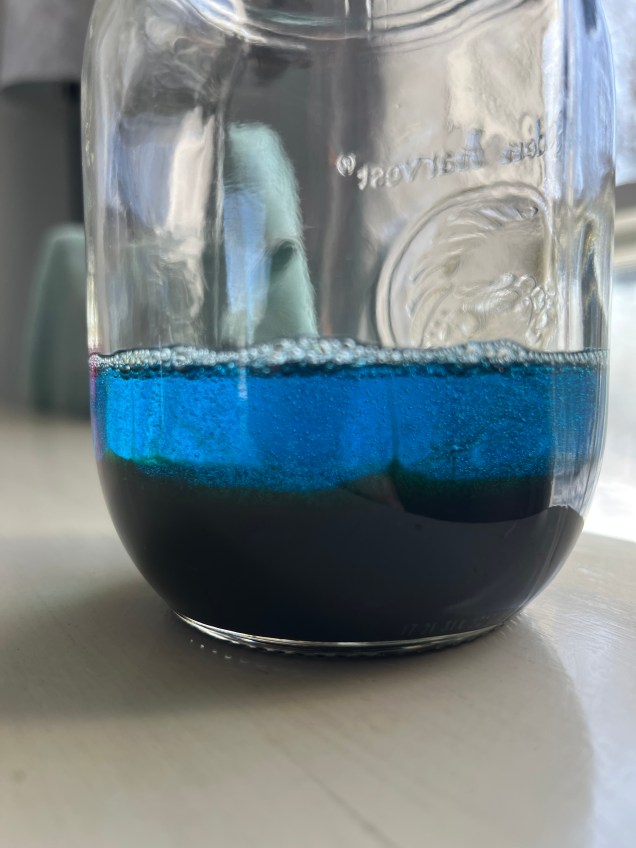
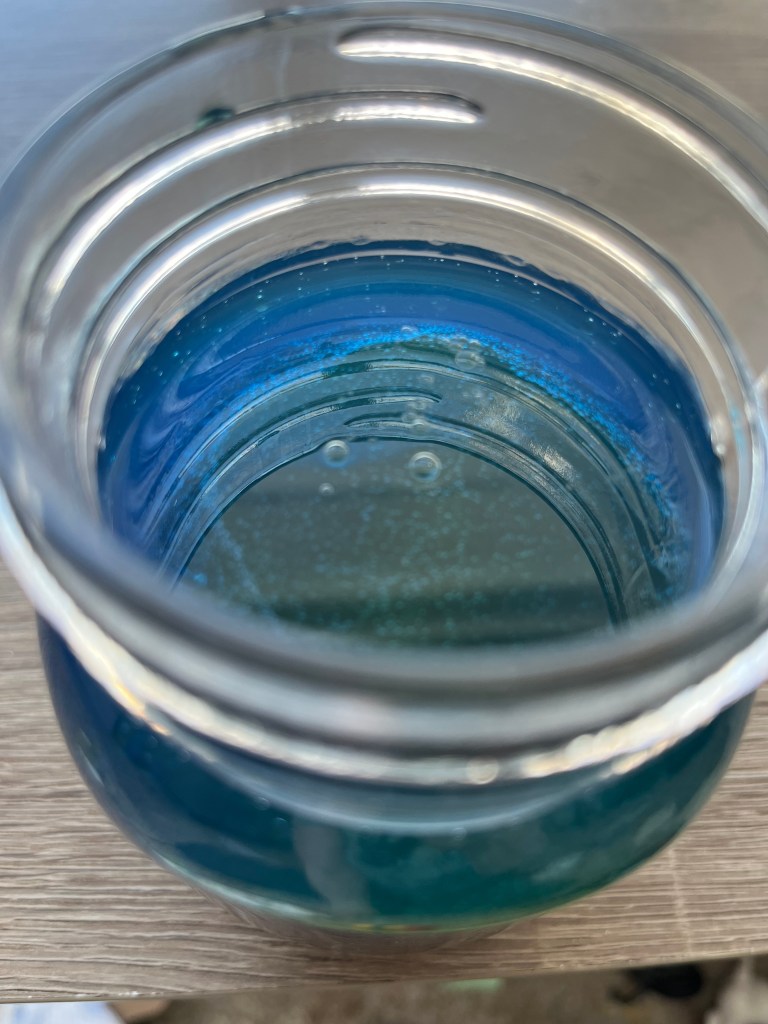
  1. Measure out the bottom liquid first. If using Molasses, simply add into the bottom. If using corn syrup then first add red, green and blue drops of food colouring until it is black. Pour into bottom of jar. This is “The Trench”.
  2. Measure out dish soap and use a funnel to slowly pour into the jar on top of the corn syrup/molasses. This is “The Abyss”. If using a clear dishsoap, add colouring to make a dark blue or purple colour.
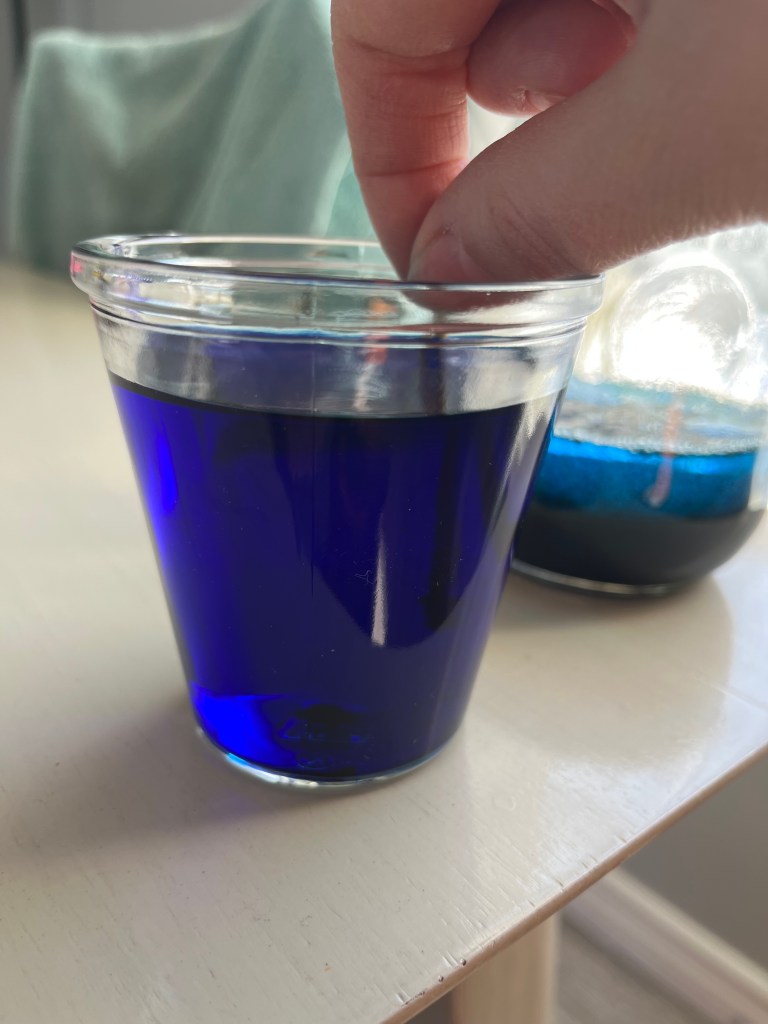
  3. Measure out water and add some colouring drops to make a deep blue/purple colour (different shade from the layer below it. Pour through the funnel slowly to add to the layers. This is now the “Bathypelagic”, or “Midnight Zone”.
  4. Measure out the vegetable oil and add through the funnel. You can try to use food colouring, but it is not likely to mix and change colour (We tried! And most people don’t do it in their videos anyway). This is now the “Mesopelagic”, or “Twilight Zone”.
  5. Measure out the rubbing alcohol and add to the top (very carefully!) to make the “Epipelagic”, or “Sunlight Zone”.
Additional Notes:

  • Take your time when pouring the liquid layers on top of each other. If you pour too quickly then the layers will mix and you may have to wait while they settle themselves out.
  • Use a funnel only for the first few layers. Keep an eye that the funnel is not inserted too deep when you are pouring layers or the liquids will mix. If you have a few hands helping with this activity, then one student could hold the funnel up so that it is not touching the liquids. Or consider using a small spoon for the last few layers to carefully add the top liquids.
  • Based on your available liquid ingredients on hand, adjust your food colouring so that you will be able to distinguish the different layers. For example, we used blue dawn dish soap for the abyss layer so we just made the water layer above it have more purple. But if you are using a clear dish soap, you might want to make the abyss layer have dark purple, and then make the water layer above it be a deep blue.

For those that like more visual illustrations, here is an excellent example of this experiment with similar ingredients and measurements, done by Mote Marine Laboratory & Aquarium.

More About The Ocean Layers (Pelagic Zones)

What are the “Pelagic Zones”?

The pelagic zones, or layers of the oceans are split up into 6 areas, ranging from the most shallow intertidal zone near the sunny surface, to the deepest and darkest depths of the hadalpelagic trenches.

The Intertidal Zone:

This area is the closest to the surface of the ocean, and is determined by the fluctuating ocean levels of high and low tide. It also contains tide pools that have their own unique ecosystem and are home to many different animals and plants.

Animals that live in this zone have to be able to adapt to both water and land, with the constantly changing high and low tides. These commonly include: small crabs, starfish, sea urchins, barnacles and anemones. Many other marine animals such as walruses and seals also live at the ocean’s edge so they can hunt for nearby food in the surface layers.

This is a great video of life in the Intertidal Zone:

The Epipelagic (Sunlight Zone):

The Epipelagic is considered the busiest and brightest area of the ocean. You could think of it like the “Epi-center” of the ocean, as it is estimated that around 90% of ocean animals, plants and different organisms live in this pelagic zone.

This zone travels down approximately 198 meters below the surface of the ocean, and temperature ranges from -2 to 36 degrees celcius, depending on warm or colder climate areas.

Due to the abundance of sunlight in this zone, underwater plant life is able to go through photosynthesis, which in turn produces oxygen for the marine animals that live there.

Check out this video on the Epipelagic Zone:

The Mesopelagic (Twilight Zone):

As one travels deeper into the ocean, you will come to the mesopelagic layer, or twilight zone. Here the amount of sunlight piercing through is less, which decreases the visibility at this depth of the ocean. As a result, there is typically less vegetation growing.

This zone is approximately 198 meters to 1,000 meters below sea level, and temperature ranges from -4 to 21 degrees celcius.

Animals that are commonly found in this zone are: blobfish, large crabs, sperm whales, swordfish, some eels, giant squid, and cuttlefish. Many of these animals also travel up and down through the layers as they seasonally migrate or hunt for food.

Check out this video on life in the Mesopelagic Layer:

The Bathypelagic (Midnight Zone):

Life in the Midnight Zone is quite dark, as there is almost no light that reaches to this depth. And yet there is still quite a lot of life!

The animals that live down at this level often have large eyes to help see whatever light there may be, and many of them are bioluminescent. (This means that they can omit their own form of light in their bodies!)

A few of these interesting animals include the vampire squid, various crustaceans, anglerfish, dragonfish, gulper eels, viperfish, and the lanternfish.

This zone is approximately 1,000 meters to 4,000 meters below sea level, and temperature stays near -4 degrees celcius.

Bruce Robinson from the Monterey Bay Aquarium shares a little of his work exploring the marine life of the Midnight Zone in this short video:

The Abyssopelagic (The Abyss):

Very near the ocean floor is the area known as the abyss. The depth here extends from approximately 4,000 meters to 6,100 meters deep! The cold water temperature stays around 1.7 degrees celcius.

Even though it is a harsh environment, many animals can still thrive in this cold and dark part of the ocean. Many of them are bioluminescent and eat dead creatures and plant life that fall down from the layers above. Some of these include the dumbo octopus, some eels, sea pigs, tripod fish, and sea spiders.

This video shows some fascinating animals found through the lower layers of the deep ocean!

The Hadalpelagic (The Trench):

And finally THE BOTTOM. At approximately 6,100 meters is the general area known as “the trench”, which is made up of caves and crevices that open up the ocean floor all over the earth. The Mariana Trench is the deepest recorded place in the ocean, with depth measuring at around 10, 984 meters.

There is extreme pressure at this depth, which makes it hard for any marine life to survive! But scientists have found a few species that live near hydrothermal vents in the ocean floor, such as giant tubeworms, hadal snailfish, and various amphipods. Cusk eels are the deepest recorded fish to be found at 8,370 meters.

The temperature tends to hover around 4 degrees celcius in the hadalpelagic zone.

Made this Mini Ocean Zone Activity?

I’d LOVE to see your results!! Feel free to post to your social media account and tag Northbird using one of the links below or post in the comments!

Hi, I’m Jessie!

I’m a Wife and Homeschooling Mom living in a remote town in Northern Ontario, Canada. I love making wholesome meals for my family from scratch, homeschooling our girls and learning more about natural living.

Read more about my story HERE.

Subscribe to Northbird’s email list to get weekly posts on: tasty recipes, activity ideas for kids, natural living tips, and some genuine mom thoughts and encouragement!


Make Mini Ocean Zones in a Jar

A fun experiment illustrating the Zones of the Ocean, and learning about liquid Viscosity.


The Northbird Blog http://www.thenorthbirdblog.com


Liquids Needed

  • Rubbing alcohol (Sunlight Zone)
  • Vegetable Oil (Twilight Zone)
  • Water (Midnight Zone)
  • Dish Soap, blue coloured-type is best like Dawn (The Abyss)
  • Corn syrup or Molasses (The Trench)

  • Directions

    1. Measure out the bottom liquid first. If using Molasses, simply add into the bottom. If using corn syrup then first add red, green and blue drops of food colouring until it is black. Pour into bottom of jar. This is “The Trench”.
    2. Measure out dish soap and use a funnel to slowly pour into the jar on top of the corn syrup/molasses. This is “The Abyss”. If using a clear dishsoap, add colouring to make a dark blue or purple colour.
    3. Measure out water and add some colouring drops to make a deep blue/purple colour (different shade from the layer below it. Pour through the funnel slowly to add to the layers. This is now the “Bathypelagic”, or “Midnight Zone”.
    4. Measure out the vegetable oil and add through the funnel. You can try to use food colouring, but it is not likely to mix and change colour (We tried! And most people don’t do it in their videos anyway). This is now the “Mesopelagic”, or “Twilight Zone”.
    5. Measure out the rubbing alcohol and add to the top (very carefully!) to make the “Epipelagic”, or “Sunlight Zone”.

    Additional Notes:

    • Take your time when pouring the liquid layers on top of each other. If you pour too quickly then the layers will mix and you may have to wait while they settle themselves out.
    • Use a funnel only for the first few layers. Keep an eye that the funnel is not inserted too deep when you are pouring layers or the liquids will mix. If you have a few hands helping with this activity, then one student could hold the funnel up so that it is not touching the liquids. Or consider using a small spoon for the last few layers to carefully add the top liquids.
    • Based on your available liquid ingredients on hand, adjust your food colouring so that you will be able to distinguish the different layers. For example, we used blue dawn dish soap for the abyss layer so we just made the water layer above it have more purple. But if you are using a clear dish soap, you might want to make the abyss layer have dark purple, and then make the water layer above it be a deep blue.
    • Use equal amounts of the different liquids each time, but the amount might be different based on what size jar you have available:
    • – For a 1 litre jar (almost a quart), you will measure out approximately 2/3 cup each liquid.

      – For a 500ml jar (almost a pint) you will measure out approximately 1/3 cup each liquid.

    Return to Top

    This post contains affiliate links. As an Amazon associate, I earn from qualifying purchases. This means that I make a small commission at no extra cost to you. You can read my full disclosure HERE.
    Bird Watching Nature Journal

    Find Northbird on social media:

    Return to “Homeschooling Activities & Resources”

    Return to “Discovering Birds”

    Do you have a child that loves to sit in nature and draw?

    I do. My oldest daughter loves sitting outside or by the window and drawing whatever wildlife she can find, or her impressions of nature.

    I created this bird survey tool as a way for her to record and draw the different birds that she finds around our community in Northern Ontario. (Her beautiful little six-year-old drawings and observations are so cute!) It will be a special keepsake in years to come.

    This birdy resource will encourage students to get outside into nature and watch and listen for the many amazing different bird species out there! It is non-specific to any geographical area, and is to be used as an interactive survey tool.

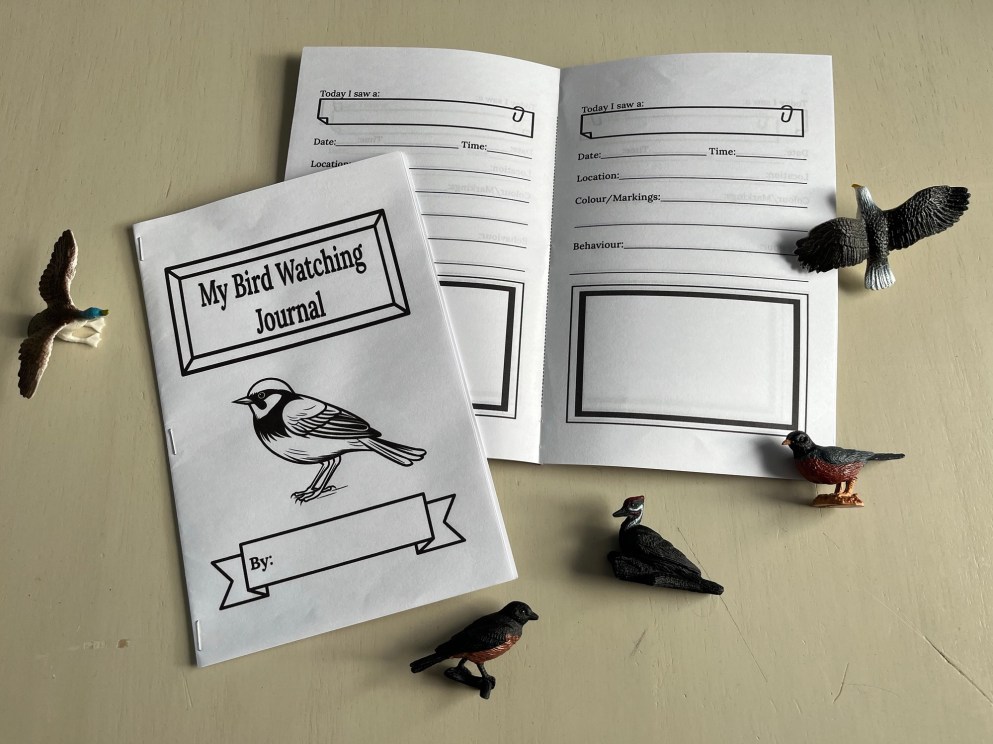
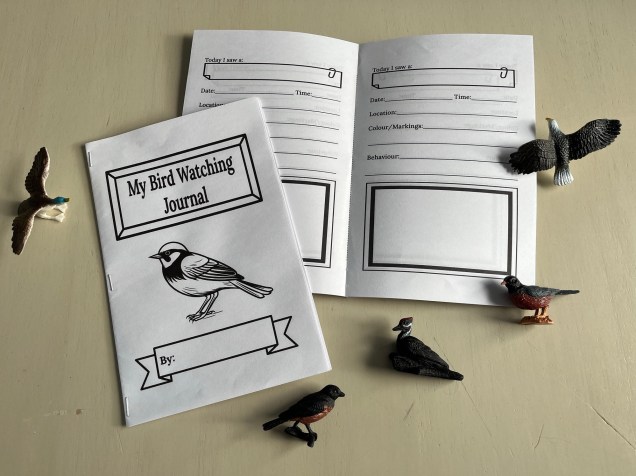
    On each page students can record:

    • The name of the BIRD sighted
    • Date/Time
    • Location of the BIRD
    • Colour and any notable markings of the BIRD
    • Behavior of the BIRD (what was the bird doing?)

    At the bottom of each page there is a framed box where students can DRAW their impression of what the bird looked like, or what it was doing (flying, perching, nesting, etc).

    This PDF file has been designed to be easily printed, folded and stapled together, making it an easy handout to either print and make ahead of time for younger students, or have the older students assemble it themselves!

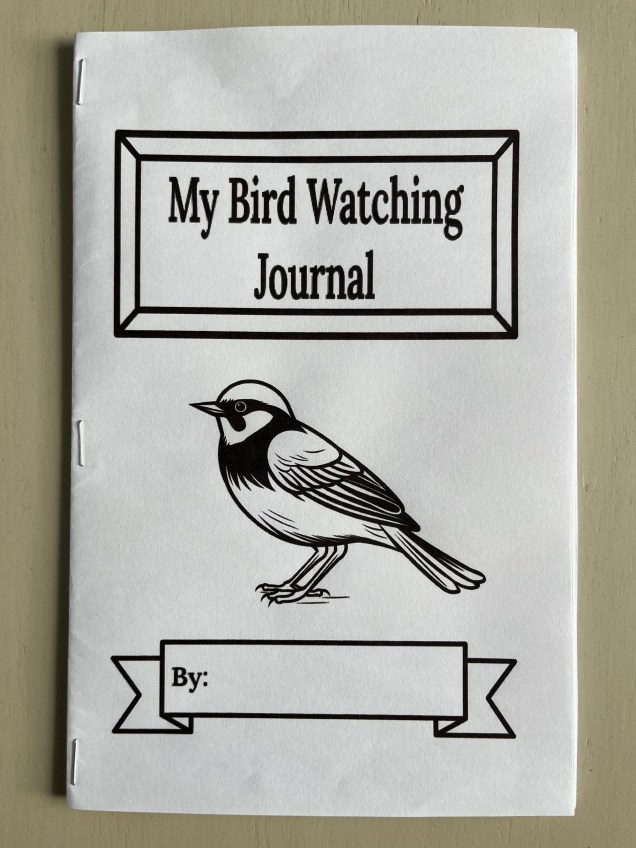
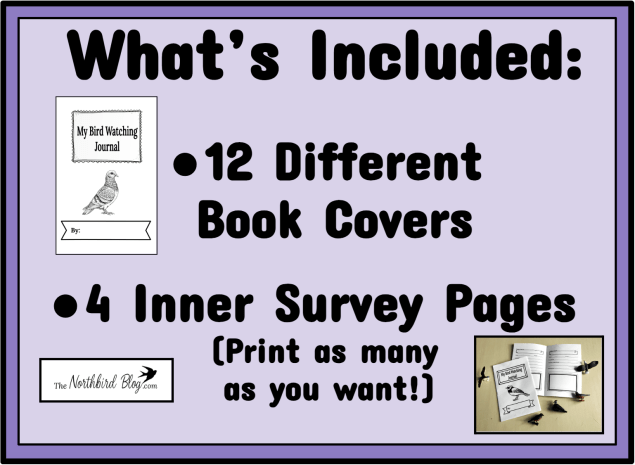
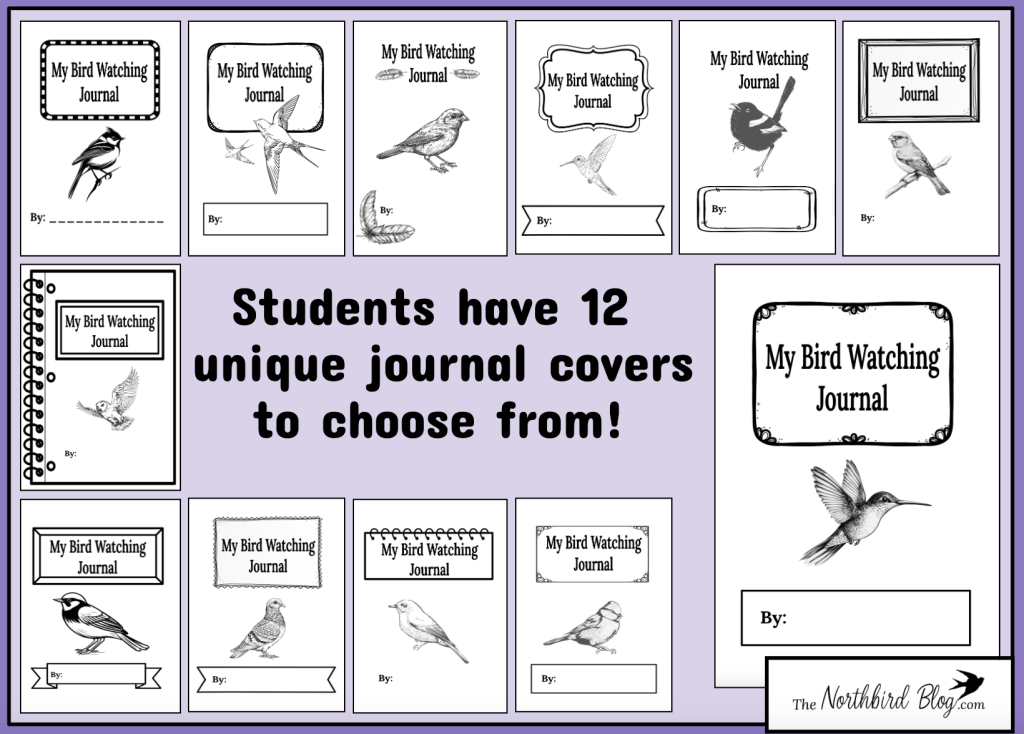
    There are 12 different journal covers for students to choose from to use in their nature journals, highlighting a variety of different bird species.

    Instructions on assembling this nature journal:

    1) Choose 1 of the 12 unique journal covers and print on cardstock, fold in half.

    2) Print inner journal pages double-sided, flipping on short edge.

    3) Fold inner pages in half and insert into the cover.       

    4) Put 3 staples along the fold in the cover.

    What is Included in this Digital Package? (Total 18 Pages)

    • Bird Watching Journal Covers (12 pages)
    • Bird Watching Journal: Inner pages (4 pages)
    • Terms of Use/Instructions/Graphic Credits (2 pages)

    **Please Note that this is a DIGITAL FILE. There is no physical product from this purchase. After purchasing, there is a link that is automatically sent to your email where you can access your new file. (Email address is required at checkout).

    Some of our favourite birds that we have discovered in the north: (and managed to take a picture of!)

    “Downy Woodpecker”

    Moosonee, Ontario

    “Dark Eyed Junco”
    Moosonee, Ontario

    (Photo Credit: Jesse Burman, my husband)

    “Chickadee”
    Moosonee, Ontario

    “Willow Ptarmigan”
    James Bay, Northern Ontario

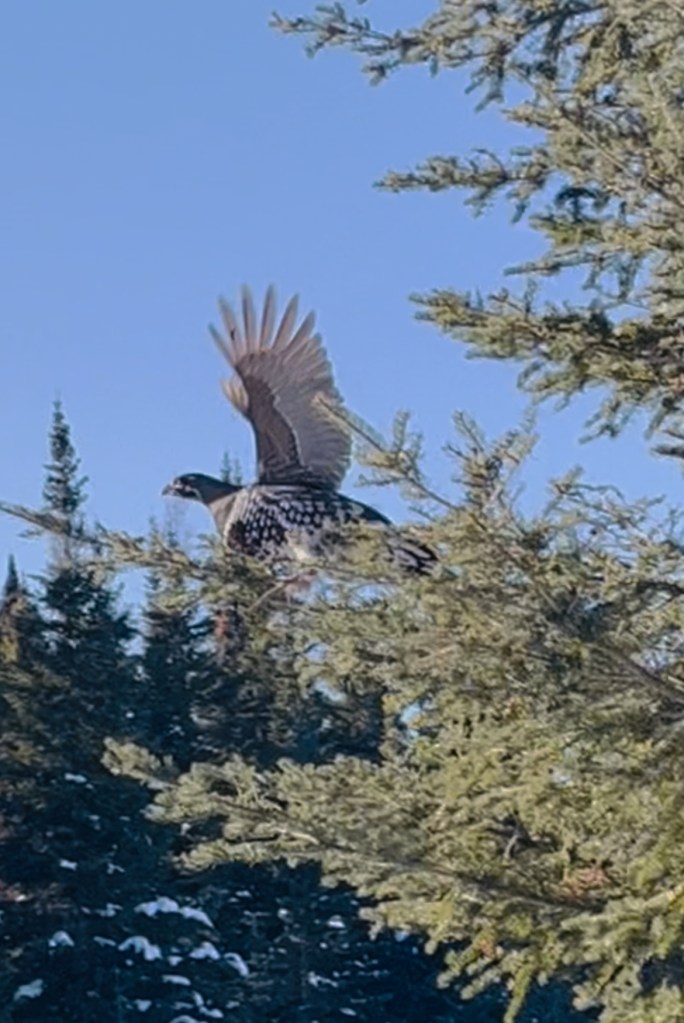
    “Partridge”
    Moose River Area, Northern Ontario

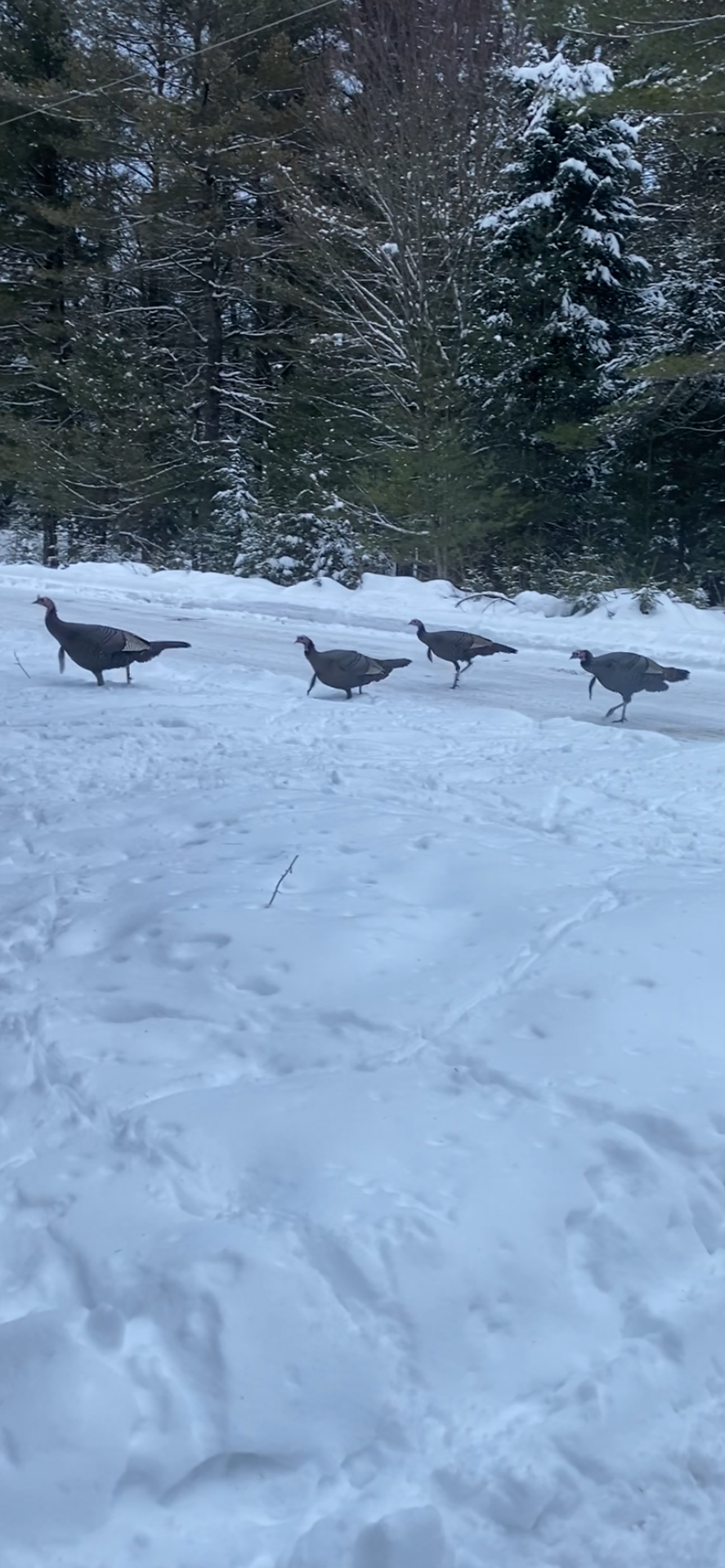
    “Wild Turkeys”
    Muskoka, Ontario

    “Whisky Jack”/”Canada Jay”,
    Moose River area, Northern Ontario

    Thank you for your interest in this product designed by Northbird!

    **Please Note that this is a DIGITAL FILE. There is no physical product from this purchase. After purchasing, there is a link that is automatically sent to your email where you can access your new file. (Email address is required at checkout).

    Did your kids or students make this Birdwatching Craft?

    I’d LOVE to see your results!! Feel free to post to your social media account and tag Northbird using one of the links below or post in the comments!

    This Free Birdwatching Survey Sheet PDF is available to download HERE.

    Hi, I’m Jessie!

    I’m a Wife and Homeschooling Mom living in a remote town in Northern Ontario, Canada. I love making wholesome meals for my family from scratch, homeschooling our girls and learning more about natural living.

    Read more about my story HERE.

    Subscribe to Northbird’s email list to get weekly posts on: tasty recipes, activity ideas for kids, natural living tips, and some genuine mom thoughts and encouragement!

    This post contains affiliate links. As an Amazon associate, I earn from qualifying purchases. This means that I make a small commission at no extra cost to you. You can read my full disclosure HERE.

    Return to Top

    Resurrection Eggs Kids Activity: 12 Moments of the True Easter Story (Free PDF Download)

    Find Northbird on social media:

    Return to “Homeschooling Activities & Resources”

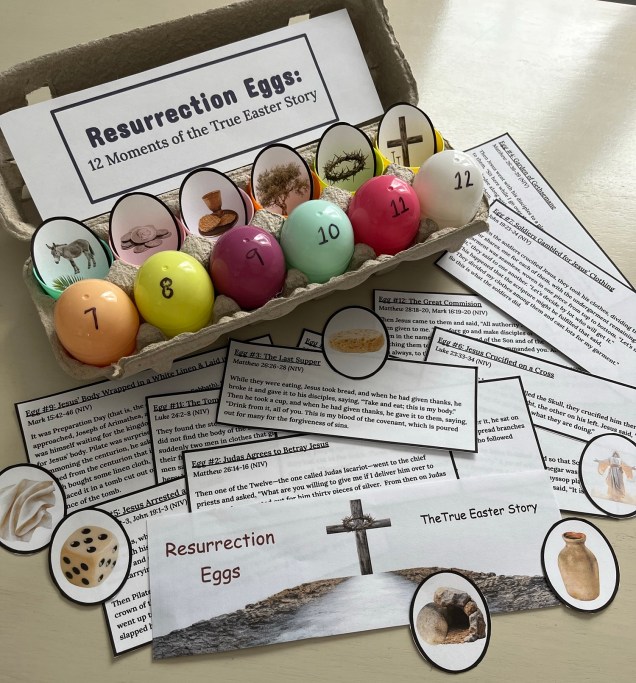
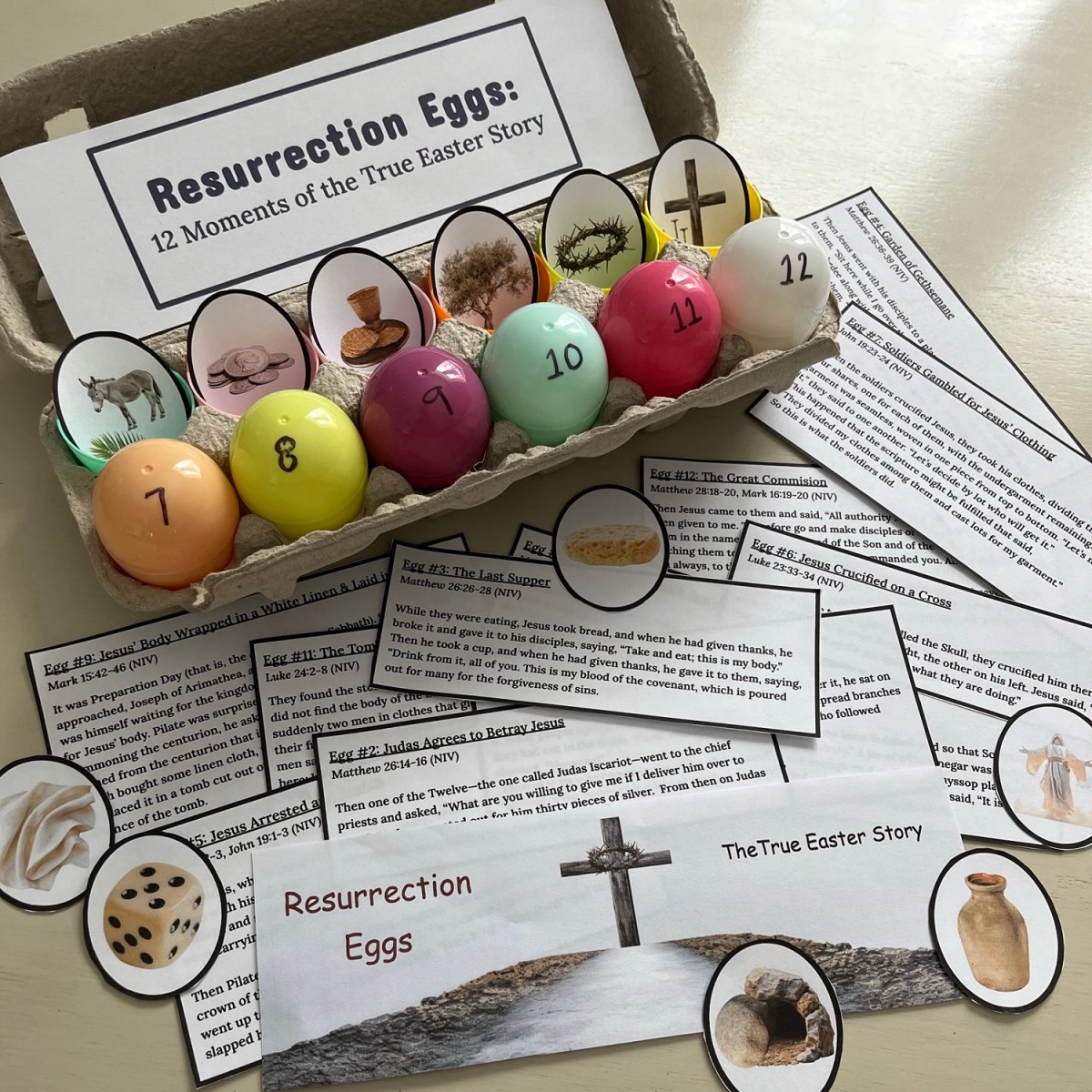
    This is a fun way to explore the true Easter story with your kids or students!

    All you need is some pop-open Easter eggs, a carton, the attached free pdf below, and (optional) some simple materials found around your home to help this incredible true story be presented in a hands-on activity for your kids.

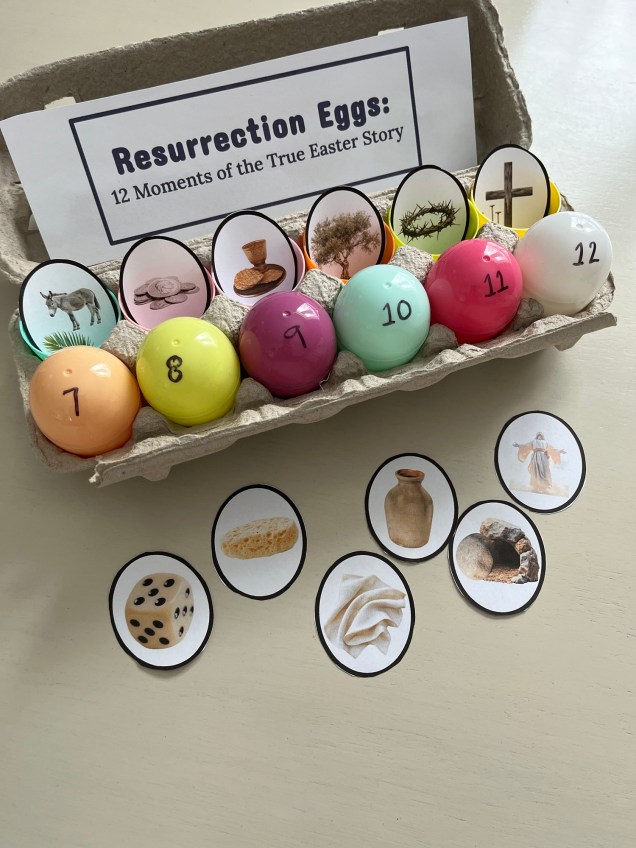
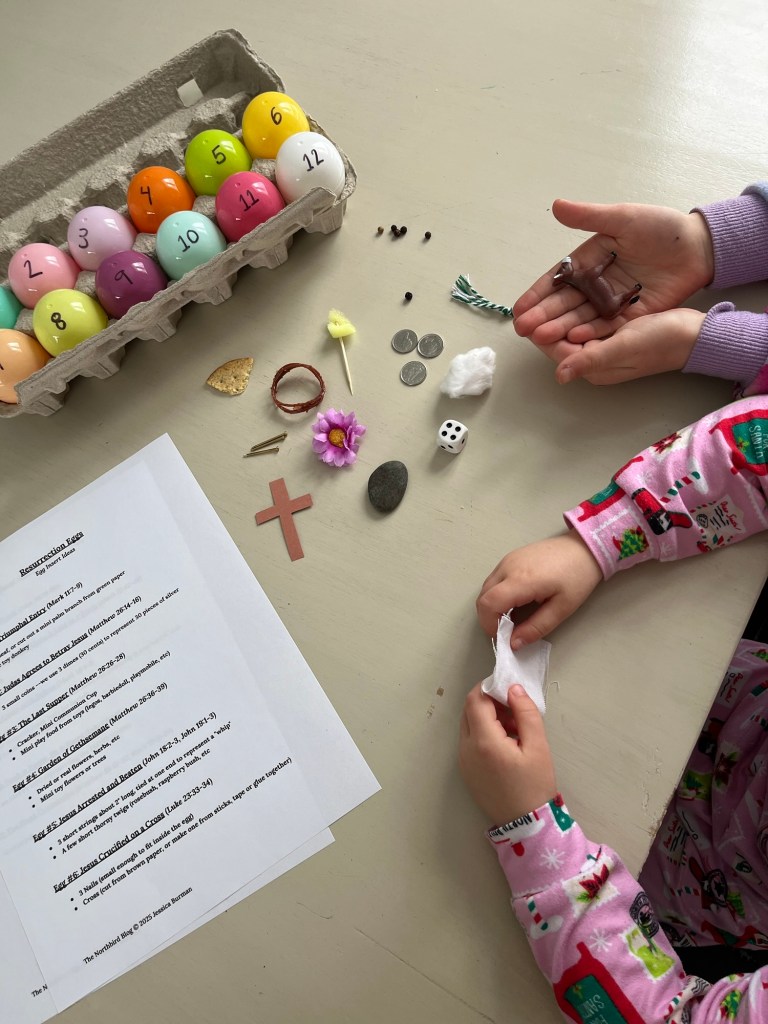
    Each egg will contain a symbol of something that can be found around your home, representing an event in Jesus’ death and resurrection.

    There is a list of suggestions and ideas for items that can be inserted into each of the eggs. This free PDF list can be downloaded in the package below.

    Alternatively, there are some beautiful and realistic picture print-outs to cut and insert instead, if you’d rather not do a scavenger hunt to find everything from around your home!

    Scripture:

    There are 12 scripture passages from the gospels that can be cut and inserted into their corresponding eggs. For this free package version, all scriptures are in New International Version.

    Use a 12-egg sized egg carton to enclose all these resurrection story eggs, and if desired, you can use one of the 2 label options in the free download package below to cut and glue or tape to the top of the egg carton.

    We secured ours with 2 large elastics to help store it for next year without it accidentally opening and losing all the eggs!

    Here are a few ideas of how to use this Resurrection Egg Activity with your kids this Easter:

    • Hide all the eggs (pre-filled and with numbers written on the outside) and get the kids to find them in or outside your home. When the eggs are all found, have them put the eggs into an egg carton in numerical order. Have the kids take turns opening the eggs in order, reading the scripture and discussing the object inside and what it represents within the story.

    • During your Easter celebration gathering (like during a meal), each of the eggs are handed out (pre-filled and with numbers written on the outside) around the table. To begin, the person who has Egg #1 will open theirs, show the object or image inside, and then read the scripture verse. Then whoever has Egg #2 will do the same, and then continue until all the eggs have been opened and scriptures read.

    • Have a Scavenger hunt around your home to find either the tangible items needed (ideas listed below), or some printed & cut images from the free PDF below that have been hidden. Once the kids have returned with their “loot”, have them take turns opening the eggs in order and reading the scripture printout that has been concealed inside. Then they can discuss which of the printed images that they found matches the scripture and then put it inside the egg.

    Supplies Needed:

    • 12 Easter Eggs, pop open/plastic
    • Egg carton -Cartons with closable lids are nice for the free label (below) and saving it for next year!
    • Scissors
    • Tape or Gluestick
    • Permanent marker
    • Resurrection Eggs: Free PDF Download Package Containing:
      • Resurrection Eggs: Image Inserts
      • Resurrection Eggs: Egg Insert Ideas
      • Resurrection Eggs: Scripture Readings (NIV)
      • Egg Carton Labels

    Download Resurrection Eggs: Free PDF Package —–HERE

    Directions:

    1. Choose 1 of the three activity ideas listed above for how to use these resurrection eggs.
    2. Print the Free PDFs listed above.
    3. Either use the egg insert ideas or cut out images from the PDF download file for each egg.
    4. With a permanent marker: number each egg from 1-12 and number the bottom of the egg carton pockets.
    5. Cut out the scripture boxes and fold or roll up to put inside each egg (match the egg numbers to applicable verses)
    6. Choose one of the egg carton labels, cut and glue or tape it to the top of your egg carton.

    Highlights of the Easter Story that are used in this activity: (Each of these egg insert suggestions are also written on a PDF that can be downloaded in the package above)

    Egg #1: The Triumphal Entry (Mark 11:7-9)

    Egg insert suggestions:

    • Small leaf (like a bay leaf)
    • Cut out a mini palm branch from green paper
    • Little toy donkey
    • “Donkey” & “palm branch” image (free download above)

    Egg #2: Judas Agrees to Betray Jesus (Matthew 26:14-16)

    Egg insert suggestions:

    • 3 small coins –we use 3 dimes (30 cents) to represent 30 pieces of silver
    • “Silver coins” image

    Egg #3: The Last Supper (Matthew 26:26-28)

    Egg insert suggestions:

    • Cracker
    • Mini Communion Cup
    • Mini play food from toys (legos, barbiedoll, playmobile, etc)
    • Passover “Matzo Bread” & “cup” image

    Egg #4: Garden of Gethsemane (Matthew 26:36-39)

    Egg insert suggestions:

    • Dried or real flowers, herbs, etc
    • Mini toy flowers or trees
    • “Olive Tree” image

    Egg #5: Jesus Arrested and Beaten (John 18:2-3, John 19:1-3)

    Egg insert suggestions:

    • 3 short strings about 2″ long, tied at one end to represent a “whip”
    • A few short thorny twigs (rosebush, raspberry bush, etc)
    • “Crown of thorns” image

    Egg #6: Jesus Crucified on a Cross (Luke 23:33-34)

    Egg insert suggestions:

    • 3 Nails (small enough to fit inside the egg)
    • Cross (cut from brown paper, or make one from sticks, tape or glue together)
    • “Nails” and “cross” image

    Egg #7: Soldiers Gambled for Jesus’ Clothing (John 19:23-24)

    Egg insert suggestions:

    • Dice
    • “Dice” image

    Egg #8: Jesus Gave up His Spirit (John 19:28-30)

    Egg insert suggestions:

    • Piece of a sponge on a toothpick
    • “sponge” image

    Egg #9: Jesus’ Body Wrapped in a White Linen & Laid in a Tomb (Mark 15:42-46)

    Egg insert suggestions:

    • White cotton cloth
    • Small rock
    • “White linen cloth” image

    Egg #10: Women Came with Spices (Mark 16:1-3)

    Egg insert suggestions:

    • Spices: Peppercorns, Cloves, Star anise, Cardamom, etc (Biblically it was “myrrh” resin and “aloes” -like sandalwood- used to anoint Jesus’ body for burial)
    • Small toy bottle or mini container of liquid
    • “Pottery” image

    Egg #11: The Tomb is Empty, He is Risen! (Luke 24:2-8)

    Egg insert suggestions:

    • (no physical item suggestion, it’s an EMPTY EGG representing the EMPTY TOMB!)
    • “Empty Tomb” image (provided if you would like something inside each egg)

    Egg #12: The Great Commission (Matthew 28:18-20, Mark 16:19-20)

    Egg insert suggestions:

    • Cotton ball representing the clouds
    • “Jesus going up into heaven” image

    Enjoy this Easter Activity?

    I’d LOVE to know how it went!!! Feel free to post to your social media account and tag Northbird using one of the links below or post in the comments!

    Hi, I’m Jessie!

    I’m a Wife and Homeschooling Mom living in a remote town in Northern Ontario, Canada. I love making wholesome meals for my family from scratch, homeschooling our girls and learning more about natural living.

    Read more about my story HERE.

    Subscribe to Northbird’s email list to get weekly posts on: tasty recipes, activity ideas for kids, natural living tips, and some genuine mom thoughts and encouragement!

    Return to Top

    This post may contain affiliate links. As an Amazon associate, I earn from qualifying purchases. This means that I make a small commission at no extra cost to you. You can read my full disclosure HERE.
    Fun Owl Bird Snack Recipe for Kids

    Find Northbird on social media:

    Jump To Printable Recipe Card

    Return to “Deserts & Snacks”

    Return to “Discovering Birds”

    Somedays, our 3 kids remind me of little birds…one is contentedly “peeping”, while another is incessantly “chirping”, and of course there’s one that just noisily “squawks” if basic needs have not been met (sometimes constant cuddles with Mom strongly falls under this category!)

    Let me just say, I love these darlings. Period. However… there are days when the constant noises of active and most-of-the-time happy kids becomes too much for my ears! (Am I right fellow parents?!)

    My coping solutions to the noise?? Calming music for me (usually classical), and a good supply of nutritious snacks for these kiddos! Most of the time they can be easily distracted with food… because the majority of the time a contented tummy and full mouth doesn’t need to squack, right?!

    About this Snack/Activity:

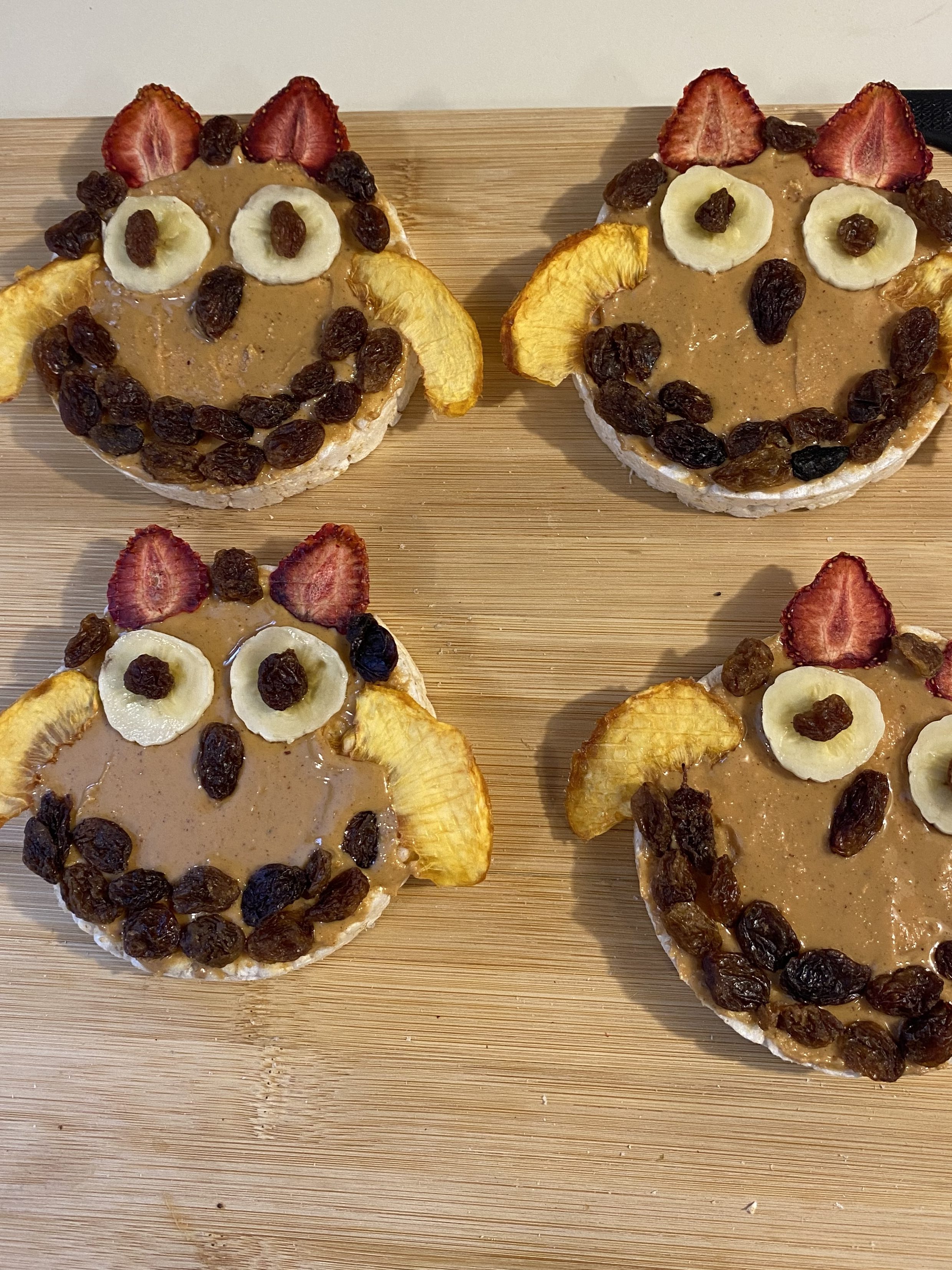
    This snack was fun to make! It not only challenged the creative/artistic side of my brain, but was super tasty to eat too!

    The kids and I had been learning about owls and nocturnal animals in homeschooling and this was a perfect mid-morning snack to go along with it! (The hubby was also home that day from teaching at the high school and was quite happy to get a snack that was more interesting than his usual)

    Ingredients to Use:

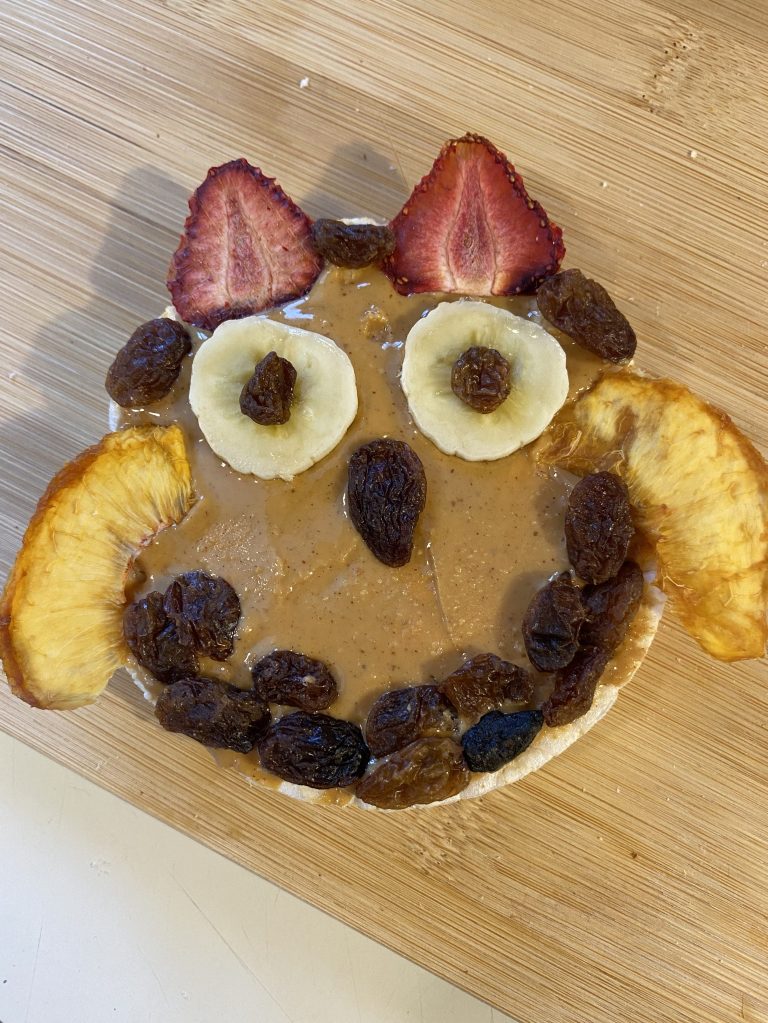
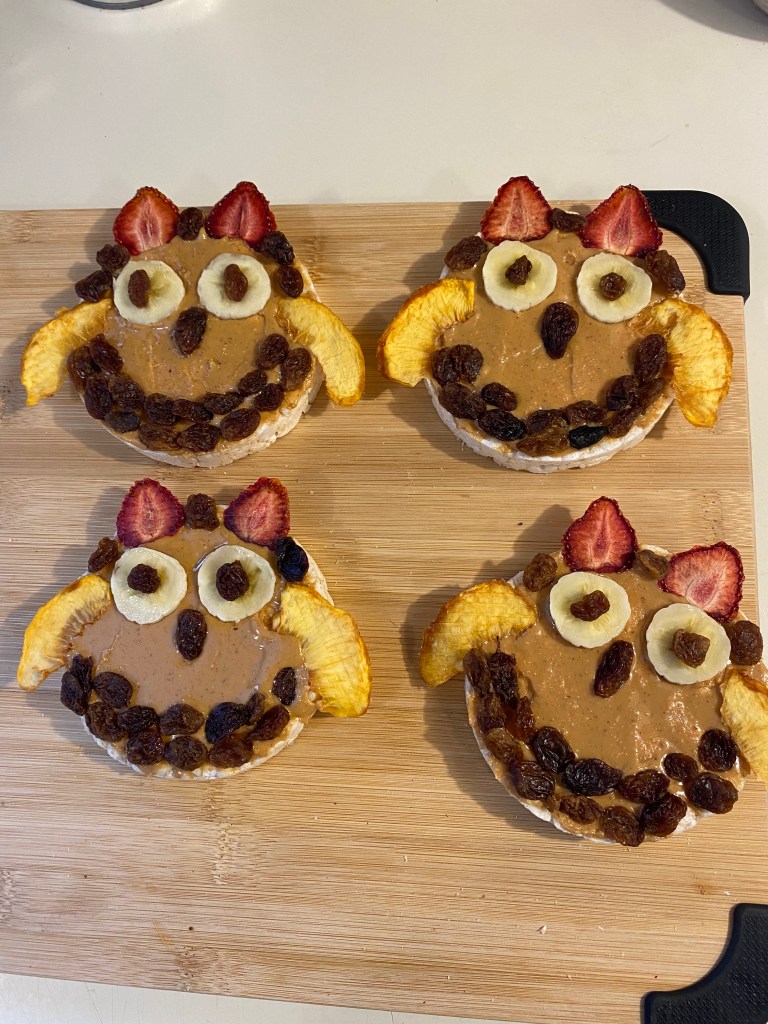
    • Rice cakes were used for the body of the owl. Any large round one works, there are so many types and flavours! We like the plain ones best for this snack though.
    • For the base we used natural peanut butter, but you could also use other nut or seed butters, or hummus! Lather it on thick, this is the main protein part of this snack!
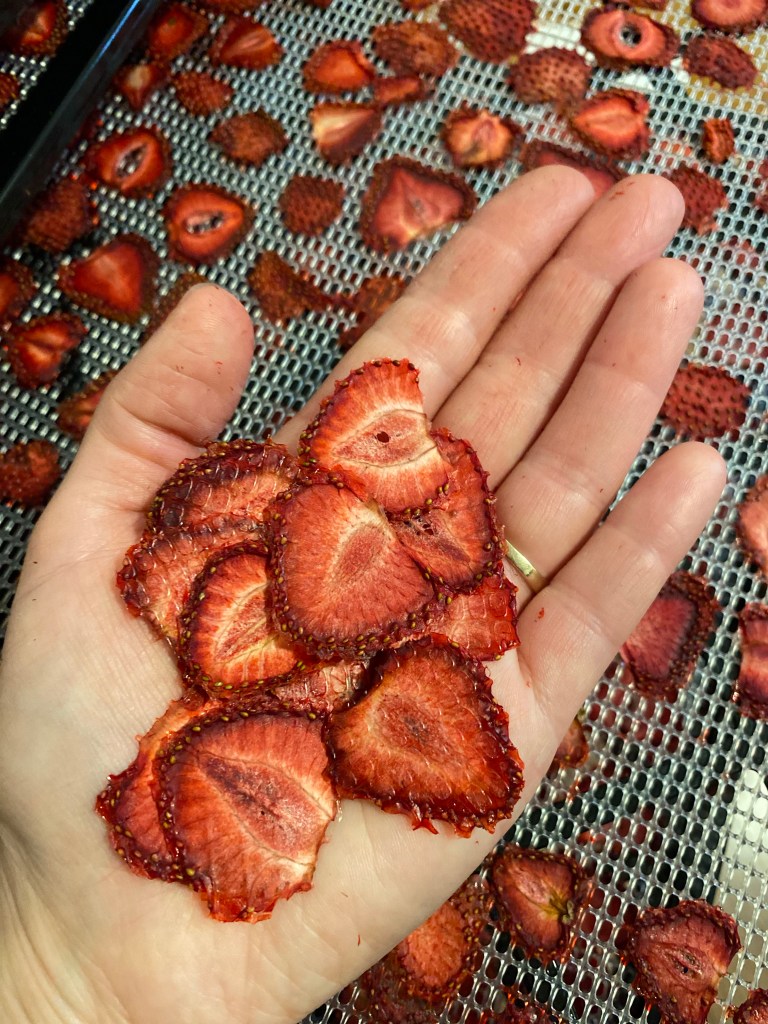
    • We used dehydrated strawberry chips for the owl ears, but you could also use fresh strawberries or another fruit and cut it to size. If you want to learn how to dehydrate your own strawberry chips like we did, you can check out THIS POST to find out more.

    • For the eyes, we sliced on fresh “banana dollars“. (My kids love their bananas!)
    • The wings were made using dehydrated peach slices, which could of course be substituted for fresh slices of peach. Apple or pear slices would work great too!
    • Raisins are the decorative part that tie it all in. You could also sub in cranberries, or other dried berries for this part.

    Activities to do with this Owl Bird Snack:

    Kids can not only have fun putting this tasty snack together, but they can also use the following resources for learning more about owls.

    Craft Activity:

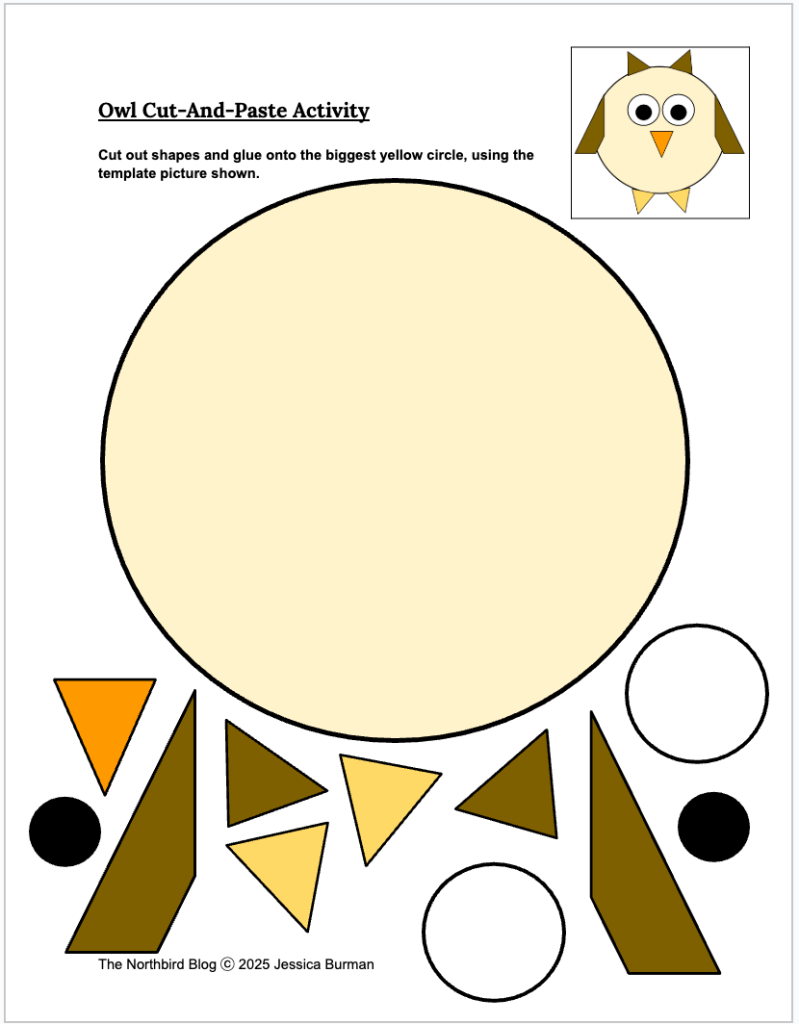
    Cut out and paste shapes to create an Owl. You can download this free pdf HERE.

    Educational Videos:

    This is a a super fun video for younger learners, lots of energy, diagrams and some amazing facts discussed about owls.

    This video is longer, at 14 + 1/2 minutes, and probably better suited for grades 1 and up. It is a very well done video by BBC Earth, and shows some baby owlets hatching! It also answers some questions such as “How can Owls fly so quietly?” and “How does an Owl’s hearing work?”
    As a heads up: there are some mice that you see getting gobbled up!

    How to Make this Owl Bird Snack:

    Supplies Needed:

    Ingredients:

    Directions:

    1. Spread the peanut/seed butter or hummus on the rice cake nice and thick.
    2. Place the Strawberry slices as ears, banana slices as eyes, and peach (or other) slices as wings.
    3. Place the raisins for additional feathers, a beak, and in the center of the banana eyes.
    4. Eat!!!

    Made this Recipe?

    I’d LOVE to see your results!! Feel free to post to your social media account and tag Northbird using one of the links below or post in the comments!

    More Desert & Snack Recipes:

    Posts on “Discovering Birds”

    Hi, I’m Jessie!

    I’m a Wife and Homeschooling Mom living in a remote town in Northern Ontario, Canada. I love making wholesome meals for my family from scratch, homeschooling our girls and learning more about natural living.

    Read more about my story HERE.

    Subscribe to Northbird’s email list to get weekly posts on: tasty recipes, activity ideas for kids, natural living tips, and some genuine mom thoughts and encouragement!

    Owl Bird Healthy Snack for Kids

    • Servings: 1 Owl
    • Difficulty: Easy
    • Print

    Jessica Burman, 2025 © The Northbird Blog. https://www.thenorthbirdblog.com

    Supplies Needed:

  • Paring Knife
  • Cutting Board
  • Spreading Knife
  • Ingredients

  • Round Rice Cakes (Body)
  • Natural Peanut Butter, Seed Butter or Hummus (Colouring)
  • Strawberry slices, dried or fresh (Ears)
  • Round Banana slices (Eyes)
  • Peach, Apple or Pear slices (Wings)
  • Raisins (Feathers, Beak, Eyeballs)
  • Directions:

    1. Spread the peanut/seed butter or hummus on the rice cake nice and thick.
    2. Place the Strawberry slices as ears, banana slices as eyes, and peach (or other) slices as wings.
    3. Place the raisins for additional feathers, a beak, and in the center of the banana eyes.
    4. Eat!!!

    Return to Top

    This post contains affiliate links. As an Amazon associate, I earn from qualifying purchases. This means that I make a small commission at no extra cost to you. You can read my full disclosure HERE.
    Ocean Pelagic Zone Booklet: A Fun Learning Resource for Students

    Find Northbird on social media:

    Return to “Homeschooling Activities & Resources”

    Return to “Ocean Life”

    Designing This Mini Pelagic Zone Booklet:

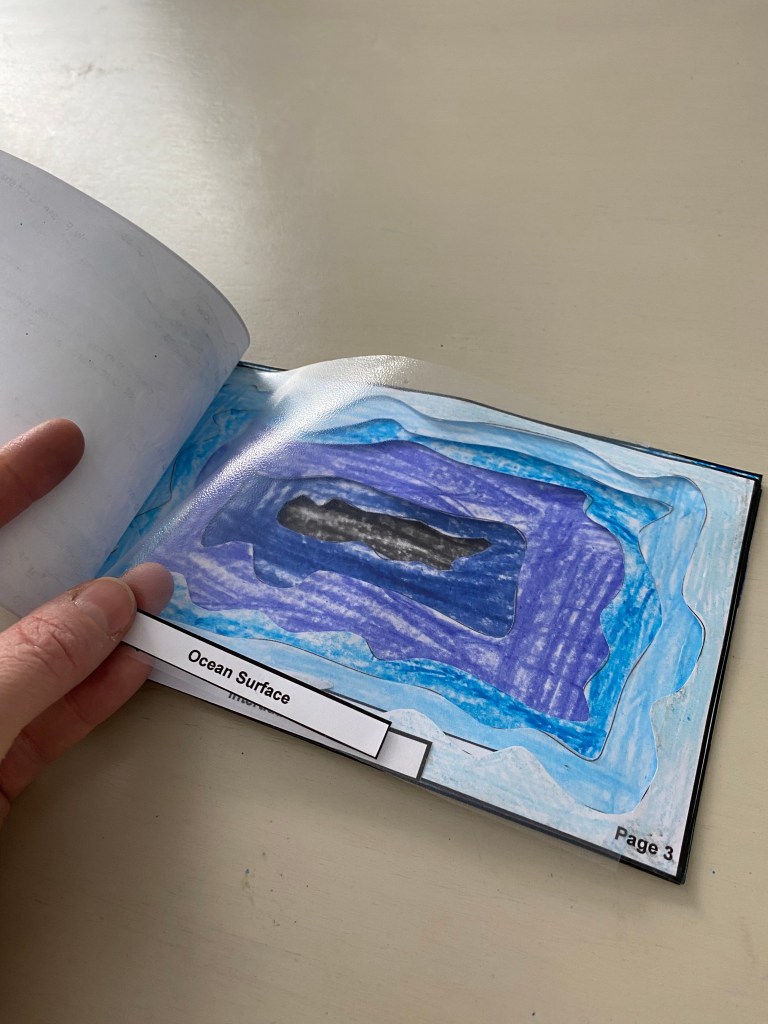
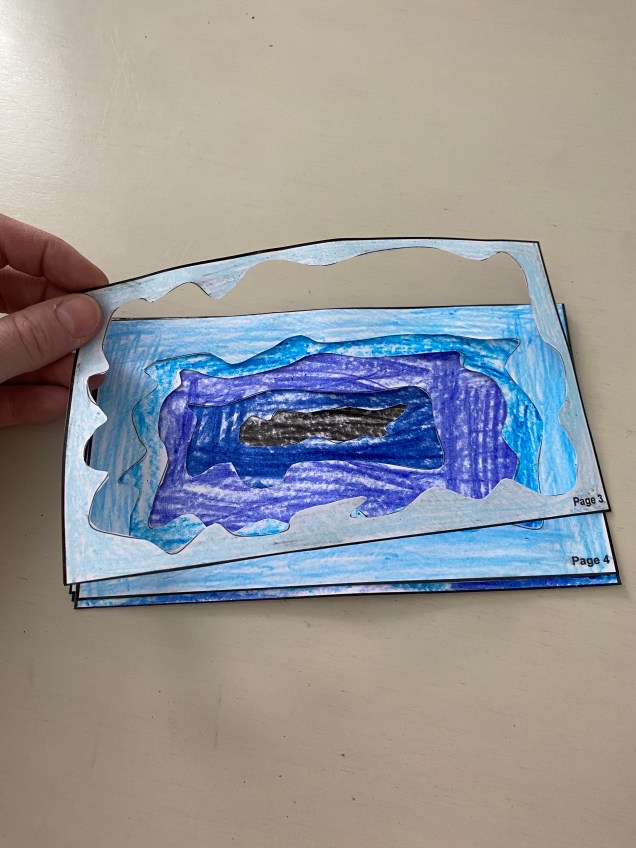
    This project was fun to create! I wanted to make a little flip-book that showed the depth of the ocean layers through shades of colours. This simple book illustrates how the deeper the layers go in distance from the sun, the darker it gets from increasing lack of sunlight.

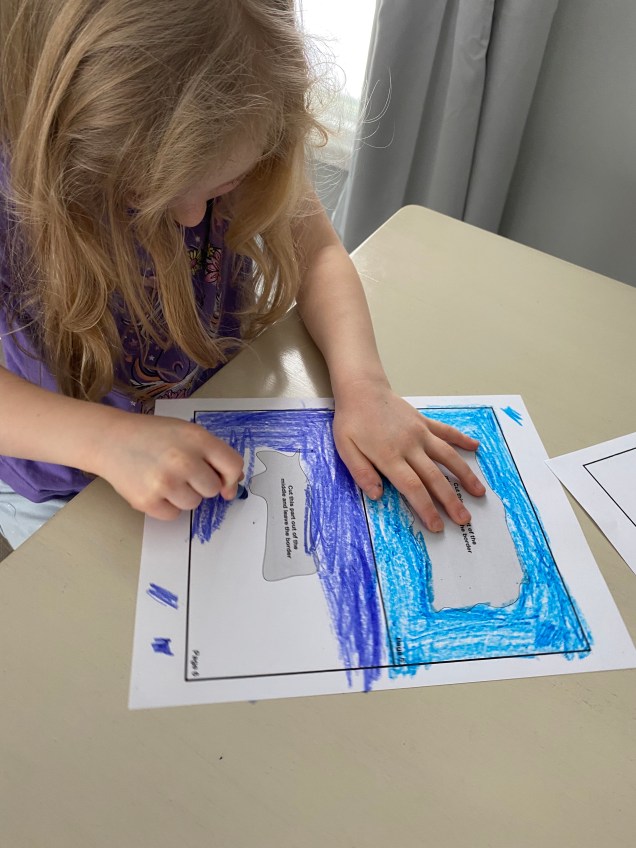
    My daughter enjoyed this activity as she got to go through our crayon box and pull out every possible shade of blue, purple, grey and lastly black. She then lined them up and selected 6 shades to use in her little flip book.

    After some technical educating on my part for how to develop this resource, I discovered how much I enjoy creating digital educational files and have since then updated and redesigned this product to be able to offer it as a digital purchase.

    What Is This Resource Used For?

    This is a fun, hands-on resource for kids to learn about the amazing layers of the ocean, also known as the “Pelagic Zones”! Great to use alongside any ocean studies!

    What are the “Pelagic Zones?”

    The pelagic zones, or layers of the oceans are split up into 6 areas, ranging from the most shallow intertidal zone near the sunny surface, to the deepest and darkest depths of the hadalpelagic trenches.

    • Intertidal Zone
    • Epipelagic Zone (Sunlight Zone)
    • Mesopelagic Zone (Twilight Zone)
    • Bathypelagic Zone (Midnight Zone)
    • Abyssopelagic Zone (The Abyss)
    • Hadalpelagic Zone (The Trench)

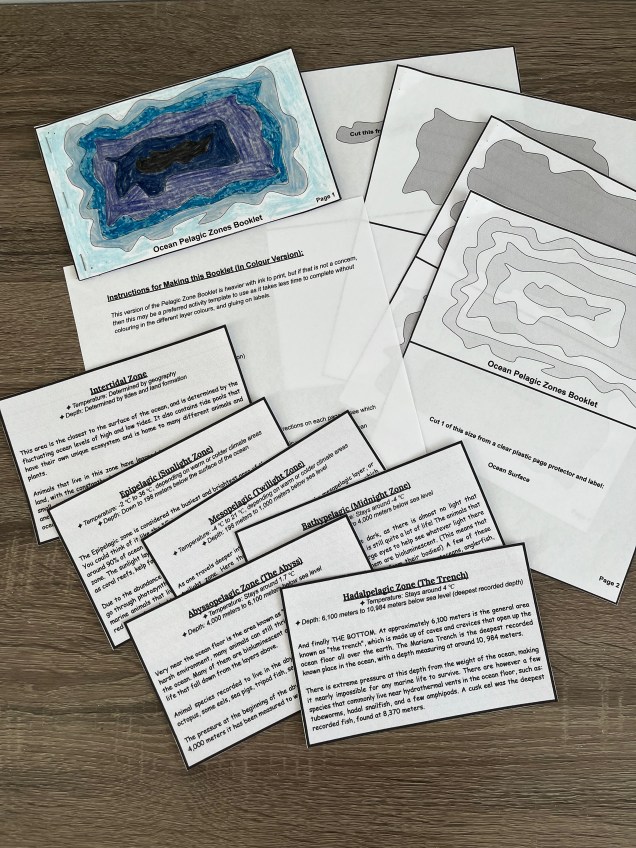
    Showing (1) completed booklet, with 5 pages of B&W booklet template, and the B&W Info cards.

    What is Included in this Digital Package? (Total 17 Pages)

    • Ocean Pelagic Zones Booklet (Colour Version) & Instructions
    • Ocean Pelagic Zones Booklet (Black and White Version) & Instructions
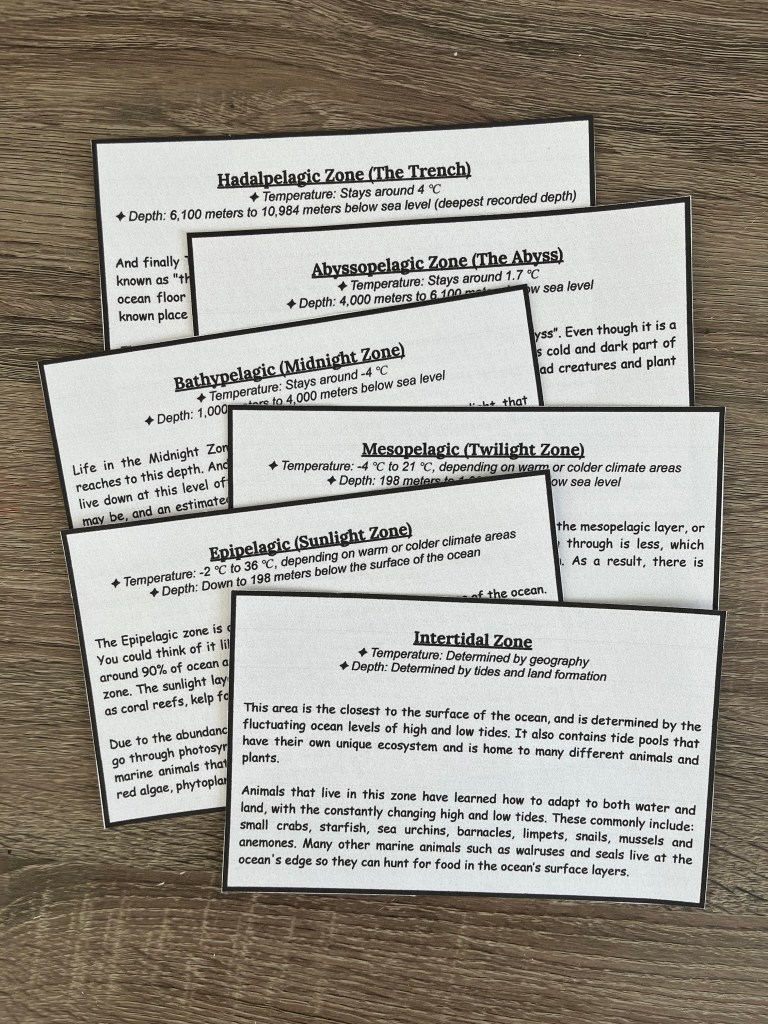
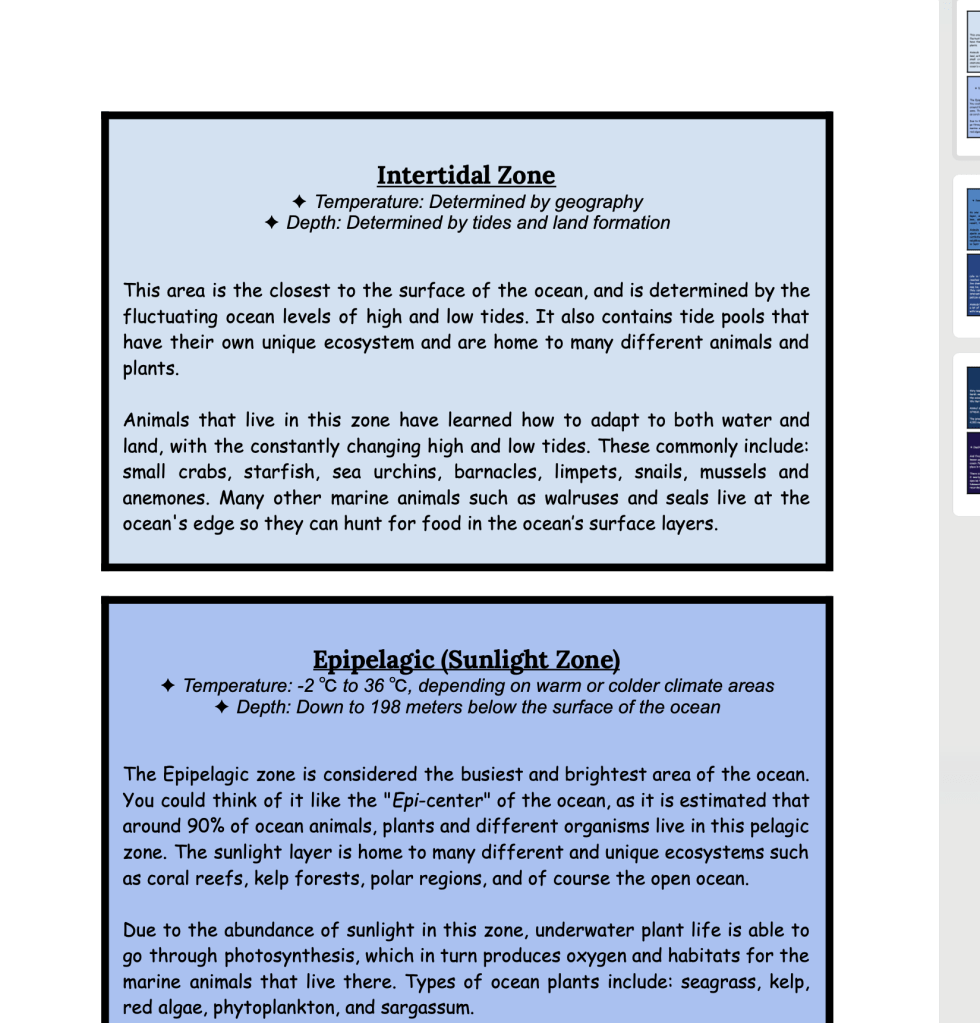
    • Pelagic Zone Info Cards (Colour Version)
    • Pelagic Zone Info Cards (Black and White Version)
    • Terms of Use

    **Please Note that this is a DIGITAL FILE. There is no physical product from this purchase. After purchasing, there is a link that is automatically sent to your email where you can access your new file.

    The Pelagic Zone Booklet:

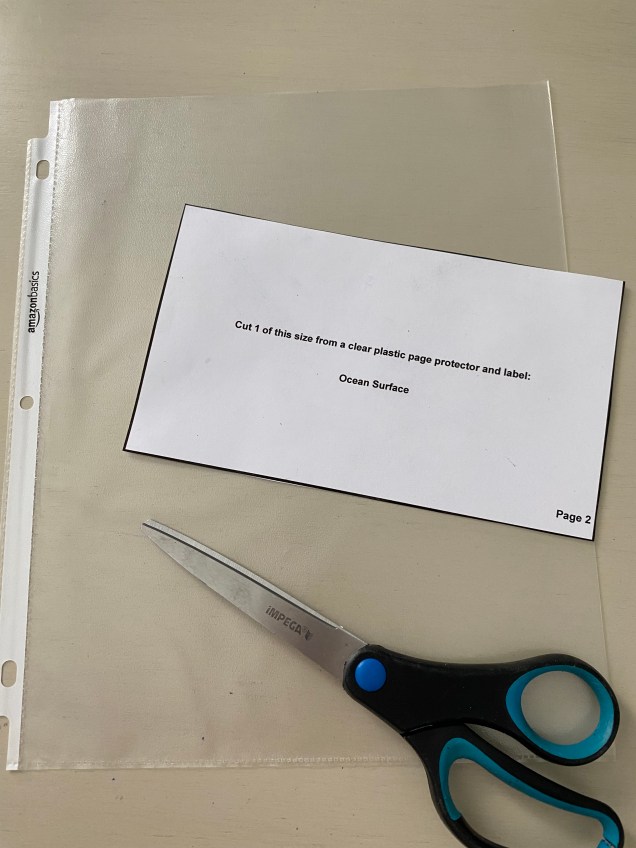
    Kids can use either one of the booklet template versions to cut and staple together their own mini pelagic zone books. Both the B&W and the Colour version were designed to insert a transparent page protector cut to represent the ocean’s surface. (This is of course optional, but my daughter and I thought it was a cool part of the activity!)

    Showing my daughter’s completed booklet cover with the B&W booklet template

    The black and white version has the extra steps of colouring or painting the different layers and then gluing on the different layer’s labels. This version is printer-friendly, and has detailed instructions on how to complete the booklet.

    The In-colour version booklet template

    The in-colour version may be heavier on ink usage, but the added step of colouring or painting the layers is already done, and the labels are already included, which enables this project to be completed in less time. The pelagic layer colours also coordinate with the coloured version of the pelagic zone info cards.

    The finished product size is approximately 7.5″ x 4.5″.

    Supplies Needed for this Activity:

    • Scissors
    • Gluestick (**not required for the in-colour version)
    • PDF template printed (pages 1-4, instructions are page 5) **I recommend printing on white cardstock if you are painting in the coloured layers)
    • Plastic page protector (cut in half if size is 8.5″x11″, use template for sizing)
    • 6 Different Crayon or Marker shades of blue, navy blue, purple and black. (You could also paint if you prefer!) (** Not required for the in-colour version)


    Pelagic Zone Info Cards:

    Each of the Pelagic Zone Info Cards relates to a layer of the ocean and has details included of the following:

    • Approximate recorded depth
    • Average recorded temperature for that zone
    • Plant life or unique habitats to that zone
    • Marine animals
    • Other known facts related to that zone

    The black and white version is of course printer friendly, and the in-colour version uses the same ocean layer colours as the coloured pelagic booklet template! So if using lots of coloured ink is not an issue then this is a great option!

    Thank you for your interest in this product!

    ** This is a DIGITAL FILE. There is no physical product from this purchase. After purchasing, there is a link that is automatically sent to your email where you can access your new file.

    Hi, I’m Jessie!

    I’m a Wife and Homeschooling Mom living in a remote town in Northern Ontario, Canada. I love making wholesome meals for my family from scratch, homeschooling our girls and learning more about natural living.

    Read more about my story HERE.

    Subscribe to Northbird’s email list to get weekly posts on: tasty recipes, activity ideas for kids, natural living tips, and some genuine mom thoughts and encouragement!

    Return to Top

    This post may contain affiliate links. As an Amazon associate, I earn from qualifying purchases. This means that I make a small commission at no extra cost to you. You can read my full disclosure HERE.

    Fun Salt Water Painting Activity for Kids

    Find Northbird on social media:

    This post contains affiliate links. As an Amazon associate, I earn from qualifying purchases. This means that I make a small commission at no extra cost to you. You can read my full disclosure HERE.

    Return to “Homeschooling Activities & Resources”

    Return to “Ocean Life”

    Jump to Printable Activity Card

    Investigating Salt Water in Homeschooling:

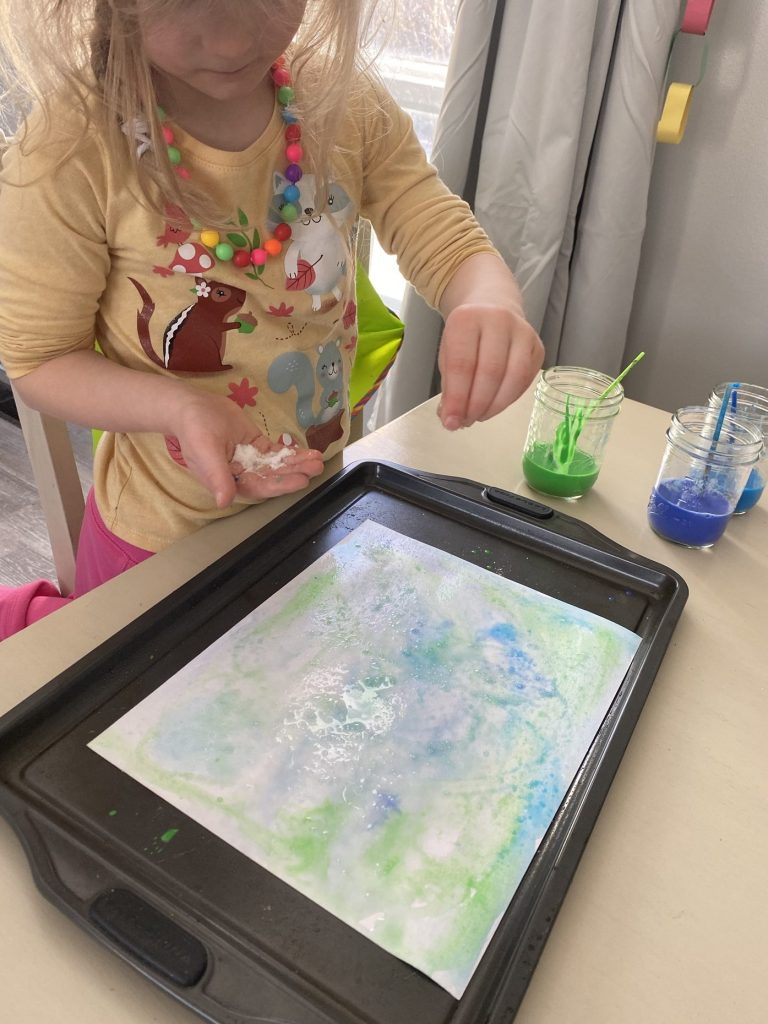
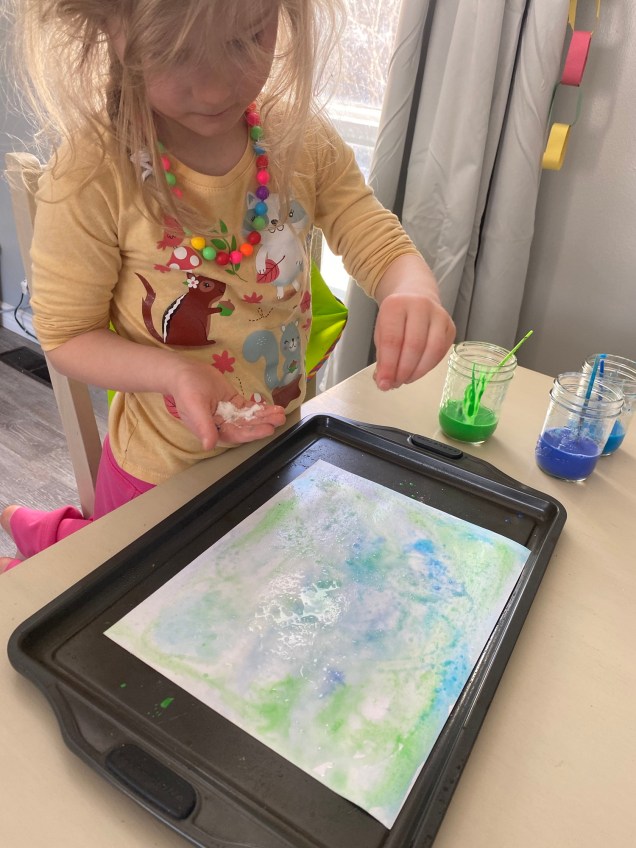
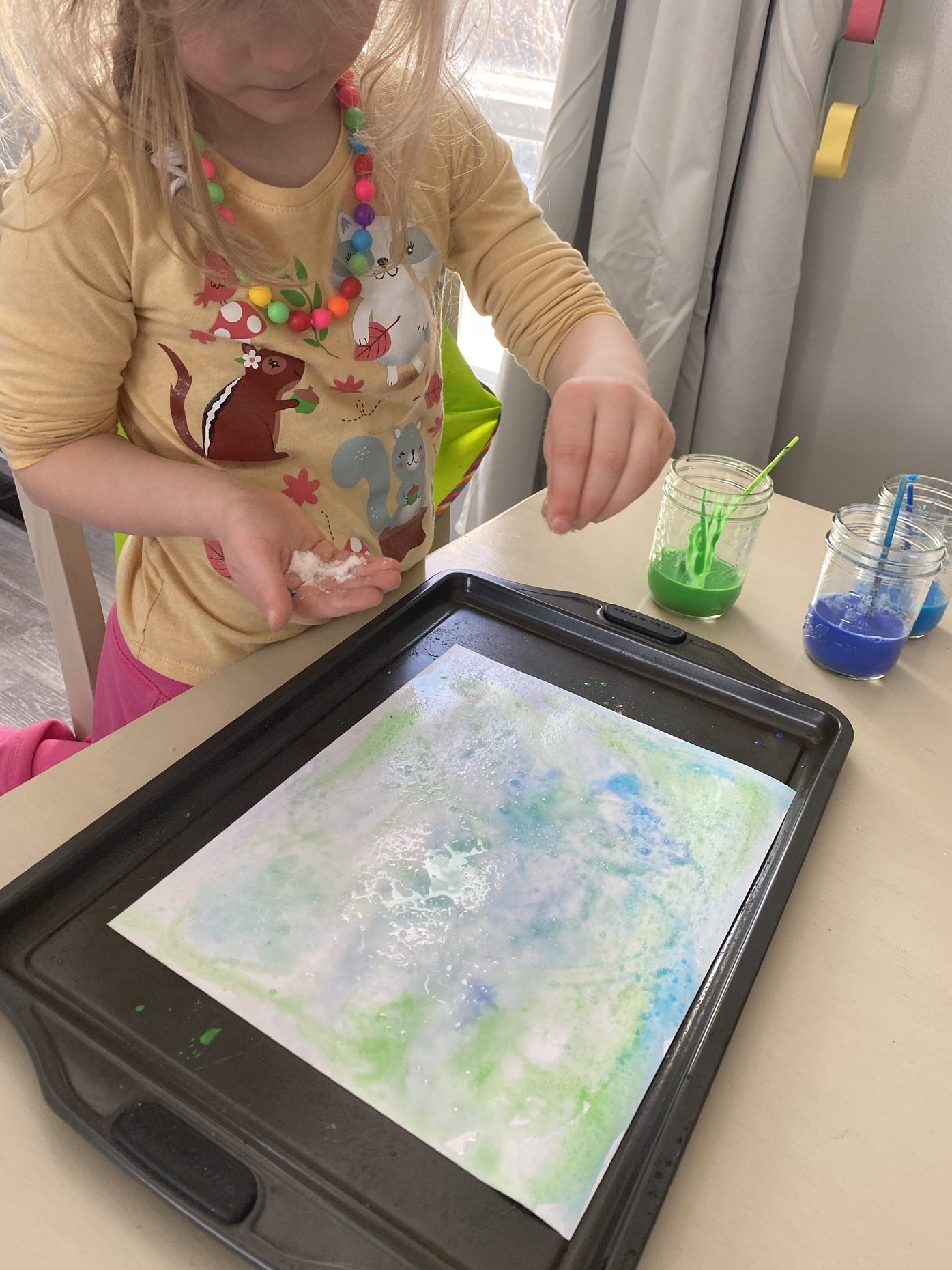
    This is a simple and fun painting craft using salt and watercolours!

    We did this easy activity as part of our inquiry into Ocean Life last year, learning about the difference between salt and fresh large bodies of water.

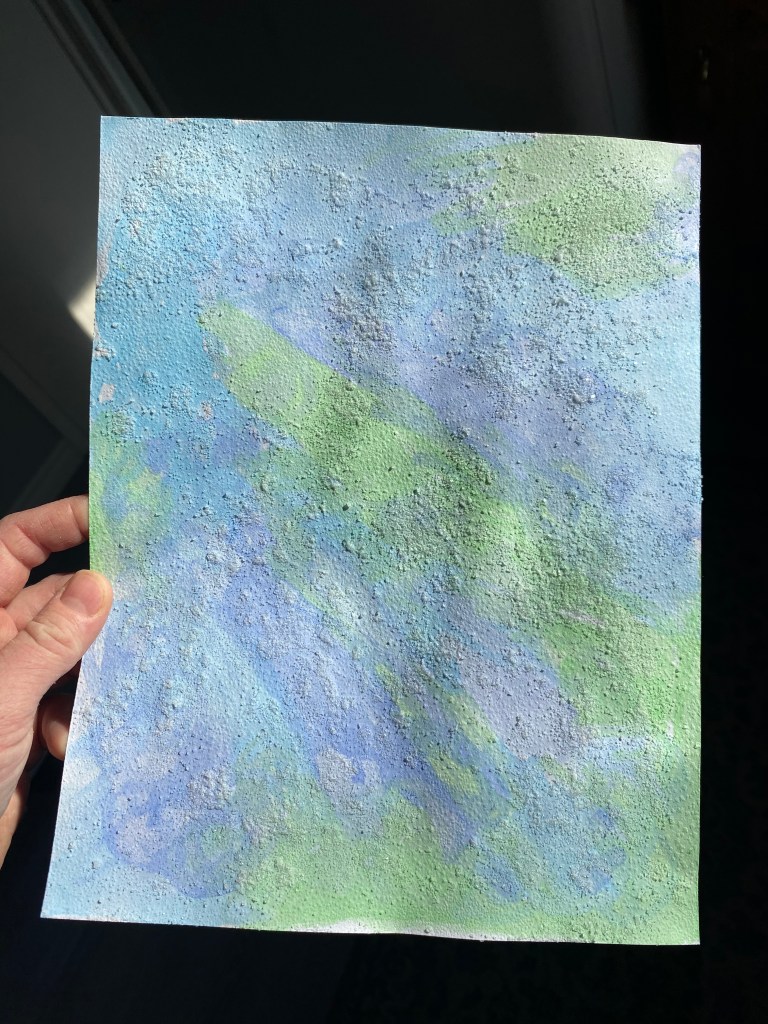
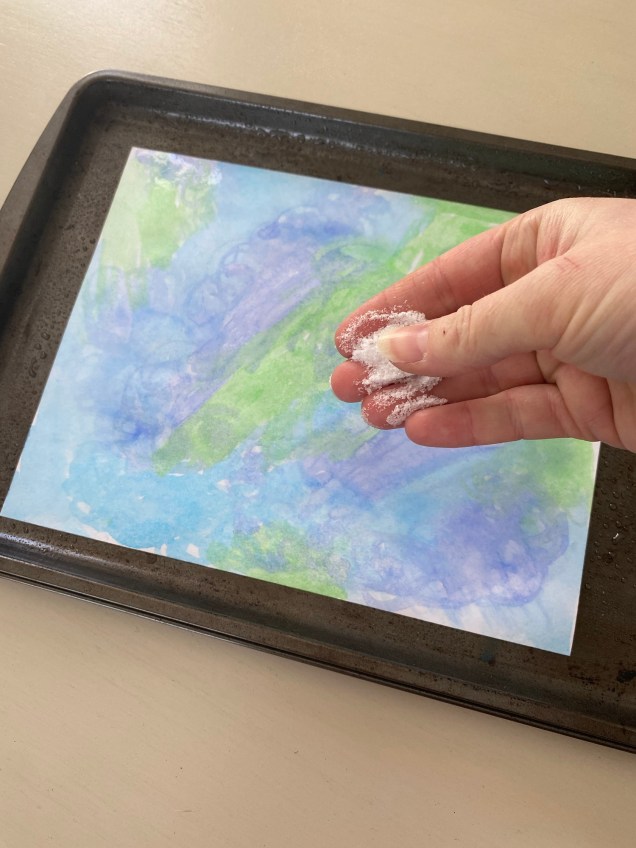
    My kids loved doing this freestyle watery painting and then getting to sprinkle it with table salt. It left a textured feel to the painting, as well as altering the colours while the salt dried on the wet paper.

    As a side note, we live near James Bay, Northern Ontario, and the river not far from our house is mostly fresh water. However, because it flows into James Bay (which is connected to the Arctic Ocean) and has some tidal changes, it carries back some salinity to our community area.

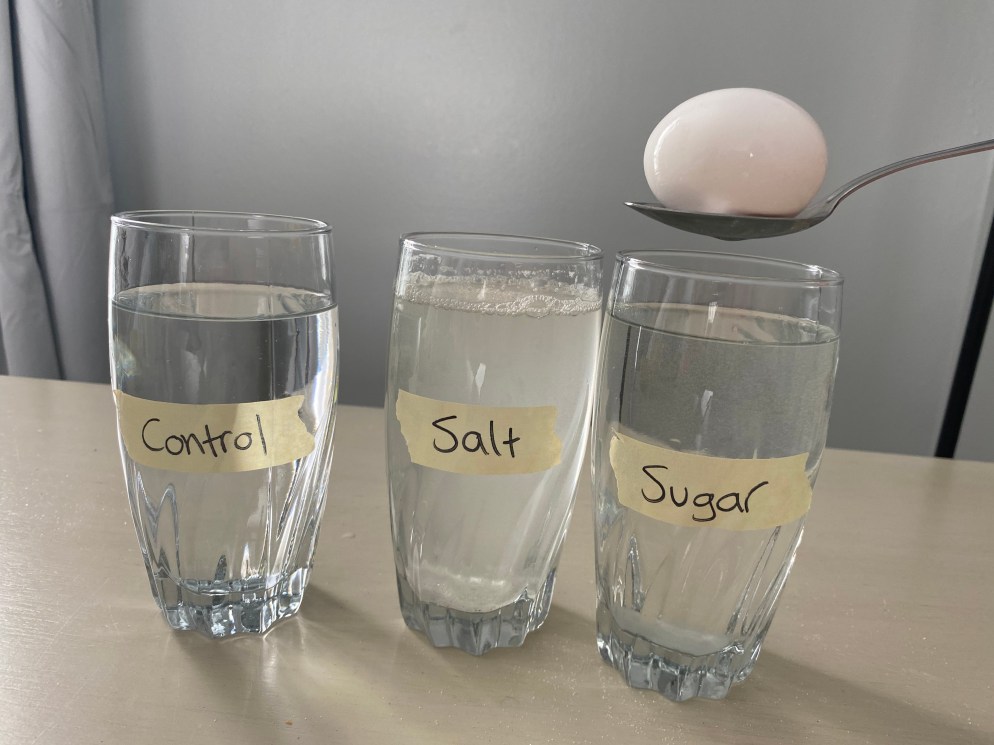
    If you read a previous post on “Exploring Salt Water Density: Homeschooling Egg Experiment”, you might already see or understand a little of the relationship between salt and water. This egg experiment was to test the different levels of density in each of these water glasses, and compare it to the egg’s own density.

    (Spoiler alert, the kids made an egg float in salted water!)

    Educational Videos: A little more about Salt and Saltwater!

    Where Does Salt Come From?

    Why The Ocean Needs Salt:

    How to Make a Salt Water Painting:

    Supplies Needed:

    Directions:

    1. Put white card stock paper on tray.

    2. Paint picture as desired with ocean colours (or more!)

    3. Sprinkle table salt over the painting.

    4. Spray paper with water to help the salt dissolve a little and alter the colours.

    5. Let painting completely dry, then gently brush off the extra salt and enjoy the results!

    Made this Activity?

    I’d LOVE to see your results!! Feel free to post to your social media account and tag Northbird using one of the links below or post in the comments!

    Hi, I’m Jessie!

    I’m a Wife and Homeschooling Mom living in a remote town in Northern Ontario, Canada. I love making wholesome meals for my family from scratch, homeschooling our girls and learning more about natural living.

    Read more about my story HERE.

    Subscribe to Northbird’s email list to get weekly posts on: tasty recipes, activity ideas for kids, natural living tips, and some genuine mom thoughts and encouragement!

    Salt Water Painting Activity

    This is a fun way to paint using salt and watered down paints! Our kids loved the texture the salt left on the paper, as well as the way the salt affected the way their pictures turned out!


    Jessica Burman, 2025 © The Northbird Blog. https://www.thenorthbirdblog.com

    Ingredients

  • Watercolours Paints (you can also use food colouring and water, or watered down other paints)
  • Paintbrushes
  • Tray
  • White Cardstock Paper
  • Table Salt
  • Spray Bottle with water
  • Flat surface to let pictures dry

  • Directions

    1. Put white card stock paper on tray.
    2. Paint picture as desired with ocean colours (or more!)
    3. Sprinkle table salt over the painting.
    4. Spray paper with water to help the salt dissolve a little and alter the colours.
    5. Let painting completely dry, then gently brush off the extra salt and enjoy the results!

    Return to Top

    Maple Syrup Taffy Twists

    Find Northbird on social media:

    This post contains affiliate links. As an Amazon associate, I earn from qualifying purchases. This means that I make a small commission at no extra cost to you. You can read my full disclosure HERE.

    Jump To Recipe Card

    Return to “Deserts & Snacks”

    Return to “Winter Activities & Crafts”

    Making Maple Syrup in My Early Years

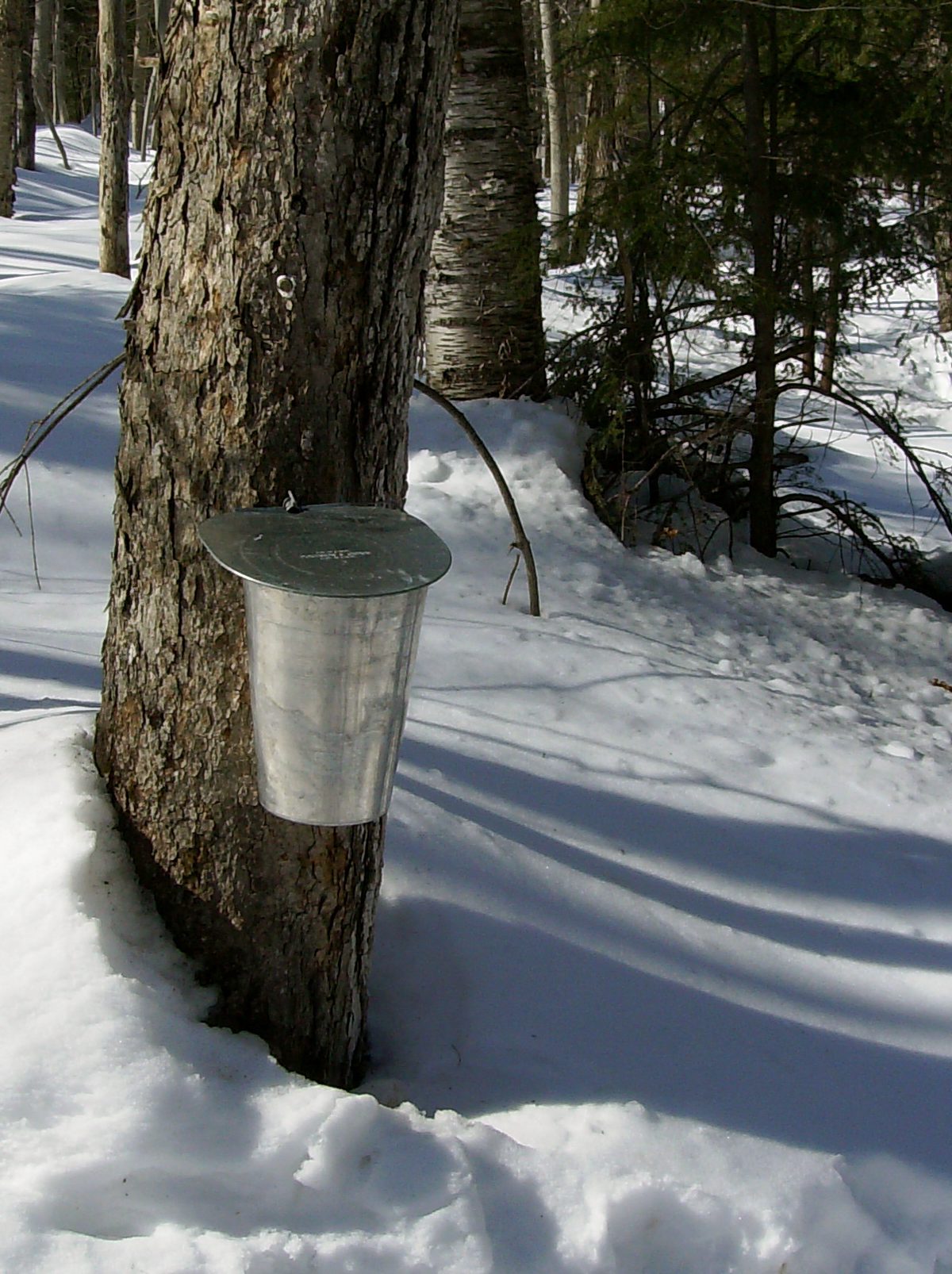
    March. This month always brings me back to my childhood and the fun we had in making our own maple syrup. Warm days above zero, but nights that are still below freezing make the perfect push for the sugar maple trees to start running their delicious sap!

    Every year we would tap the 8 sugar maple trees on my parent’s property, and attach the metal buckets to collect the tasty sugar water. Once we had filled a large collecting bin (it only took a day or too at peak!), then we would get set up to start boiling it down into maple syrup.

    For those that don’t know this, it takes approximately 40 buckets of SAP to make 1 bucket of SYRUP.

    So that’s a lot of boiling to get all of the excess water to evaporate off!

    Some years we would be adventurous and try boiling it over the fire-for days on end. Being homeschooled, this was ok with us! We would pull over the picnic table near the fire and work on our bookwork in the chilly sunshine while tending to the fire.

    In the early years of doing this, we learned the hard way that when nearing the end of the process, one has to keep a very, VERY close eye on the pots or they would quickly turn to thick syrup, and burn if not stirred constantly. (So we usually finished them off inside on the stove!)

    My godfather, Ernie, had the best set up at his home in the bush. As soon as the sap started running, he had all his trees tapped, buckets ready, and an elaborate campfire area set up, complete with a large overhead tarp over his lawn chair and prepared woodpile.

    On those days it was hard to reach him by phone because he was always outside sitting at his fire about 90% of the day! He had a stack of books read through by the end of each syrup season.

    Sometimes when the days are so busy here, I think back on the simplicity of those times and wish I could sit by a campfire on a brisk but sunny day in March and make my way through a few good books!

    Which Maple Trees are used for making Maple Syrup?

    There are 13 different species of maple trees native to North America, and at least 130 known different species throughout the earth.

    Sweet maple sap can be collected from 3 known species to boil their sap down into maple syrup:

    • Sugar Maple/Hard Maple (Acer saccharum)
    • Black Maple (Acer nigrum)
    • Red Maples (Acer rubrum).

    The most commonly used maple tree is of course the “Sugar Maple” or Hard Maple.

    About this Activity:

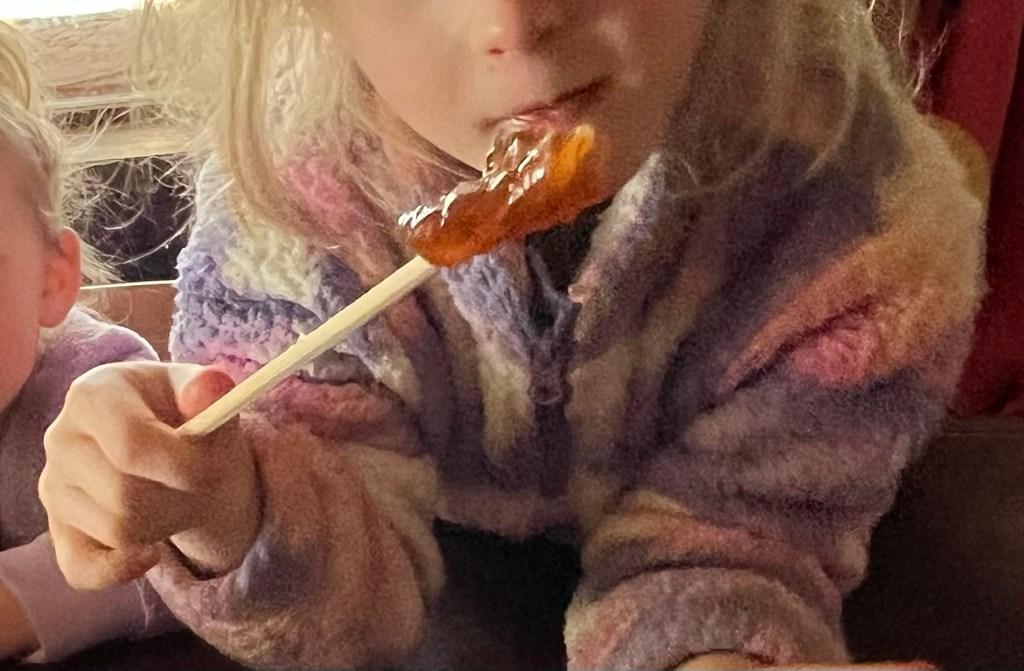
    On our winter family holiday this year we once again went to an off-grid cabin for several days to rest and enjoy being in the bush for a few days. While there, we decided to make some taffy twists out of pure maple syrup.

    Even though where we live we don’t have any maple trees, it was a great winter activity to do as an inquiry about maple trees, sap, and discussing how sap can be made into delicious maple syrup. Being a Canadian family, this is, of course an important part of their education to learn about the main symbol on our flag!

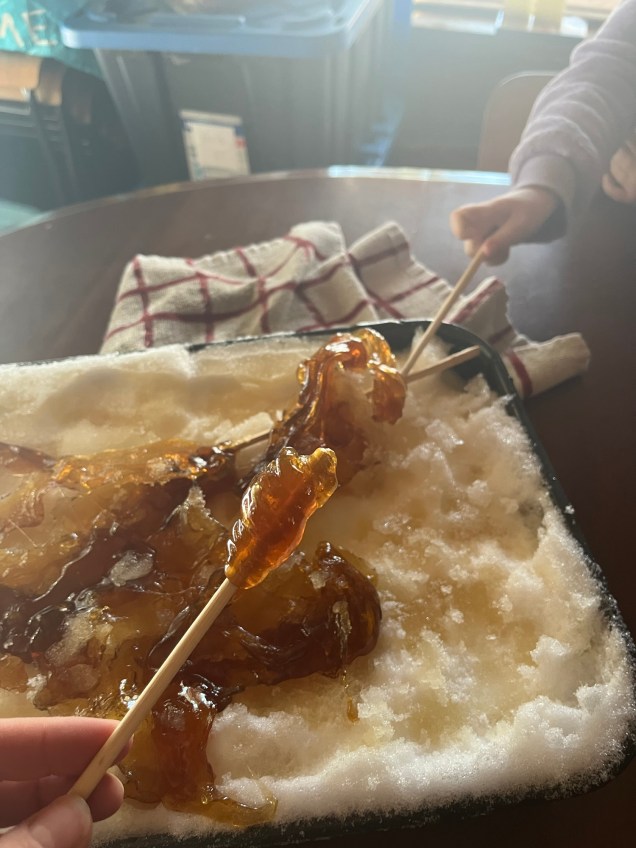
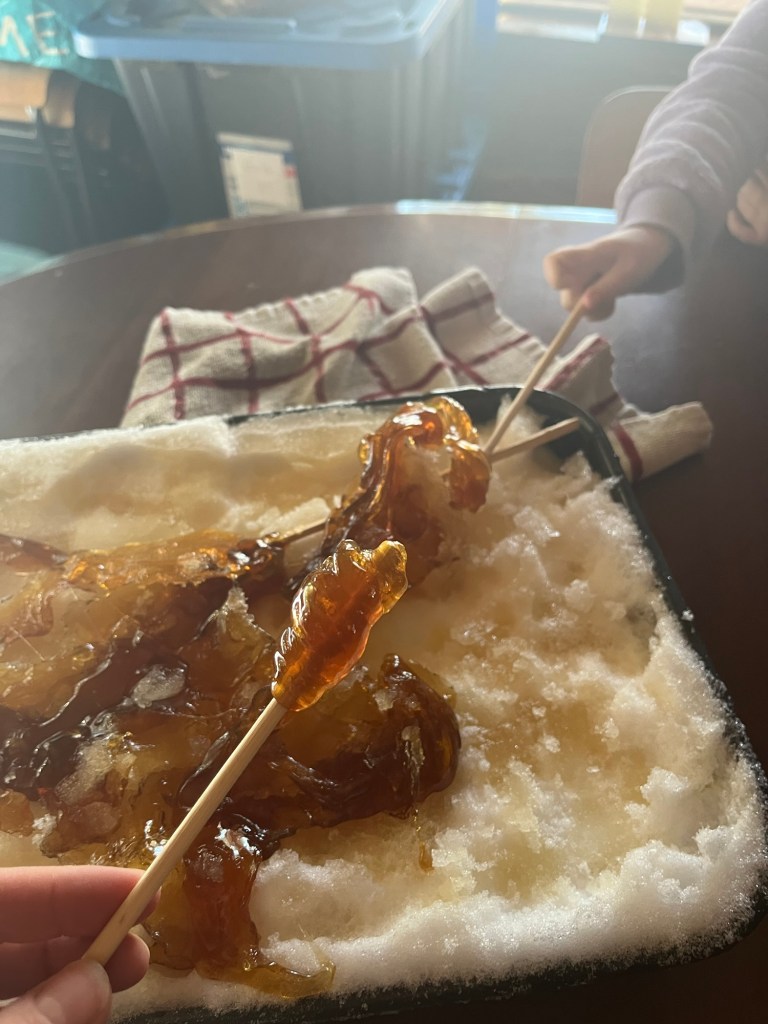
    The kids had fun trying to roll the gooey maple taffy onto their sticks before it hardened. (My toddler also greatly enjoyed just poking holes in the snow-filled pan!)

    How to Make Your Own Maple Syrup Taffy Twists:

    Supplies Needed:

    Ingredients:

    Directions:

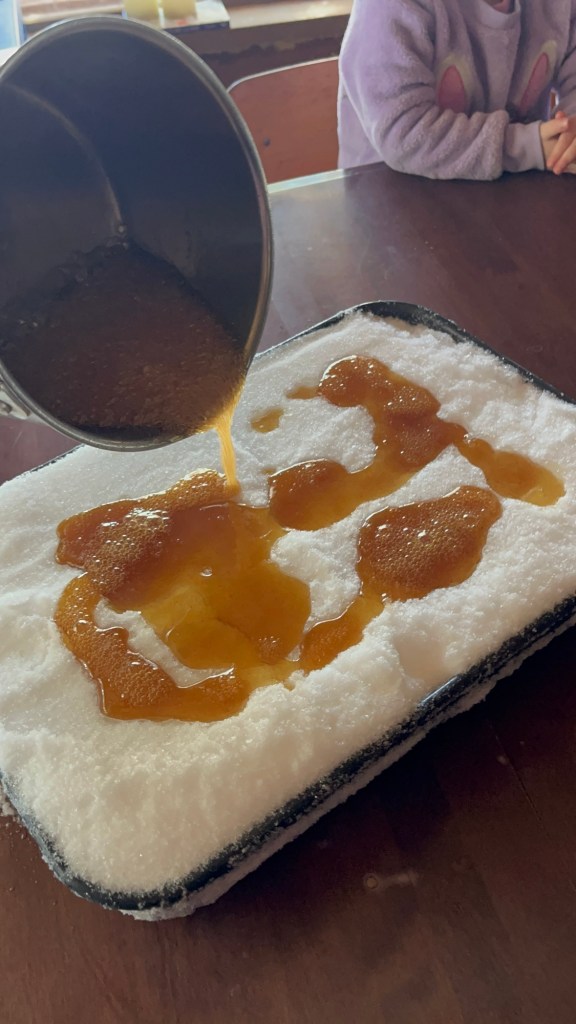
    1. Fill a large, deep roasting pan with clean, fresh snow. Avoid getting it from high traffic areas or under trees. Open areas are best, after a fresh snowfall. Pack it in well!
    2. With a small to med sized pot, pour in 100% pure maple syrup (we used grade A). Based on size of pot used, pour in until there is 1″-1.5″ of syrup on the bottom. (Too little, and it will easily burn, too full, and it may boil up and over!)
    3. Turn to medium-high, and keep wooden spoon in to help prevent boiling over, stir occasionally. Once it is hot, stir constantly and after it starts bubbling, check the temperature every 2 minutes.
    4. The target temperature is 115 ℃ , or 240 ℉. Timing of reaching this boiling point will vary based on both your stove and altitude level! But it took me about ten minutes of heating to reach this point.
    5. Remove from heat and slowly pour small ribbons of thick syrup onto the snow. Do a few at a time and set the extremely hot pot safely (not dumping it all on at once like I did!). You can always reheat it again if it hardens too fast before you are ready for more of it.
    6. Take wooden skewers and twist/roll the syrup ribbons up. It hardens quickly but is still pliable for several minutes.
    7. Set sticks in a cold area to finish setting (or they will slowly droop down the stick as they cool at room temperature!). A parchment covered baking sheet in the freezer would work perfectly to harden them off and keep their twisted form.

    Made this Recipe?

    I’d LOVE to see your results!! Feel free to post to your social media account and tag Northbird using one of the links below or post in the comments!

    More Desert & Snack Recipes:

    Hi, I’m Jessie!

    I’m a Wife and Homeschooling Mom living in a remote town in Northern Ontario, Canada. I love making wholesome meals for my family from scratch, homeschooling our girls and learning more about natural living.

    Read more about my story HERE.

    Subscribe to Northbird’s email list to get weekly posts on: tasty recipes, activity ideas for kids, natural living tips, and some genuine mom thoughts and encouragement!

    Maple Syrup Taffy Twists

    • Servings: Variable
    • Difficulty: Easy
    • Print

    This is a tasty winter activity to do with your kids: learning about maple syrup and turning it into your own sweet maple taffy twists!


    Jessica Burman, 2025 © The Northbird Blog. https://www.thenorthbirdblog.com

    Supplies Needed:

  • Small-Medium size pot, 1.5-2 quarts
  • Measuring cups/teaspoons
  • Candy/Meat Thermometer
  • Large Deep Roasting Pan, 2 inches deep (For packing clean snow into!)
  • Wooden Skewers, or Wooden Chopsticks, or some wooden sticks with the bark off.
  • Wooden Stirring Spoon
  • Ingredients

  • 1.5-2 cups Pure Maple Syrup (enough to cover the bottom of your pot 1-1.5 inches, so it doesn’t burn)
  • Clean, Fresh Snow!
  • Directions:

    1. Fill a large, deep roasting pan with clean, fresh snow. Avoid getting it from high traffic areas or under trees. Open areas are best, after a fresh snowfall. Pack it in well!
    2. With a small to med sized pot, pour in 100% pure maple syrup (we used grade A). Based on size of pot used, pour in until there is 1″-1.5″ of syrup on the bottom. (Too little, and it will burn, too full, and it may boil up and over!)
    3. Turn to medium-high, and keep wooden spoon in to help prevent boiling over, stir occasionally. Once it is hot, stir constantly and after it starts bubbling, check the temperature every 2 minutes.
    4. The target temperature is 115 ℃ , or 240 ℉. Timing of reaching this boiling point will vary based on both your stove and altitude level! But it took me about ten minutes of heating to reach this point.
    5. Remove from heat and slowly pour small ribbons of thick syrup onto the snow. Do a few at a time and set the extremely hot pot safely (not dumping it all on at once like I did!). You can always reheat it again if it hardens too fast before you are ready for more of it.
    6. Take wooden skewers and twist/roll the syrup ribbons up. It hardens quickly but is still pliable for several minutes.
    7. Set sticks in a cold area to finish setting (or they will slowly droop down the stick as they cool at room temperature!). A parchment covered baking sheet in the freezer would work perfectly to harden them off and keep their twisted form.

    Nutrition


    Per 1/2 cup of 100% Pure Maple Syrup: 131 calories; 0.1 g fat; 33.6 g carbohydrates;
    0 g protein.

    Return to Top

    Creative Potato Stamping Art for Kids

    Find Northbird on social media:

    This post contains affiliate links. As an Amazon associate, I earn from qualifying purchases. This means that I make a small commission at no extra cost to you. You can read my full disclosure HERE.

    Jump to Printable Activity Card

    Return to “Homeschooling Activities and Resources”

    Valentine Season is Just Around the Corner

    This thought went through my mind a few weeks ago in January, as I was thinking ahead and planing out what blog post topics to write about next. And then on January 31, my dear husband (being the planner and organizer that he is) said:

    “Honey, aren’t you doing a homeschooling valentine exchange again this year? You should probably start sending them out next week.”

    I turned a little defensive in my response, saying that there was plenty of time until the 14th –but then I realized that he was right.

    Things ALWAYS take longer than we anticipate, especially when kids are involved in the production, inscription, and assembly of cards to mail out…and then there’s our slightly sluggish postal system.

    Living in a remote part of Canada is absolutely beautiful and I am so so thankful to live here in Moosonee. But in regards to sending and receiving mail –You get the point!

    So yes. The hubby wins brownie points for helping me keep track of the date and keeping my commitment to mailing valentine cards across Canada.

    The Solution?

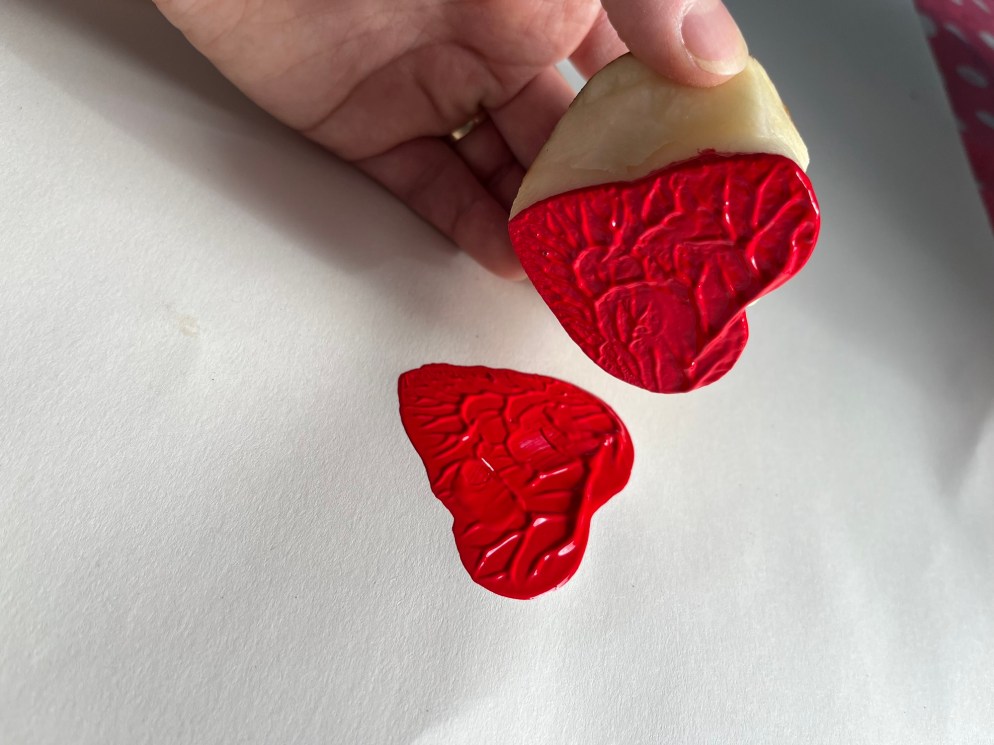
    We rummaged around in the potato bin and found some thick russet potatoes that would work to try some potato stamping art, and found the heart-shaped cookie cutters that had been hiding since last year. A little cutting of potato, applying of paint and voila! Some original artwork that the kids were very proud of!

    How to Make Potato Stamp Art & Valentine Cards:

    Supplies Needed:

    Directions:

    1. Wash potatoes and lightly dry the outside. Cut in half at thickest point. Pat dry the inside.
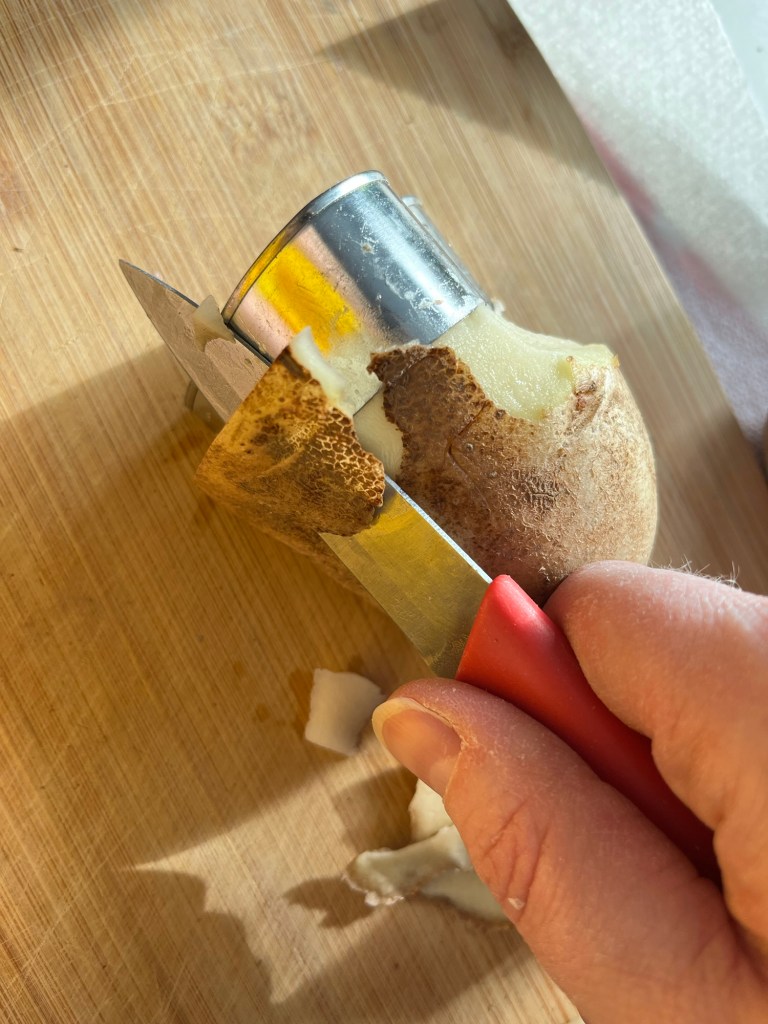
    2. Press cookie cutter into the white flesh, then cut down the sides of the cookie cutter (see picture). Remove the cookie cutter once shape is achieved.
    3. Squirt paint onto paper plate. Dab the potato in the paint and begin stamping!

    Homemade Cards:

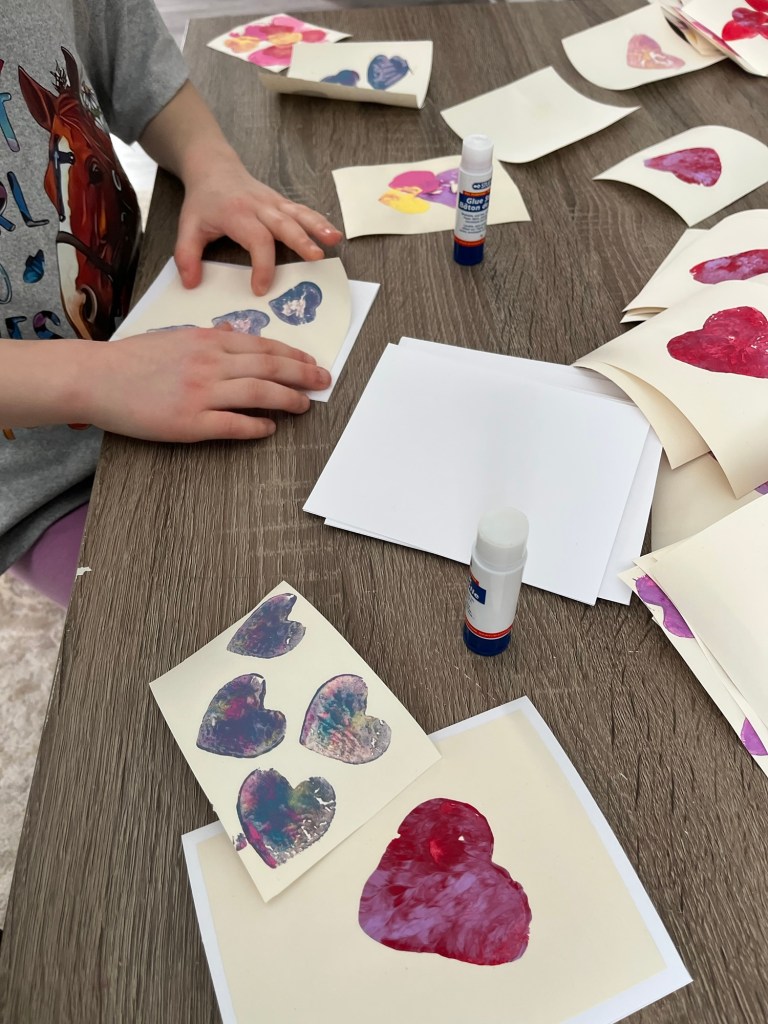
    1. We did the potato stamping first on cream-coloured paper, then let it dry for 30 minutes.

    2. I then cut 1 page of card stock paper in half for making 2 cards (8.5″x11″ paper size), and folded those in half.

    3. We then cut and trimmed the potato stamped art, and glued it to a red-coloured paper background.

    4. Lastly we glued the red paper to the front of the prepared white cardstock cards. We kept it simple due to time and somewhat limited focus for the kiddos, but at this point you can decorate and inscribe as desired!

    6. Enclose with one of these simple white envelopes that fit perfectly!

    Made this Craft?

    I’d LOVE to see your results!! Feel free to post to your social media account and tag Northbird using one of the links below or post in the comments!

    Hi, I’m Jessie!

    I’m a Wife and Homeschooling Mom living in a remote town in Northern Ontario, Canada. I love making wholesome meals for my family from scratch, homeschooling our girls and learning more about natural living.

    Read more about my story HERE.

    Subscribe to Northbird’s email list to get weekly posts on: tasty recipes, activity ideas for kids, natural living tips, and some genuine mom thoughts and encouragement!

    Creative Potato Stamping Art for Kids

    • Difficulty: Easy
    • Print


    By Jessica Burman © 2025 The Northbird Blog http://www.thenorthbirdblog.com

    Supplies Needed:

  • Potatoes (large enough to cut in half and fit a cookie cutter into it)
  • Cookie cutters (For Valentine Cards we used heart shaped ones)
  • Paring Knife
  • Paint (for smaller kids I would use non-toxic paint, but acrylic paint works better in my opinion)
  • Paper Plate or other disposable etc for putting paint on
  • Glue sticks
  • Scissors
  • Cardstock paper
  • Coloured Paper
  • Envelopes

  • Directions:

    1. Wash potatoes and lightly dry the outside. Cut in half at thickest point. Pat dry the inside.
    2. Press cookie cutter into the white flesh, then cut down the sides of the cookie cutter (see picture). Remove the cookie cutter once shape is achieved.
    3. Squirt paint onto paper plate. Dab the potato in the paint and begin stamping!

    Homemade Cards:

    1. We did the potato stamping first on cream-coloured paper, then let it dry for 30 minutes.
    2. I then cut 1 page of card stock paper in half for making 2 cards (8.5″x11″ paper size), and folded those in half.
    3. We then cut and trimmed the potato stamped art, and glued it to a red-coloured paper background.
    4. Lastly we glued the red paper to the front of the prepared white cardstock cards. We kept it simple due to time and somewhat limited focus for the kiddos, but at this point you can decorate and inscribe as desired!
    5. Enclose with one of these simple white envelopes that fit perfectly!

    Return to Top

    Birdwatching Binocular Craft with Bird Survey Printables

    Find Northbird on social media:

    This post contains affiliate links. As an Amazon associate, I earn from qualifying purchases. This means that I make a small commission at no extra cost to you. You can read my full disclosure HERE.
    Jump to Binocular Activity Card

    Return to “Homeschooling Activities & Resources”

    Return to “Discovering Birds”

    Birds: A Natural Homeschooling Inquiry…

    Learning about birds in our homeschool studies is one of the easiest topics to investigate in my opinion, simply because it is on-going, and the kid’s curiosity is spring boarded from seeing “who” comes to our bird feeders!

    This is such a natural discovery process that leaps into questions of:

    “Where do the birds go when it is raining or snowing?”

    “What do birds eat when we forget to fill up the bird feeder?”

    “Why are the birds chasing each other in the sky?”

    Even though questions from these little treasures may be nearly constant some days, I am learning to pray for patience and view them as a golden opportunity for the kids to learn.

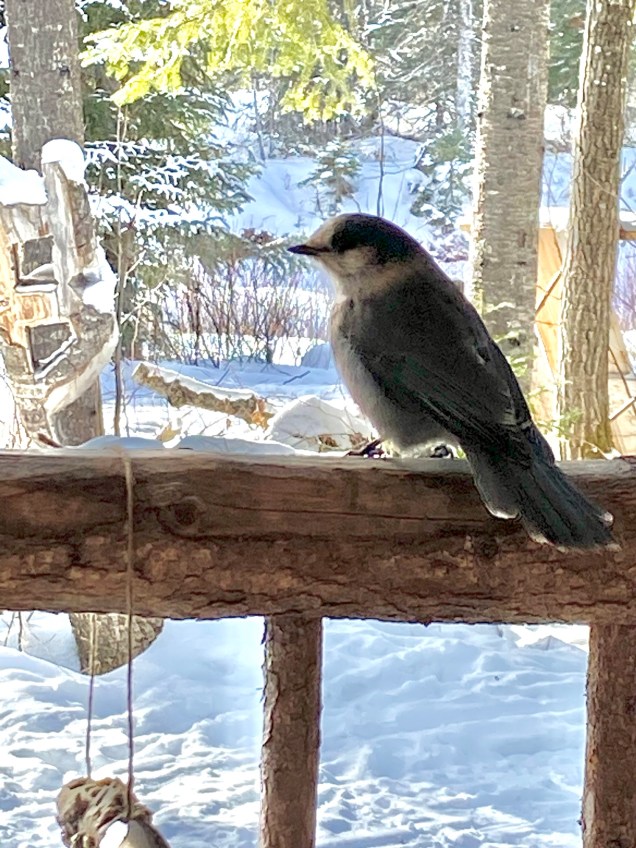
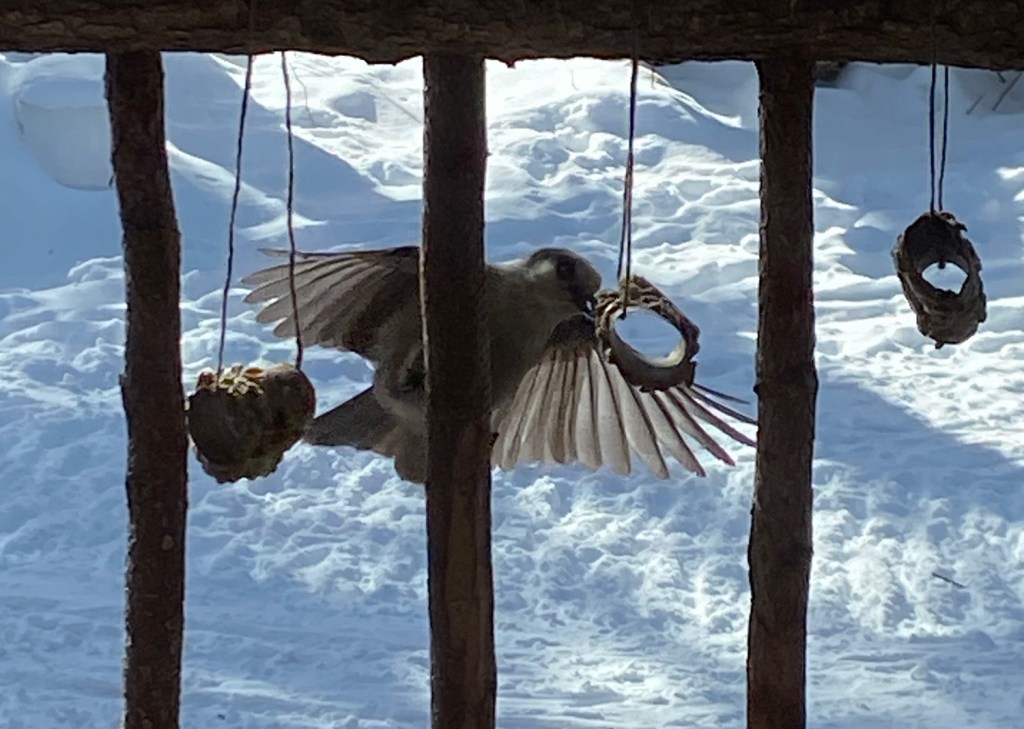
    A “Whisky Jack”/”Canada Jay”,
    Moose River area, Northern Ontario

    Honestly, there are so many days that we have dropped the math or language arts lessons to simply go stare out the window for several minutes to watch the various feathered creatures fly around, eat at our feeders, scratch for worms and bugs, or pick up grass for their nests.

    There is always something to learn from watching birds, even if it is to realize our need to sit still, and step away from whatever business is in our lives while we quietly observe these beautiful creatures. Birdwatching is so calming, both for myself and also my very busy children!

    I love how one can almost hear a pin drop if they are watching the birds from our window. They have learned to be as quiet as they can and not move so the birds don’t get spooked!

    A downy woodpecker hanging on to have a snack.

    One of our favourite types of bird feeders is the clear plastic one above  ↑ (The Window Cafe, similar to THIS ONE available on Amazon) that suctions right onto the window glass!

    A “Whisky Jack” eating from one of our homemade bird feeders.

    You can check out THIS POST if you are interested in seeing how we made these easy & seedy paper roll bird feeders.

    About this Craft:

    This bird-based inquiry craft is an easy set up, inexpensive, and can be completed as simple or fancy as you like!

    I must give credit to my sister-in-law “L” for first having the idea several years ago and making two quick sets for our toddlers to decorate with stickers when they were having trouble getting along with each other!

    I hope you and your students have fun making this simple fun birding craft!

    Watch and Record!

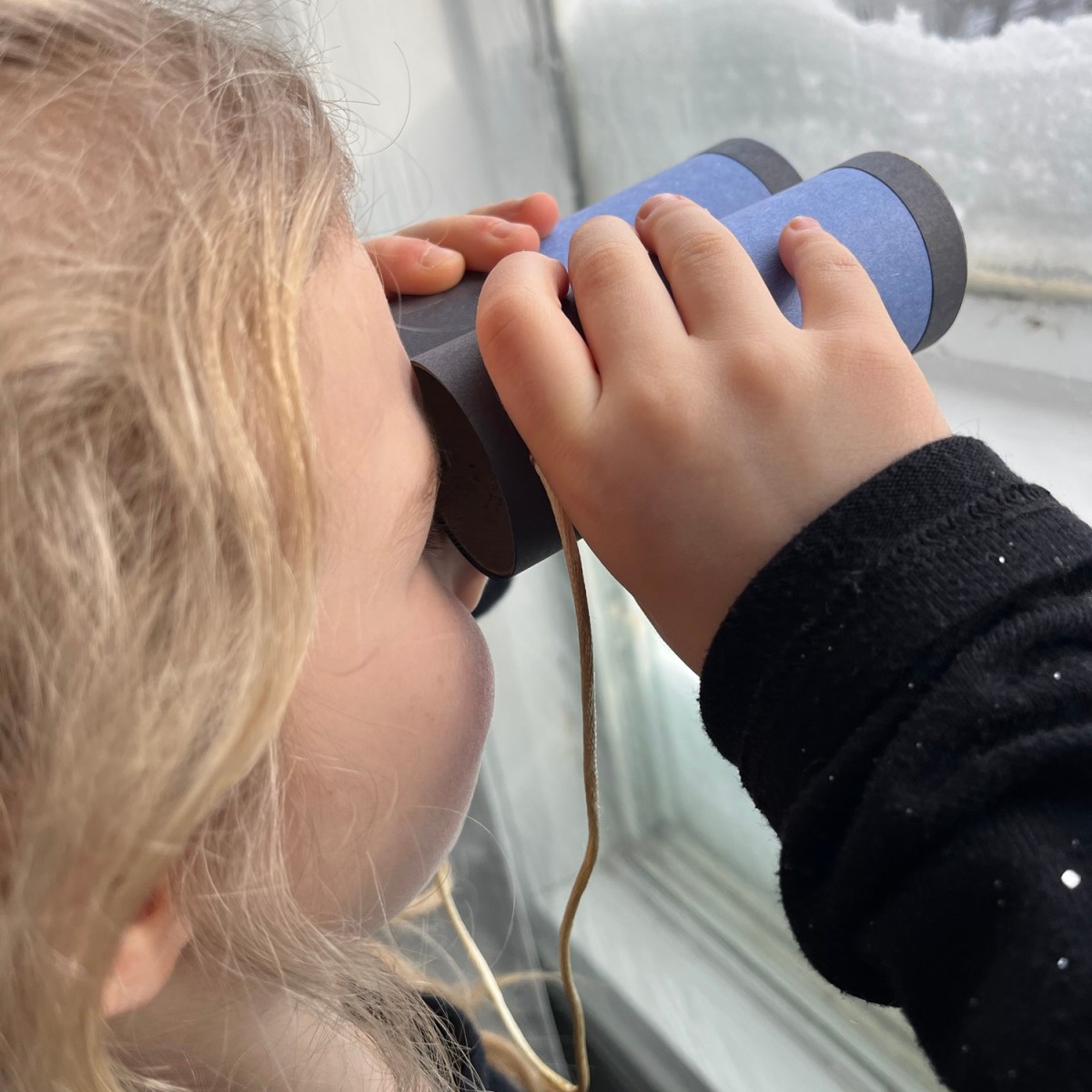
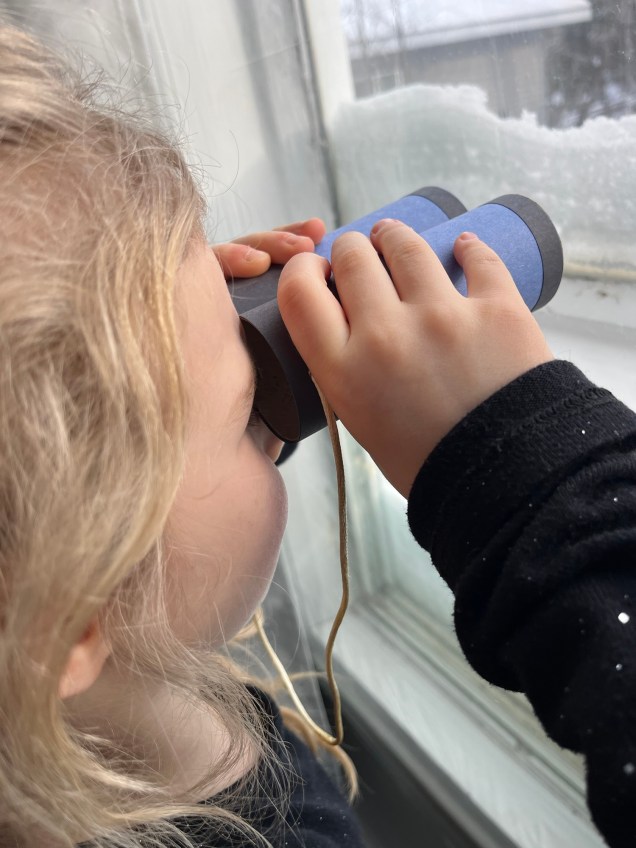
    Don’t forget to watch and record what types of birds your kids can find using their new birdwatching binoculars!

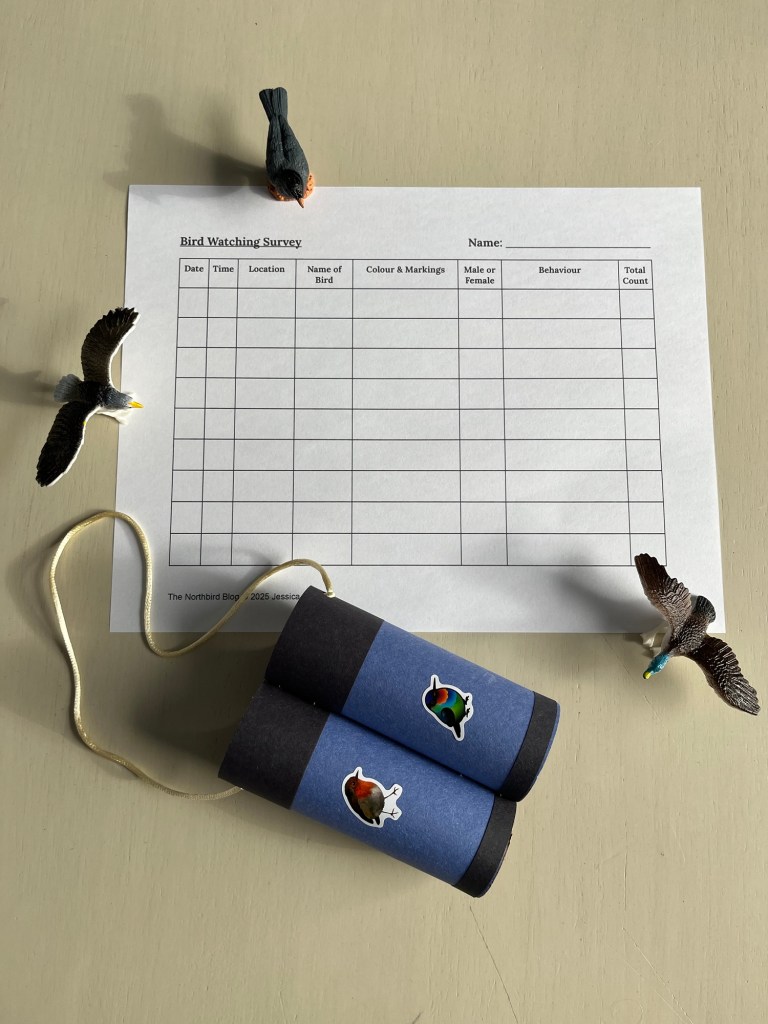
    You can download this Free Birdwatching Survey Sheet PDF HERE.

    Have a student that loves to record and draw?

    My daughter loves drawing! I created this bird survey tool as a way for her to record and draw the different birds that she finds around our home in Northern Ontario. It will be a great keepsake in years to come.

    This birdy resource will encourage students to get outside into nature and watch and listen for the many amazing different bird species out there! It is non-specific to any geographical area, and is to be used as an interactive survey tool.

    On each page students can record:

    • The name of the BIRD sighted
    • Date/Time
    • Location of the BIRD
    • Colour and any notable markings of the BIRD
    • Behavior of the BIRD (what was the bird doing?)

    At the bottom of each page there is a framed box where students can DRAW their impression of what the bird looked like, or what it was doing (flying, perching, nesting, etc)

    This PDF file has been designed to be easily printed, folded and stapled together, making it an easy handout to either print and make ahead of time for younger students, or have the older students assemble it themselves!

    This Bird Watching Printable Journal is available to purchase and download from my store on Teachers Pay Teachers HERE.

    How to Make Paper Binoculars

    Supplies Needed:

    Decorating suggestions:

    Directions:

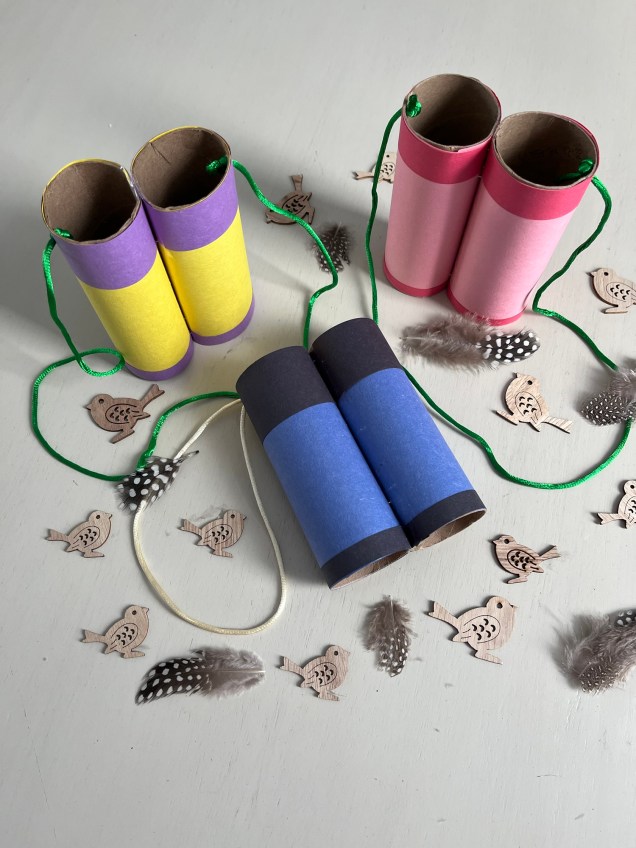
    1. If you are using paper towel rolls, first cut them in half. If using toilet paper rolls, make sure they are completely bare!

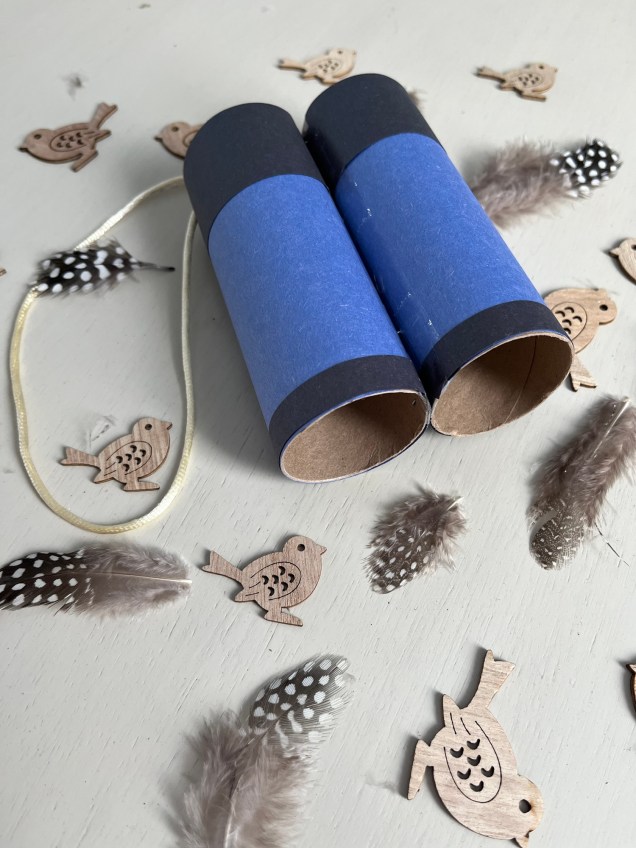
    2. Cut coloured paper into strips for a background, then wrap around and tape in place.

    3. Cut a different colour of paper into thinner strips and also wrap and tape into place. (*Note: it helps to have all the tape along one side, so that when you staple it together, the tape can be hidden)

    4. Staple together the two rolls where they touch when held together, (tape side in), stapling twice both at the top and bottom.

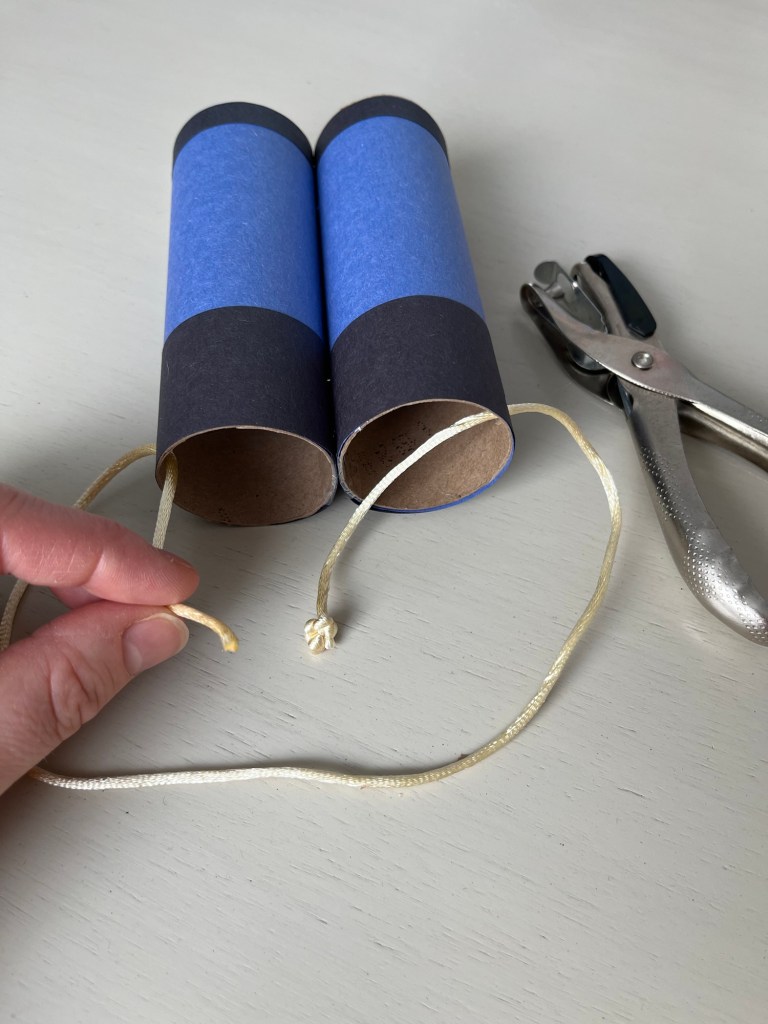
    5. Use a single hold punch, make a small hole about 1/2 inch below the eye hole top, opposite from the staples (see picture).

    6. Insert string into hole and tie a large knot at the end of the string to hold it in place.

    7. It’s time to begin using the binoculars!

    Made this Craft?

    I’d LOVE to see your results!! Feel free to post to your social media account and tag Northbird using one of the links below or post in the comments!

    Hi, I’m Jessie!

    I’m a Wife and Homeschooling Mom living in a remote town in Northern Ontario, Canada. I love making wholesome meals for my family from scratch, homeschooling our girls and learning more about natural living.

    Read more about my story HERE.

    Subscribe to Northbird’s email list to get weekly posts on: tasty recipes, activity ideas for kids, natural living tips, and some genuine mom thoughts and encouragement!

    Birdwatching Binocular Craft

    This is a fun bird inquiry craft to make at home: Kids can make their own binoculars and decorate them as simple or as decorative as they like!


    By Jessica Burman © 2025 The Northbird Blog http://www.thenorthbirdblog.com

    Supplies Needed:

  • String or Twine
  • Scissors
  • Stapler
  • Tape
  • Single Hole Punch
  • Coloured Paper
  • Inside cardboard roll from toilet paper or paper towel rolls

  • Decorating Ideas:

  • Paint
  • Markers
  • Stickers (These watercolour bird stickers are gorgeous!)
  • Coloured Ribbons
  • Washi Tape
  • Directions:

    1. If you are using paper towel rolls, first cut them in half. If using toilet paper rolls, make sure they are completely bare!
    2. Cut coloured paper into strips for a background, then wrap around and tape in place.
    3. Cut a different colour of paper into thinner strips and also wrap and tape into place. (*Note: it helps to have all the tape along one side, so that when you staple it together, the tape can be hidden)
    4. Staple together the two rolls where they touch when held together, (tape side in), stapling twice both at the top and bottom.
    5. Use a single hold punch, make a small hole about 1/2 inch below the eye hole top, opposite from the staples (see picture).
    6. Insert string into hole and tie a large knot at the end of the string to hold it in place.
    7. It’s time to begin using the binoculars!

    Return to Top

    DIY Eco-Friendly Christmas Ornament from Toilet Paper Rolls

    Find Northbird on social media:

    This post contains affiliate links. As an Amazon associate, I earn from qualifying purchases. This means that I make a small commission at no extra cost to you. You can read my full disclosure HERE.
    Jump to Printable Directions

    Jump to Video

    Return to “Homeschooling Activities & Resources”

    Return to “Christmas Activities and Crafts”

    Our little town recently had a very festive gathering in the town square to come together, decorate and light up a large Christmas tree in the middle of the square. It was super chilly and snowy out, but great fun to be there with our friends, enjoying some freshly popped corn, hear the local school choir do some carolling, and bring our homemade ornaments for the tree.

    One criteria on the event poster was that the ornaments be eco-friendly. My oldest and I had some fun thinking of ideas and discussing what “eco-friendly” meant, as we have made many ornaments over the years but I don’t think any of them were recycled or ok for the environment!

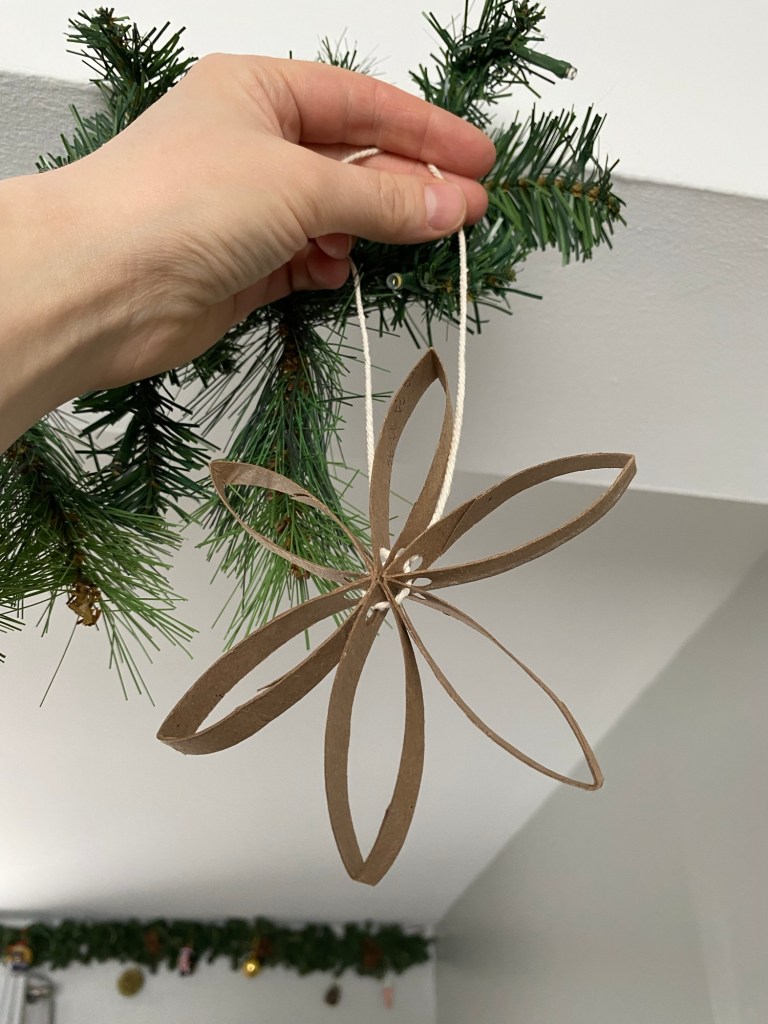
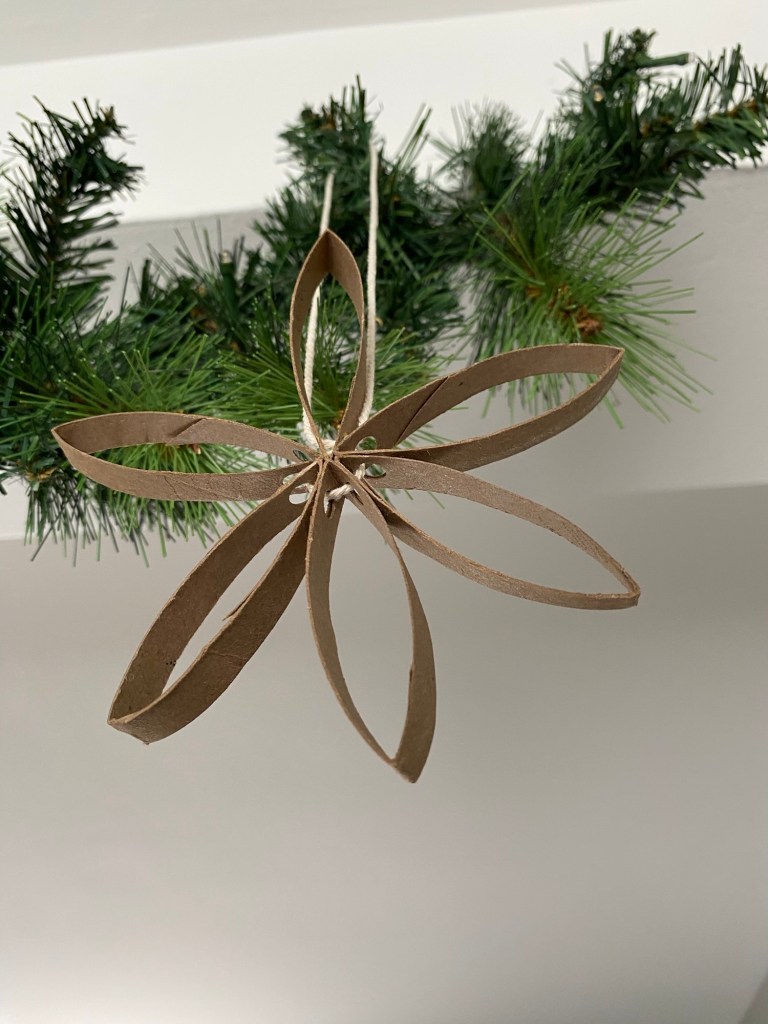
    This easy and simple craft is what we came up with. All you need is string and toilet paper rolls. Everyone has these!

    I like that it can be either completed and hung “as is”, or if desired, adding further embellishments or painting it! There are so many possibilities to have fun with this simple craft.

    I hope you enjoy making this easy ornament for your Christmas tree or holiday garland!

    For those who need a visual aid in making the Paper Roll Star, you might find this short video helpful!

    How to Make A Paper Roll Christmas Ornament:

    Supplies Needed:

    Directions:

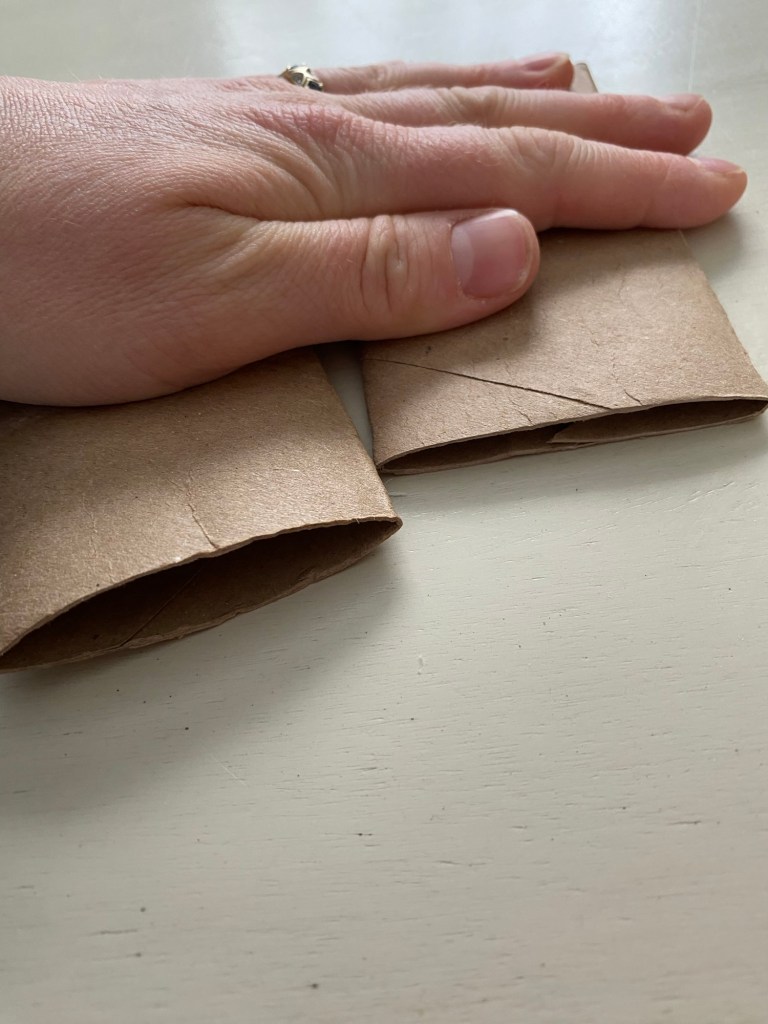
    1. Take a leftover toilet paper inner roll and make sure there is not any remains of white paper left on them. Then flatten firmly.

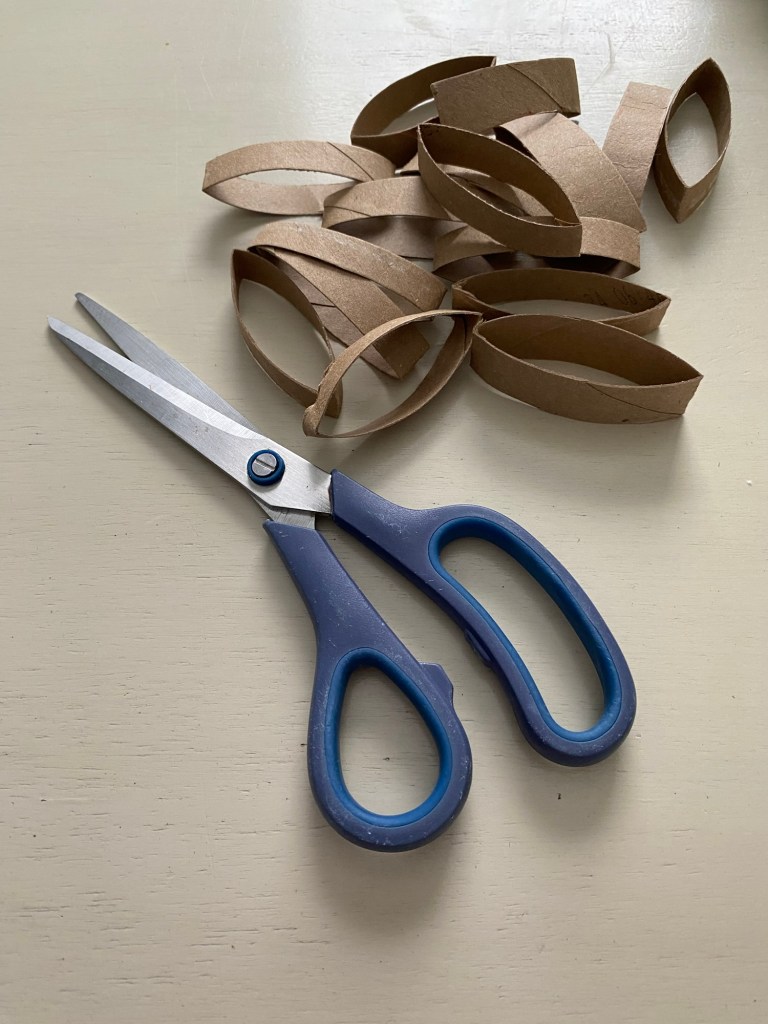
    2. Cut with scissors into 1/2 inch strips across roll.

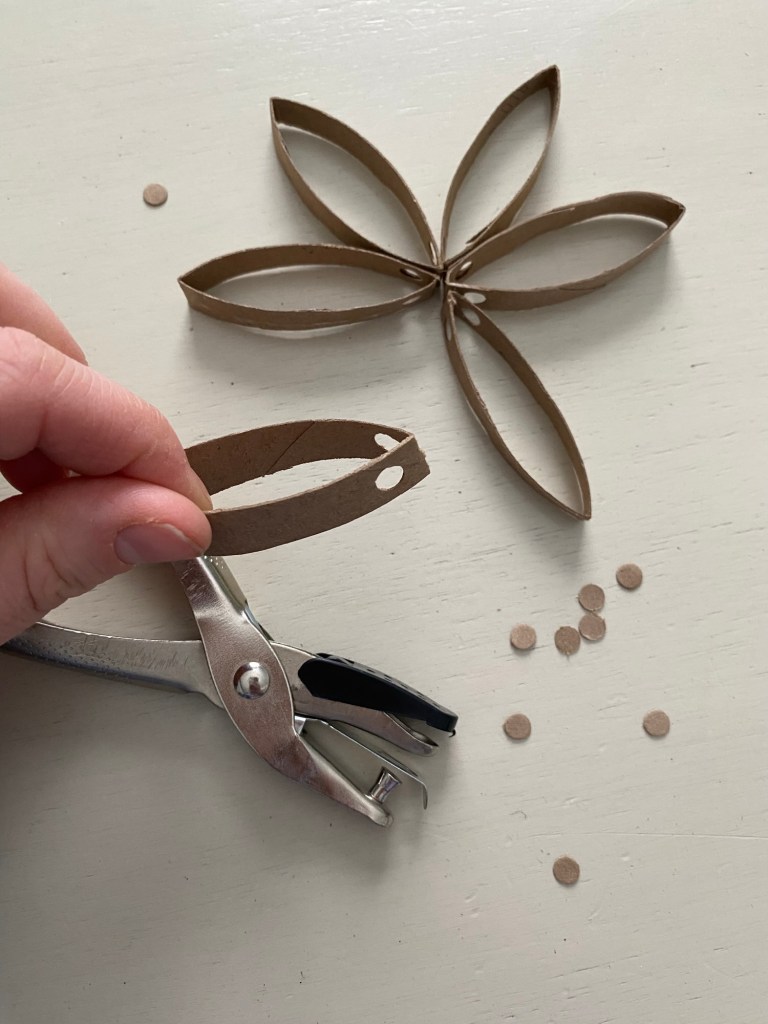
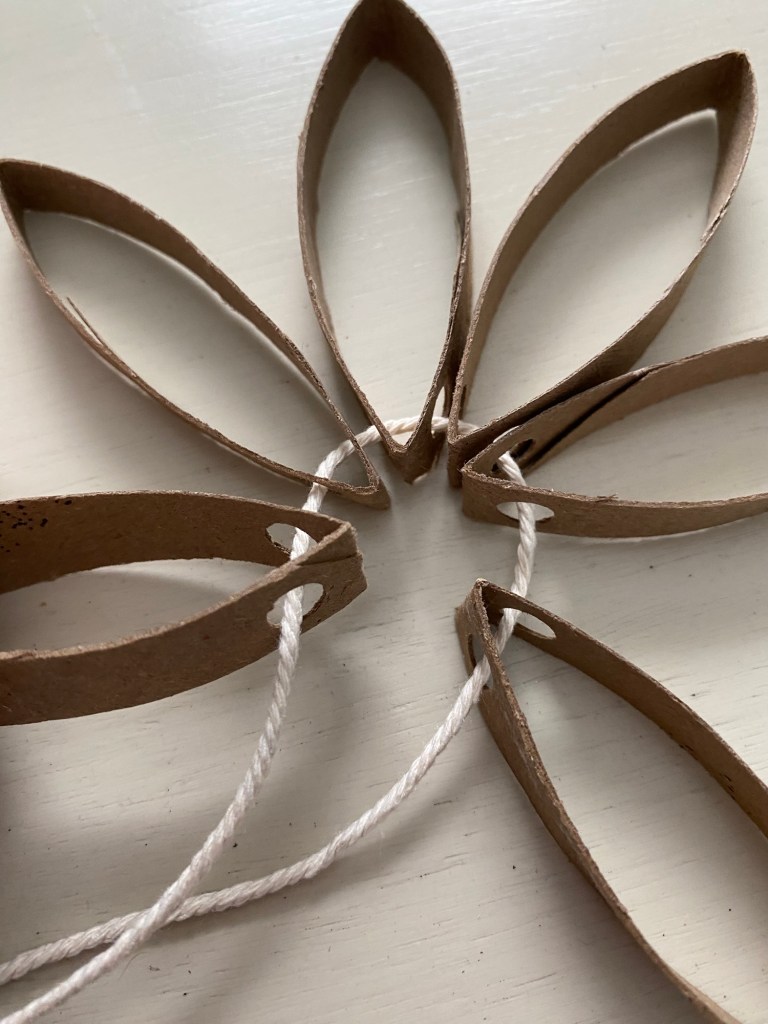
    3. Using a hole punch, make a hole at the end, leaving about a 1/4 inch from the end.

    4. Arrange Star with the amount of pieces you would like to use, with the hole punched ends in the middle.

    5. Cut string about 10 inches in length, and thread through the middle holes, leaving equal lengths of string on either side.

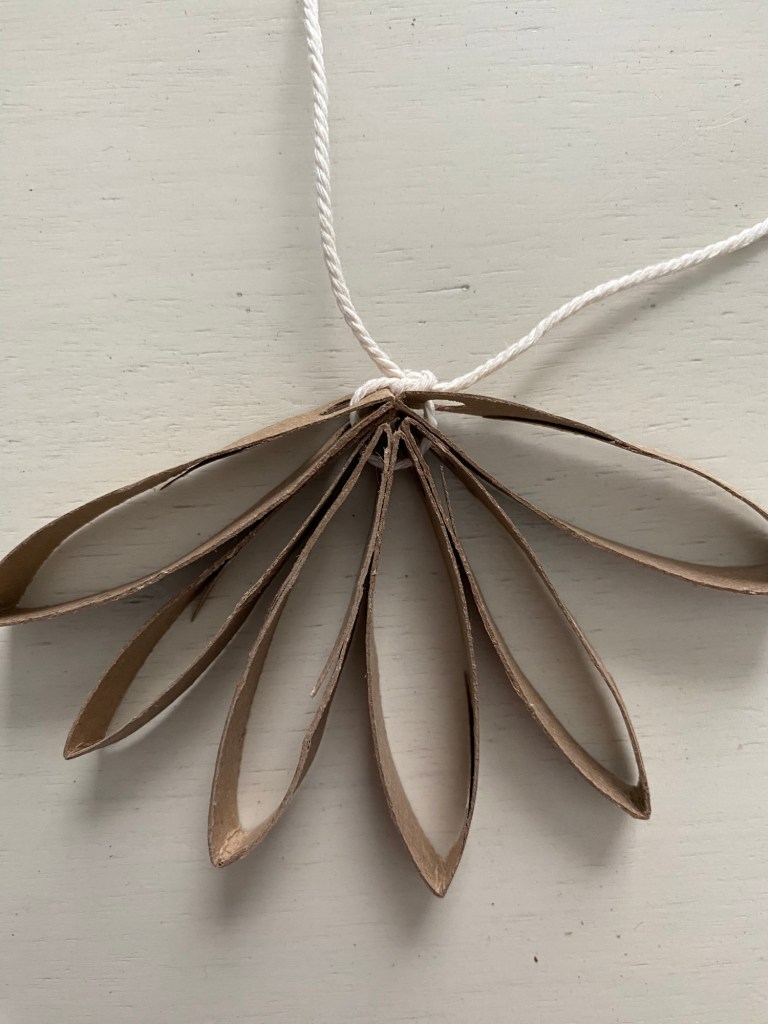
    6. Gather the pieces down and tie a double knot firmly.

    7. Fan it back up and re-thread one of the strings back through only one of the cardboard pieces (2 holes).

    8. Tie a double knot at the end and it’s ready to hang!

    Made This Activity?

    I’d LOVE to see your results!! Feel free to post to your social media account and tag Northbird using one of the links below or post in the comments!

    Hi, I’m Jessie!

    I’m a Wife and Homeschooling Mom living in a remote town in Northern Ontario, Canada. I love making wholesome meals for my family from scratch, homeschooling our girls and learning more about natural living.

    Read more about my story HERE.

    Subscribe to Northbird’s email list to get weekly posts on: tasty recipes, activity ideas for kids, natural living tips, and some genuine mom thoughts and encouragement!

    Eco Friendly Christmas Ornament: Paper Roll Star

    • Servings: 1 Christmas Ornament
    • Difficulty: Easy
    • Print

    Looking for an easy Christmas ornament craft to do this holiday season? Are you interested in it being Eco-Friendly and made from recycled materials? Check out this easy craft to decorate your home with!


    The Northbird Blog, 2024 http://www.thenorthbirdblog.com

    Supplies Needed

  • String or twine
  • Toilet paper inner roll or paper towel inner roll
  • Scissors
  • Single hole punch

  • Directions

    1. Take a leftover toilet paper inner roll and make sure there is not any remains of white paper left on them. Then flatten firmly.
    2. Cut with scissors into 1/2 inch strips across roll.
    3. Using a hole punch, make a hole at the end, leaving about a 1/4 inch from the end. (see picture)
    4. Arrange Star with the amount of pieces you would like to use, with the hole punched ends in the middle.
    5. Cut string about 10 inches in length, and thread through the middle holes, leaving equal lengths of string on either side.
    6. Gather the pieces down and tie a double knot firmly.
    7. Fan it back up and re-thread one of the strings back through only one of the cardboard pieces (2 holes).
    8. Tie a double knot at the end and it’s ready to hang!

    Return to Top