Easy Green Split Pea & Bacon Soup Recipe: Jar Soup Mix Version Included!

Find Northbird on social media:

This post contains affiliate links. As an Amazon associate, I earn from qualifying purchases. This means that I make a small commission at no extra cost to you. You can read my full disclosure HERE.

Jump To Recipe Card

Jump to Recipe Card (shelf-stable version)

Return to “Soups & Entrees”

About This Recipe…

I love cooking with dried legumes and dehydrated vegetables in these winter months! One of the most comforting meals (in my opinion) is a tasty soup or stew with freshly made bread to dip in it!

There are two versions of this recipe that you can see below:

The first version is the basic soup recipe with bacon in it (which is also very tasty subbing ham or pork tenderloin chunks!). You can make it with fresh or dehydrated vegetables. Makes about 6-8 servings.

The other version has been altered to make a shelf-stable ready-to-cook soup mix, made from dehydrated vegetables (same ingredients as first recipe) and is approximately 4-6 servings.

How to Make Green Split Pea & Bacon Soup

Supplies Needed:

Ingredients:

  • 1 medium onion, diced
  • 2 large cloves garlic, diced
  • 2 tablespoons olive oil or butter
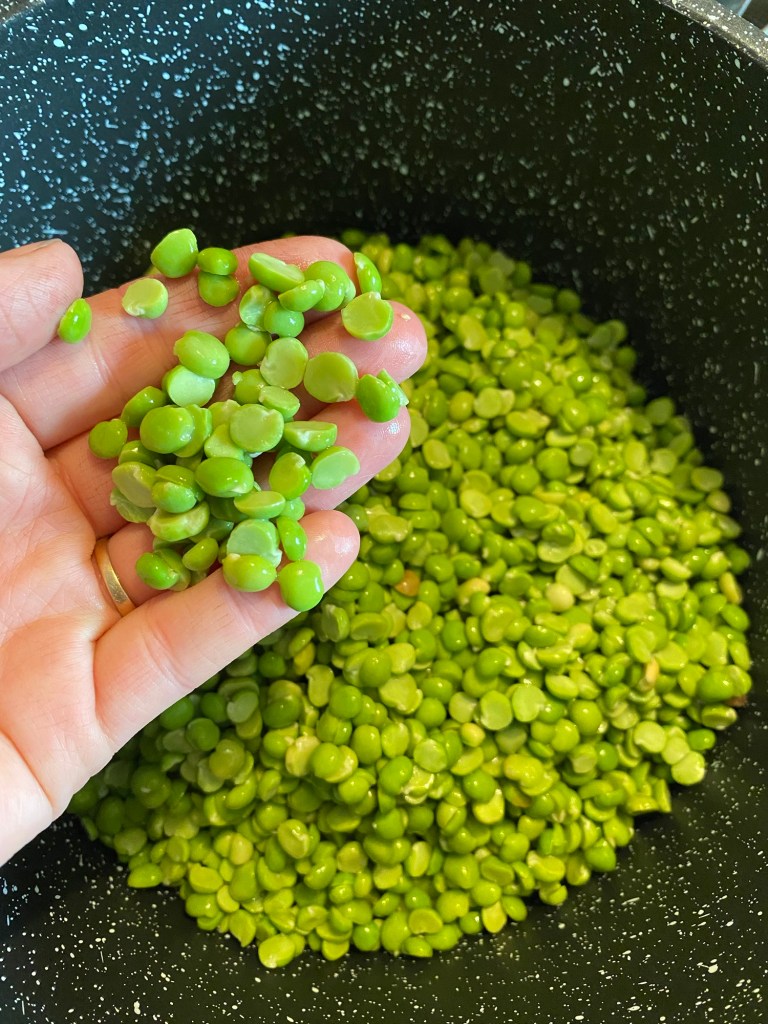
  • 2 cups dry green split peas
  • 8 cups water
  • 2 cubes of chicken/vegetable stock
  • 1 cup dried/diced carrots (or sub 2 cups fresh)
  • 1 cup dried/diced parsnips (or sub 2 cups fresh)
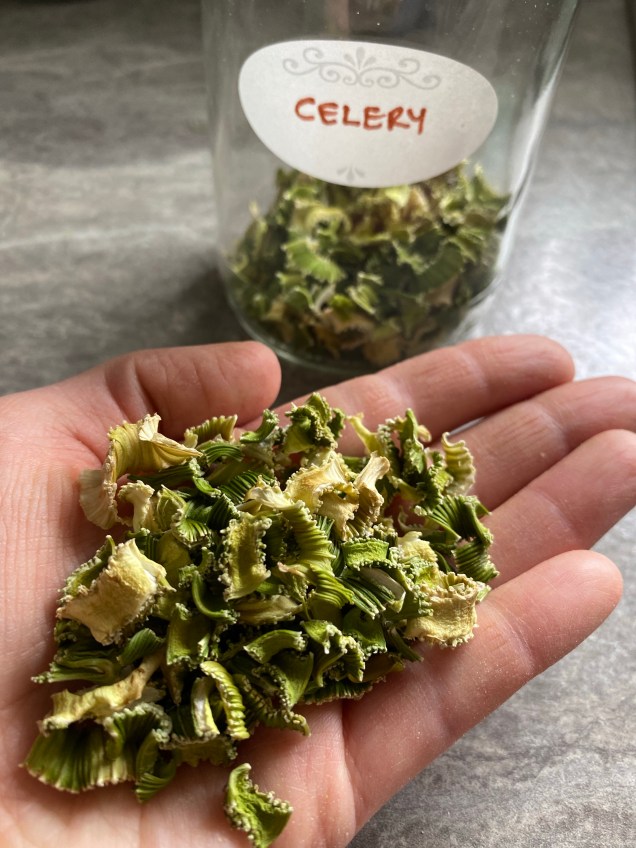
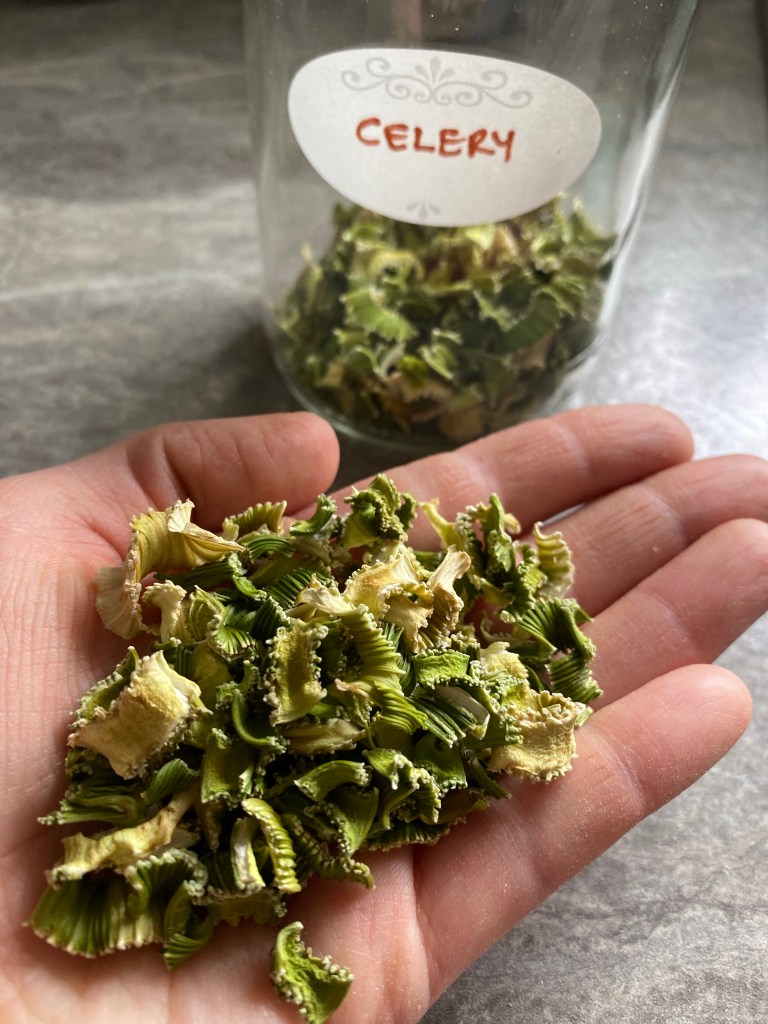
  • 1/2 cup dried/diced celery (or 1 cup fresh)
  • 1 teaspoon sea salt (more or less to taste–remember, there’s bacon coming!)
  • 1/2 teaspoon black pepper
  • 1 pound of bacon, cut into small pieces

Directions:

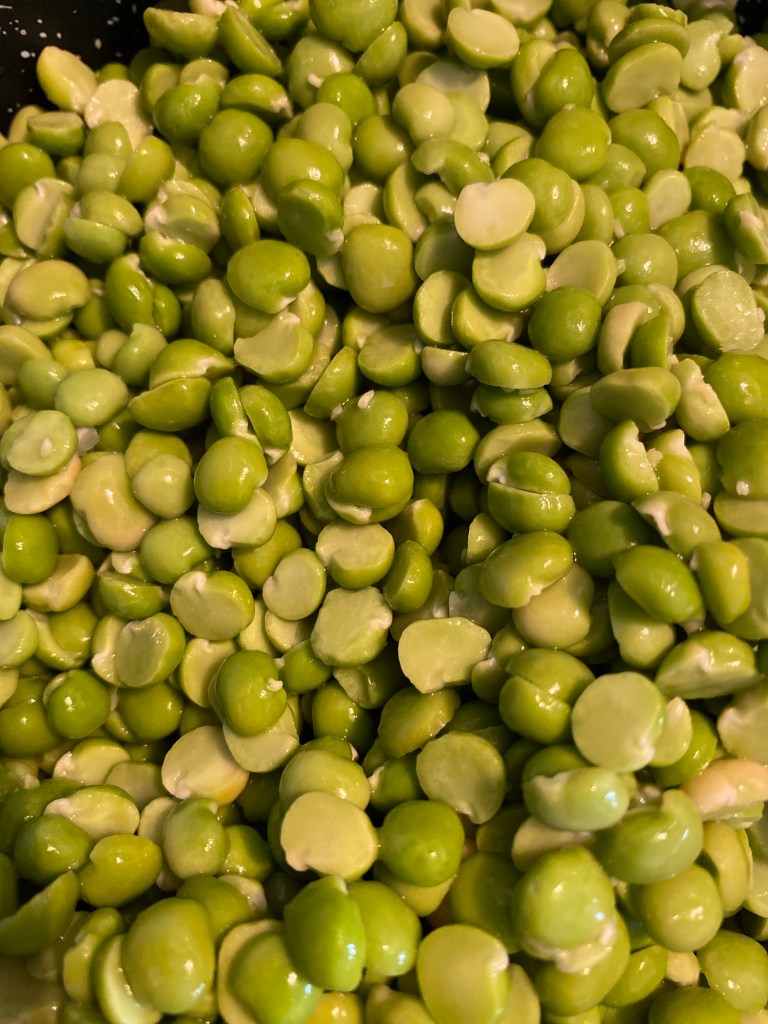
1. Soak dry green split peas overnight in cold water. If this step is missed, start soaking for 4-6 hours before cooking soup, so that peas can still partially sprout. Rinse well in cold water. (See below for more information on why it is so important to soak peas and legumes)
2. Saute onion and garlic with olive oil or butter in large soup pot. Add 8 cups of cold water and the rest of the ingredients.
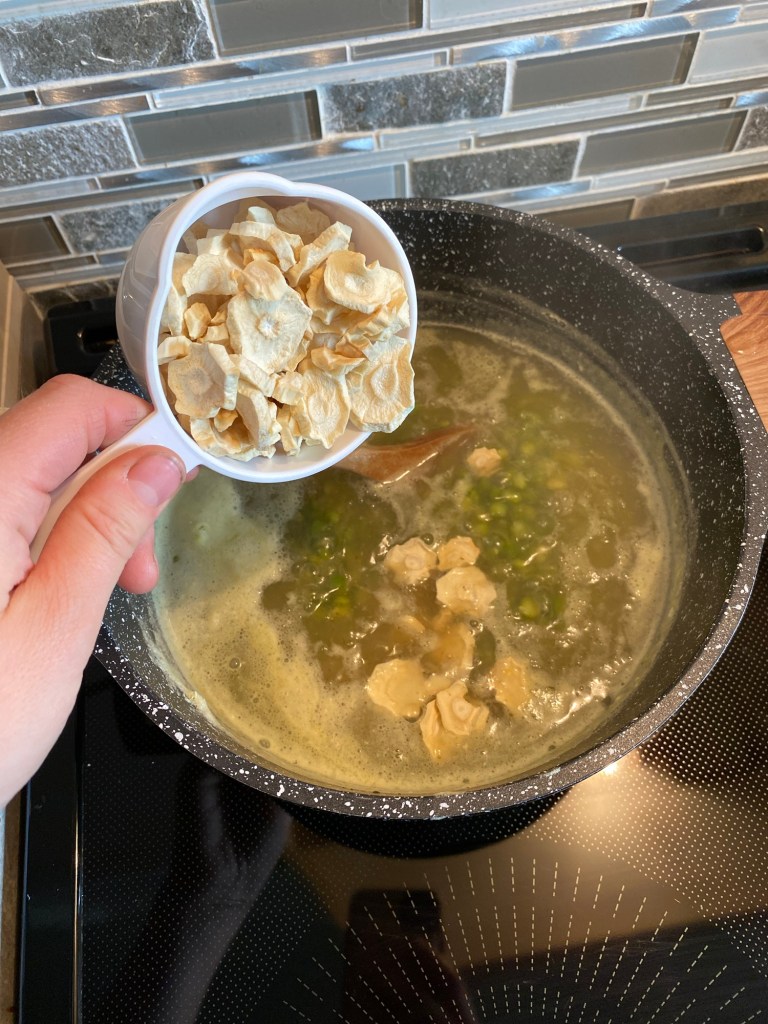
3. Bring to boil, then reduce to simmer on medium for 1-2 hours until all vegetables are soft and tender, stirring occasionally.

4. I like to use the immersion blender at this point to puree some of the soup but leave a few chunks in.
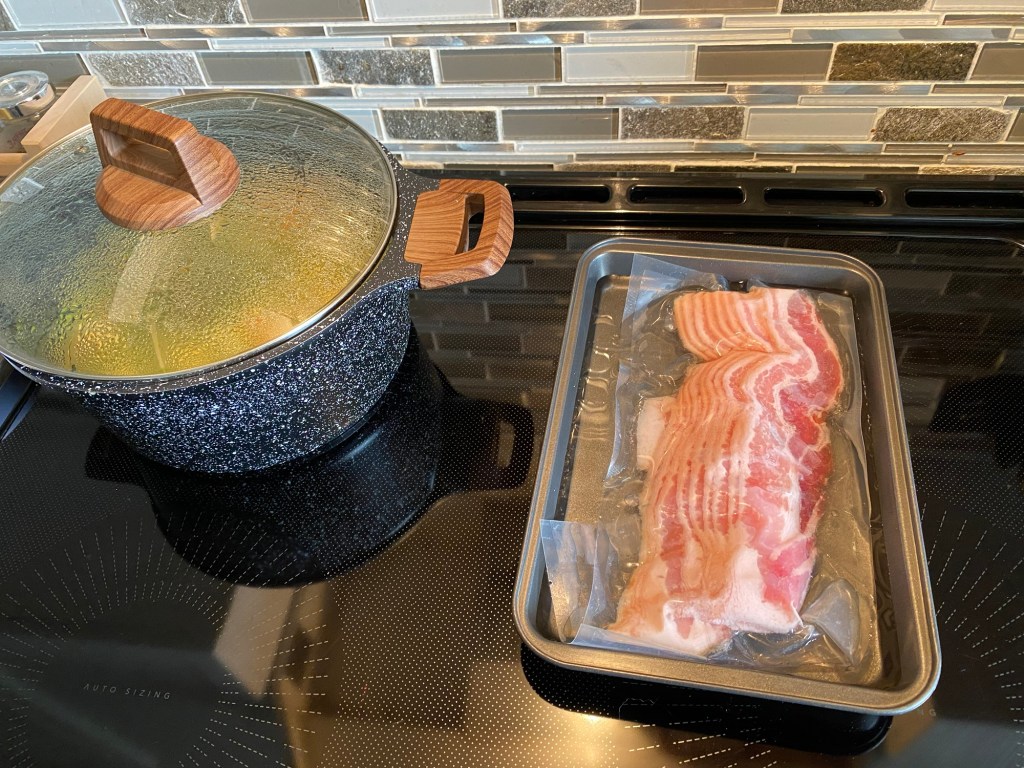
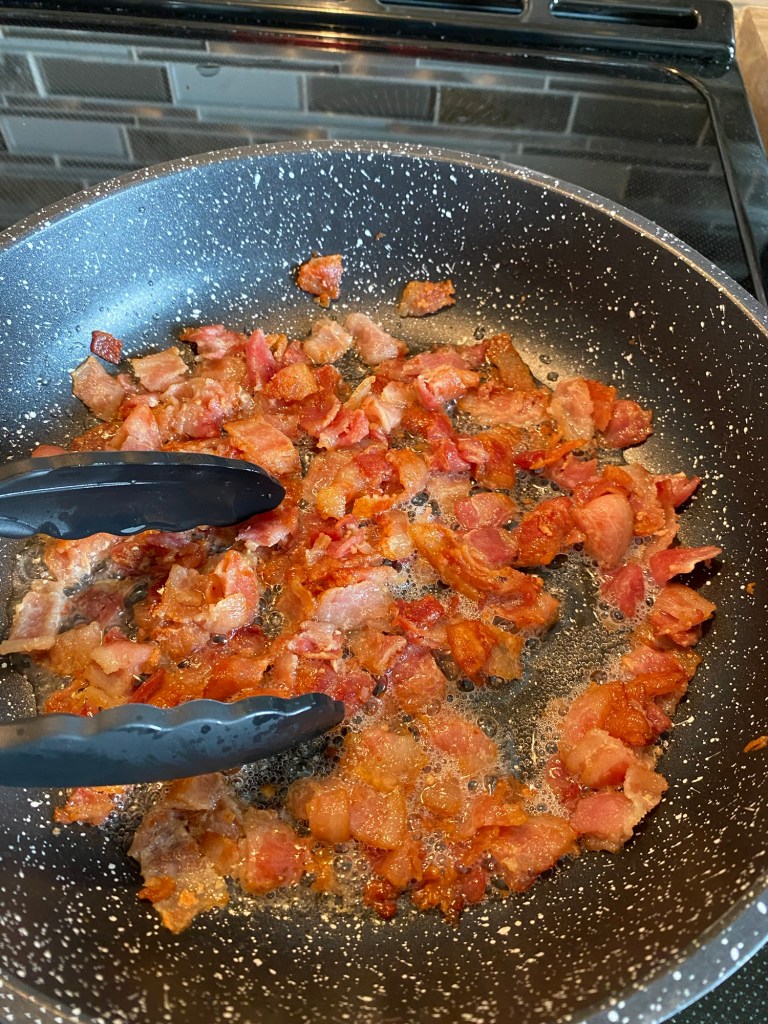
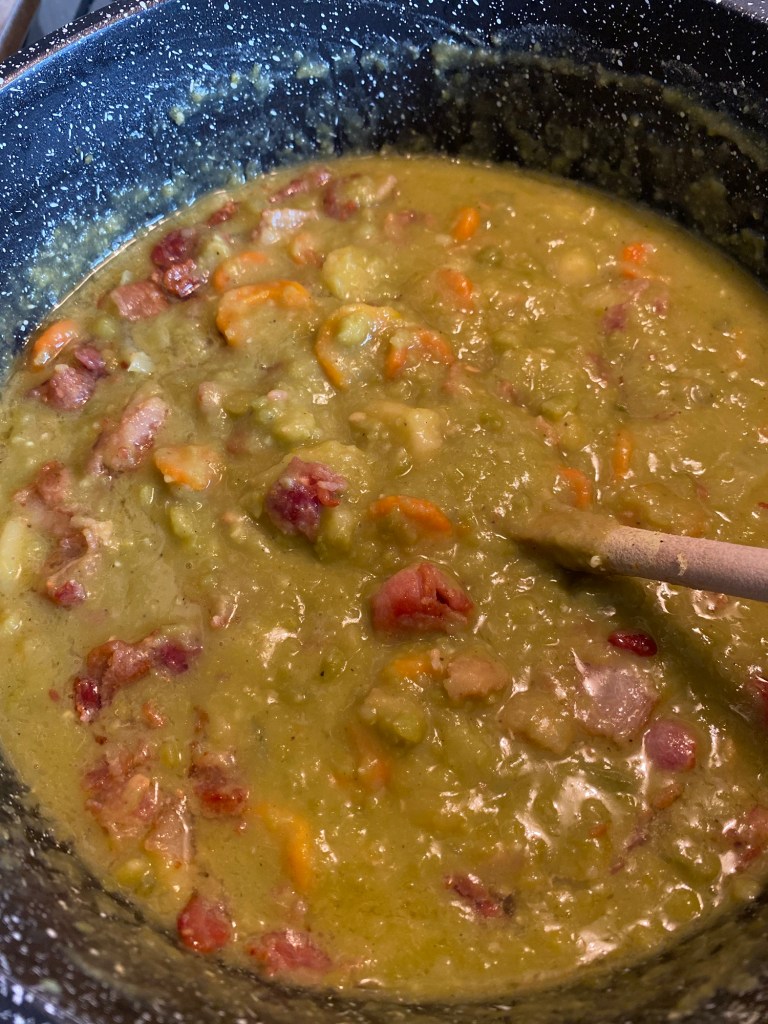
5. When soup is nearly done, cut bacon into small pieces and fry in separate pan until cooked through. (I use kitchen scissors, only reserved for cutting bacon!) Add to soup, along with a little tasty bacon grease (if desired!).

6. Serve and enjoy!

Nutritional Benefits of Green Split Peas:

Green split peas are high in fibre, high in protein, and low in calories. They have been found to contain rich amounts in: iron, protein, magnesium, zinc, phosphorus and potassium (among many others!).

Split peas help to lower high cholesterol, blood pressure, and have anti-inflammatory benefits. They also have been found to help to prevent heart disease, diabetes, osteoporosis, cancer, and many other chronic illnesses.

Why Soak the Split Peas?

Soaking the split peas overnight (or at least for several hours before cooking) not only softens them and shortens their cooking time, but it also helps the split peas to release the lectins that are in them.

Lectins are toxins that are found in beans, peas, soybeans, peanuts, lentils and whole grains. Although many people say it doesn’t matter to soak the dried split peas before cooking them, I always feel better to soak and rinse them first, and know that our digestive systems are the happier for it!

Some side effects of un-soaked but cooked green split peas have been noted to include: bloating, gas, stomach pains and diarrhea. These split peas are very good for you–especially when they’ve been prepared and cooked properly!

Interested in learning more about dehydrating your own vegetables?

You can check out the post: How to Dehydrate Celery for Flavourful Recipes HERE.

Want to make this recipe into a ready-made soup mix?

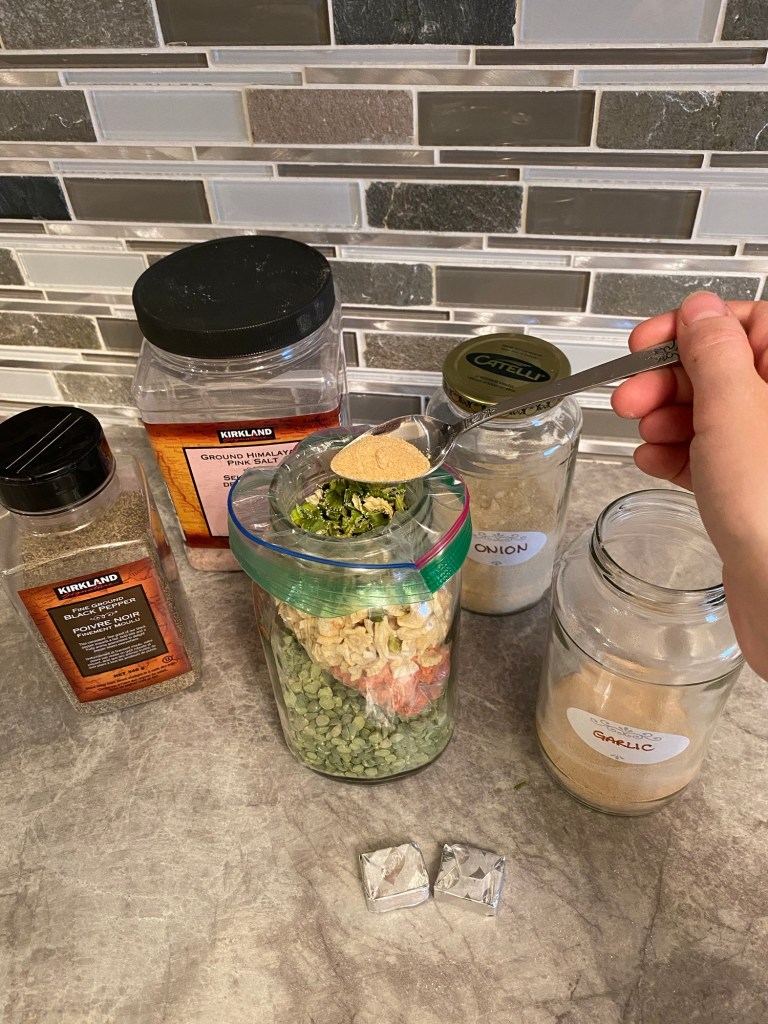
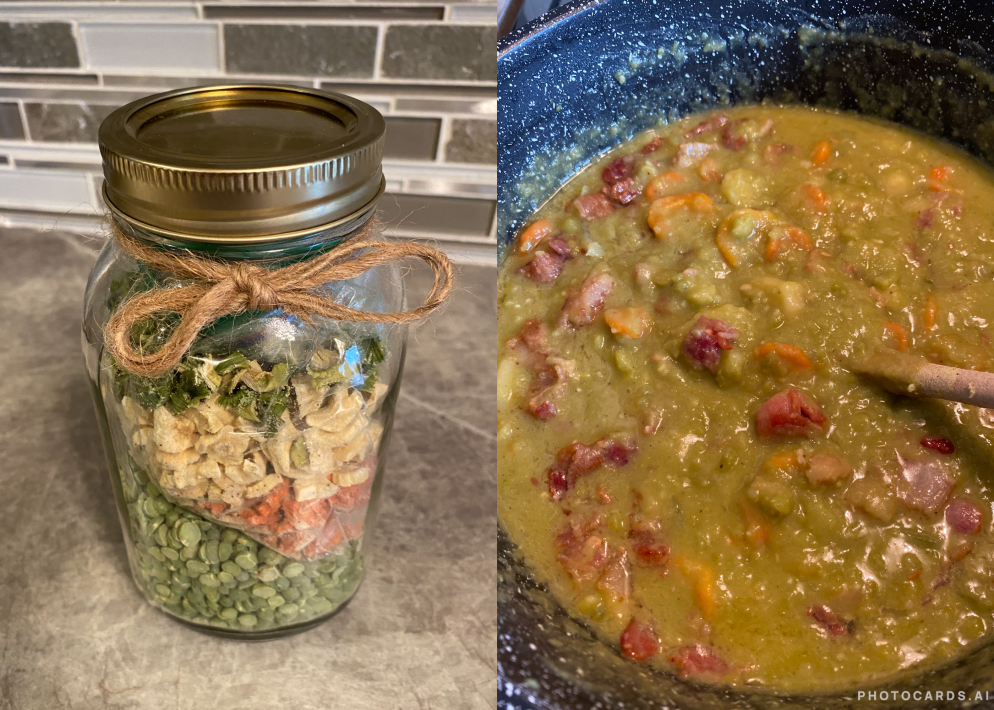
I had some fun turning this recipe into a completely dry vegetarian soup mix, fitting easily into a 1 L glass mason jar. Perfect for a nutritious emergency pantry meal or to use on a camping trip. You just need to add water! (and bacon or other meat if desired, or sprinkle dried bacon bits on the top when serving)

Using mason jars also make these ready-to-cook meals a cute gift!

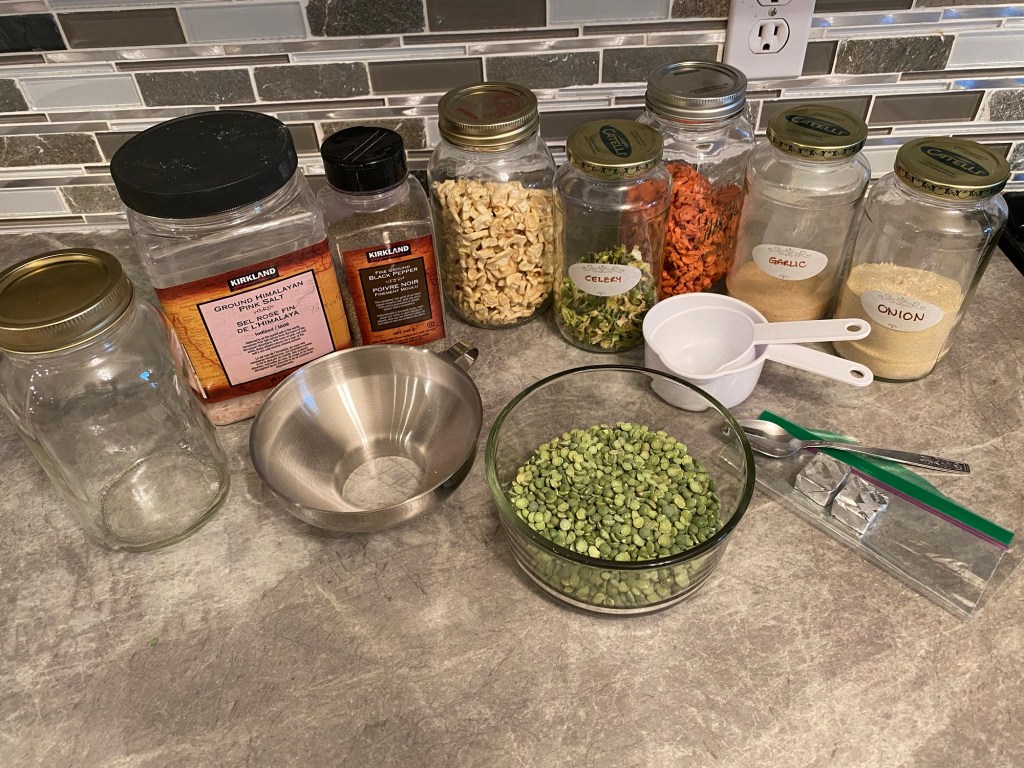
Supplies Needed:

Ingredients:

Directions:

  1. Measure dried green split peas into the bottom of the jar.
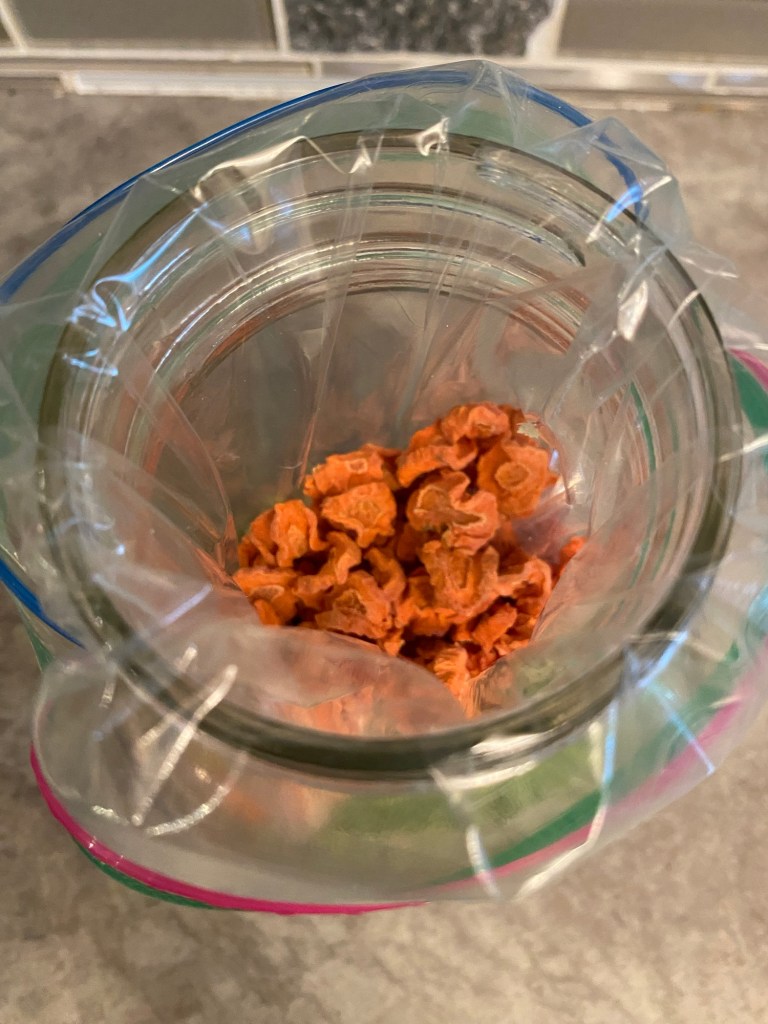
  2. Next, put the ziploc bag inside and begin filling with the remaining ingredients, except stock cubes.
  3. Close ziploc bag, poke inside jar, and place stock cubes on top. Seal jar with lid.

Additional Note:

You can of course use whatever container type you like for storing the soup mix, my personal preference for storing in my pantry is 1 Litre mason jars, so I made measurements to fit in this size.

For camping I would put it all into a large ziploc bag, just separating the green split peas in a separate bag inside.

To Cook:

  1. Pull out the stock cubes and set aside. Open up the ziploc bag and pour contents into a separate bowl.
  2. Green split peas are now separate from the rest of ingredients and can be soaked in the jar or another bowl overnight.
  3. Rinse split peas well with cold water and put in soup pot with 4 + 1/2 cups of cold water.
  4. Add remaining ingredients, and bring to a boil.
  5. Reduce to medium-low and simmer 1-2 hours, stirring occasionally until dried vegetables are cooked through and tender. Add more water as needed.
  6. If desired, you can sprinkle dried bacon bits on the top.

Made this Recipe?

I’d LOVE to see your results!! Feel free to post to your social media account and tag Northbird using one of the links below or post in the comments!

Other Soups and Entrees to Check Out:

Subscribe to Northbird’s email list to get weekly posts on: tasty recipes, activity ideas for kids, natural living tips, and some genuine mom thoughts and encouragement!

Hi, I’m Jessie!

I’m a Wife and Homeschooling Mom living in a remote town in Northern Ontario, Canada. I love making wholesome meals for my family from scratch, homeschooling our girls and learning more about natural living.

Read more about my story HERE.

Green Split Pea and Bacon Soup

  • Servings: 6-8
  • Difficulty: Easy
  • Print

A highly nutritious and tasty winter soup recipe.


Ingredients

  • 1 medium onion, diced
  • 2 large cloves garlic, diced
  • 2 tablespoons olive oil or butter
  • 2 cups dry green split peas
  • 8 cups water
  • 2 cubes of chicken/vegetable stock
  • 1 cup dried/diced carrots (or sub 2 cups fresh)
  • 1 cup dried/diced parsnips (or sub 2 cups fresh)
  • 1/2 cup dried/diced celery (or 1 cup fresh)
  • 1 teaspoon sea salt (more or less to taste–remember, there’s bacon coming!)
  • 1/2 teaspoon black pepper
  • 1 pound of bacon, cut into small pieces

  • Directions:

    1. Soak dry green split peas overnight in cold water. If this step is missed, start soaking for 4-6 hours before cooking soup, so that peas can still partially sprout. Rinse well in cold water. (See below for more information on why it is so important to soak peas and legumes)
    2. Saute onion and garlic with olive oil or butter in large soup pot. Add 8 cups of cold water and the rest of the ingredients.
    3. Bring to boil, then reduce to simmer on medium for 1-2 hours until all vegetables are soft and tender, stirring occasionally.
    4. I like to use the immersion blender at this point to puree some of the soup but leave a few chunks in.
    5. When soup is nearly done, cut bacon into small pieces and fry in separate pan until cooked through. (I use kitchen scissors, only reserved for cutting bacon!) Add to soup, along with a little tasty bacon grease (if desired!).
    6. Serve and enjoy!

    Nutrition


    Per 1 serving: 442 calories; 29.3 g fat; 36.1 g carbohydrates;
    13.8 g protein.

    Green Split Pea and Bacon Soup (Shelf-Stable Version)

    • Servings: 4-6
    • Difficulty: Easy
    • Print

    A ready to cook soup mix: Just Add Water! Great for make-ahead camping meals or stocking in your pantry for an emergency.


    Ingredients

  • 1 + 1/2 cups of dried green split peas
  • 3/4 cup dried & diced carrot
  • 3/4 cup dried & diced parsnips
  • 1/2 cup dried & diced celery
  • 1 teaspoon sea salt
  • 1/4 teaspoon black pepper
  • 1 teaspoon dried onion powder
  • 1 teaspoon dried garlic powder
  • 2 cubes of chicken/vegetable stock

  • Directions:

    1. Measure dried green split peas into the bottom of the jar.
    2. Next, put the ziploc bag inside and begin filling with the remaining ingredients, except stock cubes.
    3. Close ziploc bag, poke inside jar, and place stock cubes on top. Seal jar with lid.

    Cooking Directions:

    1. Pull out the stock cubes and set aside. Open up the ziploc bag and pour contents into a separate bowl.
    2. Green split peas are now separate from the rest of ingredients and can be soaked in the jar or another bowl overnight.
    3. Rinse split peas well with cold water and put in soup pot with 4 + 1/2 cups of cold water.
    4. Add remaining ingredients, and bring to a boil.
    5. Reduce to medium-low and simmer 1-2 hours, stirring occasionally until dried vegetables are cooked through and tender. Add more water as needed.
    6. If desired, you can sprinkle dried bacon bits on the top.

    Nutrition


    Per 1 serving: 225 calories; 0.8 g fat; 47.1 g carbohydrates;
    11.4 g protein.

    Return to Top

    Quick & Easy Naan Bread with Sourdough Discard

    Find Northbird on social media:

    This post contains affiliate links. As an Amazon associate, I earn from qualifying purchases. This means that I make a small commission at no extra cost to you. You can read my full disclosure HERE.

    Jump To Recipe Card

    Jump to Video

    Return to “Sourdough Recipes”

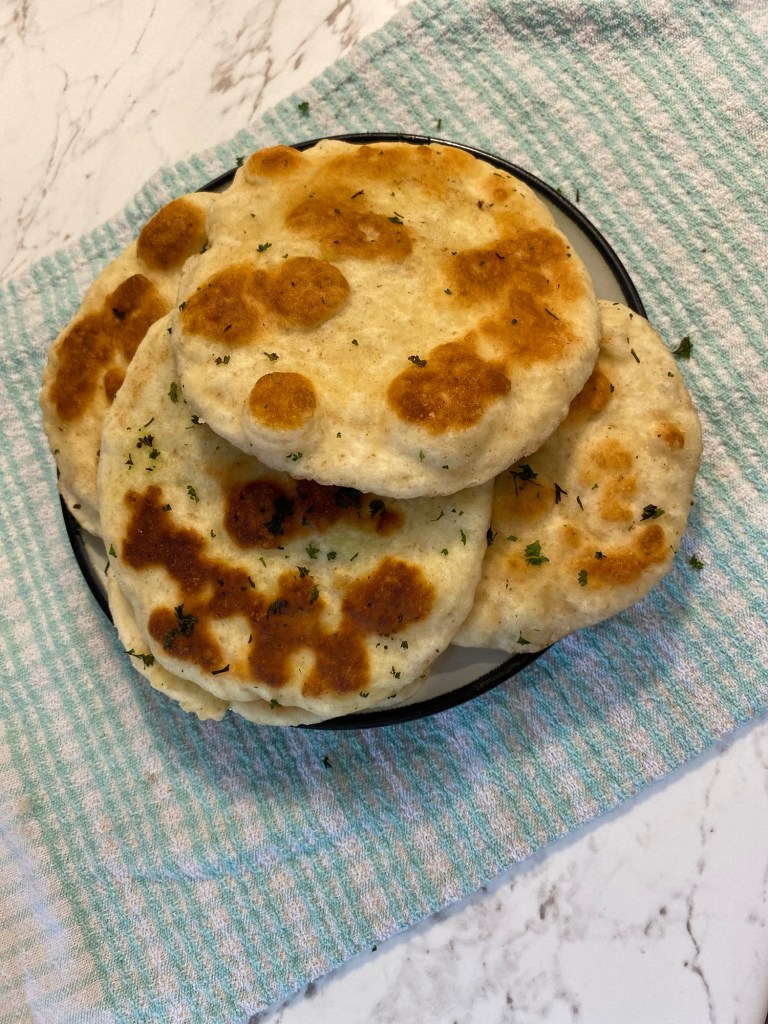
    We love eating naan bread! We tend to have either a type of curry, stirfry or butter chicken with rice for dinner once a week, and this is our favourite pairing with it.

    In our home, my husband likes thin and extra buttery naan bread, while the kids and I enjoy it a little thicker. So whenever I make some, I try to roll some out a little thinner than others, so that everyone has some the way they like it best. And always lather with lots of butter…before and after frying!

    Feel free to adjust the thickness of this naan bread recipe to your preference! The instructions below are for a 1/2 inch thickness palm sized naan.

    I’ve played around with adjusting this recipe for a while now and am finally ready to share the delicious results. I hope you enjoy it as much as we do!

    History of the Naan Bread:

    India. This country has long been on my bucket list to visit, a culture rich in traditions, history and especially in food! Naan bread, curries, spices, butter chicken, samosas, saag paneer, tikka masala, tandoori chicken, and biryani. All so so good!

    The word “naan” itself actually comes from the ancient Persian civilization meaning “bread baked on hot pebbles”. It is thought by some that naan bread started to become popular in India around the 1520s, after yeast arrived in India from Egypt. It was a delicacy reserved for the nobility, so think on that while you enjoy your dinner tonight, my noble friend!

    Make it with Your Kids!

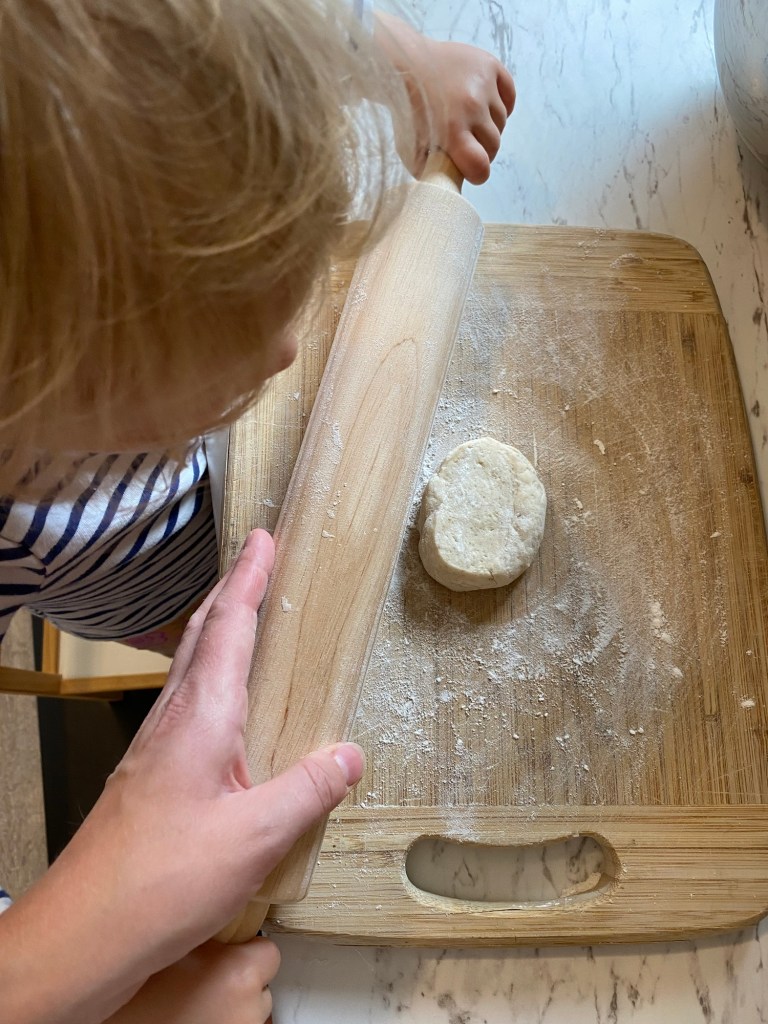
    Any time I have something that involves using a rolling pin, or just dough in general, I love getting the kids involved in preparing it. They have fun rolling out and shaping their own naans. You could also get out the cookie cutters to cut out some fun shapes to fry up!

    These were sooo yummy to make!

    ♫ Music by Matthew Compton

    How to Make Naan Bread with Sourdough Discard

    Supplies Needed:

    Ingredients:

    • 2 cups all purpose flour (I have also made this with mixing in spelt and whole wheat flour, just add a few more tablespoons of flour to balance the dough consistency)
    • 1 teaspoon organic baking powder
    • 1/4 teaspoon baking soda
    • 1 teaspoon white or raw sugar
    • 1/2 teaspoon ground sea salt
    • 1 Tablespoon olive oil
    • 1/4 cup yogurt or whole milk
    • 1/2 cup sourdough discard starter
    • 2-4 Tablespoons water (add as needed, a little more if using yogurt)
    • Flour for dusting when rolling out
    • 1/3 cup melted butter
    • 1/2-1 Tablespoon chopped fresh parsley (can also use dried parsley, but fresh is best)

    Directions:

    1. Mix flour, baking powder, baking soda, sugar and salt together.

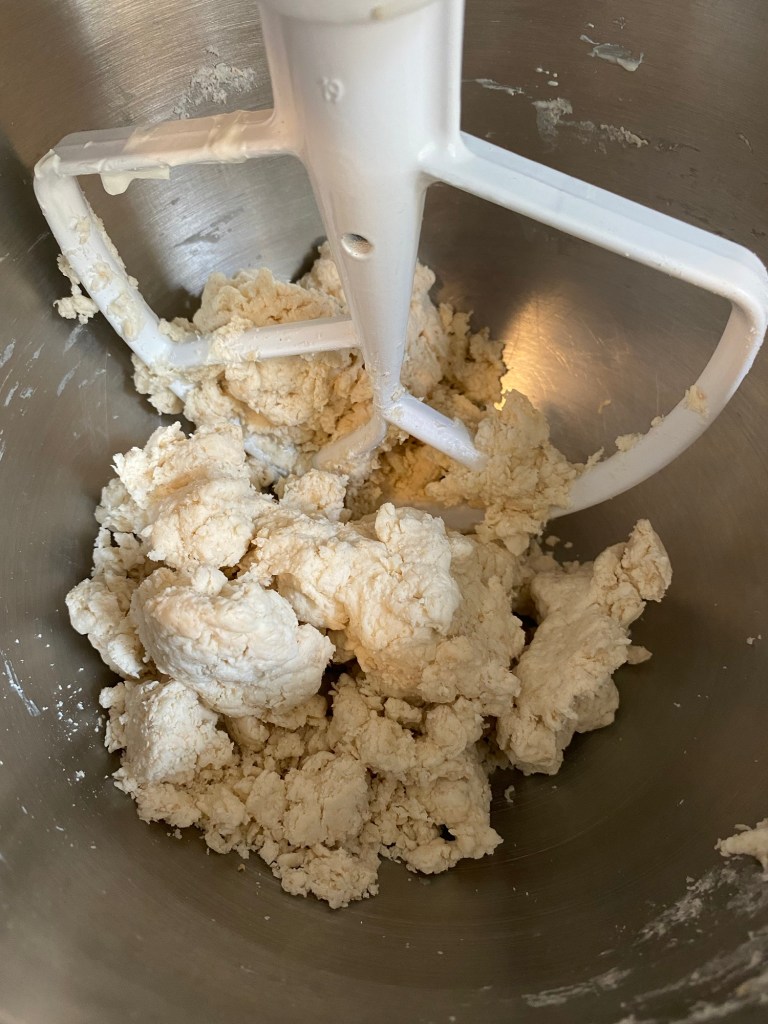
    2. Add olive oil, yogurt/milk, and sourdough discard. Mix well. Add 2-4 tablespoons of water as needed until it becomes a doughy consistency.

    3. Knead for 2-3 minutes until it is a soft dough. Dust with a little flour as needed.

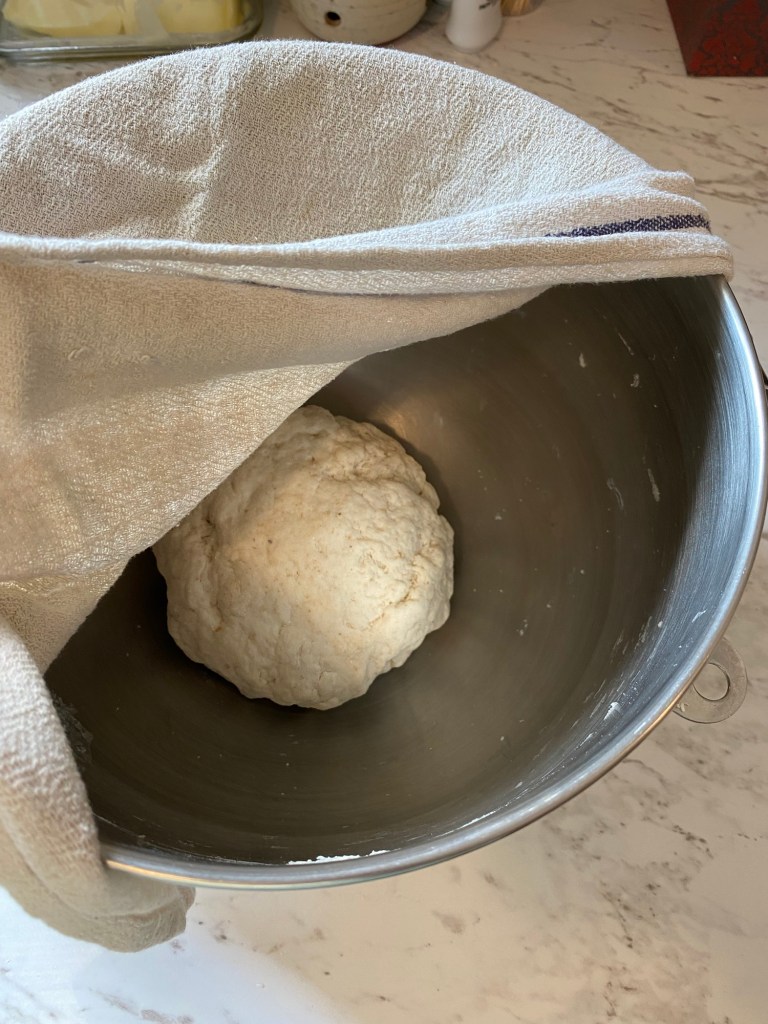
    4. Cover and let rest for 30 minutes-1 hour.

    5. Preheat skillet to medium heat. Melt butter in microwave or in a small pot.

    6. Finely chop the parsley and set aside.

    7. Form dough into a “log” and cut into 8 equal rounds.

    8. Roll dough piece out on a flour covered surface until it is 1/4 inch evenly thick.

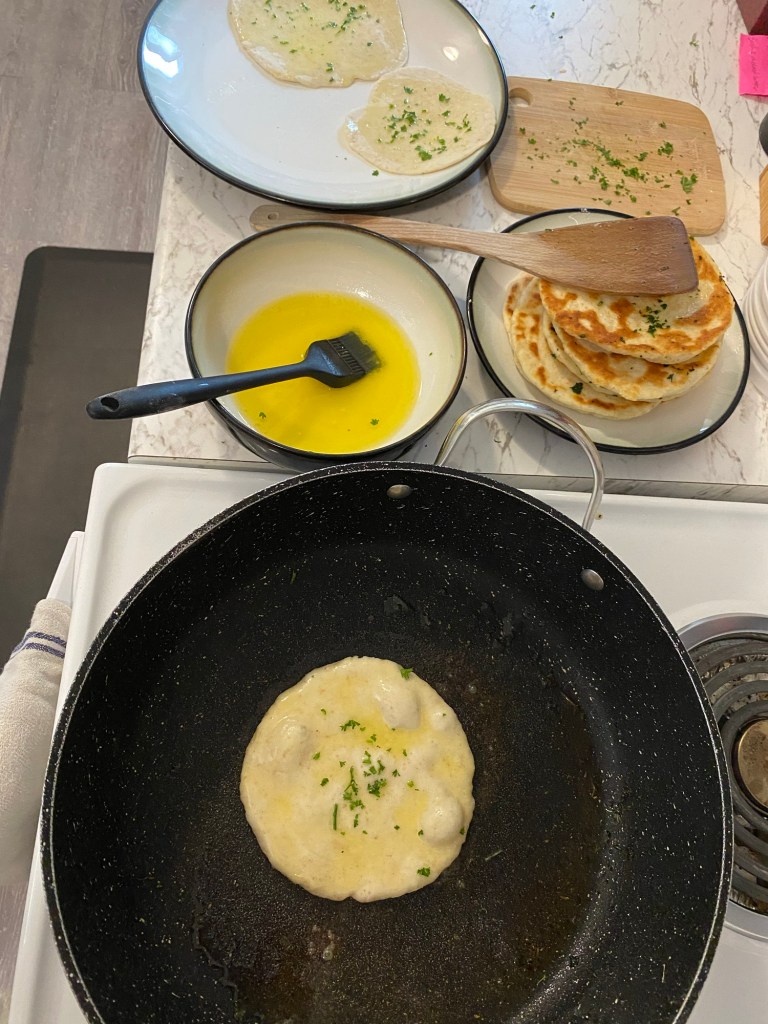
    9. Brush melted butter and sprinkle with parsley on one side. Fry with the buttered side down on the pre-heated skillet. While it is starting to bubble and sizzle, brush the top side with more butter and sprinkle with parsley. It should take about 1-2 minutes until golden spots appear, then flip over for another 1-2 minutes until golden.

    10. Keep warm in tinfoil until ready to serve. The steam will keep them soft and prevent them from drying out!

    11. Makes 8 palm-sized naans. Store leftovers in sealed container in fridge for up to 5 days.

    Additional Tips:

    *Make sure your pan is not too hot or it will just burn and not cook through.

    *The thinner you roll out the naans, the quicker it will cook.

    *Add as much butter as you want! (Before and especially after!)

    Serve with a curry, butter chicken, or other saucy and flavourful dish!

    Made this Recipe?

    I’d love to hear how your naan bread turned out! Feel free to tag Northbird using one of the links below if you are posting your tasty dinner to social media, or tell me in the comments below!

    Other Tasty Sourdough Recipes to Check Out!

    Hi, I’m Jessie!

    I’m a Wife and Homeschooling Mom living in a remote town in Northern Ontario, Canada. I love making wholesome meals for my family from scratch, homeschooling our girls and learning more about natural living.

    Read more about my story HERE.

    Subscribe to Northbird’s email list to get weekly posts on: tasty recipes, activity ideas for kids, natural living tips, and some genuine mom thoughts and encouragement!

    Quick & Easy Naan Bread with Sourdough Discard

    • Servings: 8
    • Difficulty: Easy
    • Print

    A soft and buttery naan bread recipe using sourdough discard. One of our favourite pairings when we make a stir fry, curry or butter chicken!


    By Jessica Burman © 2024 The Northbird Blog. http://www.thenorthbirdblog.com

    Supplies Needed:

  • Mixing bowl and spoon
  • Skillet
  • Dish for melting butter
  • Cooking Brush
  • Spatula
  • Cutting Board
  • Knife
  • Rolling Pin

  • Ingredients

  • 2 cups all purpose flour (I have also made this with mixing in spelt and whole wheat flour, just add a few more tablespoons of flour to balance the dough consistency)
  • 1 teaspoon organic baking powder
  • 1/4 teaspoon baking soda
  • 1 teaspoon white or raw sugar
  • 1/2 teaspoon ground sea salt
  • 1 Tablespoon olive oil
  • 1/4 cup yogurt or whole milk
  • 1/2 cup sourdough discard starter
  • 2-4 Tablespoons water (add as needed, a little more if using yogurt)
  • Flour for dusting when rolling out
  • 1/3 cup melted butter
  • 1/2-1 Tablespoon chopped fresh parsley (can also use dried parsley, but fresh is best)

  • Directions:

    1. Mix flour, baking powder, baking soda, sugar and salt together.
    2. Add olive oil, yogurt/milk, and sourdough discard. Mix well. Add 2-4 tablespoons of water as needed until it becomes a doughy consistency.
    3. Knead for 2-3 minutes until it is a soft dough. Dust with a little flour as needed.
    4. Cover and let rest for 30 minutes-1 hour.
    5. Preheat skillet to medium heat. Melt butter in microwave or in a small pot.
    6. Finely chop the parsley and set aside.
    7. Form dough into a “log” and cut into 8 equal rounds.
    8. Roll dough piece out on a flour covered surface until it is 1/4 inch evenly thick.
    9. Brush melted butter and sprinkle with parsley on one side. Fry with the buttered side down on the pre-heated skillet. While it starting to bubble and sizzle, brush the top side with more butter and sprinkle with parsley. It should take about 1-2 minutes until golden spots appear, then flip over for another 1-2 minutes until golden.
    10. Keep warm in tinfoil until ready to serve. The steam will keep them soft and prevent them from drying out!
    11. Makes about 8 palm-sized naans. Store leftovers in sealed container in fridge for up to 5 days.
    12. Additional Tips:

      *Make sure your pan is not too hot or it will just burn and not cook through.

      *The thinner you roll out the naans, the quicker it will cook.

      *Add as much butter as you want!

    Nutrition


    Per 1 serving: 322 calories; 19.7 g fat; 38.1 g carbohydrates;
    3 g protein.
    Return to Top

    Marion’s Shortbread Cookies

    Find Northbird on social media:

    This post contains affiliate links. As an Amazon associate, I earn from qualifying purchases. This means that I make a small commission at no extra cost to you. You can read my full disclosure HERE.

    Jump To Recipe Card

    Jump to Video

    Return to “Deserts & Snacks”

    There is not long to wait now until Christmas, and with this exciting season comes all the delicious baked treats and goodies! (my self-control gets really challenged this time of year!)

    I love seeing all the unique and tasty recipes that different families make every year as part of their Christmas traditions.

    My family had a few delicious traditions every year that we always looked forward to: My sister would always make chocolate peanut butter balls, my mom always made delicious Christmas cake (that would sometimes last many, many months!) and I was always a fan of making sugar cookies with all the fun icing and sprinkles.

    Other tasty Christmas treats that I remember making from my childhood are gingerbread, caramel corn, and a few different shortbreads and scones. When I got married and started learning about my in-law’s family traditions, I was particularly interested in learning the favourite cooking and baking recipes that he grew up with.

    This particular recipe belonged to my husband’s grandma “Marion”, who I never met, but I’m told was one of the kindest and gentlest of women. Her family background was Scottish, which is very fitting because shortbread of course originates from: Scotland!

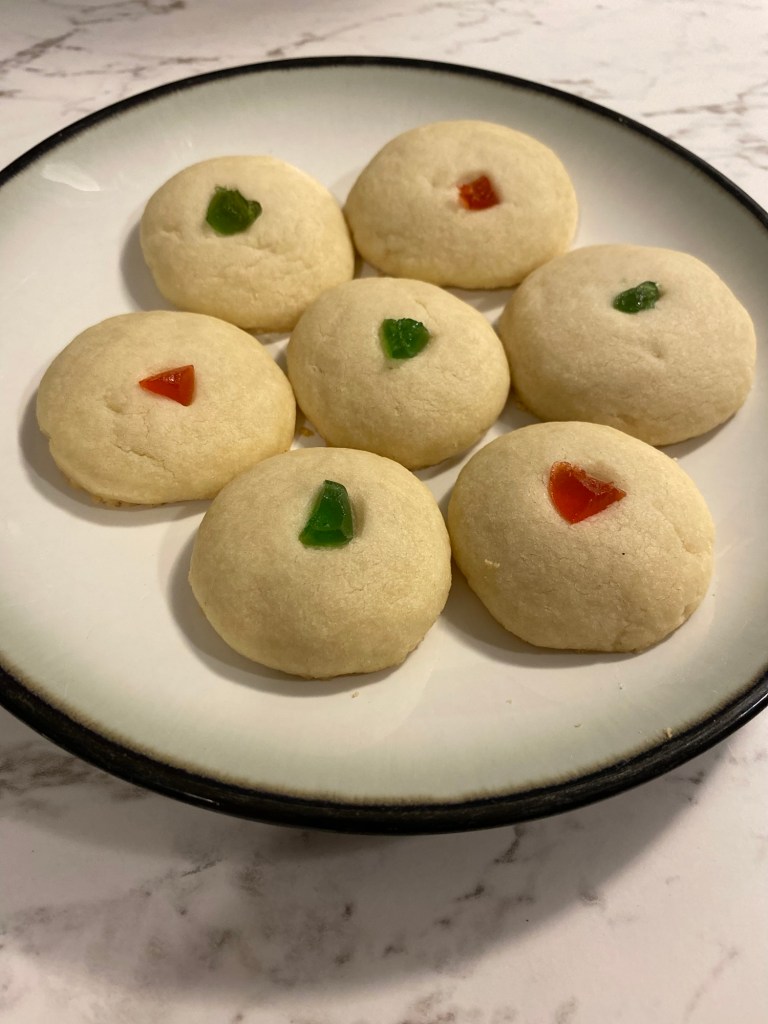
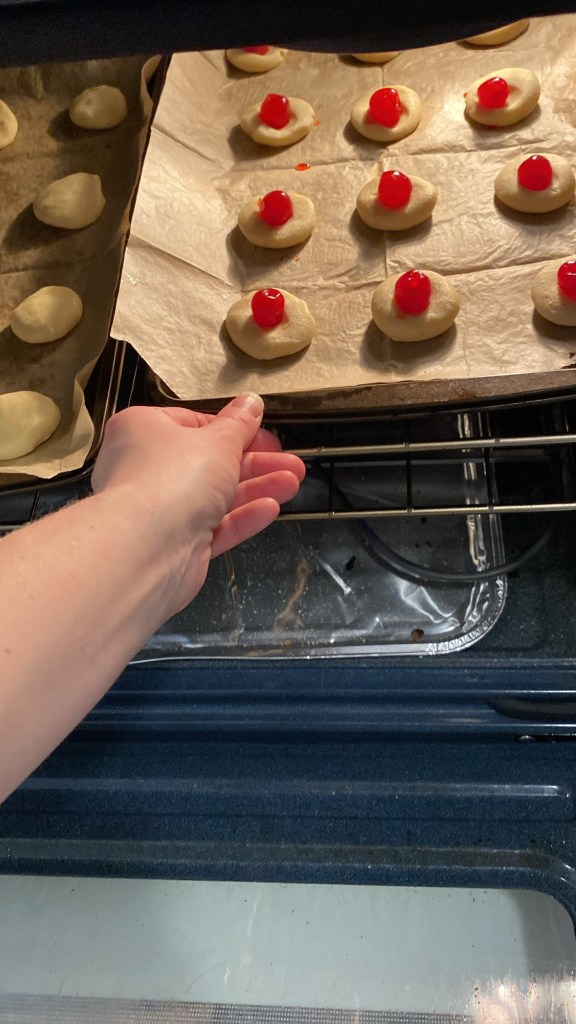
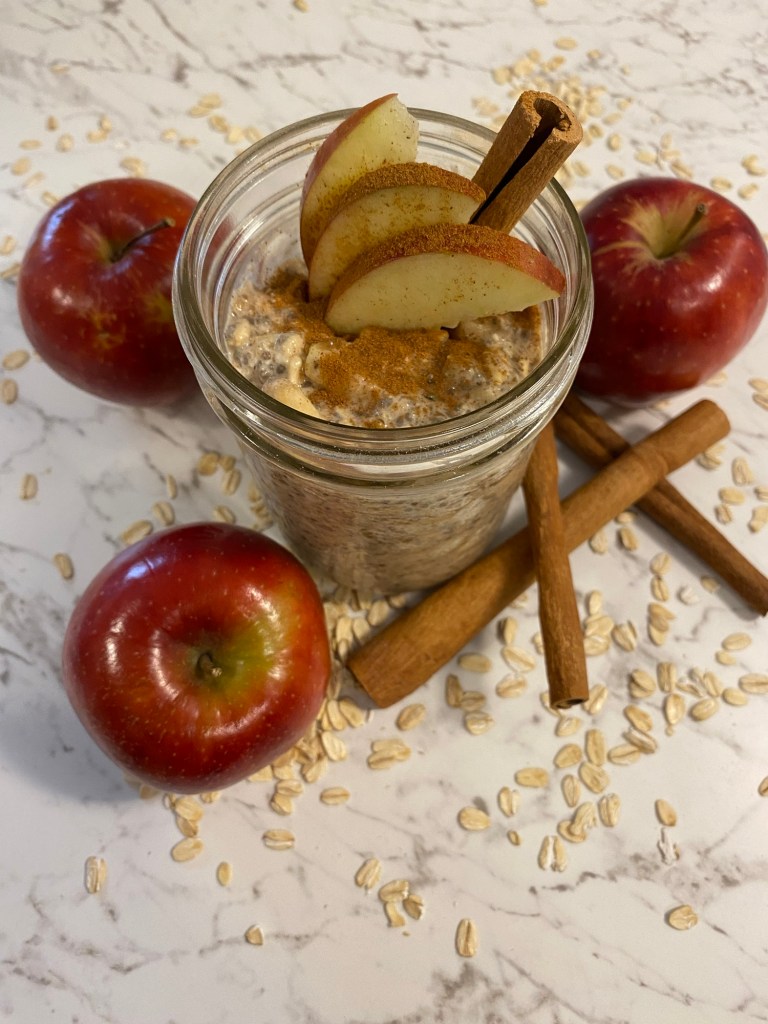
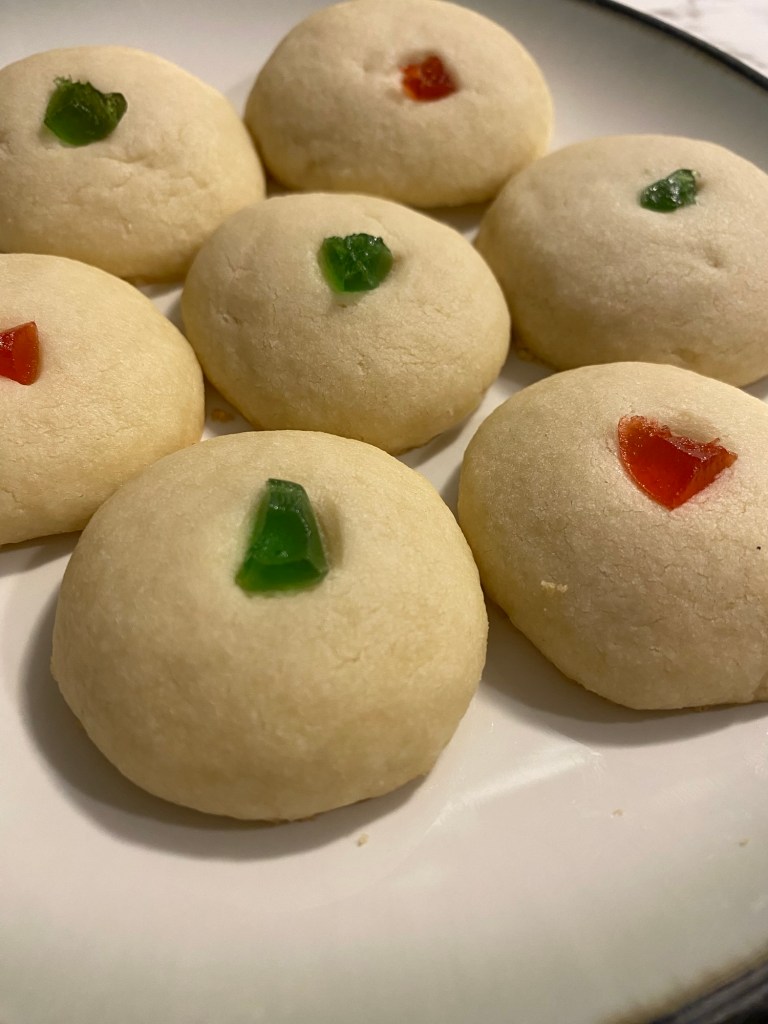
    Traditionally, Grandma Marion made these with candied cherries in the center, but my mother-in-law has also been making these for years with sliced almonds pressed on top. And when my husband and I wanted to make them for his students at school, we made them with maraschino cherries on top (that’s all that we had at the time for decoration!)

    My favourite thing about these cookies? The butter. So so good, it just melts in your mouth!

    I hope you enjoy making these tasty shortbread cookies!

    Here’s a short video showing how to make these tasty and buttery cookies!

    How to Make Marion’s Shortbread Cookies:

    Supplies Needed:

    Note: This recipe really works best with an electric mixer or food processor if possible. If doing it by hand, it may take a little longer to mix thoroughly together.

    Ingredients:

    Note: Traditionally, these cookies were topped with the little square candied cherries, but they are also very tasty using slivered almonds or maraschino cherries!

    Directions:

    1. Preheat oven to 350 degrees fahrenheit.
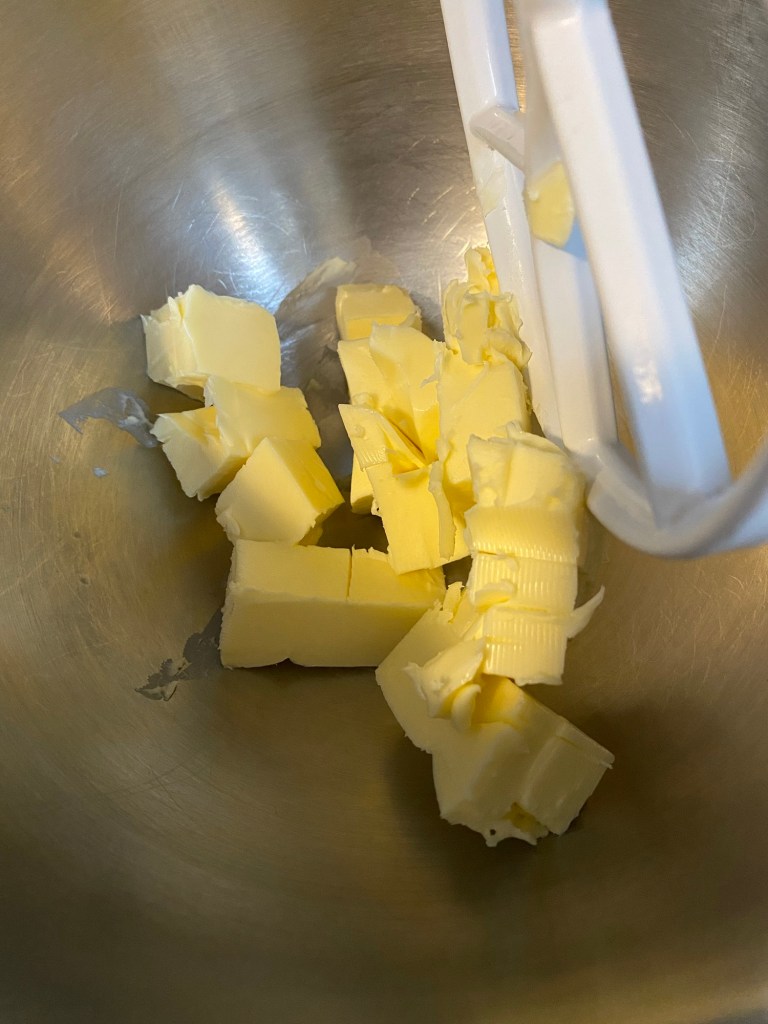
    2. Beat the butter until creamy.

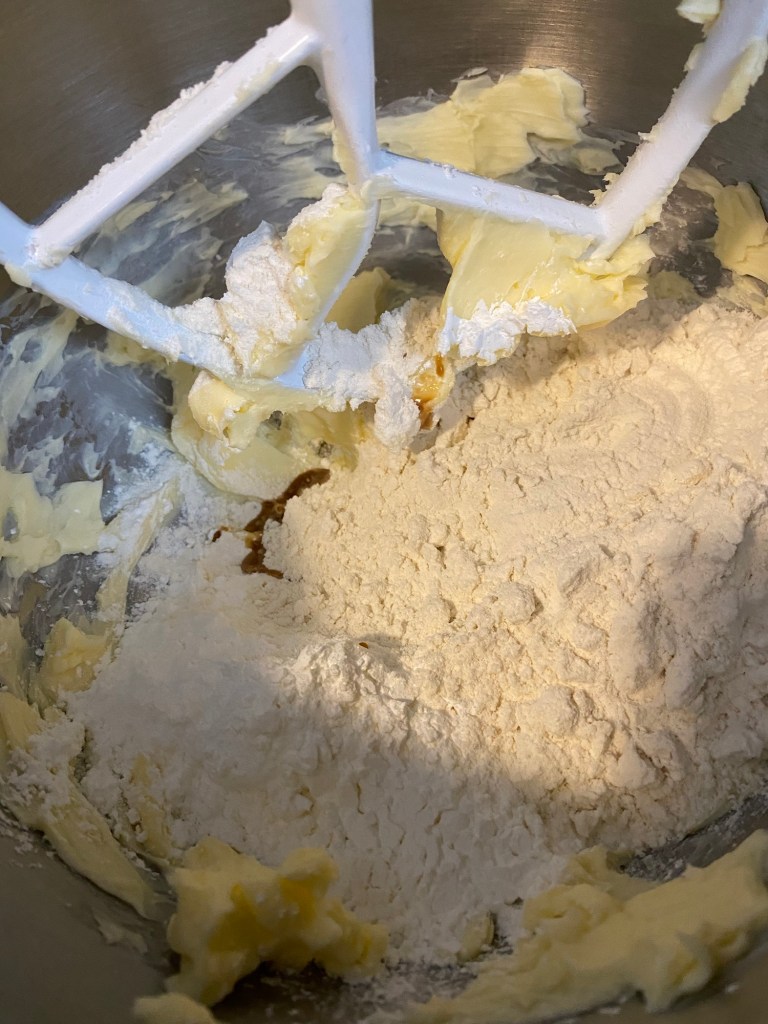
    3. Add the rest of the ingredients to the butter and mix for about 5 minutes until it comes together and the sides of the bowl are clean. It will look very dry at first while mixing, but just be patient and let the butter do it’s work. It is ready when you can clump it together in your hand.

    4. Roll in your hands into 1 inch balls and flatten them a little, placing them on a parchment covered baking sheet. Note: You will want to do this quickly as the warmth from your hands will be melting the butter causing it to lose shape!

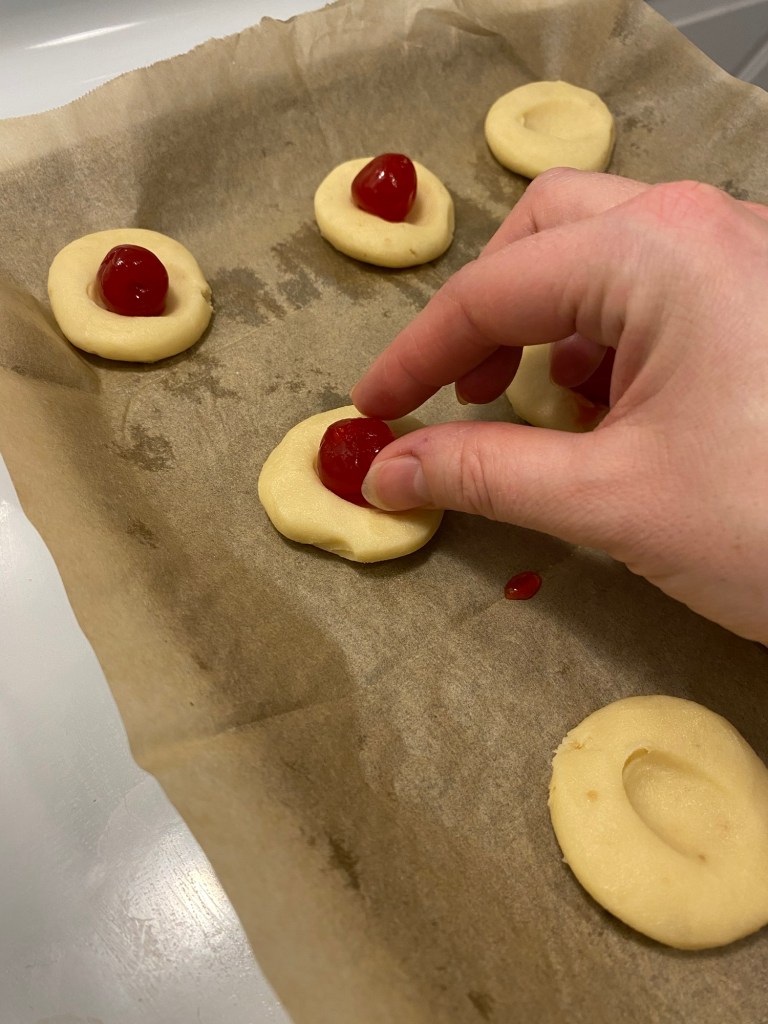
    5. Decorate the tops if desired (see ideas above) and gently push into the dough so it doesn’t fall off. If using larger maraschino cherries, make an imprint with your finger first.

    6. Bake in middle of oven at 350 degrees fahrenheit for about 12 minutes. The bottoms should be lightly golden, and you’ll see the sides start to show golden as well.

    7. Let the cookies cool before removing from baking sheet (about 10-15 minutes)

    8. Makes about 2 dozen cookies.

    How to store these cookies:

    Store in sealed container at room temperature up to 5 days, or in the fridge for longer to maintain freshness. You can also freeze them in a sealed container if you are making them in advance of the holidays, and just take them out to thaw for 1/2 hour prior to serving!

    Made this Recipe?

    I’d love to hear how your cookies turned out! Feel free to tag Northbird using one of the links below if you are posting to social media, or share in the comments below!

    Happy Baking!

    If you are a cranberry fan, you might like to check out these other tasty recipes that include cranberries from the Northbird Blog:

    More Desert & Snack Recipes:

    Hi, I’m Jessie!

    I’m a Wife and Homeschooling Mom living in a remote town in Northern Ontario, Canada. I love making wholesome meals for my family from scratch, homeschooling our girls and learning more about natural living.

    Read more about my story HERE.

    Subscribe to Northbird’s email list to get weekly posts on: tasty recipes, activity ideas for kids, natural living tips, and some genuine mom thoughts and encouragement!

    Marion's Shortbread Cookies

    • Servings: 2 dozen Cookies
    • Difficulty: Easy
    • Print

    A favourite tradition of my husband's family! So buttery and good, these Easy Shortbread Cookies will just melt in your mouth!


    Store in sealed container at room temperature up to 5 days, or in the fridge for longer to maintain freshness. You can also freeze them in a sealed container if you are making them in advance of the holidays, and just take them out to thaw for 1/2 hour prior to serving!

    The Northbird Blog, 2024 http://www.thenorthbirdblog.com


    Ingredients

  • 1/2 pound, (1 cup) butter, soft (butter is a MUST for this recipe, it will not turn out right with margarine or other substitute.
  • 1/3 cup icing sugar
  • 1/4 cup cornstarch
  • 1/2 teaspoon vanilla
  • 1+1/2 cups all purpose flour
  • Topping Ideas:

  • Directions:

    1. Preheat oven to 350 degrees fahrenheit.
    2. Beat the butter until creamy.
    3. Add the rest of the ingredients to the butter and mix for about 5 minutes until it comes together and the sides of the bowl are clean. It will look very dry at first while mixing, but just be patient and let the butter do it’s work. It is ready when you can clump it together in your hand.
    4. Roll in your hands into 1 inch balls and flatten them a little, placing them on a parchment covered baking sheet. Note: You will want to do this quickly as the warmth from your hands will be melting the butter causing it to lose shape!
    5. Decorate the tops if desired (see ideas above) and gently push into the dough so it doesn’t fall off. If using larger maraschino cherries, make an imprint with your finger first.
    6. Bake in middle of oven at 350 degrees fahrenheit for about 12 minutes. The bottoms should be lightly golden, and you’ll see the sides start to show a hint of golden as well.
    7. Let the cookies cool before removing from baking sheet (about 10-15 minutes)
    8. Makes about 2 dozen cookies.

    Nutrition


    Per 1 cookie: 68 calories; 3.4 g fat; 7.4 g carbohydrates;
    0.7 g protein.
    Return to Top

    Chocolate-Cranberry Oatmeal Cookies (Sourdough Discard Optional)

    Find Northbird on social media:

    This post contains affiliate links. As an Amazon associate, I earn from qualifying purchases. This means that I make a small commission at no extra cost to you. You can read my full disclosure HERE.

    Jump To Recipe Card

    Jump to Video

    Return to “Deserts & Snacks”

    Return to “Sourdough Recipes”

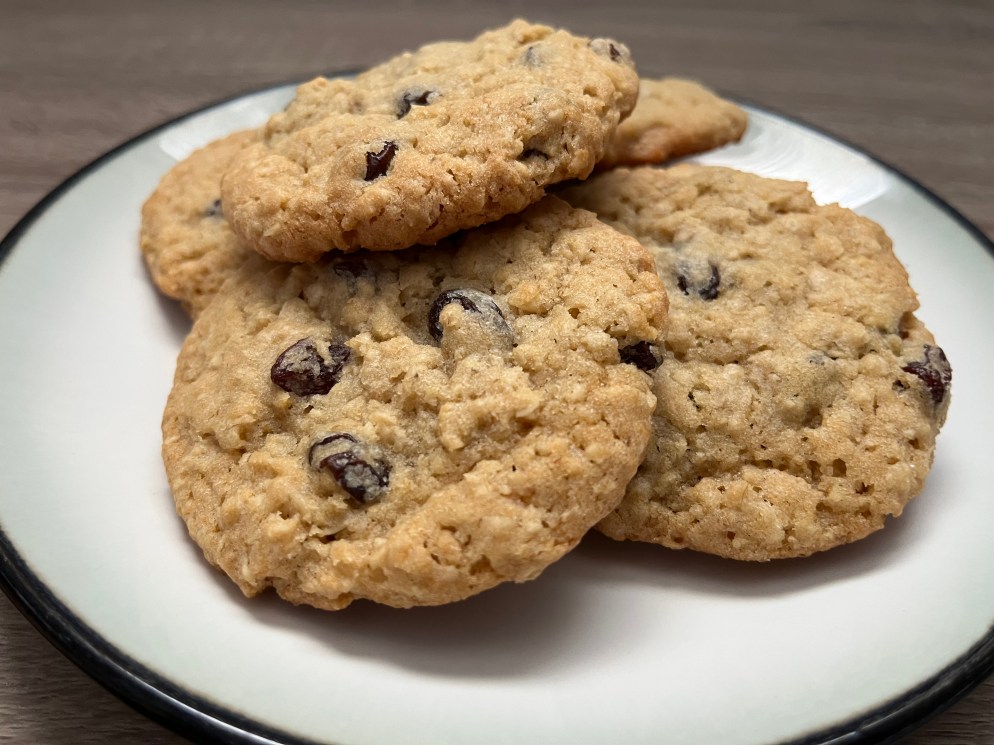
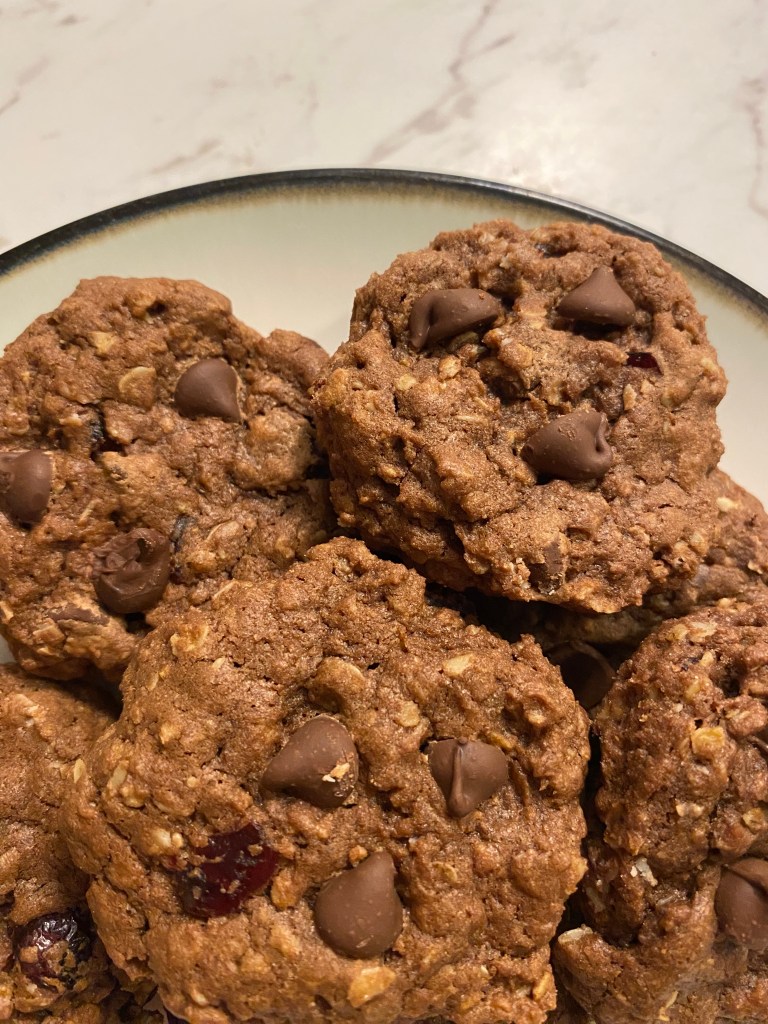
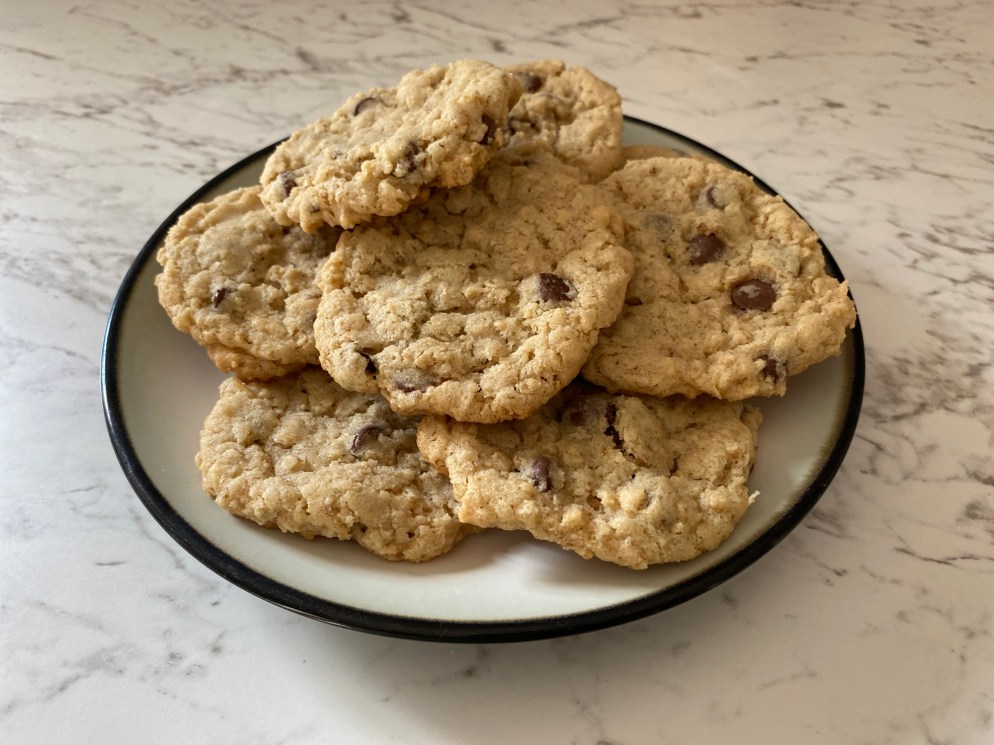
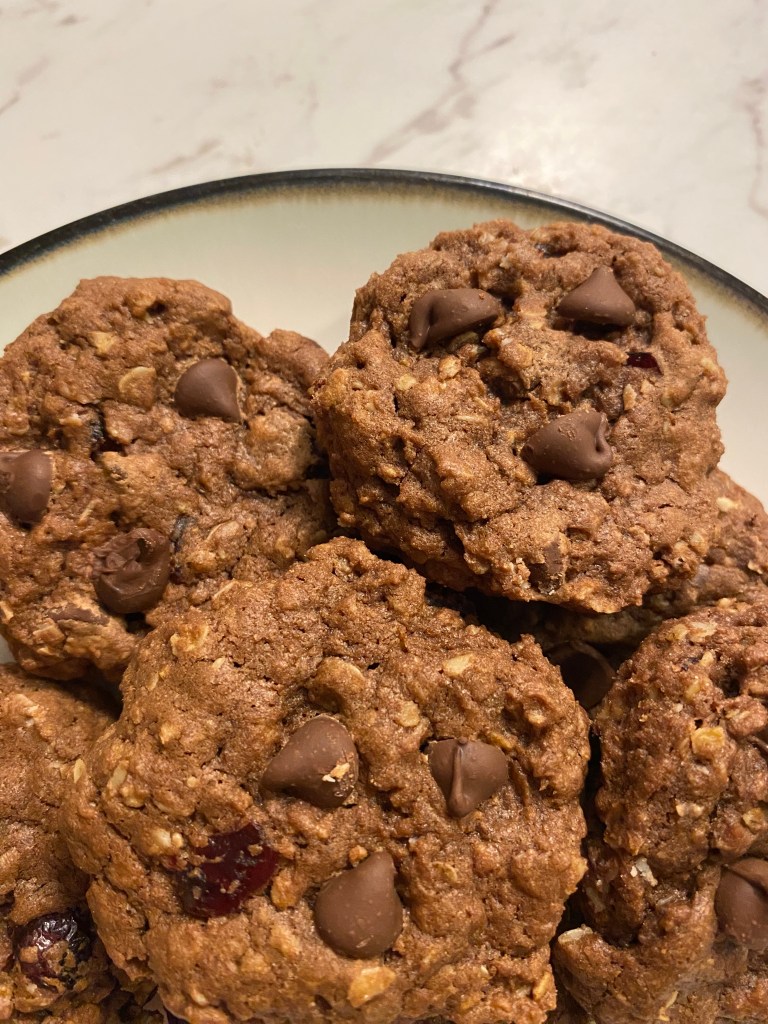
    Chocolate and cranberries go so well together! So the other day I asked myself: “why not make a simple oatmeal cookie recipe that involves both these tasty ingredients?!” And after some experimenting, this delicious recipe was born -or baked- and quickly munched down by approving family members.

    I have also included below an alternative recipe to turn this into a sourdough discard recipe, if that might peek the interest of any of my blog readers?

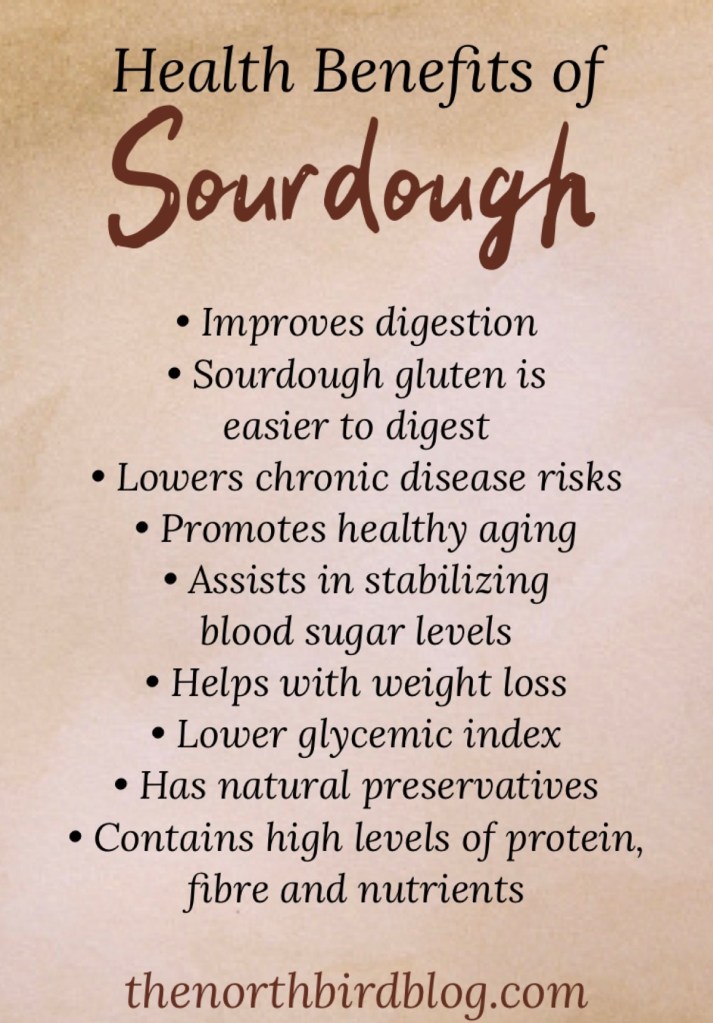
    I am especially fond of experimenting and finding ways of turning my tried-and-true baking recipes that I have been using for years, into sourdough starter discard recipes. I always like the option to add some sourdough starter if I can, and I love how it adds all the fermented goodness and extra nutrition to baked goods!

    New or interested in more info about Sourdough fun? Click HERE

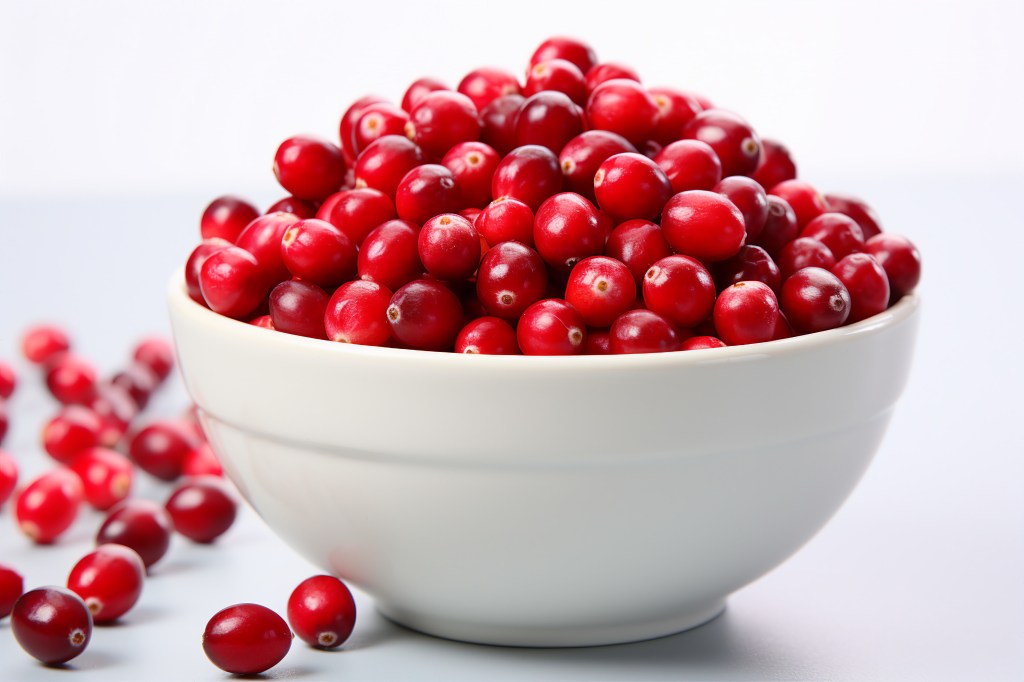
    Did You Know these Amazing Health Benefits of Eating Cranberries?!

    Image courtesy of Vecteezy.com
    • Cranberries are most known for reducing the risk of urinary tract infections. This is due to the proanthocyanidins in the berries that help to prevent bacteria from sticking to the urinary tract. A build up of bacteria in the urinary tract is what causes infections and other illnesses if left untreated.
    • The proanthocyanidins in Cranberries also help to support your teeth, and some research suggests gum disease as well.
    • Cranberries contain Vitamin E, which supports hair and skin health.
    • Cranberries have high levels of anioxidants, which support the immune system and help prevent illness and diseases.
    • Cranberries have high levels of phytonutrients, which are great for reducing inflammation in the body.
    • Cranberry juice contains phytochemicals that help to maintain healthy digestion in your body.
    • Cranberries are also very high in Vitamin C (ascorbic acid), boosting your immune system and helping to maintain health.
    • Cranberry juice helps to lower cholesterol levels, which lowers the risk of heart disease.

    Please Note: When buying cranberry juice at the store for medicinal purposes, it is always important to read the label carefully and to select a brand that is 100% pure cranberry juice, no added sugar, and not a juice cocktail mix.

    If you are a cranberry fan, you might like to check out this other tasty recipe on the Northbird Blog:

    Carol’s Cranberry Loaf!

    A simple video of making these tasty chocolatey and cranberry oatmeal cookies!

    How to Make Chocolate Cranberry Oatmeal Cookies:

    Supplies Needed:

    Ingredients:

    Directions:

    1. Preheat oven to 350 degrees fahrenheit.
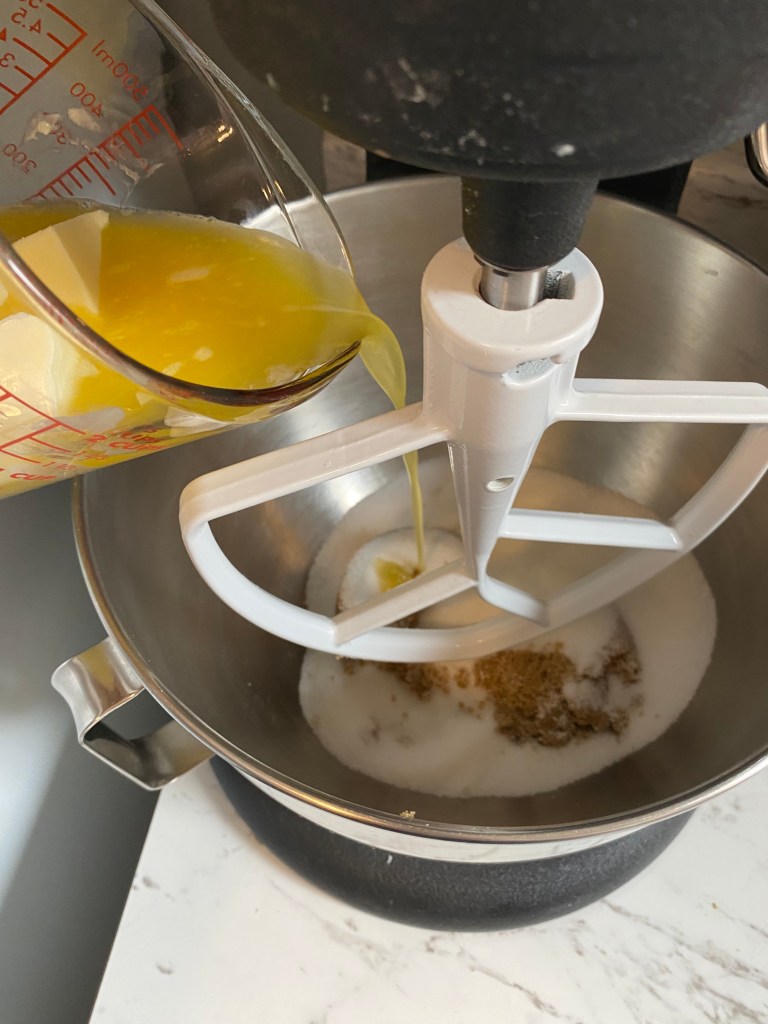
    2. Cream together the softened butter and both sugars.
    3. Add the eggs (or sourdough starter) and vanilla and mix until fully combined and smooth.

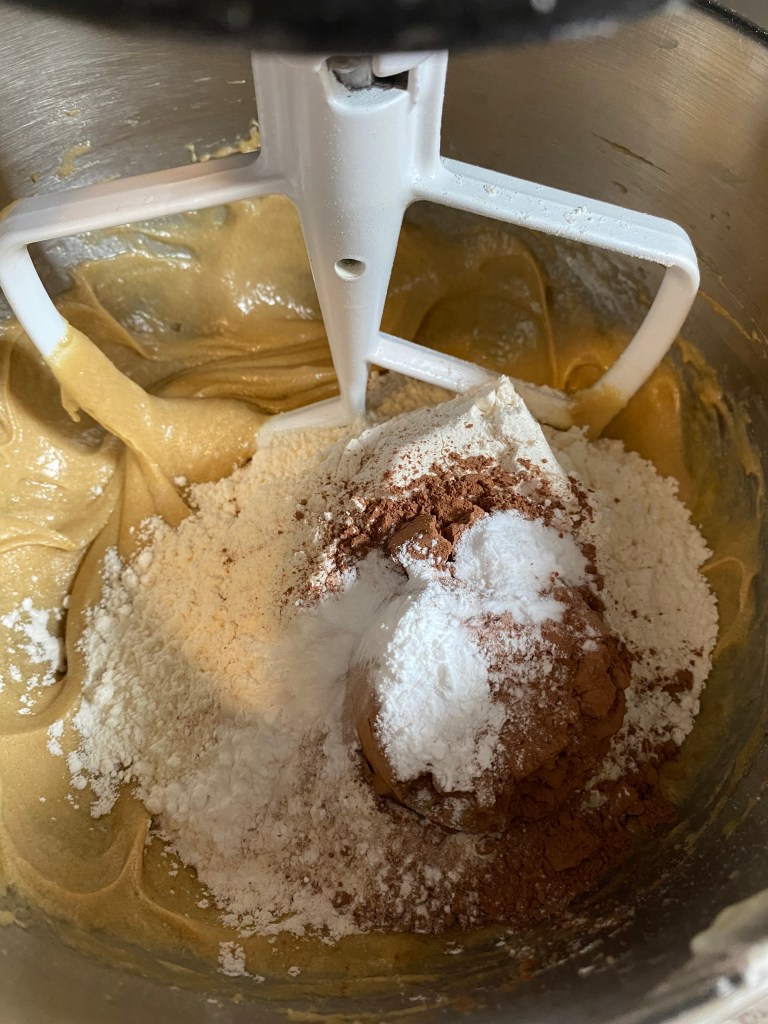
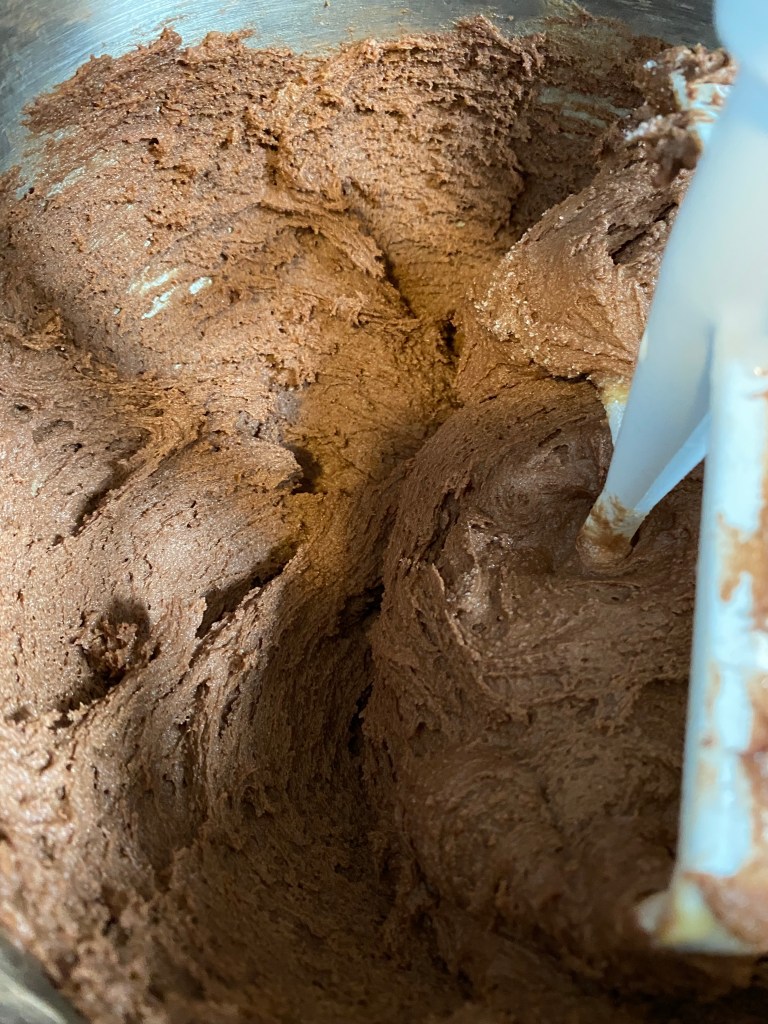
    4. Add in the flour, baking powder, baking soda, salt and cocoa powder. Stir until all combined and smooth.

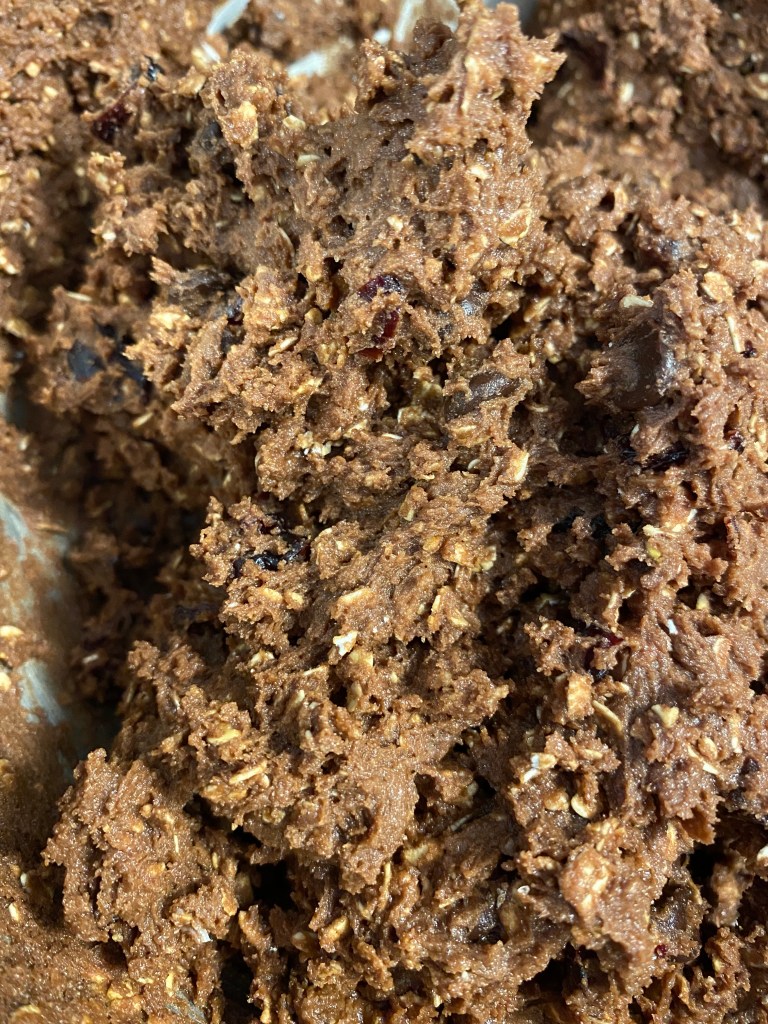
    5. Add in dried cranberries and chocolate chips and stir until fully combined.

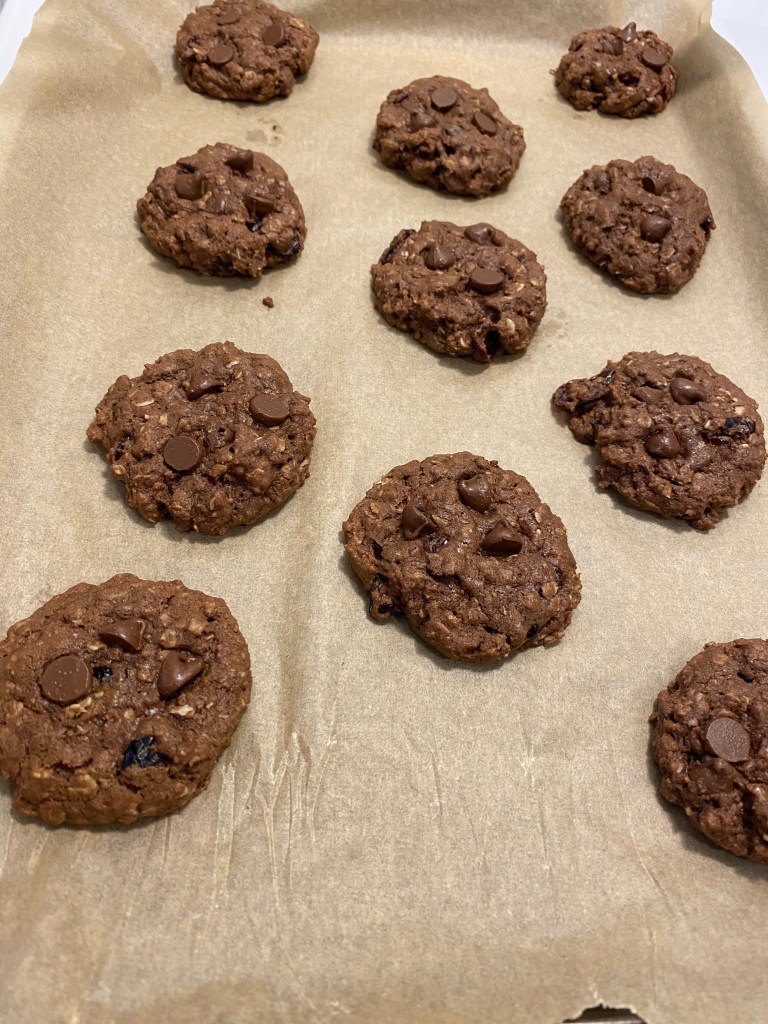
    6. Drop by spoonfuls onto parchment lined cookie sheets, and slightly flatten the cookie dough. Pop a few chocolate chips on the tops of the cookies if desired.

    7. Bake 10-12 minutes on middle rack of oven. Bottoms should be lightly browned, tops may look soft, but will harden as they cool down. (This will make them to be soft and irresistibly chewy!)

    8. Cool for 5 minutes on cookie sheets before transferring to a cooling rack.

    9. Makes about 3 dozen medium sized cookies.

    10. Store in sealed container up to 5 days. (Lets be honest:they never last that long!)

    Note: This cookie dough freezes very well, so if 3 dozen is too much to enjoy all at once, you can simply put the extra dough amount in a sealed plastic container in the freezer until you are ready to bake it off. To thaw, simply put the whole container in a larger bowl of hot water until the dough becomes soft and palpable again.

    I like to double this recipe, and then split up the dough into several leftover plastic yogurt containers and put them in the freezer. This makes it simple for baking off smaller batches of cookies whenever I feel like it without all the time it takes to mix it up!

    I’d love to hear how your cookies turned out! Feel free to tag Northbird using one of the links below if you are posting to social media:

    Happy Baking!

    More Desert & Snack Recipes:

    Other Tasty Sourdough Recipes to Check Out!

    Hi, I’m Jessie!

    I’m a Wife and Homeschooling Mom living in a remote town in Northern Ontario, Canada. I love making wholesome meals for my family from scratch, homeschooling our girls and learning more about natural living.

    Read more about my story HERE.

    Subscribe to Northbird’s email list to get weekly posts on: tasty recipes, activity ideas for kids, natural living tips, and some genuine mom thoughts and encouragement!

    Sourdough Discard Oatmeal Chocolate Chip Cookies

    • Servings: 3 dozen Cookies
    • Difficulty: Easy
    • Print

    Chocolate and cranberries are seriously so good together! Check out this tasty cookie recipe (optional directions to turn it into a sourdough discard recipe too!)


    This cookie dough freezes very well, so if 3 dozen is too much to enjoy all at once, you can simply put the extra dough amount in a sealed plastic container in the freezer until you are ready to bake it off. To thaw, simply put the whole container in a larger bowl of hot water until the dough becomes soft and palpable again, about 30 minutes.

    By Jessica Burman © 2024 The Northbird Blog. https://www.thenorthbirdblog.com


    Ingredients

  • 1 cup butter (soft)
  • 1 cup brown sugar
  • 1 cup white sugar
  • 2 eggs (or replace with 1/3 cup sourdough starter discard)
  • 1 teaspoon vanilla
  • 2 cups quick oats
  • 2 cups all purpose flour
  • 1 teaspoon baking powder
  • 1/2 teaspoon baking soda
  • 1/2 teaspoon sea salt
  • 1/2 cup cocoa powder
  • 1 cup chocolate chips (plus more for the tops)
  • 1- 1+1/2 cup dried cranberries

  • Directions:

    1. Preheat oven to 350 degrees fahrenheit.
    2. Cream together the softened butter and both sugars.
    3. Add the eggs (or sourdough starter) and vanilla and mix until fully combined and smooth.
    4. Add in the flour, baking powder, baking soda, salt and cocoa powder. Stir until all combined.
    5. Add in the oats, dried cranberries and chocolate chips and stir until fully combined.
    6. Drop by spoonfuls onto parchment lined cookie sheets, and slightly flatten the cookie dough. Pop a few chocolate chips on the tops if desired.
    7. Bake 10-12 minutes on middle rack of oven. Bottoms should be lightly browned, tops may look soft, but will harden as they cool down. (This will make them to be soft and irresistibly chewy!)
    8. Cool for 2 minutes on cookie sheets before transferring to cooling rack.
    9. Makes about 3 dozen medium sized cookies.
    10. Store in sealed container up to 5 days. (Lets be honest: they never last that long!)

    Nutrition


    Per 1 cookie: 120 calories; 4.2 g fat; 17.9 g carbohydrates;
    2.5 g protein.

    Return to Top

    Sourdough English Muffins

    Find Northbird on social media:

    This post contains affiliate links. As an Amazon associate, I earn from qualifying purchases. This means that I make a small commission at no extra cost to you. You can read my full disclosure HERE.

    Jump To Recipe Card

    Jump to Video

    Return to “Sourdough”

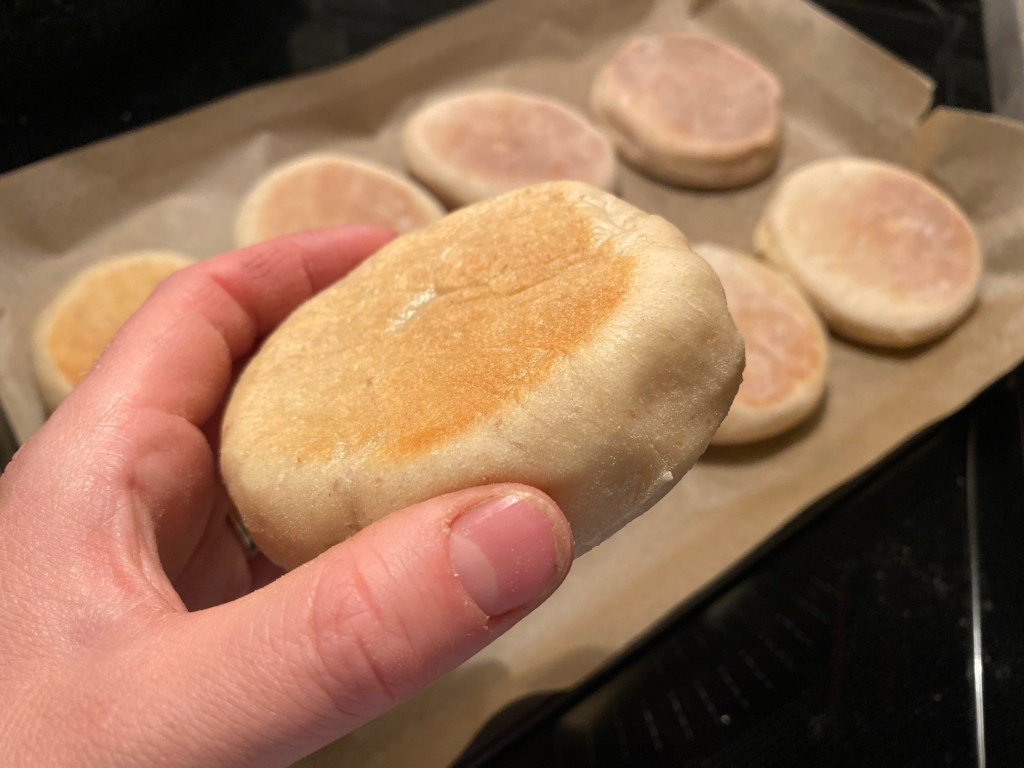
    I never knew until recent years that English Muffins were FRIED, not baked. I’m not sure why I just assumed they were baked (especially with the golden-brown tops and bottoms!)

    Anyway, since I began experimenting with developing my own recipe of this, we have eaten these quite often. Probably my favourite reason for making these so often through the summer months in particular, is that there’s no need to use the oven and overheat the kitchen. Definitely a bonus.

    Where do English Muffins Come From?

    According to the “Baking Hall of Fame”, a man named Samuel Bath Thomas emigrated from England to New York City (America) in 1874, and later in 1880 he opened his own bake shop in Manhattan, New York. It is thought that he first brought the fried bread recipe idea to America and made it popular.

    To this day, Americans call it an “English Muffin”, and the British simply call it a “Muffin”.

    Is an English Muffin the same as a Crumpet?

    No. English Muffins are more dense and have a more “bread-like” texture. They are hand-formed from dough. A Crumpet is spongier, lighter and has a thinner batter that is usually poured into a griddle base or mold. It is somewhat similar to a pancake, but typically smaller.

    Ways to eat English Muffins:

    These tasty fried breads are lovely when sliced through the middle, toasted, and spread with salted butter and jam. It also makes an easy lunch sandwich in the absence of sandwich bread.

    Perhaps one of the fast-food breakfast favourites that you might see in North America at a Mcdonalds, A&W, or Tim Hortons is a: Bacon, Egg and Cheese on an English Muffin”.

    One of our quick travel meals that we like to do is to make little mini pizzas out of sliced English Muffins. We spread pizza sauce, add pepperoni, other toppings and cheese. A quick bake then wrap in tinfoil to maintain heat makes it a tasty and warm meal on-the-go.

    New to Sourdough?

    Check out THIS POST on Sourdough Bread to see some tips and helpful info that I’ve learned for looking after and feeding a sourdough starter.

    How to Make English Muffins from scratch:

    How to Make Sourdough English Muffins

    Supplies Needed:

    Ingredients:

    • 3/4 cup of ACTIVE sourdough starter
    • 2 tablespoons of liquid sweetener (pure maple syrup or honey are what I use most often)
    • 1 + 1/2 cups of 2-3% milk (or sub plain yogurt and add 1/3 cup water)
    • 4 cups of all purpose flour (or light spelt or bread flour… add additional 1/4 cup as needed to make soft dough)
    • 2 teaspoons fine sea salt
    • Cornmeal for sprinkling tops/bottoms

    Directions:

    1. Whisk together sourdough starter, liquid sweetener and milk/yogurt until no starter clumps remain and it is a frothy white liquid.

    2. Add flour and sea salt and mix into dough.

    3. Knead for 3-5 minutes. Add additional flour as needed to make into a soft dough.

    4. Cover and rest for 8-12 hours to long ferment at room temperature. It will more than double in size *See Note Below

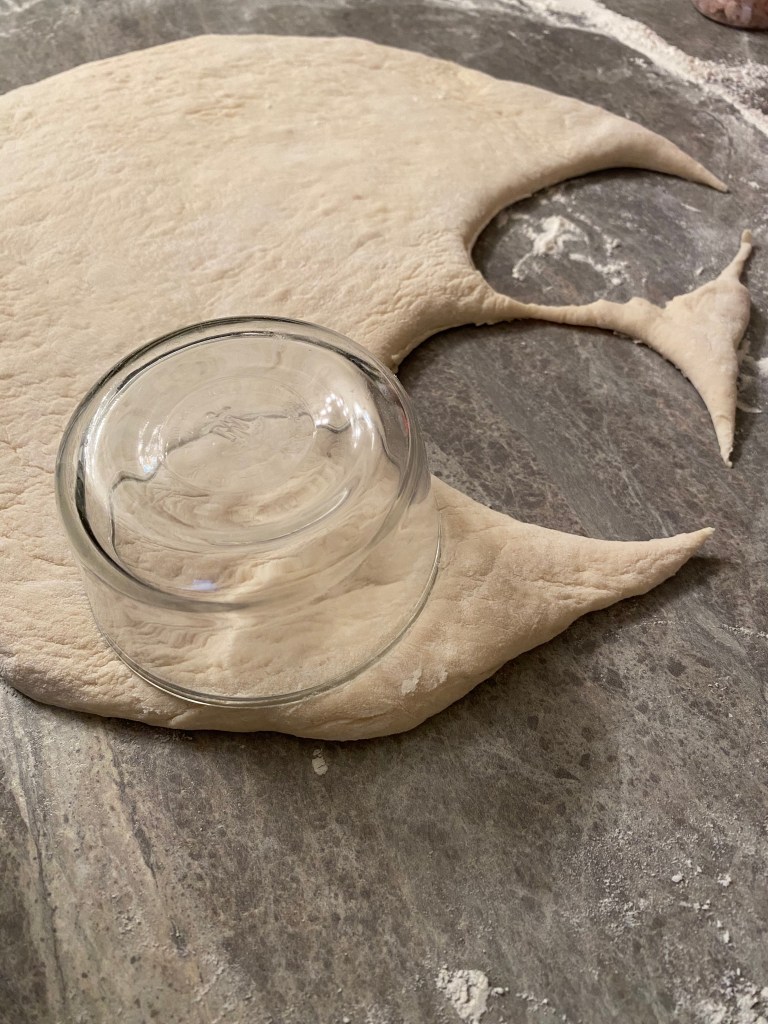
    5. Roll out so that dough is about 3/4 inch thick (2.5 cm). Cut out rounds of dough 3-4 inches in diameter. (I just use circular tupperware to cut the dough)

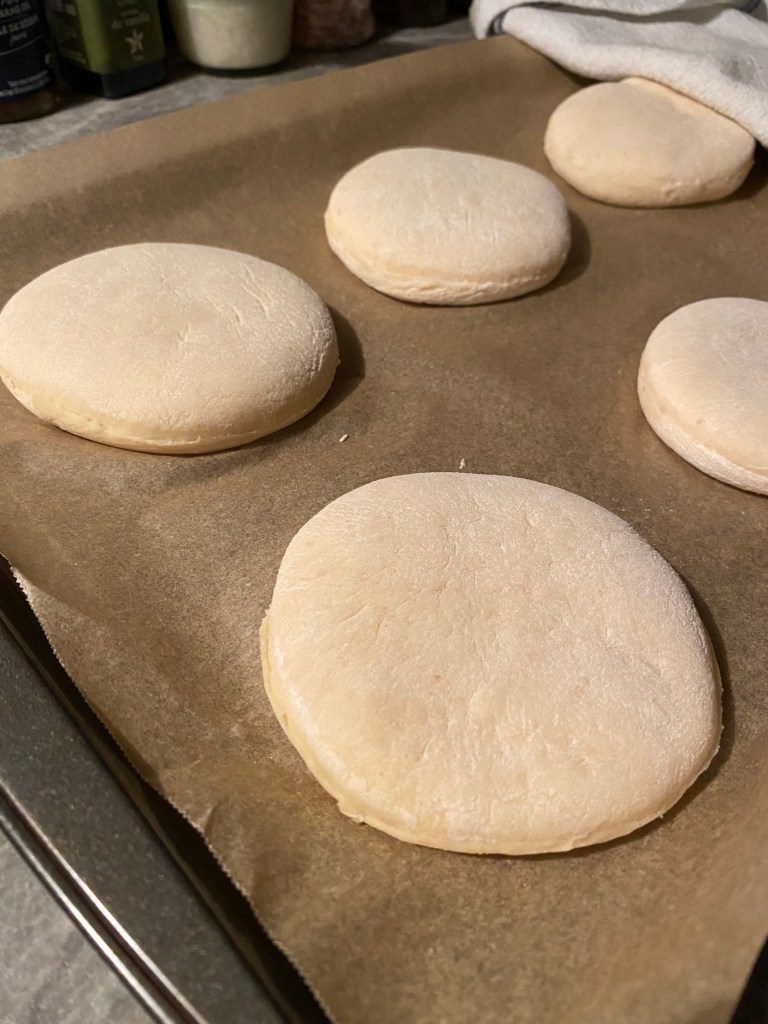
    6. Place on parchment covered baking sheet and cover with a tea towel. Rest 1-2 hours (they will puff up during this time).

    7. Warm skillet on low/medium heat with lid on for 3-5 minutes (dry, no oil). Sprinkle the tops of the english muffins with cornmeal.

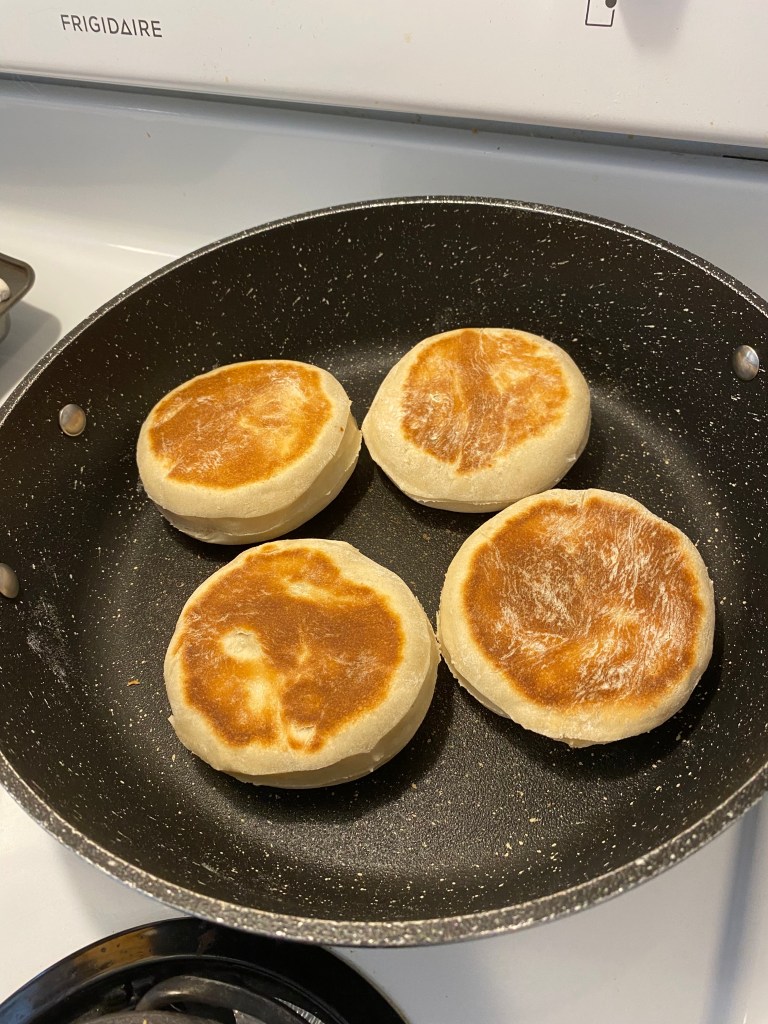
    8. Place 3-4 English Muffins in the skillet, top (cornmeal covered) side-down, and sprinkle cornmeal on the revealed bottom side. Secure lid and fry for 4-6 minutes or until golden brown. Flip over, cover and fry for another 3-4 minutes or until golden brown.

    Note: The first batch may need some tweaking of the temperature and timing as every stove is different. Too hot, and it will brown without baking the inside.

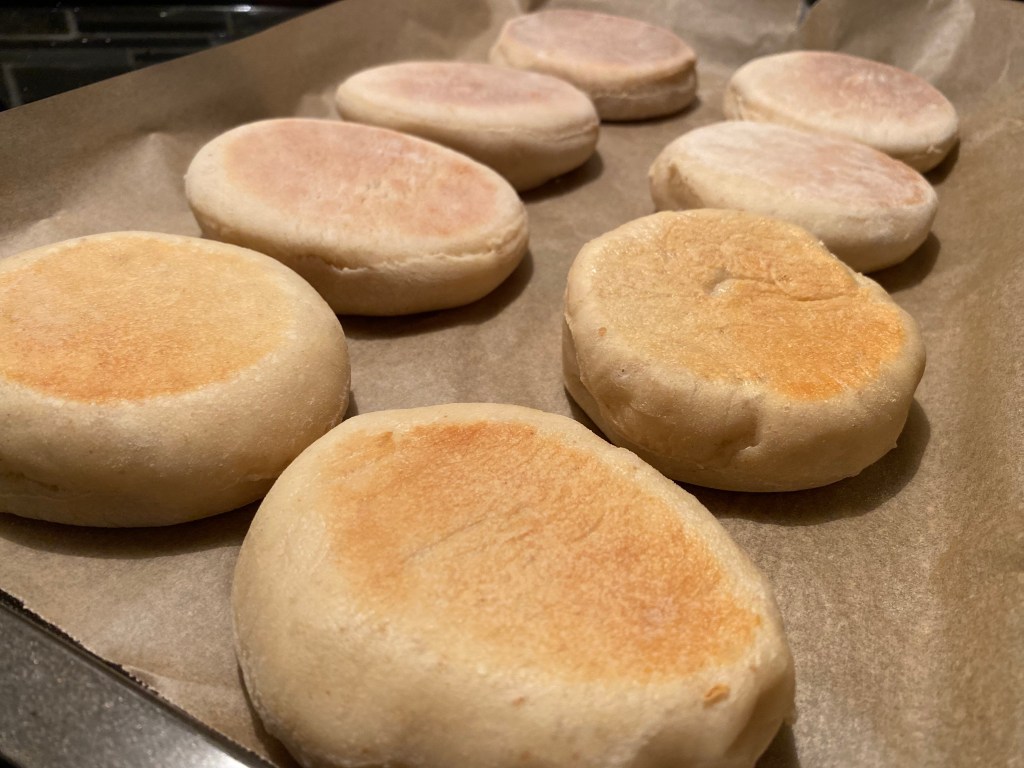
    9. Cool for several minutes on baking sheets before cutting open. Makes 10-12 English Muffins (depending on the size of the dough circles!).

    10. Store in a sealed container at room temperature for up to 5 days, or in an air-sealed ziploc bag in the freezer for up to 3 months.

    Additional Notes:

    I usually feed my sourdough starter in early afternoon, then it is bubbly and ready to use by early evening when I mix up my dough. The long ferment takes place overnight, and the next morning all that is left is a roll out, cut, rest, and then fry: just in time for breakfast!

    Other Tasty Sourdough Recipes to Check Out!

    Hi, I’m Jessie!

    I’m a Wife and Homeschooling Mom living in a remote town in Northern Ontario, Canada. I love making wholesome meals for my family from scratch, homeschooling our girls and learning more about natural living.

    Read more about my story HERE.

    Subscribe to Northbird’s email list to get weekly posts on: tasty recipes, activity ideas for kids, natural living tips, and some genuine mom thoughts and encouragement!

    Sourdough English Muffins

    • Servings: 10-12
    • Difficulty: Easy
    • Print

    One of my favourite go-to recipes for making sourdough without using the oven!


    I usually feed my sourdough starter in early afternoon, then it is bubbly and ready to use by early evening when I mix up my dough. The long ferment takes place overnight, and the next morning all that is left is a roll out, cut, rest, and then fry: just in time for breakfast!


    Ingredients

  • 3/4 cup of ACTIVE sourdough starter
  • 2 tablespoons of liquid sweetener (pure maple syrup or honey are what I use most often)
  • 1 + 1/2 cups of 2-3% milk (or sub plain yogurt and add 1/3 cup water)
  • 4 cups of all purpose flour (or light spelt or bread flour… add additional 1/4 cup as needed to make soft dough)
  • 2 teaspoons fine sea salt
  • Cornmeal for sprinkling tops/bottoms

  • Directions:

    1. Whisk together sourdough starter, liquid sweetener and milk/yogurt until no starter clumps remain and it is a frothy white liquid.
    2. Add flour and sea salt and mix into dough.
    3. Knead for 3-5 minutes. Add additional flour as needed to make into a soft dough.
    4. Cover and rest for 8-12 hours to long ferment at room temperature.
    5. Roll out so that dough is about 3/4 inch thick (2.5 cm). Cut out rounds of dough 3-4 inches in diameter. (I just use circular tupperware to cut the dough)
    6. Place on parchment covered baking sheet and cover with a tea towel. Rest 1-2 hours (they will puff up during this time).
    7. Warm skillet on low/medium heat with lid on for 3-5 minutes (dry, no oil). Sprinkle the tops of the english muffins with cornmeal.
    8. Place 3-4 English Muffins in the skillet, top (cornmeal covered) side-down, and sprinkle cornmeal on the revealed bottom side. Secure lid and fry for 4-6 minutes or until golden brown. Flip over, cover and fry for another 3-4 minutes or until golden brown.
    9. Note: The first batch may need some tweaking of the temperature and timing as every stove is different. Too hot, and it will brown without baking the inside.

    10. Cool for several minutes on baking sheets before cutting open. Makes 10-12 English Muffins (depending on the size of the dough circles!).
    11. Store in a sealed container at room temperature for up to 5 days, or in an air-sealed ziploc bag in the freezer for up to 3 months.

    Nutrition


    Per 1 serving: 194 calories; 0.8 g fat; 42.8 g carbohydrates;
    4.5 g protein.

    Return to Top

    Apple Cinnamon Overnight Oats

    Find Northbird on social media:

    This post contains affiliate links. As an Amazon associate, I earn from qualifying purchases. This means that I make a small commission at no extra cost to you. You can read my full disclosure HERE.

    Jump to Recipe Card

    Jump to Video

    Return to “Breakfast”

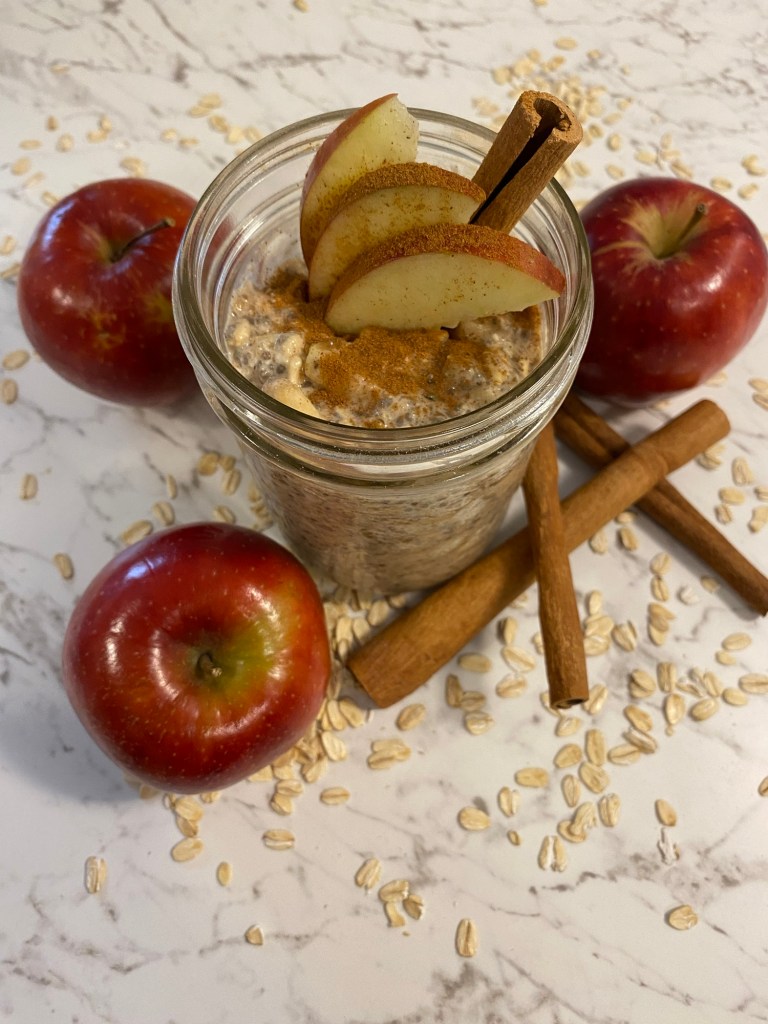
    Overnight Oats in our Home…

    We like to start off our Monday mornings with a ready-to-go container of overnight oats, prepared the night before.

    For several months now, I have been taking about ten minutes each Sunday evening to quickly mix up 4 identical containers of overnight oats.

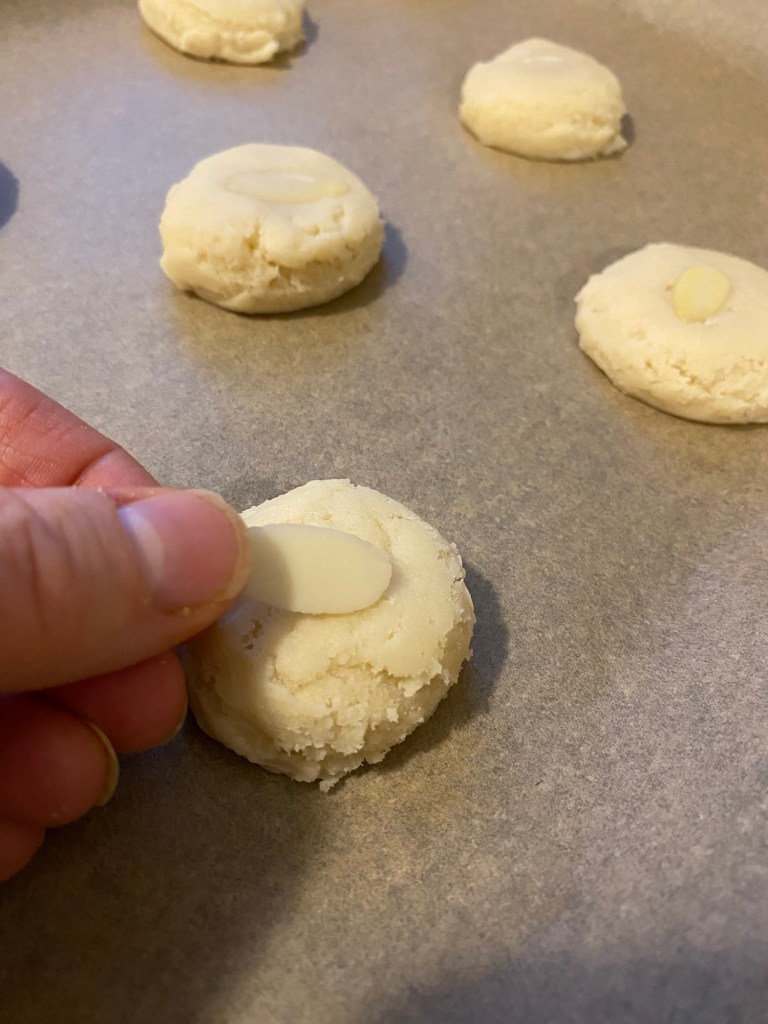
    Then overnight, the rolled oats and other ingredients will soften and thicken in the milky/yogurt mix and deliciously absorb the flavours of apple and cinnamon.

    The next morning it is a super quick breakfast and easy start to the day (which is why we have variations of this recipe every Monday morning!).

    I always feel full, and well energized during the day when having this for breakfast, and often don’t realize how much time has gone by when I finally feel hungry again (which says a lot, because our five month old baby is currently exclusively breastfed, and that usually makes me constantly hungry!)

    Nutrition of Overnight Oats:

    Overnight oat breakfasts are packed full of protein, healthy fats, carbs, and lots of good nutrition for our bodies.

    Did you know that by soaking the oats overnight they are fermenting? This is one reason why softened and lightly fermented oats are easier to digest and beneficial for gut health.

    Here are a few other ways that overnight oats help our bodies:

    • Fibre (found in the oats and seeds) helps to regulate and improve digestion
    • High in protein: essential for muscle growth and producing energy
    • Lots of B-Vitamins, copper, biotin, manganese and zinc that is beneficial to hair, skin and nails.
    • Healthy fats (chia and yogurt) help support heart health and brain function.
    • Unsaturated fatty acids and magnesium helps to support fat burning and weight loss.
    • Zinc helps to support the immune system and reduce inflammation.

    Cinnamon: More than just a “spice”

    • Chinese medicine has been using cinnamon as an antioxidant for centuries
    • Studies show that it reduces inflammation
    • Used as an anti-fungal and antiviral
    • It helps to regulate blood sugar levels
    • Cinnamon supports heart health
    • Improves circulation through the body

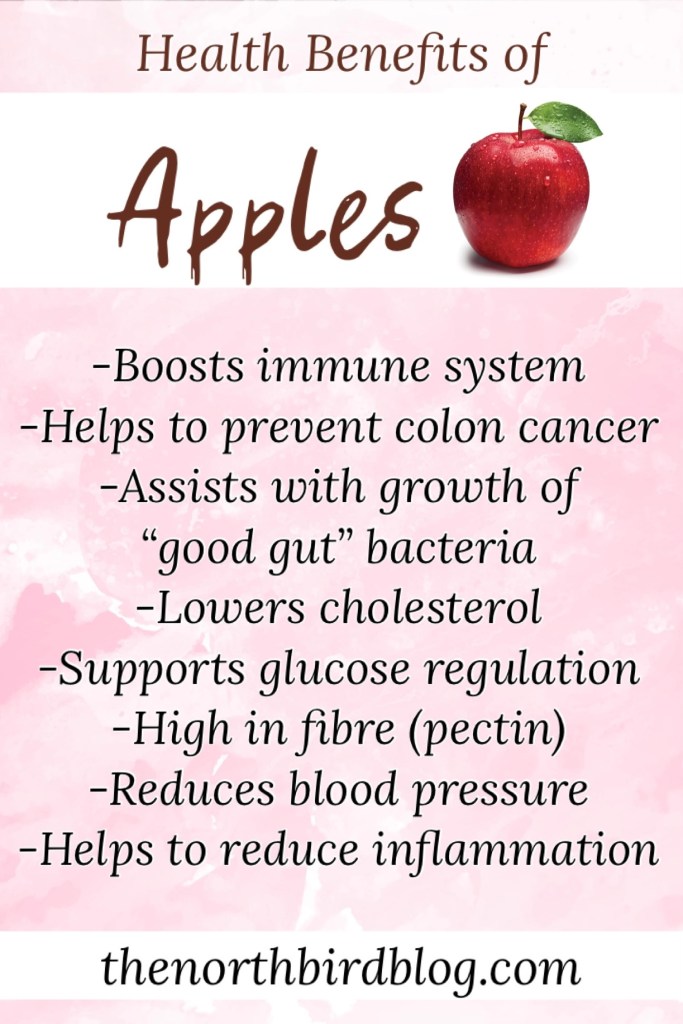
    Apples: “An apple a day keeps the doctor away” (In some ways this old quote can certainly be true!)

    • Apples give support to our immune systems
    • They help to prevent colon cancer
    • Apples assist with growth of “good gut” bacteria in the intestines
    • Eating apples can lower cholesterol
    • Support glucose regulation
    • Apples are high in fibre (pectin)
    • Has been shown to help reduce blood pressure
    • Helps to reduce inflammation

    Here’s a short video of visually putting it all together to enjoy the next morning!

    How to Make Apple Cinnamon Overnight Oats:

    Supplies Needed:

    Ingredients:

    • 1/2 cup rolled oats (You could use quick oats, but old fashioned/rolled oats will have the best results)
    • 1/4 cup yogurt (greek is my favourite. You can check out HERE how to make your own yogurt)
    • 3/4 cup milk (or favourite nut milk)
    • 1 tablespoon chia seeds
    • 1 tablespoon hemp seeds
    • 2 tablespoons of 3 Seed Blend (See THIS POST on how to make it with chia/sunflower/flax seeds)
    • 1/2 teaspoon vanilla extract
    • 1 tablespoon liquid honey
    • 1/2 teaspoon ground cinnamon
    • 1/2 apple, washed & diced

    Directions:

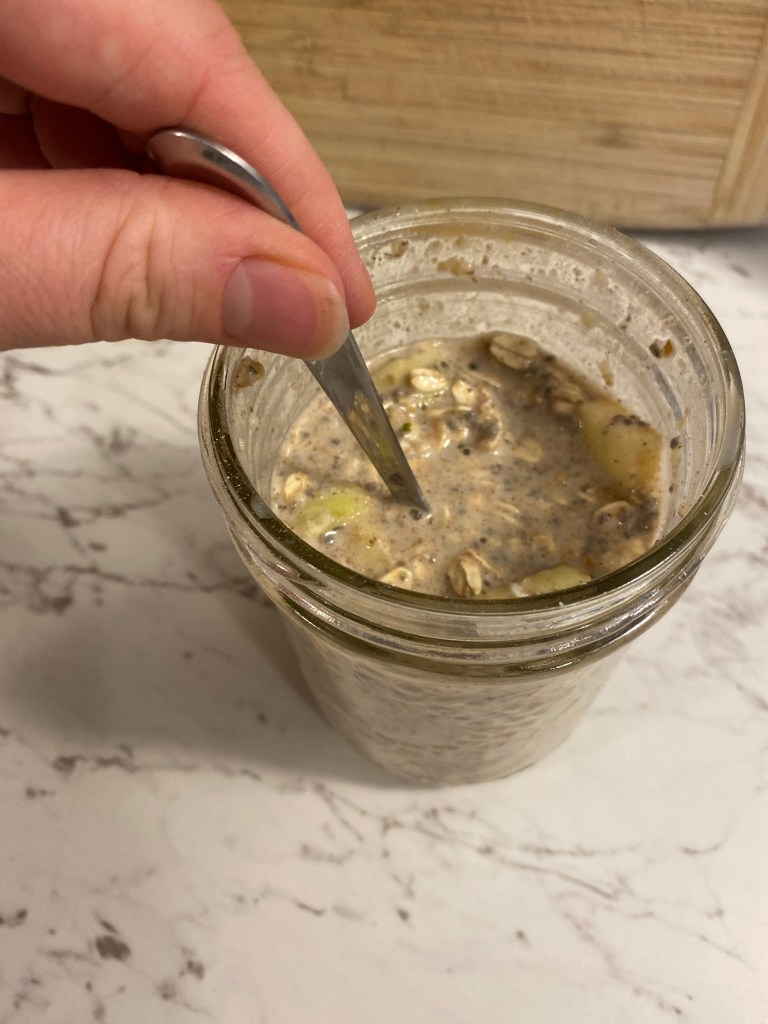
    1. Add all ingredients to container or jar and stir well. Add additional milk at the end if desired (it will thicken overnight).

    2. Keep in fridge overnight, stir again the next morning and add another dash of cinnamon in top if desired.

    Check out these other Breakfast Recipes from the Northbird Kitchen!

    Hi, I’m Jessie!

    I’m a Wife and Homeschooling Mom living in a remote town in Northern Ontario, Canada. I love making wholesome meals for my family from scratch, homeschooling our girls and learning more about natural living.

    Read more about my story HERE.

    Subscribe to Northbird’s email list to get weekly posts on: tasty recipes, activity ideas for kids, natural living tips, and some genuine mom thoughts and encouragement!

    Apple Cinnamon Overnight Oats

    • Servings: 1x 500ml jar (1 pint)
    • Difficulty: Easy
    • Print

    Start your day off smoothly with this quick and tasty Overnight Oat recipe! Simply mix in a jar the night before, then take out of the fridge the next morning and it's ready to eat!


    Ingredients

  • 1/2 cup rolled oats
  • 1/4 cup yogurt
  • 3/4 cup milk (or favourite nut milk)
  • 1 tablespoon chia seeds
  • 1 tablespoon hemp seeds
  • 2 tablespoons of 3 Seed Blend **See THIS POST on how to make it
  • 1/2 teaspoon vanilla extract
  • 1 tablespoon liquid honey
  • 1/2 teaspoon cinnamon
  • 1/2 apple, washed & diced

  • Directions:

    1. Add all ingredients to container or jar and stir well. Add additional milk at the end if desired (it will thicken overnight).
    2. Keep in fridge overnight, stir again the next morning and add another dash of cinnamon in top if desired.

    Nutrition


    Per 500ml serving: 591 calories; 24.2 g fat; 70 g carbohydrates;
    27.1 g protein.
    Return to Top

    Homemade Flu Medicine: Fire Cider

    Find Northbird on social media:

    This post contains affiliate links. As an Amazon associate, I earn from qualifying purchases. This means that I make a small commission at no extra cost to you. You can read my full disclosure HERE.

    Jump To Recipe Card

    Jump to Video

    Return to “More Recipes”

    Return to “Natural Living”

    What is Fire Cider?

    Fire Cider is an amazing natural remedy that will boost your immune system and help protect you from getting those frustrating seasonal viruses that always seem to be floating around.

    This powerful tonic looks different from home to home, but generally they contain a fermented mixture of:

    • apple cider vinegar
    • hot peppers
    • garlic
    • onions
    • and horseradish root.

    After fermenting for several weeks, the liqud is strained into a new jar and honey can be added to help sweeten the homemade tonic.

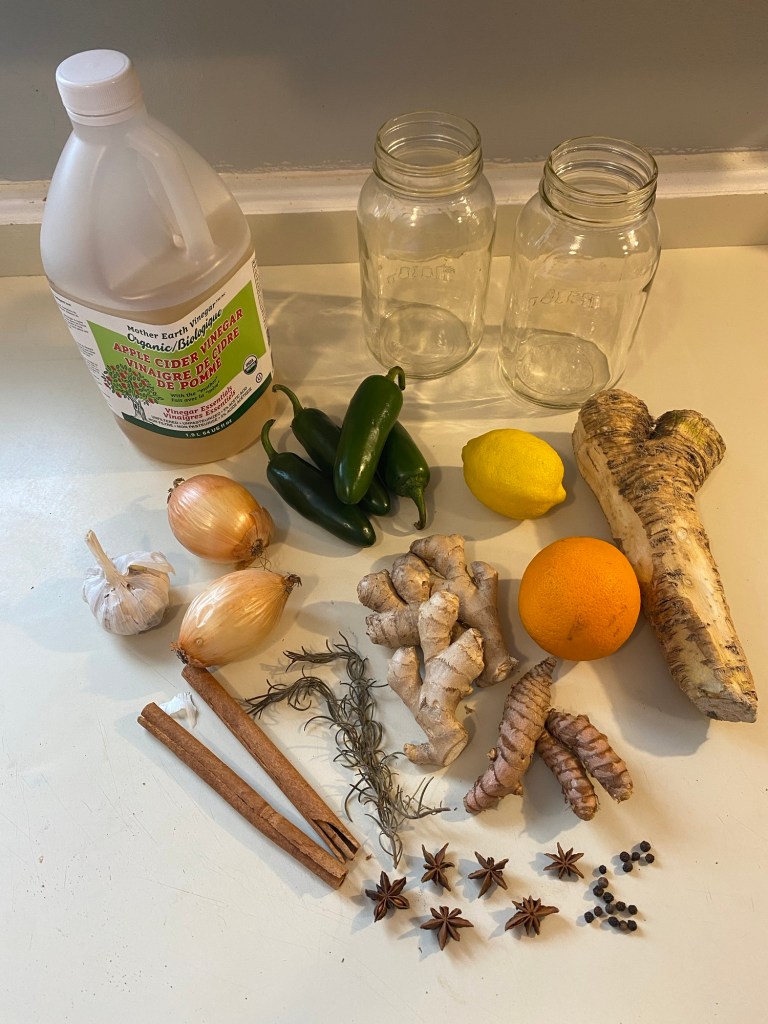
    These other tubers, citrus, herbs and spices are ones that I’ve either used in my own fire cider, or I’ve heard of folks using in theirs:

    • Turmeric
    • Ginger
    • Lemon
    • Orange
    • Lime
    • Rosemary
    • Thyme
    • Star anise
    • All Spice Berries
    • Peppercorns
    • Cinnamon stick

    All of these are amazing ingredients on their own, and packed full of nutrition and natural medicine for our bodies. When put together, all of these are one powerful kick to get rid of illness!

    On a personal note, special mention should go to my mother, Sharon, who became known in our church and homeschooling community for having her own variation of fire cider, or “Sharon’s Brew”.

    In our home growing up, it was the dreaded jar in the fridge that had been fermenting for AGES and honestly tasted quite deadly. The longer it fermented in the jar, the more potent the hot peppers made the taste of the liquid.

    Whenever colds or illness came around, out came the jar and a handful of spoons to dip into the liquid and swallow the awful stuff. No honey to sweeten it for us!

    But it worked. And it was a much better solution than popping pharmaceutical drugs into our bodies.

    That’s why natural medicine is so important: you know exactly what is going into your body, and you are using herbs and natural foods to look after the health of your body —the way that our Creator intended.

    Where Does Fire Cider Come From?

    The idea of fire cider has been used for thousands of years by herbalists, physicians and apothecaries, who would ferment different foods, spices and herbs to make this amazing natural remedy.

    However, it wasn’t until around 1970 that a well known herbalist and author named Rosemary Gladstar began encouraging the public to make their own apple cider vinegar tonic, and made the name “Fire Cider” popular. You can read more in her book “Fire Cider! 101 Zesty Recipes for Health-Boosting Remedies”.

    On that note, she has many more amazing books on medicinal herbs and natural remedies that you can check out HERE.

    Why is it Called “Fire Cider”?

    The “fire” part of it is from the hot peppers that ferment in the apple cider vinegar and give it that special “kick” that fire cider is known for.

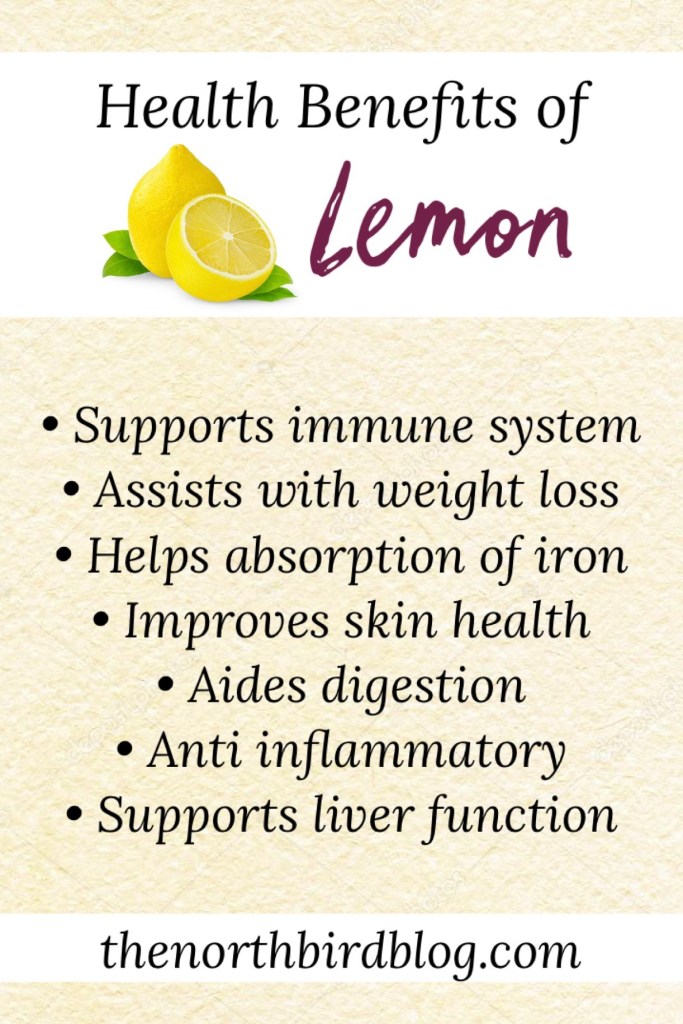
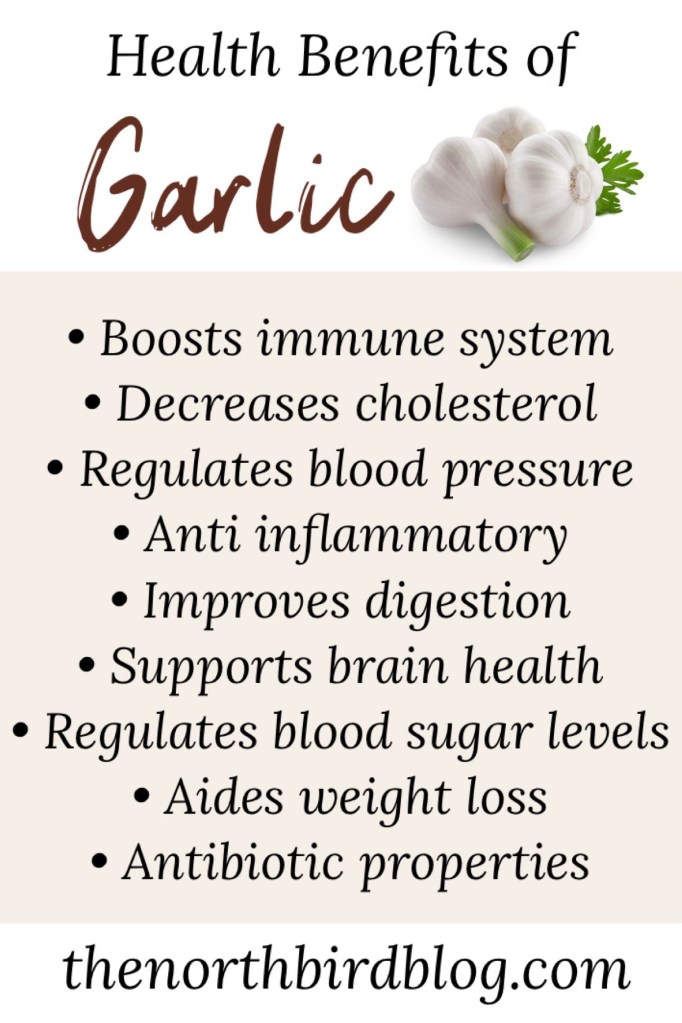
    Health Benefits of Fire Cider Ingredients:

    Please note, that although this is an amazing and medicinally powerful mixture of fermented goodness, I do not have a medical or herbalist degree. So when I recommend making this recipe, it is purely from experience and my own research that leads me to write about this topic.

    I am passionate about learning all I can about natural medicine, and sharing what I have learned on this blog. I highly encourage anyone interested to learn more from seasoned herbalists like Rosemary Gladstar,

    Reasons NOT to take Fire Cider:

    Based on my research, I do not recommend taking this every day if you are pregnant or if you have acid reflux or other chronic digestive problems. I also wouldn’t give it to a young child.

    Ways to take the Fire Cider:

    If you have a sensitive stomach and cannot take it strait, here are some other ways to still take fire cider:

    • Dilute it with juice or other beverage
    • Mix it into your meal
    • Use it as a tangy salad dressing
    • Use it as a marinade

    Watch this video to see the process of making your own fire cider!

    How to Make Your Own Fire Cider:

    Supplies Needed:

    Ingredients:

    Directions:

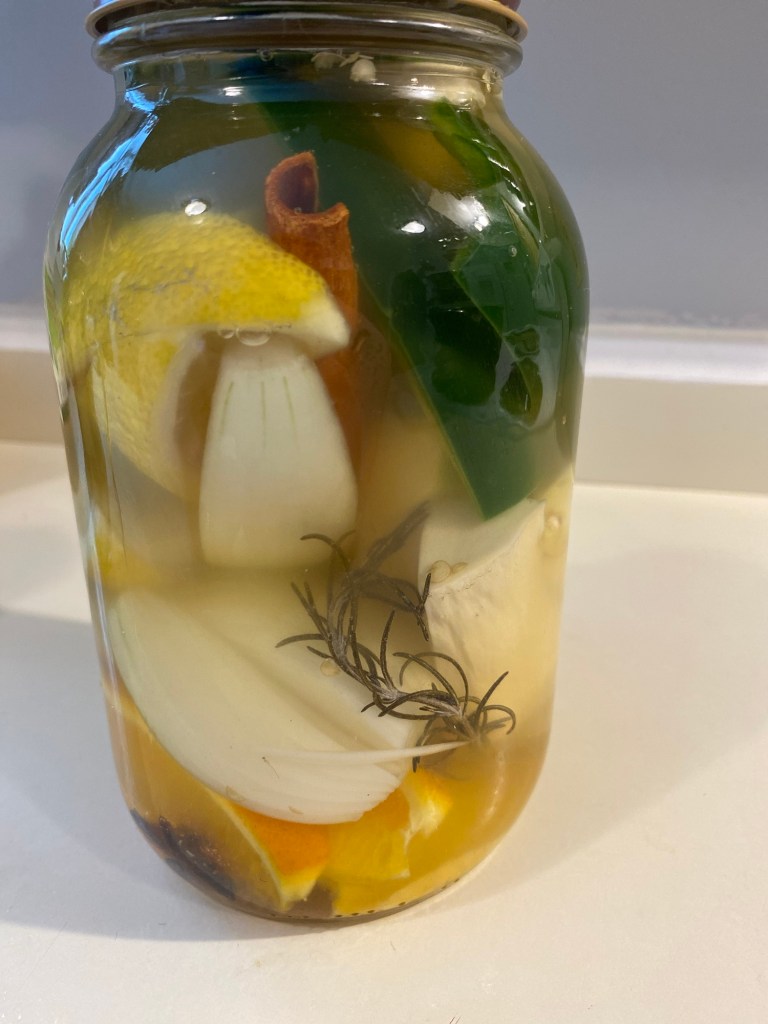
    1. Cut all fresh ingredients up and stuff into jars. Add spices in.
    2. Fill the jar up to the top with apple cider vinegar, making sure that all the ingredients are covered to prevent mold from growing.
    3. Use a plastic jar lid or put a layer of parchment paper between the jar and the metal lid so that the vinegar doesn’t react with the metal.
    4. Give jar a shake once a day, and switch the lid once a week or as needed.
    5. Ferment for 4 weeks.
    6. Use a fine mesh or cheesecloth strainer to strain out the jar contents and return liquid to fresh jars.
    7. Store in fridge and use within one year.
    8. For an adult: take three times a day when feeling ill, or take once a day as a tonic to boost and protect your immune system. (Dosage recommended by theherbalacademy.com)

    Additional Notes:

    • You can add honey directly to the jar until it has reached the desired taste to off-set the “kick”, or you can store the jar with just the fermented liquid and add sweetener as you take it. I usually take my “ medicine shot” with homemade elderberry syrup to use instead of honey to sweeten it.
    • 2 packed 1-litre jars produces around 750-1000ml of finished fire cider.

    More Ideas for Natural Living:

    Hi, I’m Jessie!

    I’m a Wife and Homeschooling Mom living in a remote town in Northern Ontario, Canada. I love making wholesome meals for my family from scratch, homeschooling our girls and learning more about natural living.

    Read more about my story HERE.

    Subscribe to Northbird’s email list to get weekly posts on: tasty recipes, activity ideas for kids, natural living tips, and some genuine mom thoughts and encouragement!

    Check out on the Natural Living Page:

    Nature’s Medicine

    An on-going picture collection of various herbs, vegetables, fruits, oils, etc and highlighting some of the amazing health benefits that they have to offer us!

    Homemade Flu Medicine: Fire Cider

    • Servings: 1-2 1 litre jars
    • Difficulty: Easy
    • Print

    A powerful natural tonic made from hot peppers, root vegetables, spices, citrus, herbs, and fermented in apple cider vinegar.


    • You can add honey directly to the jar until it has reached the desired taste to off-set the “kick”, or you can store the jar with just the fermented liquid and add sweetener as you take it. I usually take my “ medicine shot” with homemade elderberry syrup to use instead of honey to sweeten it.
    • 2 packed 1-litre jars produces around 750-1000ml of finished fire cider.


    Ingredients

  • Apple Cider Vinegar
  • Fresh horseradish root
  • Onion
  • Garlic
  • Ginger root
  • Turmeric root
  • Hot peppers (chillies, jalepenos, your preference how hot you want it!)
  • Lemon
  • Orange
  • Rosemary (fresh or dried)
  • Star anise
  • Peppercorns (10-15 per 1 litre jar)
  • Cinnamon stick

  • Directions:

  • Cut all fresh ingredients up and stuff into jars. Add spices in.
  • Fill the jar up to the top with apple cider vinegar, making sure that all the ingredients are covered to prevent mold from growing.
  • Use a plastic jar lid or put a layer of parchment paper between the jar and the metal lid so that the vinegar doesn’t react with the metal.
  • Give jar a shake once a day, and switch the lid once a week or as needed.
  • Ferment for 4 weeks.
  • Use a fine mesh or cheesecloth strainer to strain out the jar contents and return liquid to fresh jars.
  • Store in fridge and use within one year.
  • For an adult: take three times a day when feeling ill, or take once a day as a tonic to boost and protect your immune system. (Dosage recommended by theherbalacademy.com)
  • Nutrition


    Per 1 tablespoon serving: 27 calories; 0.8 g fat; 5.2 g carbohydrates;
    0.9 g protein.
    Return to Top

    Make Your Own Pumpkin Puree

    Find Northbird on social media:

    This post contains affiliate links. As an Amazon associate, I earn from qualifying purchases. This means that I make a small commission at no extra cost to you. You can read my full disclosure HERE.

    Jump To Recipe Card

    Jump to Video

    Return to “Homemade Pantry”

    We love this time of year! Lots of beautiful fall colours, it’s sweater weather, and it’s time to harvest what is left in the garden.

    (Now, this year is a bit of an exception as there wasn’t much of a garden to speak about!) But other years at my parent’s house there has been much fun in discovering all the pumpkins and squash that have been hiding all summer, and bringing them inside to store for the next several months.

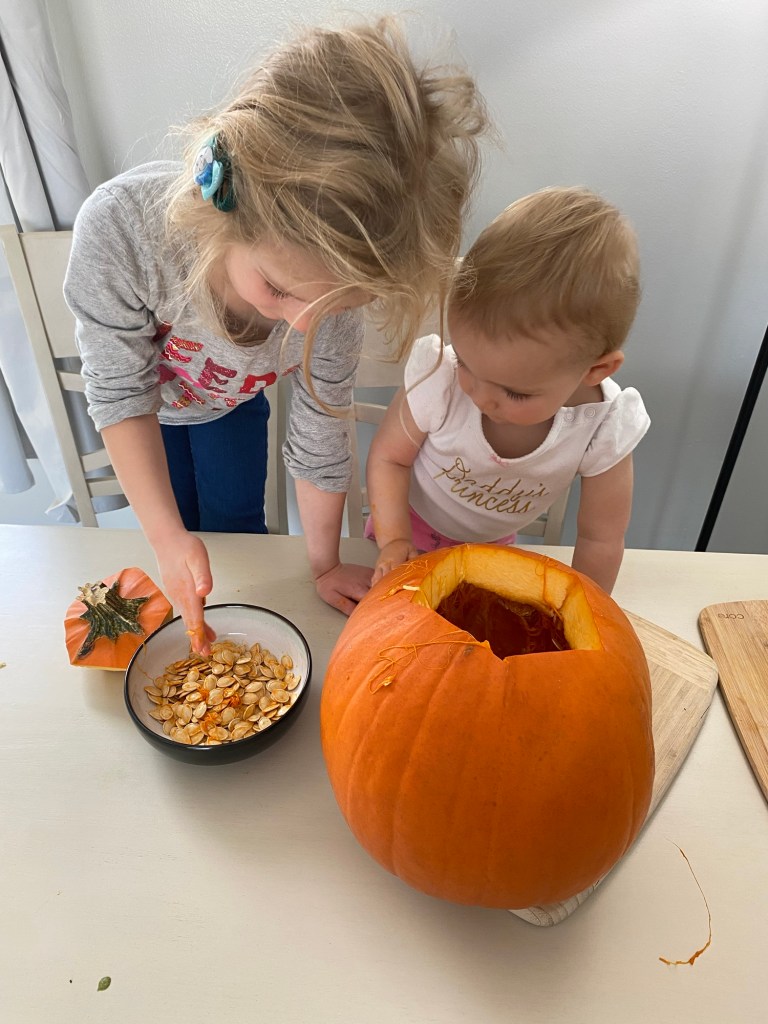
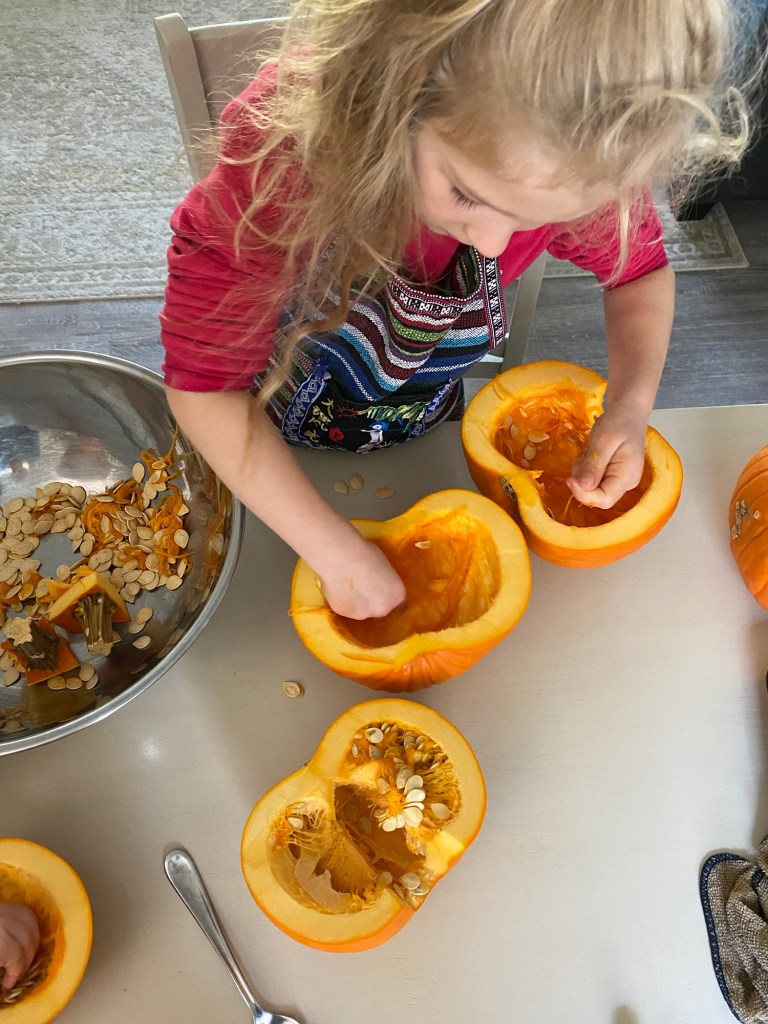
    We particularly love cutting up and cooking pumpkins to turn into homemade pumpkin puree. It’s a great activity for the kids to help with, working on their fine motor skills and scooping out all the gooey seeds!

    Ways to use Pumpkins and Pumpkin Puree:

    There are so SO many ways of using this tasty fall vegetable besides carving it up and putting it on your doorstep for decoration!

    Here are a few of my favourites plus a few more fun ideas:

    Sweet
    Savoury
    Pumpkin PiePumpkin Seed Wheat Bread
    Pumpkin MuffinsPumpkin Crackers
    Pumpkin Energy BallsPumpkin Egg Noodles & Other Pastas
    Pumpkin Chocolate SquaresPumpkin Hummus & Veggie Dips
    Pumpkin Sweet BreadPumpkin Soup Variations
    Pumpkin CookiesPumpkin Casserole
    Pumpkin Spiced Latte & Other drinksStuffed Pumpkin Dishes
    Pumpkin Pancakes & WafflesFried Pumpkin Fritters

    Does the Size of Pumpkin Matter?

    Honestly, the size only matters for what you plan on using the puree for. The smaller pumpkins will typically be sweeter, and the larger ones will just be a bit more watery.

    Smaller pumpkins, such as “pie pumpkins” are usually used for (obviously!) pies! They are sweeter, and have a more distinct taste, making them ideal for baked goodies and treats.

    The larger pumpkins are not usually used for pies and baking due to their slightly more dulled taste because they have a higher water content. This of course doesn’t mean that they can’t be used in baking and cooking, it’s purely a matter of preference.

    What can you do with the Pumpkin Seeds?

    Here are 3 ways that we use leftover pumpkin seeds:

    1. Seed Saving for planting the following year (s).
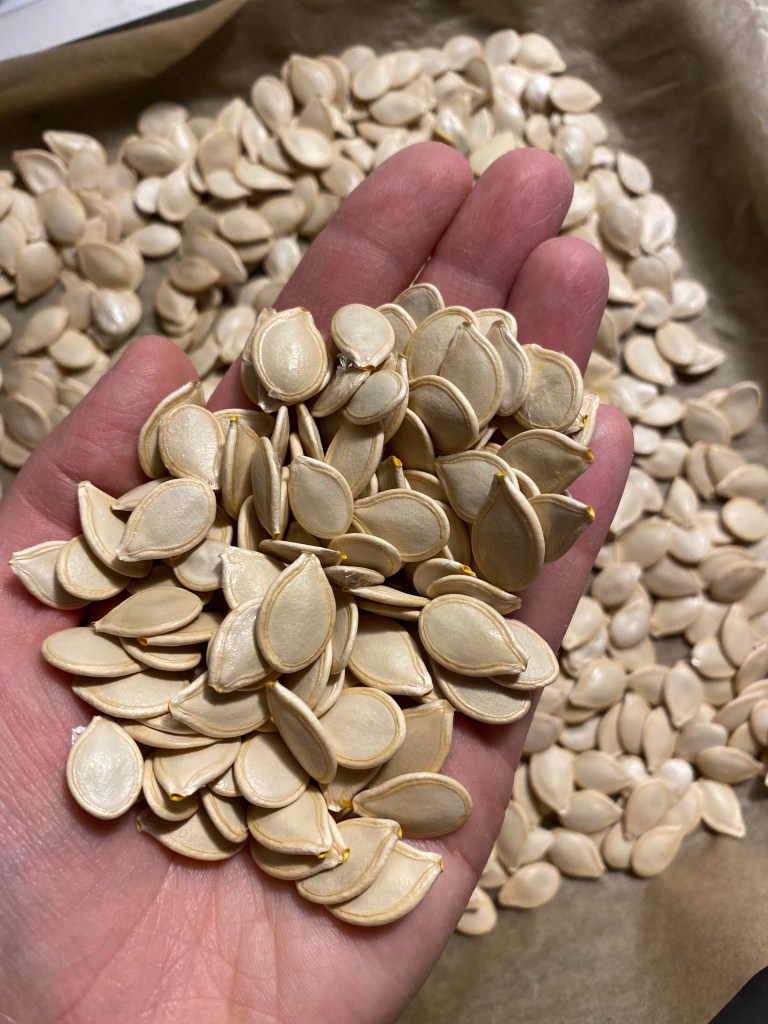
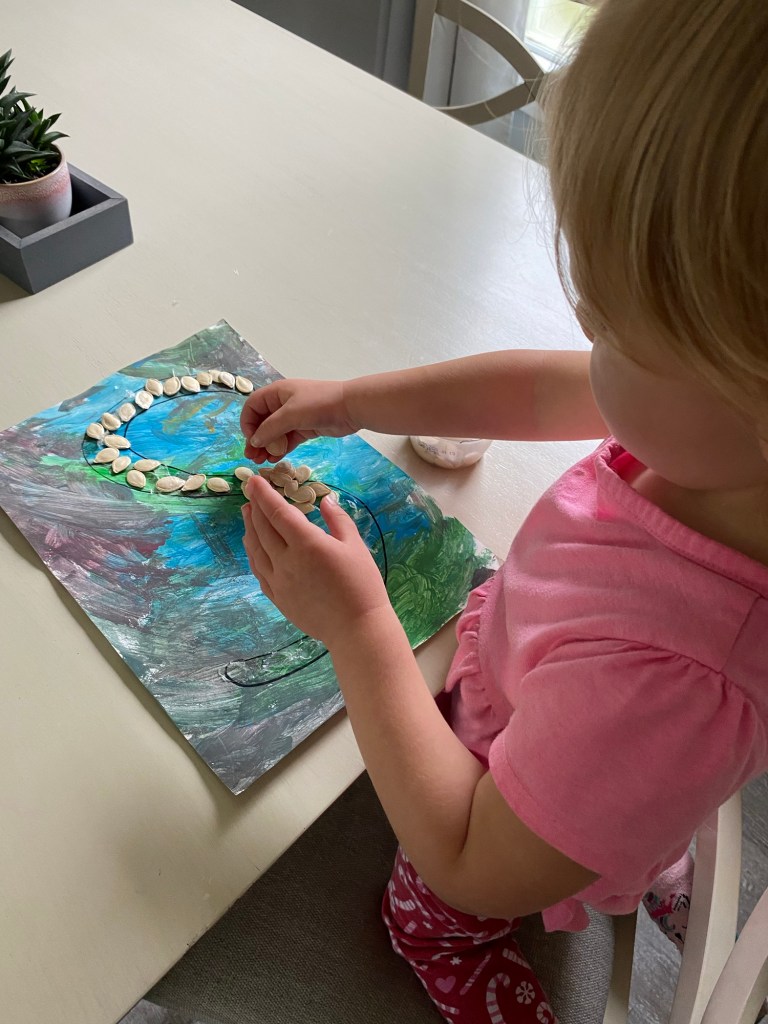
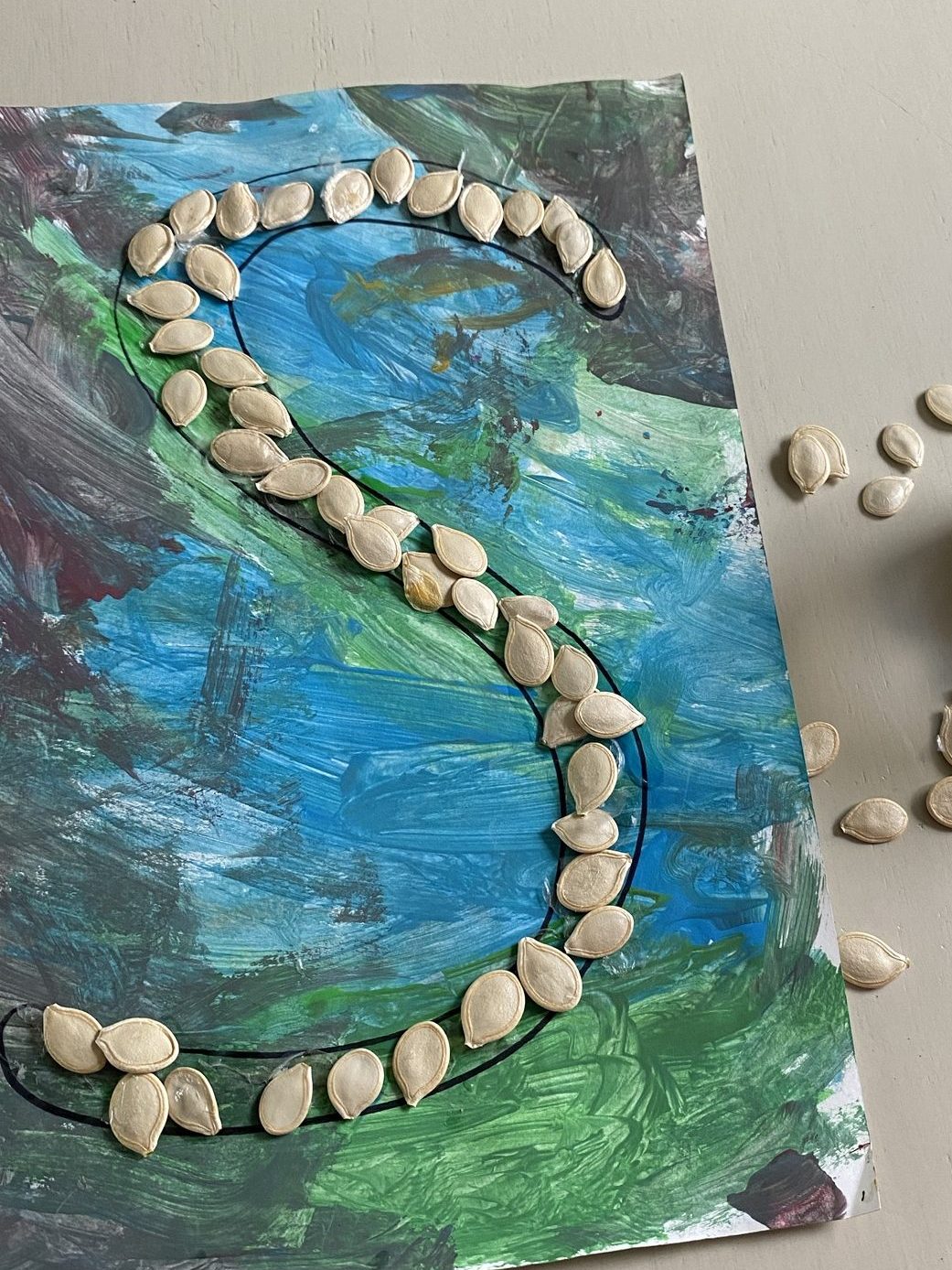
    2. Dry the seeds to use in crafts or educational activities.
    3. Roast and eat them in so many different ways!

    Saving Pumpkin Seeds for Planting:

    1. Clean seeds in a bowl of water and separate out any pulp or broken seeds. Select the biggest and best seeds to save.
    2. Drain off as much water as possible and pat the seeds as fry as you can.
    3. Put seeds on parchment paper to continue drying for several days.
    4. Put in a paper envelope and label.
    5. If you are using the seeds the following planting season, you can store it in a cool, dry pantry. If you want the germination of the seeds to last for many years, put in the freezer.
    6. Note: If it’s an heirloom pumpkin then it is definitely nice to save some seeds for future planting. If it’s a hybrid-grown pumpkin then you may not get much produce from planting the seeds, and anything grown would likely be less hardy and more vulnerable to diseases.

    Dry the Seeds for Crafts & Activities:

    1. Clean seeds in a bowl of water and separate out any pulp from them.

    2. Drain off as much water as possible and pat the seeds as dry as you can.

    3. Put seeds on parchment paper to continue drying for several days.

    4. Store the seeds in a paper envelope.

    Eating Pumpkin Seeds:

    The seeds are delicious to use in so many ways!

    • Enjoy as a salty snack
    • Add to a trail mix with other seeds, nuts and dried fruits
    • As a salad topping
    • As a pumpkin or squash soup garnish
    • Make your own pumpkin seed crackers
    • Baked into bread
    • Put in a smoothie
    • Mix into a nutritious breakfast bowl

    How to Roast Pumpkin Seeds:

    1. Wash the seeds and separate from the pulp.

    2. Mix in a small bowl with olive oil or (my favourite) Avocado oil. Add sprinklings of salt, pepper and also a dash of paprika.

    3. Spread in single layer on parchment paper.

    4. Broil on low for about 5 minutes, or until crispy (every oven is different!)

    5. Store in an airtight container at room temperature for up to one week.

    Here’s a simple video of one of the times we recently cut up some pie pumpkins.

    How to Make Your Own Pumpkin Puree

    Supplies Needed:

    Ingredients:

    • Pumpkins

    Directions:

    1. Preheat oven to 350 degrees fahrenheit.

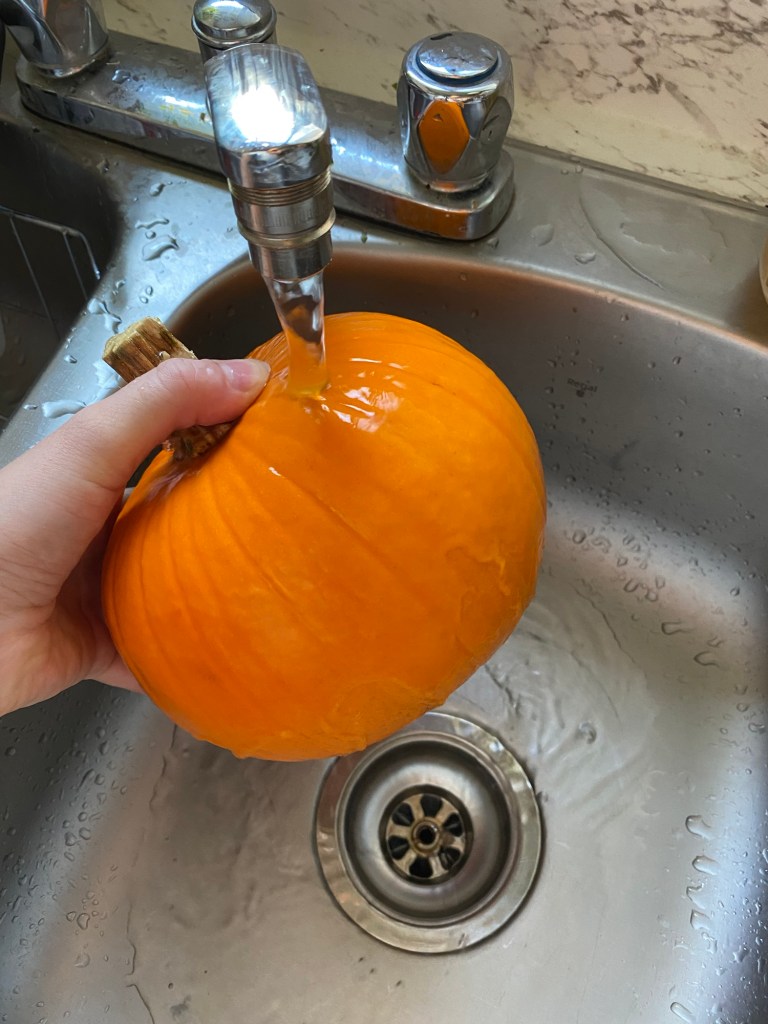
    2. Wash the outside of the pumpkins to remove any dirt.

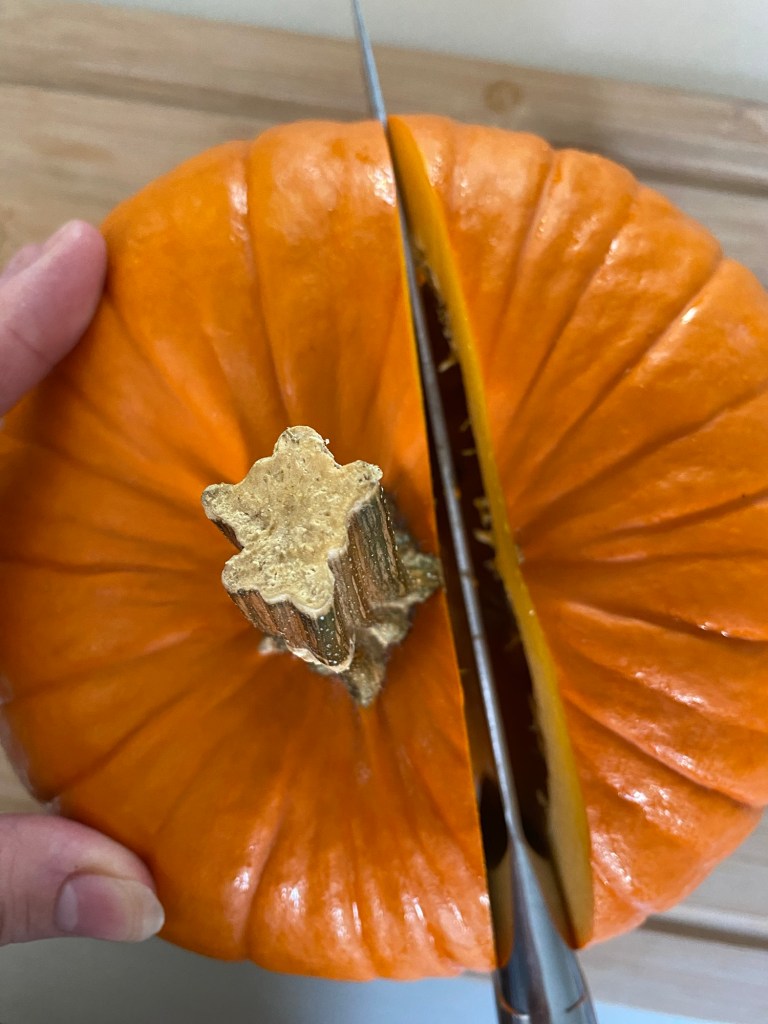
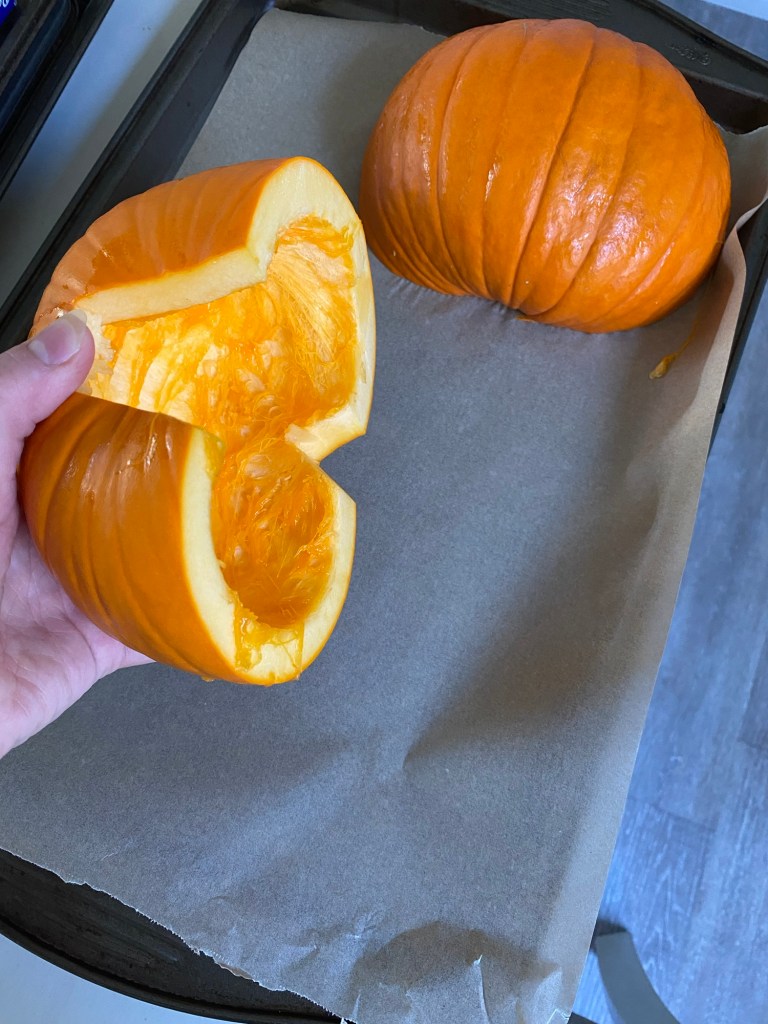
    3. If it is a small pumpkin, simply cut in half next to the stem and cut through into two halves. Cut off the stem and blossom end. If it is a larger pumpkin, cut around the stem part of the pumpkin in a circle and lift it out. Cut off the blossom ends as well.

    4. Scoop the seeds out into a bowl **Save these for a tasty snack later!

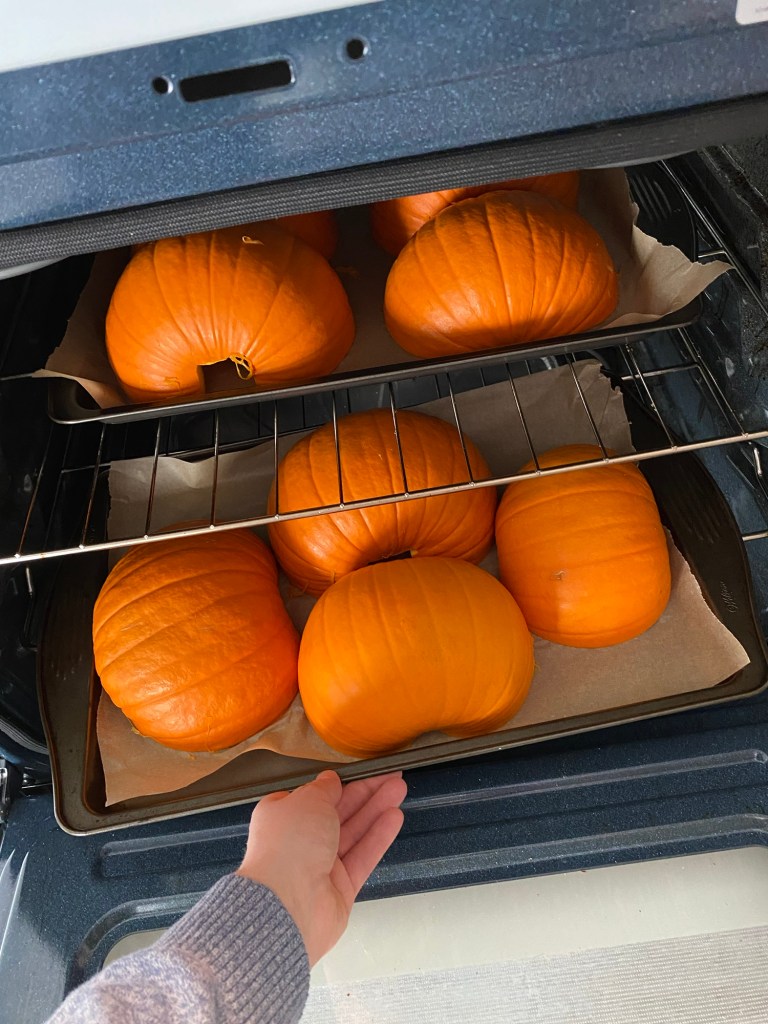
    5. Place pumpkin halves upside down on parchment-lined baking sheets.

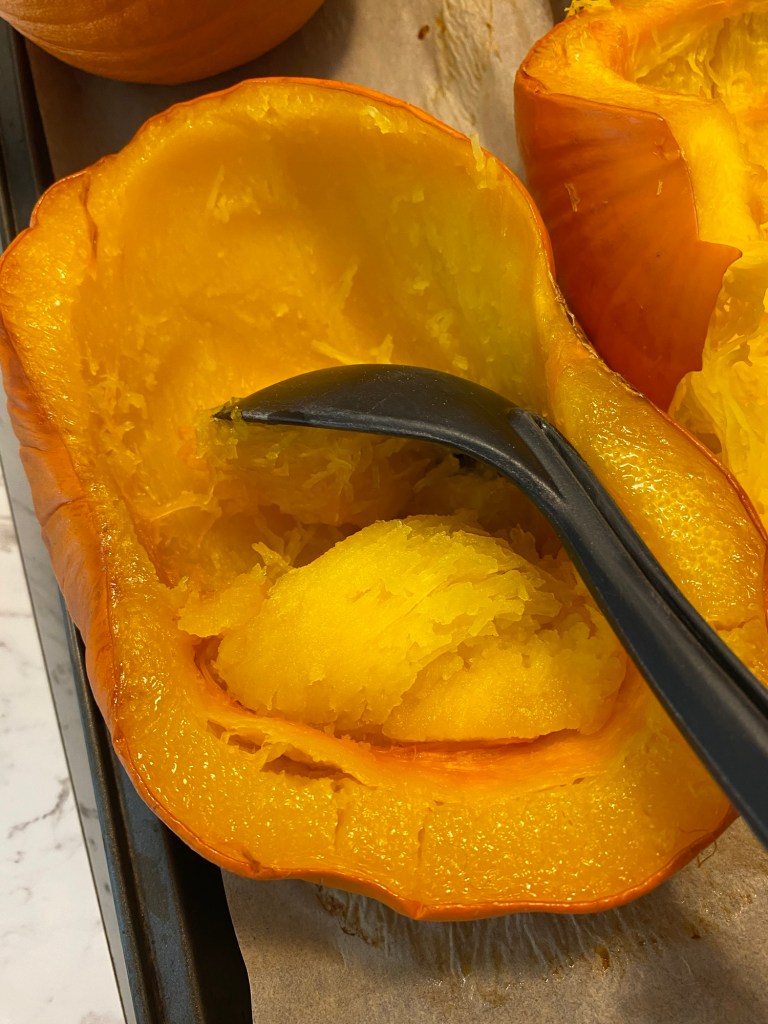
    6. Bake fat 350 for 45-60 minutes until the pumpkin skin on the outside is soft, lightly browned, and can be easily pierced with a fork. (You will want it soft enough to easily scoop the pumpkin flesh)

    7. Let cool completely, turning right side up to cool down faster.

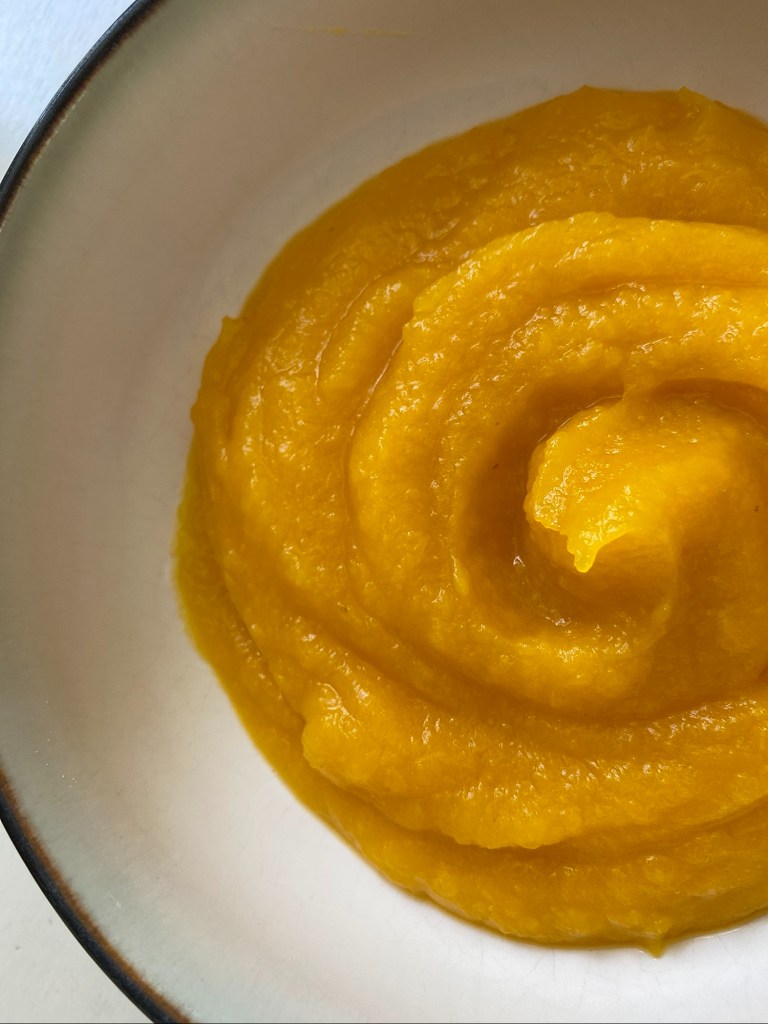
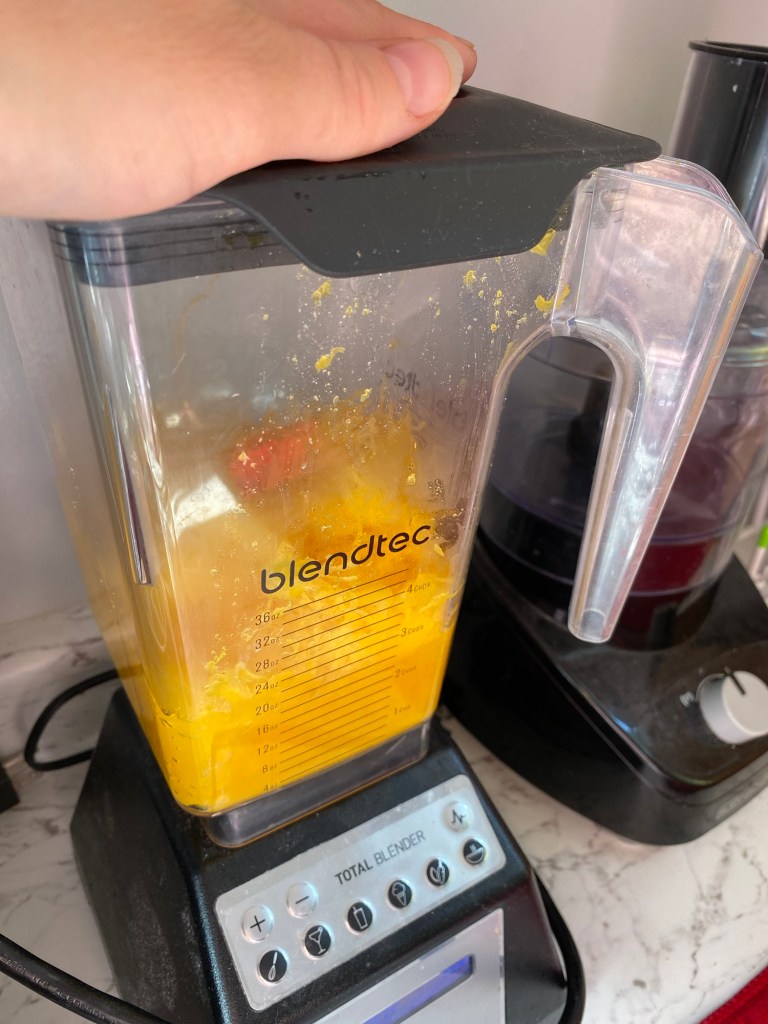
    8. Scrape the insides out into a high powered blender and puree until smooth.

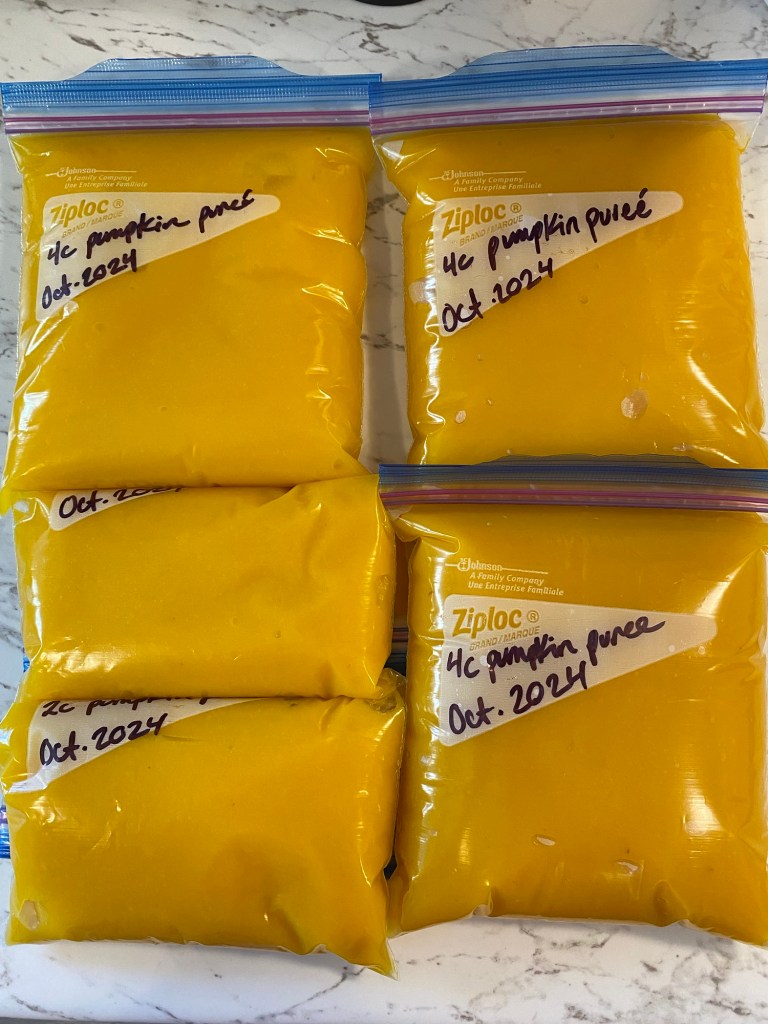
    9. Use immediately in desired recipe, or put in a sealed container and store in the fridge for up to one week. You can also put the pumpkin puree in a ziplock bag in the freezer. Best to use within 6 months. (Although I have used some puree that was frozen for much longer than that and still thawed and tasted great!)

    10. One small pie pumpkin makes approximately 4 cups of puree.

    Hi, I’m Jessie!

    I’m a Wife and Homeschooling Mom living in a remote town in Northern Ontario, Canada. I love making wholesome meals for my family from scratch, homeschooling our girls and learning more about natural living.

    Read more about my story HERE.

    Subscribe to Northbird’s email list to get weekly posts on: tasty recipes, activity ideas for kids, natural living tips, and some genuine mom thoughts and encouragement!

    Homemade Pumpkin Puree

    • Servings: 4 cups
    • Difficulty: Easy
    • Print

    Make your own pumpkin puree with this easy recipe and then freeze the puree to later make many sweet or savoury pumpkin recipes!


    You can use either large or small pumpkins for this recipe. The smaller pumpkins will typically be sweeter, and the larger ones will just be more watery. See ideas above for how to use pumpkins best based on their size.

    Ingredients

    • Pumpkins

    Directions:

    1. Preheat oven to 350 degrees fahrenheit.
    2. Wash the outside of the pumpkins to remove any dirt.
    3. If it is a small pumpkin, simply cut in half next to the stem and cut through into two halves.
    4. Scoop the seeds out into a bowl **Save these for a tasty snack later!
    5. Place pumpkin halves upside down on parchment-lined baking sheets.
    6. Bake fat 350 for 40-50 minutes until the pumpkin skin on the outside is soft, lightly browned, and can be easily pierced with a fork.
    7. Let cool completely, turning right side up to cool down faster.
    8. Scrape the insides out into a high powered blender and puree until smooth.
    9. Use immediately in desired recipe, or put in a sealed container and store in the fridge for up to one week. You can also put the pumpkin puree in a ziplock bag in the freezer. Best to use within 6 months.
    10. One small pie pumpkin makes approximately 3-4 cups of puree.

    Nutrition


    Per 1 cup serving: 34 calories; 0.3 g fat; 8.1 g carbohydrates;
    1.1 g protein.
    Return to Top

    Easy No-Sugar Crockpot Apple Butter Recipe

    Find Northbird on social media:

    This post contains affiliate links. As an Amazon associate, I earn from qualifying purchases. This means that I make a small commission at no extra cost to you. You can read my full disclosure HERE.

    Jump To Recipe Card

    Jump to Video

    Return to “Homemade Pantry”

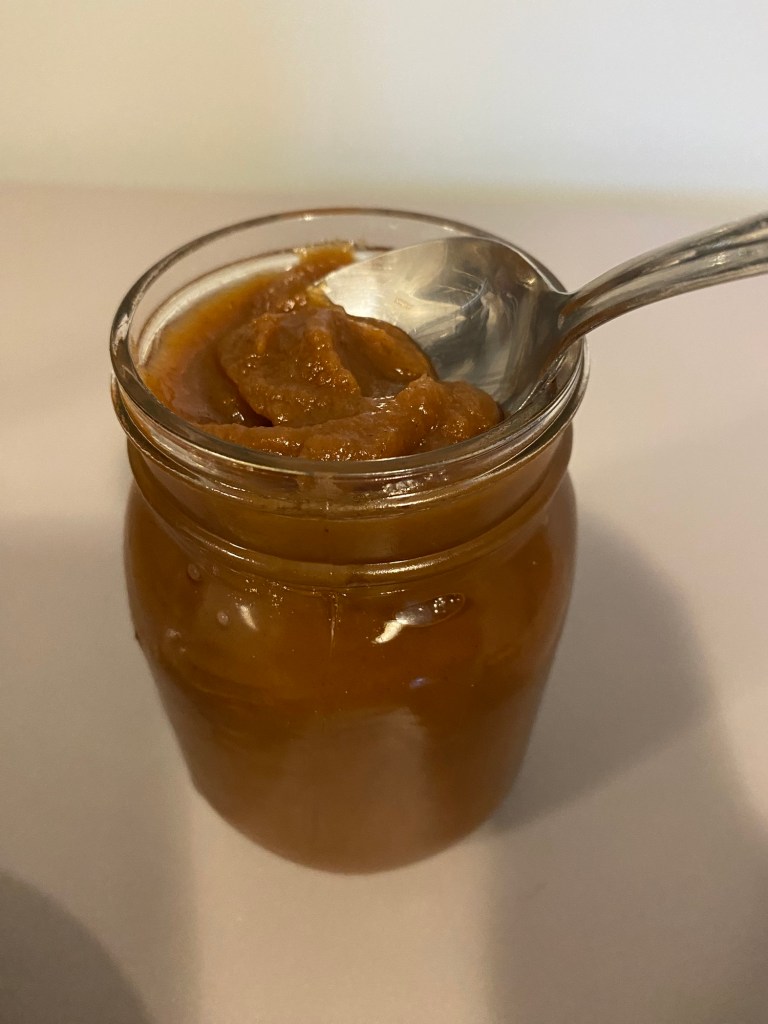
    This tasty recipe is creamy and rich with the pure taste of autumn apples!

    No sugar is needed to add to this as the final product’s natural sugars have been slow cooked down and act as their own natural preservative. I usually prefer homemade apple butter for this reason over jam or jelly that typically have lots of sugar added!

    Making your own Apple Butter is also a great way to use up any apples that are looking a little tired and wrinkled in the fruit basket!

    The taste is even better if you are able to use a few different kinds of apples. I usually have a mix of golden delicious, granny smiths, red delicious, macintosh, or empire.

    I like recipes that are adaptable based on how much produce I am trying to use up. This one is great for example, because if I have about 10 apples that I would like to use up, I can use up all 10 instead of only 8 if the recipe calls for only 8.

    Now that’s a bit of a ramble! But I hope you understand the gist of what I am trying to say: With this recipe, you can use whatever amount of apples you would like that will fit in your available crockpot.

    Water Bath Canner: Altitude Adjustments

    For the majority of canning recipes, it is important to note that it is necessary to increase the water bath boiling time if your geographical altitude is over 1,000 feet (305 meters) above sea level. The higher the altitude is, the boiling point of water decreases, so it needs to boil longer in order to effectively kill heat-resistant bacteria and preserve canned goods more safely.

    Altitude in Feet:Altitude in Meters:Increase Processing Time
    1,001-3,000306-9155 minutes
    3,001-6,000916-1,83010 minutes
    6,001-8,0001,831-2,44015 minutes
    8,001-10,0002,441-3,05020 minutes

    A simple video of part of the process of making Homemade Apple Butter!

    How to Make Homemade Apple Butter

    Supplies Needed:

    Ingredients:

    • Apples (a few different types is best!)
    • Cinnamon (optional)

    Stage 1 Directions: Harvesting the Apples

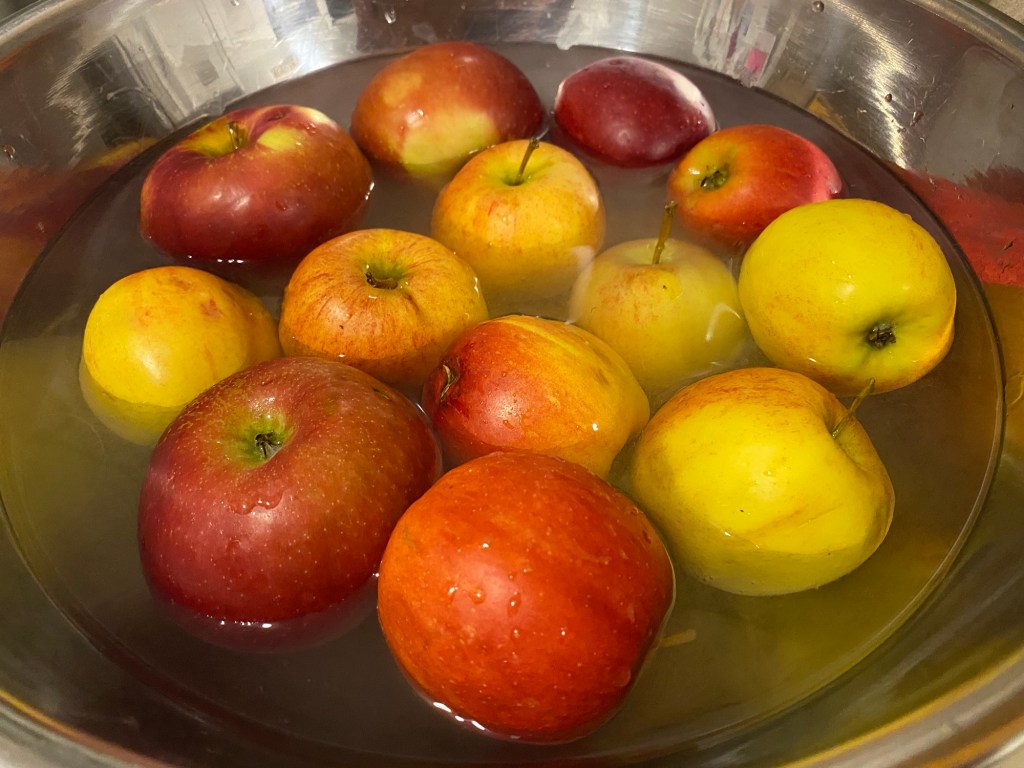
    1. Wash apples, slice and peel. Make sure to discard any bad bits.

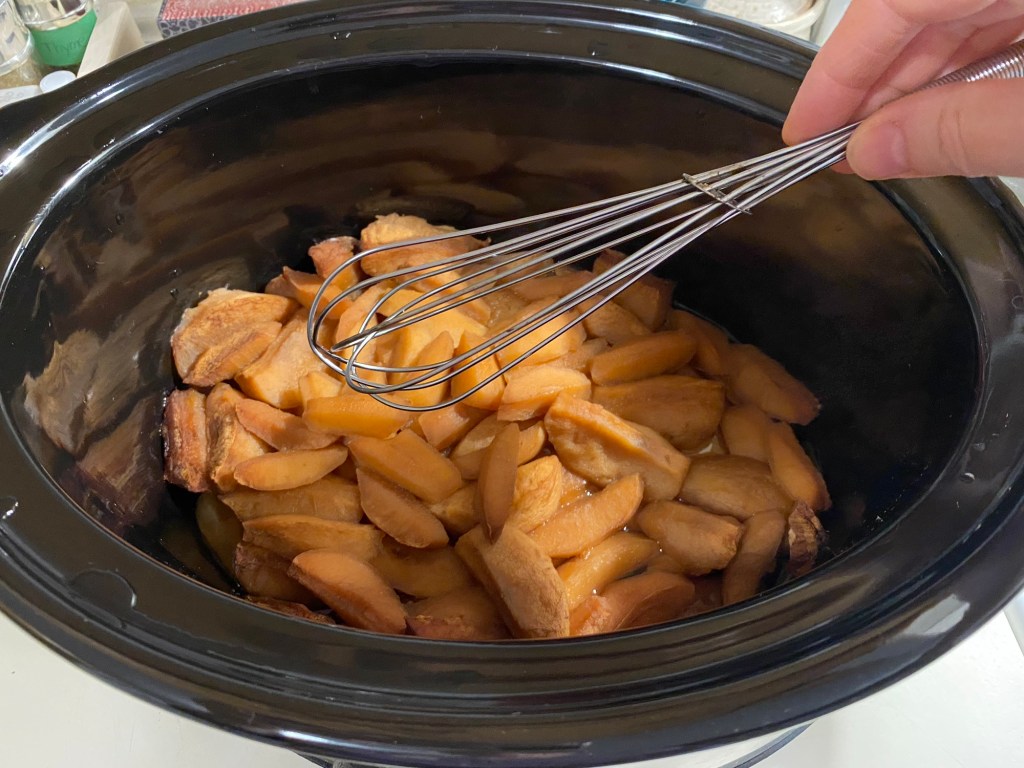
    2. Put apple pieces into crockpot and turn to low, cooking slowly 8-12 hours or overnight.

    3. When the apples can be easily mushed with a spoon, whisk up a little and use an immersion blender or put in a high power blender to puree until smooth.

    4. If desired, add some cinnamon for additional flavouring.

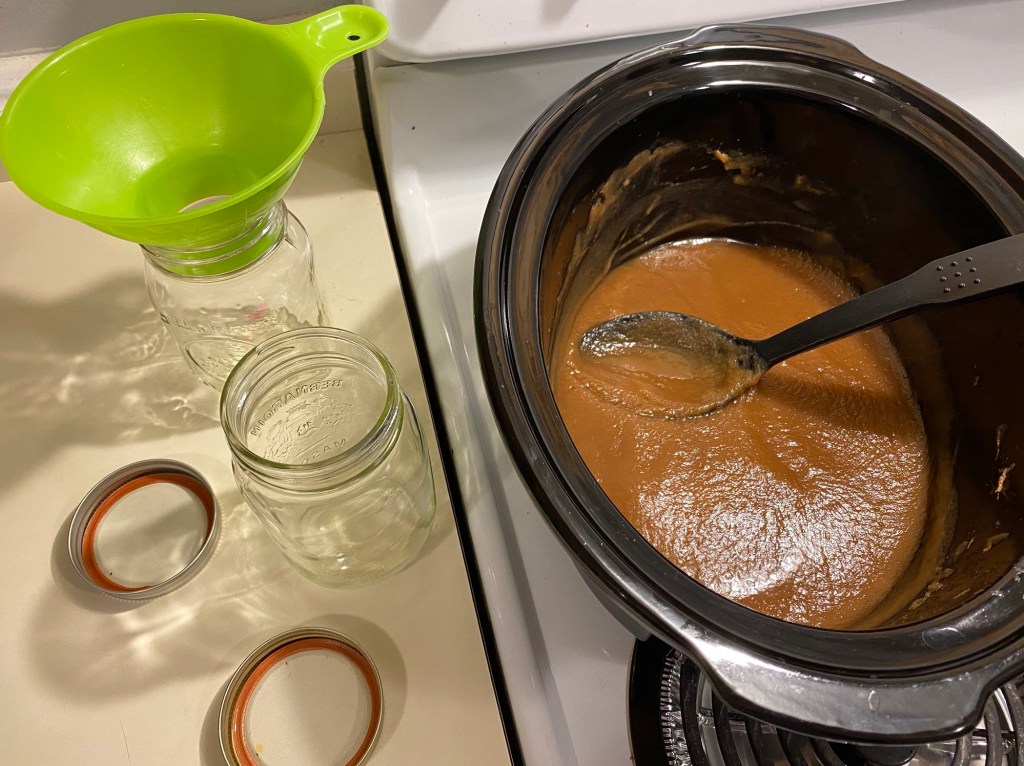
    5. If you are planning to preserve your apple butter by canning in a water bath, keep the pureed apple butter warm in crockpot, then continue with directions below. If you are just planning on keeping your finished apple butter in the fridge, pour into clean jars with lids. Best to use within 1-2 months in the fridge.

    Stage 2 Directions: Water Bath

    1. Before you start: Begin by prepping and setting up for the canning process. (There’s nothing worse than being ready to pour into the canning jars and realizing that you are missing something!)

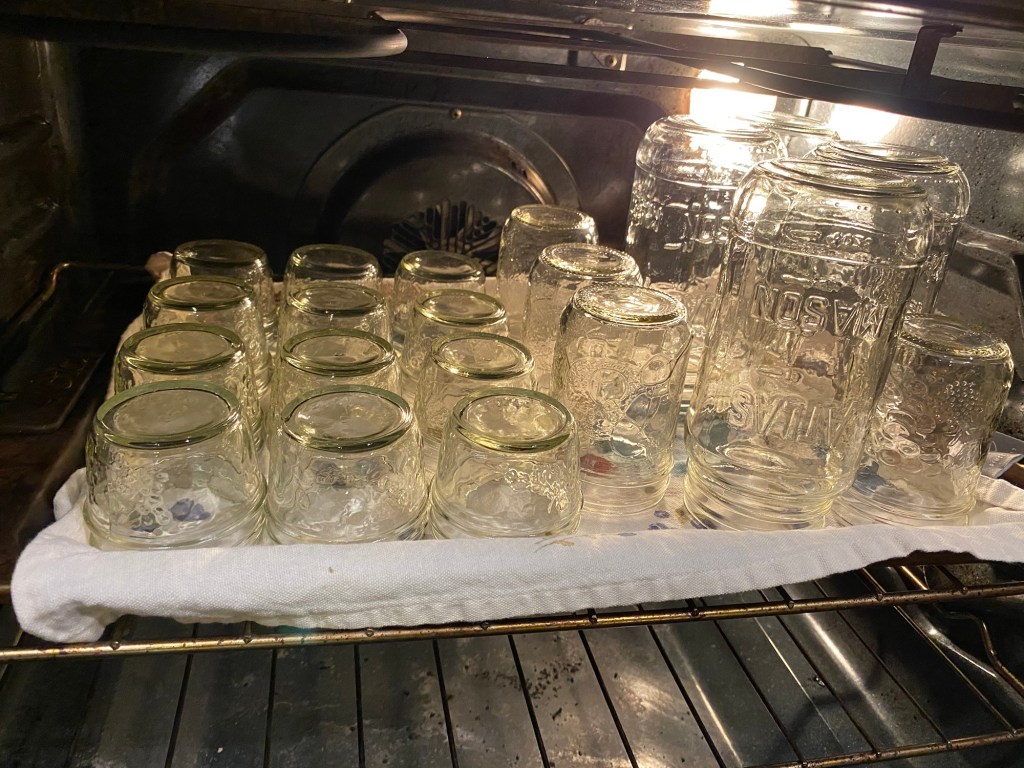
    • Clean your glass jars, lids and rings in hot soapy water and rinse thoroughly. Place jars upside down on a clean tea-towel covered baking sheet. Place in the oven, preheat oven to 180 degrees fahrenheit.
    • Place cleaned lids in a small saucepan and put on low/med on the stove.
    • Set out: canning tongs, paper towel, ladle spoon, non-metallic utensil, tongs or magnetic lid lifter, and lid rings.
    • Fill large water bath canner with cold water and set on stove, cover with lid. Bring to a boil then turn to low to simmer until ready.
    • If you don’t know already know this, research your current geographical altitude to see if you will need to modify some timing of this recipe. See notes below for testing for the jelly-set stage, as well as later on for the water bath canning stage.

    2. With canning tongs, pull out a few jars from the oven and make sure all supplies are ready for the canning stage.

    3. Carefully ladle or pour the warm apple butter sauce into the jars through the funnel.

    4. Gently stir each of the filled jars with a non-metallic utensil.

    5. Wipe the tops of the filled jars with a clean/wet paper towel.

    6. Put a warm canning lid on each one, pressing down while you twist on a screw band. Only tight enough to hold in place.

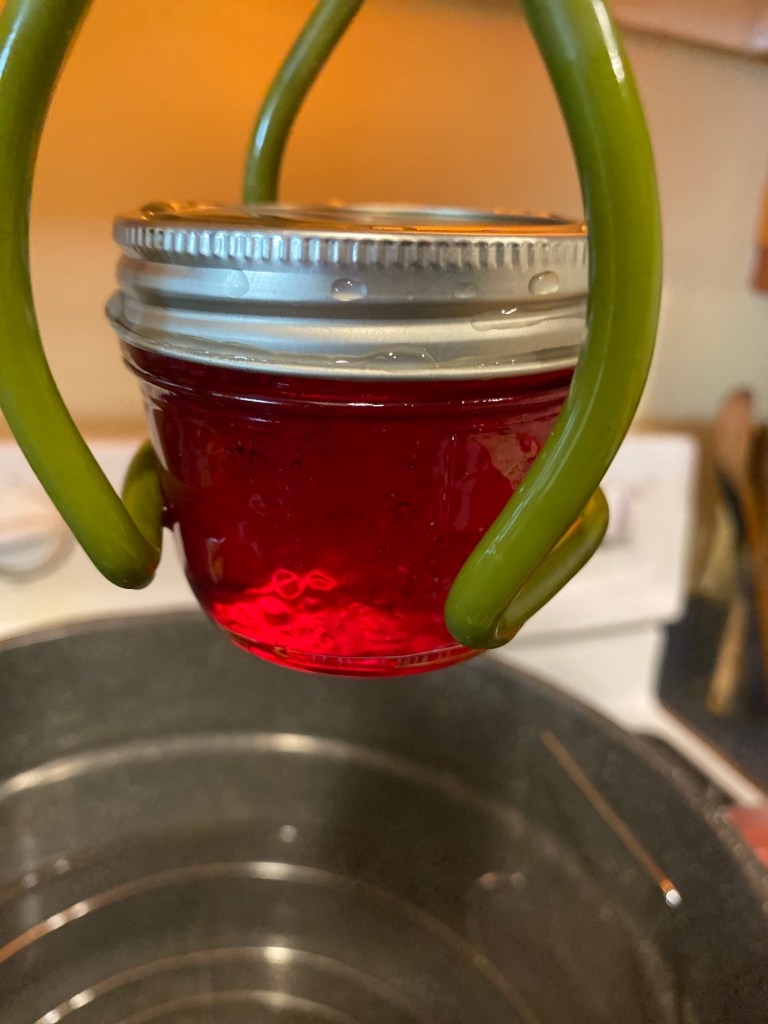
    7. With canning tongs, put into water bath canner. When all the jars are filled and inside, return water to a boil.

    8. Process jars in the water bath for 10 minutes, at sea level. See note above for altitudes above 1,000 feet to increase timing.

    9. Lift jars from canner, being careful not to tilt. Place on towel-covered baking sheet and wait for the jar lids to start to “pop” as they naturally vacuum seal over the next little while.

    10. When lids have finished “popping”, without lifting the jars you can gently remove the screw bands and wipe off any excess water.

    11. Let sit for 24 hours undisturbed so the apple butter can finish setting.

    12. Store at room temperature for 12-18 months, refrigerate after opening.

    13. Recipe yield will depend on how many apples you harvest! But when I typically fill a 6 quart slow cooker, it makes around 2x 500ml jars of finished apple butter.

    Hi, I’m Jessie!

    I’m a Wife and Homeschooling Mom living in a remote town in Northern Ontario, Canada. I love making wholesome meals for my family from scratch, homeschooling our girls and learning more about natural living.

    Read more about my story HERE.

    Subscribe to Northbird’s email list to get weekly posts on: tasty recipes, activity ideas for kids, natural living tips, and some genuine mom thoughts and encouragement!

    No Sugar Crockpot Apple Butter

    • Difficulty: Easy
    • Print

    No Sugar Added, Just Pure Apple Goodness!


    This recipe’s yield depends on how many apples you want to cook up. But If I fill a 6 quart crockpot with apple slices, it yields around 2 x 500ml jars of finished apple butter.


    Ingredients

  • Apples (a few different types is best!)
  • Cinnamon (optional)

  • Stage 1 Directions:

    1. Wash apples, slice and peel. Make sure to discard any bad bits.
    2. Put apple pieces into crockpot and turn to low, cooking slowly 8-12 hours or overnight.
    3. When the apples can be easily mushed with a spoon, whisk up a little and use an immersion blender or put in a high power blender to puree until smooth.
    4. If desired, add some cinnamon for additional flavouring.
    5. If you are planning to preserve your apple butter by canning in a water bath, keep the pureed apple butter warm in crockpot, then continue with directions below. If you are just planning on keeping your finished apple butter in the fridge, pour into clean jars with lids. Best to use within 1-2 months in the fridge.

    Stage 2 Directions:


    Nutrition


    Per 1 tablespoon serving: 15 calories; 0 g fat; 4.0 g carbohydrates;
    0 g protein.
    Return to Top

    Simple Crockpot Recipe for Homemade Tomato Sauce

    Find Northbird on social media:

    This post contains affiliate links. As an Amazon associate, I earn from qualifying purchases. This means that I make a small commission at no extra cost to you. You can read my full disclosure HERE.

    Jump To Recipe Card

    Return to “Homemade Pantry”

    This is one of my favourite recipes and preserving hacks to deal with your garden tomatoes in a simple and stress-free way using a crockpot!

    While there are many recipes found online that make absolutely delicious tomato sauce (I’ve tried so many!), this simple recipe is what I’ve been doing for the last few times we’ve had tomatoes to harvest.

    For me, the preference boils down to time. During harvest season, I’ve had less and less time and energy to preserve the veggies that we have managed to grow, or that I’ve bought in bulk from the grocery store.

    As a young mother, I also find it extremely hard just in general to have the time needed to devote to the whole process of canning. Something that used to take me an hour or two now takes sometimes half a day to finish because of all the little ones that always need something. I’m sure many moms can relate to this!

    So using a crockpot to the cook the tomatoes slowly overnight is a very convenient solution for those of us that struggle with busy lives!

    Here are a few important things to note about making this recipe:

    • This recipe has no set measurements for the sauce and herbs as it purely comes down to taste preference, how many tomatoes you harvest, and how big your crockpot is.
    • The only measurement that is important (in my opinion) is adding specific amounts of lemon juice or citric acid to the different jar sizes.
    • The timing of the water bath canning stage will depend on your current altitude over sea level. This is important because water boils at different heights, so length of time needed to preserve effectively differs based on geographical altitude. If you don’t know what your altitude is, this can easily be found by a google search.
    Jar SizeLemon Juice(or) Citric Acid
    500ml (approximately a pint)1 Tablespoon1/4 teaspoon
    1 Litre (approximately a quart)2 Tablespoons1/2 teaspoon

    Water Bath Canner: Altitude Adjustments

    Altitude in Feet:Altitude in Meters:Increase Processing Time
    1,001-3,000306-9155 minutes
    3,001-6,000916-1,83010 minutes
    6,001-8,0001,831-2,44015 minutes
    8,001-10,0002,441-3,05020 minutes

    Avoid using aluminum pots or utensils:

    It is best to avoid using aluminum pots or utensils because the acid in the tomato reacts with the aluminum and causes the tomatoes to taste more bitter and the beautiful red colour to go more brown.

    Some folks have also noted that their aluminum cookware will also become discoloured from the acidity of the tomatoes. So best to use stainless steel or other if possible!

    How to Make Easy Crockpot Tomato Sauce

    Supplies Needed:

    Ingredients:

    Stage 1 Directions: Harvesting & Cooking the Tomatoes

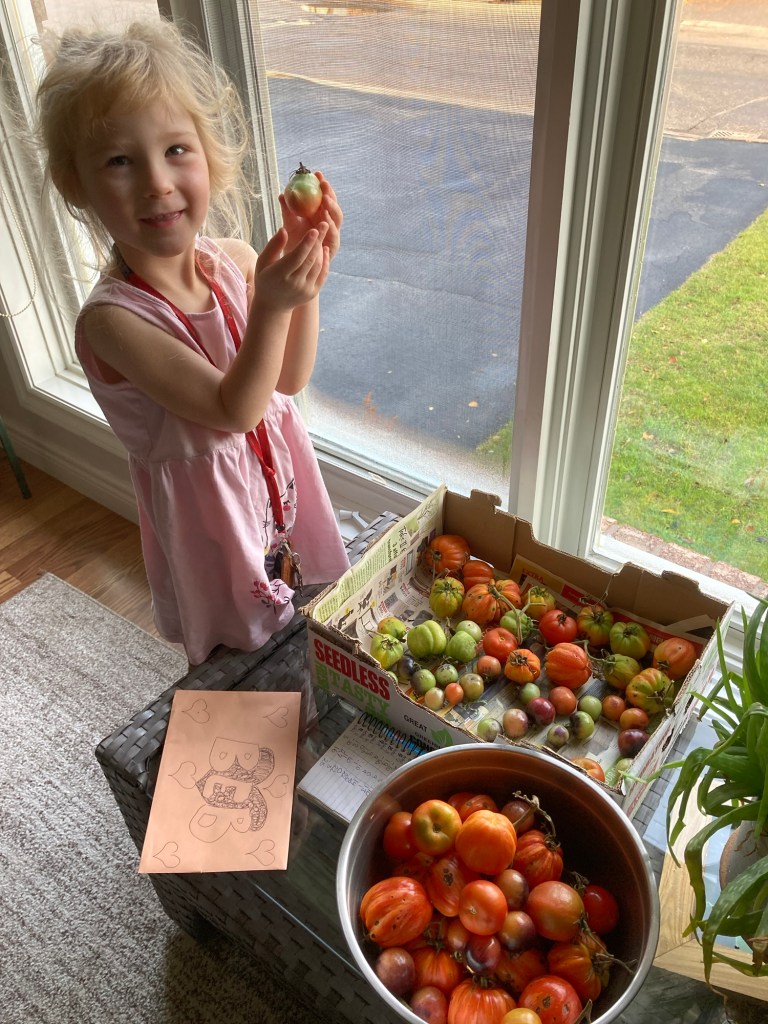
    1. Wash tomatoes and cut into quarters, removing the stem end and cutting out any bad bits.

    2. Put tomato pieces into crockpot and cover.

    3. Cook on low for 12 hours or overnight until the tomatoes can be easily mushed with a spoon.

    4. Spoon off the excess water that has separated from the cooked tomatoes.

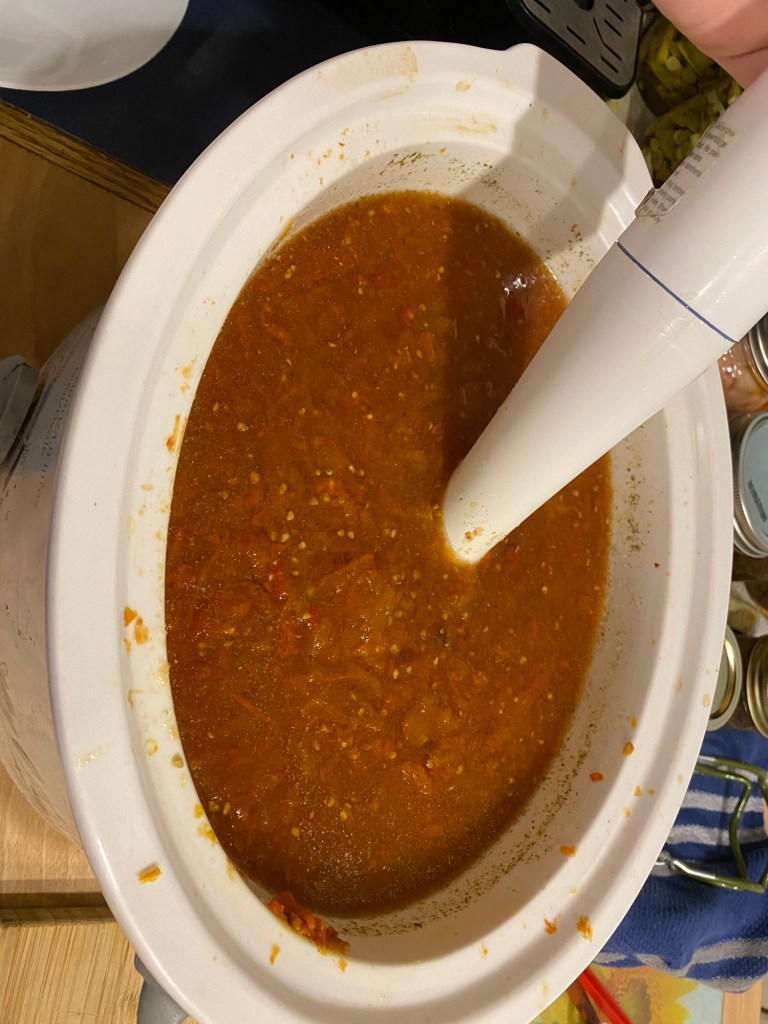
    5. Use an immersion blender or put into a high powered blender and blend until smooth.

    6. Add in desired amounts of dried herbs and salt (until it tastes right to you!) For a full 6quart crockpot I put a couple of tablespoons of dried basil and parsley, and about 1-2 tablespoons of garlic, onion powder and salt. Mix well.

    7. Keep in crockpot with temperature on low until ready to can.

    Stage 2 Directions: Water Bath

    1. Before you start: Begin by prepping and setting up for the canning process. (There’s nothing worse than being ready to pour into the canning jars and realizing that you are missing something!)

    • Clean your glass jars, lids and rings in hot soapy water and rinse thoroughly. Place jars upside down on a clean tea-towel covered baking sheet. Place in the oven, preheat oven to 180 degrees fahrenheit.
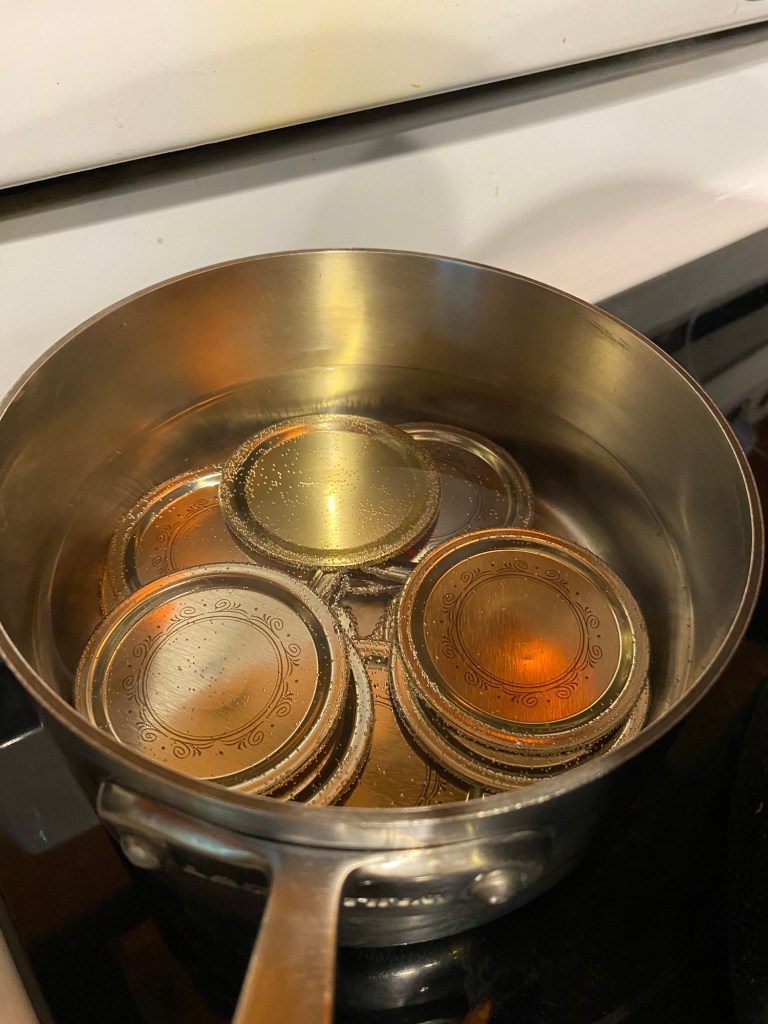
    • Place cleaned lids in a small saucepan and put on low/med on the stove.
    • Set out: canning tongs, paper towel, ladle spoon, non-metallic utensil, tongs or magnetic lid lifter, and lid rings.
    • Fill large water bath canner with cold water and set on stove, cover with lid. Bring to a boil then turn to low to simmer until ready.
    • If you don’t know already know this, research your current geographical altitude to see if you will need to modify some timing of this recipe. See the table below for additional timing needed for the water bath canning.

    2. With canning tongs, pull out a few jars from the oven and make sure all supplies are ready for the canning stage.

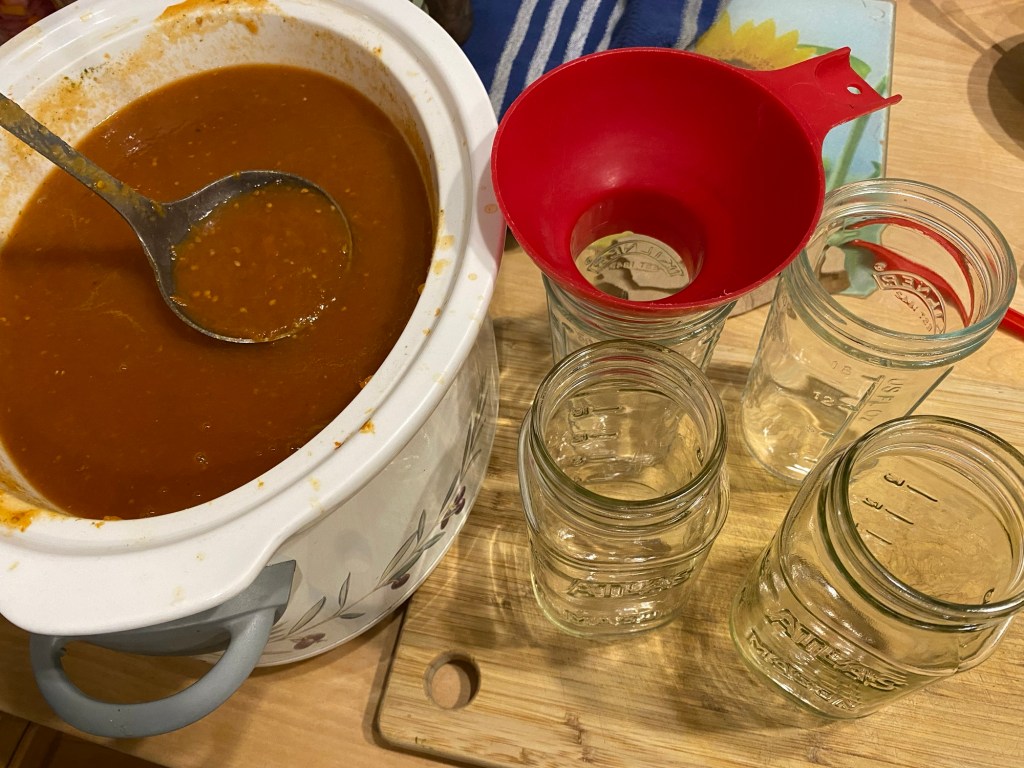
    3. Carefully ladle or pour the warm tomato sauce into the jars through the funnel.

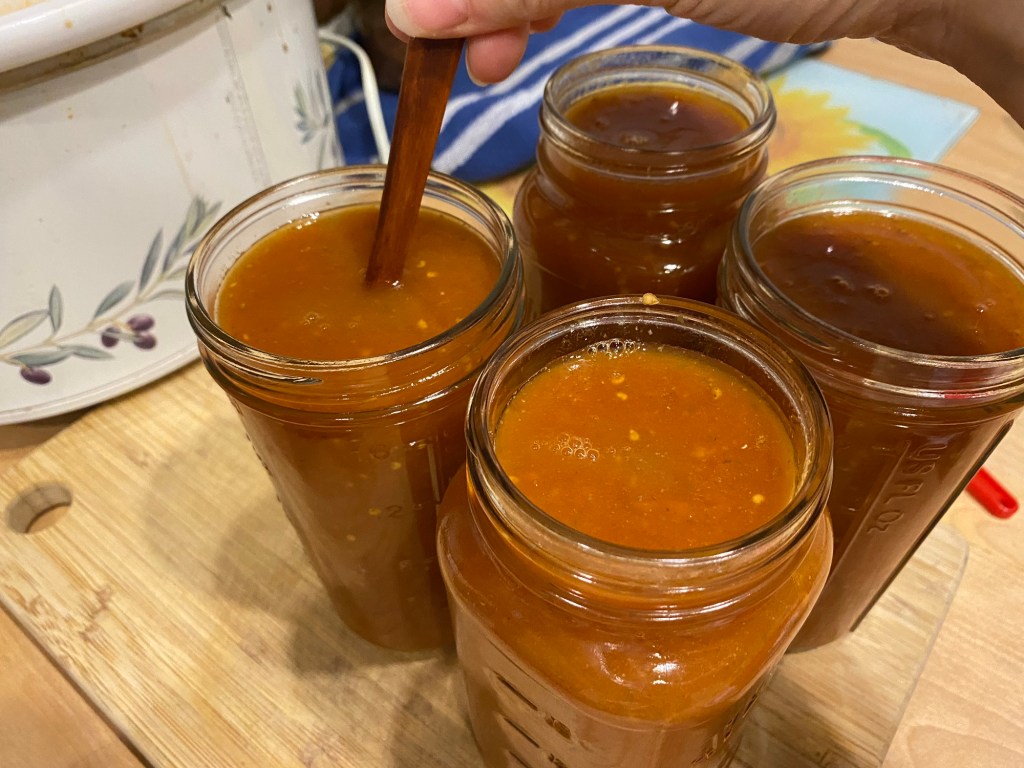
    4. Put the lemon juice or citric acid into each jar. See table for amount per size of jar.

    5. Gently stir each of the filled jars with a non-metallic utensil, removing any bubbles.

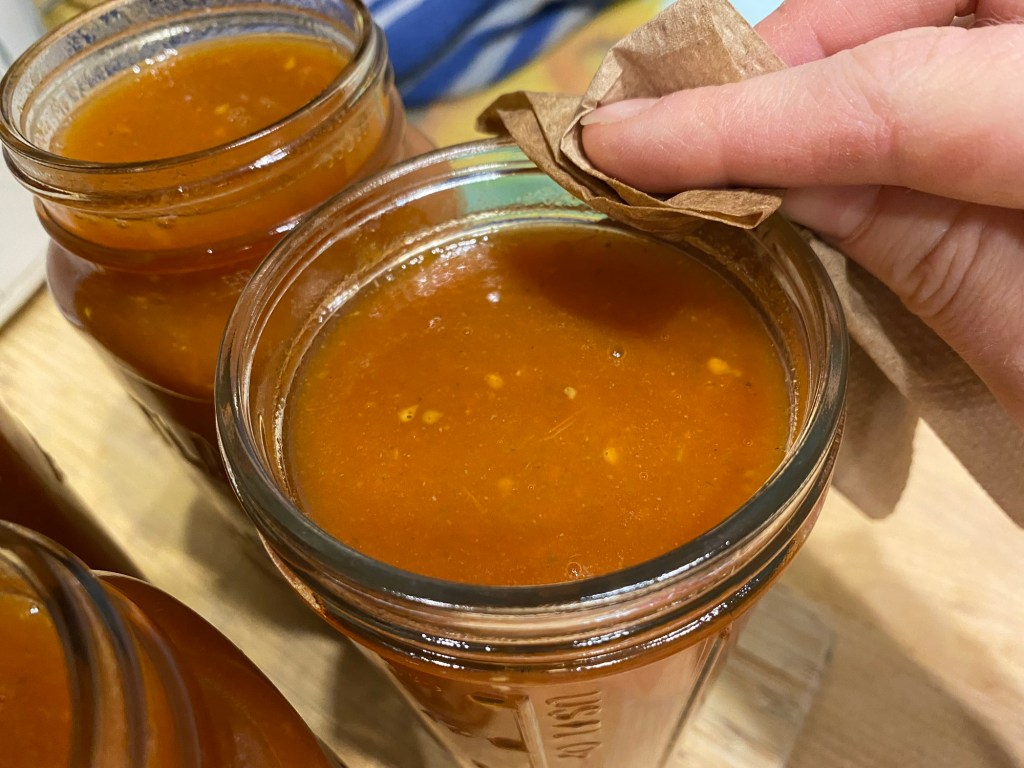
    6. Wipe the tops of the filled jars with a clean/wet paper towel.

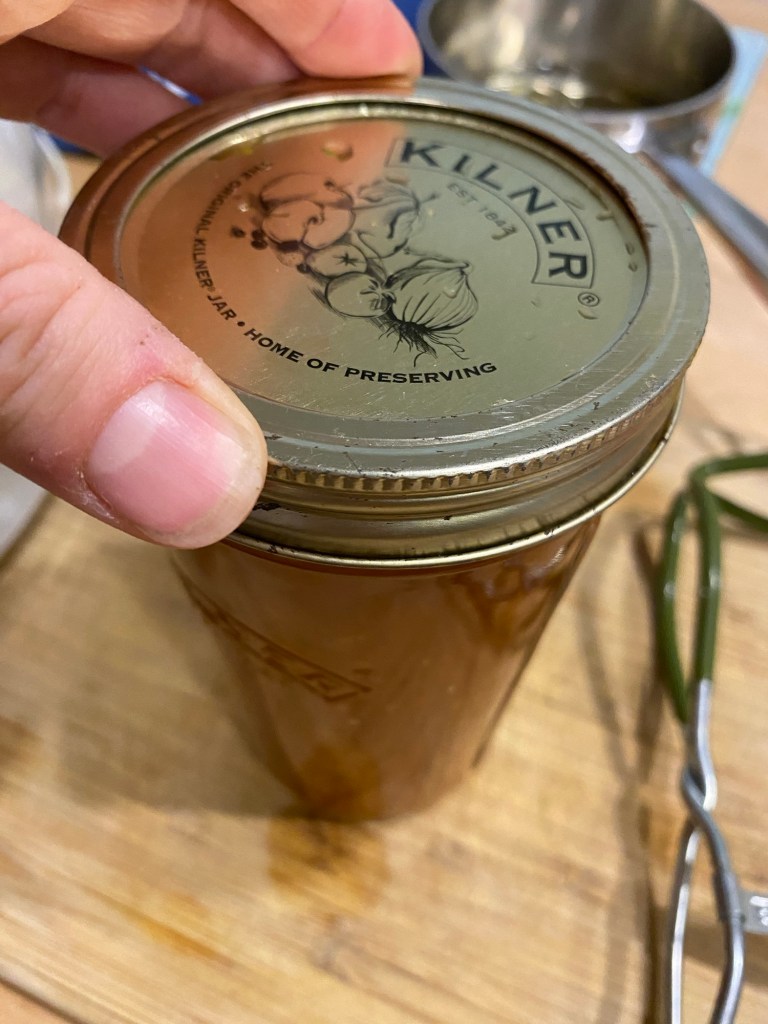
    7. Put a warm canning lid on each one, pressing down while you twist on a screw band. Only tight enough to hold in place.

    8. With canning tongs, put into water bath canner. When all the jars are filled and inside, return water to a boil.

    9. Process jars in the water bath for 10 minutes, at sea level. See note above for altitudes above 1,000 feet.

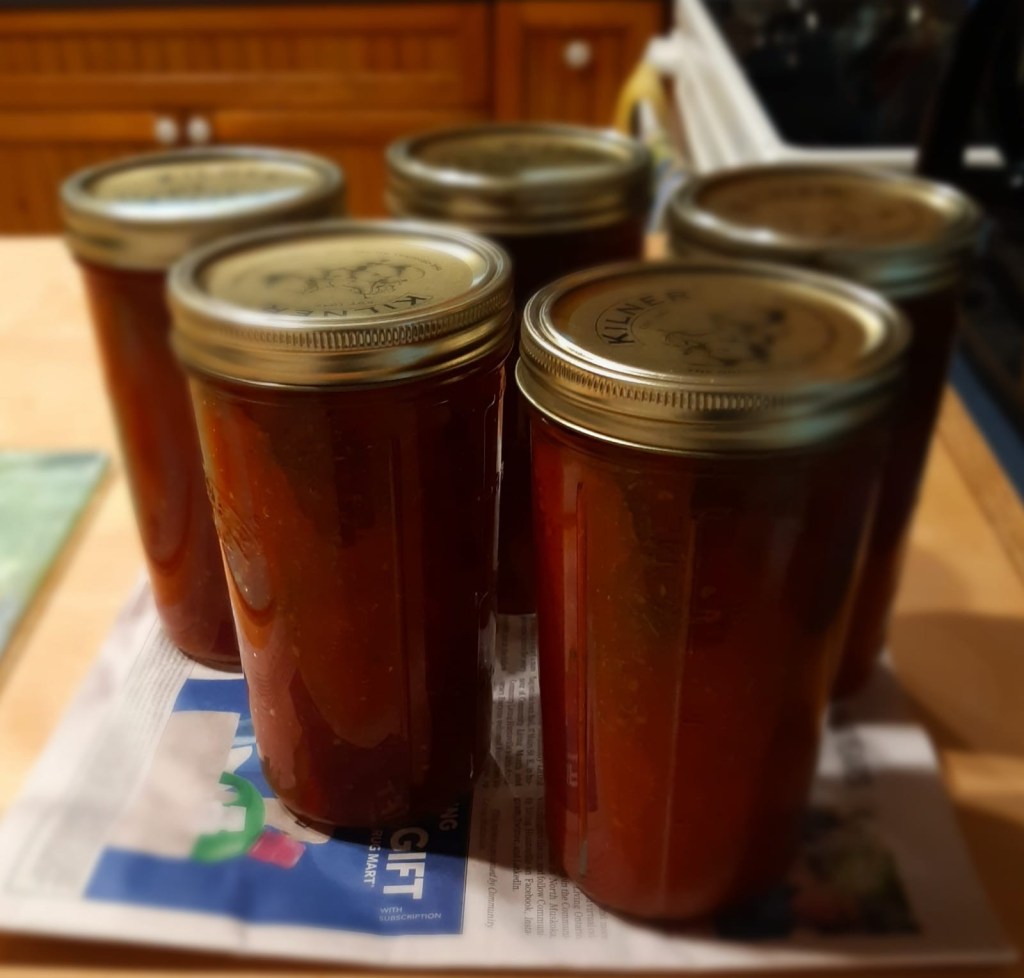
    10. Lift jars from canner, being careful not to tilt. Place on towel-covered baking sheet and wait for the jar lids to start to “pop” as they naturally vacuum seal over the next little while.

    11. When lids have finished “popping”, without lifting the jars you can gently remove the screw bands and wipe off any excess water.

    12. Let sit for 24 hours undisturbed so the tomato sauce can finish setting.

    13. Store at room temperature for 12-18 months, refrigerate after opening.

    Hi, I’m Jessie!

    I’m a Wife and Homeschooling Mom living in a remote town in Northern Ontario, Canada. I love making wholesome meals for my family from scratch, homeschooling our girls and learning more about natural living.

    Read more about my story HERE.

    Subscribe to Northbird’s email list to get weekly posts on: tasty recipes, activity ideas for kids, natural living tips, and some genuine mom thoughts and encouragement!

    Easy Crockpot Tomato Sauce

    • Servings: Adaptable
    • Difficulty: Easy
    • Print

    An easy and stress-free way to make tomato sauce from scratch in the crockpot!


    Stage 1 Directions: Harvesting & Cooking the Tomatoes

    1. Wash tomatoes and cut into quarters, removing the stem end and cutting out any bad bits.
    2. Put tomato pieces into crockpot and cover.
    3. Cook on low for 12 hours or overnight until the tomatoes can be easily mushed with a spoon.
    4. Spoon off the excess water that has separated from the cooked tomatoes.
    5. Use an immersion blender or put into a high powered blender and blend until smooth.
    6. Add in desired amounts of dried herbs and salt (until it tastes right to you!) For a full 6quart crockpot I put a couple of tablespoons of dried basil and parsley, and about 1-2 tablespoons of garlic, onion powder and salt. Mix well.
    7. Keep in crockpot with temperature on low until ready to can.

    Stage 2 Directions: Water Bath


    Nutrition


    Per 1 cup serving: 0 calories; 0 g fat; 0.1 g carbohydrates;
    0 g protein.

    Return to Top