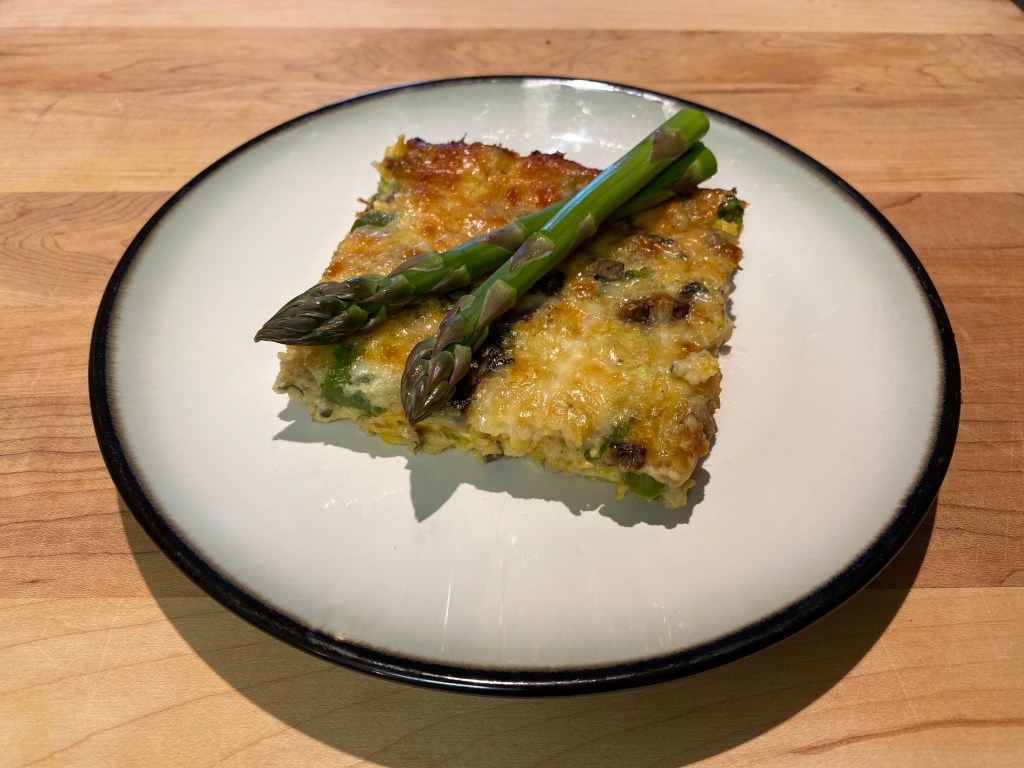
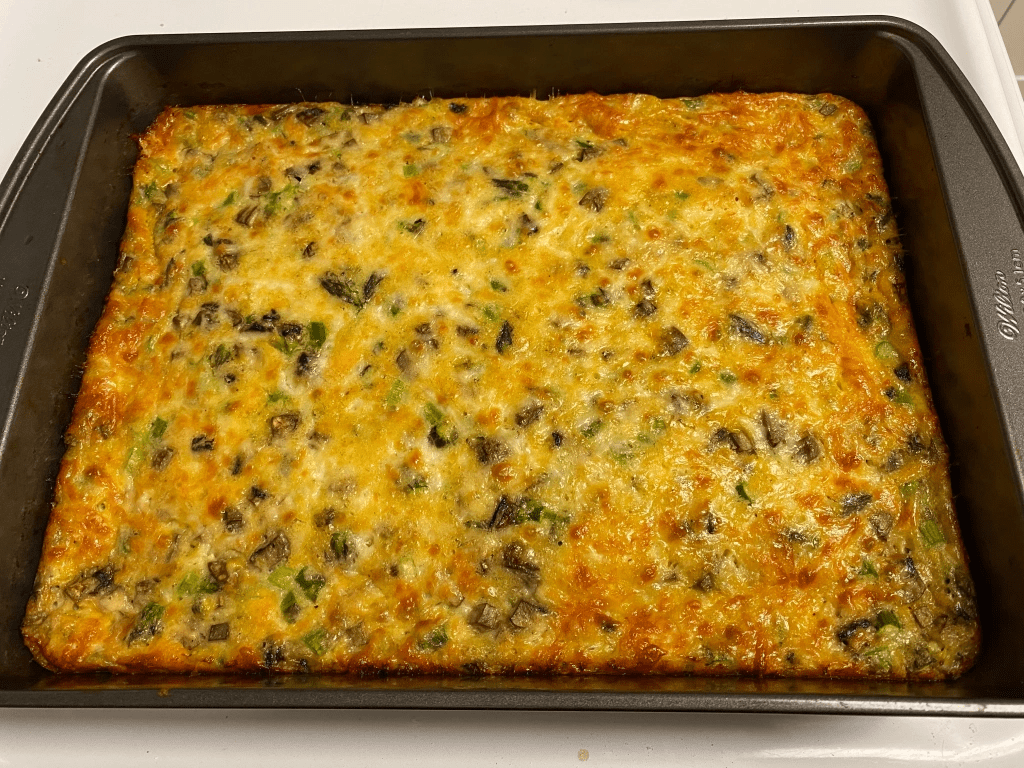
Delicious Broccoli Chicken Divan Recipe

Find Northbird on social media:

Jump To Printable Recipe Card

Return to “Soups & Entrees”

About This Dish…

This is one of my grandmother’s tried-and-true recipes, and trust me, its a gold one! Since finding it in her recipe book last year we have made it many times and enjoyed a few emergency freezer meals that of it too!

Full of excellent nutrition, this tasty dish is a great no-stress meal to serve hot on top of some fluffy rice!

I love the way the flavours of broccoli and chicken are wrapped together with a creamy mix and coated with a generous layer of cheese (and many of those crave-able dinner dishes have that bubbly delicious cheese, am I right?!).

I hope you enjoy this as much as my family does!

History of Chicken Divan:

This dish is a classic American casserole, often dubbed nowadays as a “comfort food”. Although there are many variations, this recipe always seems to consist of chicken and broccoli and is baked in a bubbly cheese sauce. It is thought to have originated in early 1900s in New York City at the Divan Parisien Restaurant. It was served for many years as their signature dish.
How to Make Broccoli Chicken Divan:

Supplies Needed:

Ingredients:

  • 4 chicken breasts, cubed and browned
  • 3 medium stalks broccoli, broken into florets (you could also sub in cauliflower, or frozen broccoli/cauliflower)
  • 1 small yellow onion, diced
  • 1 can cream of mushroom soup, 10oz / 284ml (cream of chicken or celery is also nice)
  • 1/2 cup sour cream
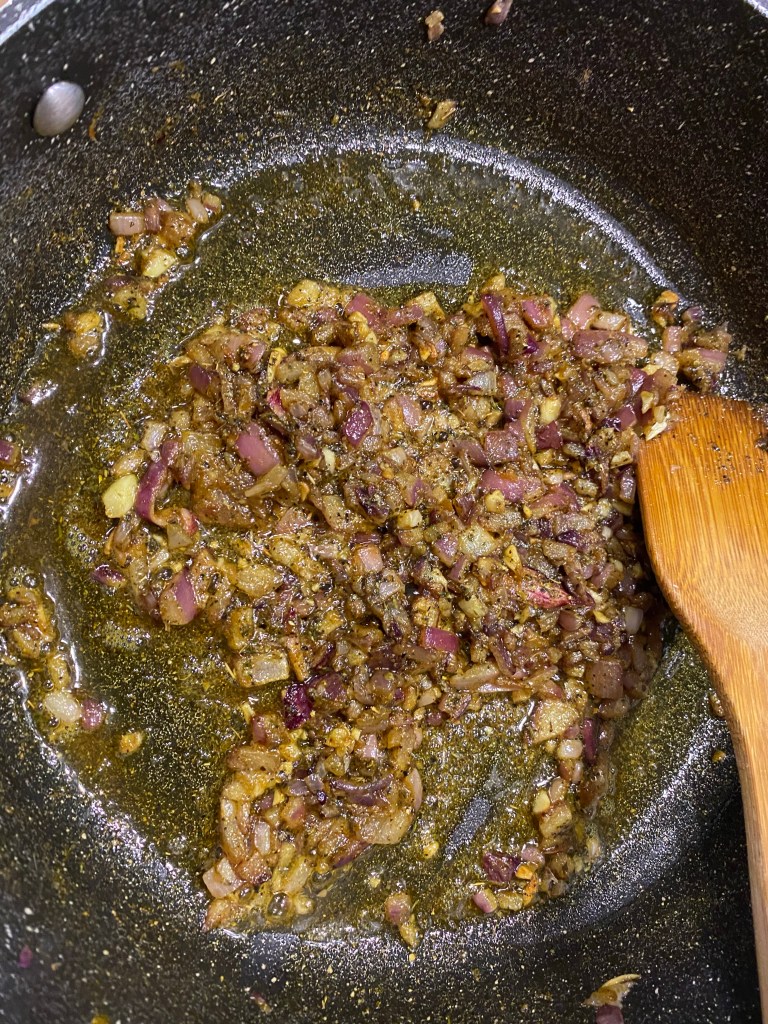
  • 1 teaspoon curry powder
  • 1 cup grated cheese (I like cheddar with this recipe)
  • 2 Tablespoons butter
  • Paprika, sprinkled

Directions:

1. Preheat oven to 375 ℉

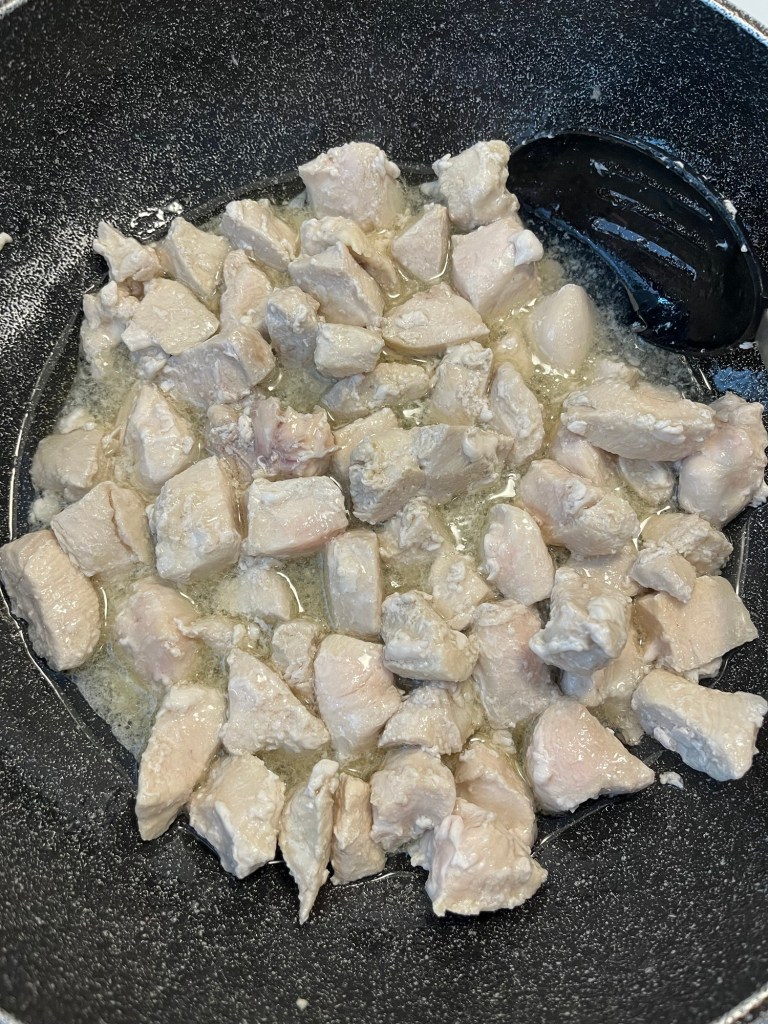
2. Cut and brown the chicken in a little oil or butter, then set aside.

3. Cut the broccoli into small florets and steam or boil until mostly cooked through (skip this step if using frozen broccoli as it has already been par-boiled).

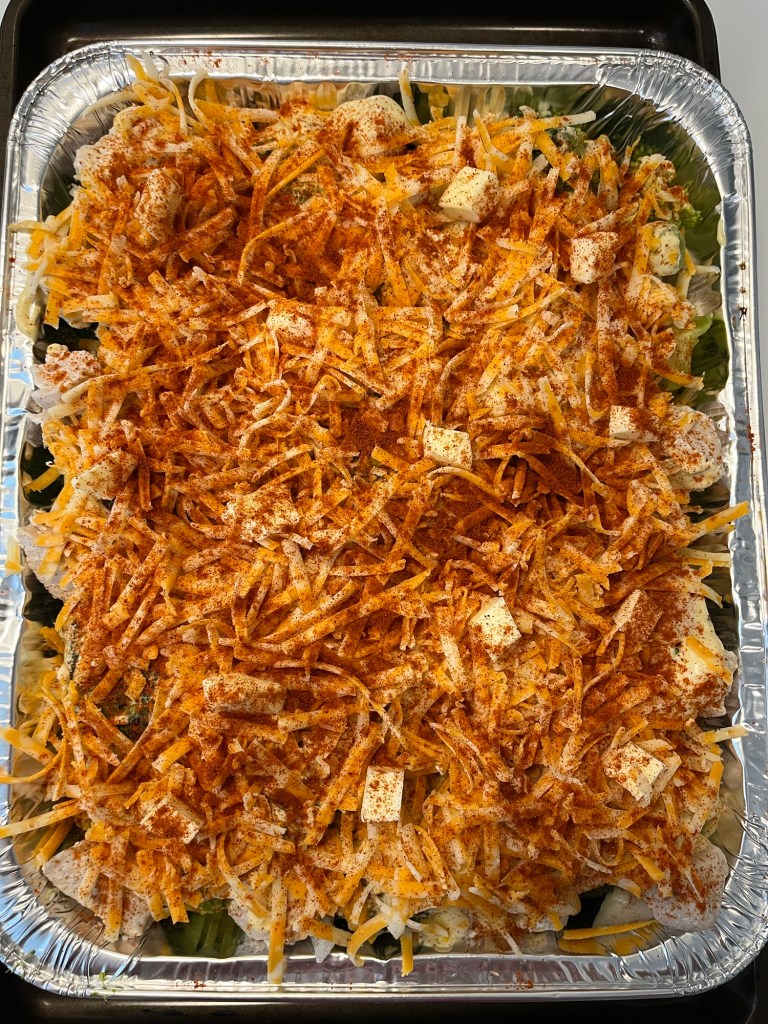
4. Put the broccoli and cooked chicken into a greased 9″ x 13″ pan or casserole dish.
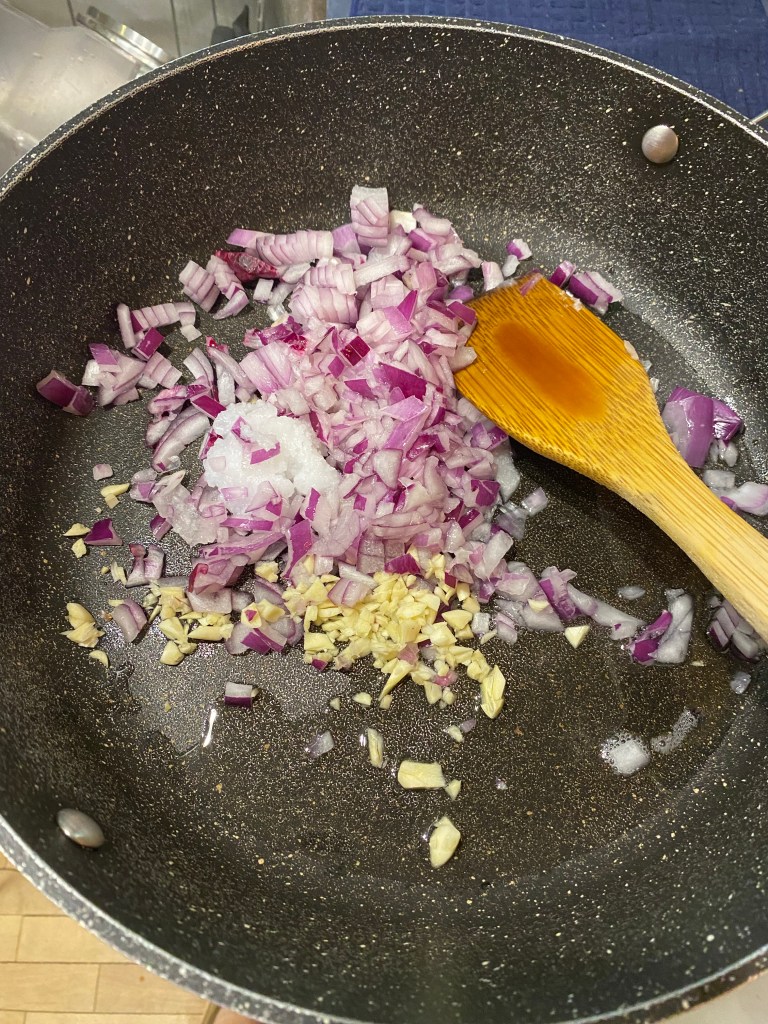
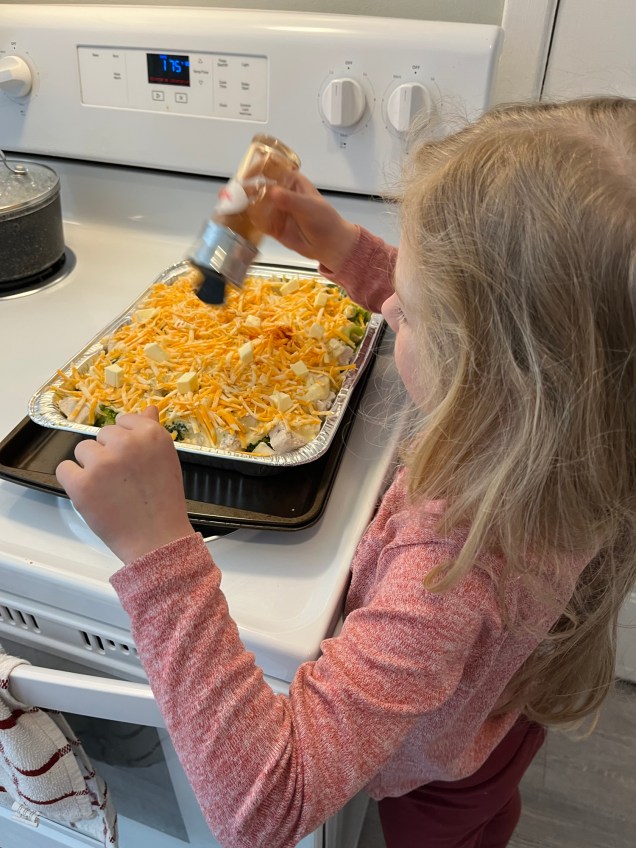
5. Dice up the onion and sprinkle on top.

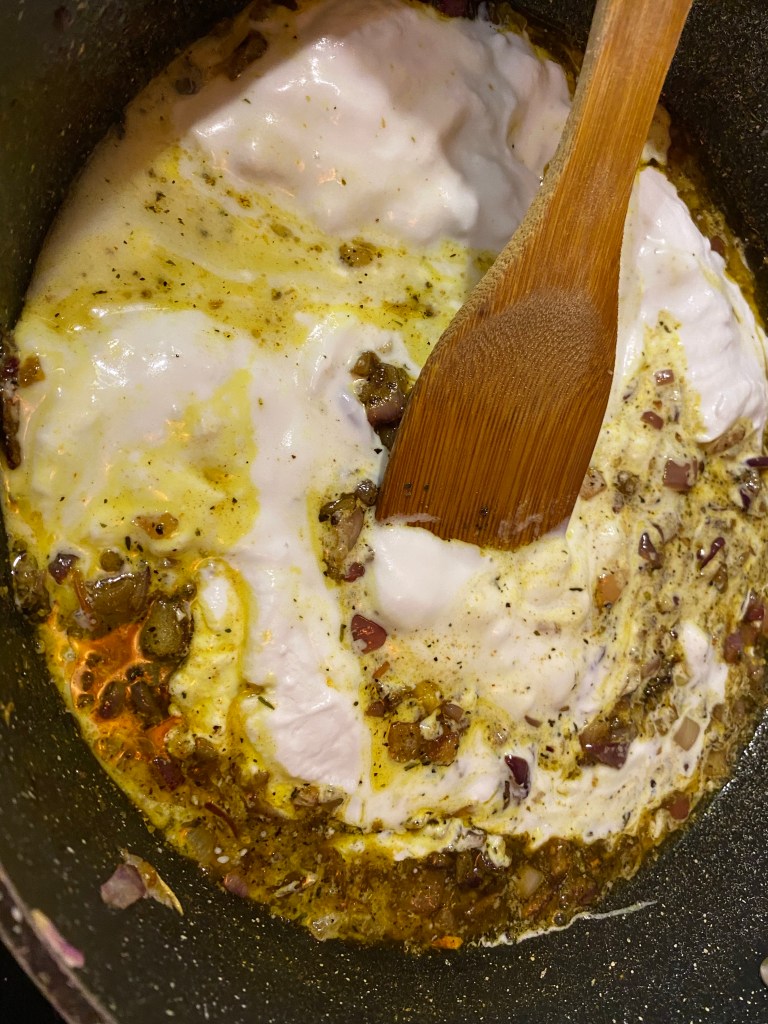
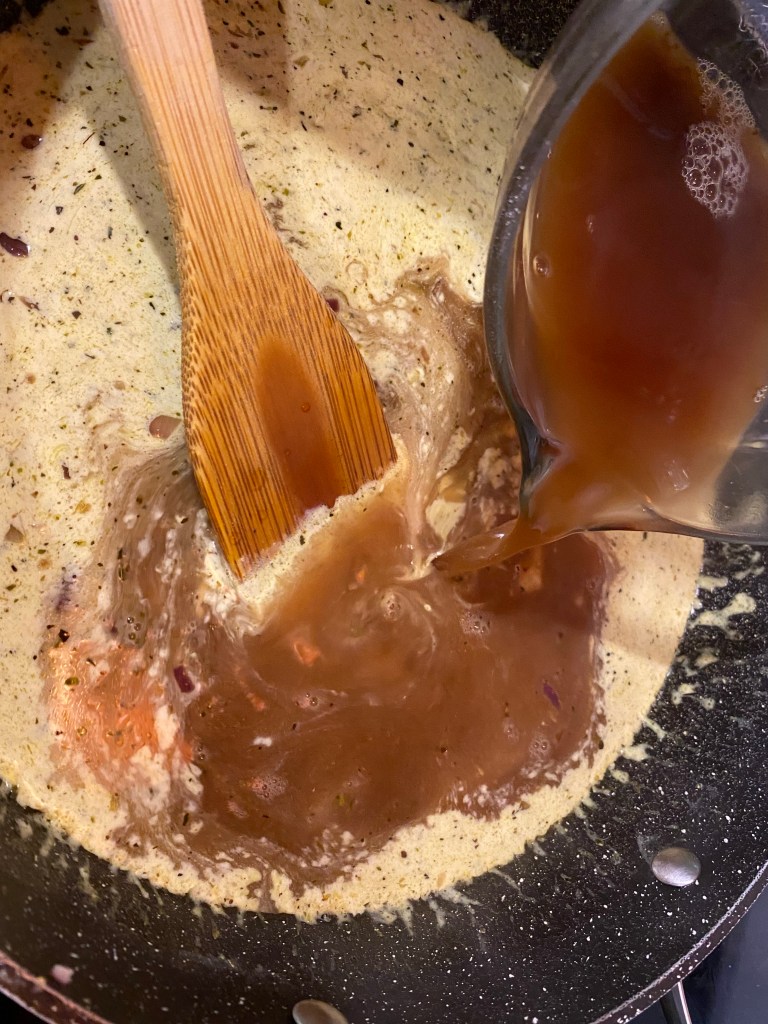
6. In a small bowl, blend together the creamed soup (undiluted!), sour cream and curry powder.

7. Pour and spread as a next layer in the dish.

8. Grate cheese and spread over top.

9. Cut butter into small bits and dot over the cheese.

10. Sprinkle the top with paprika.

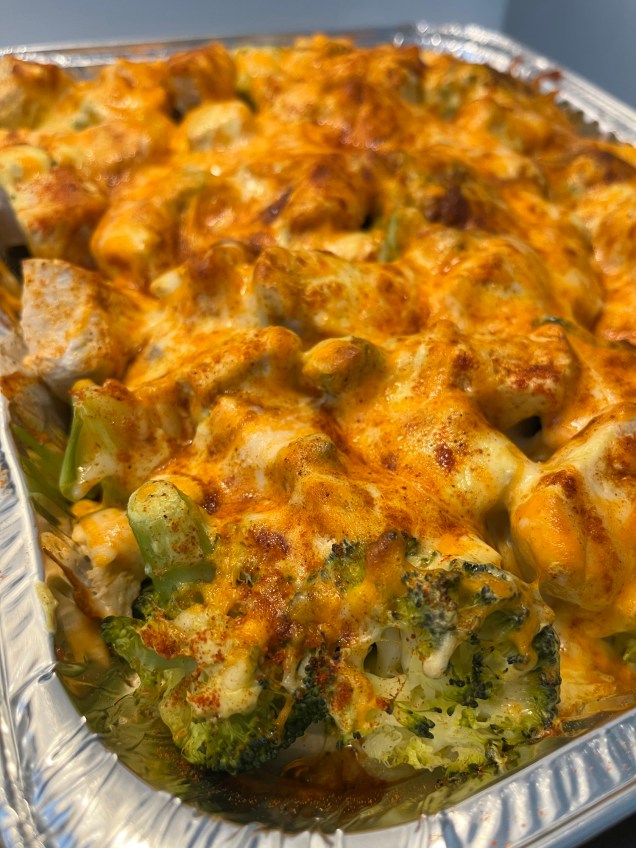
11. Bake at 375 ℉ for 20-25 minutes or until browned on top.

12. Let sit for 5 minutes and serve warm over rice.

13. Makes 6-8 servings.

Saving the Leftovers?

  • Store leftovers in a sealed container in the fridge and eat up within 3 days.
  • For the freezer: put in a sealed container, label, and best to use up within 3 months. To thaw, put in fridge overnight and then reheat in microwave/oven.

Make it a Bake-From-Frozen Freezer Meal!

  • Follow the directions above, and use an aluminum freezer safe dish to layer the chicken divan in.
  • Tightly wrap the top in aluminum foil and label. If possible, put the wrapped divan in an extra large freezer bag to keep it fresh longer and prevent freezer burn. Alternately, add another layer of aluminum foil, wrapping it completely around and tightly pressing it down. Label!
  • To bake: preheat oven to 400 ℉, and remove all wrappings except 1 layer of aluminum foil on the top.
  • Let sit for 5 minutes then serve warm with rice.

Made this Recipe?

I’d LOVE to see your results!! Feel free to post to your social media account and tag Northbird using one of the links below or post in the comments!

Other Soups and Entrees to Check Out:

Hi, I’m Jessie!

I’m a Wife and Homeschooling Mom living in a remote town in Northern Ontario, Canada. I love making wholesome meals for my family from scratch, homeschooling our girls and learning more about natural living.

Read more about my story HERE.

Subscribe to Northbird’s email list to get weekly posts on: tasty recipes, activity ideas for kids, natural living tips, and some genuine mom thoughts and encouragement!

Easy Broccoli Chicken Divan Casserole

  • Servings: 9x13 inch dish
  • Difficulty: Easy
  • Print

Full of excellent nutrition, this tasty dish is a great no-stress meal to serve hot with some rice!


Jessica Burman via Juanita Lambert, 2025 © The Northbird Blog. https://www.thenorthbirdblog.com

Ingredients

  • 4 chicken breasts, cubed and browned
  • 3 medium stalks broccoli, broken into florets (you could also sub in cauliflower, or frozen broccoli/cauliflower)
  • 1 small yellow onion, diced
  • 1 can cream of mushroom soup, 10oz / 284ml (cream of chicken or celery is also nice)
  • 1/2 cup sour cream
  • 1 teaspoon curry powder
  • 1 cup grated cheese (I like cheddar with this recipe)
  • 2 Tablespoons butter
  • Paprika, sprinkled
  • Directions:

    1. Preheat oven to 375 ℉
    2. Cut and brown the chicken in a little oil or butter, then set aside.
    3. Cut the broccoli into small florets and steam or boil until mostly cooked through (skip this step if using frozen broccoli as it has already been par-boiled).
    4. Put the broccoli and cooked chicken into a greased 9″ x 13″ pan or casserole dish.
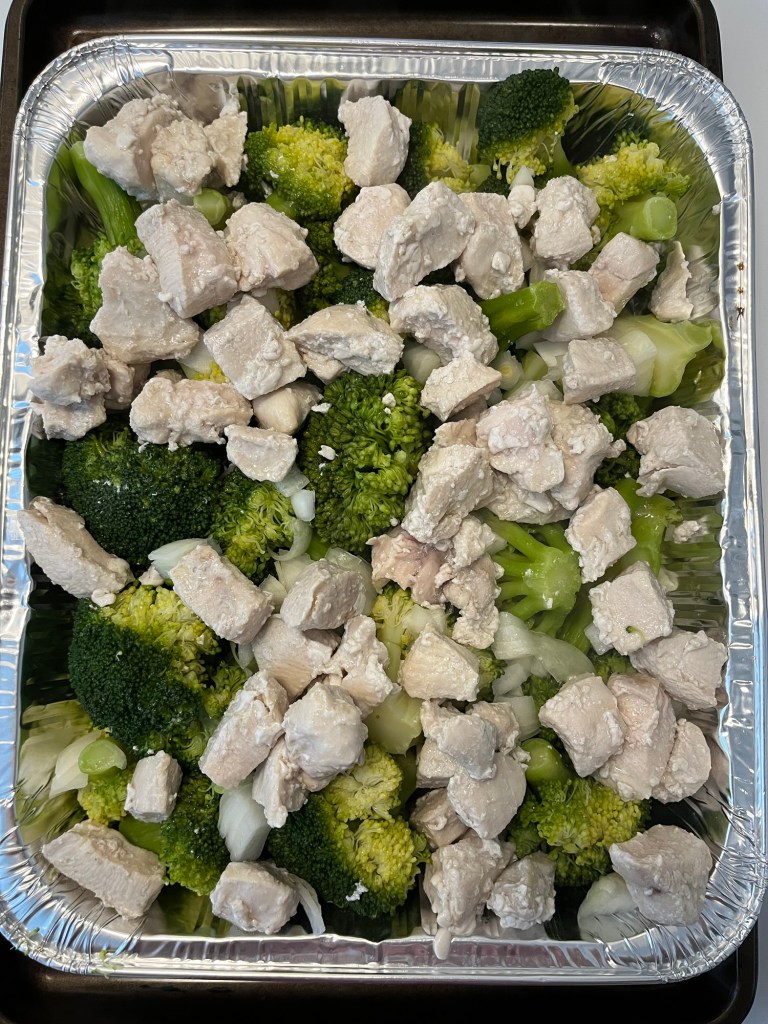
    5. Dice up the onion and sprinkle on top.
    6. In a small bowl, blend together the creamed soup (undiluted!), sour cream and curry powder.
    7. Pour and spread as a next layer in the dish.
    8. Grate cheese and spread over top.
    9. Cut butter into small bits and dot over the cheese.
    10. Sprinkle the top with paprika.
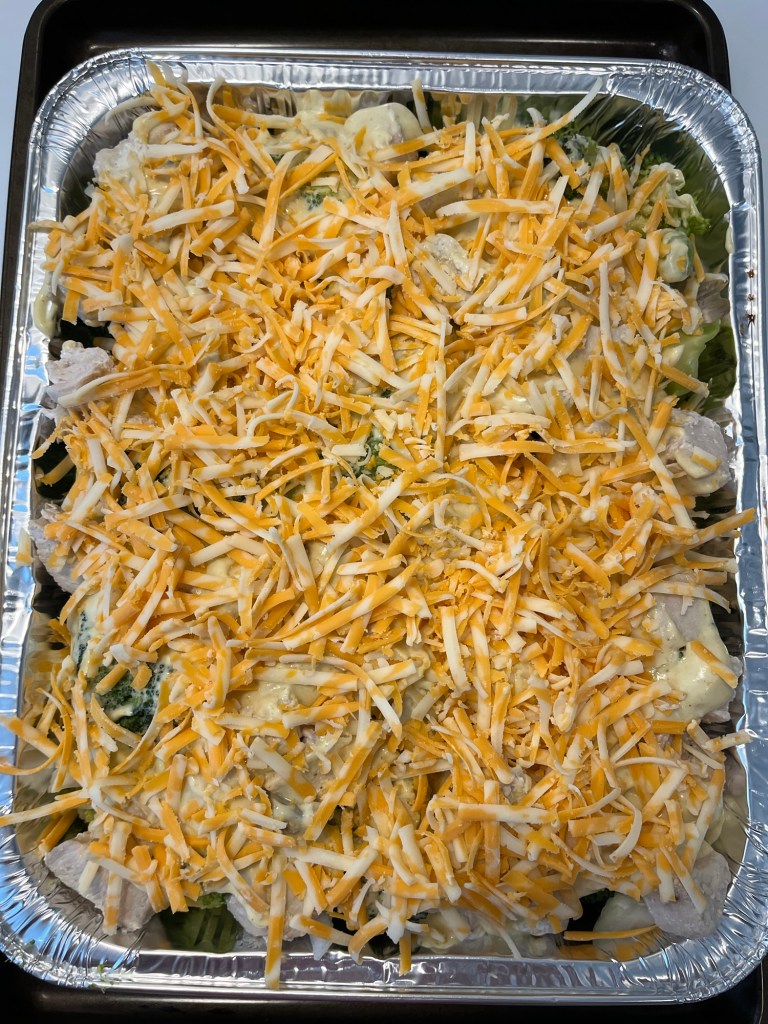
    11. Bake at 375 ℉ for 20-25 minutes or until browned on top.
    12. Let sit for 5 minutes and serve warm over rice.
    13. Makes 6-8 servings.

    Additional Notes: Leftovers

    • Store leftovers in a sealed container in the fridge and eat up within 3 days.
    • For the freezer: put in a sealed container, label, and best to use up within 3 months. To thaw, put in fridge overnight and then reheat in microwave/oven.

    Additional Notes: Make a Freezer Meal

    • Follow the directions above, and use an aluminum freezer safe dish to layer the chicken divan in.
    • Tightly wrap the top in aluminum foil and label. If possible, put the wrapped divan in an extra large freezer bag to keep it fresh longer and prevent freezer burn. Alternately, add another layer of aluminum foil, wrapping it completely around and tightly pressing it down. Label!
    • To bake: preheat oven to 400 ℉, and remove all wrappings except 1 layer of aluminum foil on the top.
    • Bake for 45 minutes, then remove the last layer of aluminum foil and bake for another 10-15 minutes or until fully heated through.
    • Let sit for 5 minutes then serve warm with rice.
    Nutrition


    Per serving: 411 calories; 32 g fat; 13.2 g carbohydrates;
    21.2 g protein.

    Return to Top

    This post contains affiliate links. As an Amazon associate, I earn from qualifying purchases. This means that I make a small commission at no extra cost to you. You can read my full disclosure HERE.

    Easy Green Split Pea & Bacon Soup Recipe: Jar Soup Mix Version Included!

    Find Northbird on social media:

    This post contains affiliate links. As an Amazon associate, I earn from qualifying purchases. This means that I make a small commission at no extra cost to you. You can read my full disclosure HERE.

    Jump To Recipe Card

    Jump to Recipe Card (shelf-stable version)

    Return to “Soups & Entrees”

    About This Recipe…

    I love cooking with dried legumes and dehydrated vegetables in these winter months! One of the most comforting meals (in my opinion) is a tasty soup or stew with freshly made bread to dip in it!

    There are two versions of this recipe that you can see below:

    The first version is the basic soup recipe with bacon in it (which is also very tasty subbing ham or pork tenderloin chunks!). You can make it with fresh or dehydrated vegetables. Makes about 6-8 servings.

    The other version has been altered to make a shelf-stable ready-to-cook soup mix, made from dehydrated vegetables (same ingredients as first recipe) and is approximately 4-6 servings.

    How to Make Green Split Pea & Bacon Soup

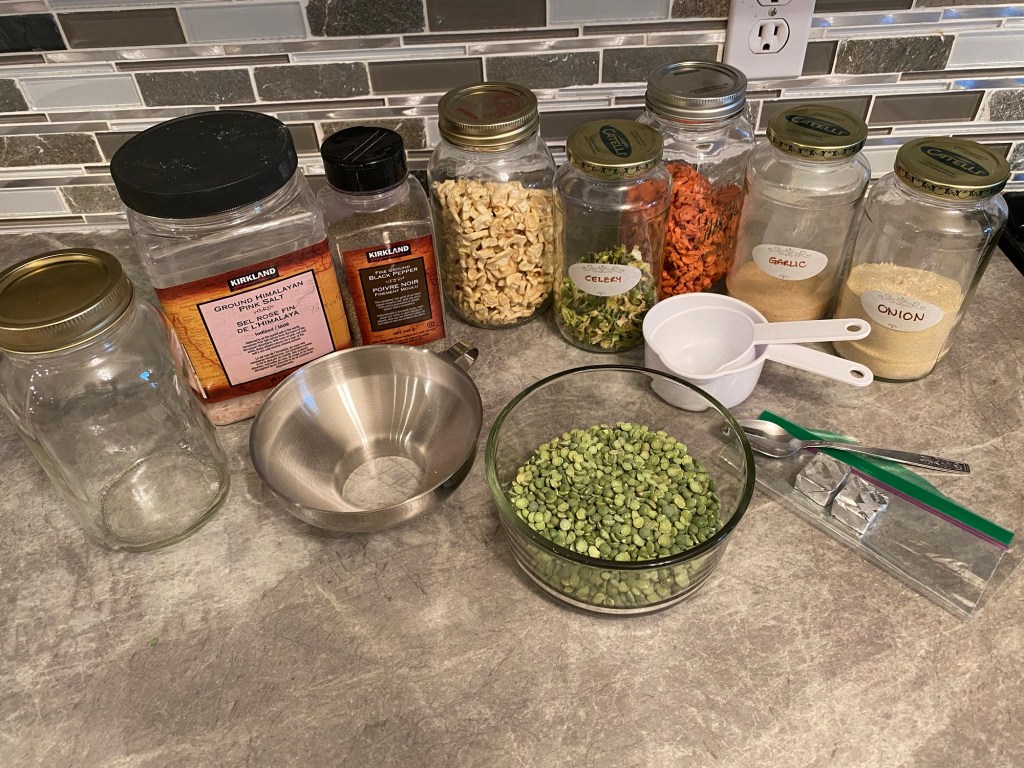
    Supplies Needed:

    Ingredients:

    • 1 medium onion, diced
    • 2 large cloves garlic, diced
    • 2 tablespoons olive oil or butter
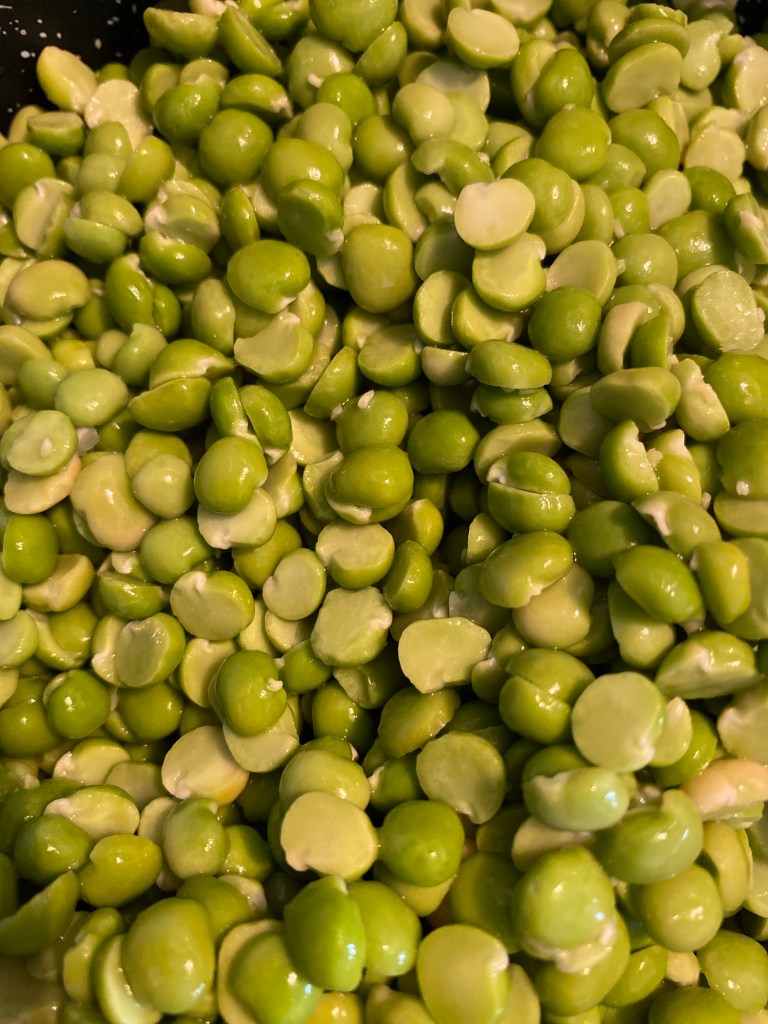
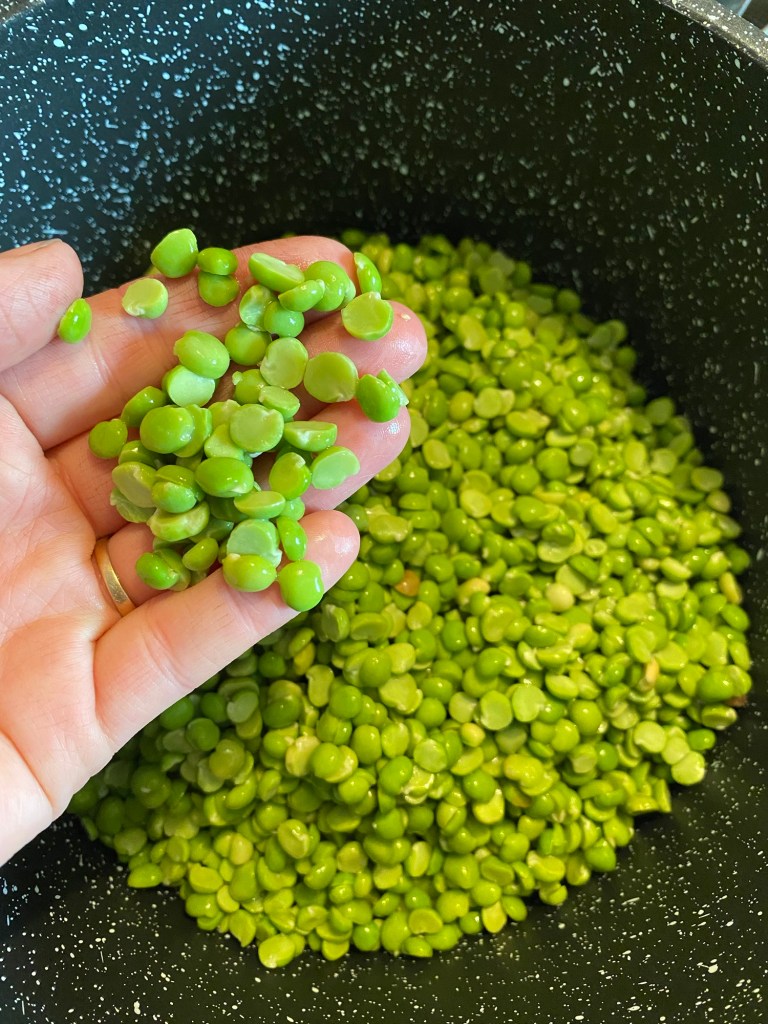
    • 2 cups dry green split peas
    • 8 cups water
    • 2 cubes of chicken/vegetable stock
    • 1 cup dried/diced carrots (or sub 2 cups fresh)
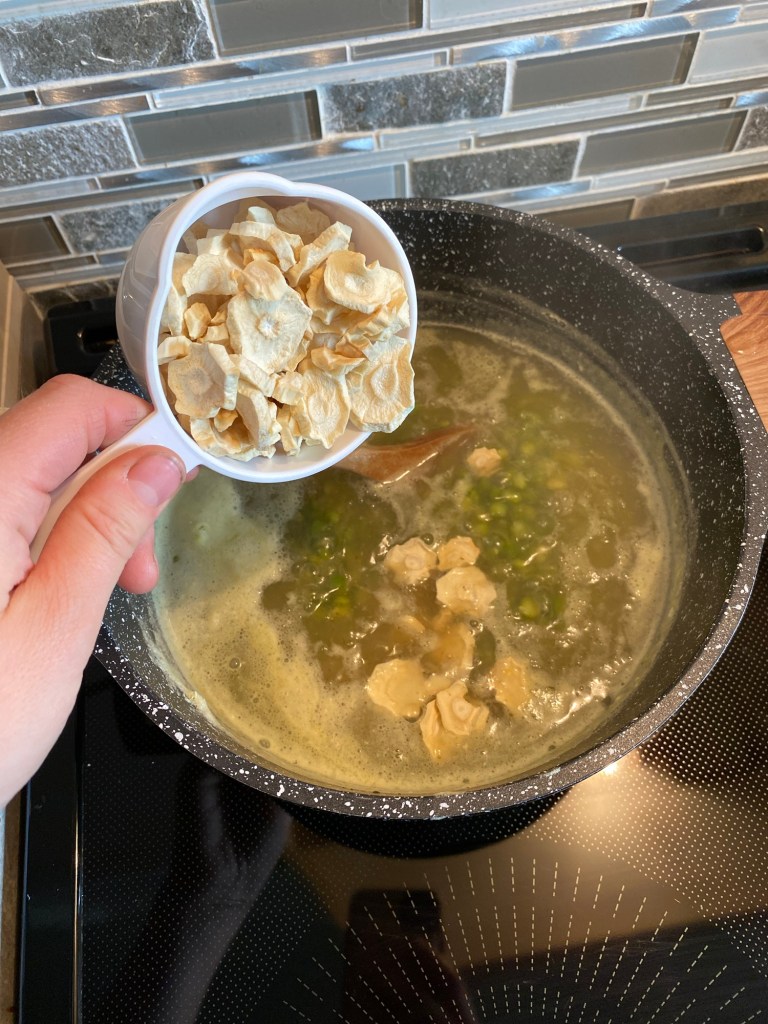
    • 1 cup dried/diced parsnips (or sub 2 cups fresh)
    • 1/2 cup dried/diced celery (or 1 cup fresh)
    • 1 teaspoon sea salt (more or less to taste–remember, there’s bacon coming!)
    • 1/2 teaspoon black pepper
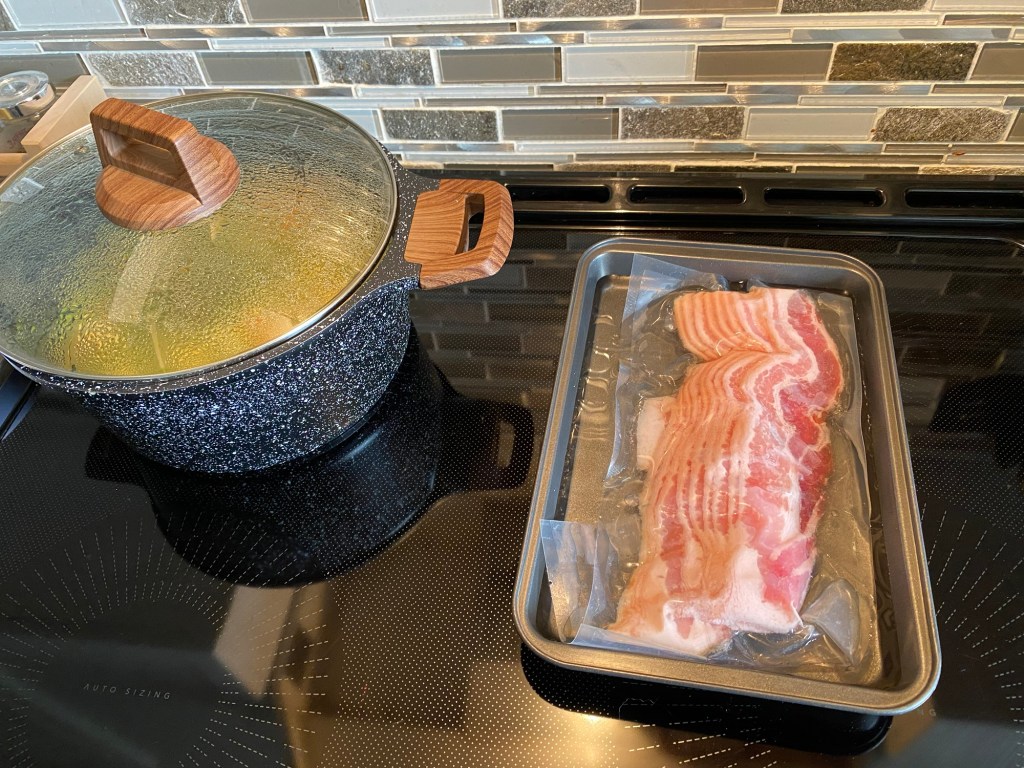
    • 1 pound of bacon, cut into small pieces

    Directions:

    1. Soak dry green split peas overnight in cold water. If this step is missed, start soaking for 4-6 hours before cooking soup, so that peas can still partially sprout. Rinse well in cold water. (See below for more information on why it is so important to soak peas and legumes)

    2. Saute onion and garlic with olive oil or butter in large soup pot. Add 8 cups of cold water and the rest of the ingredients.

    3. Bring to boil, then reduce to simmer on medium for 1-2 hours until all vegetables are soft and tender, stirring occasionally.

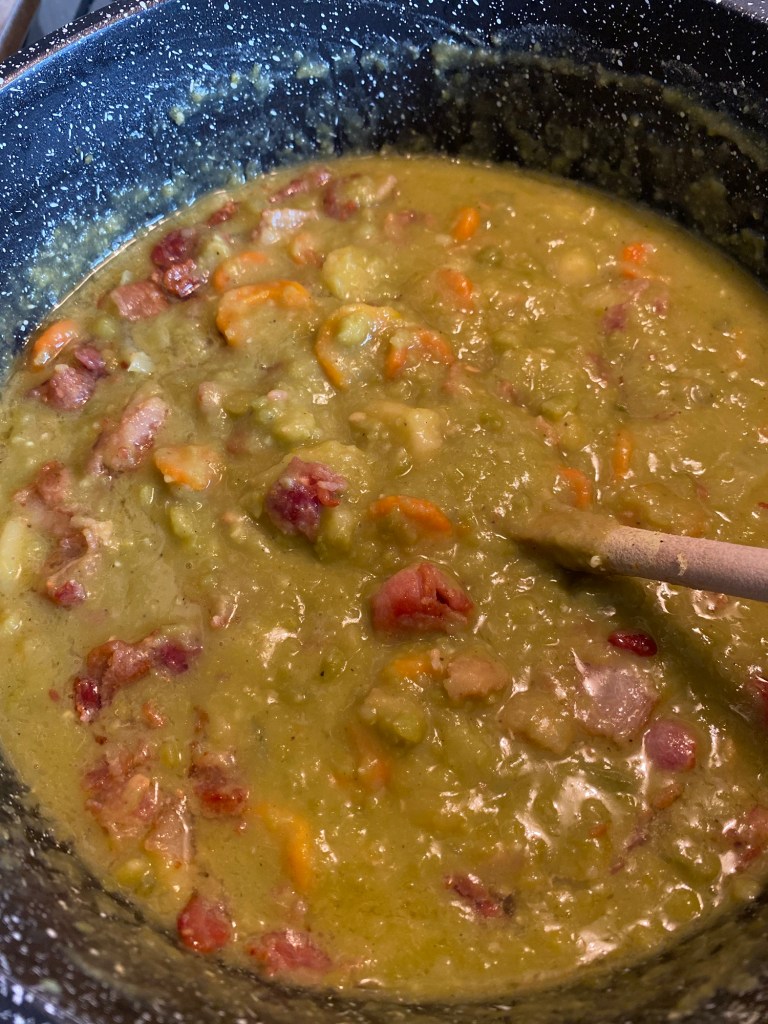
    4. I like to use the immersion blender at this point to puree some of the soup but leave a few chunks in.

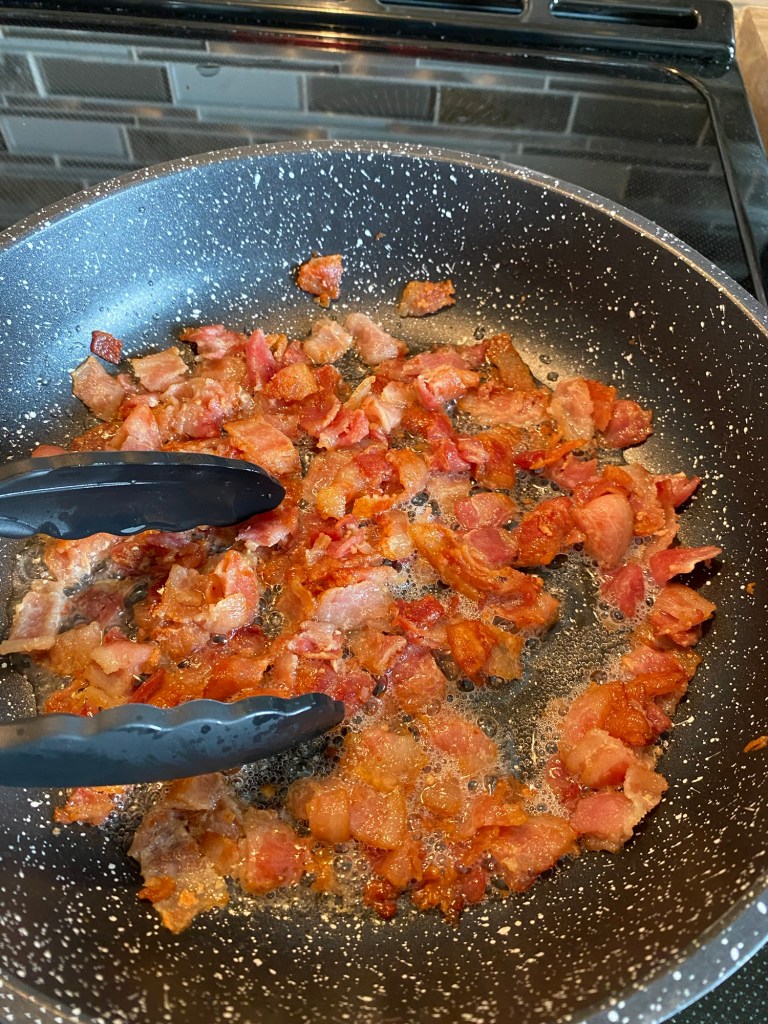
    5. When soup is nearly done, cut bacon into small pieces and fry in separate pan until cooked through. (I use kitchen scissors, only reserved for cutting bacon!) Add to soup, along with a little tasty bacon grease (if desired!).

    6. Serve and enjoy!

    Nutritional Benefits of Green Split Peas:

    Green split peas are high in fibre, high in protein, and low in calories. They have been found to contain rich amounts in: iron, protein, magnesium, zinc, phosphorus and potassium (among many others!).

    Split peas help to lower high cholesterol, blood pressure, and have anti-inflammatory benefits. They also have been found to help to prevent heart disease, diabetes, osteoporosis, cancer, and many other chronic illnesses.

    Why Soak the Split Peas?

    Soaking the split peas overnight (or at least for several hours before cooking) not only softens them and shortens their cooking time, but it also helps the split peas to release the lectins that are in them.

    Lectins are toxins that are found in beans, peas, soybeans, peanuts, lentils and whole grains. Although many people say it doesn’t matter to soak the dried split peas before cooking them, I always feel better to soak and rinse them first, and know that our digestive systems are the happier for it!

    Some side effects of un-soaked but cooked green split peas have been noted to include: bloating, gas, stomach pains and diarrhea. These split peas are very good for you–especially when they’ve been prepared and cooked properly!

    Interested in learning more about dehydrating your own vegetables?

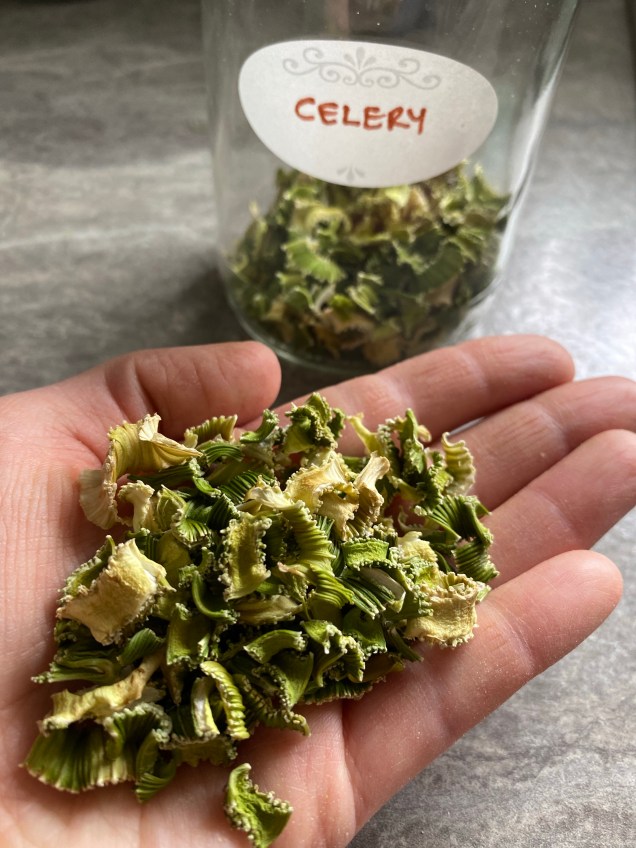
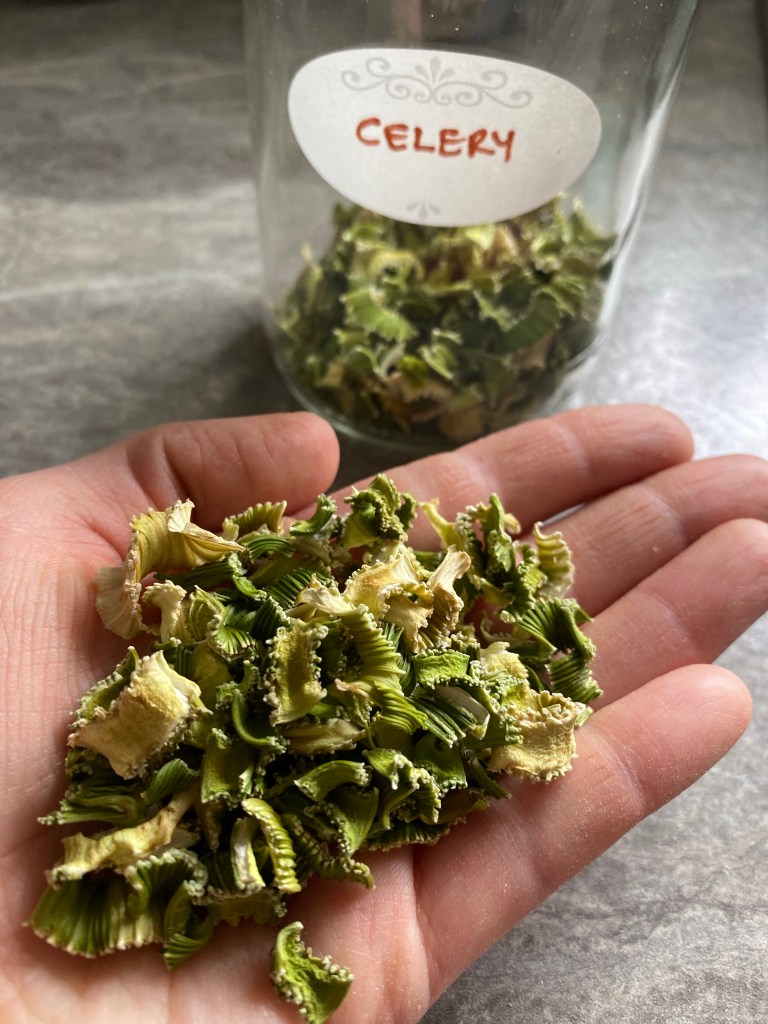
    You can check out the post: How to Dehydrate Celery for Flavourful Recipes HERE.

    Want to make this recipe into a ready-made soup mix?

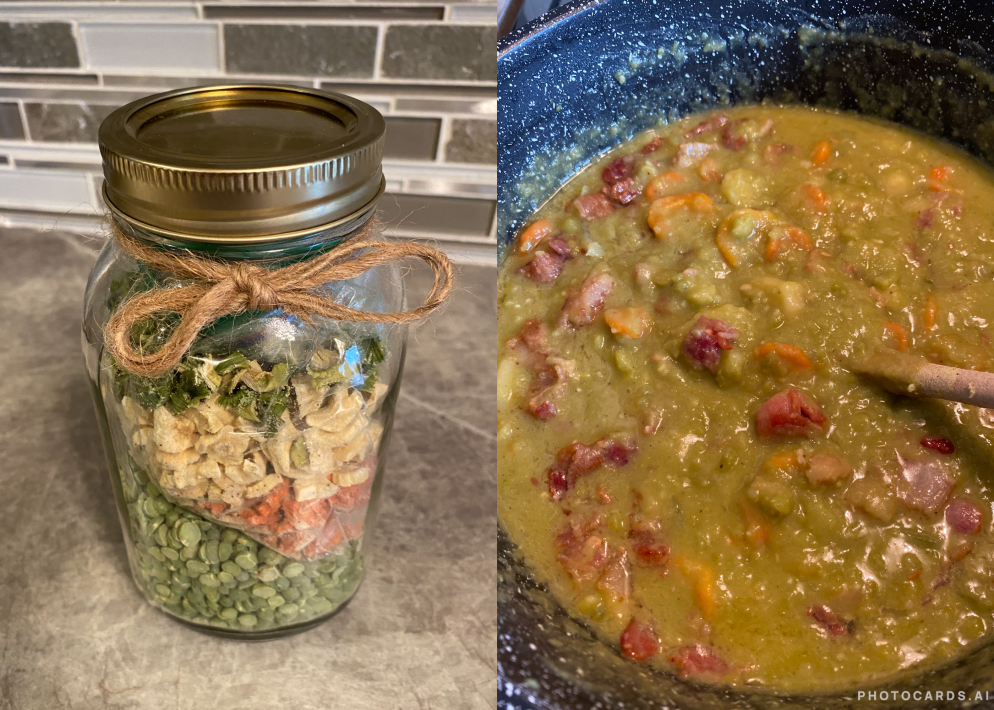
    I had some fun turning this recipe into a completely dry vegetarian soup mix, fitting easily into a 1 L glass mason jar. Perfect for a nutritious emergency pantry meal or to use on a camping trip. You just need to add water! (and bacon or other meat if desired, or sprinkle dried bacon bits on the top when serving)

    Using mason jars also make these ready-to-cook meals a cute gift!

    Supplies Needed:

    Ingredients:

    Directions:

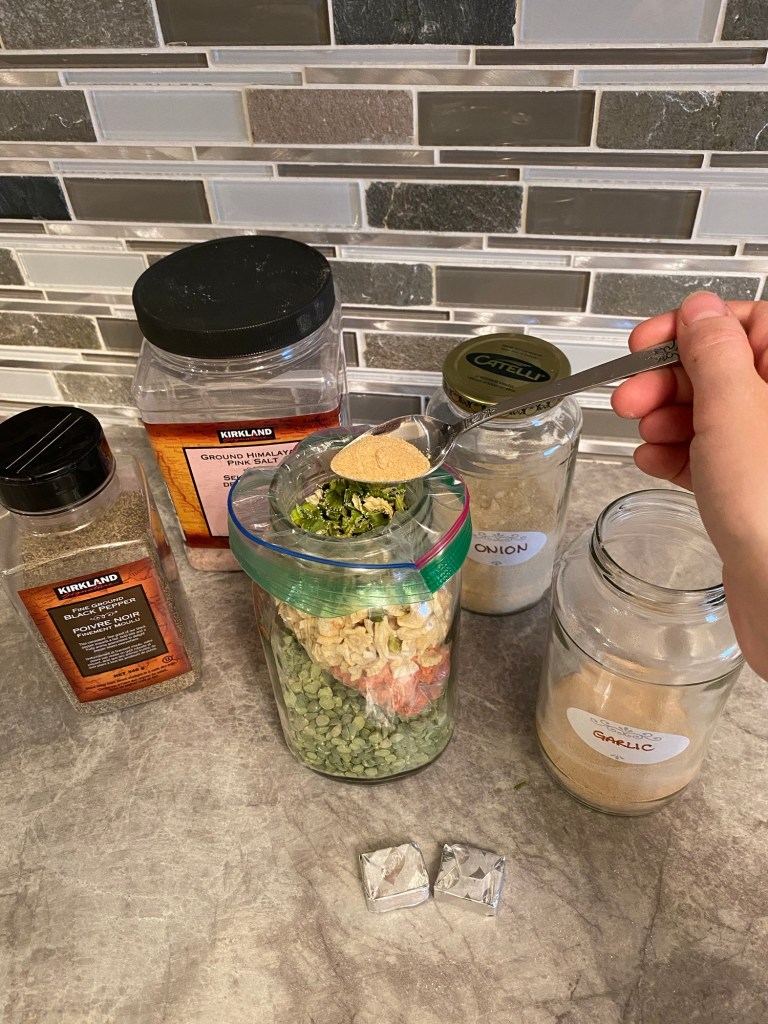
    1. Measure dried green split peas into the bottom of the jar.
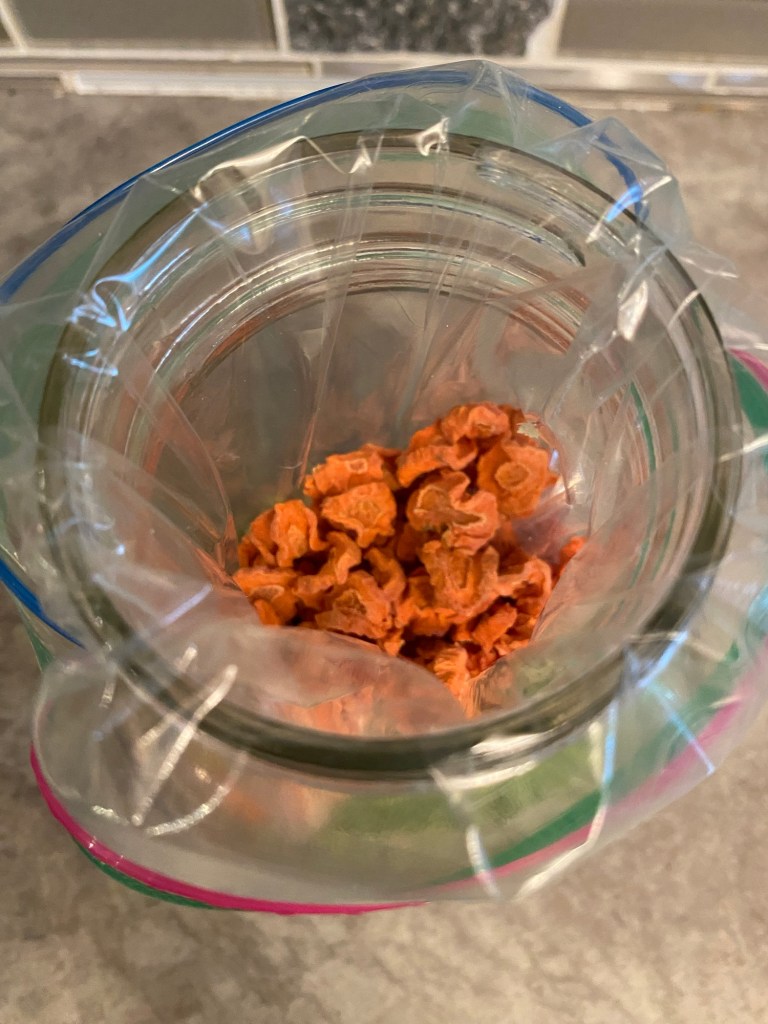
    2. Next, put the ziploc bag inside and begin filling with the remaining ingredients, except stock cubes.
    3. Close ziploc bag, poke inside jar, and place stock cubes on top. Seal jar with lid.

    Additional Note:

    You can of course use whatever container type you like for storing the soup mix, my personal preference for storing in my pantry is 1 Litre mason jars, so I made measurements to fit in this size.

    For camping I would put it all into a large ziploc bag, just separating the green split peas in a separate bag inside.

    To Cook:

    1. Pull out the stock cubes and set aside. Open up the ziploc bag and pour contents into a separate bowl.
    2. Green split peas are now separate from the rest of ingredients and can be soaked in the jar or another bowl overnight.
    3. Rinse split peas well with cold water and put in soup pot with 4 + 1/2 cups of cold water.
    4. Add remaining ingredients, and bring to a boil.
    5. Reduce to medium-low and simmer 1-2 hours, stirring occasionally until dried vegetables are cooked through and tender. Add more water as needed.
    6. If desired, you can sprinkle dried bacon bits on the top.

    Made this Recipe?

    I’d LOVE to see your results!! Feel free to post to your social media account and tag Northbird using one of the links below or post in the comments!

    Other Soups and Entrees to Check Out:

    Subscribe to Northbird’s email list to get weekly posts on: tasty recipes, activity ideas for kids, natural living tips, and some genuine mom thoughts and encouragement!

    Hi, I’m Jessie!

    I’m a Wife and Homeschooling Mom living in a remote town in Northern Ontario, Canada. I love making wholesome meals for my family from scratch, homeschooling our girls and learning more about natural living.

    Read more about my story HERE.

    Green Split Pea and Bacon Soup

    • Servings: 6-8
    • Difficulty: Easy
    • Print

    A highly nutritious and tasty winter soup recipe.


    Ingredients

  • 1 medium onion, diced
  • 2 large cloves garlic, diced
  • 2 tablespoons olive oil or butter
  • 2 cups dry green split peas
  • 8 cups water
  • 2 cubes of chicken/vegetable stock
  • 1 cup dried/diced carrots (or sub 2 cups fresh)
  • 1 cup dried/diced parsnips (or sub 2 cups fresh)
  • 1/2 cup dried/diced celery (or 1 cup fresh)
  • 1 teaspoon sea salt (more or less to taste–remember, there’s bacon coming!)
  • 1/2 teaspoon black pepper
  • 1 pound of bacon, cut into small pieces

  • Directions:

    1. Soak dry green split peas overnight in cold water. If this step is missed, start soaking for 4-6 hours before cooking soup, so that peas can still partially sprout. Rinse well in cold water. (See below for more information on why it is so important to soak peas and legumes)
    2. Saute onion and garlic with olive oil or butter in large soup pot. Add 8 cups of cold water and the rest of the ingredients.
    3. Bring to boil, then reduce to simmer on medium for 1-2 hours until all vegetables are soft and tender, stirring occasionally.
    4. I like to use the immersion blender at this point to puree some of the soup but leave a few chunks in.
    5. When soup is nearly done, cut bacon into small pieces and fry in separate pan until cooked through. (I use kitchen scissors, only reserved for cutting bacon!) Add to soup, along with a little tasty bacon grease (if desired!).
    6. Serve and enjoy!

    Nutrition


    Per 1 serving: 442 calories; 29.3 g fat; 36.1 g carbohydrates;
    13.8 g protein.

    Green Split Pea and Bacon Soup (Shelf-Stable Version)

    • Servings: 4-6
    • Difficulty: Easy
    • Print

    A ready to cook soup mix: Just Add Water! Great for make-ahead camping meals or stocking in your pantry for an emergency.


    Ingredients

  • 1 + 1/2 cups of dried green split peas
  • 3/4 cup dried & diced carrot
  • 3/4 cup dried & diced parsnips
  • 1/2 cup dried & diced celery
  • 1 teaspoon sea salt
  • 1/4 teaspoon black pepper
  • 1 teaspoon dried onion powder
  • 1 teaspoon dried garlic powder
  • 2 cubes of chicken/vegetable stock

  • Directions:

    1. Measure dried green split peas into the bottom of the jar.
    2. Next, put the ziploc bag inside and begin filling with the remaining ingredients, except stock cubes.
    3. Close ziploc bag, poke inside jar, and place stock cubes on top. Seal jar with lid.

    Cooking Directions:

    1. Pull out the stock cubes and set aside. Open up the ziploc bag and pour contents into a separate bowl.
    2. Green split peas are now separate from the rest of ingredients and can be soaked in the jar or another bowl overnight.
    3. Rinse split peas well with cold water and put in soup pot with 4 + 1/2 cups of cold water.
    4. Add remaining ingredients, and bring to a boil.
    5. Reduce to medium-low and simmer 1-2 hours, stirring occasionally until dried vegetables are cooked through and tender. Add more water as needed.
    6. If desired, you can sprinkle dried bacon bits on the top.

    Nutrition


    Per 1 serving: 225 calories; 0.8 g fat; 47.1 g carbohydrates;
    11.4 g protein.

    Return to Top

    Heavenly Crockpot Chicken

    Find Northbird on social media:

    This post contains affiliate links. As an Amazon associate, I earn from qualifying purchases. This means that I make a small commission at no extra cost to you. You can read my full disclosure HERE.

    Jump To Recipe Card

    Jump to Video

    Return to “Soups & Entrees”

    Need an easy crockpot chicken meal idea? This is it.

    My mother used to make this delicious chicken meal a lot when I was growing up. I am not sure where the recipe actually came from, so I cannot truly give origin credit where it is due. However, it’s just one of those simple, easy, go-to meals that truly makes busy days easier.

    I remember my mother making huge meals of this whenever she was hosting a large amount of people. She would double/triple this recipe and preferred to cook it in the oven in a large covered roasting pan.

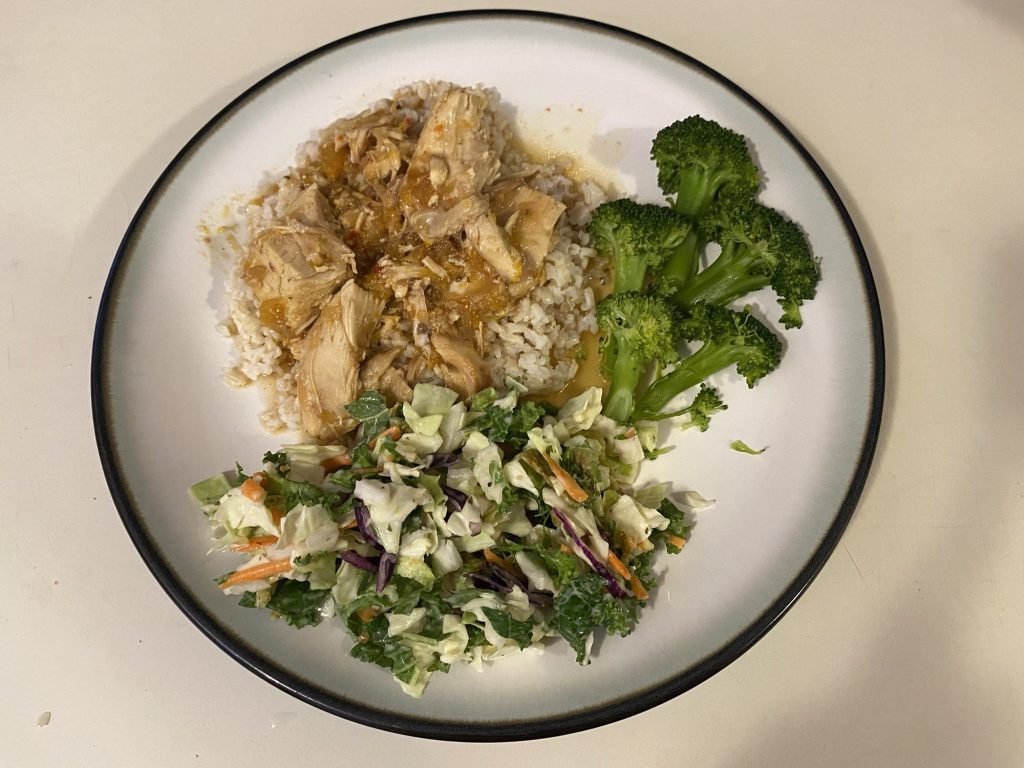
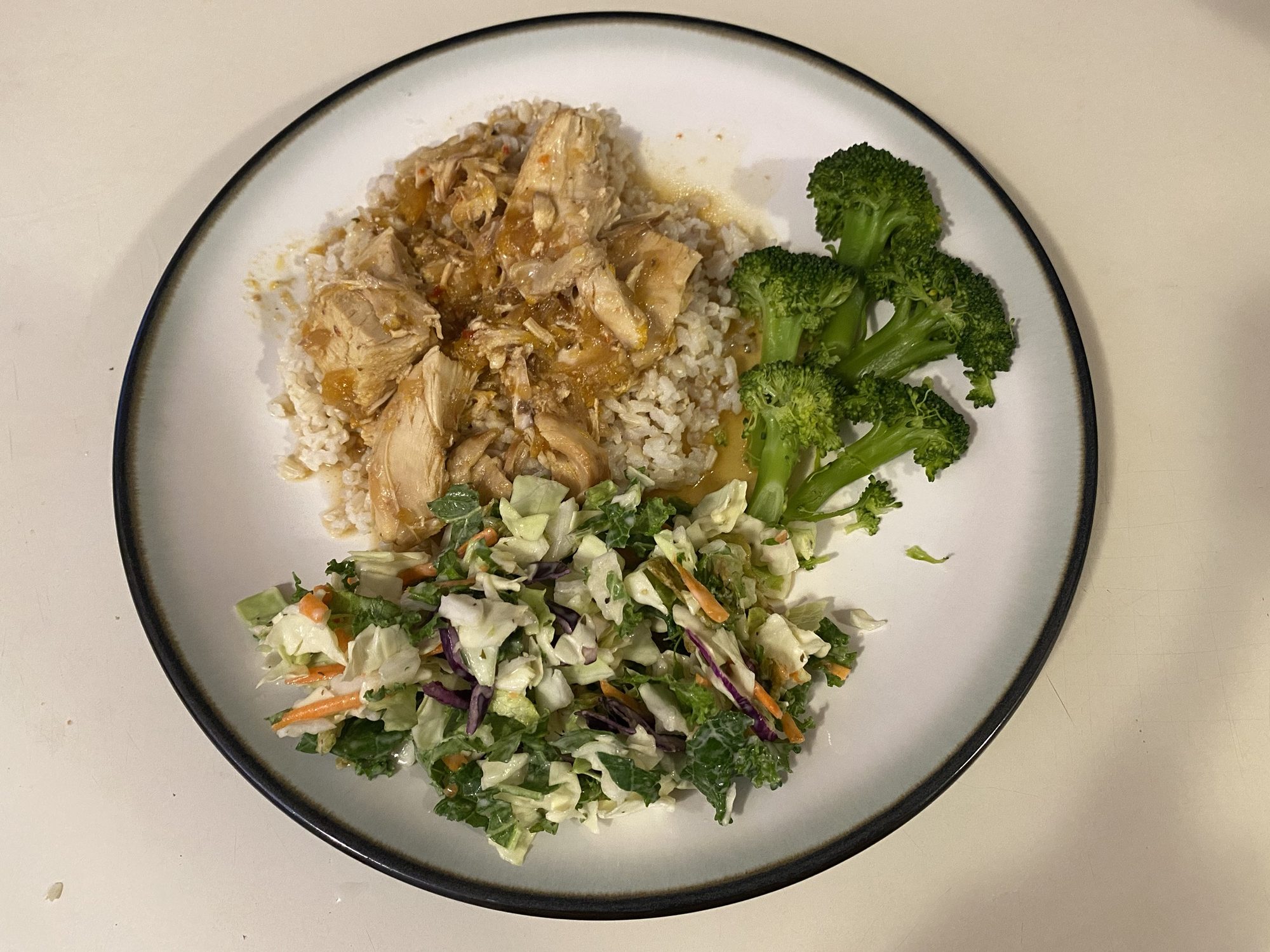
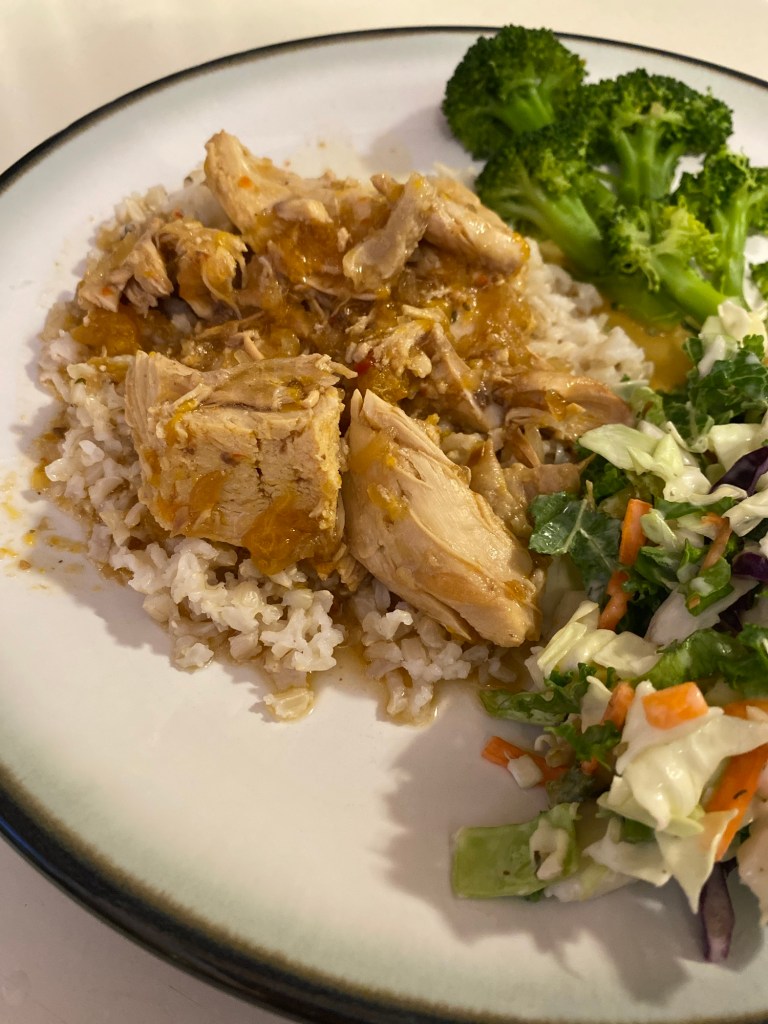
    We always served it with brown rice and a cooked vegetable and salad on the side. I have to say, I almost prefer eating just the sauce poured over the rice, it is SERIOUSLY that good.

    This is a short visual of how to make this delicious crockpot chicken dinner!

    How to Make Heavenly Crockpot Chicken

    Supplies Needed:

    Ingredients:

    • 2-3 large chicken breasts, or use 8-10 small drumsticks/chicken thighs. This recipe is flexible on the type of chicken cut to use –See note below.
    • 1 small can of apricot halves in syrup (or use 1 cup apricot jam for added sweetness)
    • 1 cup Italian salad dressing
    • 1 package onion soup mix

    Directions:

    1. Thaw chicken if frozen and wash with cold water. Place evenly in crockpot.
    2. In a small bowl, mix together: onion soup mix, apricot, and 1 cup of Italian salad dressing.
    3. Pour over chicken.

    4. Cover and turn crockpot to high for 3-4 hours, or low for 6-8 hours. Baste chicken tops with sauce 1-2 times through cooking time.

    In the oven: Preheat to 350 degrees fahrenheit and bake 2 hours covered, turning chicken once. Cook chicken to an internal temperature of at least 165 degrees fahrenheit.

    5. Serve over rice (pairs well with brown rice), and generously drizzle the sauce! We like to add a salad and cooked vegetable on the side.

    Additional Note: We have used boneless/skinless chicken breasts, chicken thighs, drumsticks, etc. If chicken used has bones, it’s nicest to take off meat once it is fully cooked and return to crockpot until ready to serve.

    Edit: When we made this meal recently, I found out last minute that we didn’t have any canned apricots or apricot jam! So we subbed in fresh peaches and peach jam instead. It tasted quite similar and was just as good!

    Other Soups and Entrees to Check Out:
    Hi, I’m Jessie!

    I’m a Wife and Homeschooling Mom living in a remote town in Northern Ontario, Canada. I love making wholesome meals for my family from scratch, homeschooling our girls and learning more about natural living.

    Read more about my story HERE.

    Subscribe to Northbird’s email list to get weekly posts on: tasty recipes, activity ideas for kids, natural living tips, and some genuine mom thoughts and encouragement!

    Heavenly Crockpot Chicken

    • Servings: 6
    • Difficulty: Easy
    • Print

    With only 4 ingredients, this delicious recipe proves the simplicity of crockpot meals for those busy weekdays!


    Additional Note: We have used boneless/skinless chicken breasts, chicken thighs, drumsticks, etc. If chicken used has bones, it’s nicest to take off meat once it is fully cooked and return to crockpot until ready to serve. Peaches and peach jam is also a nice alternative to apricots.

    Supplies Needed:

  • Crockpot (or see note below for cooking in the oven)
  • Small mixing bowl and spoon
  • Meat thermometer
  • Measuring cups

  • Ingredients

  • 2-3 large chicken breasts, or use 8-10 small drumsticks/chicken thighs. This recipe is flexible on the type of chicken cut to use –See note below.
  • 1 small can of apricot halves in syrup (or use 1 cup apricot jam for added sweetness)
  • 1 cup Italian salad dressing
  • 1 package onion soup mix

  • Directions:

    1. Thaw chicken if frozen and wash with cold water. Place evenly in crockpot.
    2. In a small bowl, mix together: onion soup mix, apricot, and 1 cup of Italian salad dressing.
    3. Pour over chicken.
    4. With lid on, turn crockpot to high for 3-4 hours, or low for 6-8 hours. Baste chicken tops with sauce 1-2 times through cooking time. In the oven: Preheat to 350 degrees fahrenheit and bake 2 hours covered, turning chicken once. Cook chicken to an internal temperature of at least 165 degrees fahrenheit.
    5. Serve over rice (pairs well with brown rice), and generously drizzle the sauce! We like to add a salad and cooked vegetable on the side.

    Nutrition


    Per 1 serving: 332 calories; 22 g fat; 14.9 g carbohydrates;
    17.8 g protein.

    Return to Top

    Chickpea Coconut Curry

    Find Northbird on social media:

    This post contains affiliate links. As an Amazon associate, I earn from qualifying purchases. This means that I make a small commission at no extra cost to you. You can read my full disclosure HERE.

    Jump to Recipe Card

    Jump to Video

    Return to Soups & Entrees

    We LOVE curry night! Once a week we have either a stir fry or curry served with rice. My favourite is curry of course because it’s a little less work and can be easily made ahead and kept warm.

    Before Jesse and I got married (or even met), I spent several months in a bible school that had an outreach focus in Asia. After training, my team and I lived in a missionary’s house in Tokyo, Japan, for a month, followed by another month in Southern Thailand. It was during this time that I grew to love eating different curries and of course rice.

    There are hundreds of different curry recipes, originating from many different countries and cultures. I love trying different ones out and letting my somewhat enthusiastic family try them (they are not as excited to try anything remotely spicy!).

    This Chickpea Coconut Curry has become my go-to recipe for last minute curry cooking. It may change week-to-week based on what vegetables I have available, but I love this particular mix of ingredients. It is generally easier on the more sensitive palate, making it a great choice on the menu for little ones.

    Nutritional Benefits of Chickpeas:

    Chickpeas are also known as garbanzo beans, and are widely used in many different cuisines. From falafel to curries to hummus, there are countless types of dishes that feature chickpeas.

    They are high in protein, which makes them a favourite alternative for replacing meat protein. They are also high in healthy fats, carbs and fibre. Some other nutritional components include: Manganese, Folate (Vitamin B9), Copper, Iron, Zinc, Phosphorus, Magnesium, Thiamine, Vitamin B6, Selenium and Potassium.

    Health Benefits May Include:

    • Help you to feel full longer
    • Weight management
    • Boosts bone & muscle health
    • Helps to regulate blood sugar levels
    • Assists with digestion
    • May reduce risk of chronic illnesses
    • Supports brain function
    • May help relieve anxiety and depression
    • Boosts red blood cell production (Iron deficiency)

    You can read more HERE about why Chickpeas are an amazing addition to your diet.

    Is Coconut Milk good for you?

    Coconut milk is an amazing source of healthy saturated fats and high in calories. It is typically made from grinding the white flesh part of a matured brown coconut and then mixed with water. It is important to not confuse coconut milk with coconut water, which usually comes from an immature green coconut and is estimated 94% water.

    The coconut milk has varying thickness of fat in it, and used for different dishes. In most cuisines, the thicker the milk is, the more likely it is used for deserts and creams. The thinner milk is usually used for making soups, curries and sauces.

    My mother usually has at least one can of coconut milk buried at the back of her fridge. She chills the can so that the milk layers will separate and the thicker cream can be used as desert toppings.

    I heard a story a while ago of how some babies that were born in the south pacific islands were given coconut milk when there was no baby formula or substitute nursing mothers available. And these babies thrived with no developmental concerns.

    Perhaps one thing to note about drinking coconut milk, is that not all store bought brands are actually good for you. Many of them contain preservatives and added sugars, so it’s always a good idea to read the labels!

    Here’s a short video of how to make Chickpea Coconut Curry…!

    How to Make Chickpea Coconut Curry

    Supplies Needed:

    Ingredients:

    Directions:

    1. Melt the coconut oil in wok or large skillet over medium heat.
    2. Add the onion, garlic and ginger. Cook for 2 minutes or until the onions have softened.
    3. Add the spices/herbs: coriander, curry, salt, pepper, and Italian seasoning. Stir for 1 minute.

    4. Add the coconut milk and stir in, followed by the beef stock. Cook for 5 minutes and stir well.

    5. Add the remaining ingredients (sweet potatoes, chickpeas, mushrooms, bay leaves, and any other vegetables you would like to add!).

    6. Continue cooking and stirring occasionally for another 15-20 minutes, until curry thickens and vegetables are tender.

    7. Serve over rice and garnish with fresh basil or parsley.

    Additional Note: This recipe is lovely with some fresh Naan bread for dipping. I am developing a recipe to share on here soon!

    Other Soups and Entrees to Check Out:
    Hi, I’m Jessie!

    I’m a Wife and Homeschooling Mom living in a remote town in Northern Ontario, Canada. I love making wholesome meals for my family from scratch, homeschooling our girls and learning more about natural living.

    Read more about my story HERE.

    Subscribe to Northbird’s email list to get weekly posts on: tasty recipes, activity ideas for kids, natural living tips, and some genuine mom thoughts and encouragement!

    Chickpea Coconut Curry

    • Servings: 8 servings
    • Difficulty: Easy
    • Print

    Delicious and Creamy Curry on your table in under an hour!


    Ingredients:

  • 1/4 cup coconut oil
  • 1 onion, chopped
  • 4 garlic cloves, minced
  • 1 small finger of ginger root, minced
  • 1/2 teaspoon coriander, ground
  • 2 tablespoons yellow curry (or more to taste)
  • Pepper and salt to taste
  • 2 teaspoons Italian seasoning herbs
  • 1 can (14oz/400ml) coconut milk
  • 2 cups beef stock (can use chicken or vegetable)
  • 6 small sweet potatoes
  • 1 can (19oz/540ml) Chickpeas
  • 6 small mushrooms
  • 2 bay leaves

  • Directions:

    1. Melt the coconut oil in wok or large skillet over medium heat.
    2. Add the onion, garlic and ginger. Cook for 2 minutes or until the onions have softened.
    3. Add the spices/herbs: coriander, curry, salt, pepper, and Italian seasoning. Stir for 1 minute.
    4. 4. Add the coconut milk and stir in, followed by the beef stock. Cook for 5 minutes and stir well.
    5. Add the remaining ingredients (sweet potatoes, chickpeas, mushrooms, bay leaves, and any other vegetables you would like to add!).
    6. Continue cooking and stirring occasionally for another 15-20 minutes, until curry thickens and vegetables are tender.
    7. Serve over rice and garnish with fresh basil or parsley.

    Nutrition


    For 1 approximate serving: 192 calories; 13 g fat; 16 g carbohydrates;
    3.7 g protein.

    Return to Top

    Sourdough Panzerotti (Pizza Pockets)

    Find Northbird on social media:

    This post contains affiliate links. As an Amazon associate, I earn from qualifying purchases. This means that I make a small commission at no extra cost to you. You can read my full disclosure HERE.

    Jump to Recipe Card

    Return to “Sourdough”

    Return to “Soups & Entrees”

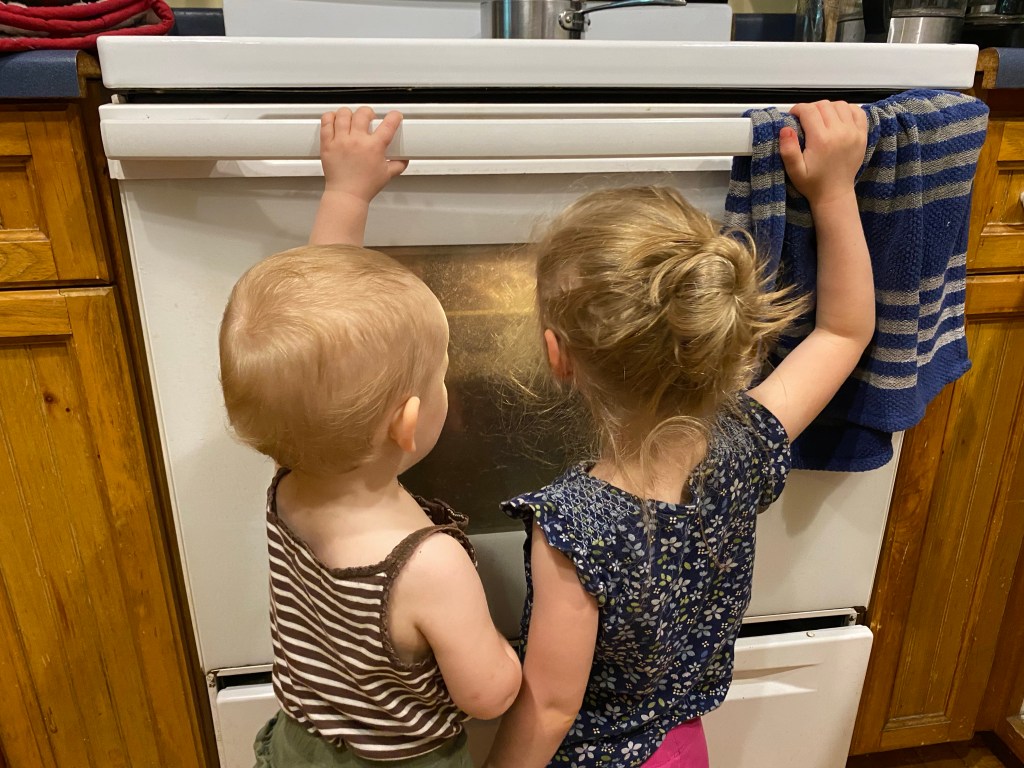
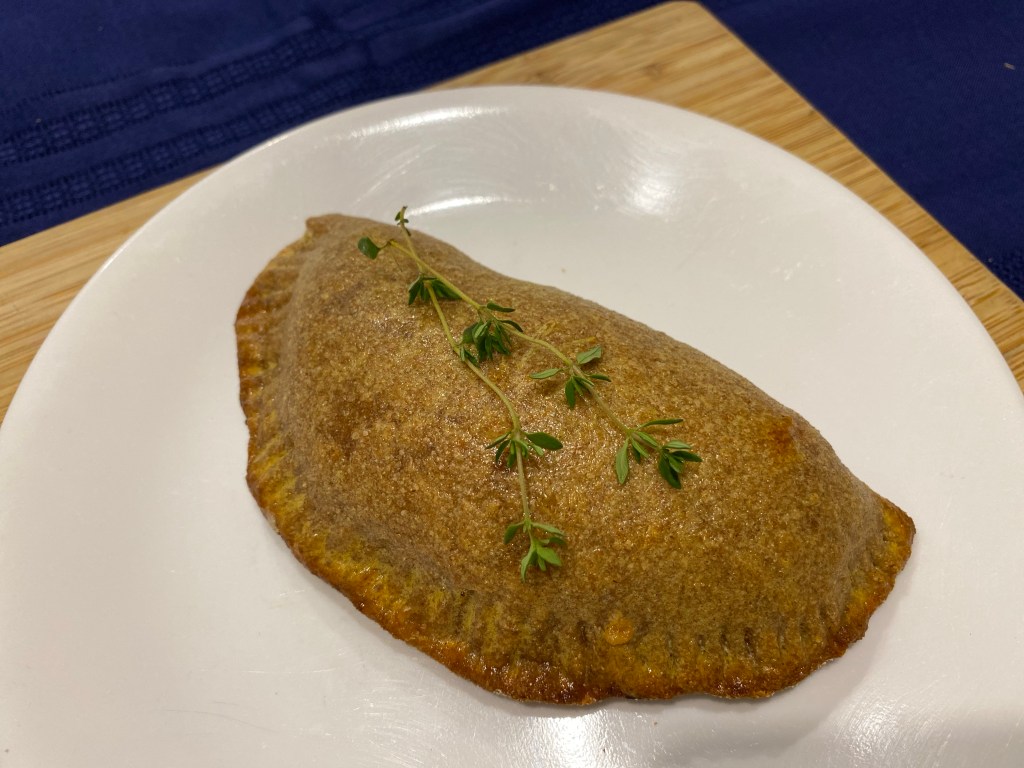
    We’ve had some fun lately experimenting with our Friday pizza meals. One fun development was making these “pizza pockets”, or Panzerottis. The kids loved making these with me, and especially watching them puff up in the oven!

    The first few I made had some thin spots in the crust so they broke open and delicious cheese spilled out –or as my oldest said “It pooped out some cheese!”

    What is the difference between a Panzerotti and a Calzone?

    Panzerottis, or “pizza pockets/hot pockets” can be fried or baked, but are usually fried. They are smaller in size than Calzones, and can be made with a variety of ingredients. For this particular recipe, I made them in the oven, baked alongside a large pizza with similar toppings.

    Calzones, or “pizza turnovers” are usually about the size of a medium pizza, folded or inverted on itself with the crust on the outside. Calzones are usually oven-baked, have a thicker crust and are served with a dipping sauce.

    What is Sourdough?

    Sourdough is made using a fermented mixture of flour and water, called the “starter”, and mixed with more water, flour, and usually salt. The dough naturally rises as it ferments during resting stages.

    There is a lower amount of gluten in sourdough baking, which is why the dough needs to be “stretched” multiple times to help it expand and become fluffy.

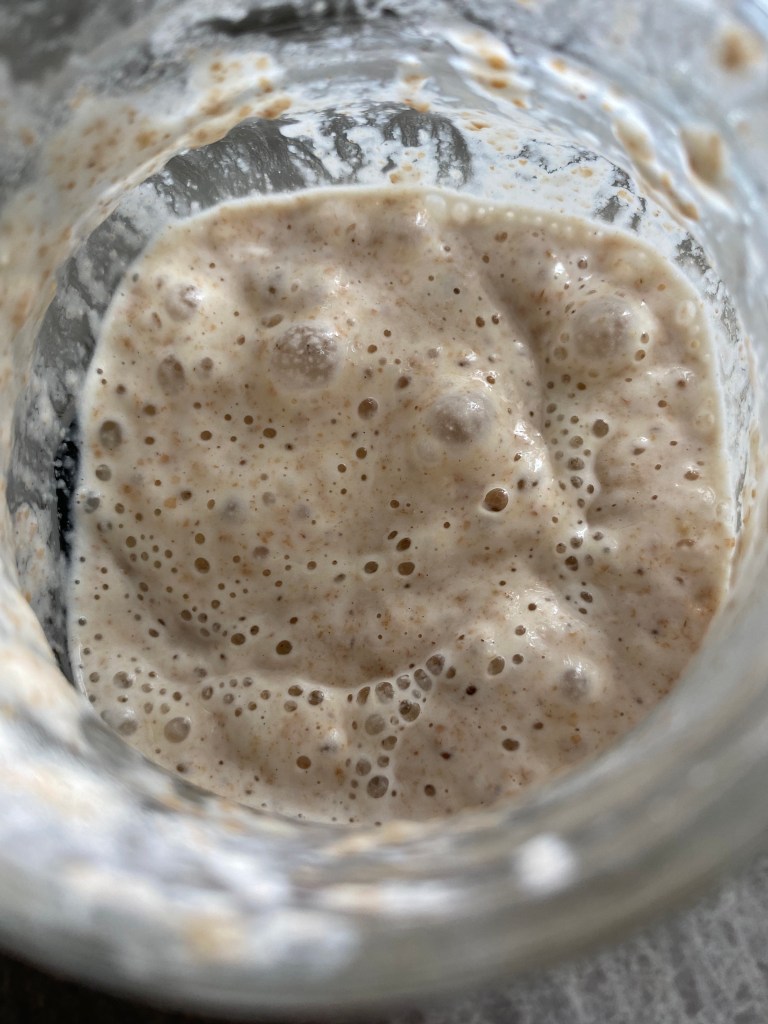
    A sourdough starter is a fermented mixture of flour and water. Every day it is “fed” usually equal parts water and flour by weight, and within several hours it becomes bubbly and doubled in size. This is called “active starter”. The “active” timing depends on your kitchen’s temperature and humidity, and also the feeding ratio of flour and water.

    For more information on “Sourdoughing”, you can see THIS POST (Sourdough Bread).

    Click HERE to get my easy Sourdough Pizza recipe!

    How to Make Sourdough Panzerotti (Pizza Pockets)

    Supplies Needed:

    Ingredients:

    Pizza Topping Ideas:

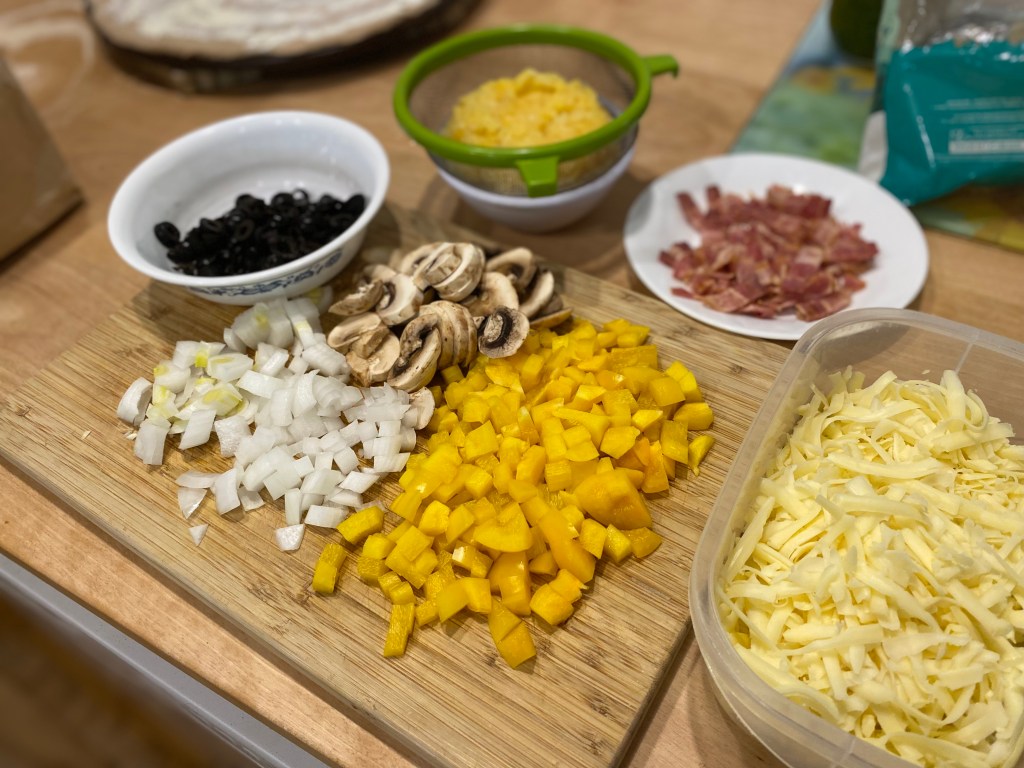
    • Cheese: Mozzarella and white cheddar are my favourites to use on pizza, but they are undoubtedly the most expensive part of the pizza. Where we live in the north, one 400g block costs around $10! We buy several blocks at a time when we are in the south and they go on sale, and if the expiry date is close, then the cheese intended for pizza goes directly into the freezer. Frozen cheese can tend to crumble a little when thawed, but that works just fine for pizza, right?!
    • Pizza sauce: You can use regular canned pizza sauce or also pasta sauce, it just won’t be as thick. (In a later post I’ll share my mother’s Garlic Cream Sauce for pizza!)
    • Meat: If we have a ham, chicken, beef roast, etc then I’ll cut off small cooked portions and put in freezer bags and label for pizza. I also use cooked bacon, kohlbassa and pepperoni and do the same thing.
    • Peppers: I love dehydrating peppers from the summer garden and using them year long on pizzas! They re-hydrate easily in a bowl of water for a few minutes prior to putting on the pizza.
    • Mushrooms: You can also dehydrate these, and rehydrate in water like the peppers. (it’s on my bucket list and I’ll share with you how it turns out!)
    • Olives: these are easy to buy canned and sliced.
    • Pineapple: We are one of those families that enjoys fruit on pizza! Easy to buy small cans of diced pineapple for northern storage or buy fresh, dice and freeze in portioned ziploc bags.
    • Herbs: It’s always nice to sprinkle some herbs on top at the end. Fresh herbs in the summer, and dried herbs in the winter (unless we are organized to grow some windowsill herbs year long!) Oregano, thyme, chives and rosemary are delicious sprinkled on pizza.
    • Other veggies: We have also used zucchini, vidalia onion, red onion and arugula.

    Directions: Day One

    1. Feed your sourdough starter in the morning

    • The starter I use is mostly made from all purpose flour and whole wheat flour. I feed it once a day: 3 tablespoons of flour and 2 tablespoons of lukewarm water (well water or distilled water). After a good stir, it rests in a warm area of the kitchen and within 8-10 hours is ready. See above for more details on the starter.
    • If your kitchen is warmer, than your starter may take less time to activate. You could feed your starter in the early afternoon instead to keep with this recipe’s timing.

    2. Mix your Dough in the Evening

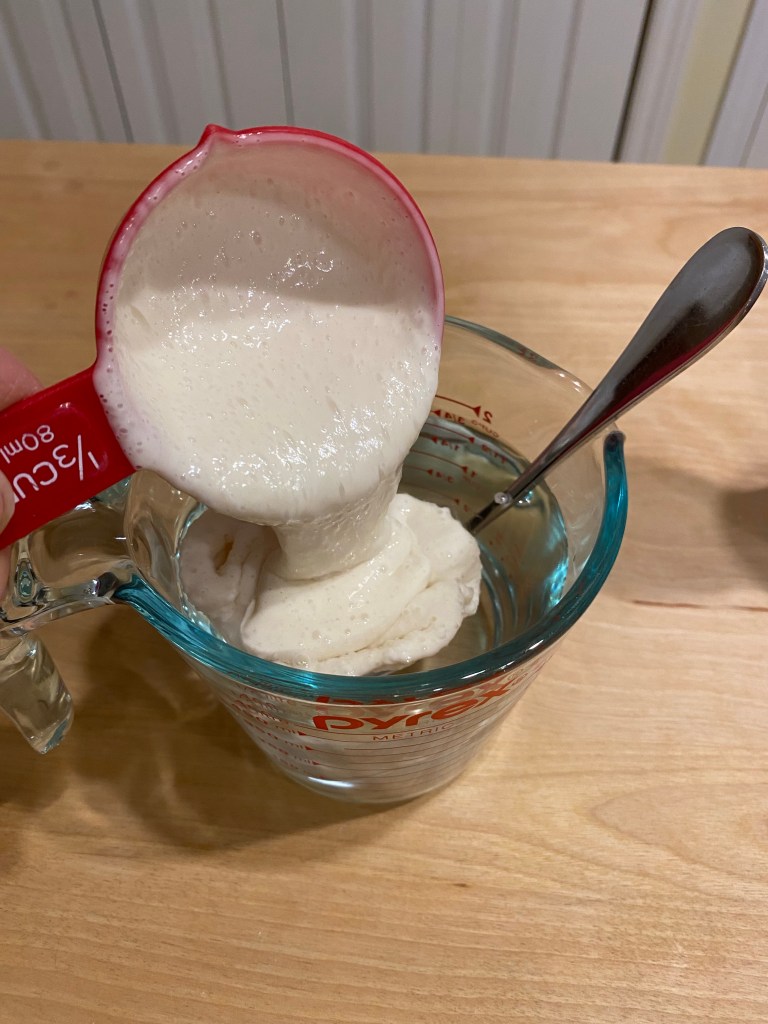
    • Mix your active starter with the water and set aside. At this point if the measured starter floats on top of the measured water, you know it’s going to be a great rising pizza dough! Sometimes my timing has been a little off due to life getting crazy, and my starter doesn’t float (even though it looked bubbly and risen in the starter jar). If this happens to you, just add another 1-2 tablespoons of starter and it should still rise good.
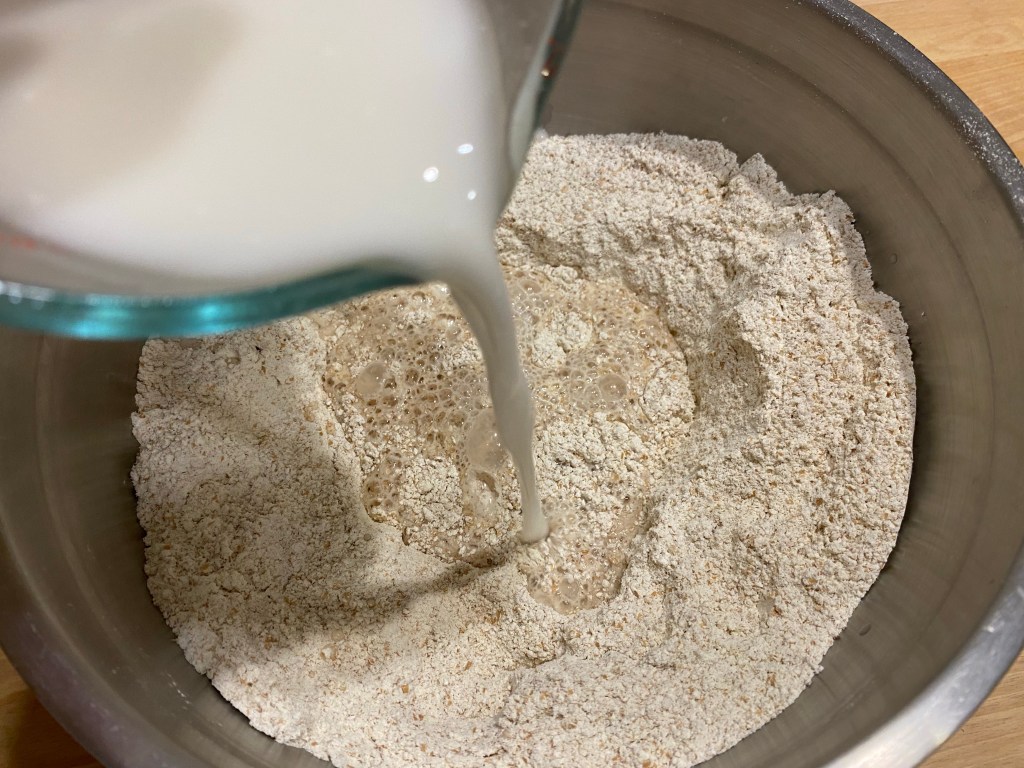
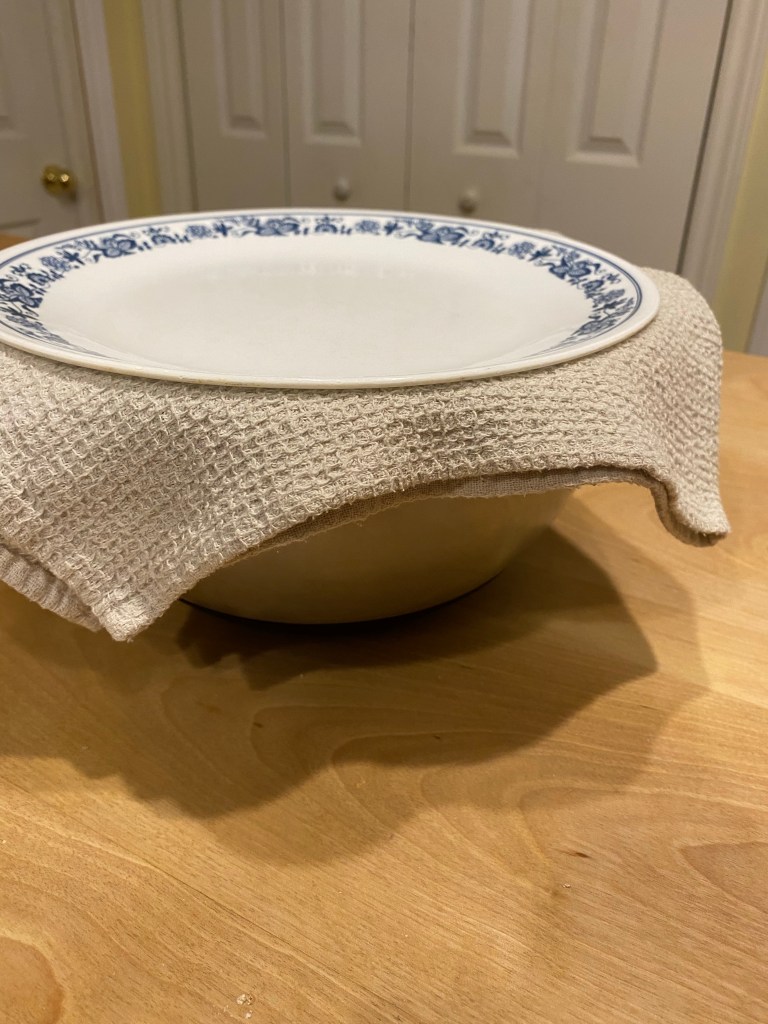
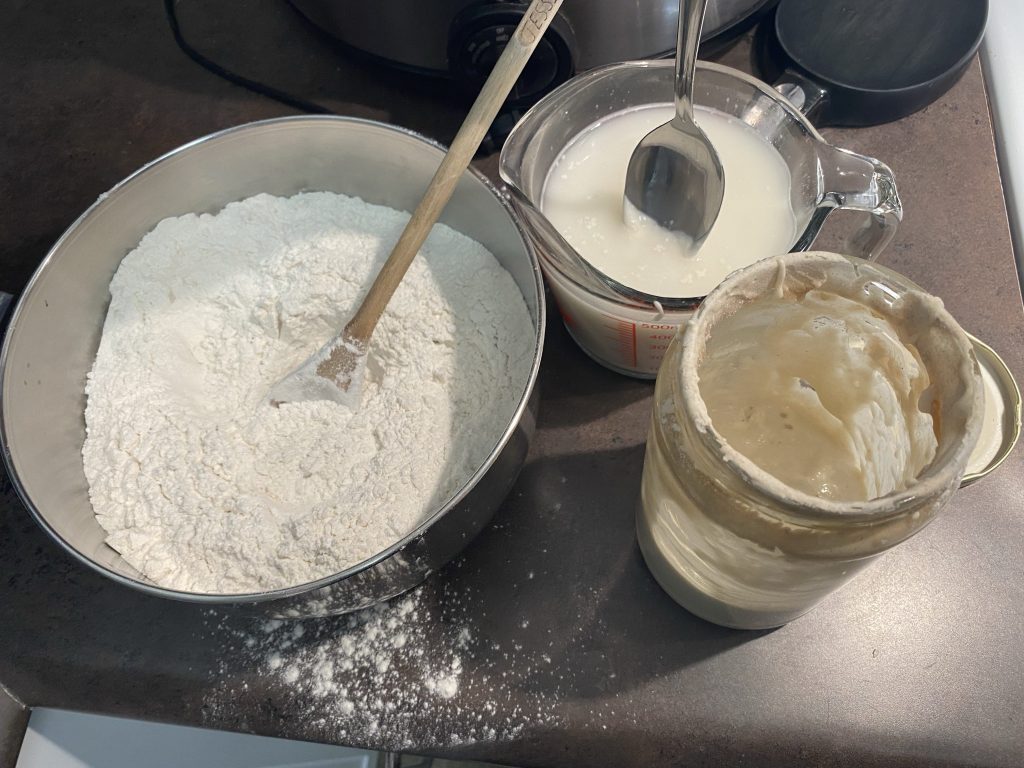
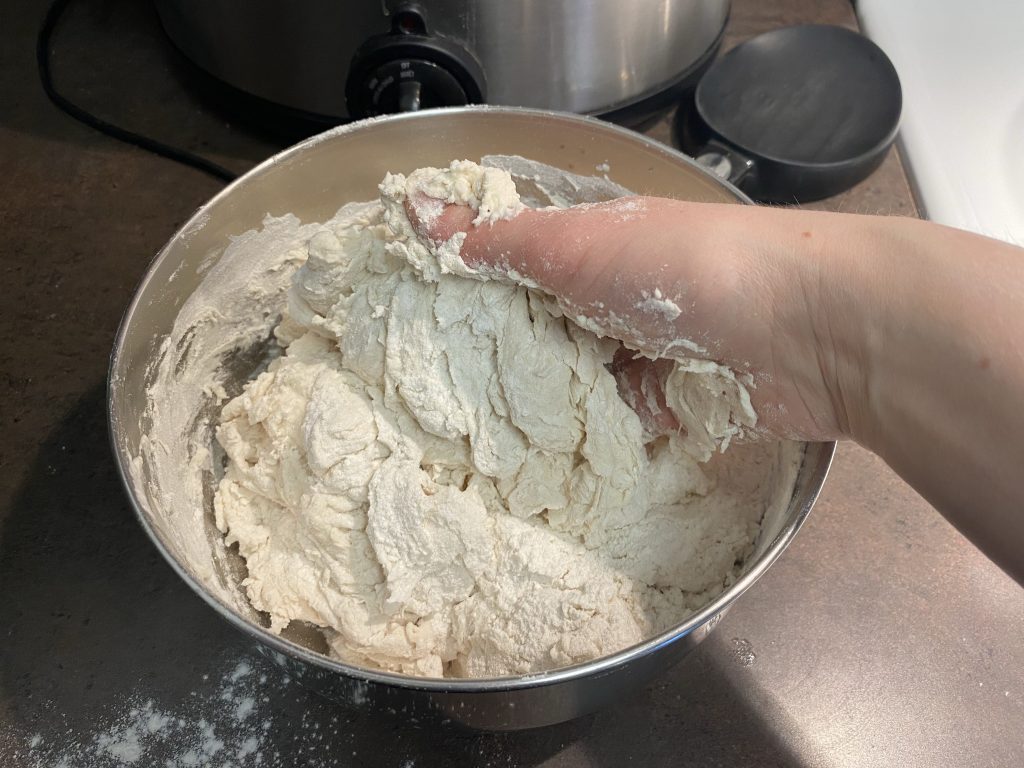
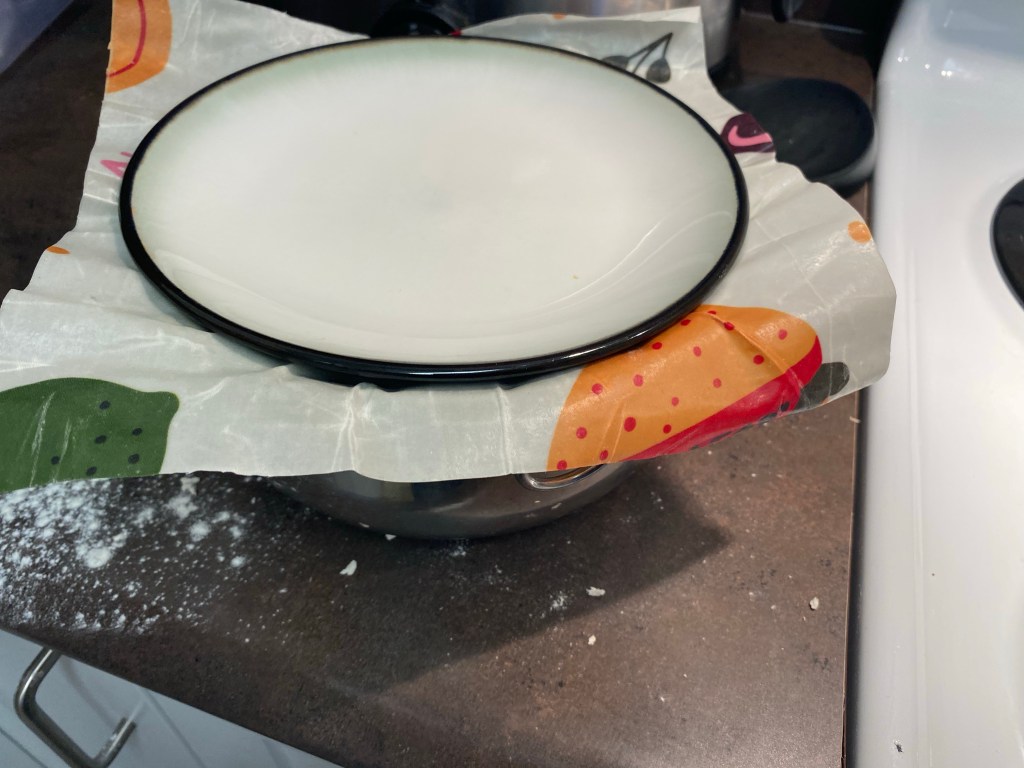
    • Mix the flour and salt together in a larger bowl, then add the wet ingredients and stir together until it forms a sticky ball. I find it easier to finish mixing it with my hands. If it is dry, resist the urge to add any water! Cover with beeswax cover, plastic wrap or towel and heavy plate and rest for 30 minutes.
    • I have made this recipe with spelt, whole wheat and all purpose flour, with similar results for each. Add a little more flour for spelt and whole wheat, or mix with all purpose to lighten it up a little. These pictures were done using freshly milled whole wheat flour, which can be more grainy in texture than all purpose flour.

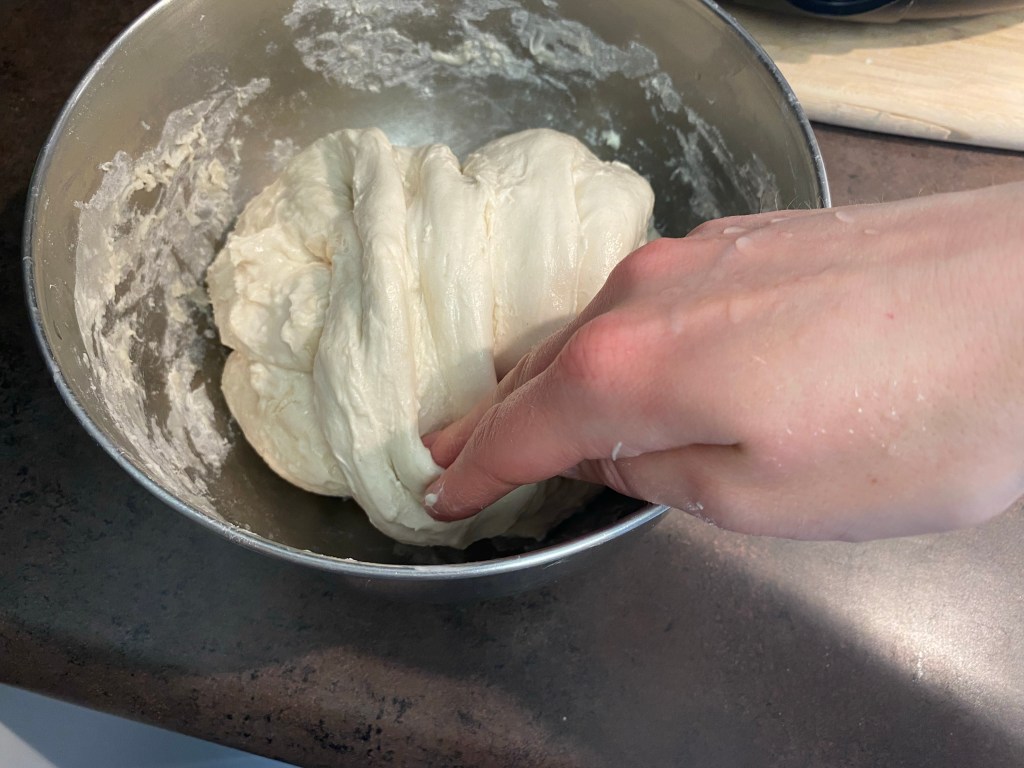
    3. Stretch & Fold: 1st Way

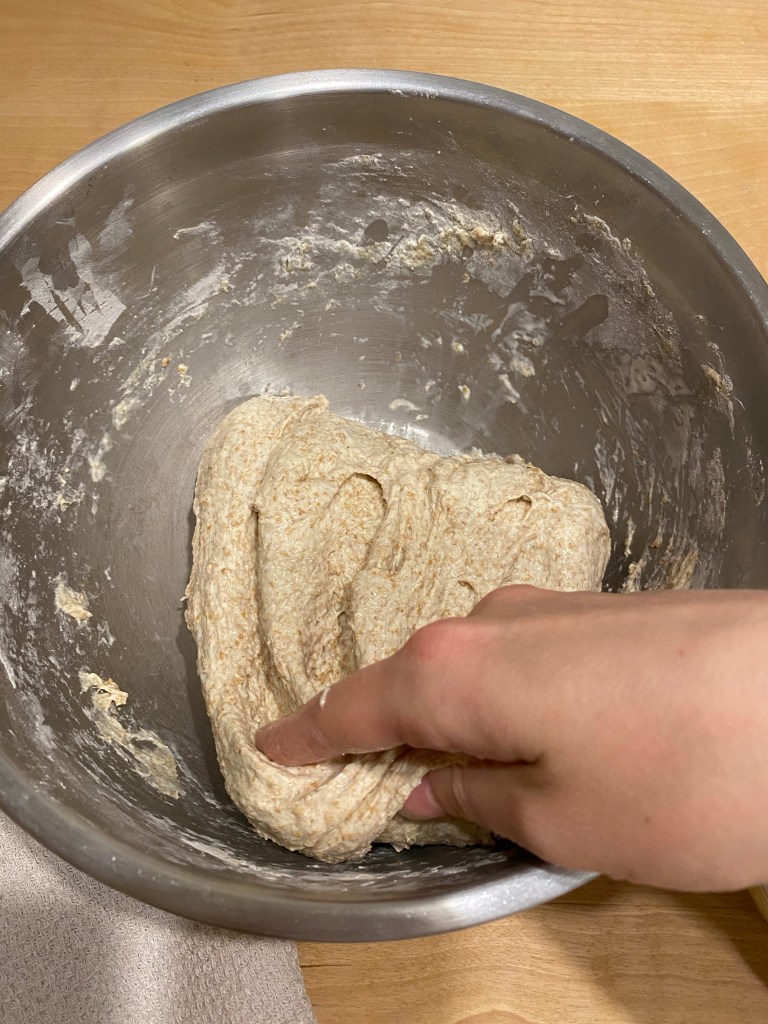
    • Wet one hand and gently loosen dough from edges of bowl. Take a handful of dough from the top of the bowl and pull towards you *See picture. Turn bowl 1/4 turn and repeat for a total of 4 stretch & folds to complete circle.
    • Cover and rest 20 minutes
    • Repeat stretch & fold full circle
    • Cover and rest 20 minutes
    • Repeat stretch & fold full circle
    • Cover and rest overnight 10-12 hours.

    Directions: Day Two

    1. The next morning, lift & fold: 2nd way

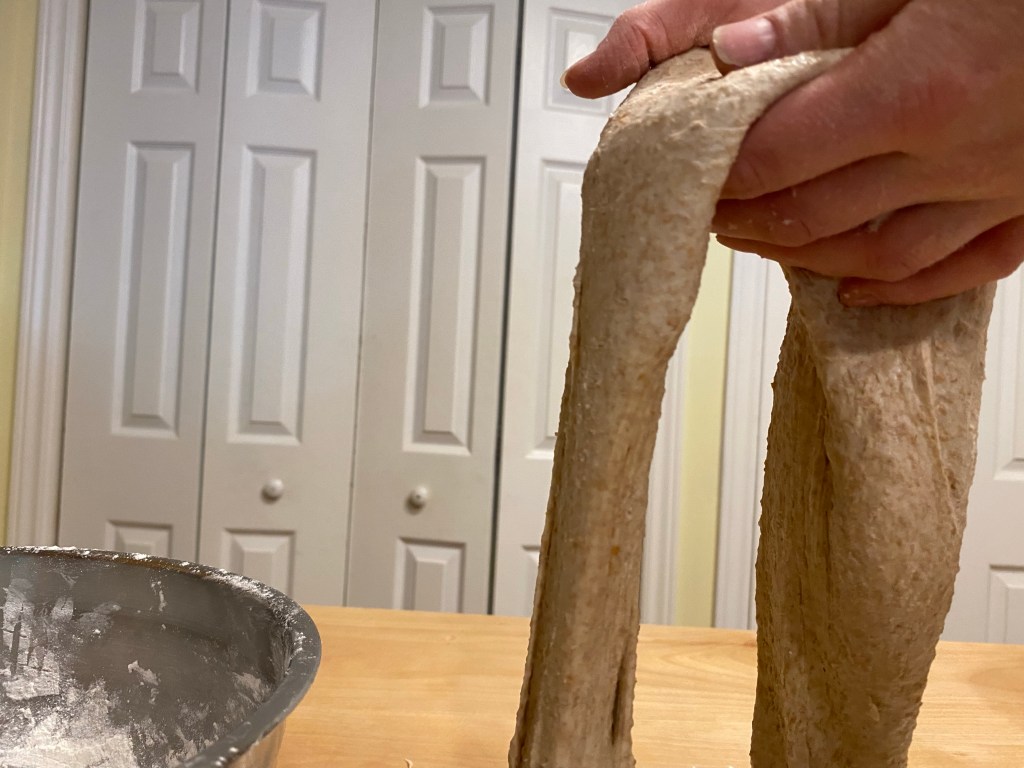
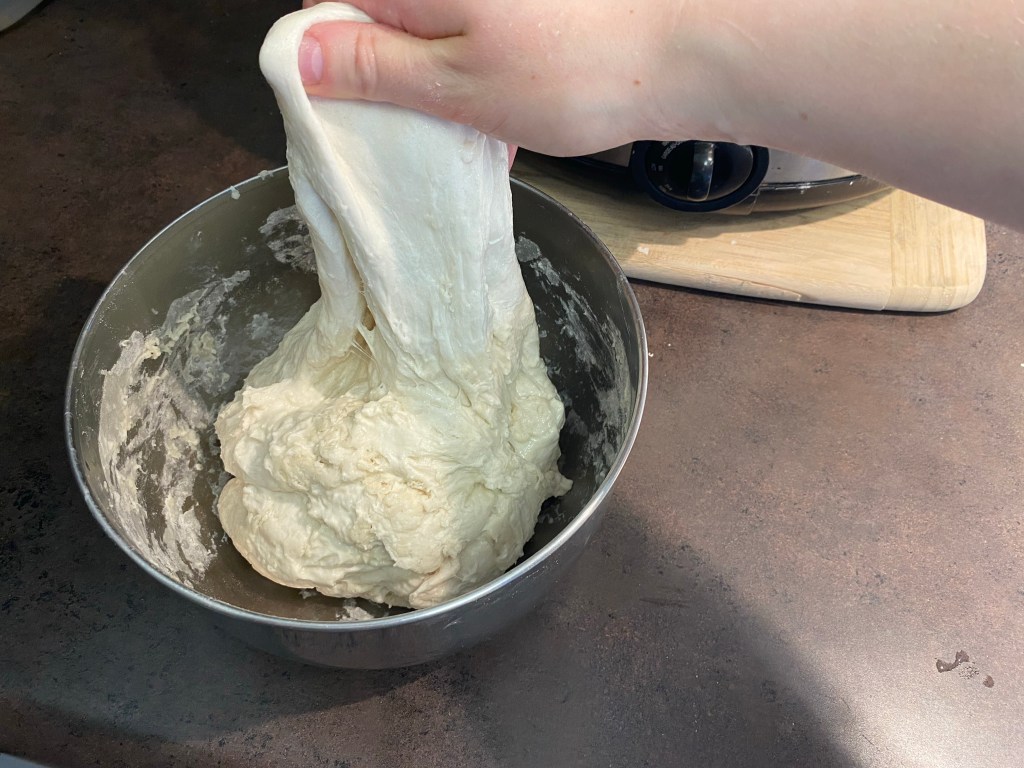
    • Wet both hands and loosen dough from edges of bowl. Using both hands, pick up dough from middle and let it droop over the sides of your hands. *See picture. Gently lower into bowl and let it fold on top of itself. Turn bowl 1/4 turn and repeat for total of 4 to complete full circle.
    • Note: If it is stiff at first, you can pick it up and gently stretch a little with your wet hands to encourage the gluten. *See picture.
    • Cover and rest 20 minutes
    • Repeat lift & fold full circle
    • Cover and rest 20 minutes

    2. Shape and Stuff

    • Preheat oven to 425 degrees fahrenheit.
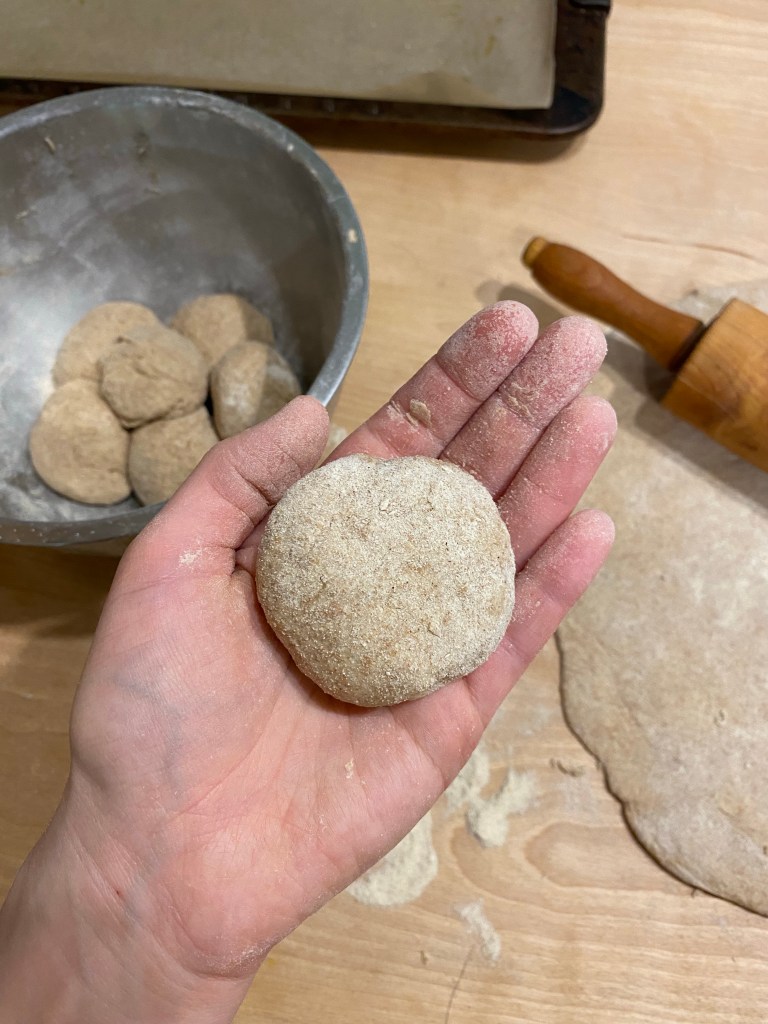
    • Separate the dough into 2″ balls. Roll out into 6-9″ diameter circles.
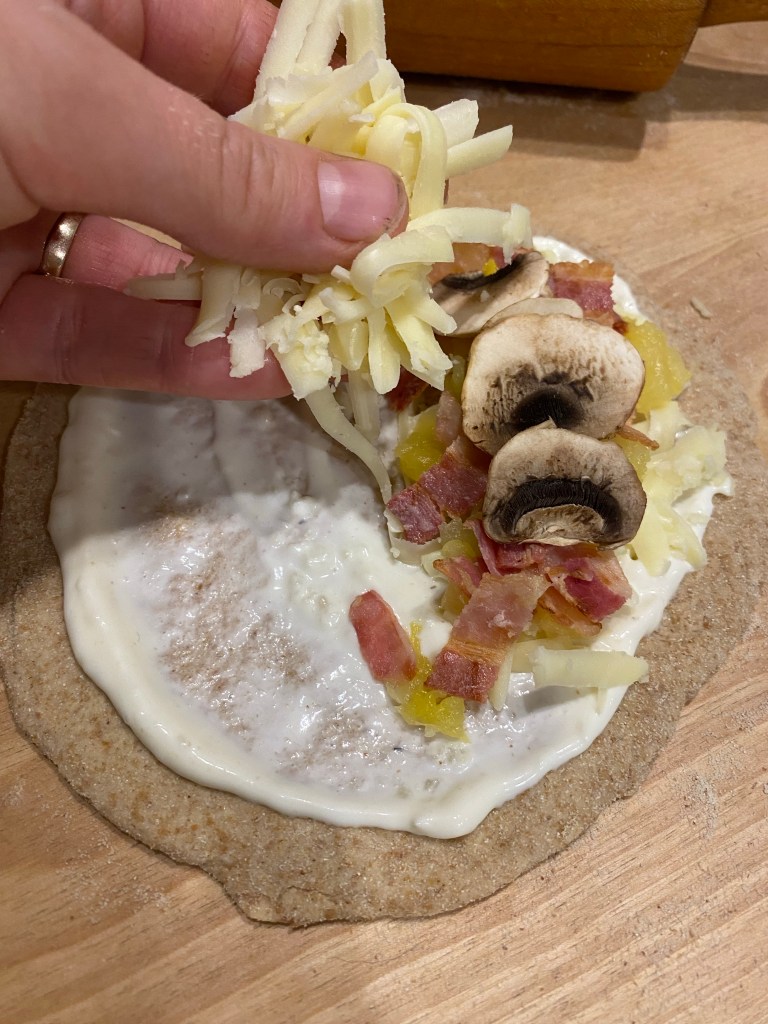
    • Cover the top with pizza sauce, or whatever sauce you like, leaving a 1/2-1″ edging around.
    • Fill one half of the dough with pizza toppings.

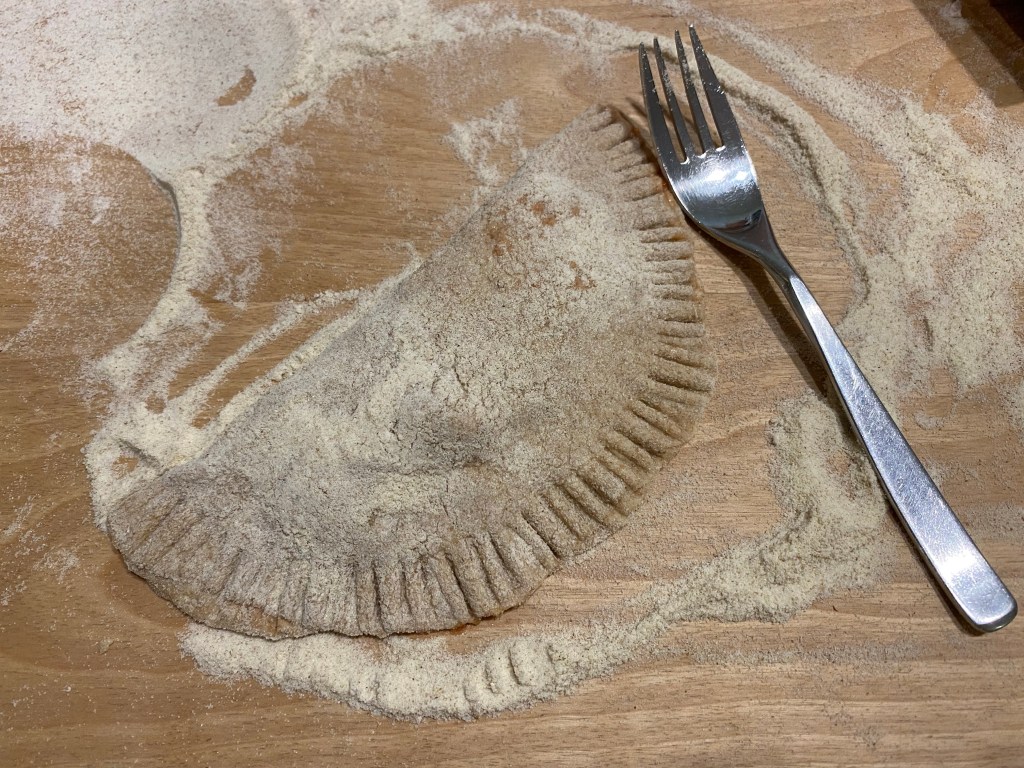
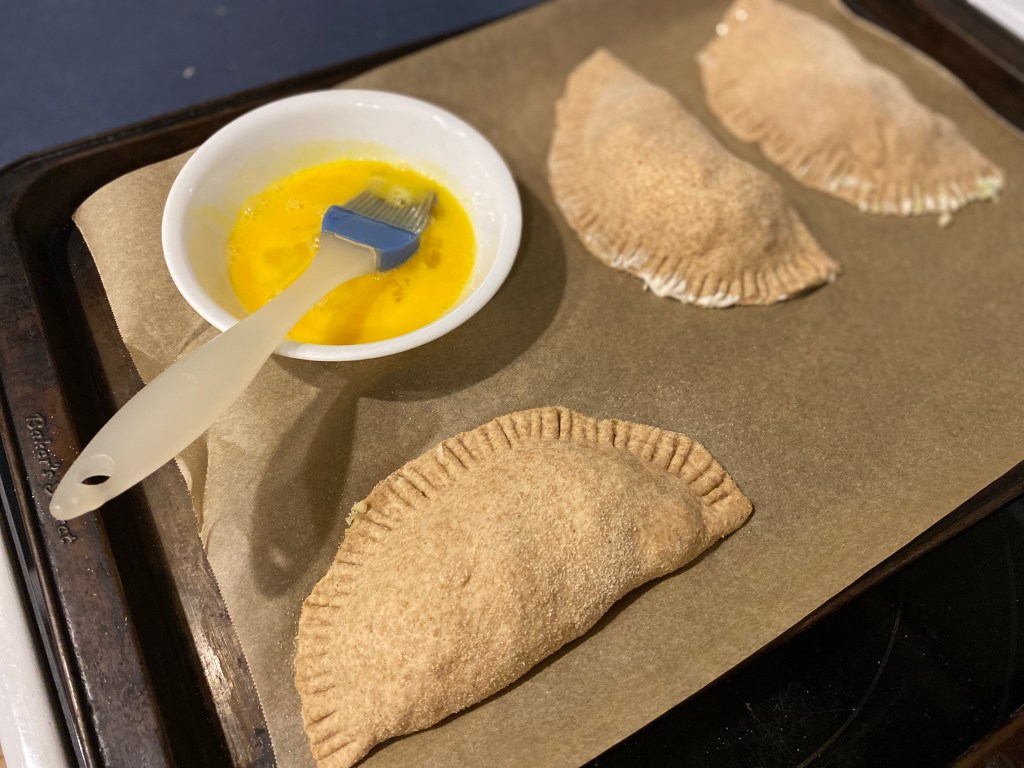
    • Fold over dough and press edges firmly with a fork.
    • Place on parchment covered baking sheets.
    • Cover dough with egg yolks and sprinkle with any seasonings or herbs.

    3. Bake the Panzerotti

    • Bake the panzerottis for 12-18 minutes until crust is cooked and golden brown.
    • Let cool for a few minutes before biting into!

    Other Soups and Entrees to Check Out:

    Hi, I’m Jessie!

    I’m a Wife and Homeschooling Mom living in a remote town in Northern Ontario, Canada. I love making wholesome meals for my family from scratch, homeschooling our girls and learning more about natural living.

    Read more about my story HERE.

    Subscribe to Northbird’s email list to get weekly posts on: tasty recipes, activity ideas for kids, natural living tips, and some genuine mom thoughts and encouragement!

    Sourdough Panzerottis

    • Servings: 16-18 panzerottis
    • Difficulty: Easy
    • Print

    Homemade Panzerottis (Pizza Pockets)


    Ingredients:

  • 1/3 cup active sourdough starter
  • 1 + 3/4 cup water, lukewarm
  • 4 cups all purpose flour
  • 2 teaspoons sea salt, finely ground


  • Please Note: This recipe takes two days to make.

    Directions: Day One


    1. Feed Your Starter In the Morning

    • The starter I use is mostly made from all purpose flour and whole wheat flour. I feed it once a day: 3 tablespoons of flour and 2 tablespoons of lukewarm water (well water or distilled water). After a good stir, it rests in a warm area of the kitchen and within 8-10 hours is ready. See above for more details on the starter
    • If your kitchen is warmer, than your starter may take less time to activate. You could feed your starter in the early afternoon instead to keep with this recipe’s timing.

    2. Mix your Dough in the Evening

    • Mix your active starter with the water and set aside. At this point if the measured starter floats on top of the measured water, you know it’s going to be a great rising pizza dough! Sometimes my timing has been a little off due to life getting crazy, and my starter doesn’t float (even though it looked bubbly and risen in the starter jar). If this happens to you, just add another 1-2 tablespoons of starter and it should still rise good.
    • Mix the flour and salt together in a larger bowl, then add the wet ingredients and stir together until it forms a sticky ball. I find it easier to finish mixing it with my hands. If it is dry, resist the urge to add any water! Cover with beeswax cover or plastic wrap and rest for 30 minutes.
    • I have made this recipe with spelt, whole wheat and all purpose flour, with similar results for each. Add a little more flour for spelt and whole wheat, or mix with all purpose to lighten it up a little.

    3. Stretch & Fold: 1st Way

    • Wet one hand and gently loosen dough from edges of bowl. Take a handful of dough from the top of the bowl and pull towards you *See picture. Turn bowl 1/4 turn and repeat for a total of 4 stretch & folds to complete circle.
    • Cover and rest 20 minutes.
    • Repeat stretch and fold full circle.
    • Cover and rest 20 minutes.
    • Repeat stretch and fold full circle.
    • Cover and rest overnight 10-12 hours.

    Directions: Day Two


    1. Lift & Fold: 2nd Way

    • Wet both hands and loosen dough from edges of bowl. Using both hands, pick up dough from middle and let it droop over the sides of your hands. *See picture. Gently lower into bowl and let it fold on top of itself. Turn bowl 1/4 turn and repeat for total of 4 to complete full circle.
    • Note: If it is stiff at first, you can pick it up and gently stretch a little with your wet hands to encourage the gluten. *See picture.
    • Cover and rest 20 minutes
    • Repeat 2nd way of stretch & fold full circle
    • Cover and rest 20 minutes

    2. Shape and Stuff

    • Preheat oven to 425 degrees fahrenheit.
    • Separate the dough into 2″ balls. Roll out into 6-9″ diameter circles.
    • Cover the top with pizza sauce, or whatever sauce you like, leaving a 1/2-1″ edging around.
    • Fill one half of the dough with pizza toppings.
    • Fold over dough and press edges firmly with a fork.
    • Place on parchment covered baking sheets.
    • Cover dough with egg yolks and sprinkle with any seasonings or herbs.

    3. Bake the Panzerottis

    • Bake the panzerottis for 15-18 minutes until crust is crispy and golden brown.
    • Let cool for a few minutes before biting into!

    Nutrition


    For approximately 1 Panzerotti, crust only: 121.6 calories; 1 g fat; 23.8 g carbohydrates;
    3.2 g protein; 290 mg sodium.

    Return to Top

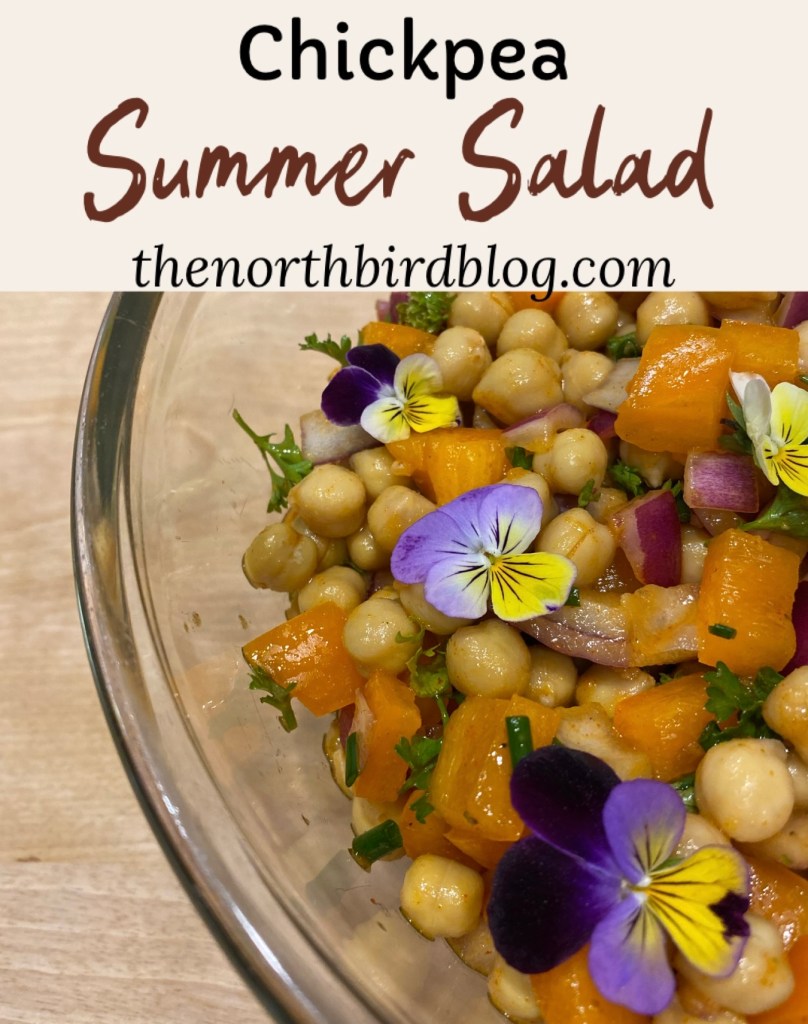
    Chickpea Summer Salad

    Find Northbird on social media:

    This post contains affiliate links. As an Amazon associate, I earn from qualifying purchases. This means that I make a small commission at no extra cost to you. You can read my full disclosure HERE.

    Jump to Recipe Card

    It’s that time of year. Wonderful summer heat! And for me, a decreased desire to eat or cook/bake anything hot for dinner!

    That’s why every summer I love finding new salads and developing ideas to serve for dinner without heating up the kitchen. And besides, at this time of year, I would much rather be in the garden!

    Nutritional Benefits of Chickpeas:

    Chickpeas are also known as garbanzo beans, and are widely used in many different cuisines. From falafel to curries to hummus, there are countless types of dishes that feature chickpeas.

    They are high in protein, which makes them a favourite alternative for replacing meat protein. They are also high in healthy fats, carbs and fibre. Some other nutritional components include: Manganese, Folate (Vitamin B9), Copper, Iron, Zinc, Phosphorus, Magnesium, Thiamine, Vitamin B6, Selenium and Potassium.

    Health Benefits May Include:

    • Helps you to feel full longer
    • Weight management
    • Boosts bone & muscle health
    • Helps to regulate blood sugar levels
    • Assists with digestion
    • May reduce risk of chronic illnesses
    • Supports brain function
    • May help relieve anxiety and depression
    • Boosts red blood cell production (Iron deficiency)

    You can read more HERE about why Chickpeas are an amazing addition to your diet.

    A Little About Perennial Edible Flowers:

    I love finding edible flowers and putting them in salads, or as garnishes for other festive dishes. My sister H is a very accomplished cake baker and often decorates her cakes with fresh edible flowers. (I’m hoping she’ll start her own blog soon to share and feature her awesome creativity —wink wink @H!)

    On my parent’s farm, they have a large area of their garden dedicated to various organic edible flowers that they sell to restaurants and resorts for fine dining.

    Please note that when picking or foraging flowers and herbs in residential or public areas, make sure to only pick ones that have no risk of a pesticide spray or dog pee on them! If possible, source from an open field or an area with “clean” flowers.

    There are many edible flowers with numerous health benefits, and too many to list now, so perhaps that will be a separate post in the future! Below are two common edible flowers that I have found grow well as a perennial in zones 2-3.

    Pansies:

    Pansies are one of my favourite edible flowers. They have a sight sweet taste, and aside from their charming looks and extremely hardy character for growing in the north, they have several medicinal uses as well.

    Traditionally, they have been used in teas and poultices to treat skin problems, respiratory infections, fevers, headaches and pain relief. They have antioxidant, antimicrobial and anti-inflammatory properties.

    The pansy family has many names: Jolly Jump Up, Heartsease, Wild Pansy, and Viola Tricolour are some of them.

    Dandelion:

    Dandelions are usually known as an invasive weed, and one of the first foods that bees look for in the spring. But they are also a highly nutritious plant and packed full of medicinal properties. From the root to the flower head, all of the plant is edible and has different uses.

    Dandelion root is traditionally used to treat digestive problems and help the liver and gallbladder. Feeling constipated? Dandelion root tea can help with that. (I’ve tried it!) It is also used to make “root coffee”, a coffee bean alternative.

    Dandelion greens are considered a superfood! Jo Robinson, author of “Eating on the Wild Side”, says that when compared to spinach, dandelion leaves have “eight times more antioxidants, two times more calcium, three times more Vitamin A, and five times more vitamin K and vitamin E.”

    The leaves taste a little bitter, so when making a dandelion leaf salad it is nice to add some sweetness to balance it out. I enjoy it with a raspberry vinaigrette.

    Dandelion flowers are a powerful antioxidant. In addition to supporting the immune system, they help to lower cholesterol, fight infections and reduce inflammation. They taste sweeter than the leaves, and can be used not only in salads, but can also be cooked in sauces and made into preserves.

    I enjoy making an annual batch of “Dandelion Jelly”, which tastes like wild honey.

    How to Make Chickpea Summer Salad

    Supplies Needed:

    Ingredients:

    Directions:

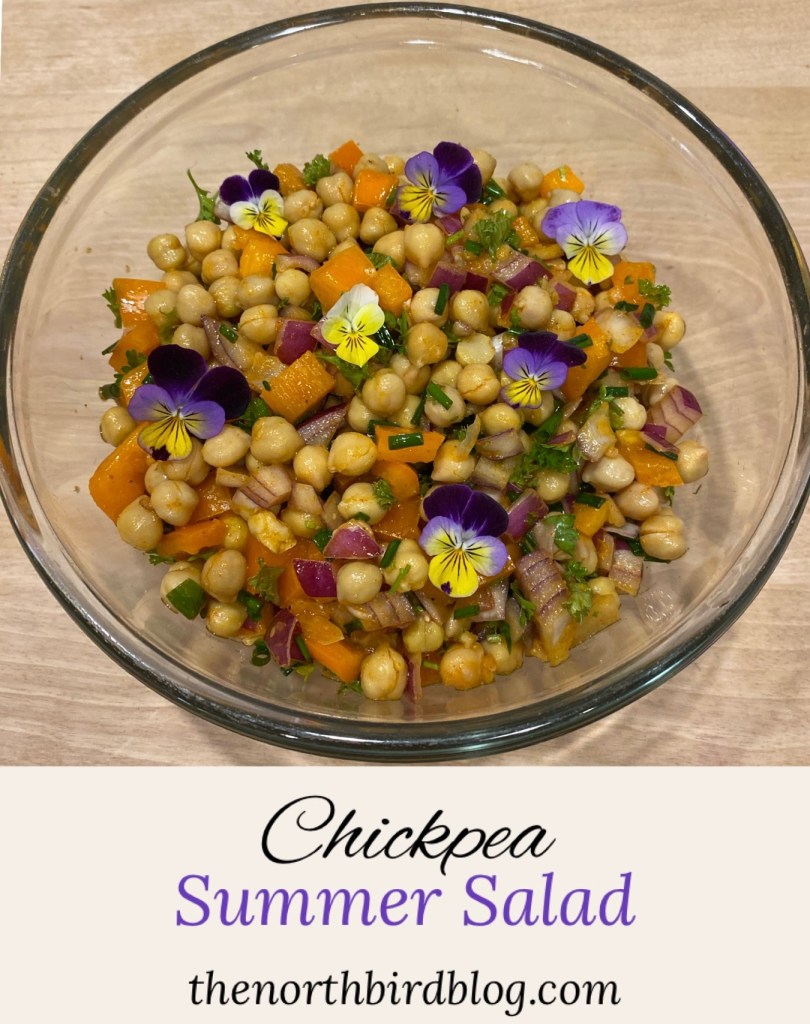
    1. Drain and rinse the chickpeas and add to large bowl. Add the garlic cloves, bell pepper, red onion, olive oil, lemon juice, paprika, salt and pepper. Stir well.

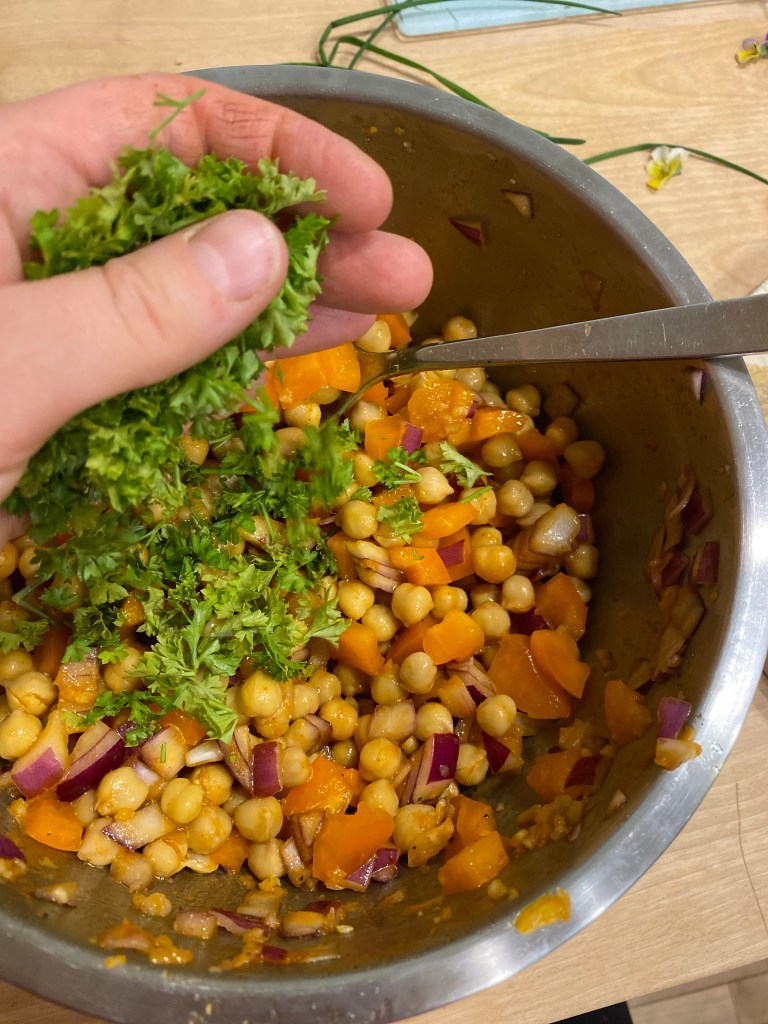
    2. Pick some fresh herbs, chop finely and add to bowl. Refrigerate until serving time.

    3. Decorate the top with fresh edible flowers closer to serving time so that the flowers do not wilt.

    We made a colourful and fresh meal that night by cooking some corn cobs, making a green salad, fresh homegrown sprouts, avocados, veggie sticks and hummus!

    Other Soups and Entrees to Check Out:

    Hi, I’m Jessie!

    I’m a Wife and Homeschooling Mom living in a remote town in Northern Ontario, Canada. I love making wholesome meals for my family from scratch, homeschooling our girls and learning more about natural living.

    Read more about my story HERE.

    Subscribe to Northbird’s email list to get weekly posts on: tasty recipes, activity ideas for kids, natural living tips, and some genuine mom thoughts and encouragement!

    Chickpea Summer Salad

    • Servings: 6 Servings
    • Difficulty: Easy
    • Print

    A Fresh and Tasty Chickpea Salad for Hot Summer Days


    Supplies Needed

  • Large bowl
  • Mixing spoon
  • Cutting board
  • Knife

  • Ingredients

  • 1 can (796ml/28oz) chickpeas (or 1 cup of dry chickpeas, soaked overnight & cooked for several hours until tender)
  • 3 garlic cloves, diced finely
  • 1 bell pepper, diced
  • 1 medium red onion, diced
  • 2 tablespoons extra virgin olive oil
  • 1 tablespoon lemon juice
  • 1 teaspoon paprika
  • Sea salt and pepper to taste
  • Chives, parsley, thyme or other fresh herbs
  • Edible flowers

  • Directions

    1. Drain and rinse the chickpeas and add to large bowl. Add the garlic cloves, bell pepper, red onion, olive oil, lemon juice, paprika, salt and pepper. Stir well.
    2. Pick some fresh herbs, chop finely and add to bowl. Refrigerate until serving time.
    3. Decorate the top with fresh edible flowers closer to serving time so that the flowers do not wilt.

    Nutrition


    Per 1 Serving: 250 calories; 6.9 g fat; 37.2 g carbohydrates;
    11.9 g protein; 746 mg sodium.

    Return to Top

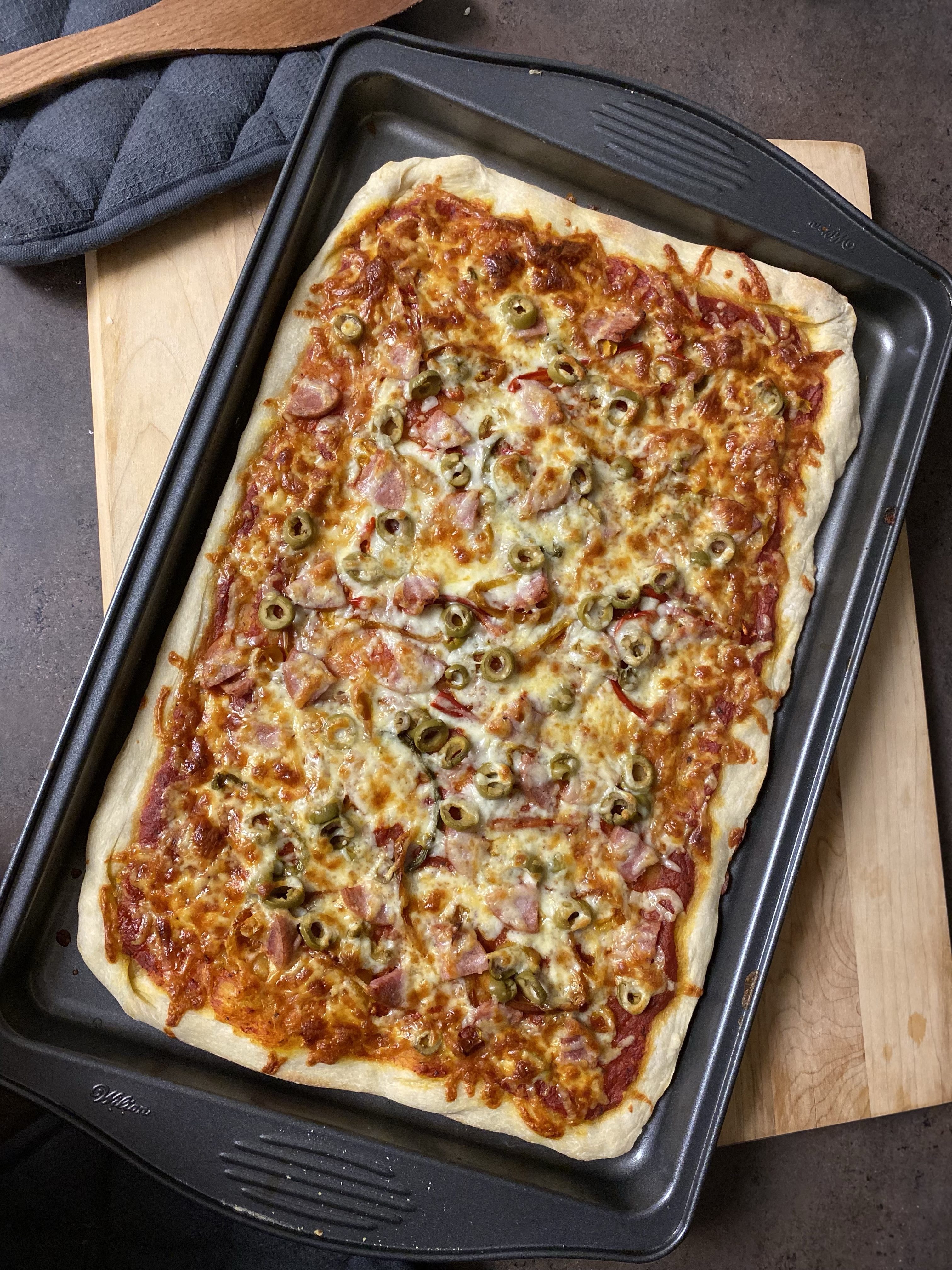
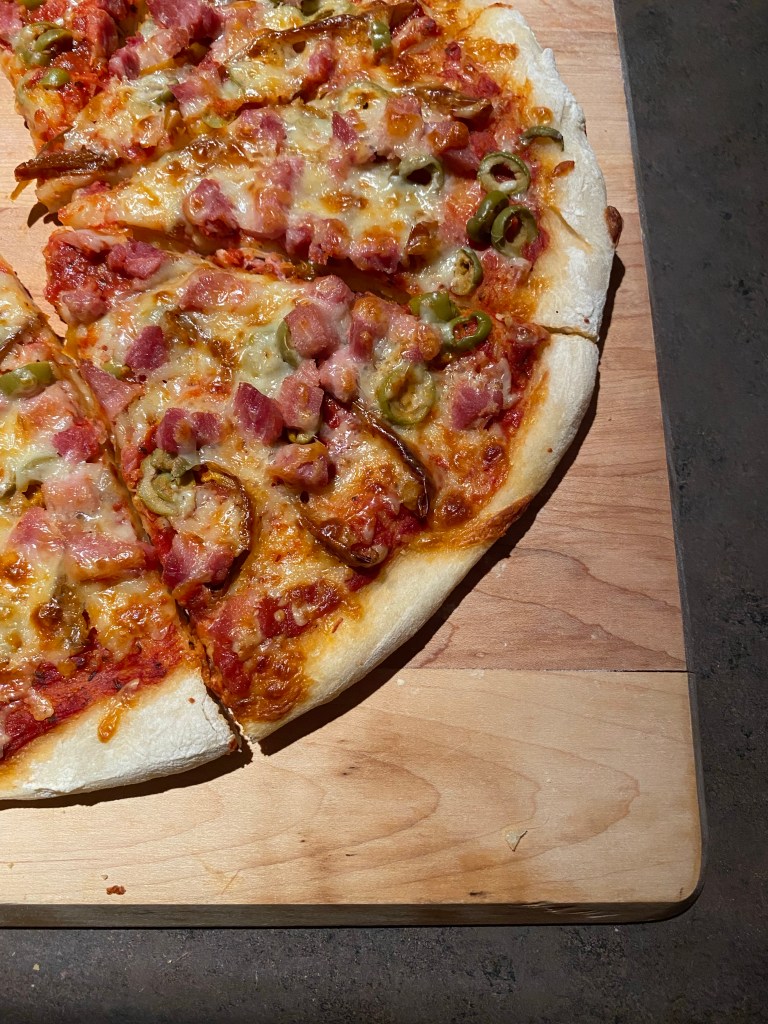
    Sourdough pizza

    Find Northbird on social media:

    This post contains affiliate links. As an Amazon associate, I earn from qualifying purchases. This means that I make a small commission at no extra cost to you. You can read my full disclosure HERE.

    Jump to Recipe Card

    Return to Soups & Entrees

    Return to Sourdough

    Why I love Homemade Sourdough Pizza…

    Every Friday night we have homemade sourdough pizza (unless we are not home or it is simply way to hot in the summer to use the oven!). We pair this with watching a family movie and setting up the screen projector to have a fun, relaxing family time while munching on delicious pizza.

    I love the simplicity of this meal, and how easy it is to make and roll out the dough ahead of time, then decorate and bake off closer to when my husband is home from work and we get ready to start the movie.

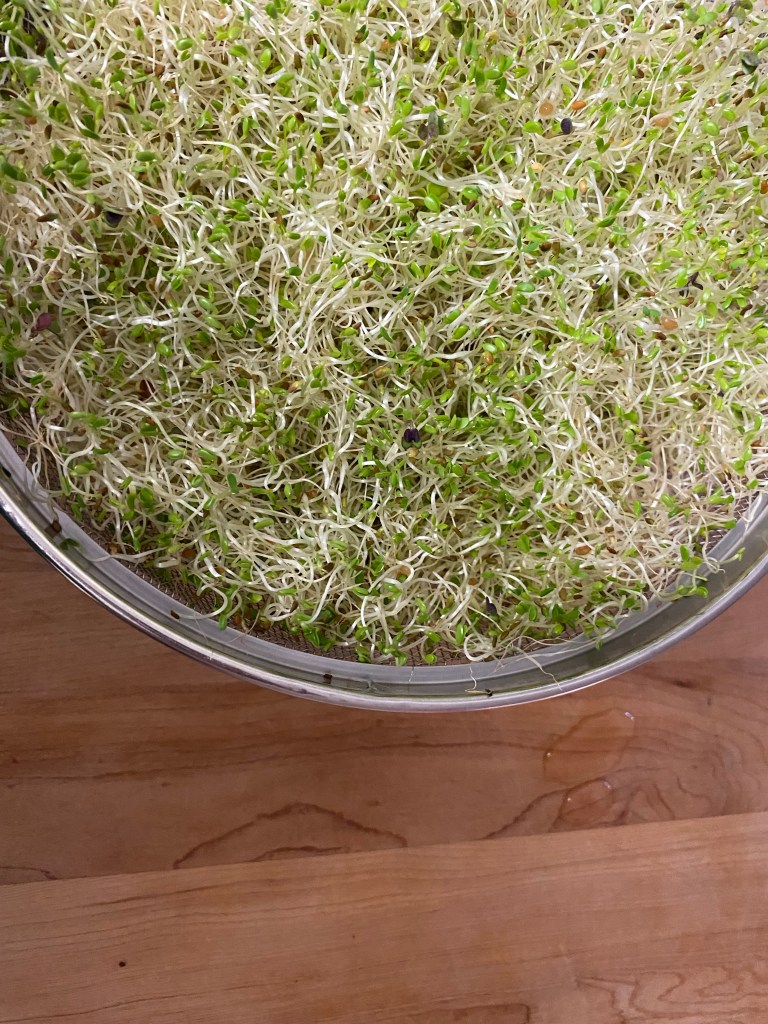
    We love pairing homemade pizza with fresh home-grown sprouts and an assortment of veggie sticks!

    Prior to getting addicted to sourdough recipes, I would make variations with different flours using traditional yeast dough. I can honestly say that I prefer the sourdough process for making pizza dough, and because the dough ferments prior to being loaded and baked, my sensitive tummy appreciates it too.

    New to Sourdough?

    Sourdough is made using a fermented mixture of flour and water, called the “starter”, and mixed with more water, flour, and usually salt. The dough naturally rises as it ferments during resting stages. There is a lower amount of gluten in sourdough baking, which is why the dough needs to be “stretched” multiple times to help it expand and become fluffy.

    You can read more in the Sourdough Bread Post HERE about sourdough tips, feeding the sourdough starter, and keeping it happy.

    How to Make Sourdough Pizza Dough

    Supplies Needed:

    Ingredients:

    Pizza Topping Ideas: (what we use to cut down grocery costs)

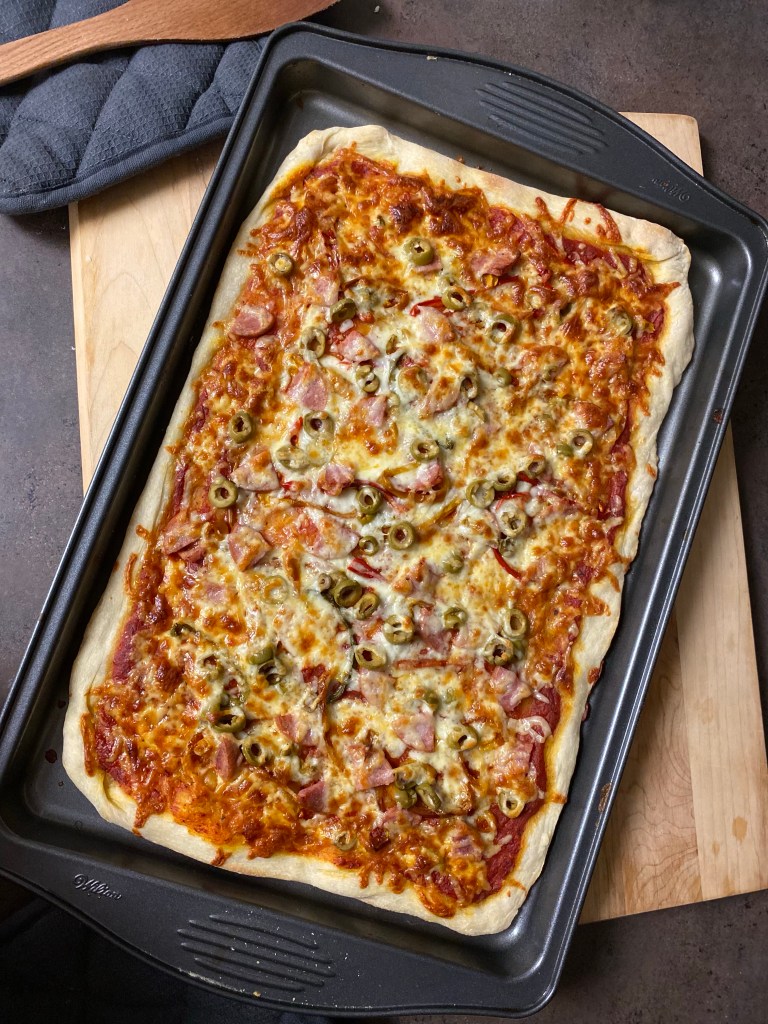
    • Cheese: Mozzarella and white cheddar are my favourites to use on pizza, but they are undoubtedly the most expensive part of the pizza. Where we live in the north, one 400g block costs around $10! We buy several blocks at a time when we are in the south and they go on sale, and if the expiry date is close, then the cheese intended for pizza goes directly into the freezer. Frozen cheese can tend to crumble a little when thawed, but that works just fine for pizza, right?!

    • Pizza sauce: You can use regular canned pizza sauce or also pasta sauce, it just won’t be as thick. (In a later post I’ll share my mother’s Garlic Cream Sauce for pizza!)

    • Meat: If we have a ham, chicken, beef roast, etc then I’ll cut off small portions and put in freezer bags and label for pizza. I also use cooked bacon, kohlbassa and occasionally pepperoni and do the same thing.

    • Peppers: I love dehydrating peppers from the summer garden and using them year long on pizzas! They re-hydrate easily in a bowl of water for a few minutes prior to putting on the pizza.

    • Mushrooms: You can also dehydrate these, and rehydrate in water like the peppers. (it’s on my bucket list and I’ll share with you how it turns out!)

    • Olives: these are easy to buy canned and sliced.

    • Pineapple: We are one of those families that enjoys fruit on pizza! Easy to buy small cans of diced pineapple, or buy a whole one on sale, cut up and freeze in portioned baggies. Thaw prior to use.

    • Herbs: It’s always nice to sprinkle some herbs on top at the end. Fresh herbs in the summer, and dried herbs in the winter (unless we are organized to grow some windowsill herbs year long!) Oregano, thyme, chives and rosemary are delicious sprinkled on pizza.

    • Other veggies: We have also used zucchini, vidalia onion, red onion and arugula.

    Directions: Day One

    1. Feed your starter in the morning

    • If your starter takes less time to activate, then feed your starter in the early afternoon.

    2. Mix your Dough in the Evening

    • Mix your active starter with the water and set aside. At this point if the measured starter floats on top of the measured water, you know it’s going to be a great rising pizza dough! Sometimes my timing has been a little off due to life getting crazy, and my starter doesn’t float (even though it looked bubbly and risen in the starter jar). If this happens to you, just add another 1-2 tablespoons of starter and it should still rise good.
    • Mix the flour and salt together in a larger bowl, then add the wet ingredients and stir together until it forms a sticky ball. I find it easier to finish mixing it with my hands. If it is dry, resist the urge to add any water! Cover with beeswax cover or tea towel and plate and rest for 30 minutes.

    3. Stretch & Fold: 1st Way

    • Wet one hand and gently loosen dough from edges of bowl. Take a handful of dough from the top of the bowl and pull towards you *See picture. Turn bowl 1/4 turn and repeat for a total of 4 stretch & folds to complete circle.
    • Cover and rest 20 minutes
    • Repeat stretch & fold full circle
    • Cover and rest 20 minutes
    • Repeat stretch & fold full circle
    • Cover and rest overnight 10-12 hours.

    Directions: Day Two

    1. The next morning, lift & fold: 2nd way

    • Wet both hands and loosen dough from edges of bowl. Using both hands, pick up dough from middle and let it droop over the sides of your hands. *See picture. Gently lower into bowl and let it fold on top of itself. Turn bowl 1/4 turn and repeat for total of 4 to complete full circle.
    • Note: If it is stiff at first, you can pick it up and gently stretch a little with your wet hands to encourage the gluten. *See picture.
    • Cover and rest 20 minutes
    • Repeat lift & fold full circle
    • Cover and rest 20 minutes

    2. Prepare dough & put in fridge

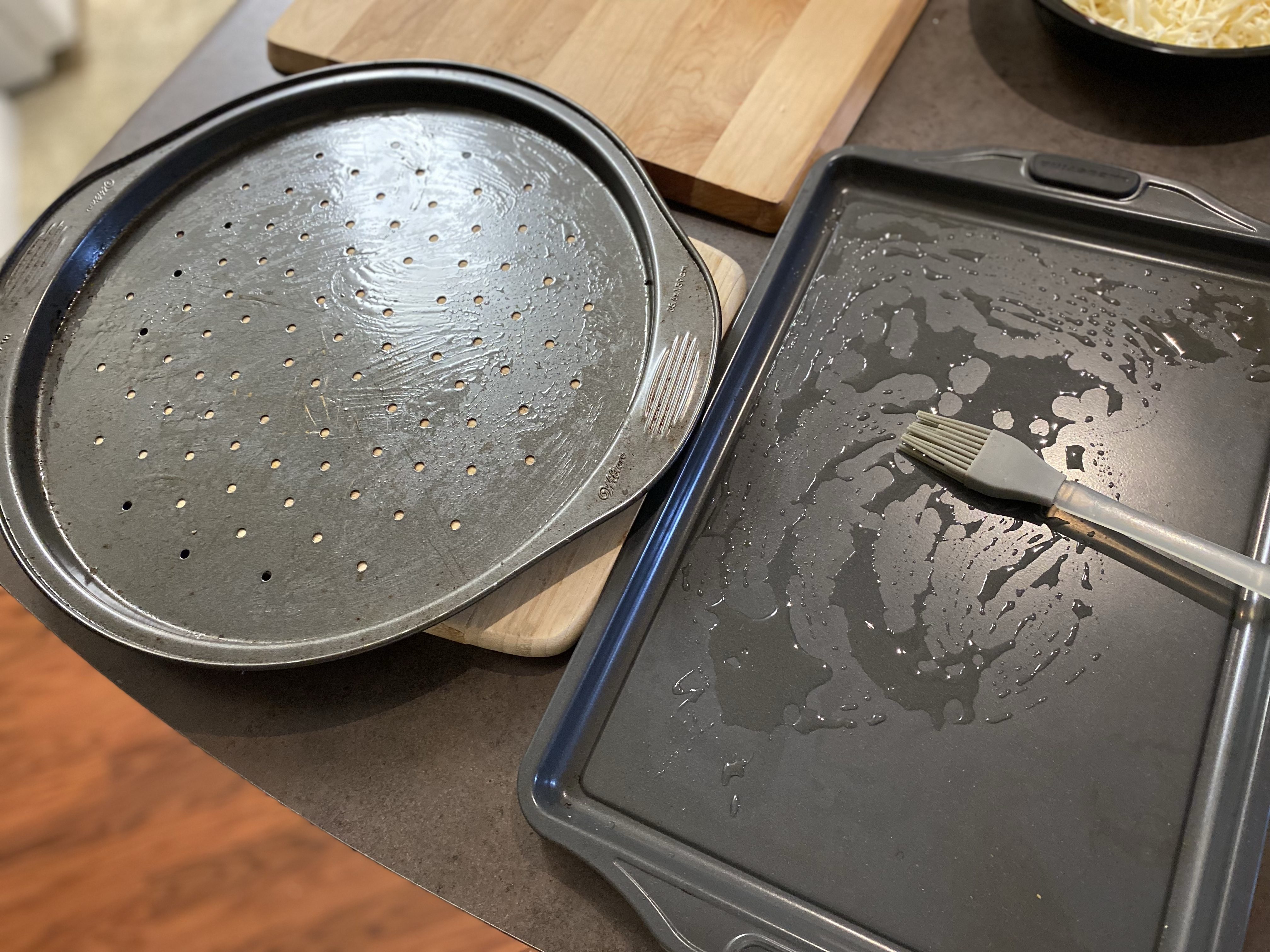
    • Grease pizza pans with olive oil, and sprinkle cornmeal onto it to help the bottom not to stick later.
    • Separate the dough into two balls. Roll out on lightly floured counter and press into prepared pizza pans.
    • Put pizza pans in the fridge for minimum 1 hour, or for several hours until closer to when you want to bake the pizzas off. I like to get it all prepped up to this point in the morning, then it’s just a quick decorate and bake before dinner.

    3. Decorate dough

    • Preheat the oven to 425 degrees fahrenheit.
    • Rehydrate any dehydrated veggies in water prior to putting on the pizza: (mushrooms, peppers, onions, dried meats, etc)
    • Brush pizza sauce on top of dough.
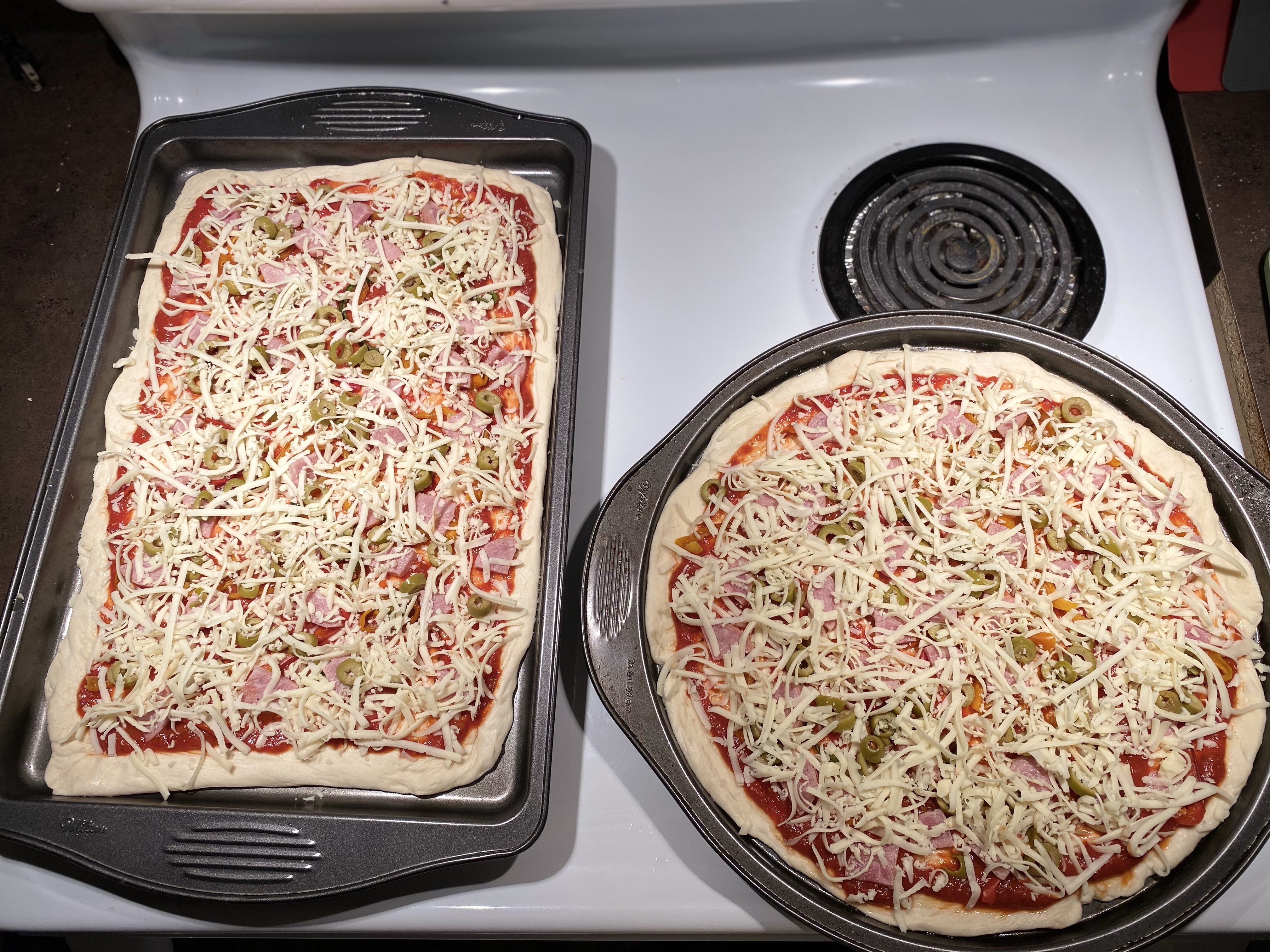
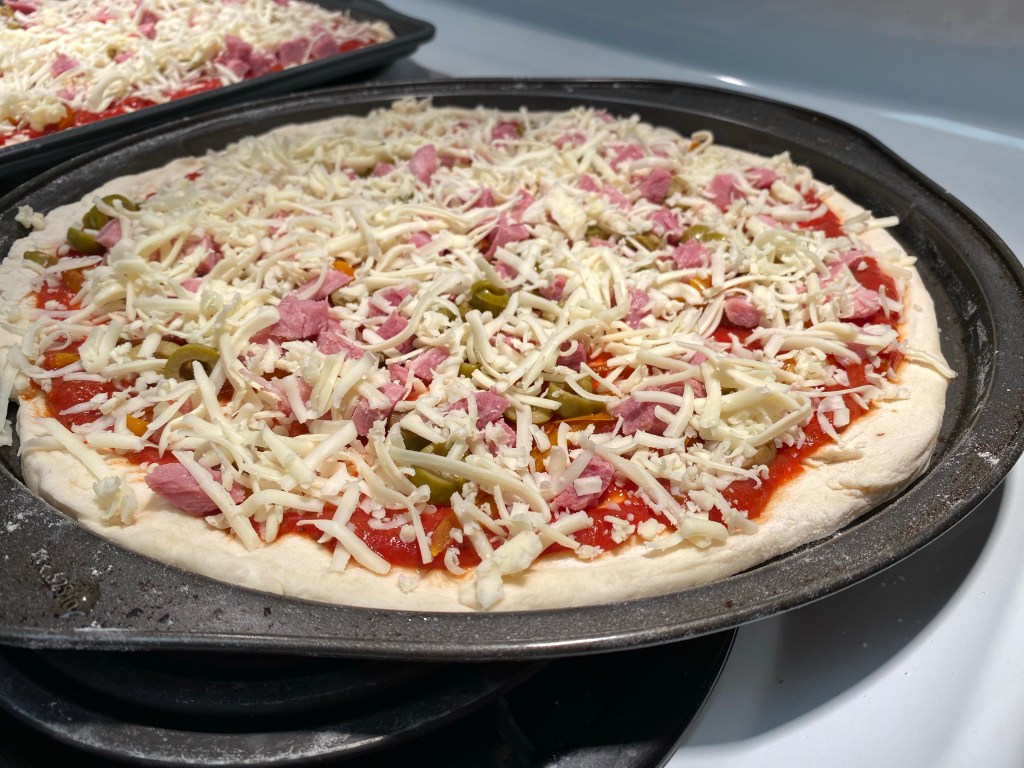
    • Decorate pizza with desired toppings and cover with shredded cheese. Herbs are nice sprinkled on top (see above list of suggestions).
    • Optional: You can stuff the pizza crust with cheese if you want by pulling the dough edges outward, putting a wad of cheese into it and rolling and pinching it back.
    • Optional: A final touch that I like to do is brushing the crust with olive oil.

    4. Bake the Pizza

    • Bake the pizzas for 15-20 minutes (depending on your oven!) until crust is hard and golden and cheese has browned on top. I usually take a peek of the underside to see if it looks doughy or cooked. You can also broil for a minute to crisp the top more if desired (but keep a close eye on it!)
    • Let cool for 5 minutes before slicing it up.

    Other Tasty Sourdough Recipes to Check Out!

    Hi, I’m Jessie!

    I’m a Wife and Homeschooling Mom living in a remote town in Northern Ontario, Canada. I love making wholesome meals for my family from scratch, homeschooling our girls and learning more about natural living.

    Read more about my story HERE.

    Subscribe to Northbird’s email list to get weekly posts on: tasty recipes, activity ideas for kids, natural living tips, and some genuine mom thoughts and encouragement!

    Other Soups and Entrees to Check Out:
    Sourdough Pizza Crust

    • Servings: 2 Pizza Crusts
    • Difficulty: Easy
    • Print

    An Easy, Step-by-Step Guide to Making Sourdough Pizza!


    Supplies Needed:

  • Mixing bowl and spoon
  • Measuring cups
  • Teaspoon & tablespoon
  • Beeswax cover or tea towel/plate
  • Pizza pan or baking sheet
  • Rolling pin
  • Oil brush
  • Pizza cutter

  • Ingredients:

  • 1/2 cup active sourdough starter
  • 1 + 3/4 cup water, lukewarm
  • 4 cups all purpose flour
  • 1+1/2 teaspoons sea salt, finely ground
  • Olive oil
  • Cornmeal, for sprinkling onto pans


  • Please Note: This recipe takes two days to make.

    Directions: Day One


    1. Feed Your Starter In the Morning

    • If your starter takes less time to activate, then feed your starter in the early afternoon.

    2. Mix your Dough in the Evening

    • Mix your active starter with the water and set aside. At this point if the measured starter floats on top of the measured water, you know it’s going to be a great rising pizza dough! Sometimes my timing has been a little off due to life getting crazy, and my starter doesn’t float (even though it looked bubbly and risen in the starter jar). If this happens to you, just add another 1-2 tablespoons of starter and it should still rise good.
    • Mix the flour and salt together in larger bowl, then add the wet ingredients and stir together until it forms a sticky ball. I find it easier to finish mixing it with my hands. If it is dry, resist the urge to add any water!
    • Cover with beeswax cover or plastic wrap and rest for 30 minutes.

    3. Stretch & Fold: 1st Way

    • Wet one hand and gently loosen dough from edges of bowl. Take a handful of dough from the top of the bowl and pull towards you *See picture. Turn bowl 1/4 turn and repeat for a total of 4 stretch & folds to complete circle.
    • Cover and rest 20 minutes.
    • Repeat stretch and fold full circle.
    • Cover and rest 20 minutes.
    • Repeat stretch and fold full circle.
    • Cover and rest overnight 10-12 hours.

    Directions: Day Two


    1. Lift & Fold: 2nd Way

    • Wet both hands and loosen dough from edges of bowl. Using both hands, pick up dough from middle and let it droop over the sides of your hands. *See picture. Gently lower into bowl and let it fold on top of itself. Turn bowl 1/4 turn and repeat for total of 4 to complete full circle.
    • Note: If it is stiff at first, you can pick it up and gently stretch a little with your wet hands to encourage the gluten. *See picture.
    • Cover and rest 20 minutes
    • Repeat 2nd way of stretch & fold full circle
    • Cover and rest 20 minutes

    2. Prepare dough & put in fridge

    • Grease pizza pans with olive oil, and sprinkle cornmeal onto it to help the bottom not to stick later.
    • Separate the dough into two balls. Roll out on lightly floured counter and press into prepared pizza pans.
    • Put pizza pans in the fridge for minimum 1 hour, or for several until closer to when you want to bake the pizzas off. I like to get it all prepped up to this point in the morning, then it’s just a quick decorate and bake before dinner.

    3. Decorate dough

    • Preheat the oven to 425 degrees fahrenheit.
    • Rehydrate any dehydrated veggies in water prior to putting on the pizza: (mushrooms, peppers, onions, dried meats, etc)
    • Brush pizza sauce on top of dough.
    • Decorate pizza with desired toppings and cover with shredded cheese. Herbs are nice sprinkled on top (see above list of suggestions).
    • Optional: You can stuff the pizza crust with cheese if you want by pulling the dough edges outward, putting a wad of cheese into it and rolling and pinching it back.
    • Optional: A final touch that I like to do is brushing the crust with olive oil.

    4. Bake the Pizza

    • Bake the pizzas for 15-20 minutes (depending on your oven!) until crust is hard and golden and cheese has browned on top. I usually take a peek of the underside to see if it looks doughy or cooked. You can also broil for a minute to crisp the top more if desired (but keep a close eye on it!)
    • Let cool for 5 minutes before slicing it up.

    Nutrition


    For 1 of 16 pizza slices, crust only: 121.6 calories; 1 g fat; 23.8 g carbohydrates;
    3.2 g protein; 290 mg sodium.

    Return to Top

    Delicious Vegan Mac and Cheese Recipe

    Find Northbird on social media:

    This post contains affiliate links. As an Amazon associate, I earn from qualifying purchases. This means that I make a small commission at no extra cost to you. You can read my full disclosure HERE.

    Jump to Recipe Card

    Return to “Soups & Entrees”

    Mac and cheese…for most people, its one of those staple comfort foods. However, a quick box of pasta and powdered cheese can mean tummy upset for others. And besides, who honestly likes powdered cheese anyway?

    Over the past few years, our family has been exploring meal options and looking for ways to eat less processed foods and cutting down our grocery bill. One of those ways was to simply eat less meat and dairy products.

    We are not vegans, but have become more conscious in trying to eat only grass-fed/non-steroid pumped meats, or wild game (which my sister-in-law K, calls “happy meat”!)

    I also prefer to support small local farms whenever possible. For most dairy products in recipes it is easy to substitute with nut milks, creams, and cheese (still on my bucket list!).

    So that brings us to why we like to cook vegan and vegetarian for some of our meals during the week: It not only helps with the grocery bill, but also encourages us to plan ahead (as most of them require soaking nuts, seeds, beans and legumes).

    The end result: Happy tummies, and a little more cash in our pocket.

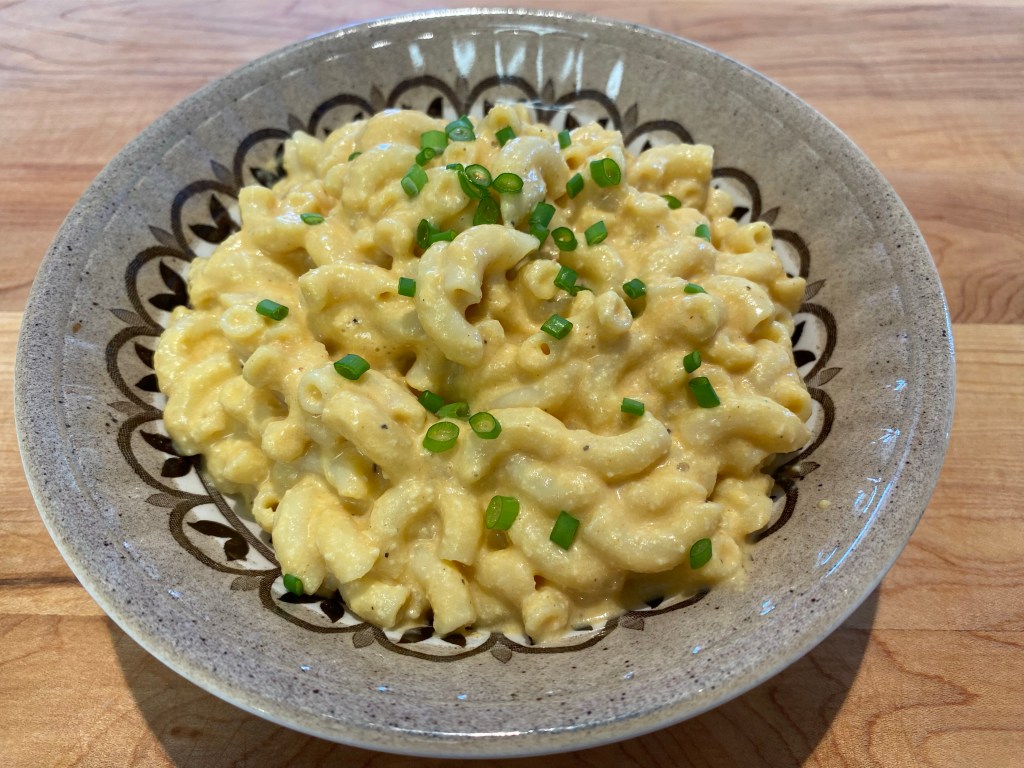
    This vegan recipe uses cashews as the delicious creamy base and when mixed with spices and nutritional yeast, it has a nutty and cheesy flavour. The potato helps to thicken the sauce and the carrots give it that lovely cheesy colour and add a little sweetness.

    Nutritional Benefits of Cashews:

    • A great source of plant protein
    • Rich in heart healthy fats
    • Low in sugar
    • Source of fibre
    • Contains magnesium and manganese (bone health)
    • Source of copper (brain development & immune system)
    • Antioxidant
    • Anti-inflammatory

    Why is it Important to Soak Cashews?

    All nuts contain an enzyme inhibitor called phytic acid, which prevents the body from properly absorbing nutrients and makes it harder to digest. When the nut is soaked in water for 8-12 hours, the phytic acid is released from the nut, and optimal absorption of nutrients can now happen.

    What is Nutritional Yeast?

    Nutritional Yeast is a plant-based protein that is a deactivated yeast, and comes from a strain of Saccharomyces cerevisiae. It is often used in vegan recipes and loved for it’s cheesy and nutty-like flavour. In addition to being a great source of protein, it also contains trace amounts of minerals and B vitamins.

    How to make Vegan Mac and Cheese

    Supplies Needed:

    Ingredients:

    Optional Topping:

    Directions:

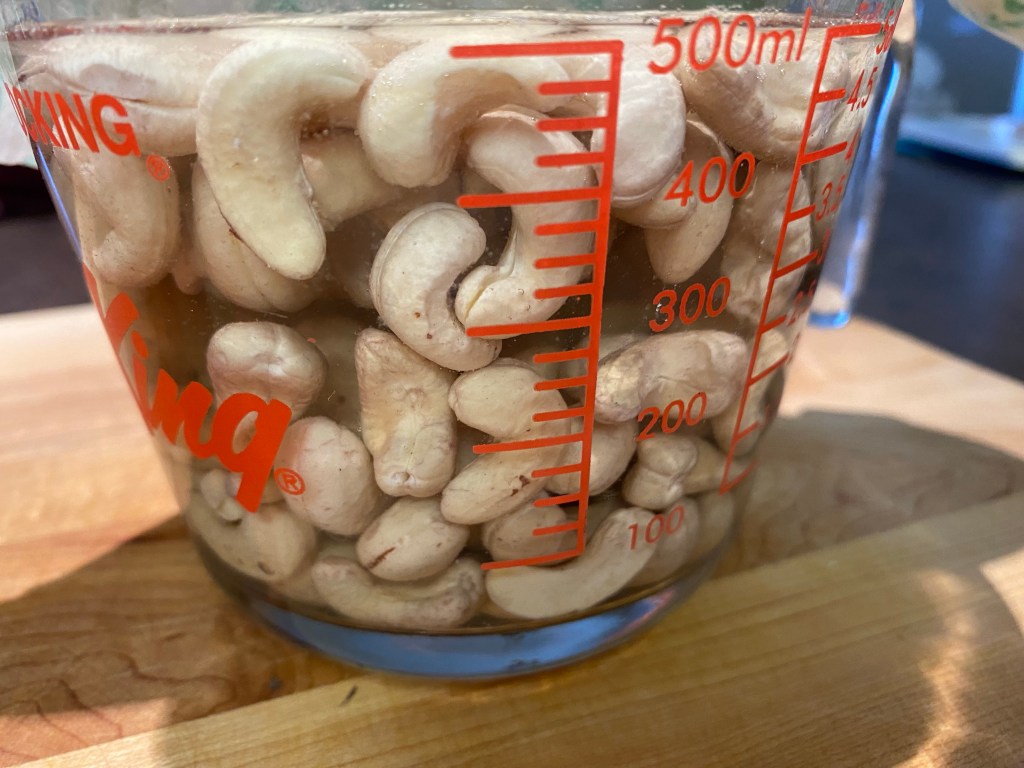
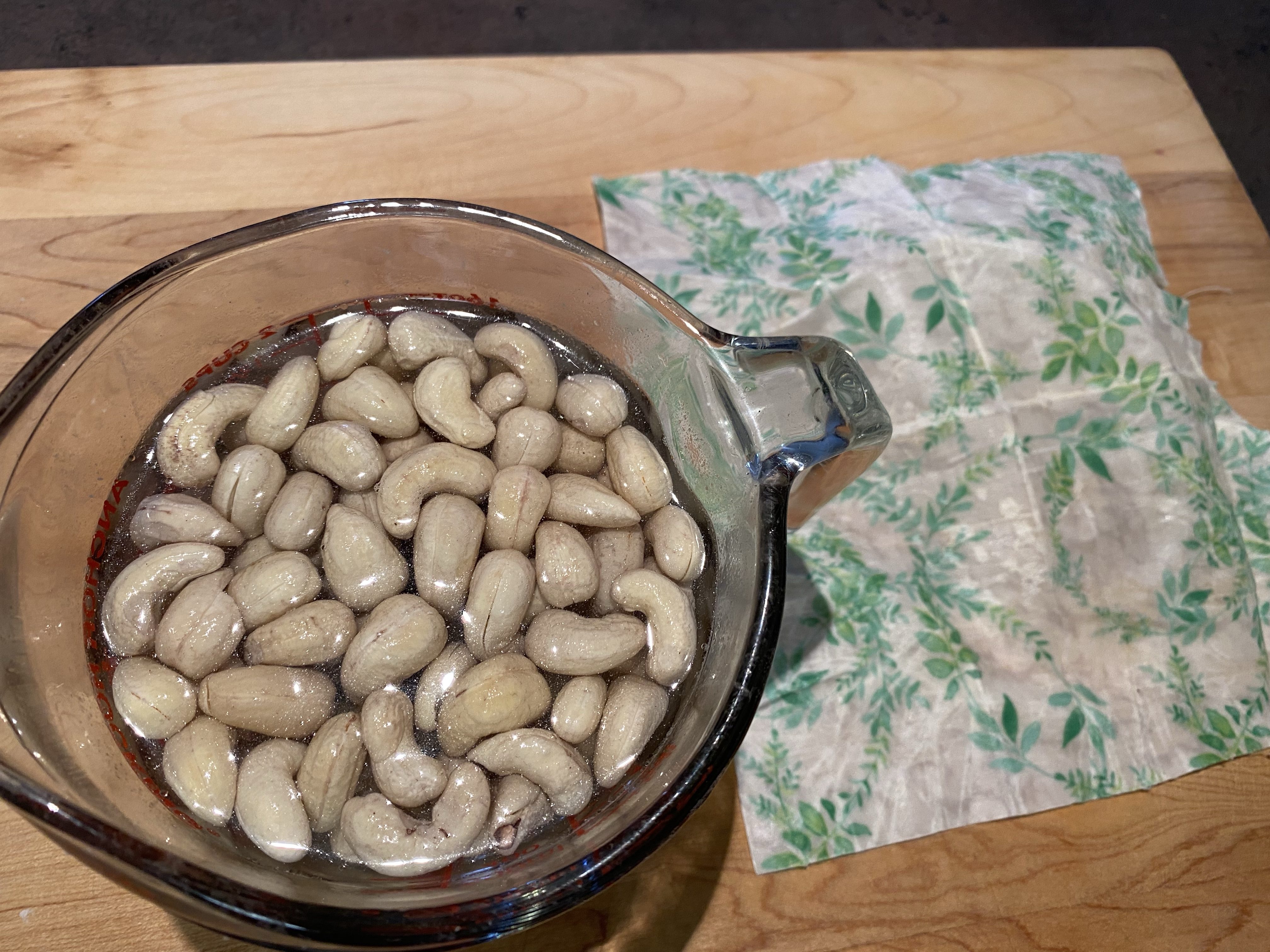
    1. 8-12 hours prior to dinner, put 1 cup of cashews in water (submerged). Cover and keep on the counter until dinner prep.

    2. Boil the macaroni pasta until tender, but do not over-cook! As soon as they are done, put through strainer and pour cold water over them. This will keep them firm until the end.

    3. Peel carrots and potatoes and cut into chunks. Dice onion.

    4. Boil vegetables with 2 cups water in small pot until tender. Strain, but save the broth!

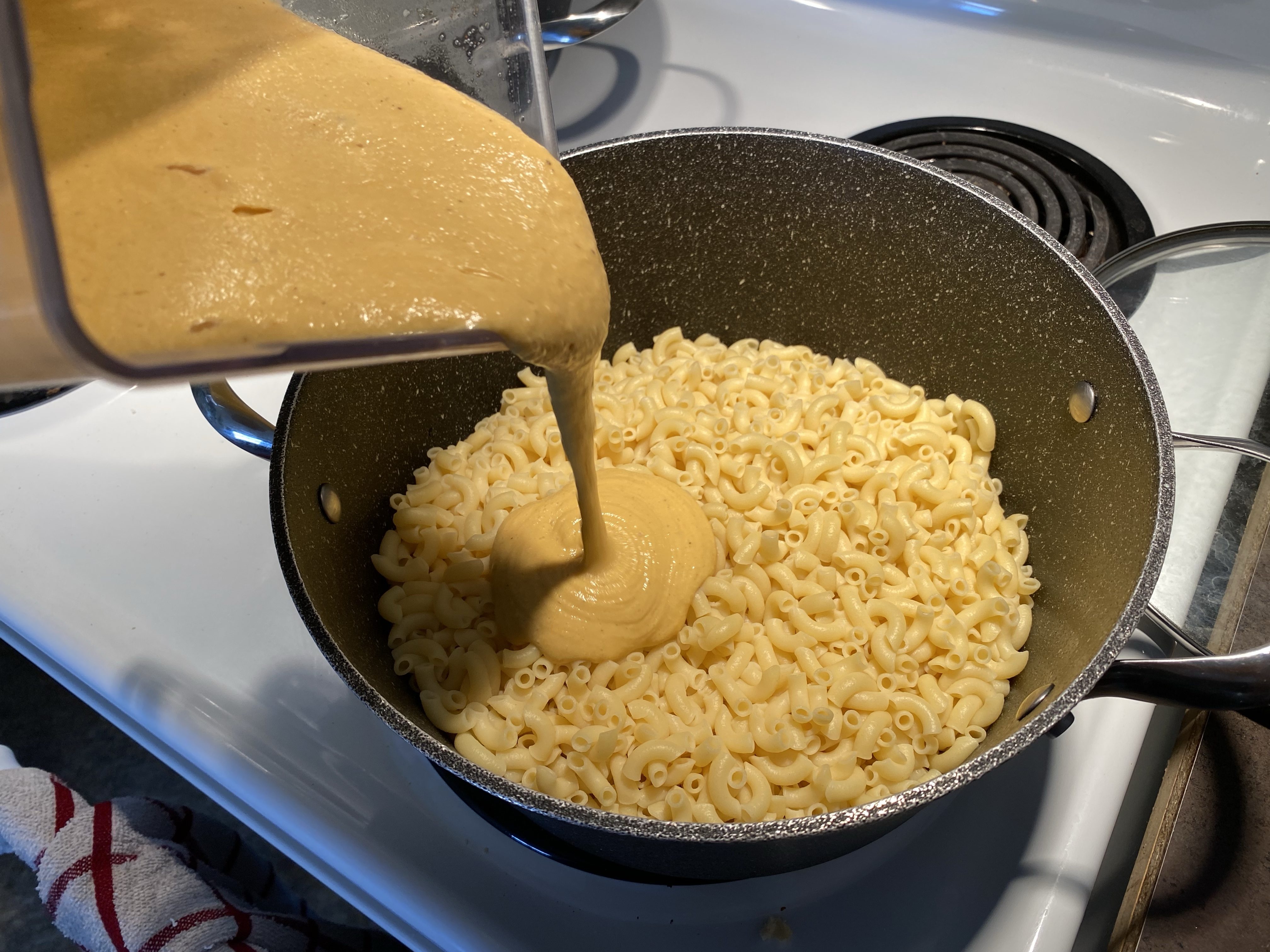
    5. Add cooked vegetables with 3/4 cup of the vegetable broth to the blender.

    6. Add garlic powder, sea salt, black pepper, paprika, nutritional yeast and lemon juice to the blender.

    7. Strain and rinse soaked cashews with cold water and add to the blender. Blend until smooth.

    For a quick serve:

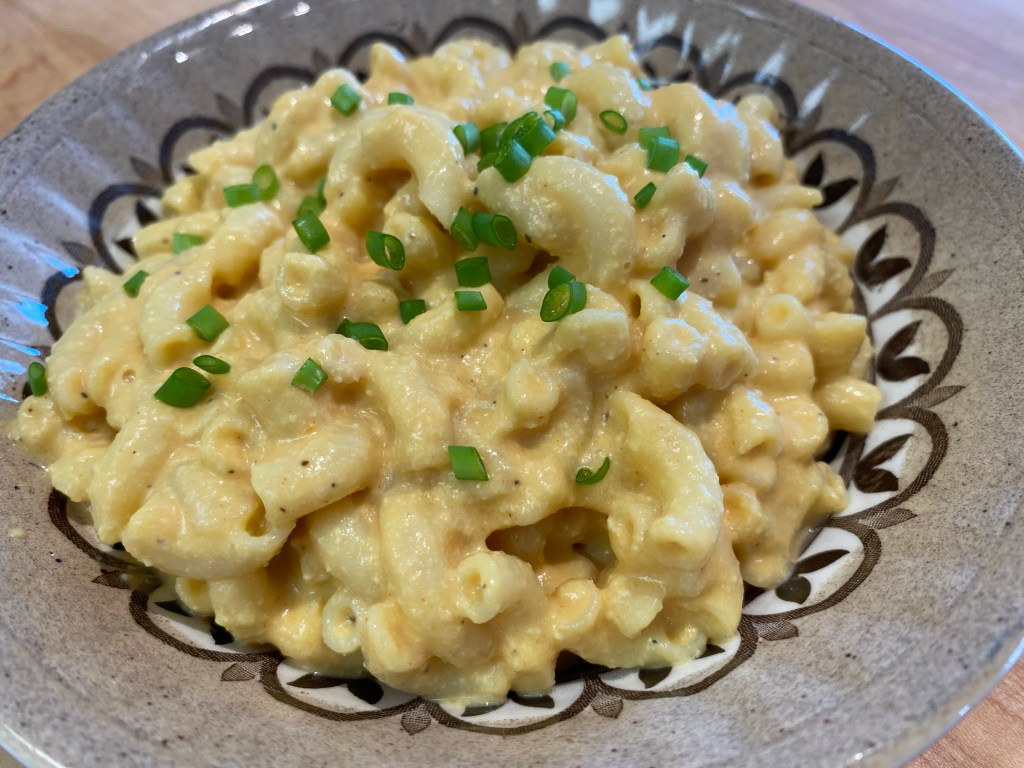
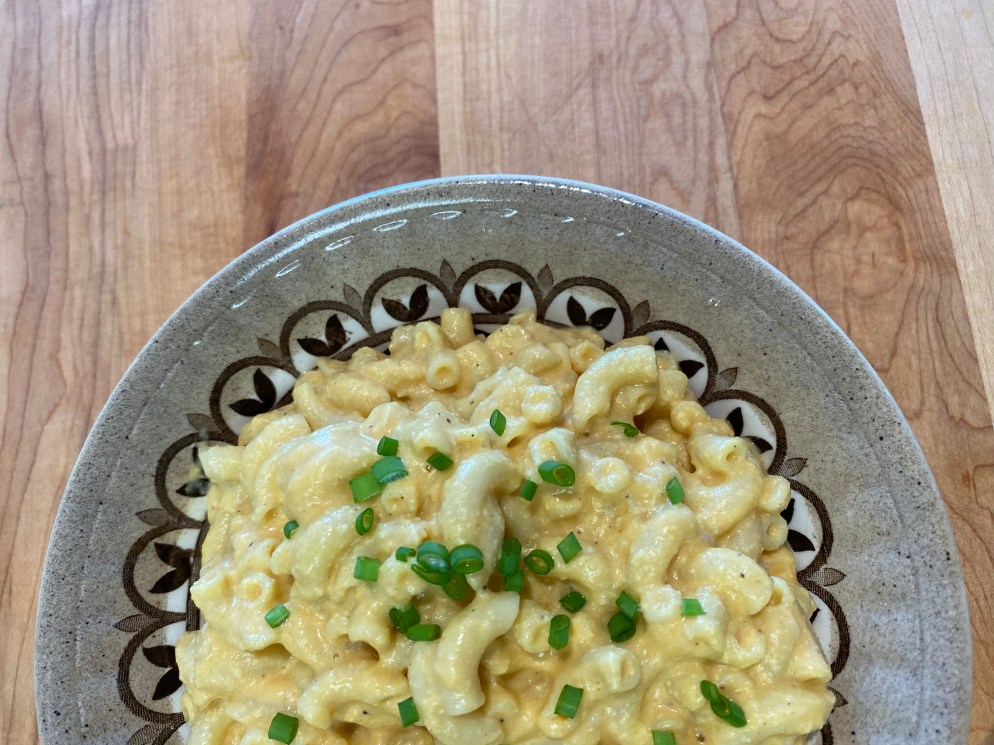
    • Put cooked pasta in large serving dish and pour the cashew sauce over it, mixing part way. It will continue to thicken as it sits.
    • Serve and garnish with your favourite herbs (we like using chives, parsley and spring onions)

    For a gourmet finish:

    • Put the cooked pasta in a large casserole dish and pour the cashew sauce over it, mix well.
    • Melt vegan butter and mix with bread crumbs. Spread on top of macaroni.
    • Bake at 300 degrees F for 20 minutes.

    Other Soups and Entrees to Check Out:
    Hi, I’m Jessie!

    I’m a Wife and Homeschooling Mom living in a remote town in Northern Ontario, Canada. I love making wholesome meals for my family from scratch, homeschooling our girls and learning more about natural living.

    Read more about my story HERE.

    Subscribe to Northbird’s email list to get weekly posts on: tasty recipes, activity ideas for kids, natural living tips, and some genuine mom thoughts and encouragement!

    Vegan Mac and Cheese

    • Servings: 4
    • Difficulty: Easy
    • Print

    Made with Creamy Cashew Sauce and Nutritional Yeast


    Supplies Needed:

  • High power blender (We love our Blendtec Blender!)
  • Small pot
  • Bowl/large measuring cup for soaking
  • beeswax cover or plastic wrap
  • Strainer
  • Measuring cups
  • Vegetable peeler
  • Teaspoons

  • Ingredients

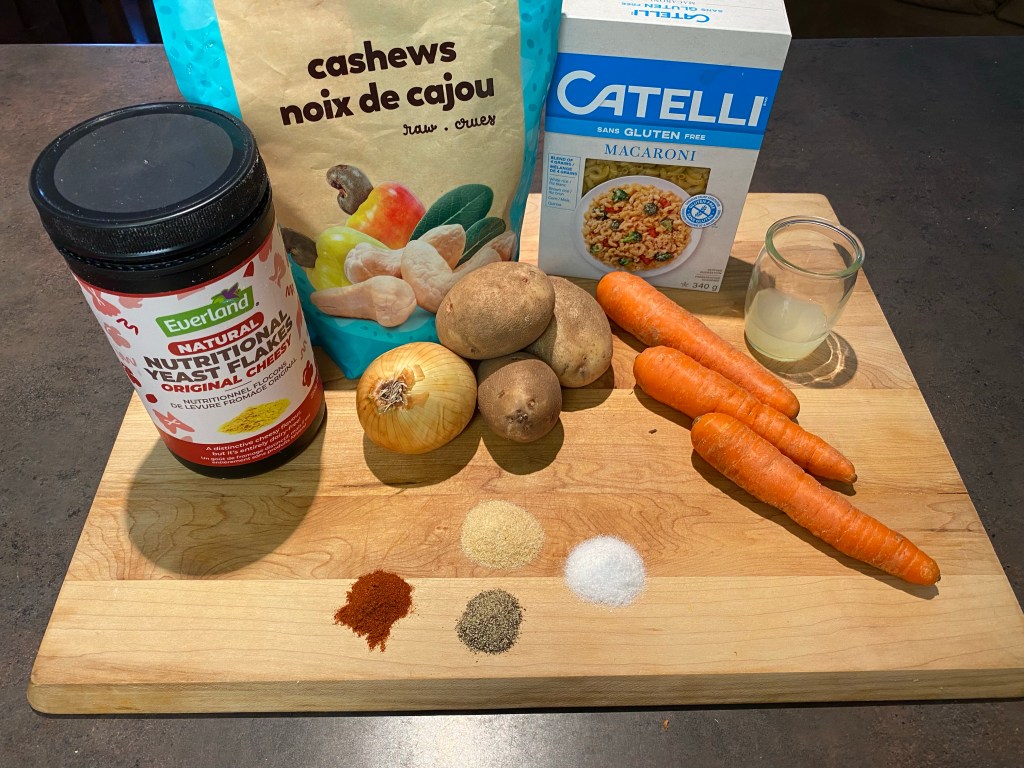
  • 1 cup raw/unsalted cashews
  • 3 medium potatoes
  • 1 large onion
  • 3 medium carrots
  • 2 cups water (some used for veg broth)
  • 1 teaspoon garlic powder
  • 2 teaspoons sea salt
  • 1/2 teaspoon black pepper
  • 1/2 teaspoon paprika
  • 1/4 cup nutritional yeast
  • 2 Tablespoons lemon juice
  • 1 box of macaroni Pasta, 4 serving size

  • Optional Toppings:

  • 1/4 cup vegan butter (like Ghee)
  • 1 cup breadcrumbs (I toast up our leftover sourdough crusts)

  • Directions

    1. 8-12 hours prior to dinner, put 1 cup of cashews in water (submerged). Cover and keep on the counter until dinner prep.
    2. Boil the macaroni pasta until tender, but do not over-cook! As soon as they are done, put through strainer and pour cold water over them. This will keep them firm until the end.
    3. Peel carrots and potatoes and cut into chunks. Dice onion.
    4. Boil vegetables with 2 cups water in small pot until tender. Strain, but save the broth!
    5. Add cooked vegetables with 3/4 cup of the vegetable broth to the blender.
    6. Add garlic powder, sea salt, black pepper, paprika, nutritional yeast and lemon juice to the blender.
    7. Strain and rinse soaked cashews with cold water and add to the blender. Blend until smooth.

    For a Quick Serve:

    • Put cooked pasta in large serving dish and pour the cashew sauce over it, mixing part way. It will continue to thicken as it sits.
    • Serve and garnish with your favourite herbs (we like using chives, parsley and spring onions)

    For a Gourmet Finish:

    1. Put the cooked pasta in a large casserole dish and pour the cashew sauce over it, mix well.
    2. Melt vegan butter and mix with bread crumbs. Spread on top of macaroni/cashew mix.
    3. Bake at 300 degrees F for 20 minutes.

    Nutrition


    Per Serving: 706 calories; 14.7 g fat; 121.6 g carbohydrates;
    26 g protein; 0 mg cholesterol; 1303 mg sodium.

    Return to Top

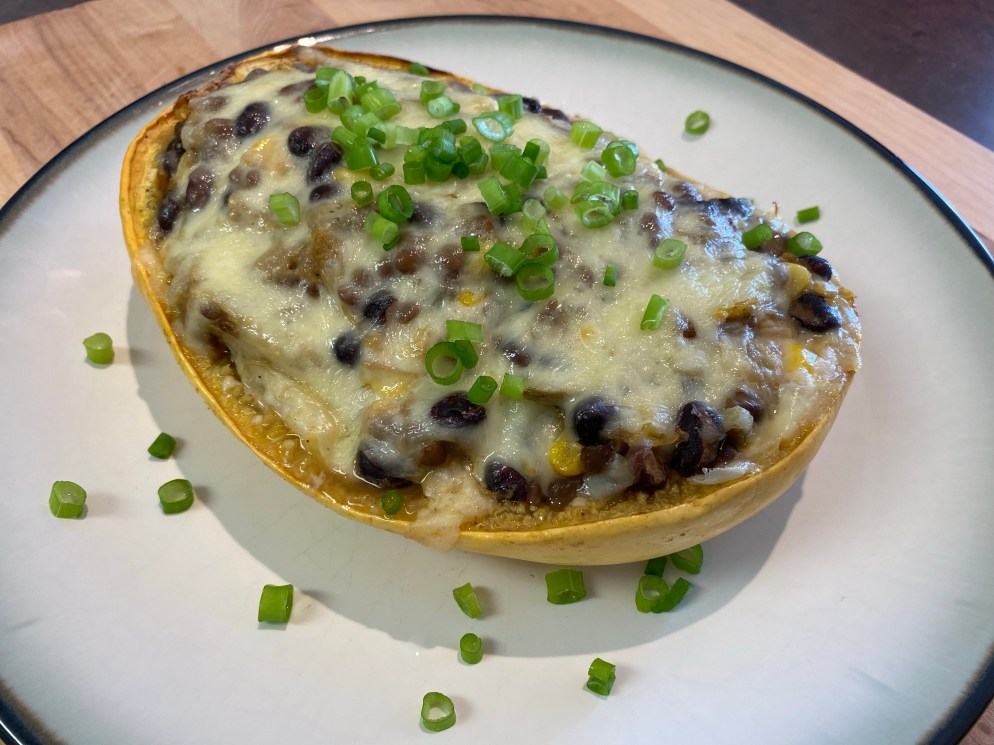
    Vegetarian Spaghetti Squash Taco Boats

    Find Northbird on social media:

    This post contains affiliate links. As an Amazon associate, I earn from qualifying purchases. This means that I make a small commission at no extra cost to you. You can read my full disclosure HERE.

    Jump to Recipe

    Return to “Soups & Entrees”

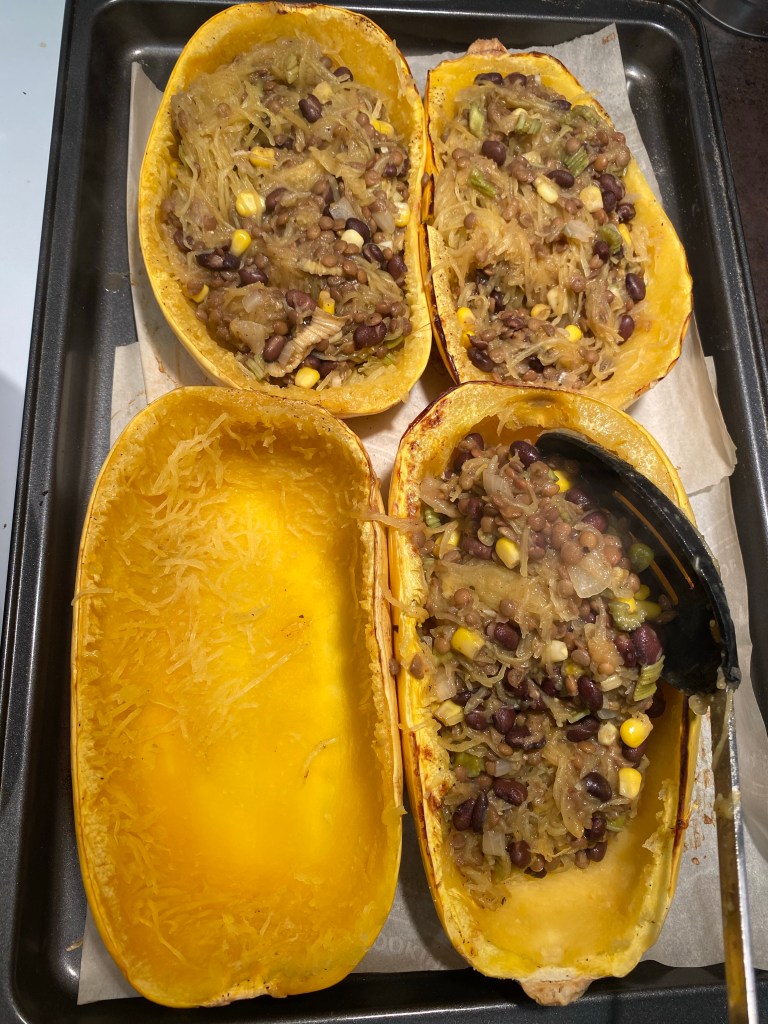
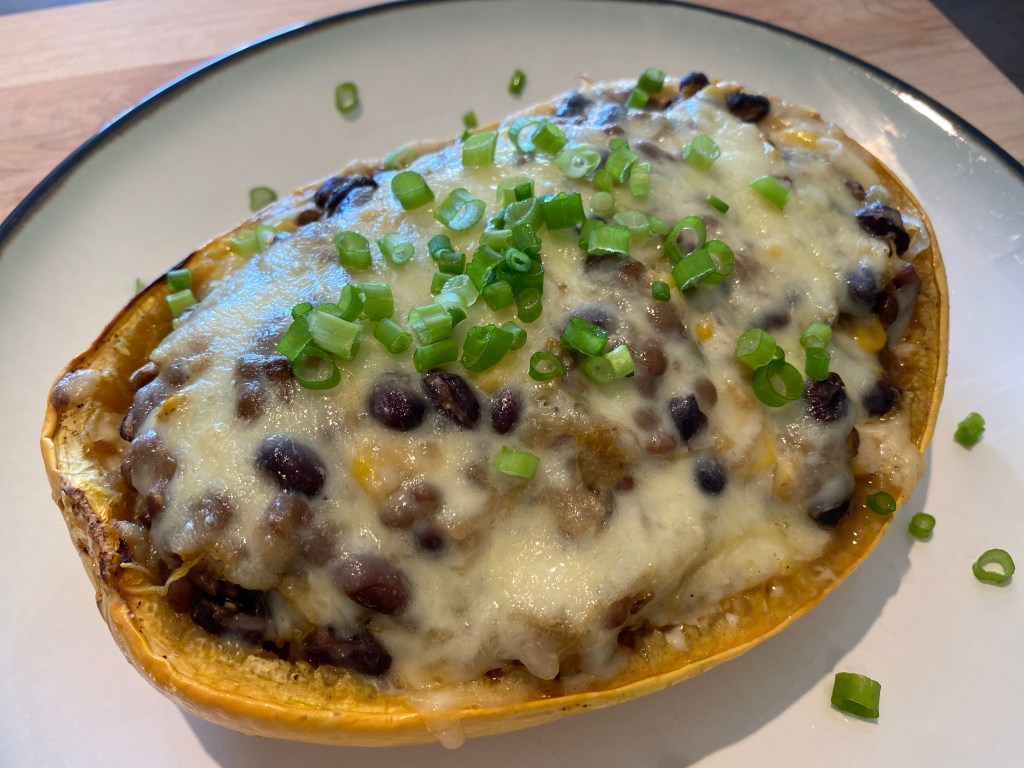
    One spring during planting time, some squash seeds were carefully started indoors and then later planted outside in a rich and fertile “hugelkultur” garden bed. They were cared for, and watered and little helpers watched the plants grow and vine and start to produce their fruit.

    The dream was to have an abundance of treasured Hokkaido squash to share with the family. What came up was not the beautiful and delicious Hokkaidos, but yes, dozens upon dozens of spaghetti squash!

    (This was one of those home-seed-saving scenarios resulting in very unfortunate labeling errors!)

    Don’t get me wrong, I do enjoy spaghetti squash, and get a total rush of pride in seeing piles of squash stored for the long winters! But even after giving tons of them away, we were still left with several dozen and we realized that we needed to get creative with ways of eating them up or we’d get bored pretty quick.

    My sister-in-law L, found a Mexican taco boat recipe with ground beef, and cooked about a dozen of them for one of our large family gatherings. Problem solved!

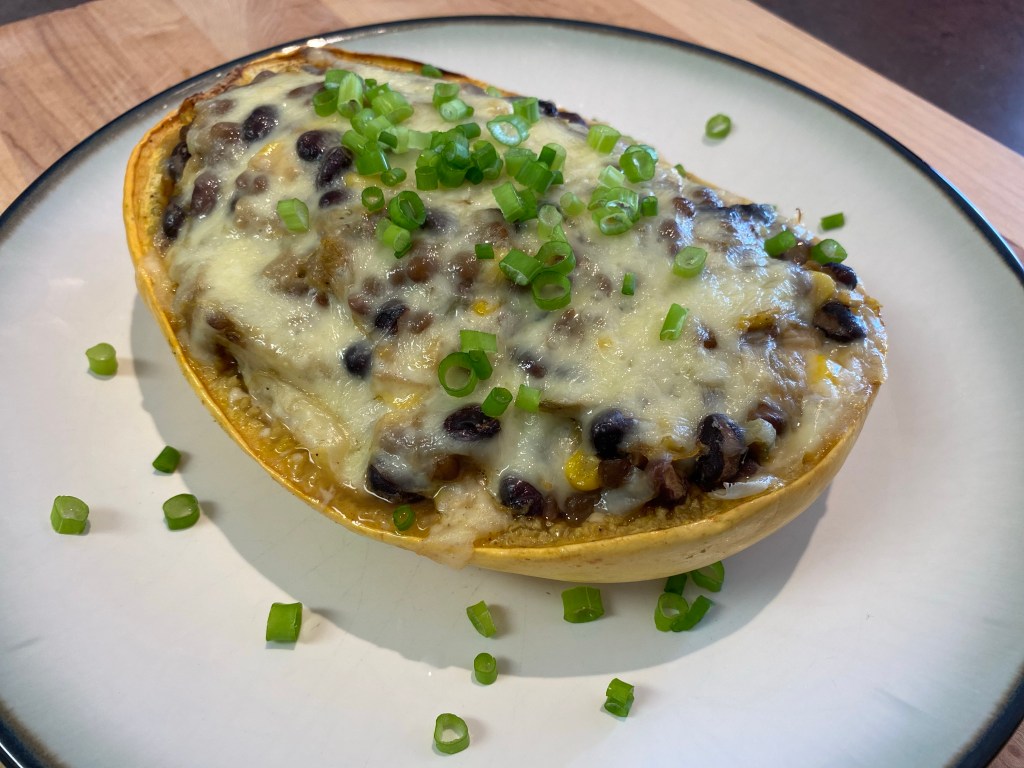
    This vegetarian version of the recipe was inspired from that spaghetti squash summer.

    Vegetarian Spaghetti Squash Taco Bowls

    Supplies Needed:

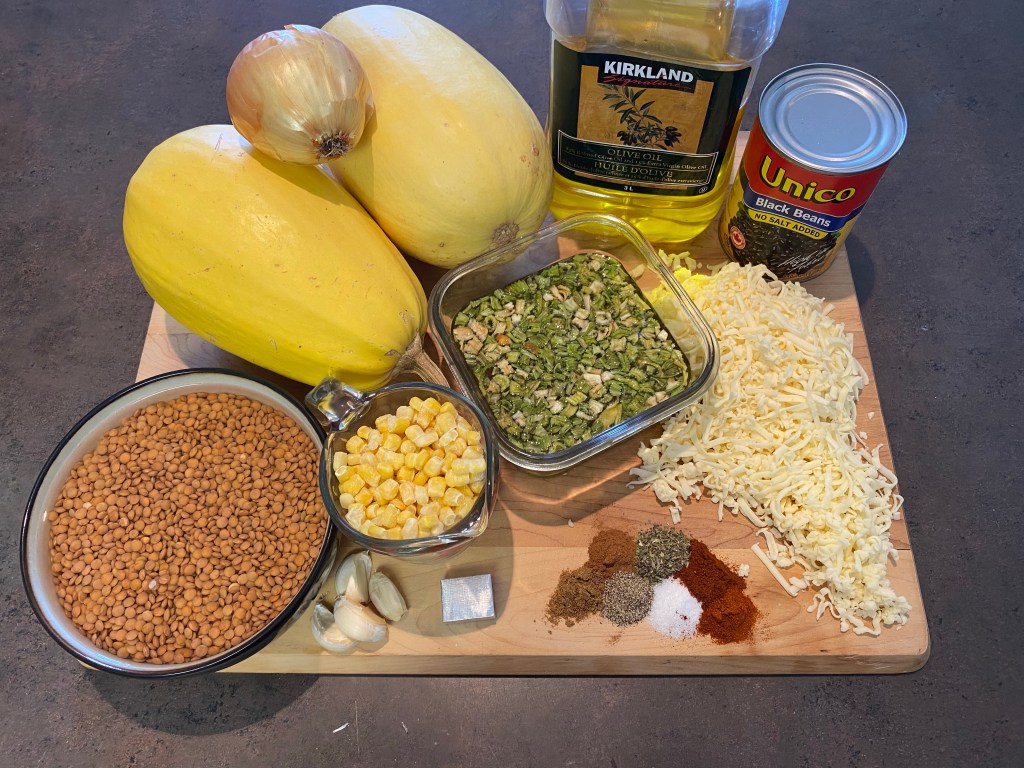
    Ingredients:

    • 2 spaghetti squash
    • 4 garlic cloves
    • 2 cups cheese, grated
    • 1 onion
    • 2 tablespoons olive oil
    • 1 cup dried lentils, or 1-2 cans of lentils (depending on size)
    • 1 cube chicken, vegetable or beef stock
    • 1 3/4 cup water
    • 1 teaspoon sea salt
    • 1/2 cup dried celery, soaked (or 2 stalks fresh)
    • 1/2 teaspoon chili powder
    • 1/2 teaspoon cinnamon
    • 1 teaspoon Italian seasoning
    • 1/2 teaspoon black pepper
    • 1/2 teaspoon cumin
    • 1/2 teaspoon paprika
    • 1 cup frozen or canned corn
    • 1 can 540ml/19oz black beans
    • Scallions/fresh parsley/cilantro to garnish

    Directions:

    1. In the morning, soak dried lentils and dried celery in separate bowls, covered with water.

    2. Start cooking lentils 2 hours before serving time. Rinse and put in pot of water, bring to boil and simmer until step 9.

    3. At meal prep time, preheat oven to 400 degrees F, and cut spaghetti squash lengthwise.

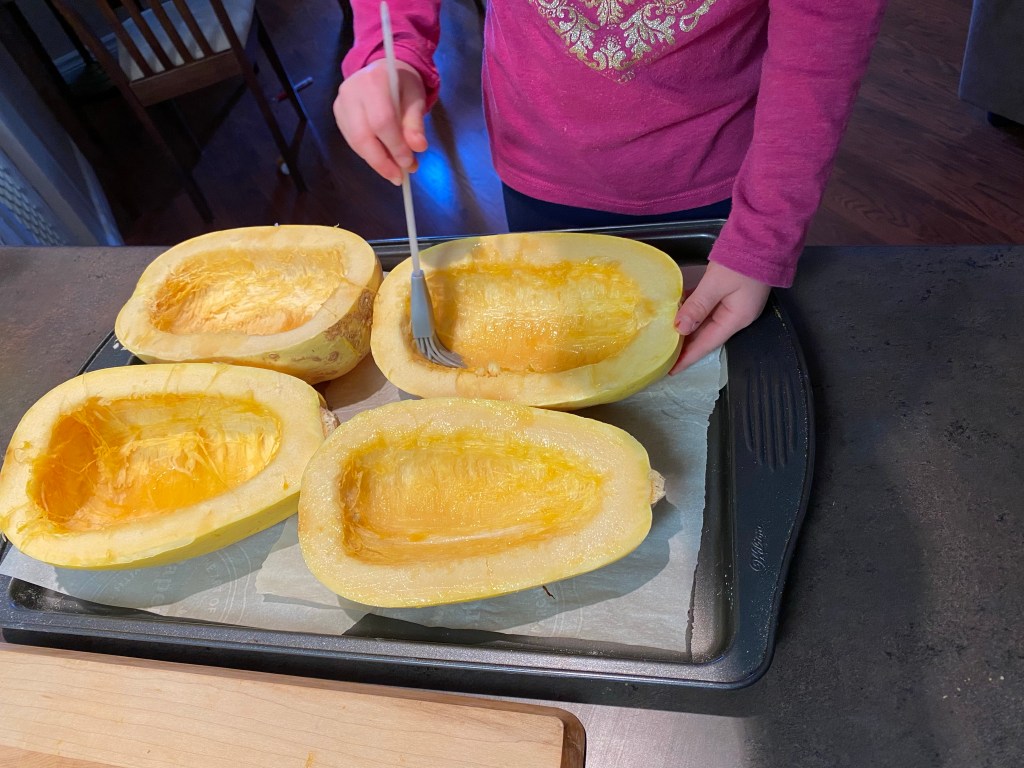
    4. Scoop out seeds and brush insides with olive oil. Sprinkle with salt and pepper.

    5. Turn upside down and roast for 30-35 minutes or until the insides are soft and cooked through.

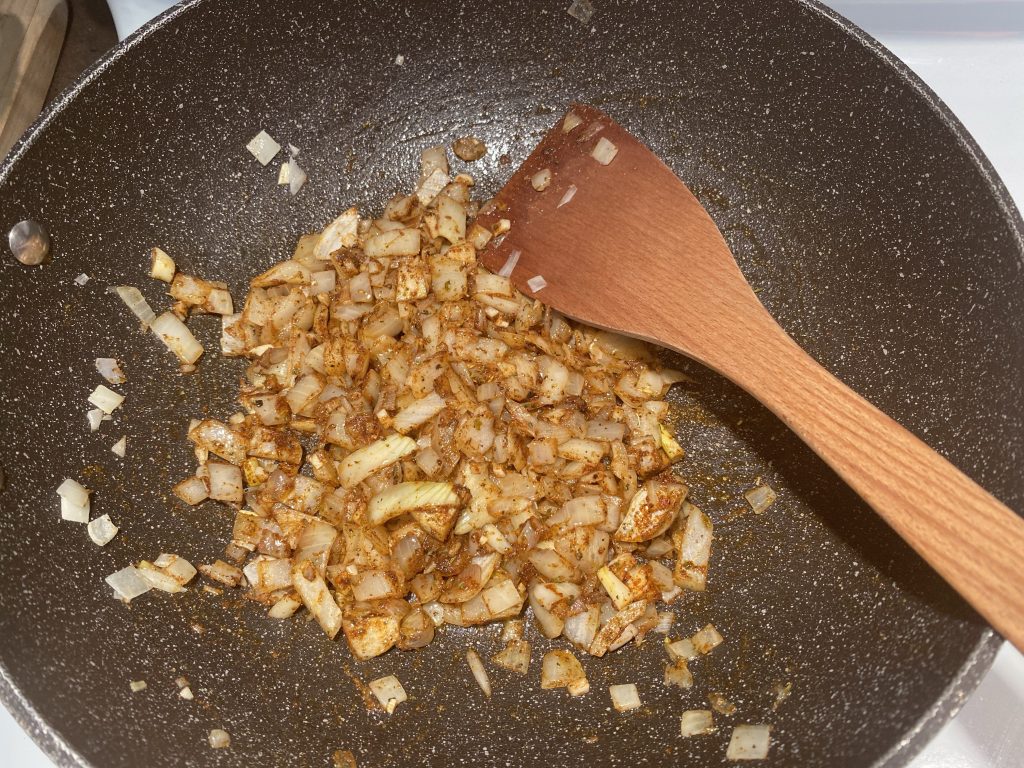
    6. While the squash are baking, sauté the onion and garlic with olive oil in a large skillet over medium heat.

    7. Add the salt, chili, cinnamon, Italian herbs, pepper, cumin and paprika. Stir well.

    8. Dissolve the stock cube in 1 13/4 cup boiling water and add.

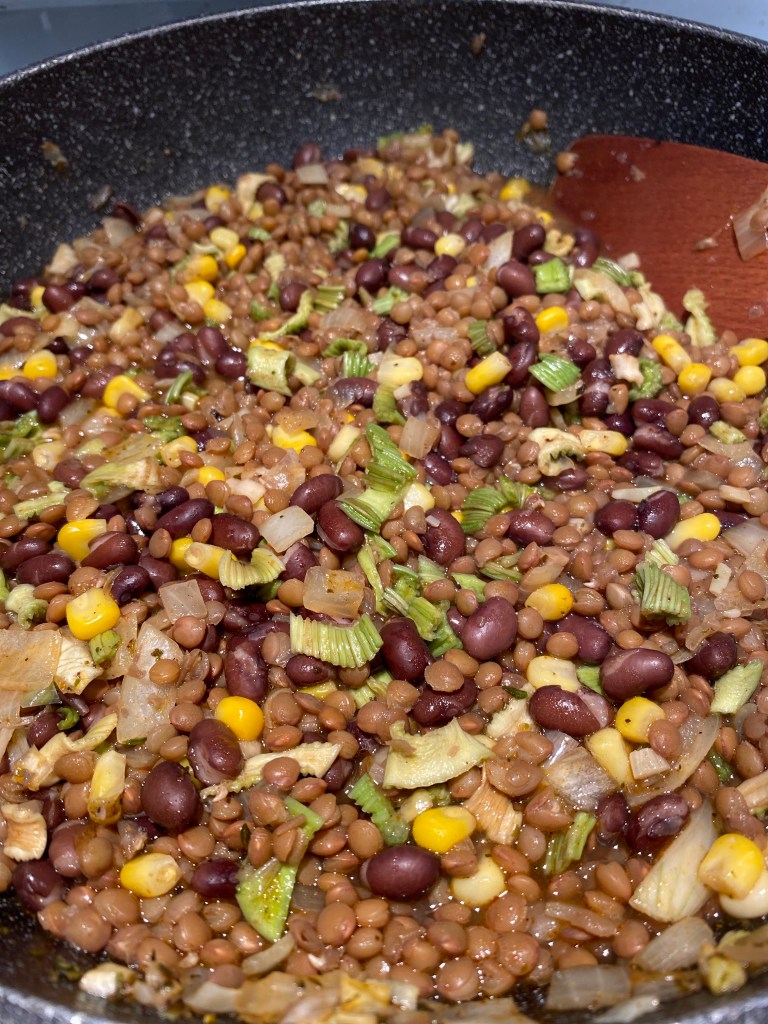
    9. Add the black beans (rinsed), corn, lentils, and rehydrated (or fresh) celery.

    10. Cook through and simmer until the squash are finished in the oven.

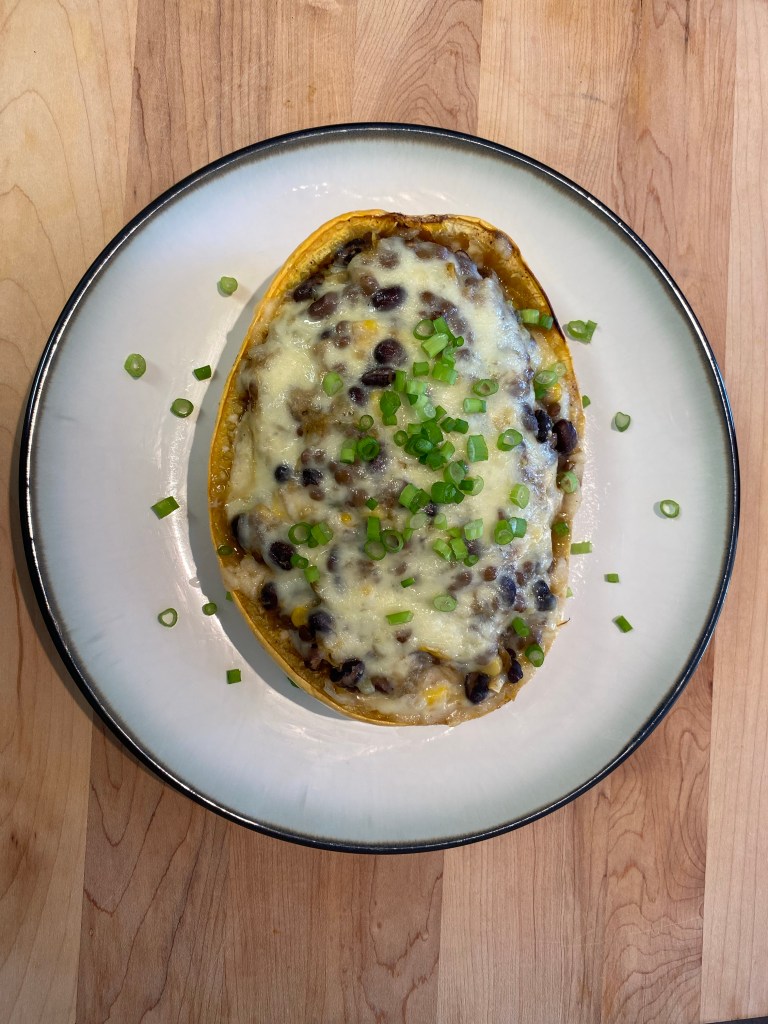
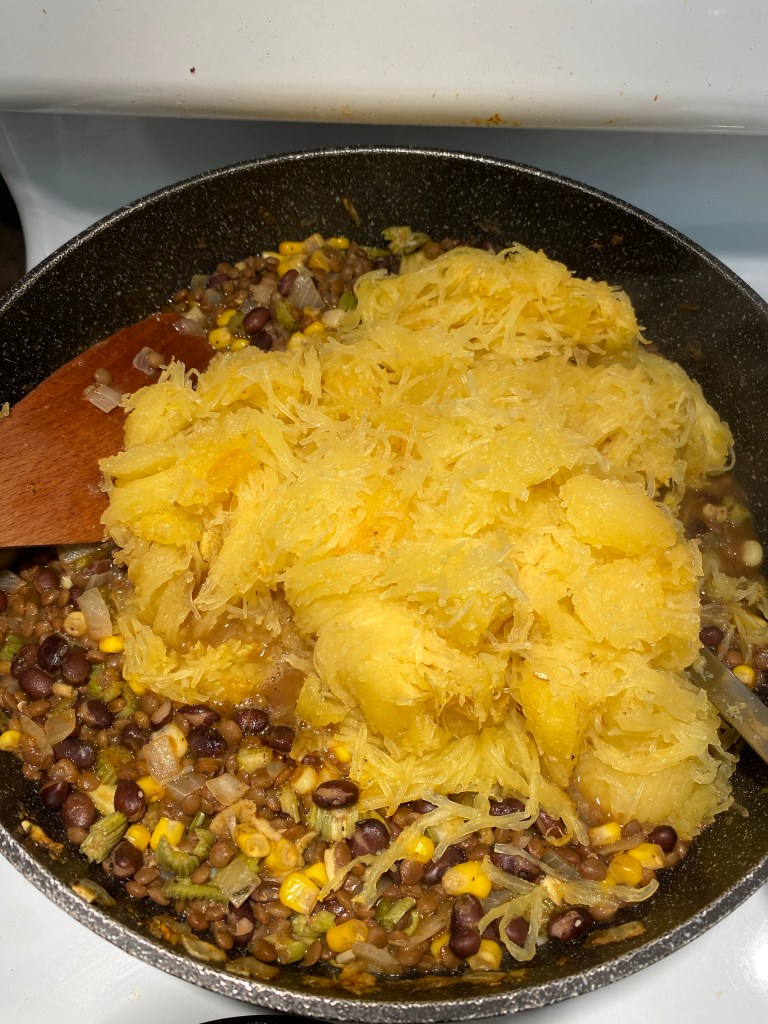
    11. Scoop out insides of squash and mix in the skillet, then return to the squash shells and cover with cheese.

    12. Return to oven and cook for another 10 minutes. Finish with a quick broil to brown the cheese nicely.

    13. Garnish with fresh herbs or scallions and enjoy!

    Note: Store any leftovers in an airtight container in the fridge for up to 3 days.

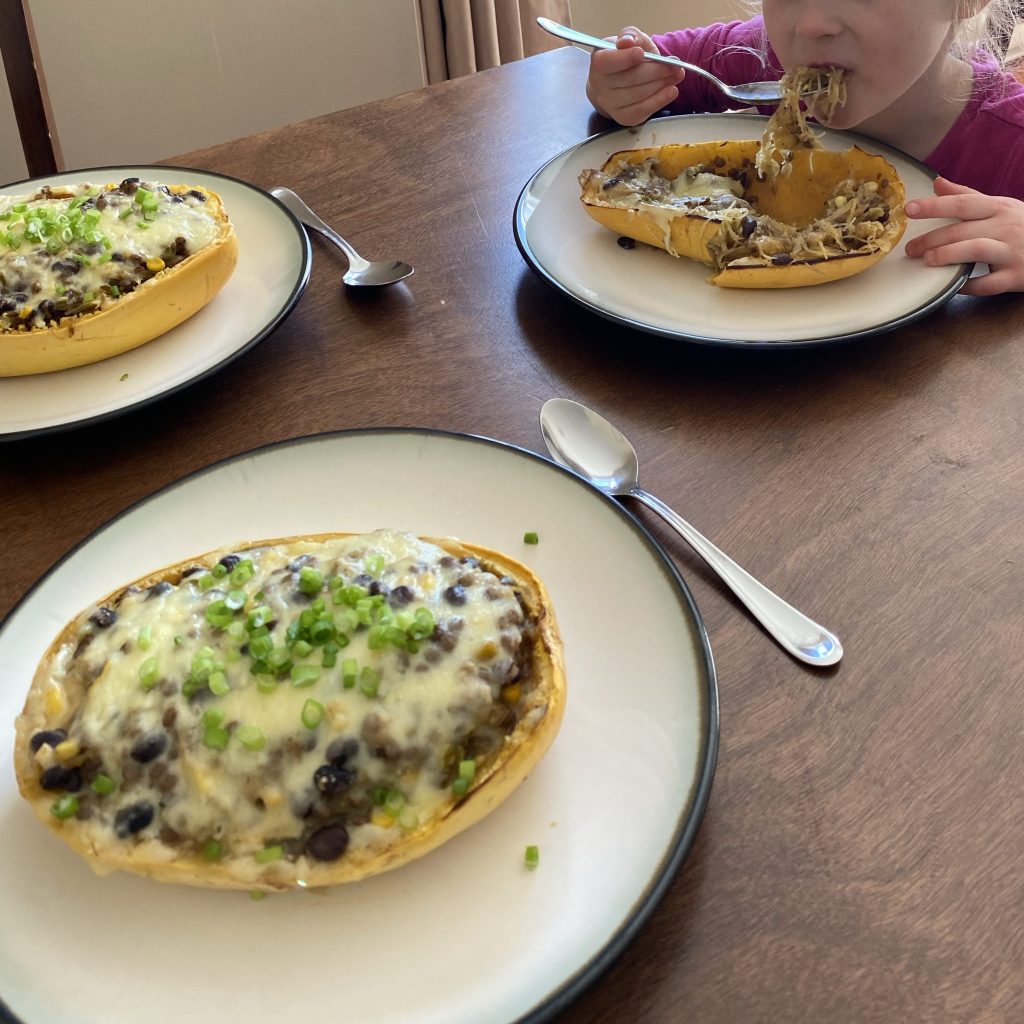
    Our kids LOVED this meal! (Our oldest especially enjoyed it because she helped to make it!)

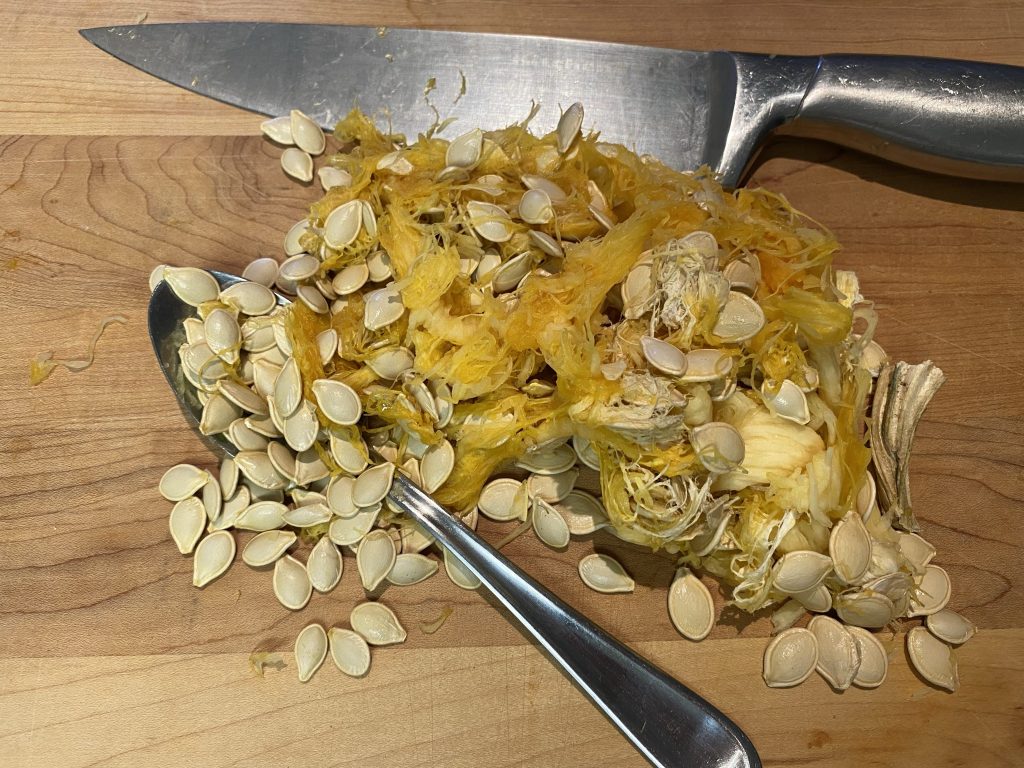
    Can You Eat the Spaghetti Squash Seeds?

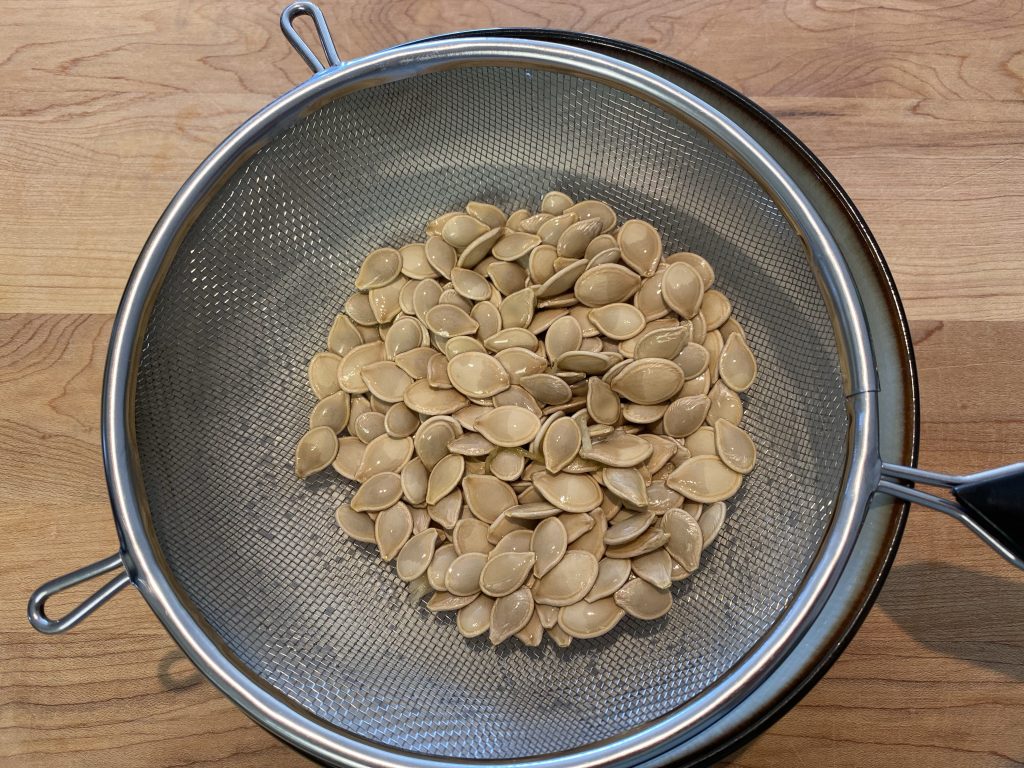
    Yes! Absolutely! They are delicious and packed full of nutrients, and you can roast them the same way as pumpkin seeds. They contain lots of omega 3 fatty acids, protein, Vitamin C and beta-carotene.

    How to Roast Spaghetti Squash Seeds:

    1. Wash the seeds and separate from the pulp.

    2. Mix in a small bowl with olive oil or (my favourite) Avocado oil. Add sprinklings of salt, pepper and also a dash of paprika.

    3. Spread in single layer on parchment paper.

    4. Broil on low for about 5 minutes, or until crispy (every oven is different!)

    5. Store in an airtight container at room temperature for up to one week.

    Ways to Eat Roasted Spaghetti Squash Seeds:

    • Enjoy as a salty counter snack
    • Add to a trail mix with other seeds, nuts and dried fruits
    • As a salad topping
    • As a pumpkin or squash soup garnish

    How to Save the Squash Seeds for Planting:

    1. Clean seeds in a bowl of water and separate out any pulp or broken seeds. Select the biggest and best seeds to save.

    2. Drain off as much water as possible.

    3. Pat dry with a towel and put on a parchment paper to continue drying for several days.

    4. Put in a paper envelope and label.

    5. If you are using the seeds the following planting season, you can store it in a cool, dry pantry, or in the freezer to last for several years.

    Other Soups and Entrees to Check Out:
    Hi, I’m Jessie!

    I’m a Wife and Homeschooling Mom living in a remote town in Northern Ontario, Canada. I love making wholesome meals for my family from scratch, homeschooling our girls and learning more about natural living.

    Read more about my story HERE.

    Subscribe to Northbird’s email list to get weekly posts on: tasty recipes, activity ideas for kids, natural living tips, and some genuine mom thoughts and encouragement!

    Vegetarian Spaghetti Squash Taco Boats

    • Servings: 4
    • Difficulty: Easy
    • Print

    An Easy and Delicious Way to Eat Spaghetti Squash


    See above for the recipe to roast the squash seeds!


    Ingredients

  • 2 spaghetti squash
  • 4 garlic cloves
  • 2 cups cheese, grated
  • 1 onion
  • 2 tablespoons olive oil
  • 1 cup dried lentils, or 1-2 cans of lentils (depending on size)
  • 1 cube chicken, vegetable or beef stock
  • 1 3/4 cup water
  • 1 teaspoon sea salt
  • 1/2 cup dried celery, soaked (or 2 stalks fresh)
  • 1/2 teaspoon chili powder
  • 1/2 teaspoon cinnamon
  • 1 teaspoon Italian seasoning
  • 1/2 teaspoon black pepper
  • 1/2 teaspoon cumin
  • 1/2 teaspoon paprika
  • 1 cup frozen or canned corn
  • 1 can 540ml/19oz black beans
  • Scallions/fresh parsley/cilantro to garnish

  • Directions

    1. In the morning, soak dried lentils and dried celery in separate bowls, covered with water (Or use canned lentils and fresh celery)
    2. Start cooking lentils 2 hours before serving time. Rinse and put in pot of water, bring to boil and simmer until step 9.
    3. At meal prep time, preheat oven to 400 degrees F, and cut spaghetti squash lengthwise.
    4. Scoop out seeds and brush insides with olive oil. Sprinkle with salt and pepper.
    5. Turn upside down and roast for 30-35 minutes or until the insides are soft and cooked through.
    6. While the squash are baking, sauté the onion and garlic with olive oil in a large skillet over medium heat.
    7. Add the salt, chili, cinnamon, Italian herbs, pepper, cumin and paprika. Stir well.
    8. Dissolve the stock cube in 1 13/4 cup boiling water and add.
    9. Add the black beans (rinsed), corn, lentils, and rehydrated (or fresh) celery.
    10. Cook through and simmer until the squash are finished in the oven.
    11. Scoop out insides of squash and mix in the skillet, then return to the squash shells and cover with cheese.
    12. Return to oven and cook for another 10 minutes. Finish with a quick broil to brown the cheese nicely.
    13. Garnish with fresh herbs or scallions and enjoy!
    14. Store any leftovers in an airtight container in the fridge for up to 3 days.

    Nutrition


    Per Serving: 725 calories; 31.9 g fat; 86 g carbohydrates; 46.8 g protein; 240 mg cholesterol; 1614 mg sodium.

    Return to Top

    Easy Asparagus Cheese Frittata

    Find Northbird on social media:

    This post contains affiliate links. As an Amazon associate, I earn from qualifying purchases. This means that I make a small commission at no extra cost to you. You can read my full disclosure HERE.

    Jump to Recipe Card

    Return to “Soups & Entrees”

    Asparagus Cheese Frittata:

    This recipe has been a favourite meal for many years now. My mother made the original version from a very well worn cookbook, and the recipe changed over the years to taste preference for the family.

    When I left my parent’s home for college, I started making my own version of it. It tended to change based on what was available in the pantry, and did not always turn out entirely well. This version of the recipe is a particular favourite with our girls, and it makes for an easy breakfast or lunch the next day too!

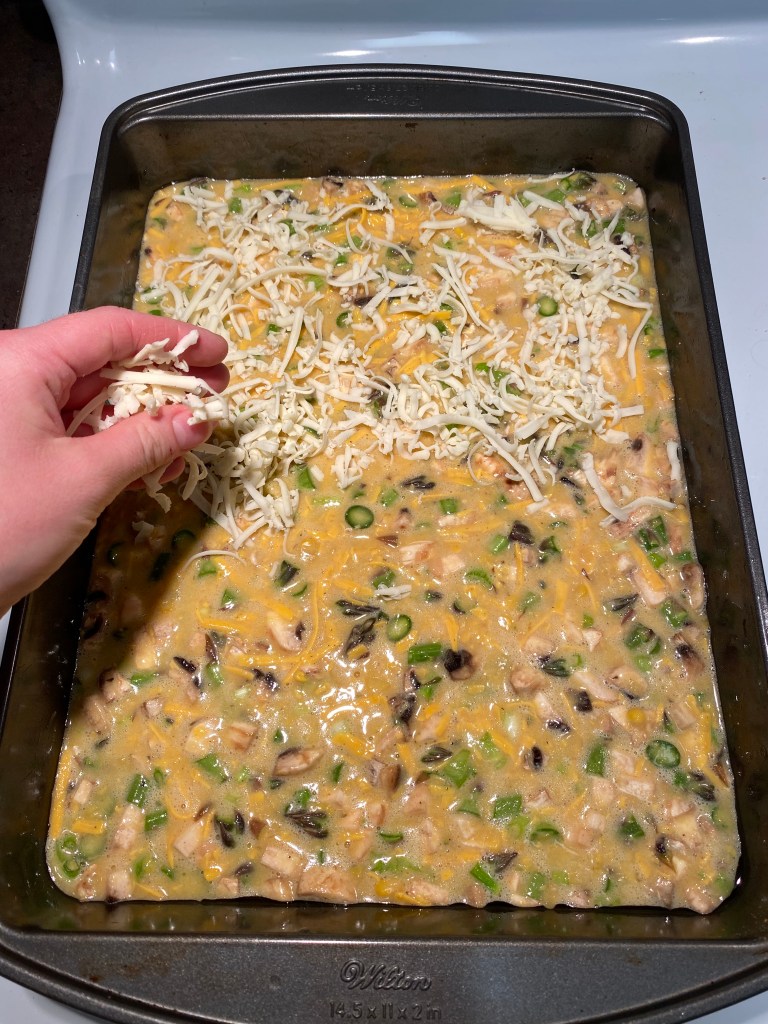
    I love the simplicity of this meal: Mix everything together, pour into baking pan, smother with cheese and bake!

    How to make Asparagus Cheese Frittata:

    Supplies needed:

    Ingredients:

    • 10 eggs
    • 1/2 cup flour
    • 1 teaspoon baking powder
    • 3/4 teaspoon sea salt
    • 1/2 teaspoon ground black pepper
    • 1/2 cup olive oil
    • 2 cups cheese grated, plus more for top
    • 1 can (398ml/4oz) creamed corn
    • 1- 1 1/2 cups chopped asparagus (1 small bunch)
    • 1 cup chopped spring onions or scallions

    Directions:

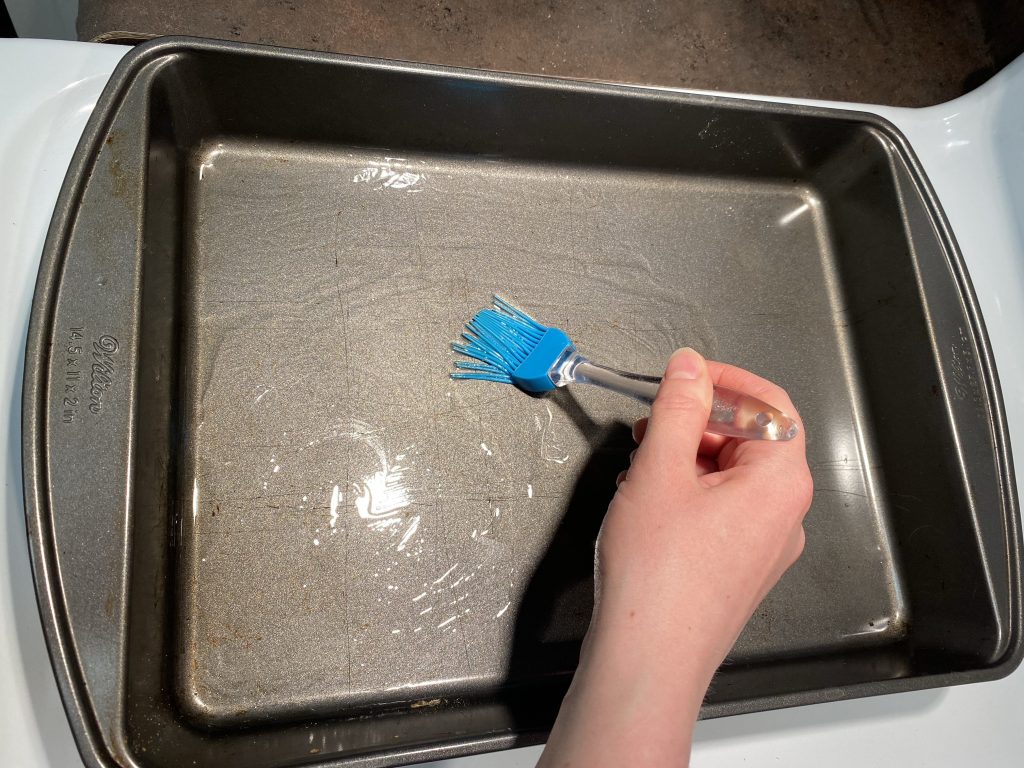
    1. Preheat oven to 350 degrees F, and grease 9”x13” baking pan.

    2. Whisk eggs together in large bowl.

    3. Add flour, baking powder, salt and pepper. Whisk together.

    4. Add the remainder of ingredients, mix thoroughly, and pour into greased 9″x13″ pan.

    5. Cover top with extra grated cheese.

    6. Bake for 30-45 minutes until Frittata is firm to a gentle jiggle and golden on top.

    7. Let sit for 5 minutes before serving.

    How to store it for later

    It also freezes incredibly well in an airtight plastic container, aluminum foil freezer container (to reheat in oven easily). To reheat, place frozen frittata pieces on a cookie sheet and bake at 300 degrees F until heated through. Another favourite that we have done in the past is to roll some leftovers inside a tortilla wrap, wrap it in foil, and put in a freezer bag to freeze for a delicious on-the-go breakfast wrap! Simply pop in the microwave (foil off!) to reheat from frozen.

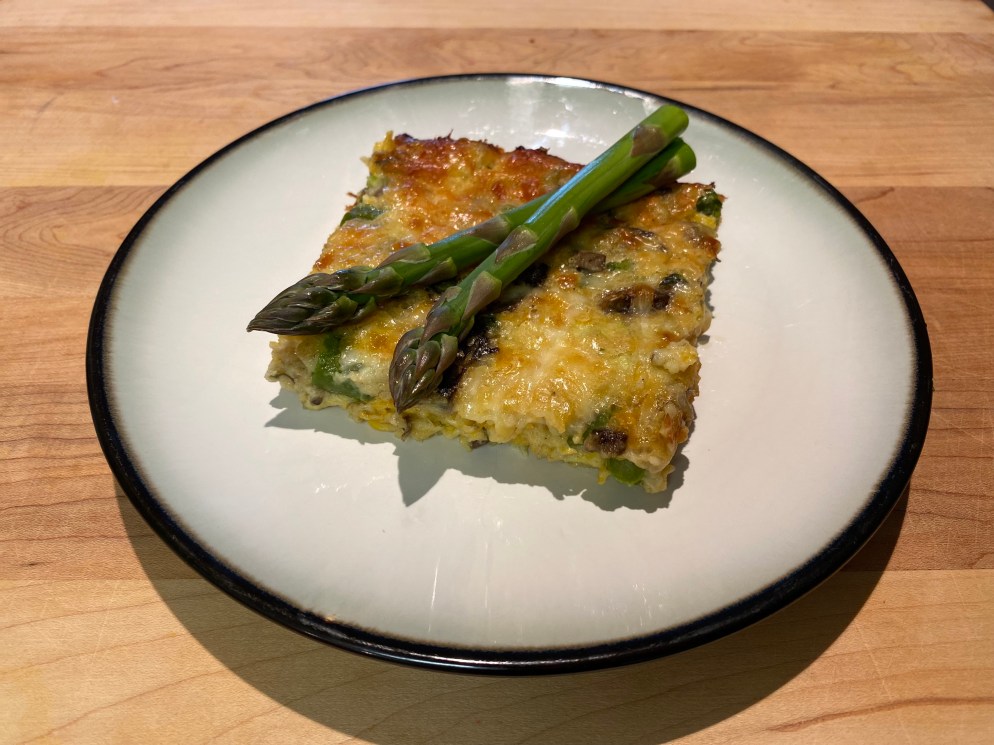
    We have also made it with broccoli and zucchini (the original vegetable), but asparagus is our personal favourite. The last time I made this dish (when some of these pictures were taken), I also added some chopped mushrooms which were delicious.

    If you are looking for a non-vegetarian option then you can always add chopped bacon to the mix and topping. Because everything is better with bacon, right?!

    What is a Frittata?

    A frittata is traditionally a Italian egg-based dish that typically has meat, vegetables and cheese in it. Unlike a omelette or scramble, the frittata is cooked in one piece without it being folded over or mixed while cooking.

    It is also usually cooked slowly on the stove and/or entirely baked in the oven and then served after cooling a bit. That makes this a great option for a delicious brunch dish!

    Making Frittata with a Cast Iron Skillet:

    If you have a cast iron deep fry pan, you can make it with the traditional method by:

    1. Preheat cast iron skillet on stove with some olive oil in pan.

    2. Gently cook asparagus or any other vegetables (like broccoli, green beans, brussel sprouts or zucchini) in pan on medium heat until soft.

    3. Pour the rest of the batter into pan and gently stir in. Add extra grated cheese to the top.

    4. Let cook without mixing until the eggy edges turn lighter (about 1 minute).

    5. Remove from stove top and put in preheated oven. Bake for 30-40 minutes until golden on top and has a slight jiggle.

    Other Soups and Entrees to Check Out:
    Hi, I’m Jessie!

    I’m a Wife and Homeschooling Mom living in a remote town in Northern Ontario, Canada. I love making wholesome meals for my family from scratch, homeschooling our girls and learning more about natural living.

    Read more about my story HERE.

    Subscribe to Northbird’s email list to get weekly posts on: tasty recipes, activity ideas for kids, natural living tips, and some genuine mom thoughts and encouragement!

    Easy Asparagus Cheese Frittata

    • Servings: 6
    • Difficulty: Easy
    • Print

    A Quick and Easy Vegetarian Dinner Dish


    Ingredients

  • 10 eggs
  • 1/2 cup flour
  • 1 teaspoon baking powder
  • 3/4 teaspoon sea salt
  • 1/2 teaspoon ground black pepper
  • 1/2 cup olive oil
  • 2 cups cheese grated, plus more for top
  • 1 can (398ml/4oz) creamed corn
  • 1- 1 1/2 cups chopped asparagus (1 small bunch)
  • 1 cup chopped spring onions or scallions

  • Directions

    1. Preheat oven to 350 degrees F, and hrease 9”x13” baking pan.
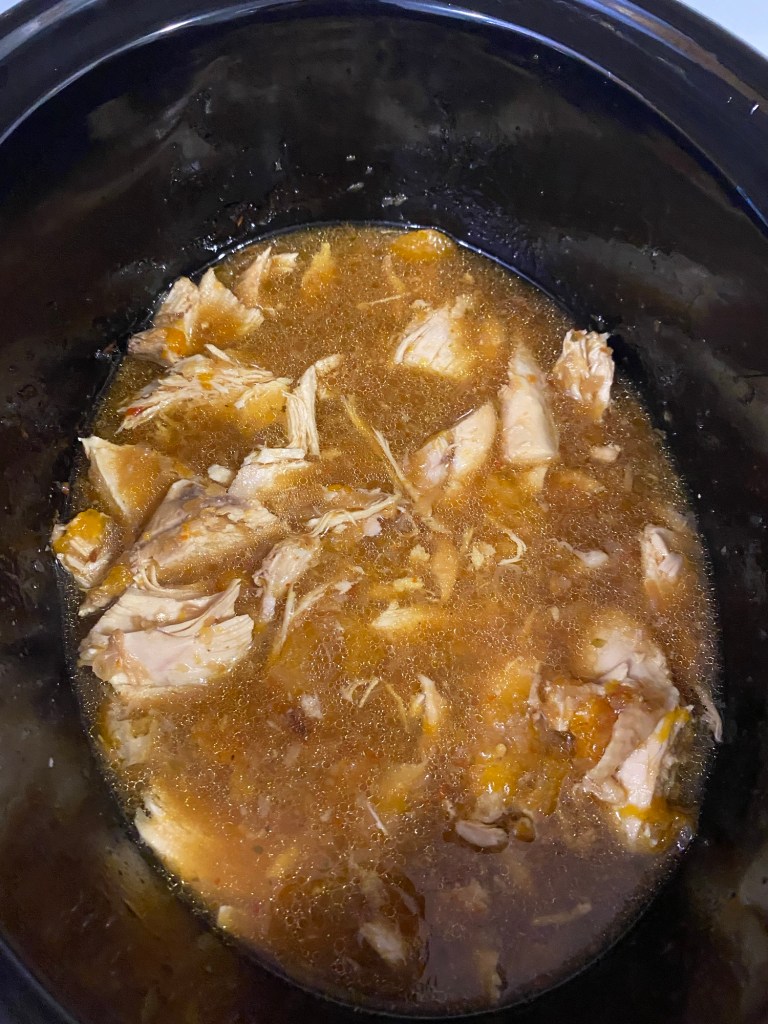
    2. Whisk eggs together.
    3. Add flour, baking powder, salt and pepper. Whisk together.
    4. Add the remainder of ingredients and mix thoroughly.
    5. Pour into greased baking pan.
    6. Cover top with extra grated cheese.
    7. Bake for 30-45 minutes until Frittata is firm and golden on top.
    8. Let sit for 5 minutes before serving.

    Nutrition


    Per Serving: 493 calories; 31.8 g fat; 14.6 g carbohydrates;
    21 g protein; 347 mg cholesterol; 792 mg sodium.

    Return to Top