DIY Natural Hand Soap Recipe for Healthy Skin

Find Northbird on social media:

This post contains affiliate links. As an Amazon associate, I earn from qualifying purchases. This means that I make a small commission at no extra cost to you. You can read my full disclosure HERE.

Jump To Recipe Card

Jump to Video

Return to “Natural Living”

Why I like making my own hand soap:

We have been using variations of this recipe for about 8 years now, and I’ve never regretted it for a number of reasons:

  1. I’ve noticed a huge difference in the condition of the skin on my hands while using this gentle hand soap, in comparison to using a store-bought hand soap. My hands are more smooth, and less prone to drying out.
  2. I know EXACTLY what is in the ingredients and what I am allowing my skin to absorb.
  3. This costs a fraction of the amount for store-bought hand soap pumps.
  4. I can choose which pure essential oil scent each batch will have!

I would like to give credit to my sister-in-law K and my mother S, for sharing their homemade hand soap recipes with me several years ago, and being the inspiration to create this simple recipe that keeps our hands fresh and clean!

What to know about Castile Soap:

Castile soap is an amazing natural and non-toxic product made from combining plant-based oils and an alkali. It is also biodegradable and contains no synthetic or chemicals that are tough on the environment.

It is named after the Castile region in Spain, where castile soap bars have been made for centuries and are treasured for their quality and gentleness on skin.

Typical ingredients include: olive oil, jojoba oil, coconut oil, sunflower seed oil, hemp, and alkalis such as: sodium or potassium hydroxide if it is a liquid soap, or sodium hydroxide if it is a soap bar.

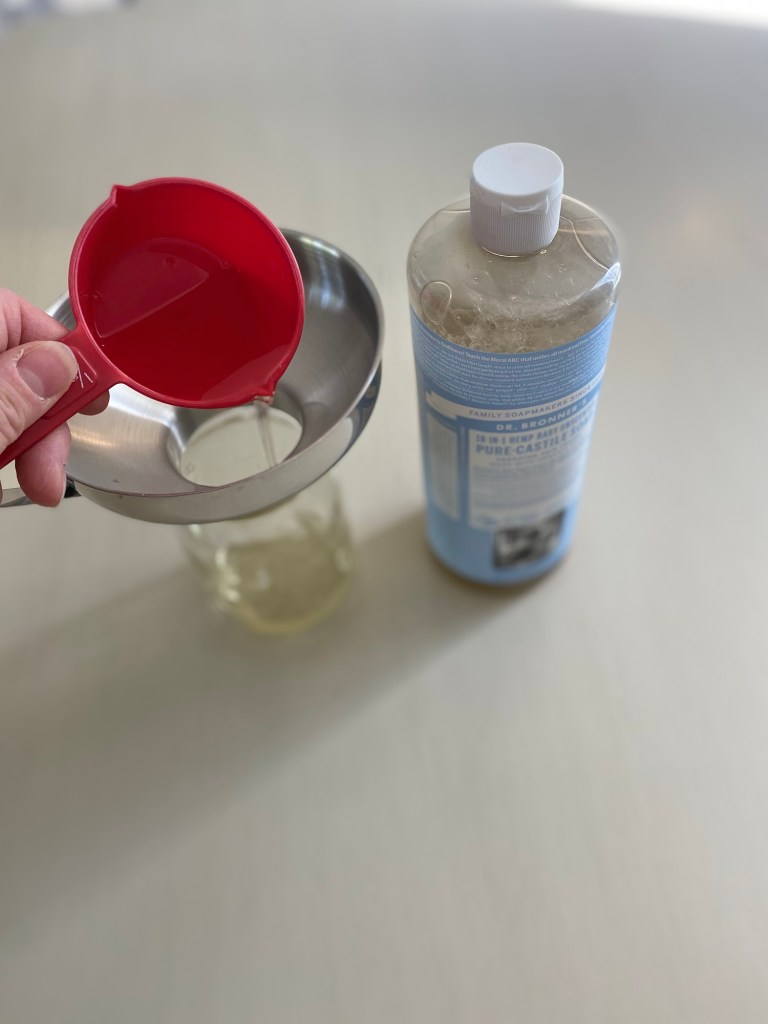
I have use a few different castile liquid soaps over the years, but this one from Dr. Bronners is my favourite. They come in scented or unscented bottles per your preference.
Vitamin E Oil Health Benefits:

I always add a few drops of Vitamin E Oil into whatever skin care products I am making. It is highly beneficial to the skin because of its moisturizing properties, and helps to cure skin problems such as psoriasis, eczema, dryness and itchiness to name just a few!

It is also a wonderful antioxidant and helps to keep your immune system strong.

Why are Pure Essential Oils better to use in your home than Artificial Scents?

Artificial fragrances and perfumes are everywhere: in candles, in air fresheners, hand soaps, body lotions, shampoos & conditioners, and in most commercial based laundry products. This is one reason why it is so important to check labels and list of ingredients!

Synthetic scents are usually petroleum based and these chemicals have very serious effects on the human body. Some common chemicals used include benzophenone and styrene (carcinogenic) and phthalates (endocrine disruptors). You can read more about this HERE.

I suppose that makes sense why there are so many allergies and asthmatic reactions to strong scents!

Commonly used Essential Oils for Hand Soaps and their Medicinal Uses: (I’ve also added a few that primarily aid skin conditions)

  • Lavender: Lowers stress, anxiety, and headaches. Improves sleep quality, relaxes muscles, lowers pain. Also used to treat head lice and stimulate hair growth.
  • Peppermint: A great resource for opening up the sinuses and relieving headaches.
  • Sandalwood: Calming and a relaxing scent.
  • Lemon: A bright and refreshing scent that helps to even out the skin tone.
  • Eucalyptus: An antiseptic, anti-fungal, anti-viral, and anti-bacterial essential oil. Fights infection and promotes healing.
  • Rosehip: Primarily used for treating eczema, acne and rashes. It has linoleic acid in it which shrinks pimples and reduces inflammation.
  • Sweet Orange Oil: An anti-bacterial, anti-inflammatory, aides in digestion, but most known to act as a mood enhancer and relaxant.
  • Geranium: Used to treat depression, balance hormones, improve circulation, and sleep aid to name a few.
  • Carrot Seed Oil: An antioxidant, anti-fungal and anti-bacterial. Primarily used to treat skin infections and inflammations.
  • Jasmine: Used to treat depression and anxiety, aides in balancing hormones and improving energy and sleep.
  • Grapefruit: Treats acne and other skin infections. Mood enhancer and may also help with weight loss.

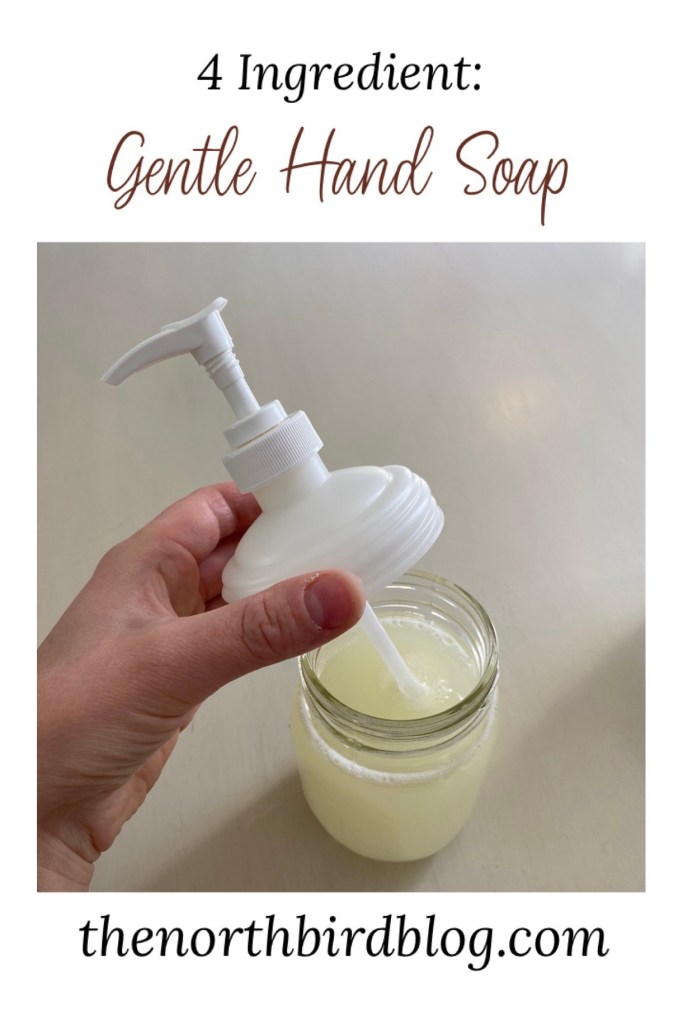
Here is a short visual of how to make your own hand soap using the ingredients listed below.

♫ Music by Mark Mothersbaugh

How to Make Homemade Hand Soap

Supplies Needed:

Ingredients:

Directions:

  1. Mix Castile soap, water and vitamin e oil together in glass jar.
  2. Add favourite essential oil(s) until scent is as desired.
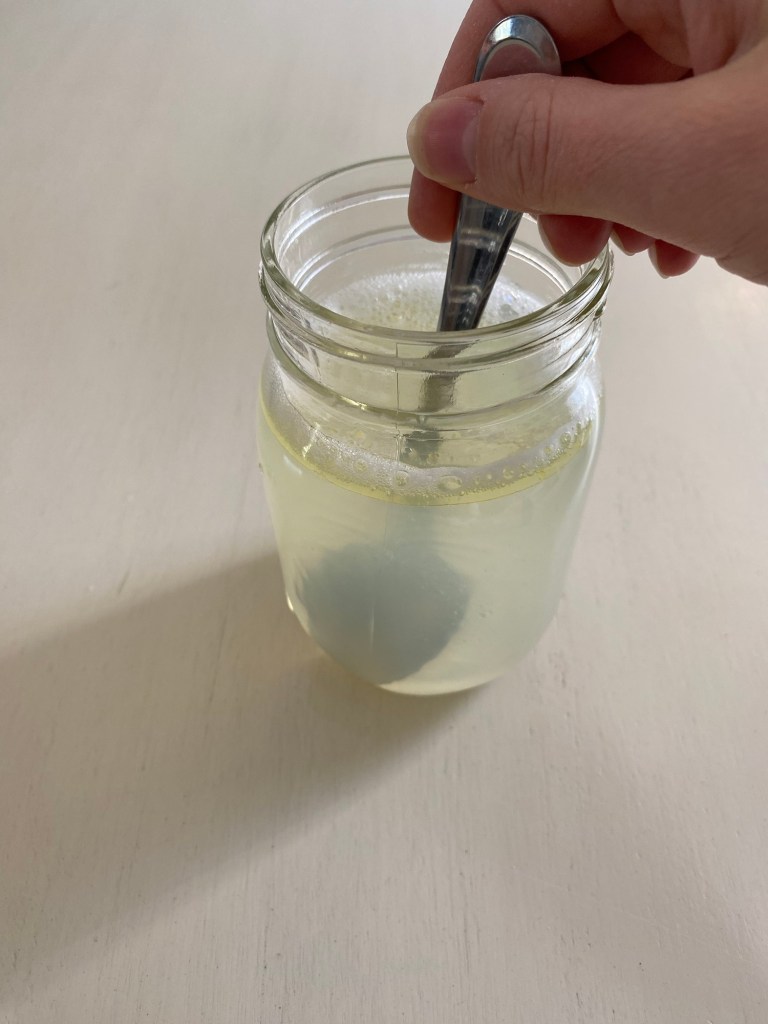
  3. Mix together well.
  4. Secure lid and prime pump. Enjoy!

Additional Notes:

  • If the vitamin e oil separates to the top after a few hours, this is normal. Just give it a shake and continue use.

More Ideas for Natural Living:
Hi, I’m Jessie!

I’m a Wife and Homeschooling Mom living in a remote town in Northern Ontario, Canada. I love making wholesome meals for my family from scratch, homeschooling our girls and learning more about natural living.

Read more about my story HERE.

Subscribe to Northbird’s email list to get weekly posts on: tasty recipes, activity ideas for kids, natural living tips, and some genuine mom thoughts and encouragement!

Check out on the Natural Living Page:

Nature’s Medicine

An on-going picture collection of various herbs, vegetables, fruits, oils, etc and highlighting some of the amazing health benefits that they have to offer us!

DIY Natural Hand Soap Recipe for Healthy Skin

  • Servings: 1 x 500ml Jar
  • Difficulty: Easy
  • Print

Gentle on skin, and made from natural ingredients, this homemade hand soap is one of my favourite household recipes!


By Jessica Burman © 2025 The Northbird Blog. http://www.thenorthbirdblog.com


Supplies Needed:

  • Mason glass jar, 500ml (pint)
  • Pump lid fitting mason glass jar
  • Measuring cups and teaspoon
  • Jar funnel -I love this one!
  • Stirring spoon

  • Ingredients

  • 1 1/2 cups Water
  • 1/2 cup Liquid Castile Soap
  • 1 teaspoon Vitamin E Oil
  • 10-15 drops Pure Essential Oil (optional, see suggestions above!)

  • Directions:

    1. Mix Castile soap, water and vitamin e oil together in glass jar.
    2. Add favourite essential oil(s) until scent is as desired.
    3. Mix together well.
    4. Secure lid and prime pump. Enjoy!

    Return to Top

    Marion’s Shortbread Cookies

    Find Northbird on social media:

    This post contains affiliate links. As an Amazon associate, I earn from qualifying purchases. This means that I make a small commission at no extra cost to you. You can read my full disclosure HERE.

    Jump To Recipe Card

    Jump to Video

    Return to “Deserts & Snacks”

    There is not long to wait now until Christmas, and with this exciting season comes all the delicious baked treats and goodies! (my self-control gets really challenged this time of year!)

    I love seeing all the unique and tasty recipes that different families make every year as part of their Christmas traditions.

    My family had a few delicious traditions every year that we always looked forward to: My sister would always make chocolate peanut butter balls, my mom always made delicious Christmas cake (that would sometimes last many, many months!) and I was always a fan of making sugar cookies with all the fun icing and sprinkles.

    Other tasty Christmas treats that I remember making from my childhood are gingerbread, caramel corn, and a few different shortbreads and scones. When I got married and started learning about my in-law’s family traditions, I was particularly interested in learning the favourite cooking and baking recipes that he grew up with.

    This particular recipe belonged to my husband’s grandma “Marion”, who I never met, but I’m told was one of the kindest and gentlest of women. Her family background was Scottish, which is very fitting because shortbread of course originates from: Scotland!

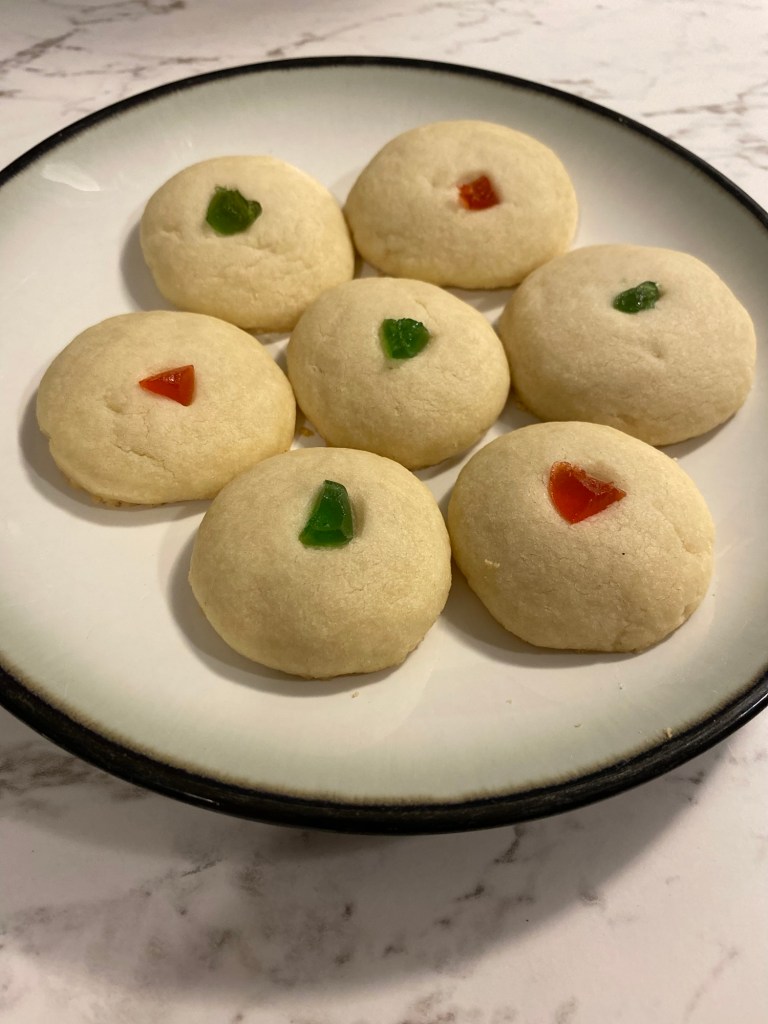
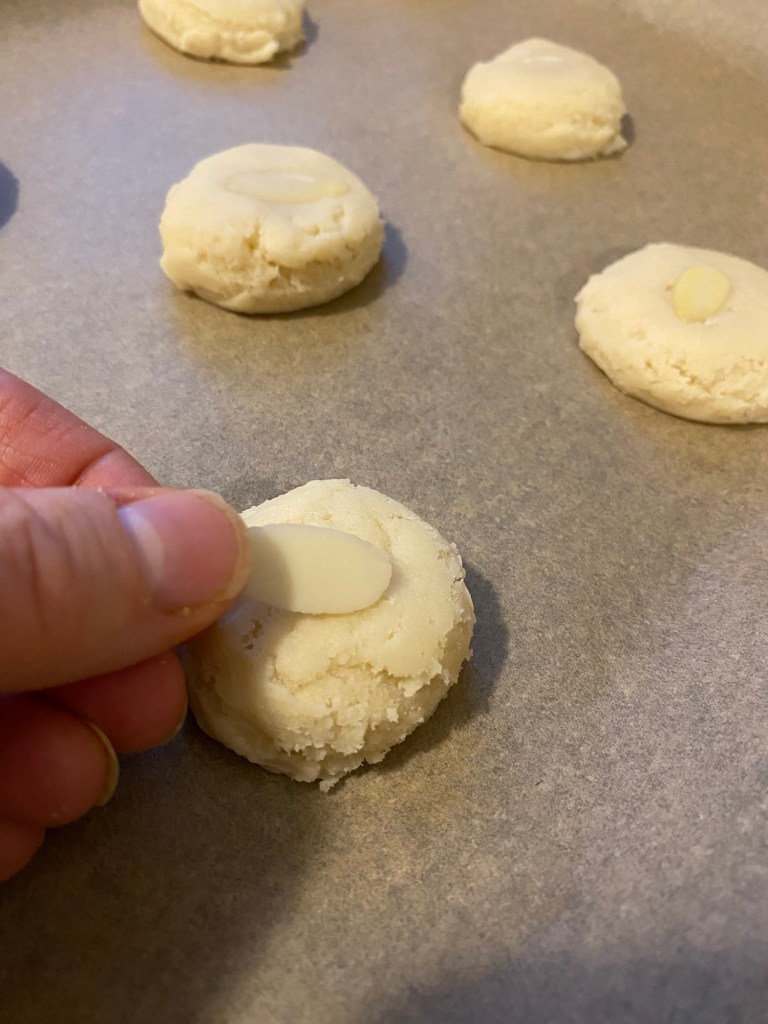
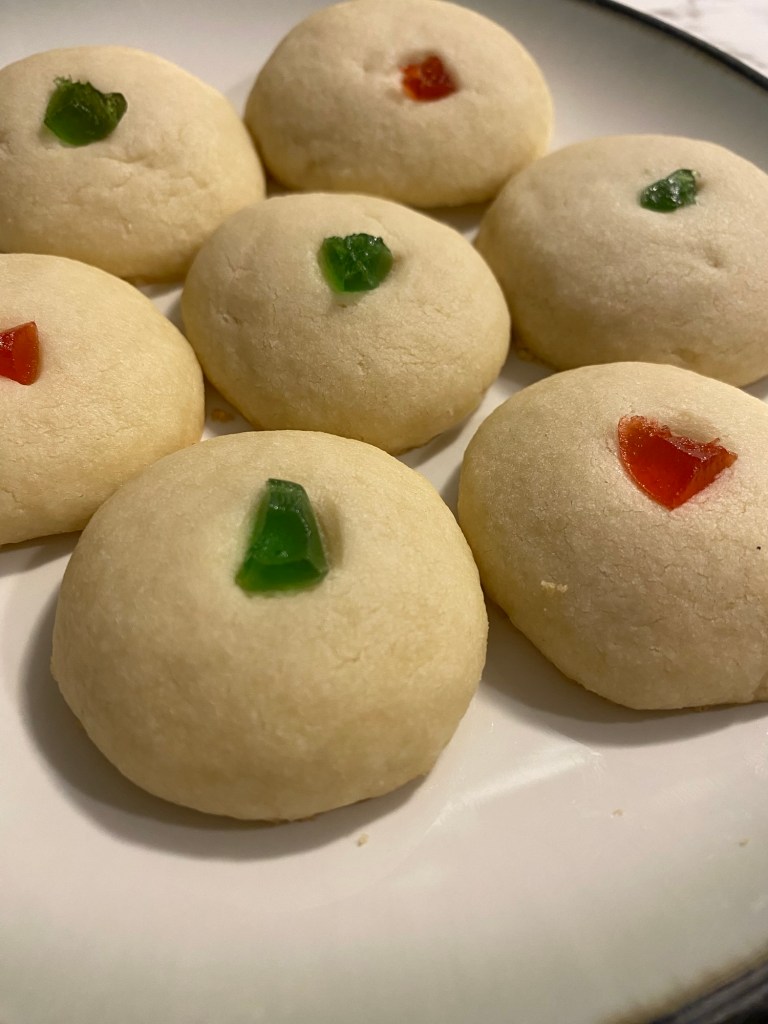
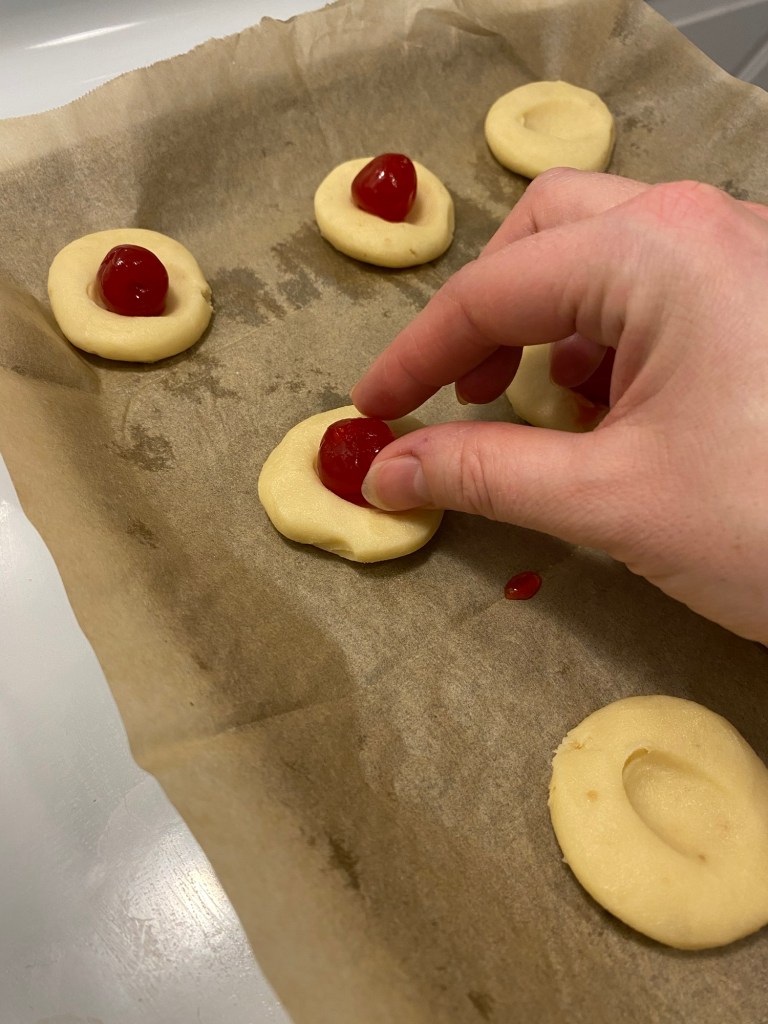
    Traditionally, Grandma Marion made these with candied cherries in the center, but my mother-in-law has also been making these for years with sliced almonds pressed on top. And when my husband and I wanted to make them for his students at school, we made them with maraschino cherries on top (that’s all that we had at the time for decoration!)

    My favourite thing about these cookies? The butter. So so good, it just melts in your mouth!

    I hope you enjoy making these tasty shortbread cookies!

    Here’s a short video showing how to make these tasty and buttery cookies!

    How to Make Marion’s Shortbread Cookies:

    Supplies Needed:

    Note: This recipe really works best with an electric mixer or food processor if possible. If doing it by hand, it may take a little longer to mix thoroughly together.

    Ingredients:

    Note: Traditionally, these cookies were topped with the little square candied cherries, but they are also very tasty using slivered almonds or maraschino cherries!

    Directions:

    1. Preheat oven to 350 degrees fahrenheit.
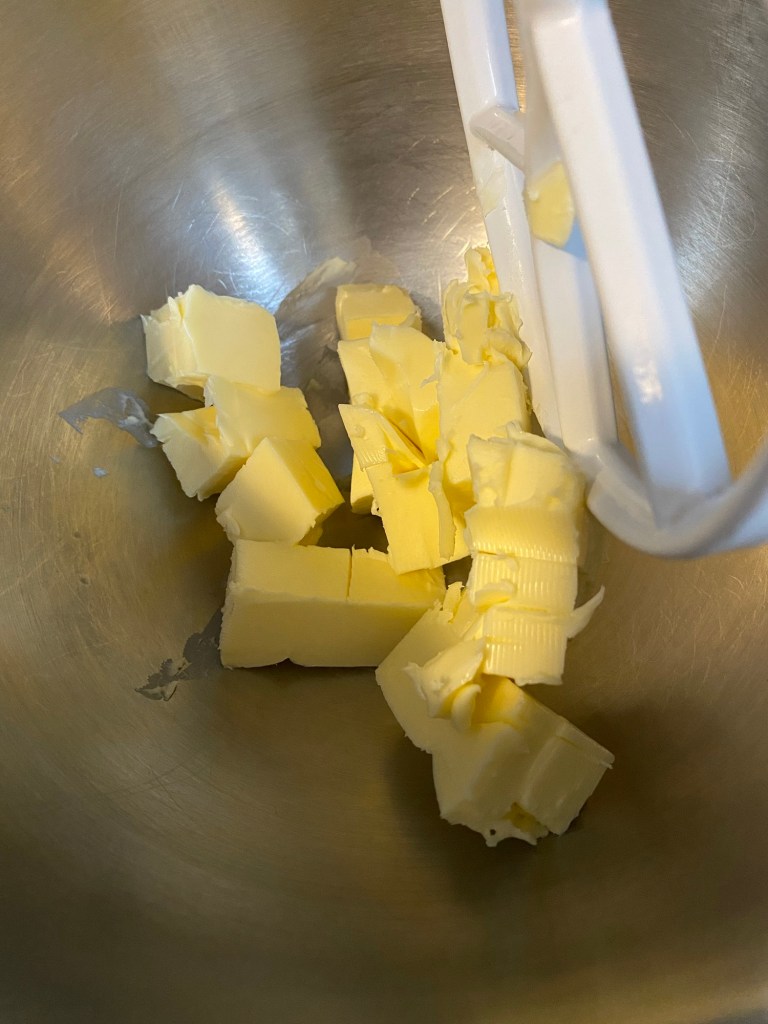
    2. Beat the butter until creamy.

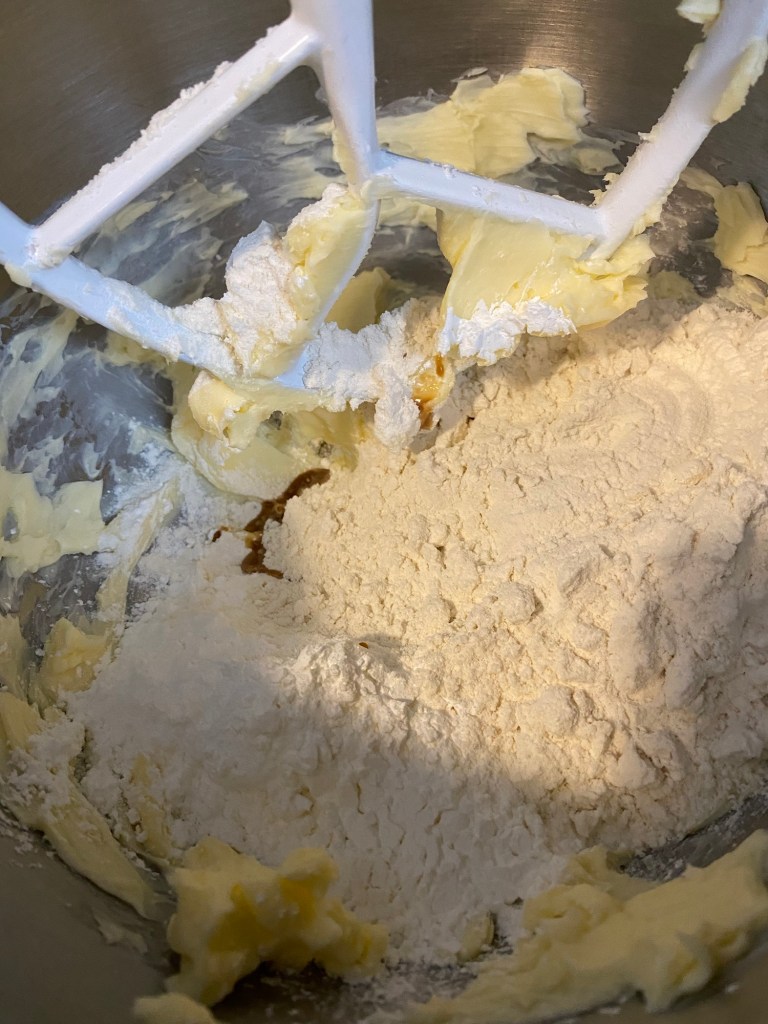
    3. Add the rest of the ingredients to the butter and mix for about 5 minutes until it comes together and the sides of the bowl are clean. It will look very dry at first while mixing, but just be patient and let the butter do it’s work. It is ready when you can clump it together in your hand.

    4. Roll in your hands into 1 inch balls and flatten them a little, placing them on a parchment covered baking sheet. Note: You will want to do this quickly as the warmth from your hands will be melting the butter causing it to lose shape!

    5. Decorate the tops if desired (see ideas above) and gently push into the dough so it doesn’t fall off. If using larger maraschino cherries, make an imprint with your finger first.

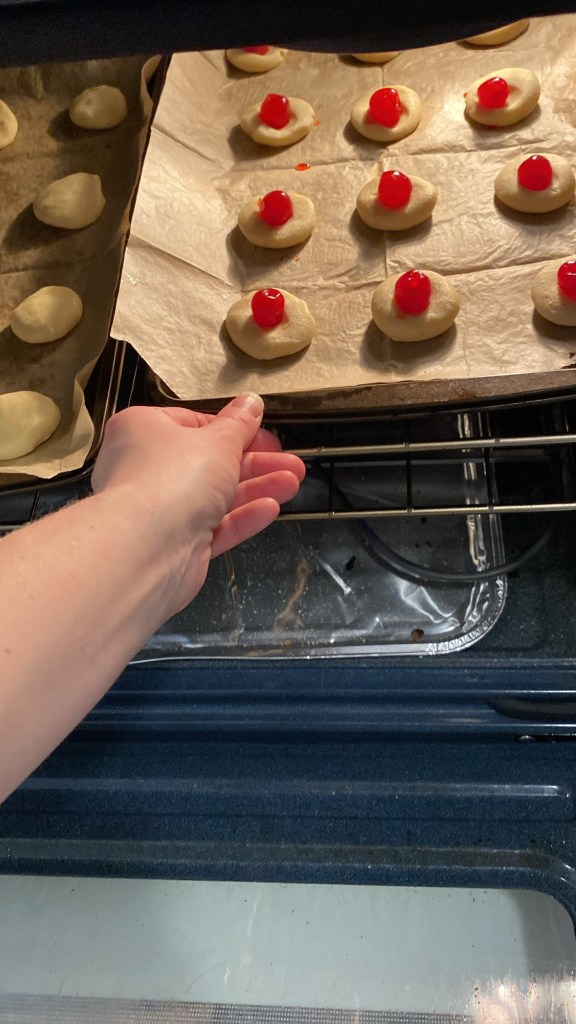
    6. Bake in middle of oven at 350 degrees fahrenheit for about 12 minutes. The bottoms should be lightly golden, and you’ll see the sides start to show golden as well.

    7. Let the cookies cool before removing from baking sheet (about 10-15 minutes)

    8. Makes about 2 dozen cookies.

    How to store these cookies:

    Store in sealed container at room temperature up to 5 days, or in the fridge for longer to maintain freshness. You can also freeze them in a sealed container if you are making them in advance of the holidays, and just take them out to thaw for 1/2 hour prior to serving!

    Made this Recipe?

    I’d love to hear how your cookies turned out! Feel free to tag Northbird using one of the links below if you are posting to social media, or share in the comments below!

    Happy Baking!

    If you are a cranberry fan, you might like to check out these other tasty recipes that include cranberries from the Northbird Blog:

    More Desert & Snack Recipes:

    Hi, I’m Jessie!

    I’m a Wife and Homeschooling Mom living in a remote town in Northern Ontario, Canada. I love making wholesome meals for my family from scratch, homeschooling our girls and learning more about natural living.

    Read more about my story HERE.

    Subscribe to Northbird’s email list to get weekly posts on: tasty recipes, activity ideas for kids, natural living tips, and some genuine mom thoughts and encouragement!

    Marion's Shortbread Cookies

    • Servings: 2 dozen Cookies
    • Difficulty: Easy
    • Print

    A favourite tradition of my husband's family! So buttery and good, these Easy Shortbread Cookies will just melt in your mouth!


    Store in sealed container at room temperature up to 5 days, or in the fridge for longer to maintain freshness. You can also freeze them in a sealed container if you are making them in advance of the holidays, and just take them out to thaw for 1/2 hour prior to serving!

    The Northbird Blog, 2024 http://www.thenorthbirdblog.com


    Ingredients

  • 1/2 pound, (1 cup) butter, soft (butter is a MUST for this recipe, it will not turn out right with margarine or other substitute.
  • 1/3 cup icing sugar
  • 1/4 cup cornstarch
  • 1/2 teaspoon vanilla
  • 1+1/2 cups all purpose flour
  • Topping Ideas:

  • Directions:

    1. Preheat oven to 350 degrees fahrenheit.
    2. Beat the butter until creamy.
    3. Add the rest of the ingredients to the butter and mix for about 5 minutes until it comes together and the sides of the bowl are clean. It will look very dry at first while mixing, but just be patient and let the butter do it’s work. It is ready when you can clump it together in your hand.
    4. Roll in your hands into 1 inch balls and flatten them a little, placing them on a parchment covered baking sheet. Note: You will want to do this quickly as the warmth from your hands will be melting the butter causing it to lose shape!
    5. Decorate the tops if desired (see ideas above) and gently push into the dough so it doesn’t fall off. If using larger maraschino cherries, make an imprint with your finger first.
    6. Bake in middle of oven at 350 degrees fahrenheit for about 12 minutes. The bottoms should be lightly golden, and you’ll see the sides start to show a hint of golden as well.
    7. Let the cookies cool before removing from baking sheet (about 10-15 minutes)
    8. Makes about 2 dozen cookies.

    Nutrition


    Per 1 cookie: 68 calories; 3.4 g fat; 7.4 g carbohydrates;
    0.7 g protein.

    Return to Top

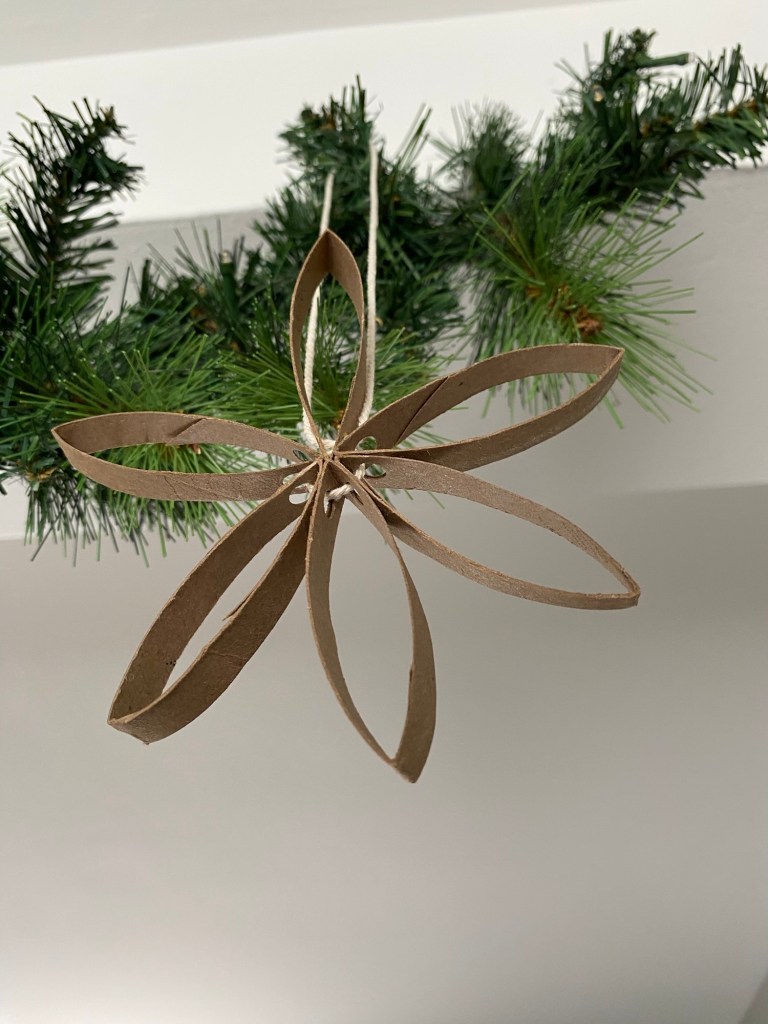
    DIY Eco-Friendly Christmas Ornament from Toilet Paper Rolls

    Find Northbird on social media:

    This post contains affiliate links. As an Amazon associate, I earn from qualifying purchases. This means that I make a small commission at no extra cost to you. You can read my full disclosure HERE.

    Jump to Printable Directions

    Jump to Video

    Return to “Homeschooling Activities & Resources”

    Return to “Christmas Activities and Crafts”

    Our little town recently had a very festive gathering in the town square to come together, decorate and light up a large Christmas tree in the middle of the square. It was super chilly and snowy out, but great fun to be there with our friends, enjoying some freshly popped corn, hear the local school choir do some carolling, and bring our homemade ornaments for the tree.

    One criteria on the event poster was that the ornaments be eco-friendly. My oldest and I had some fun thinking of ideas and discussing what “eco-friendly” meant, as we have made many ornaments over the years but I don’t think any of them were recycled or ok for the environment!

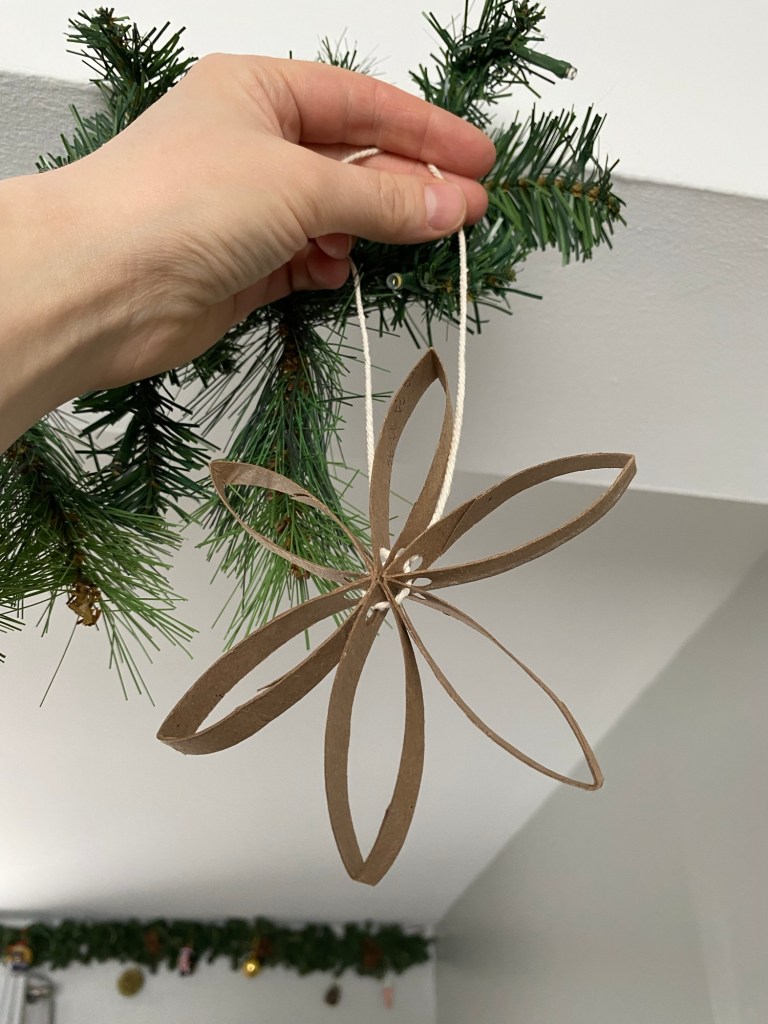
    This easy and simple craft is what we came up with. All you need is string and toilet paper rolls. Everyone has these!

    I like that it can be either completed and hung “as is”, or if desired, adding further embellishments or painting it! There are so many possibilities to have fun with this simple craft.

    I hope you enjoy making this easy ornament for your Christmas tree or holiday garland!

    For those who need a visual aid in making the Paper Roll Star, you might find this short video helpful!

    How to Make A Paper Roll Christmas Ornament:

    Supplies Needed:

    Directions:

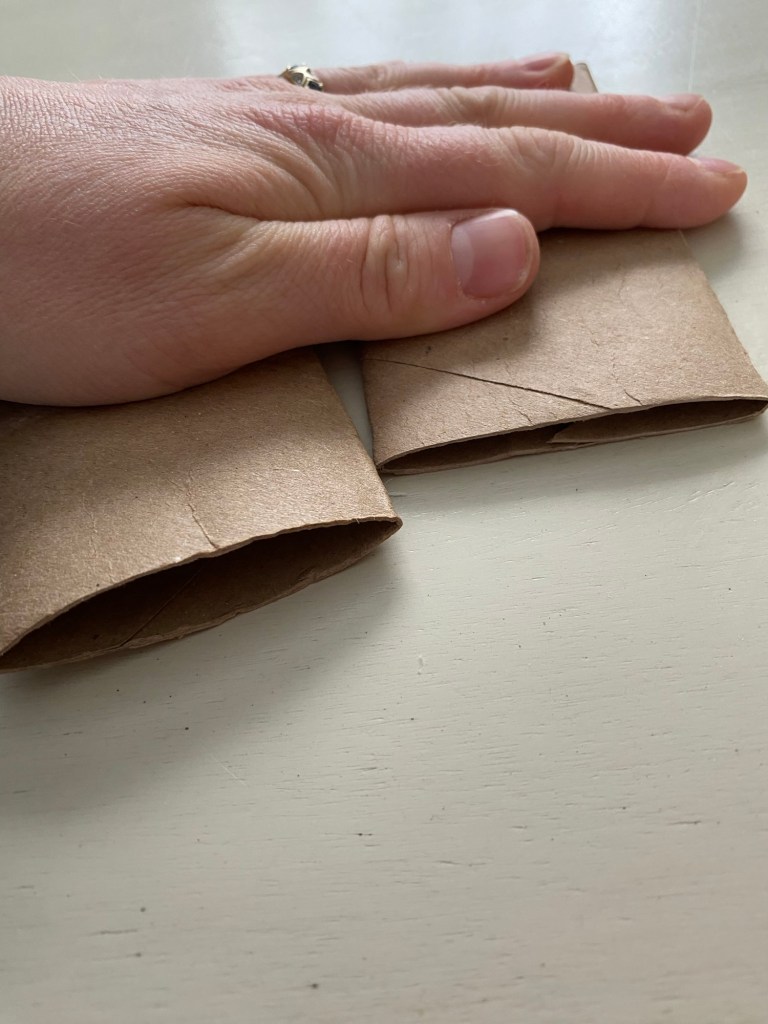
    1. Take a leftover toilet paper inner roll and make sure there is not any remains of white paper left on them. Then flatten firmly.

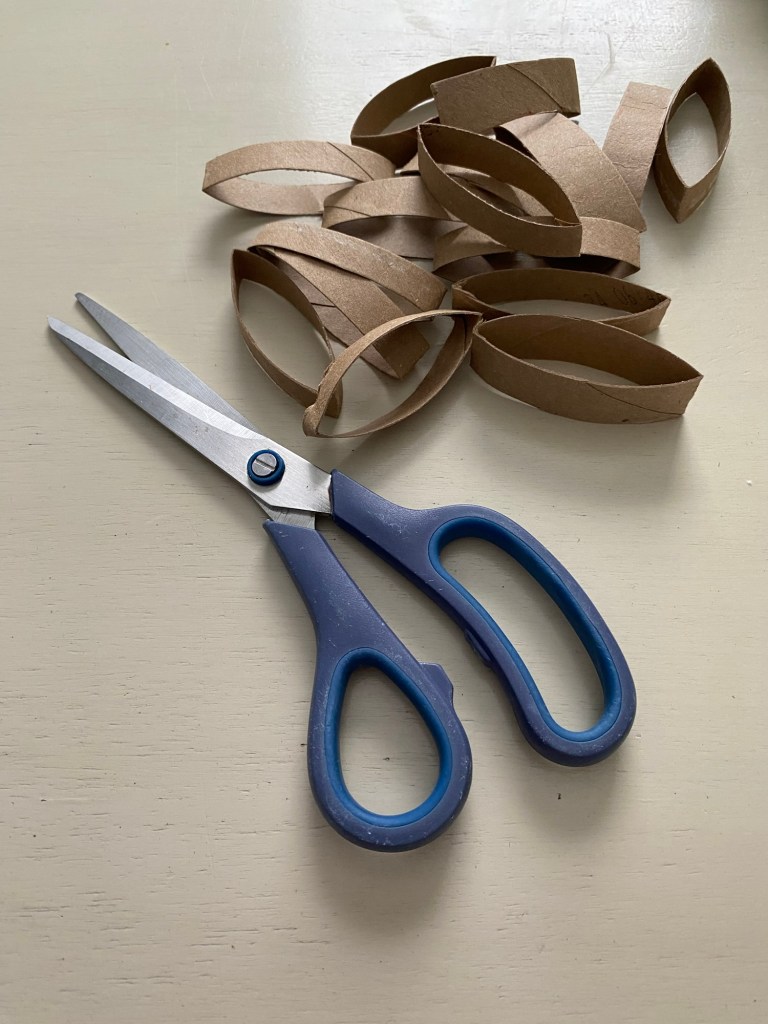
    2. Cut with scissors into 1/2 inch strips across roll.

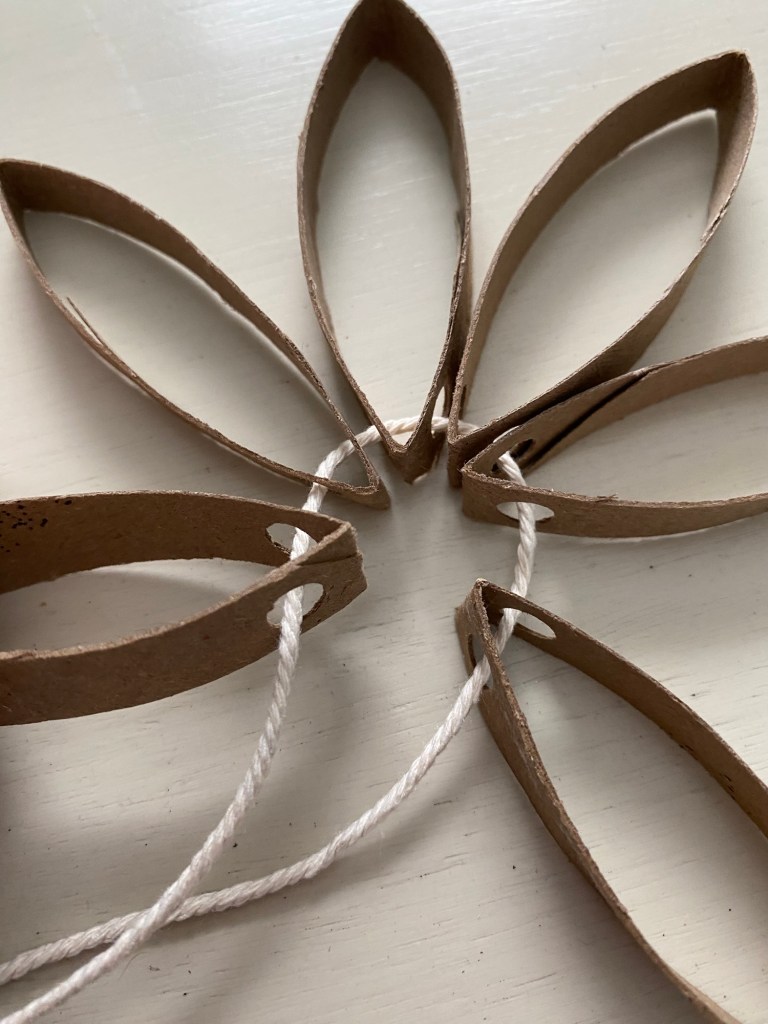
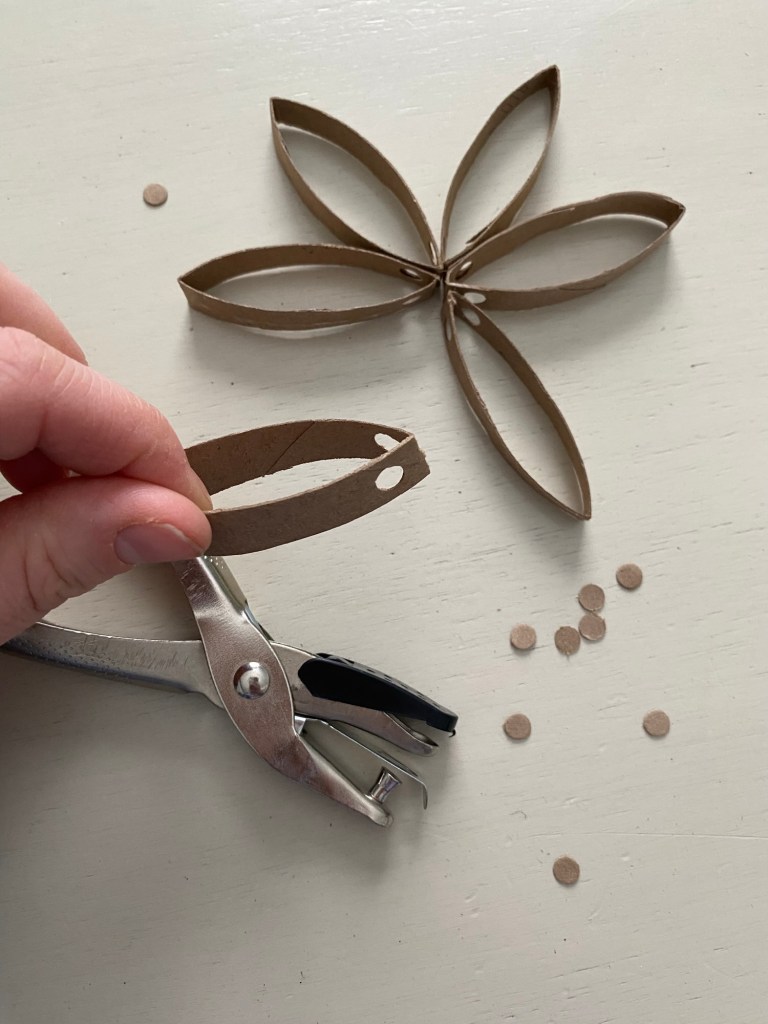
    3. Using a hole punch, make a hole at the end, leaving about a 1/4 inch from the end.

    4. Arrange Star with the amount of pieces you would like to use, with the hole punched ends in the middle.

    5. Cut string about 10 inches in length, and thread through the middle holes, leaving equal lengths of string on either side.

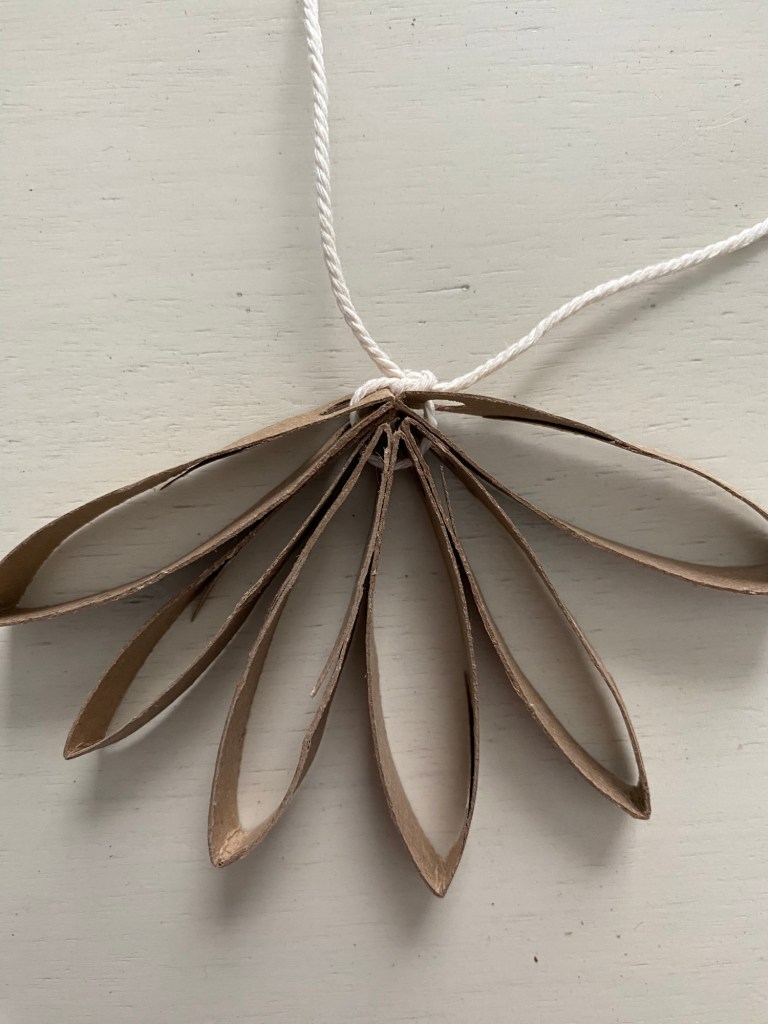
    6. Gather the pieces down and tie a double knot firmly.

    7. Fan it back up and re-thread one of the strings back through only one of the cardboard pieces (2 holes).

    8. Tie a double knot at the end and it’s ready to hang!

    Made This Activity?

    I’d LOVE to see your results!! Feel free to post to your social media account and tag Northbird using one of the links below or post in the comments!

    Hi, I’m Jessie!

    I’m a Wife and Homeschooling Mom living in a remote town in Northern Ontario, Canada. I love making wholesome meals for my family from scratch, homeschooling our girls and learning more about natural living.

    Read more about my story HERE.

    Subscribe to Northbird’s email list to get weekly posts on: tasty recipes, activity ideas for kids, natural living tips, and some genuine mom thoughts and encouragement!

    Eco Friendly Christmas Ornament: Paper Roll Star

    • Servings: 1 Christmas Ornament
    • Difficulty: Easy
    • Print

    Looking for an easy Christmas ornament craft to do this holiday season? Are you interested in it being Eco-Friendly and made from recycled materials? Check out this easy craft to decorate your home with!


    The Northbird Blog, 2024 http://www.thenorthbirdblog.com

    Supplies Needed

  • String or twine
  • Toilet paper inner roll or paper towel inner roll
  • Scissors
  • Single hole punch

  • Directions

    1. Take a leftover toilet paper inner roll and make sure there is not any remains of white paper left on them. Then flatten firmly.
    2. Cut with scissors into 1/2 inch strips across roll.
    3. Using a hole punch, make a hole at the end, leaving about a 1/4 inch from the end. (see picture)
    4. Arrange Star with the amount of pieces you would like to use, with the hole punched ends in the middle.
    5. Cut string about 10 inches in length, and thread through the middle holes, leaving equal lengths of string on either side.
    6. Gather the pieces down and tie a double knot firmly.
    7. Fan it back up and re-thread one of the strings back through only one of the cardboard pieces (2 holes).
    8. Tie a double knot at the end and it’s ready to hang!

    Return to Top

    Salt Dough Baby Print Ornaments

    Find Northbird on social media:

    This post contains affiliate links. As an Amazon associate, I earn from qualifying purchases. This means that I make a small commission at no extra cost to you. You can read my full disclosure HERE.

    Jump to Printable Directions

    Jump to Video

    Return to “Homeschooling Activities & Resources”

    Return to “Christmas Activities and Crafts”

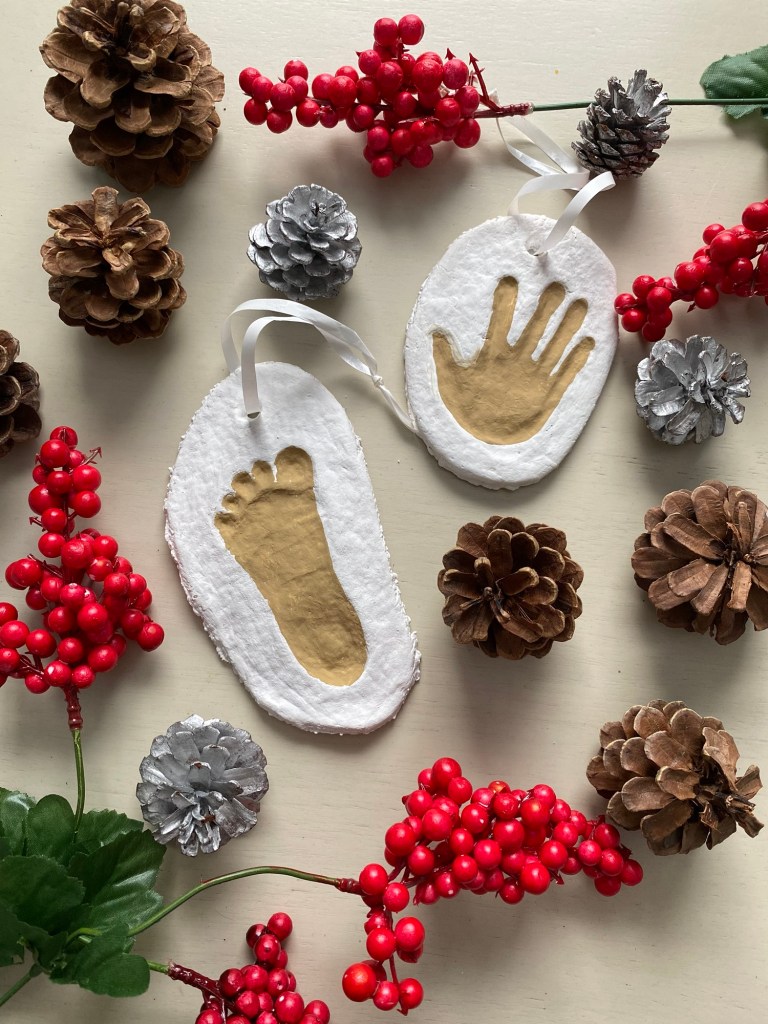
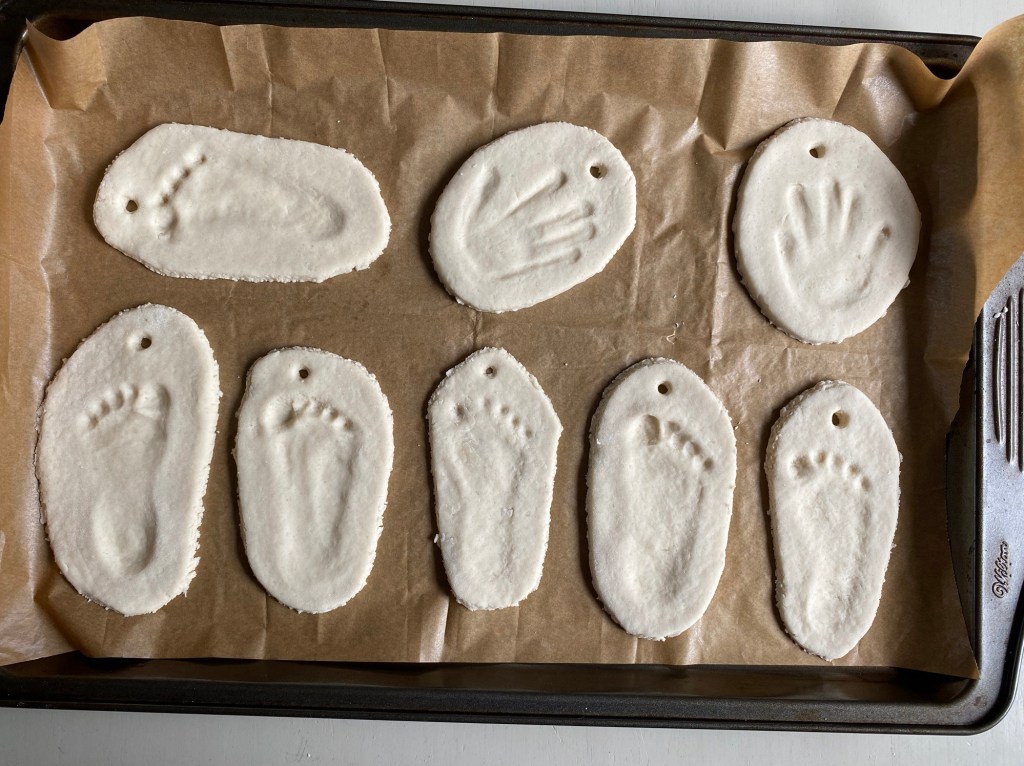
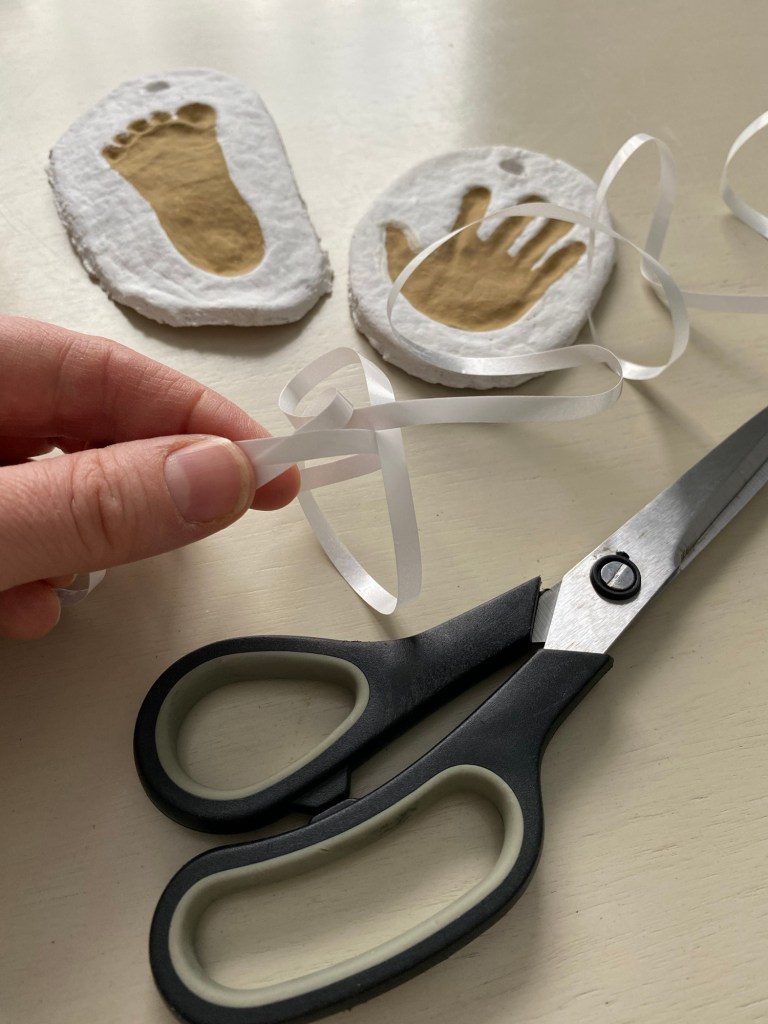
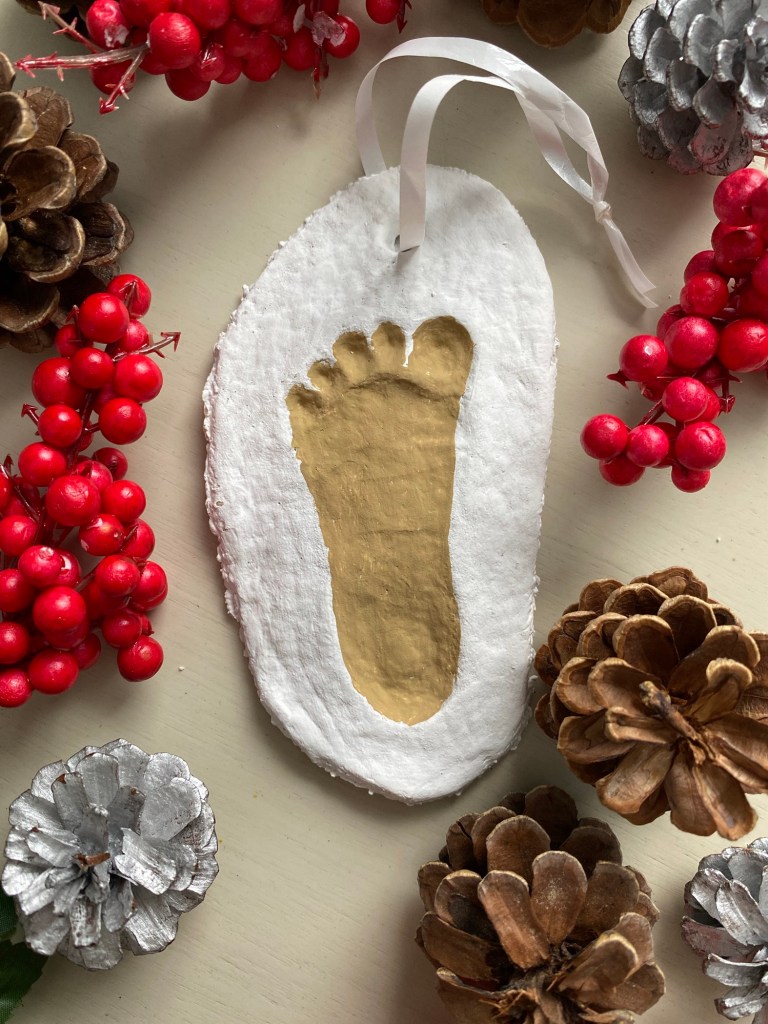
    With each baby that we’ve had, we have this lovely tradition to make a salt dough imprint of their tiny feet or hands every Christmas and turn it into a special ornament for our Christmas garland.

    I love having this precious memento to remind myself of our little girls when they were this tiny!

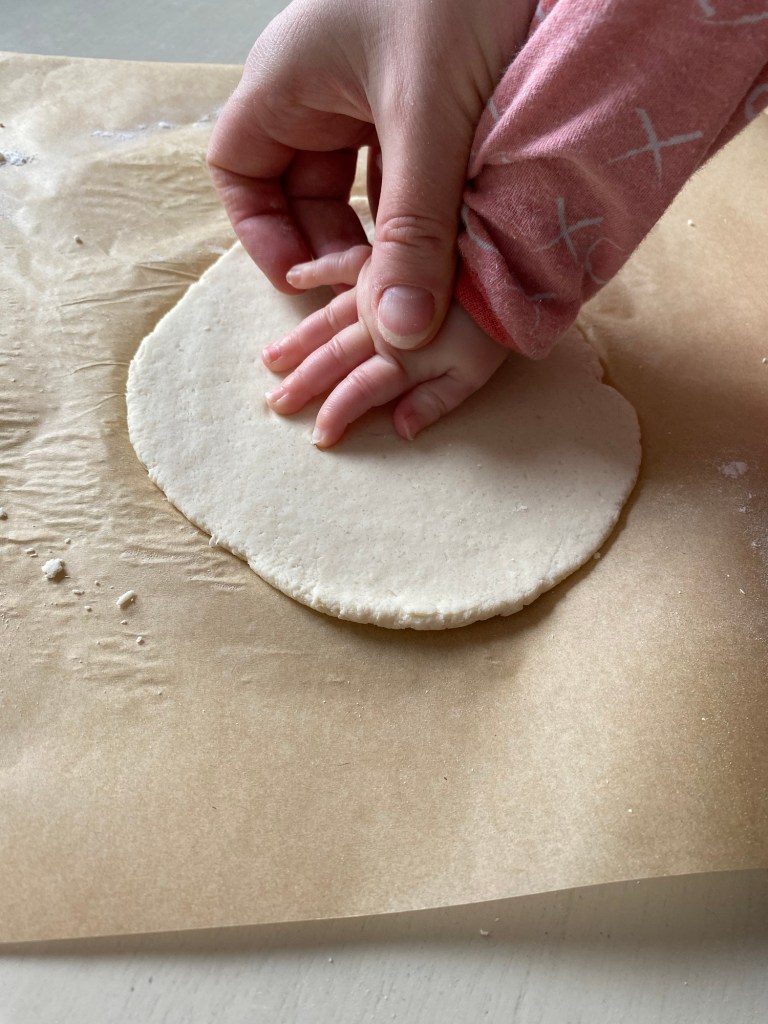
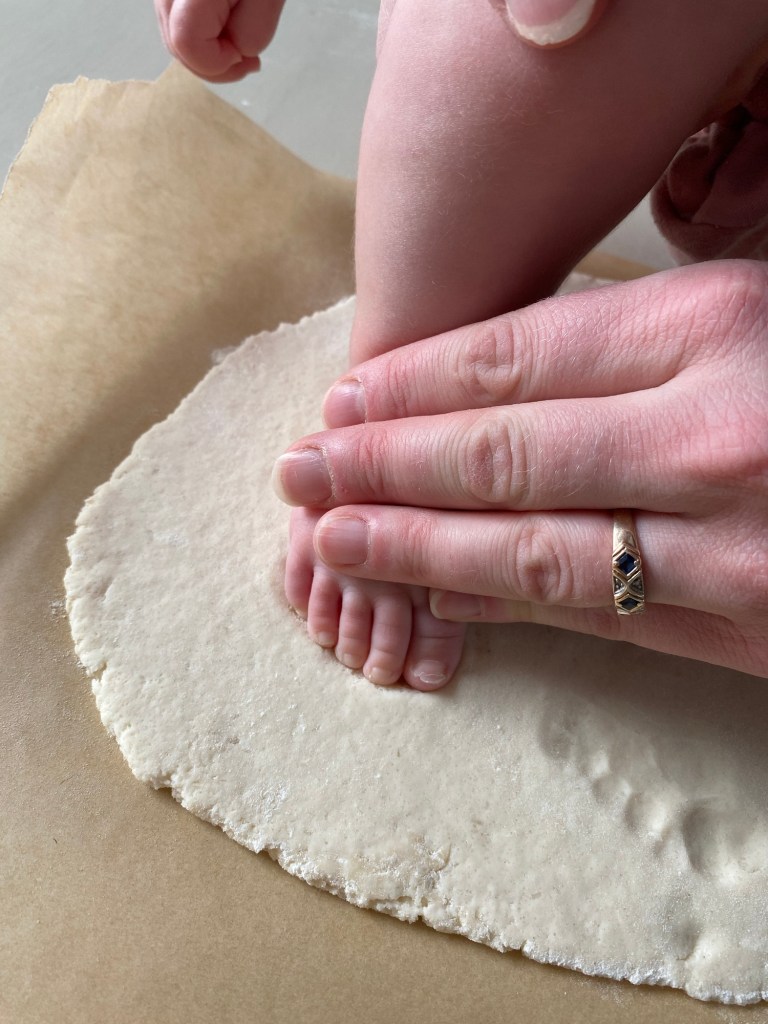
    It’s not always easy to try to get wriggling toes or tiny squirming fingers to cooperate for this craft, so I definitely suggest having someone help hold your little one still while you gently push their feet or hands into the rolled out and ready dough!

    These charming ornaments also make great gifts for grandparents, aunties, uncles (to my family members reading this: sorry for the spoiler this year!) and other special friends in your life.

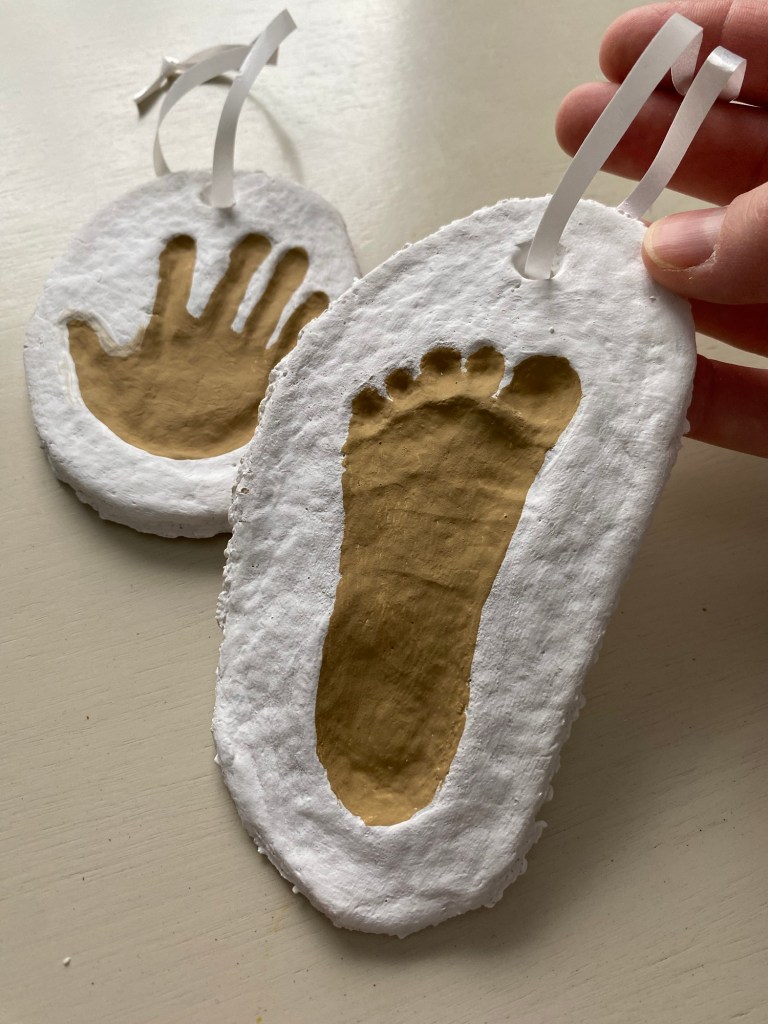
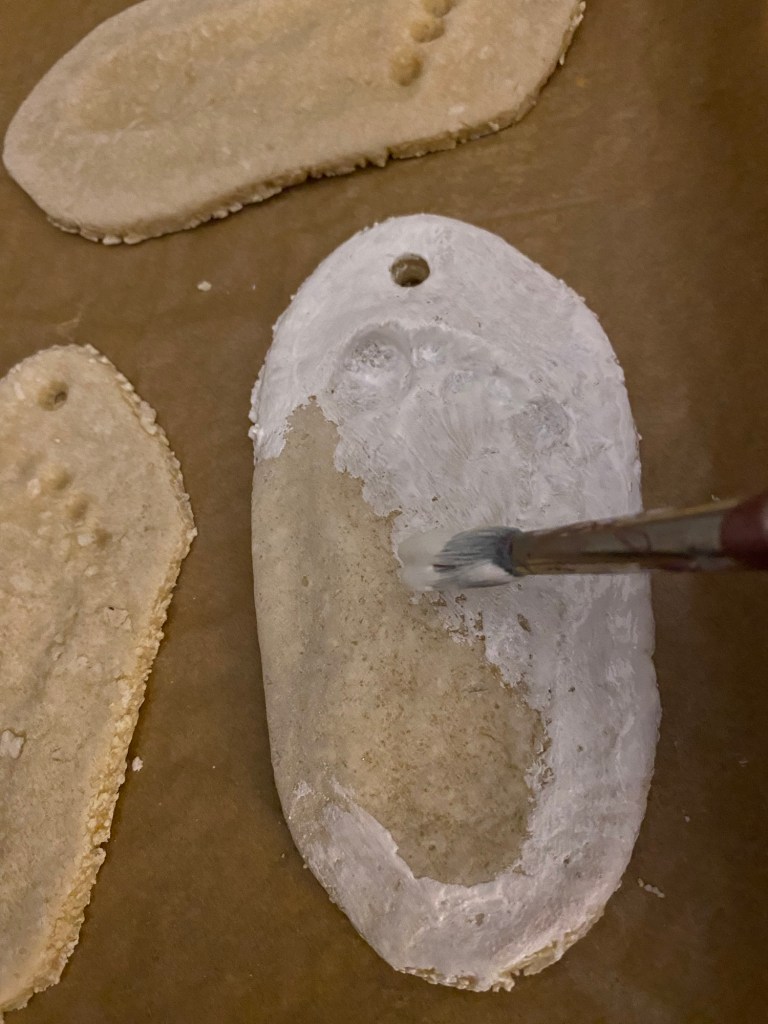
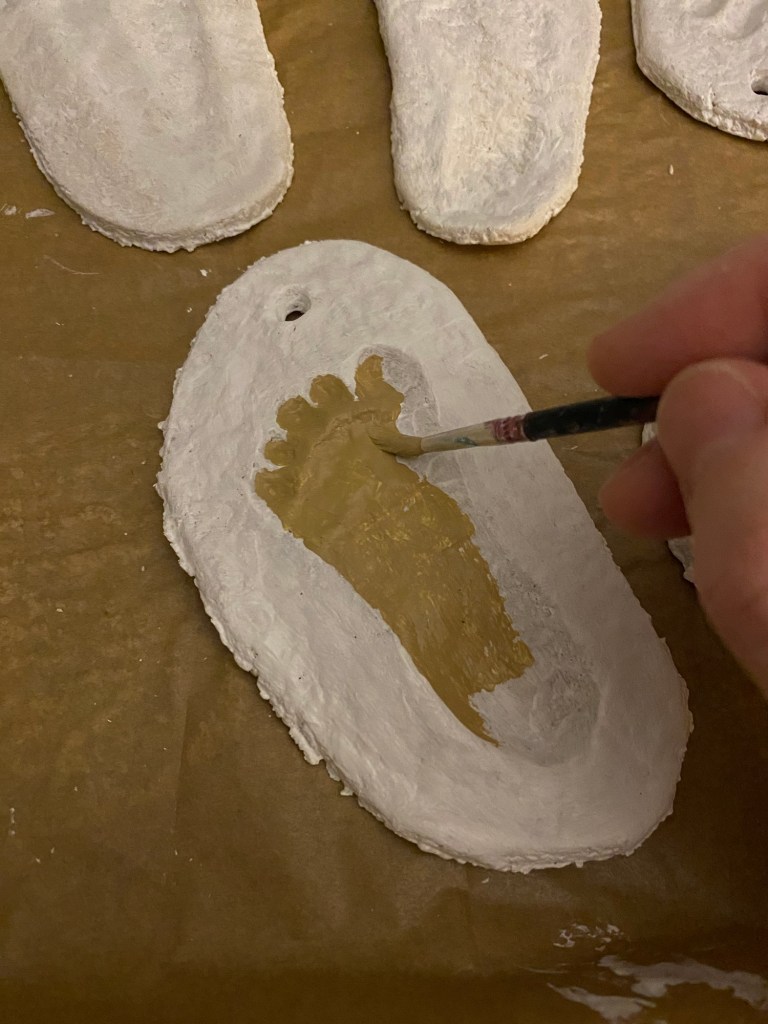
    After baking them in the oven and cooling completely, use some acrylic paint to either paint the print so you can see it better, or paint the whole thing however you like!

    After the paint has dried, a nice layer of mod podge will seal it and give it a nice shine to enjoy on your Christmas tree for many years to come.

    I hope you enjoy making this simple and inexpensive yet precious keepsake of this time in your baby’s life!

    If you are a visual learner like I am, this video might be helpful to see the whole process!

    How to Make Salt Dough Baby Foot/Handprint Ornaments:

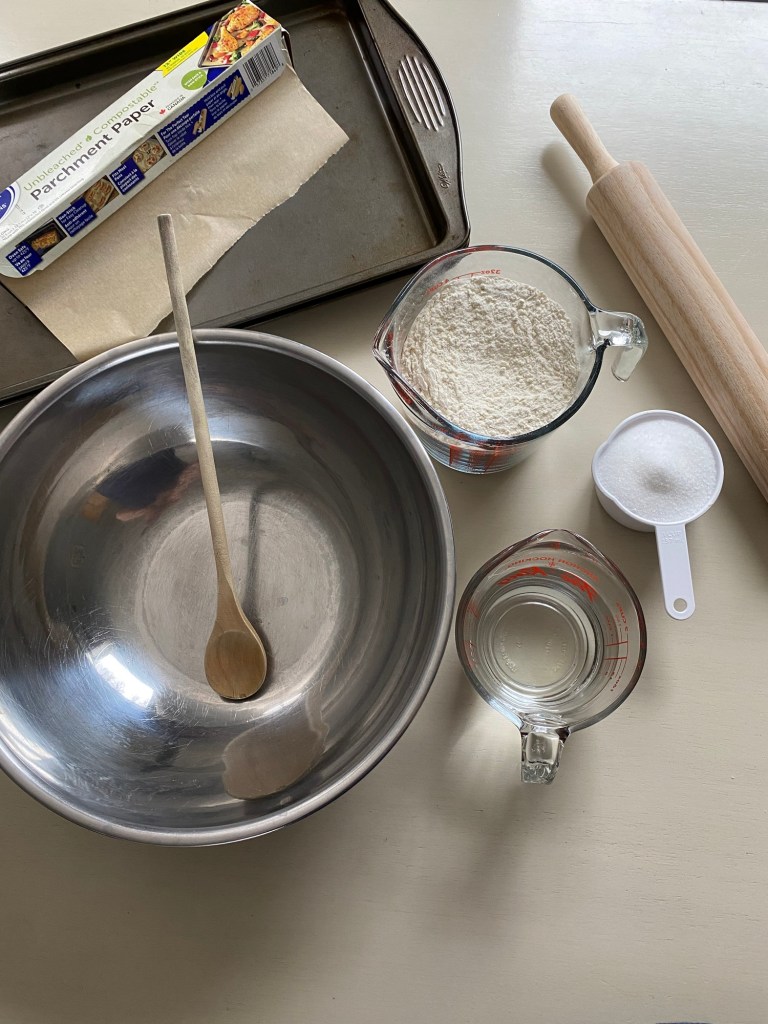
    Supplies Needed:

    Ingredients:

    Directions:

    1. Preheat oven to 250 degrees fahrenheit.
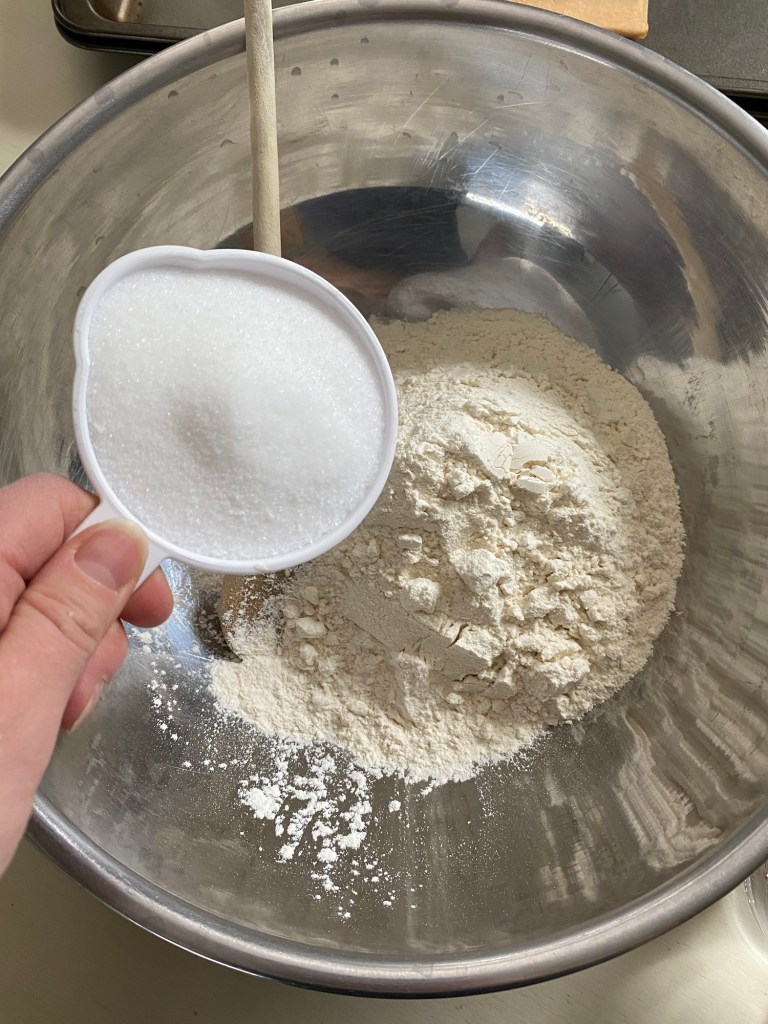
    2. Mix flour and salt together in medium size bowl. (Add any additional sparkles or cinnamon if you want at this point, but keep in mind if you want to paint later on it may not matter too much!)
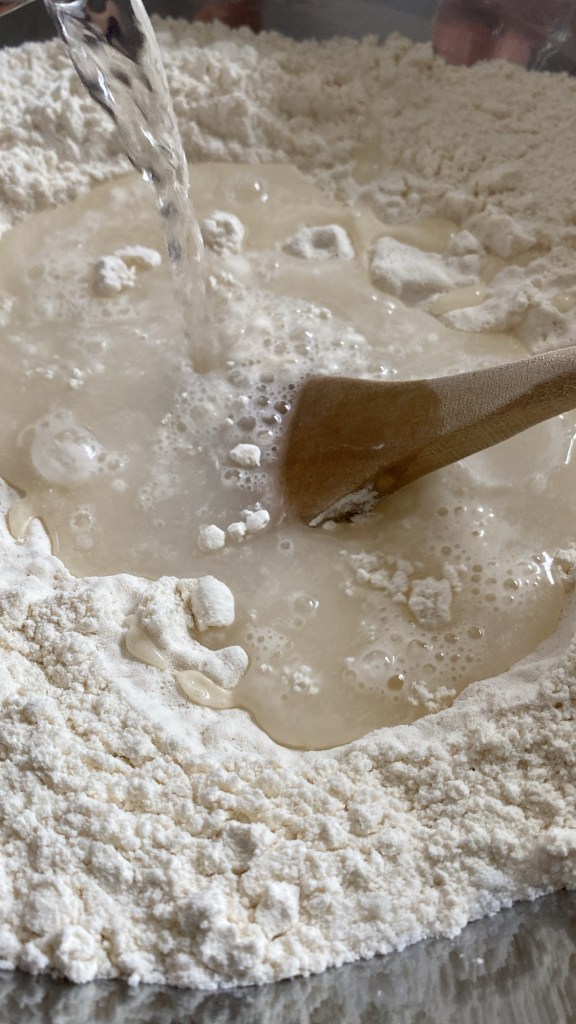
    3. Add just enough water to make it into a soft dough.

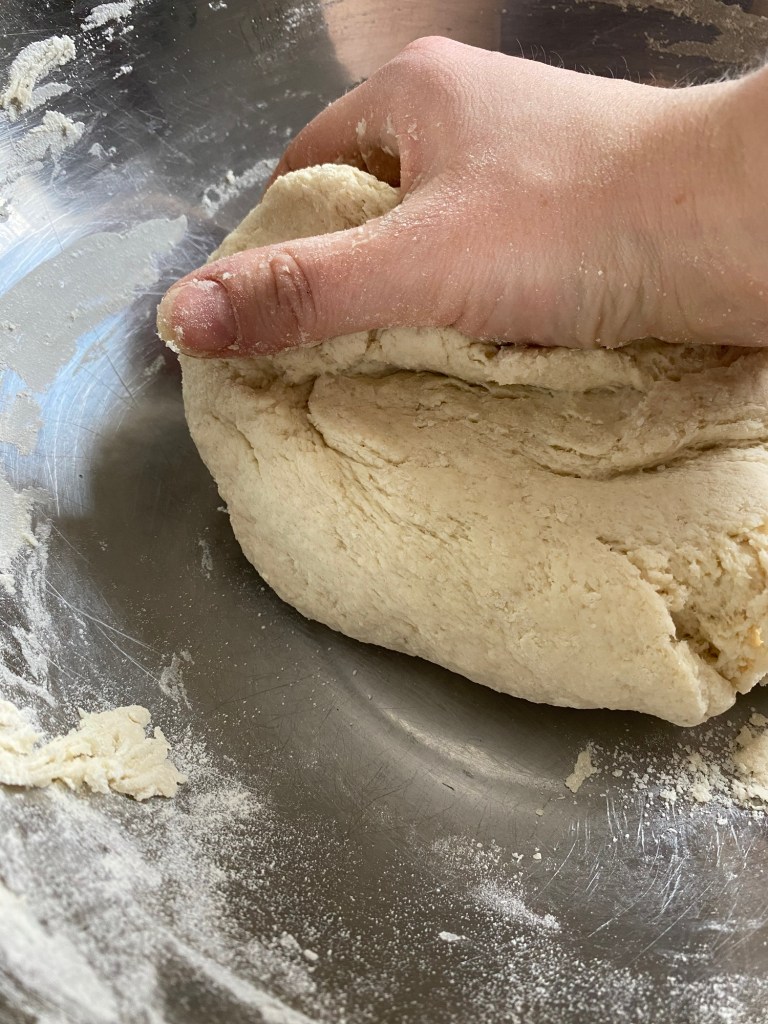
    4. Knead for 2-3 minutes so dough is a smooth ball.

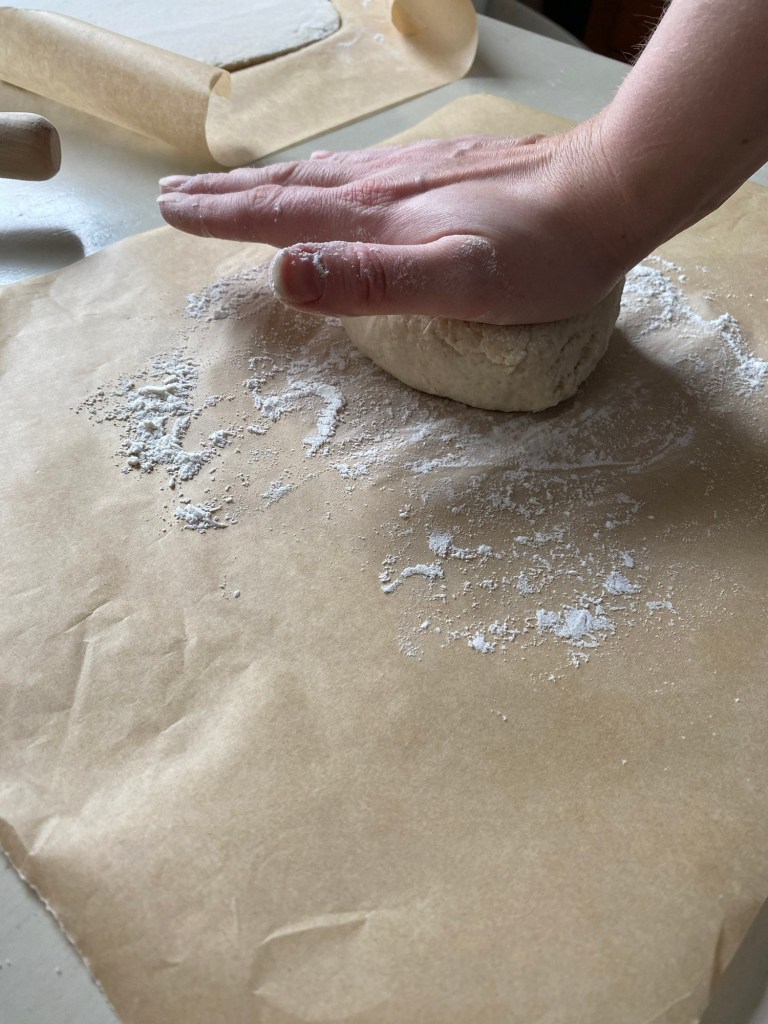
    5. Divide into 2 balls and roll out to 1/4” thick (or about 1/2 centimeter). *You can try putting a flattened ball between two sheets of parchment paper with flour and rolling it this way, or just flour up a surface and roll out, adding flour as you go. (Try not to add too much flour, just enough so that it doesn’t stick to the parchment or pin!)

    6. While baby is held overtop of dough area by one person, another can gently take the hand or foot and press firmly into the soft dough. Make sure to poke each finger and toe so that you get the full imprint! (If you have a really wriggly baby, feet are definitely much easier to do than hands!)

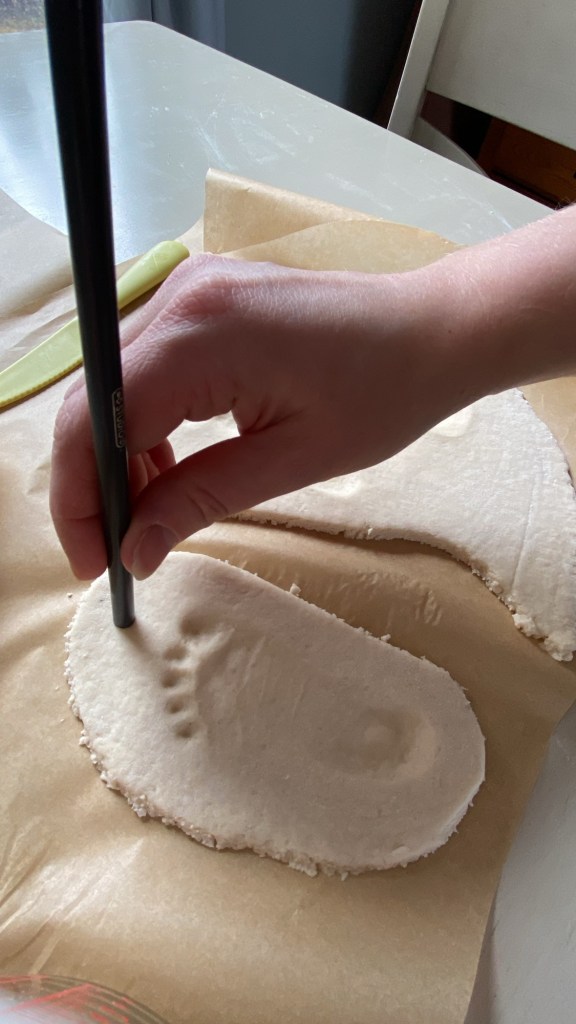
    7. If the print is not very deep, it will be harder to see, especially after baking. Use your finger or gently use a utensil to deepen the baby’s print to make it more visible.

    8. Use dull knife or large cookie cutter to cut out baby’s print. Gently place on a parchment covered baking sheet, spaced out evenly with other baby prints.

    9. Poke a hole above the print for the ribbon, leaving at least 1/2 inch of dough before the edge.

    10. Bake on middle rack for about 1.5-2 hours (90-120 minutes). The timing will largely depend on the thickness of the baby prints, so I recommend checking it after 1 hour, and every 20 minutes after that. When done it will be mostly hard yet slightly soft on top (not squish-able!) and slightly golden on bottom. Turn the oven off at this point and just let them continue to dry out in the oven for another hour (or longer if you want, just make sure not to forget about them for the next time you use the oven!)

    11. Remove from oven and transfer to cooling racks.

    12. When fully cooled (or the next day!) you can use acrylic paint if desired to paint the baby’s imprint area so it can be seen better, and decorate however you like. I also painted the backs once the front side had dried.

    13. Seal with mod podge or other craft sealer to help it stay dry and preserved.

    14. Don’t forget to write your baby’s name and age with a permanent marker so you don’t forget this precious moment in your baby’s life.

    15. Tie with a ribbon and wrap up carefully when not in use. Keep in mind that it may still break if dropped (it is salt dough after all!).

    Additional Notes:

    1. This recipe makes enough for about 10 handprint or footprint infant ornaments.

    2. I had some ornaments puff up while being baked several years ago, using other recipes. So after tweaking it and having many great results, I have learned that puffing up usually happens from these three avoidable things:

    • Having the oven too hot
    • The dough hasn’t been rolled out thin enough
    • The dough has mini air pockets in it

    Made This Recipe?

    I’d LOVE to see your results!! Feel free to post to your social media account and tag Northbird using one of these links:

    Hi, I’m Jessie!

    I’m a Wife and Homeschooling Mom living in a remote town in Northern Ontario, Canada. I love making wholesome meals for my family from scratch, homeschooling our girls and learning more about natural living.

    Read more about my story HERE.

    Subscribe to Northbird’s email list to get weekly posts on: tasty recipes, activity ideas for kids, natural living tips, and some genuine mom thoughts and encouragement!

    Salt Dough Baby Footprint Ornaments

    • Servings: 10
    • Difficulty: Easy
    • Print

    Make a salt dough imprint of your baby's hands or feet and turn it into a beautiful ornament or precious gift for your loved ones this Christmas!


    This recipe makes enough for about 10 handprint or footprint infant ornaments.

    Supplies Needed

  • Mixing bowl
  • Spoon
  • Measuring cups
  • Parchment paper
  • Rolling pin
  • Baking sheets x2
  • Cooling rack
  • Pencil or straw (for poking ribbon holes)
  • Dull knife or a large cookie cutter (if you want perfectly round ones!)

  • Ingredients

  • 2 cups all purpose flour (plus extra for rolling out)
  • 1/2 cup iodized fine salt
  • 3/4 cups water (more or less)
  • Additional ideas if not painting:

  • Directions

    1. Preheat oven to 250 degrees fahrenheit.
    2. Mix flour and salt together in medium size bowl. (Add any additional sparkles or cinnamon if you want at this point, but keep in mind if you want to paint later on it may not matter too much!)
    3. Add just enough water to make it into a soft dough.
    4. Knead for 2-3 minutes so dough is a smooth ball.
    5. Divide into 2 balls and roll out to 1/4” thick (or about 1/2 centimeter). *You can try putting a flattened ball between two sheets of parchment paper with flour and rolling it this way, or just flour up a surface and roll out, adding flour as you go. (Try not to add too much flour, just enough so that it doesn’t stick to the parchment or pin!)
    6. While baby is held overtop of dough area by one person, another can gently take the hand or foot and press firmly into the soft dough. Make sure to poke each finger and toe so that you get the full imprint! (If you have a really wriggly baby, feet are definitely much easier to do than hands!)
    7. If the print is not very deep, it will be harder to see, especially after baking. Use your finger or gently use a utensil to deepen the baby’s print to make it more visible.
    8. Use dull knife or large cookie cutter to cut out baby’s print. Gently place on a parchment covered baking sheet, spaced out evenly with other baby prints.
    9. Poke a hole above the print for the ribbon, leaving at least 1/2 inch of dough before the edge.
    10. Bake on middle rack for about 1.5-2 hours (90-120 minutes). The timing will largely depend on the thickness of the baby prints, so I recommend checking it after 1 hour, and every 20 minutes after that. When done it will be mostly hard yet slightly soft on top (not squish-able!) and slightly golden on bottom. Turn the oven off at this point and just let them continue to dry out in the oven for another hour (or longer if you want, just make sure not to forget about them for the next time you use the oven!)
    11. Remove from oven and transfer to cooling racks.
    12. When fully cooled (or the next day!) you can use acrylic paint if desired to paint the baby’s imprint area so it can be seen better, and decorate however you like. I also painted the backs once the front side had dried.
    13. Seal with mod podge or other craft sealer to help it stay dry and preserved.
    14. Don’t forget to write your baby’s name and age with a permanent marker so you don’t forget this precious moment in your baby’s life.
    15. Tie with a ribbon and wrap up carefully when not in use. Keep in mind that it may still break if dropped (it is salt dough after all!).

    Return to Top

    Chocolate-Cranberry Oatmeal Cookies (Sourdough Discard Optional)

    Find Northbird on social media:

    This post contains affiliate links. As an Amazon associate, I earn from qualifying purchases. This means that I make a small commission at no extra cost to you. You can read my full disclosure HERE.

    Jump To Recipe Card

    Jump to Video

    Return to “Deserts & Snacks”

    Return to “Sourdough Recipes”

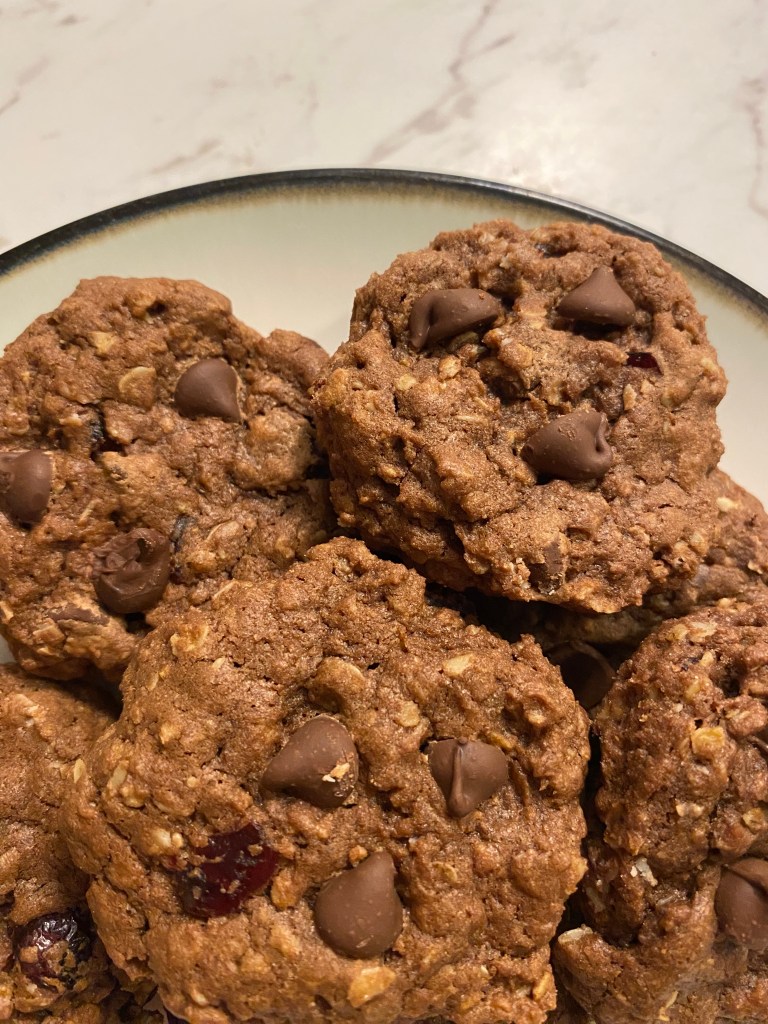
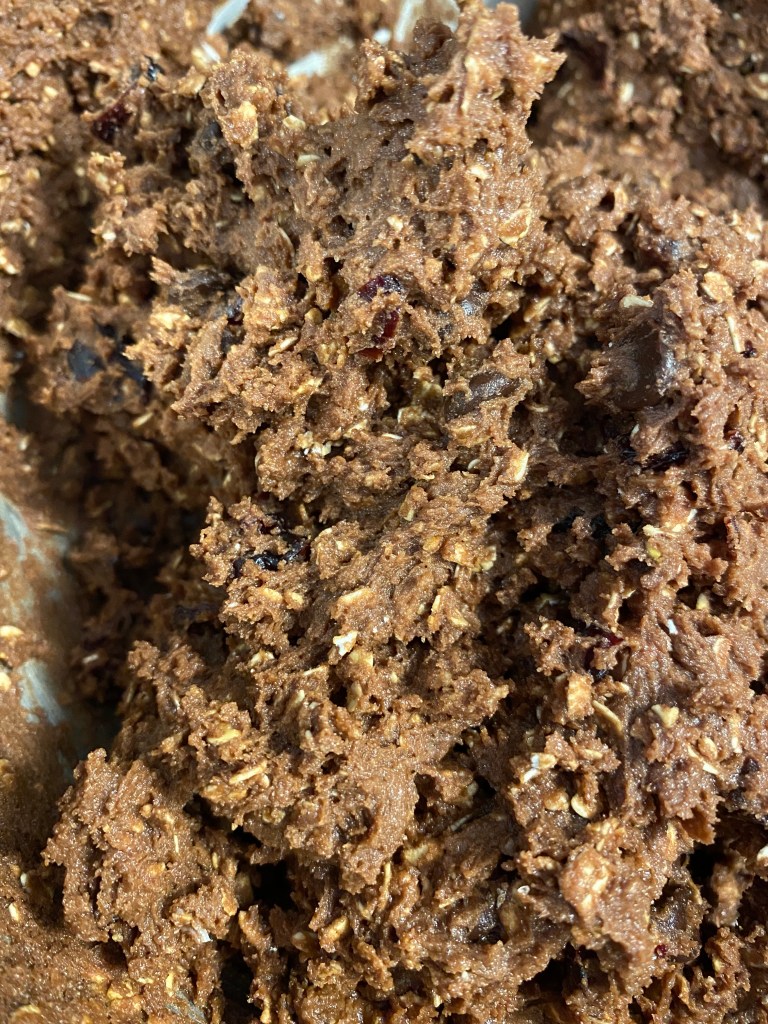
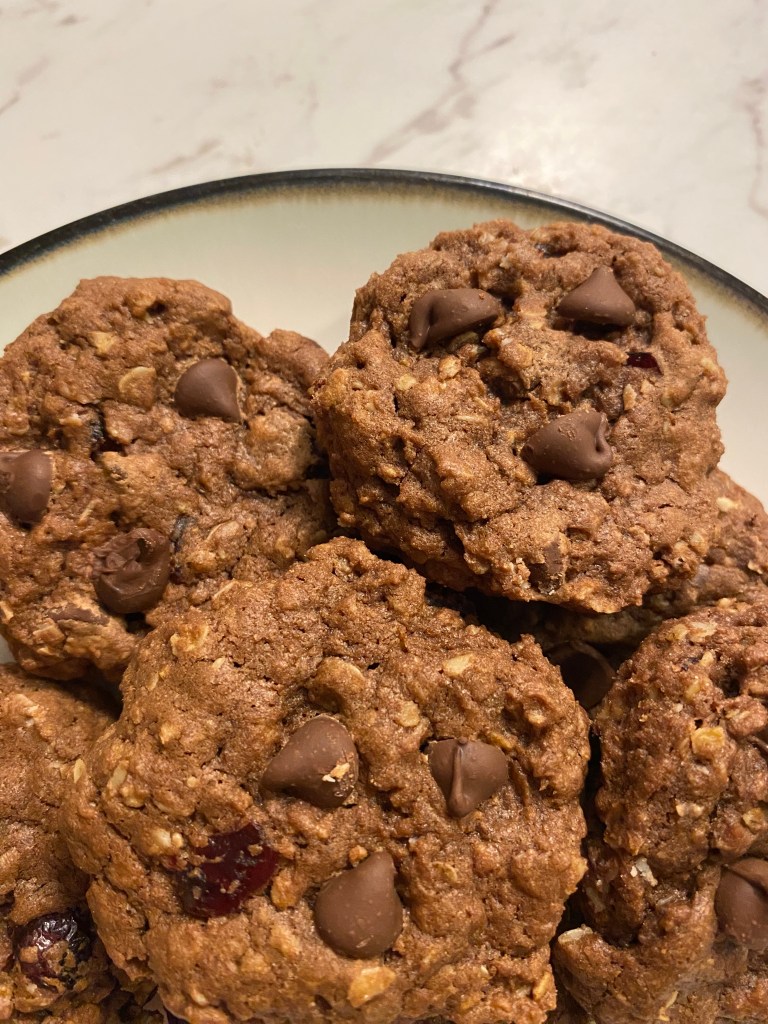
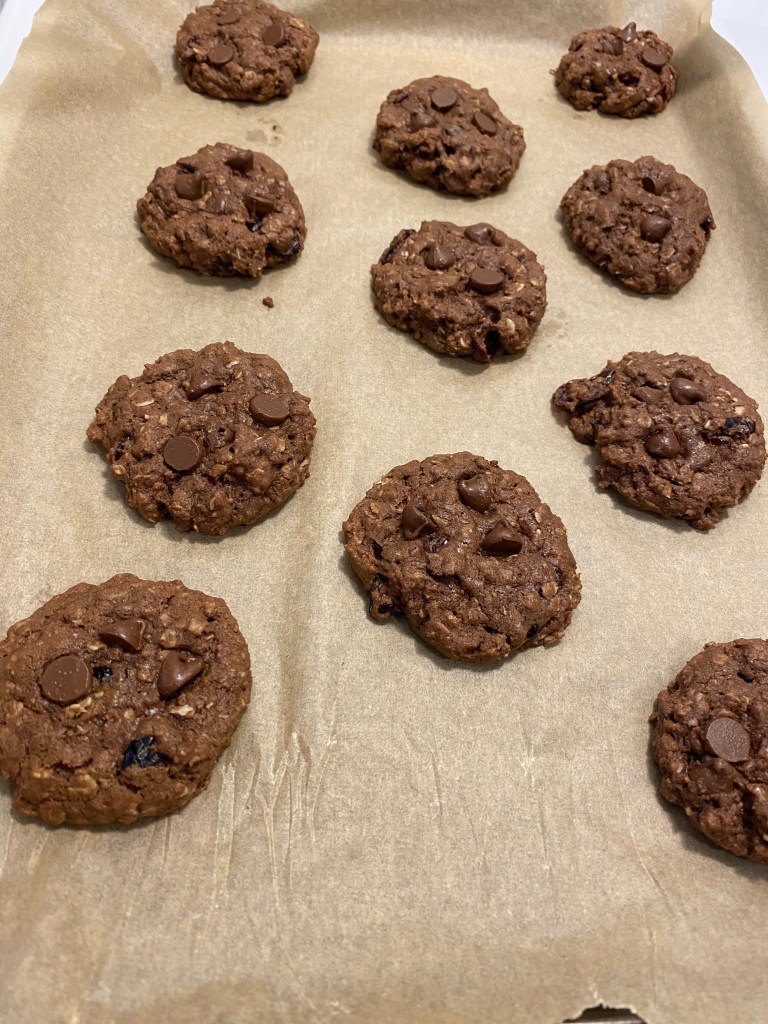
    Chocolate and cranberries go so well together! So the other day I asked myself: “why not make a simple oatmeal cookie recipe that involves both these tasty ingredients?!” And after some experimenting, this delicious recipe was born -or baked- and quickly munched down by approving family members.

    I have also included below an alternative recipe to turn this into a sourdough discard recipe, if that might peek the interest of any of my blog readers?

    I am especially fond of experimenting and finding ways of turning my tried-and-true baking recipes that I have been using for years, into sourdough starter discard recipes. I always like the option to add some sourdough starter if I can, and I love how it adds all the fermented goodness and extra nutrition to baked goods!

    New or interested in more info about Sourdough fun? Click HERE

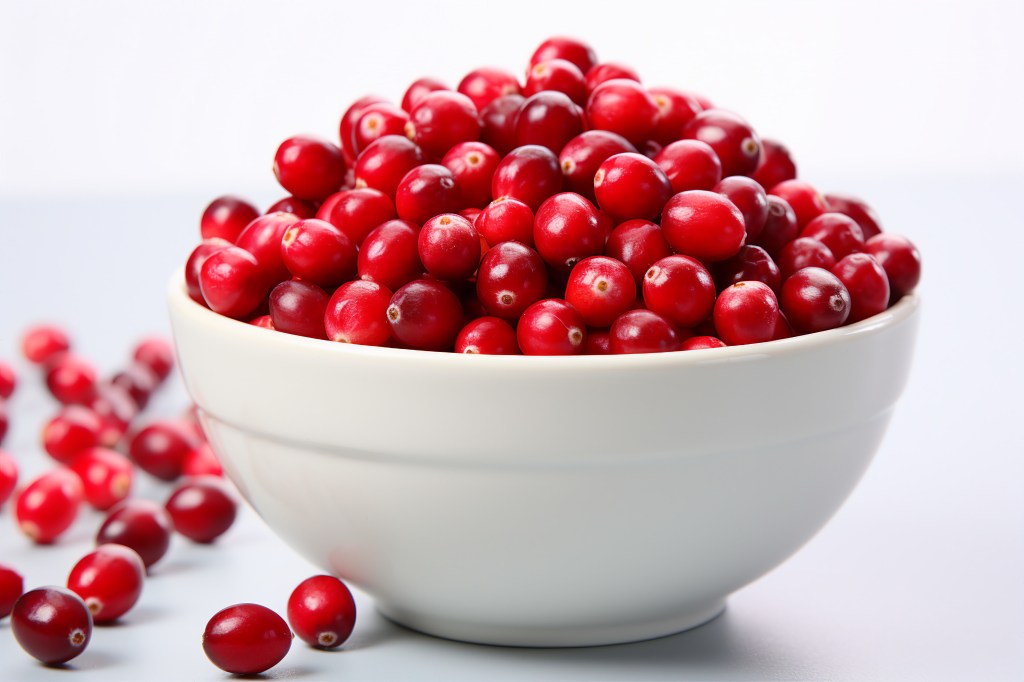
    Did You Know these Amazing Health Benefits of Eating Cranberries?!

    Image courtesy of Vecteezy.com
    • Cranberries are most known for reducing the risk of urinary tract infections. This is due to the proanthocyanidins in the berries that help to prevent bacteria from sticking to the urinary tract. A build up of bacteria in the urinary tract is what causes infections and other illnesses if left untreated.
    • The proanthocyanidins in Cranberries also help to support your teeth, and some research suggests gum disease as well.
    • Cranberries contain Vitamin E, which supports hair and skin health.
    • Cranberries have high levels of anioxidants, which support the immune system and help prevent illness and diseases.
    • Cranberries have high levels of phytonutrients, which are great for reducing inflammation in the body.
    • Cranberry juice contains phytochemicals that help to maintain healthy digestion in your body.
    • Cranberries are also very high in Vitamin C (ascorbic acid), boosting your immune system and helping to maintain health.
    • Cranberry juice helps to lower cholesterol levels, which lowers the risk of heart disease.

    Please Note: When buying cranberry juice at the store for medicinal purposes, it is always important to read the label carefully and to select a brand that is 100% pure cranberry juice, no added sugar, and not a juice cocktail mix.

    If you are a cranberry fan, you might like to check out this other tasty recipe on the Northbird Blog:

    Carol’s Cranberry Loaf!

    A simple video of making these tasty chocolatey and cranberry oatmeal cookies!

    How to Make Chocolate Cranberry Oatmeal Cookies:

    Supplies Needed:

    Ingredients:

    Directions:

    1. Preheat oven to 350 degrees fahrenheit.
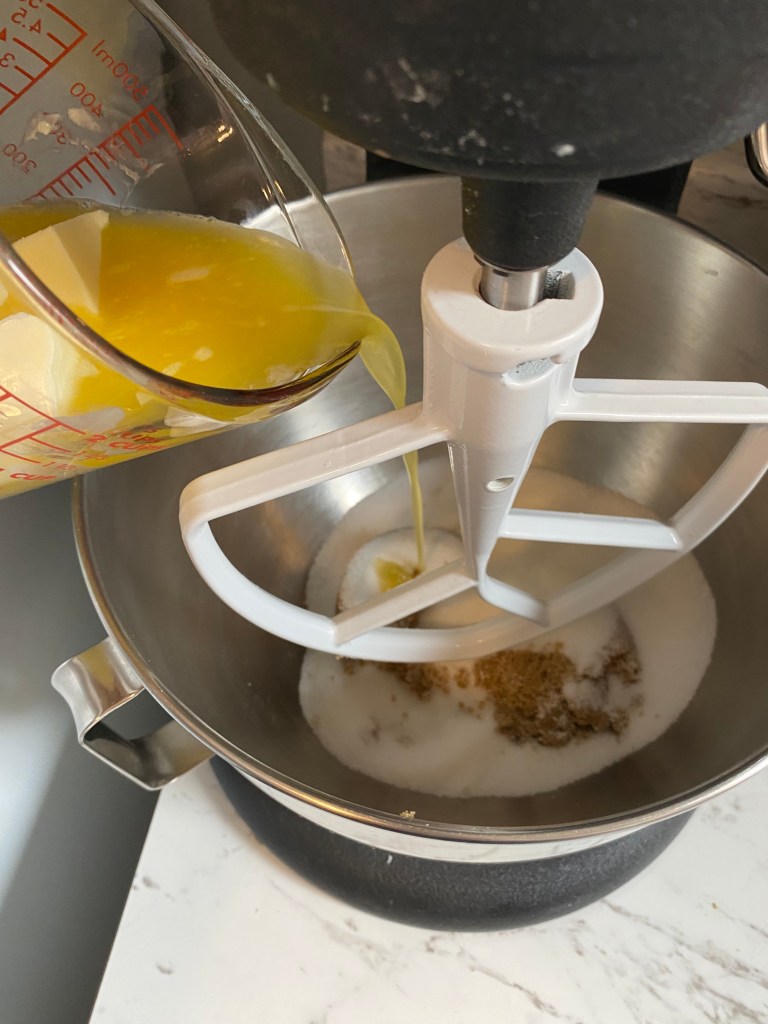
    2. Cream together the softened butter and both sugars.
    3. Add the eggs (or sourdough starter) and vanilla and mix until fully combined and smooth.

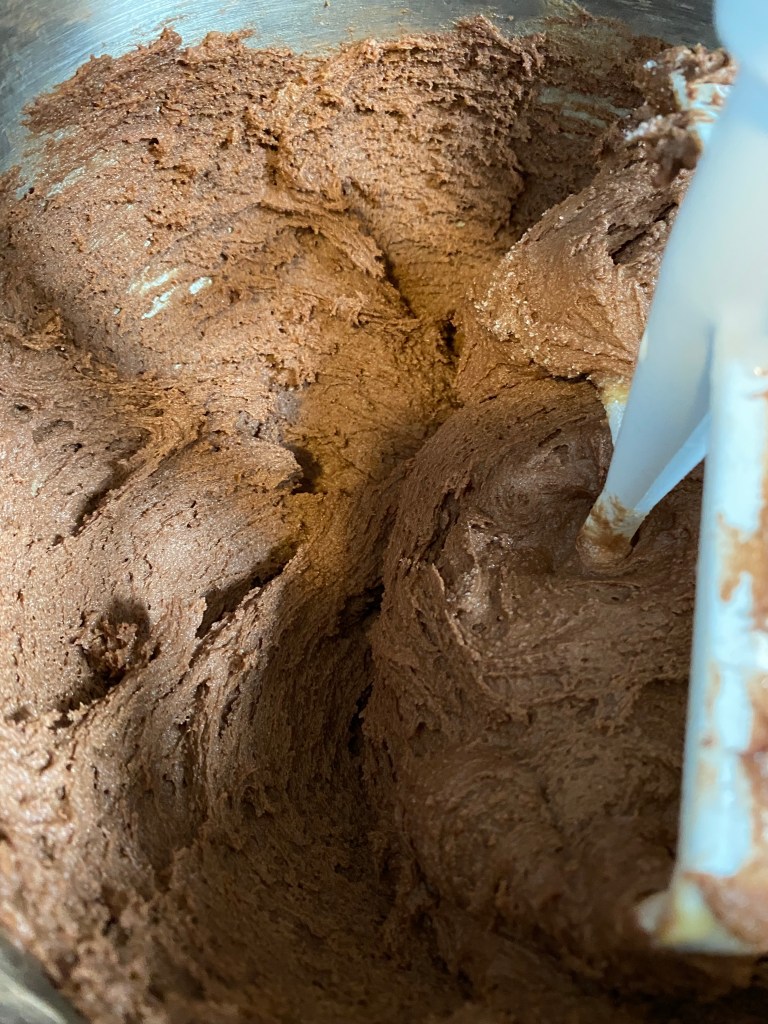
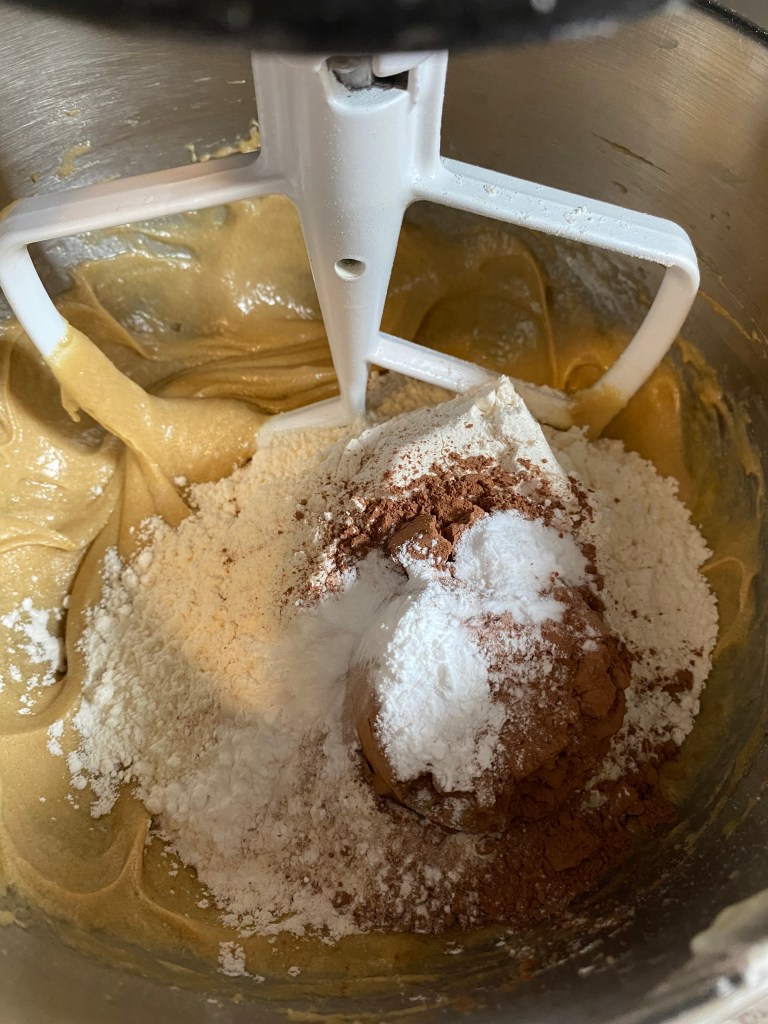
    4. Add in the flour, baking powder, baking soda, salt and cocoa powder. Stir until all combined and smooth.

    5. Add in dried cranberries and chocolate chips and stir until fully combined.

    6. Drop by spoonfuls onto parchment lined cookie sheets, and slightly flatten the cookie dough. Pop a few chocolate chips on the tops of the cookies if desired.

    7. Bake 10-12 minutes on middle rack of oven. Bottoms should be lightly browned, tops may look soft, but will harden as they cool down. (This will make them to be soft and irresistibly chewy!)

    8. Cool for 5 minutes on cookie sheets before transferring to a cooling rack.

    9. Makes about 3 dozen medium sized cookies.

    10. Store in sealed container up to 5 days. (Lets be honest:they never last that long!)

    Note: This cookie dough freezes very well, so if 3 dozen is too much to enjoy all at once, you can simply put the extra dough amount in a sealed plastic container in the freezer until you are ready to bake it off. To thaw, simply put the whole container in a larger bowl of hot water until the dough becomes soft and palpable again.

    I like to double this recipe, and then split up the dough into several leftover plastic yogurt containers and put them in the freezer. This makes it simple for baking off smaller batches of cookies whenever I feel like it without all the time it takes to mix it up!

    I’d love to hear how your cookies turned out! Feel free to tag Northbird using one of the links below if you are posting to social media:

    Happy Baking!

    More Desert & Snack Recipes:

    Other Tasty Sourdough Recipes to Check Out!

    Hi, I’m Jessie!

    I’m a Wife and Homeschooling Mom living in a remote town in Northern Ontario, Canada. I love making wholesome meals for my family from scratch, homeschooling our girls and learning more about natural living.

    Read more about my story HERE.

    Subscribe to Northbird’s email list to get weekly posts on: tasty recipes, activity ideas for kids, natural living tips, and some genuine mom thoughts and encouragement!

    Sourdough Discard Oatmeal Chocolate Chip Cookies

    • Servings: 3 dozen Cookies
    • Difficulty: Easy
    • Print

    Chocolate and cranberries are seriously so good together! Check out this tasty cookie recipe (optional directions to turn it into a sourdough discard recipe too!)


    This cookie dough freezes very well, so if 3 dozen is too much to enjoy all at once, you can simply put the extra dough amount in a sealed plastic container in the freezer until you are ready to bake it off. To thaw, simply put the whole container in a larger bowl of hot water until the dough becomes soft and palpable again, about 30 minutes.

    By Jessica Burman © 2024 The Northbird Blog. https://www.thenorthbirdblog.com


    Ingredients

  • 1 cup butter (soft)
  • 1 cup brown sugar
  • 1 cup white sugar
  • 2 eggs (or replace with 1/3 cup sourdough starter discard)
  • 1 teaspoon vanilla
  • 2 cups quick oats
  • 2 cups all purpose flour
  • 1 teaspoon baking powder
  • 1/2 teaspoon baking soda
  • 1/2 teaspoon sea salt
  • 1/2 cup cocoa powder
  • 1 cup chocolate chips (plus more for the tops)
  • 1- 1+1/2 cup dried cranberries

  • Directions:

    1. Preheat oven to 350 degrees fahrenheit.
    2. Cream together the softened butter and both sugars.
    3. Add the eggs (or sourdough starter) and vanilla and mix until fully combined and smooth.
    4. Add in the flour, baking powder, baking soda, salt and cocoa powder. Stir until all combined.
    5. Add in the oats, dried cranberries and chocolate chips and stir until fully combined.
    6. Drop by spoonfuls onto parchment lined cookie sheets, and slightly flatten the cookie dough. Pop a few chocolate chips on the tops if desired.
    7. Bake 10-12 minutes on middle rack of oven. Bottoms should be lightly browned, tops may look soft, but will harden as they cool down. (This will make them to be soft and irresistibly chewy!)
    8. Cool for 2 minutes on cookie sheets before transferring to cooling rack.
    9. Makes about 3 dozen medium sized cookies.
    10. Store in sealed container up to 5 days. (Lets be honest: they never last that long!)

    Nutrition


    Per 1 cookie: 120 calories; 4.2 g fat; 17.9 g carbohydrates;
    2.5 g protein.

    Return to Top

    Sourdough English Muffins

    Find Northbird on social media:

    This post contains affiliate links. As an Amazon associate, I earn from qualifying purchases. This means that I make a small commission at no extra cost to you. You can read my full disclosure HERE.

    Jump To Recipe Card

    Jump to Video

    Return to “Sourdough”

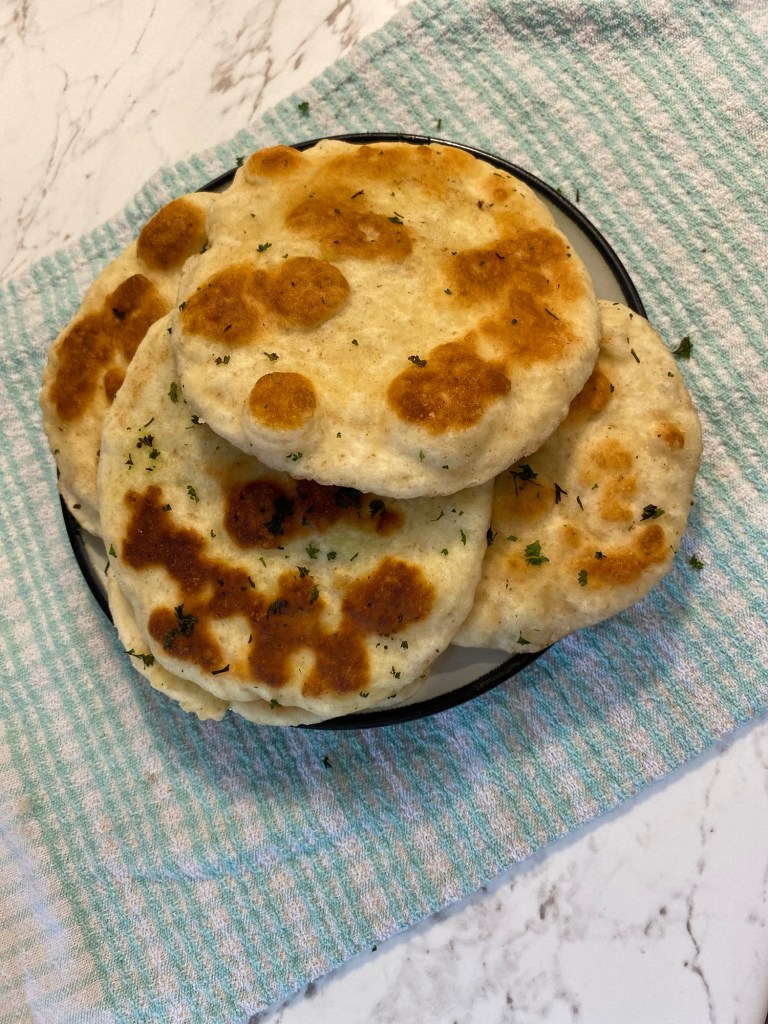
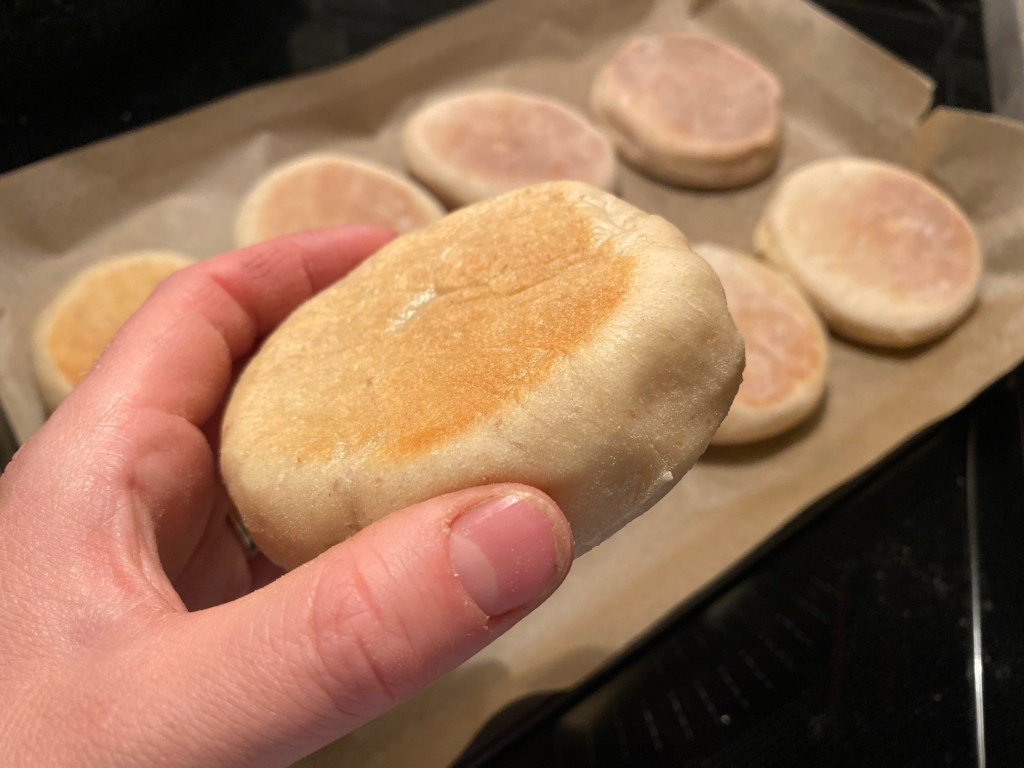
    I never knew until recent years that English Muffins were FRIED, not baked. I’m not sure why I just assumed they were baked (especially with the golden-brown tops and bottoms!)

    Anyway, since I began experimenting with developing my own recipe of this, we have eaten these quite often. Probably my favourite reason for making these so often through the summer months in particular, is that there’s no need to use the oven and overheat the kitchen. Definitely a bonus.

    Where do English Muffins Come From?

    According to the “Baking Hall of Fame”, a man named Samuel Bath Thomas emigrated from England to New York City (America) in 1874, and later in 1880 he opened his own bake shop in Manhattan, New York. It is thought that he first brought the fried bread recipe idea to America and made it popular.

    To this day, Americans call it an “English Muffin”, and the British simply call it a “Muffin”.

    Is an English Muffin the same as a Crumpet?

    No. English Muffins are more dense and have a more “bread-like” texture. They are hand-formed from dough. A Crumpet is spongier, lighter and has a thinner batter that is usually poured into a griddle base or mold. It is somewhat similar to a pancake, but typically smaller.

    Ways to eat English Muffins:

    These tasty fried breads are lovely when sliced through the middle, toasted, and spread with salted butter and jam. It also makes an easy lunch sandwich in the absence of sandwich bread.

    Perhaps one of the fast-food breakfast favourites that you might see in North America at a Mcdonalds, A&W, or Tim Hortons is a: Bacon, Egg and Cheese on an English Muffin”.

    One of our quick travel meals that we like to do is to make little mini pizzas out of sliced English Muffins. We spread pizza sauce, add pepperoni, other toppings and cheese. A quick bake then wrap in tinfoil to maintain heat makes it a tasty and warm meal on-the-go.

    New to Sourdough?

    Check out THIS POST on Sourdough Bread to see some tips and helpful info that I’ve learned for looking after and feeding a sourdough starter.

    How to Make English Muffins from scratch:

    How to Make Sourdough English Muffins

    Supplies Needed:

    Ingredients:

    • 3/4 cup of ACTIVE sourdough starter
    • 2 tablespoons of liquid sweetener (pure maple syrup or honey are what I use most often)
    • 1 + 1/2 cups of 2-3% milk (or sub plain yogurt and add 1/3 cup water)
    • 4 cups of all purpose flour (or light spelt or bread flour… add additional 1/4 cup as needed to make soft dough)
    • 2 teaspoons fine sea salt
    • Cornmeal for sprinkling tops/bottoms

    Directions:

    1. Whisk together sourdough starter, liquid sweetener and milk/yogurt until no starter clumps remain and it is a frothy white liquid.

    2. Add flour and sea salt and mix into dough.

    3. Knead for 3-5 minutes. Add additional flour as needed to make into a soft dough.

    4. Cover and rest for 8-12 hours to long ferment at room temperature. It will more than double in size *See Note Below

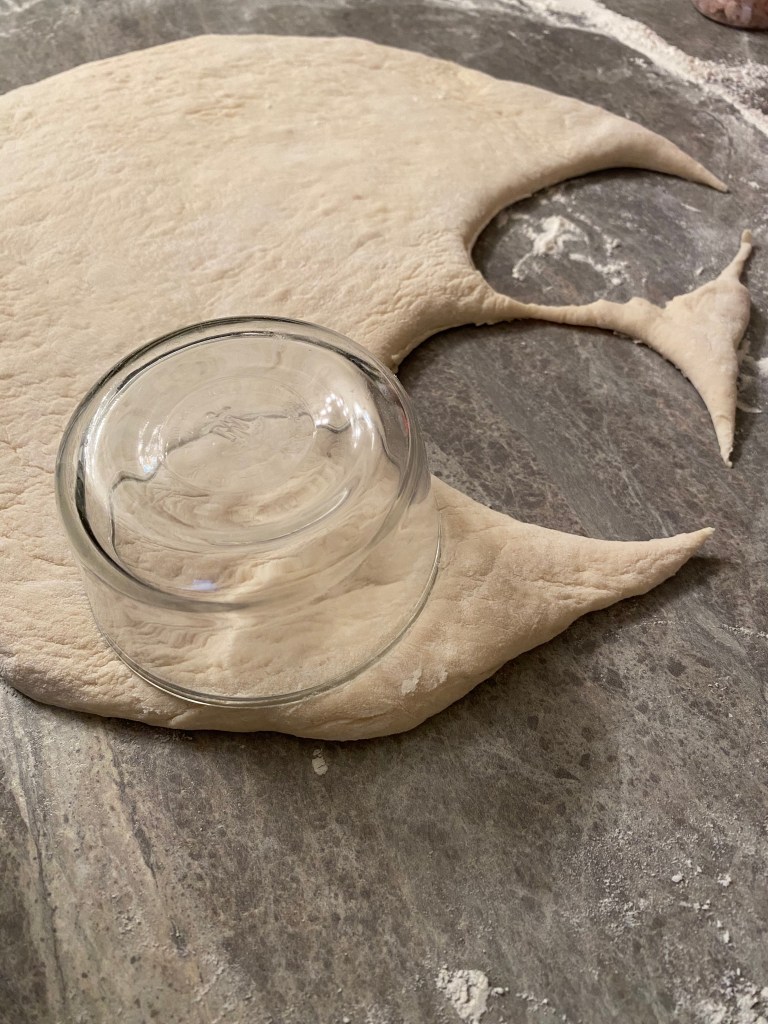
    5. Roll out so that dough is about 3/4 inch thick (2.5 cm). Cut out rounds of dough 3-4 inches in diameter. (I just use circular tupperware to cut the dough)

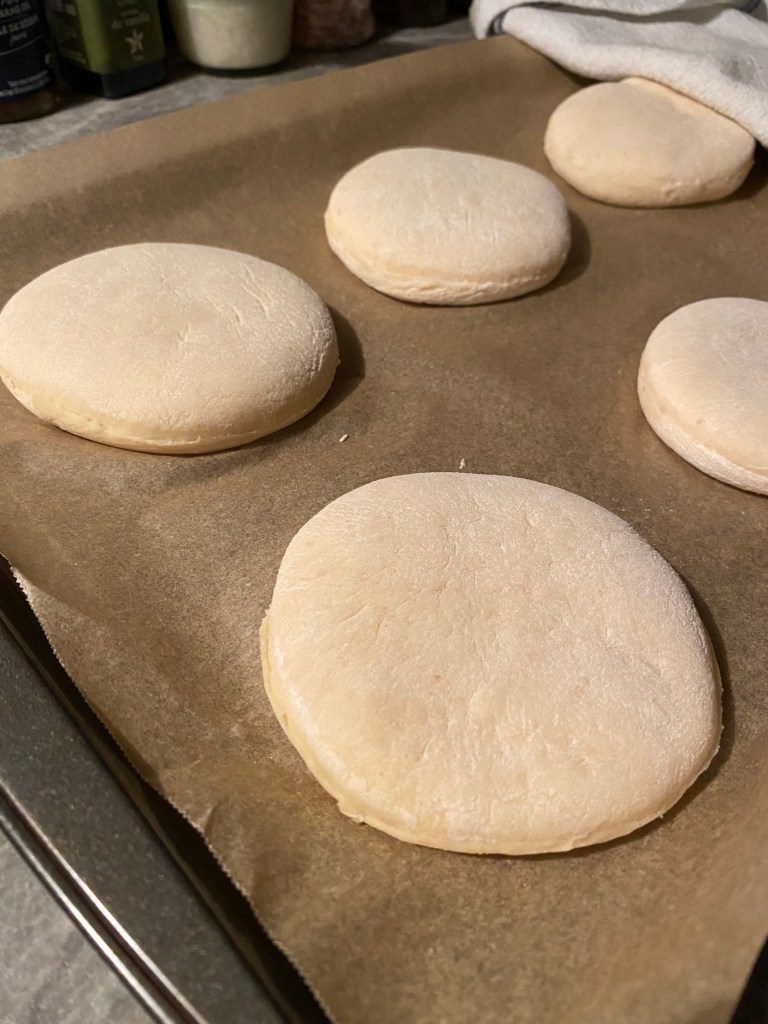
    6. Place on parchment covered baking sheet and cover with a tea towel. Rest 1-2 hours (they will puff up during this time).

    7. Warm skillet on low/medium heat with lid on for 3-5 minutes (dry, no oil). Sprinkle the tops of the english muffins with cornmeal.

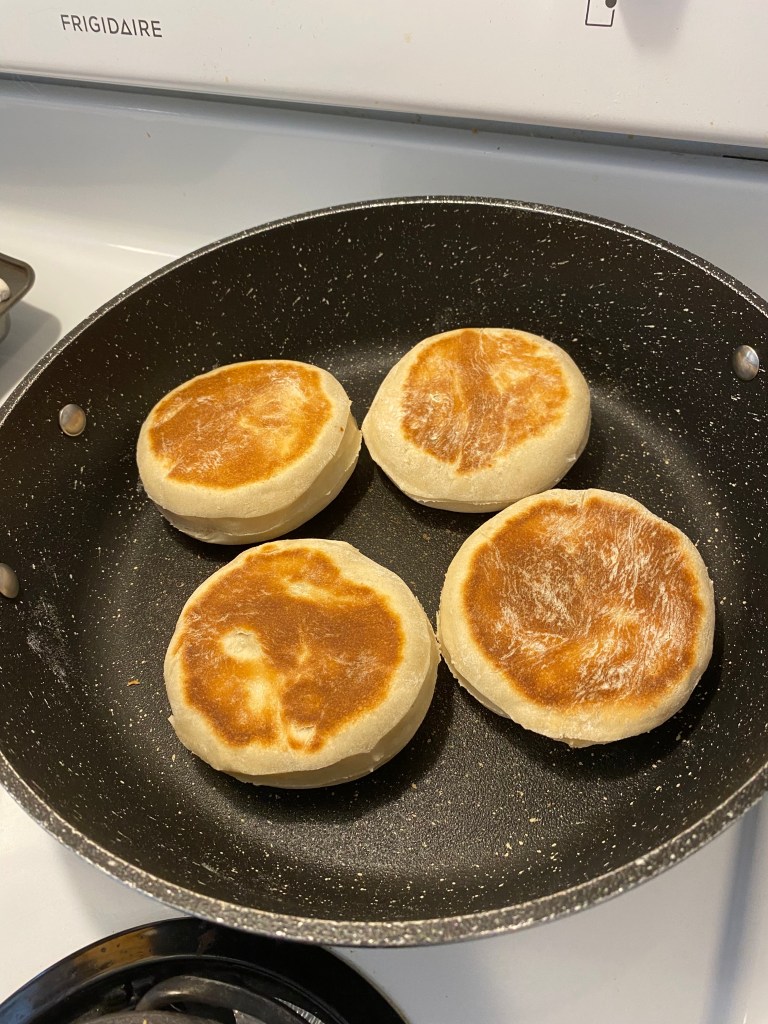
    8. Place 3-4 English Muffins in the skillet, top (cornmeal covered) side-down, and sprinkle cornmeal on the revealed bottom side. Secure lid and fry for 4-6 minutes or until golden brown. Flip over, cover and fry for another 3-4 minutes or until golden brown.

    Note: The first batch may need some tweaking of the temperature and timing as every stove is different. Too hot, and it will brown without baking the inside.

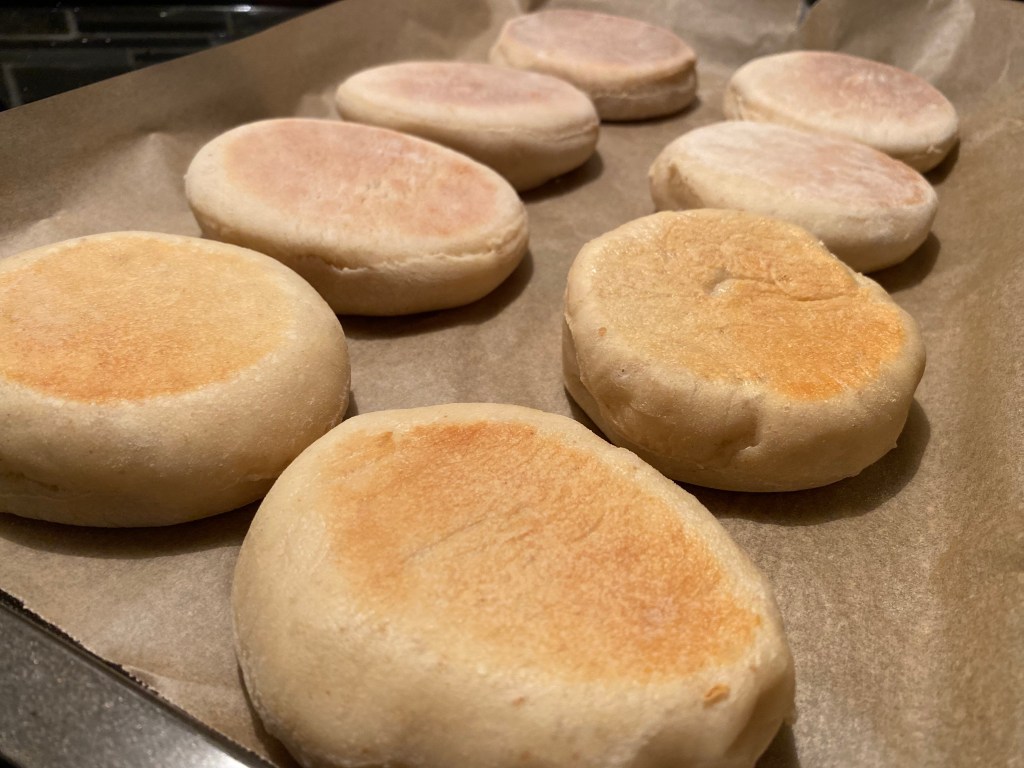
    9. Cool for several minutes on baking sheets before cutting open. Makes 10-12 English Muffins (depending on the size of the dough circles!).

    10. Store in a sealed container at room temperature for up to 5 days, or in an air-sealed ziploc bag in the freezer for up to 3 months.

    Additional Notes:

    I usually feed my sourdough starter in early afternoon, then it is bubbly and ready to use by early evening when I mix up my dough. The long ferment takes place overnight, and the next morning all that is left is a roll out, cut, rest, and then fry: just in time for breakfast!

    Other Tasty Sourdough Recipes to Check Out!

    Hi, I’m Jessie!

    I’m a Wife and Homeschooling Mom living in a remote town in Northern Ontario, Canada. I love making wholesome meals for my family from scratch, homeschooling our girls and learning more about natural living.

    Read more about my story HERE.

    Subscribe to Northbird’s email list to get weekly posts on: tasty recipes, activity ideas for kids, natural living tips, and some genuine mom thoughts and encouragement!

    Sourdough English Muffins

    • Servings: 10-12
    • Difficulty: Easy
    • Print

    One of my favourite go-to recipes for making sourdough without using the oven!


    I usually feed my sourdough starter in early afternoon, then it is bubbly and ready to use by early evening when I mix up my dough. The long ferment takes place overnight, and the next morning all that is left is a roll out, cut, rest, and then fry: just in time for breakfast!


    Ingredients

  • 3/4 cup of ACTIVE sourdough starter
  • 2 tablespoons of liquid sweetener (pure maple syrup or honey are what I use most often)
  • 1 + 1/2 cups of 2-3% milk (or sub plain yogurt and add 1/3 cup water)
  • 4 cups of all purpose flour (or light spelt or bread flour… add additional 1/4 cup as needed to make soft dough)
  • 2 teaspoons fine sea salt
  • Cornmeal for sprinkling tops/bottoms

  • Directions:

    1. Whisk together sourdough starter, liquid sweetener and milk/yogurt until no starter clumps remain and it is a frothy white liquid.
    2. Add flour and sea salt and mix into dough.
    3. Knead for 3-5 minutes. Add additional flour as needed to make into a soft dough.
    4. Cover and rest for 8-12 hours to long ferment at room temperature.
    5. Roll out so that dough is about 3/4 inch thick (2.5 cm). Cut out rounds of dough 3-4 inches in diameter. (I just use circular tupperware to cut the dough)
    6. Place on parchment covered baking sheet and cover with a tea towel. Rest 1-2 hours (they will puff up during this time).
    7. Warm skillet on low/medium heat with lid on for 3-5 minutes (dry, no oil). Sprinkle the tops of the english muffins with cornmeal.
    8. Place 3-4 English Muffins in the skillet, top (cornmeal covered) side-down, and sprinkle cornmeal on the revealed bottom side. Secure lid and fry for 4-6 minutes or until golden brown. Flip over, cover and fry for another 3-4 minutes or until golden brown.
    9. Note: The first batch may need some tweaking of the temperature and timing as every stove is different. Too hot, and it will brown without baking the inside.

    10. Cool for several minutes on baking sheets before cutting open. Makes 10-12 English Muffins (depending on the size of the dough circles!).
    11. Store in a sealed container at room temperature for up to 5 days, or in an air-sealed ziploc bag in the freezer for up to 3 months.

    Nutrition


    Per 1 serving: 194 calories; 0.8 g fat; 42.8 g carbohydrates;
    4.5 g protein.

    Return to Top

    Exploring Salt Water Density: Homeschooling Egg Experiment

    Find Northbird on social media:

    This post contains affiliate links. As an Amazon associate, I earn from qualifying purchases. This means that I make a small commission at no extra cost to you. You can read my full disclosure HERE.

    Jump to Printable Activity Card

    Jump to Video

    Return to “Homeschooling Activities & Resources”

    Return to “Ocean Life”

    What is density?

    Why do some things float in water and others sink? It all comes down to density.

    Density is the measurement of how compact an item is. If an item generally feels heavy, then it has high density, and if an item feels light then it has low density.

    For example, a rock has high density and will sink when you throw it in the water. But if you throw a dry stick in the water, it will float because the particles that make it up are more spread apart, and it is less dense than the water.

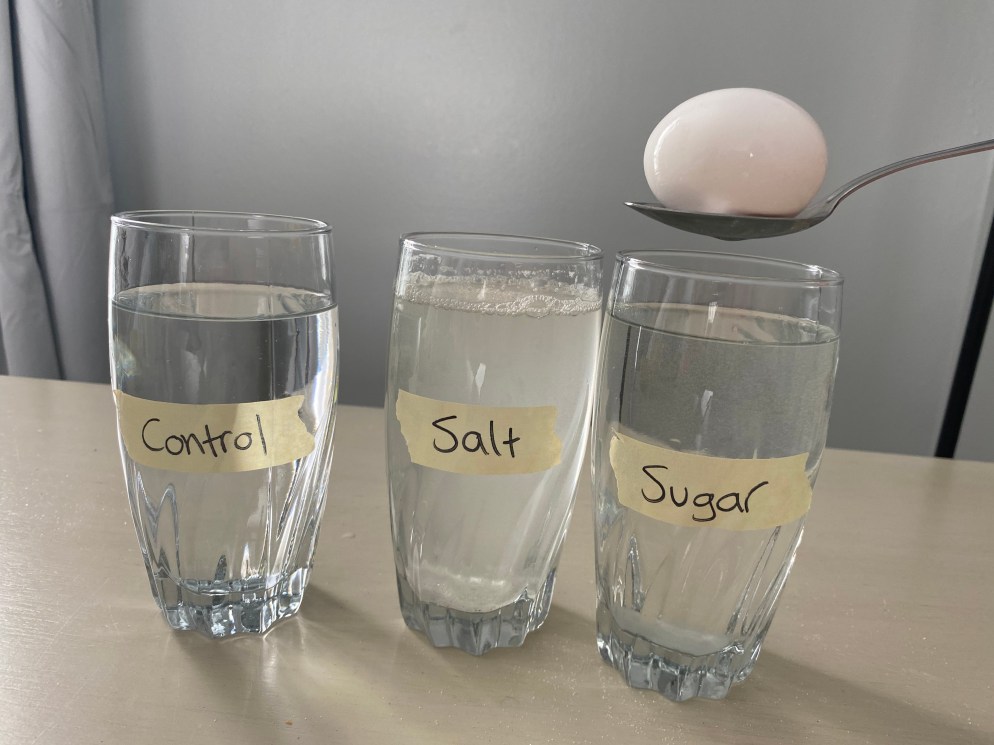
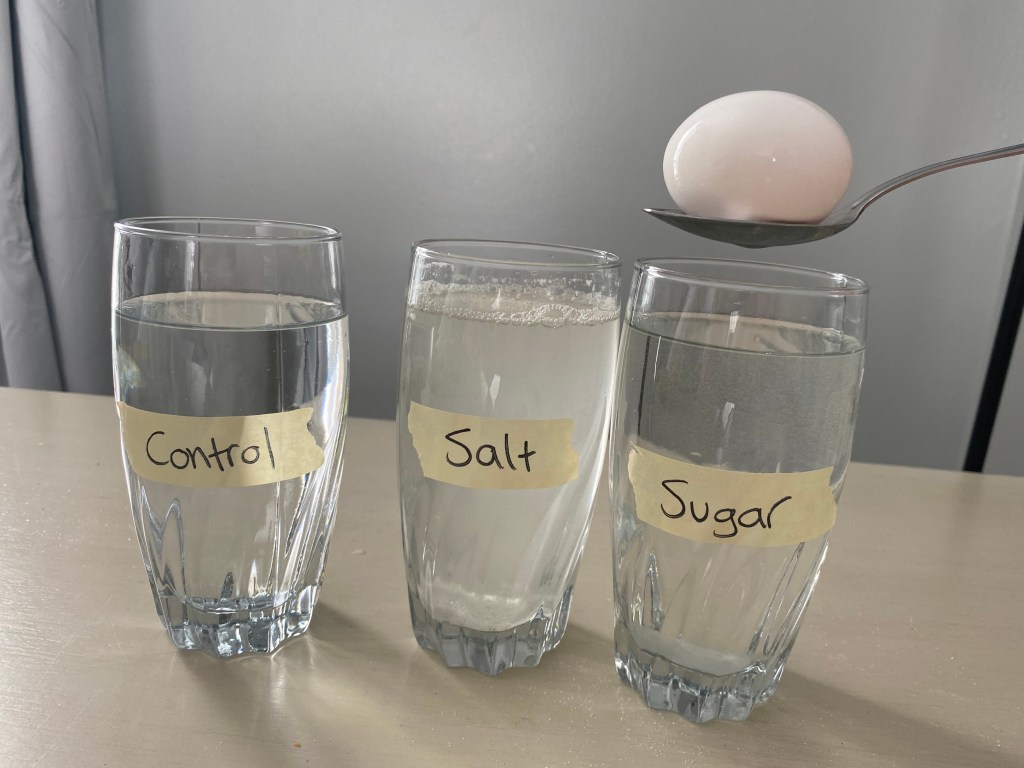
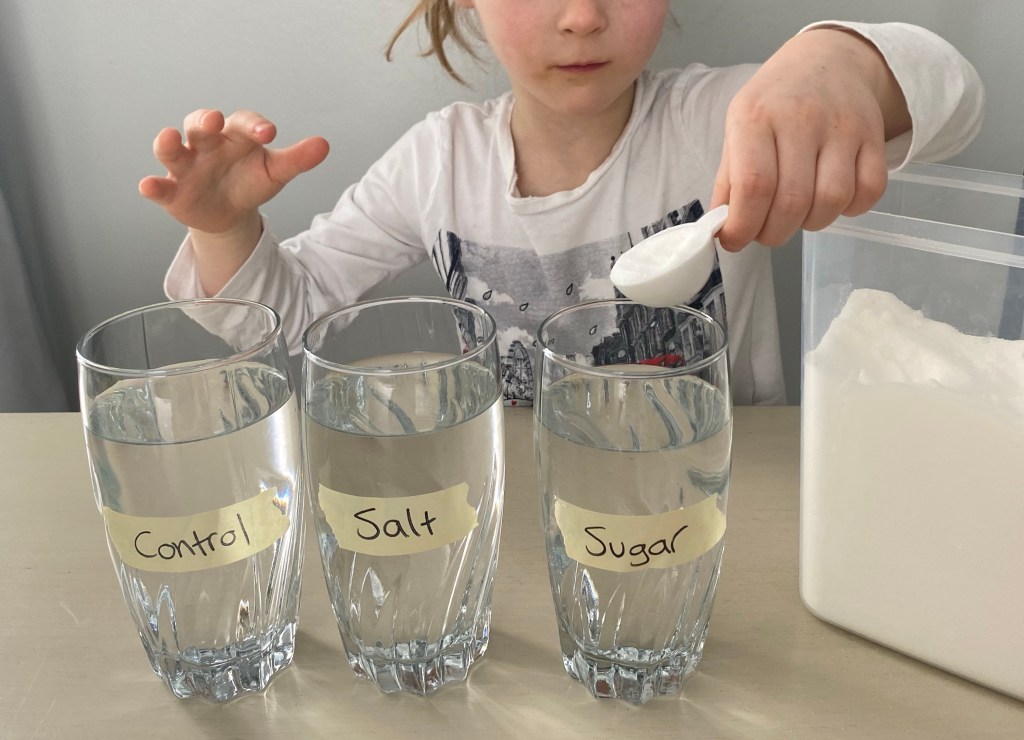
    We did a little experiment at home to test the buoyancy of an egg when first submerged in water, then sugar water, then lastly in salted water. This was to test the different levels of density in each of these water glasses, and compare it to the egg’s own density.

    This was my oldest’s first time learning about density and salinity. She was quite baffled that we were actually able to make the egg float!

    (My toddler’s favourite part was watching the glasses be stirred and the sugar and salt getting dissolved!)

    Check out the directions below to do this yourself at home!

    Here’s a short video of the process and the kid’s delight in seeing the egg bobbing in the glass!

    Egg Density Experiment:

    Supplies Needed:

    Directions:

    1. Fill the 3 glasses with equal amounts of cold water.
    2. Label each glass: 1-Control, 2-Salt, 3-Sugar.

    3. Put 8 Tablespoons of table salt in the “Salt” glass and stir well until dissolved.

    4. Put 8 Tablespoons of granulated sugar in the “Sugar” glass and stir well until dissolved.

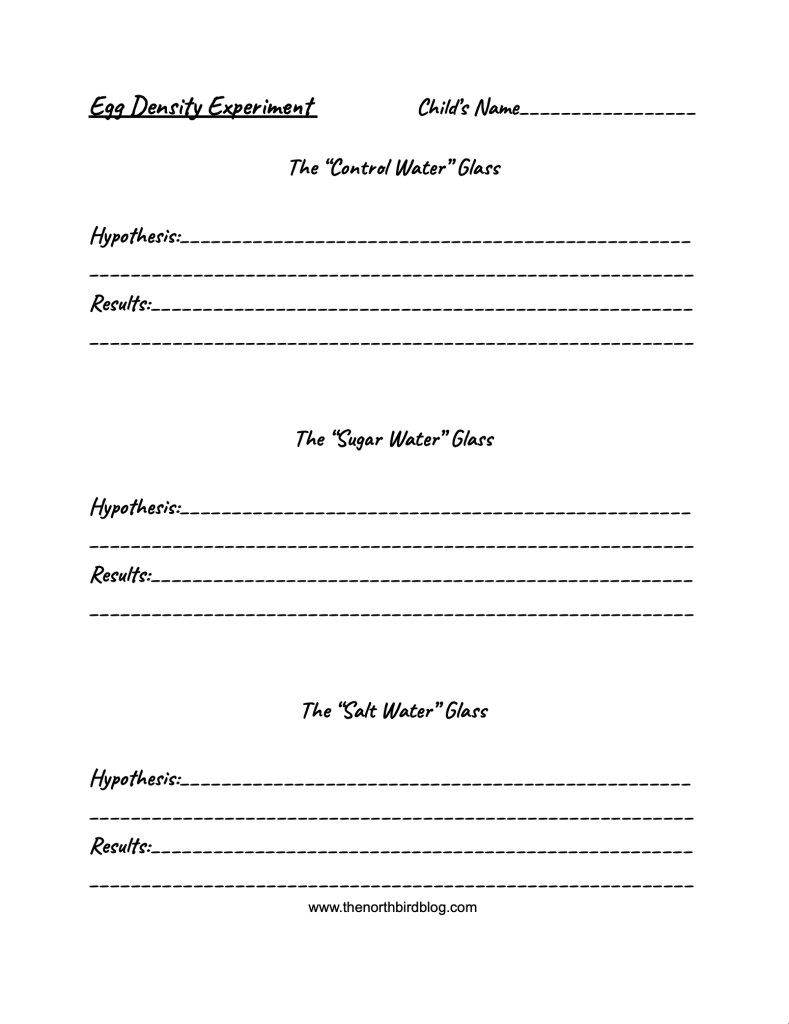
    5. Ask the kids what they think will happen. They can write their “hypothesis” in the attached PDF printable at this point.

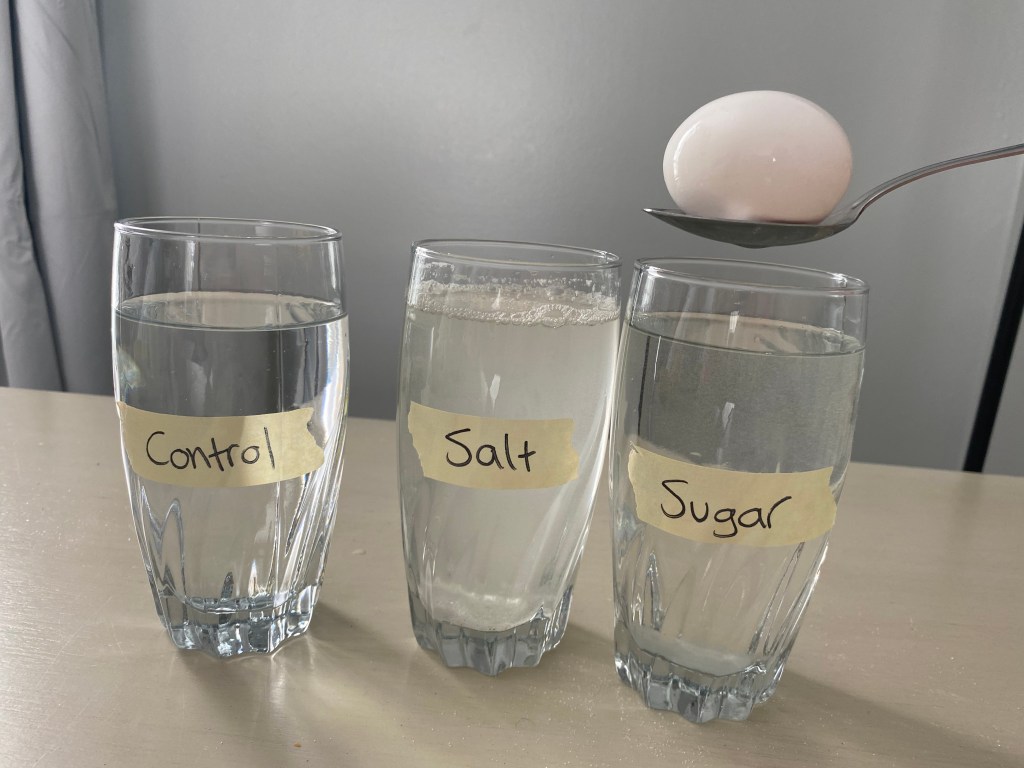
    6. Place egg carefully in the “Control” glass (you might want to use the spoon to lower it in…!)

    7. Then put egg in the “Sugar” glass, followed by the “Salt” glass, and see the results! If easier, use two eggs for these glasses to compare the egg’s buoyancy.

    8. Document your findings and compare your results to the hypothesis made earlier. See if you guessed right or were surprised!

    Our Findings:

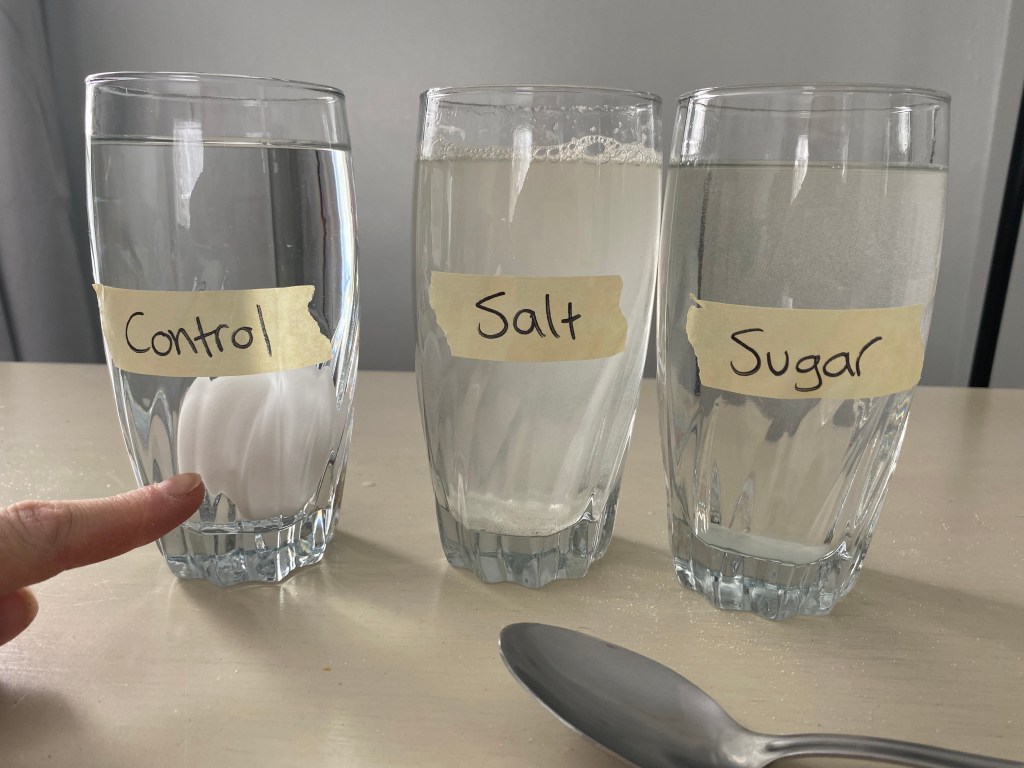
    We discovered that in the “Control” glass of water, the egg was more dense than the water, so it sank.

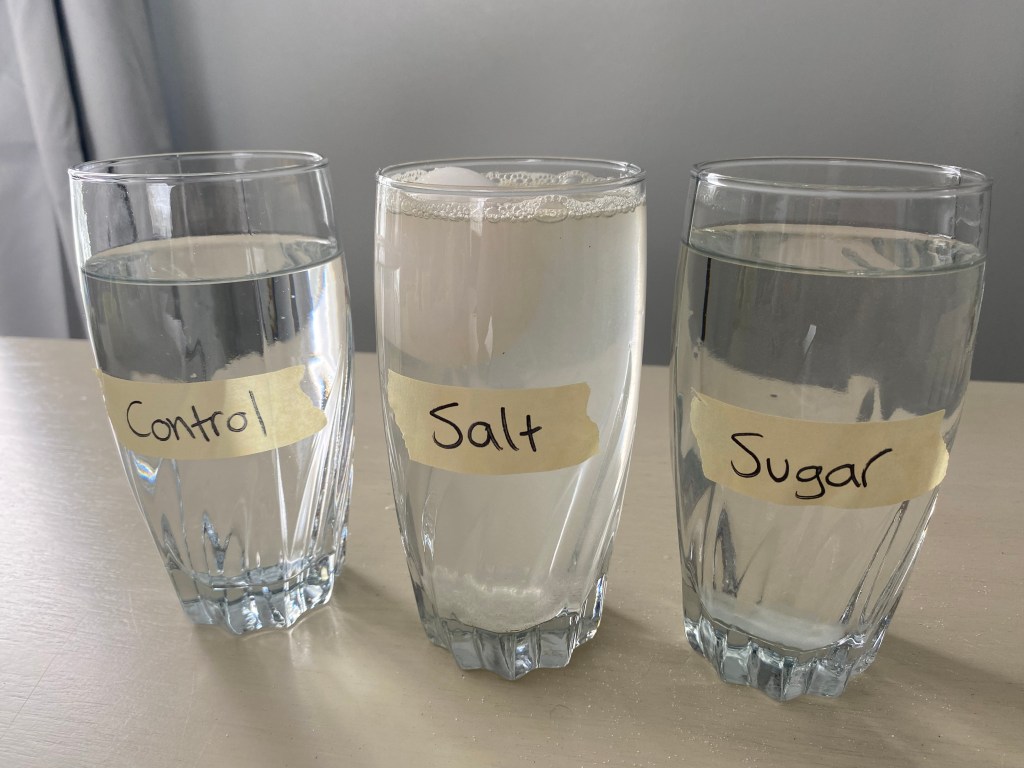
    The “Sugar” glass of water was more dense than the “Control” water, but not more dense than the egg, so the egg lifted a bit in the water but didn’t float on the surface.

    The “Salt” glass of water had the highest density. We discovered that when the egg was put in it, it floated on the water’s surface. This showed that the egg had a lower density than the salted water.

    Educational Videos

    “Why is it called “Dead Sea”? Why does everyone float in this sea?” by Science ABC

    This is a very detailed thorough video about the density of salt in the Dead Sea (Israel). They discuss why people can effortlessly float in it, and how there is such a high amount of salt in that particular body of water. This video is definitely geared toward older kids (my 6 year old’s eyes sort of “glazed over” after a few minutes in!)

    “Why is the Ocean Salty?” by Mystery Science

    This video is well done and designed to engage younger grades. It is full of questions that younger kids ask (at least ones that my oldest has asked me and I had no idea the answer to!).

    I love how there is also a part where they recommend pausing the video to discuss with the kids “Why do you think the ocean is salty but lakes and rivers aren’t?”

    Sink or Float?” by SciShow Kids

    This cute video discusses the topic of density and how the density of different items compare with the density of water. There is a simple experiment that you can do at home alongside the video so that younger kids can test this concept out for themselves. The conclusion of the study is communicated clearly, making it easy for younger kids to understand the concept of density.

    Other posts on Ocean Life:

    Hi, I’m Jessie!

    I’m a Wife and Homeschooling Mom living in a remote town in Northern Ontario, Canada. I love making wholesome meals for my family from scratch, homeschooling our girls and learning more about natural living.

    Read more about my story HERE.

    Subscribe to Northbird’s email list to get weekly posts on: tasty recipes, activity ideas for kids, natural living tips, and some genuine mom thoughts and encouragement!

    Exploring Salt Water Density: Homeschooling Egg Experiment


    Supplies Needed

  • 3 tall glasses
  • 6 Tablespoons of table salt
  • 6 Tablespoons of granulated sugar
  • An egg
  • A spoon
  • Label & marker
  • PDF printed experiment page

  • Directions

    1. Fill the 3 glasses with equal amounts of cold water.
    2. Label each glass: 1-Control, 2-Salt, 3-Sugar.
    3. Put 8 Tablespoons of table salt in the “Salt” glass and stir well until dissolved.
    4. Put 8 Tablespoons of granulated sugar in the “Sugar” glass and stir well until dissolved.
    5. Ask the kids what they think will happen. They can write their “hypothesis” in the attached PDF printable at this point.
    6. Place egg carefully in the “Control” glass (you might want to use the spoon to lower it in…!)
    7. Then put egg in the “Sugar” glass, followed by the “Salt” glass, and see the results! If easier, use two eggs for these glasses to compare the egg’s buoyancy.
    8. Document your findings and compare your results to the hypothesis made earlier. See if you guessed right or were surprised!

    Return to Top

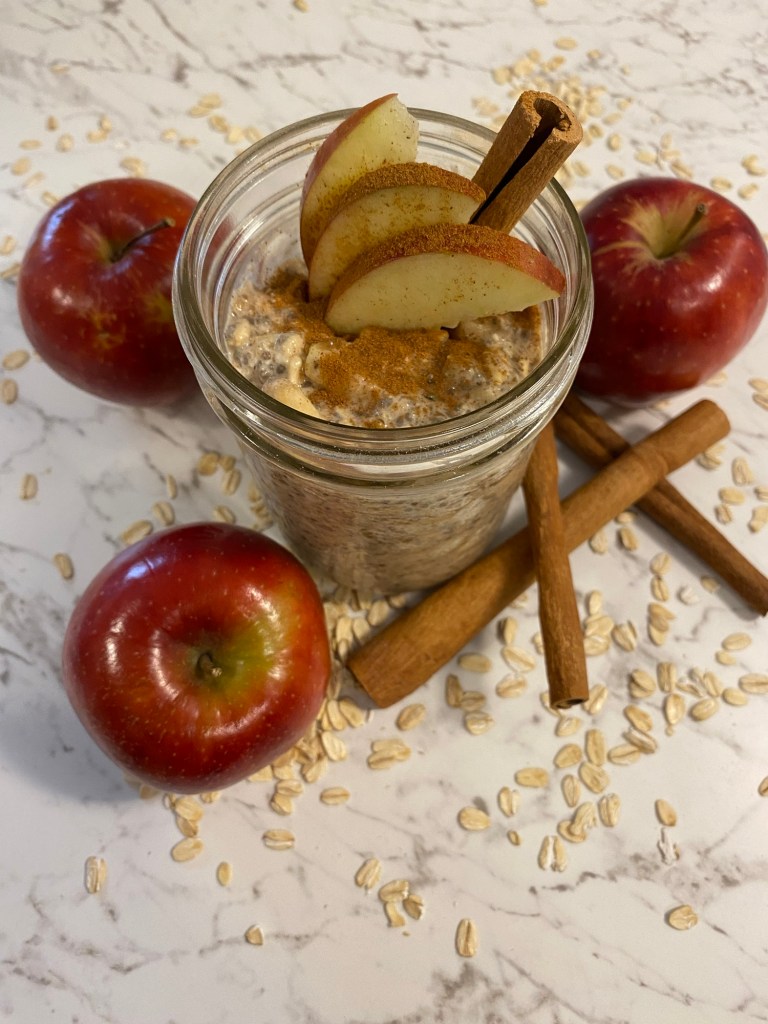
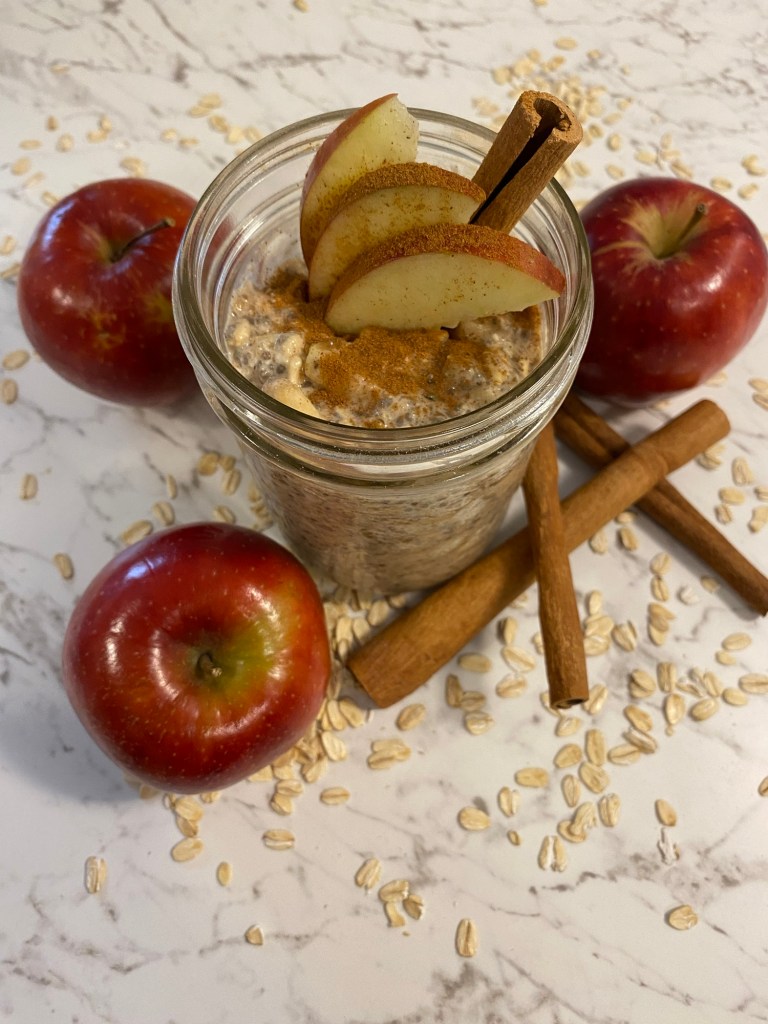
    Apple Cinnamon Overnight Oats

    Find Northbird on social media:

    This post contains affiliate links. As an Amazon associate, I earn from qualifying purchases. This means that I make a small commission at no extra cost to you. You can read my full disclosure HERE.

    Jump to Recipe Card

    Jump to Video

    Return to “Breakfast”

    Overnight Oats in our Home…

    We like to start off our Monday mornings with a ready-to-go container of overnight oats, prepared the night before.

    For several months now, I have been taking about ten minutes each Sunday evening to quickly mix up 4 identical containers of overnight oats.

    Then overnight, the rolled oats and other ingredients will soften and thicken in the milky/yogurt mix and deliciously absorb the flavours of apple and cinnamon.

    The next morning it is a super quick breakfast and easy start to the day (which is why we have variations of this recipe every Monday morning!).

    I always feel full, and well energized during the day when having this for breakfast, and often don’t realize how much time has gone by when I finally feel hungry again (which says a lot, because our five month old baby is currently exclusively breastfed, and that usually makes me constantly hungry!)

    Nutrition of Overnight Oats:

    Overnight oat breakfasts are packed full of protein, healthy fats, carbs, and lots of good nutrition for our bodies.

    Did you know that by soaking the oats overnight they are fermenting? This is one reason why softened and lightly fermented oats are easier to digest and beneficial for gut health.

    Here are a few other ways that overnight oats help our bodies:

    • Fibre (found in the oats and seeds) helps to regulate and improve digestion
    • High in protein: essential for muscle growth and producing energy
    • Lots of B-Vitamins, copper, biotin, manganese and zinc that is beneficial to hair, skin and nails.
    • Healthy fats (chia and yogurt) help support heart health and brain function.
    • Unsaturated fatty acids and magnesium helps to support fat burning and weight loss.
    • Zinc helps to support the immune system and reduce inflammation.

    Cinnamon: More than just a “spice”

    • Chinese medicine has been using cinnamon as an antioxidant for centuries
    • Studies show that it reduces inflammation
    • Used as an anti-fungal and antiviral
    • It helps to regulate blood sugar levels
    • Cinnamon supports heart health
    • Improves circulation through the body

    Apples: “An apple a day keeps the doctor away” (In some ways this old quote can certainly be true!)

    • Apples give support to our immune systems
    • They help to prevent colon cancer
    • Apples assist with growth of “good gut” bacteria in the intestines
    • Eating apples can lower cholesterol
    • Support glucose regulation
    • Apples are high in fibre (pectin)
    • Has been shown to help reduce blood pressure
    • Helps to reduce inflammation

    Here’s a short video of visually putting it all together to enjoy the next morning!

    How to Make Apple Cinnamon Overnight Oats:

    Supplies Needed:

    Ingredients:

    • 1/2 cup rolled oats (You could use quick oats, but old fashioned/rolled oats will have the best results)
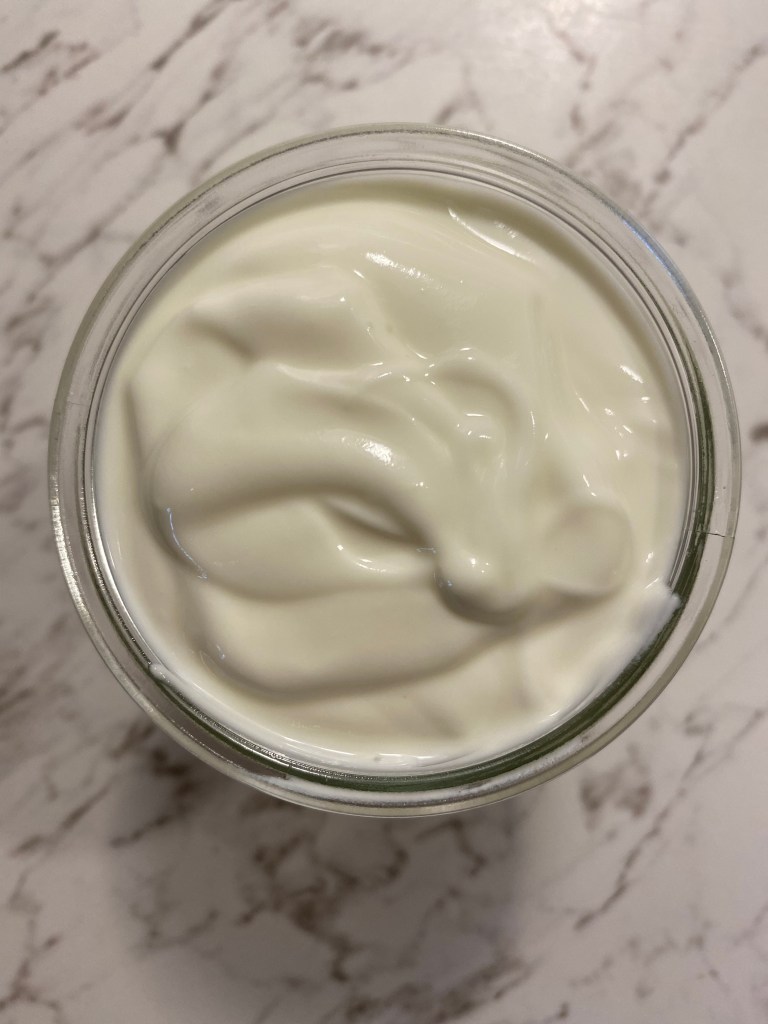
    • 1/4 cup yogurt (greek is my favourite. You can check out HERE how to make your own yogurt)
    • 3/4 cup milk (or favourite nut milk)
    • 1 tablespoon chia seeds
    • 1 tablespoon hemp seeds
    • 2 tablespoons of 3 Seed Blend (See THIS POST on how to make it with chia/sunflower/flax seeds)
    • 1/2 teaspoon vanilla extract
    • 1 tablespoon liquid honey
    • 1/2 teaspoon ground cinnamon
    • 1/2 apple, washed & diced

    Directions:

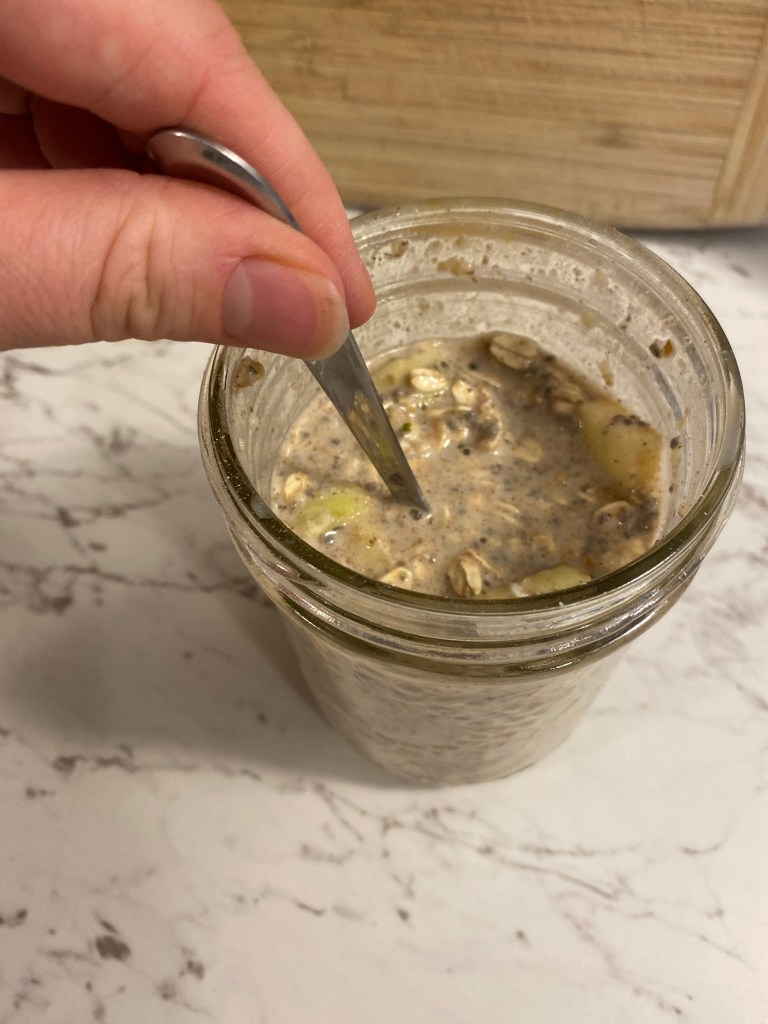
    1. Add all ingredients to container or jar and stir well. Add additional milk at the end if desired (it will thicken overnight).

    2. Keep in fridge overnight, stir again the next morning and add another dash of cinnamon in top if desired.

    Check out these other Breakfast Recipes from the Northbird Kitchen!

    Hi, I’m Jessie!

    I’m a Wife and Homeschooling Mom living in a remote town in Northern Ontario, Canada. I love making wholesome meals for my family from scratch, homeschooling our girls and learning more about natural living.

    Read more about my story HERE.

    Subscribe to Northbird’s email list to get weekly posts on: tasty recipes, activity ideas for kids, natural living tips, and some genuine mom thoughts and encouragement!

    Apple Cinnamon Overnight Oats

    • Servings: 1x 500ml jar (1 pint)
    • Difficulty: Easy
    • Print

    Start your day off smoothly with this quick and tasty Overnight Oat recipe! Simply mix in a jar the night before, then take out of the fridge the next morning and it's ready to eat!


    Ingredients

  • 1/2 cup rolled oats
  • 1/4 cup yogurt
  • 3/4 cup milk (or favourite nut milk)
  • 1 tablespoon chia seeds
  • 1 tablespoon hemp seeds
  • 2 tablespoons of 3 Seed Blend **See THIS POST on how to make it
  • 1/2 teaspoon vanilla extract
  • 1 tablespoon liquid honey
  • 1/2 teaspoon cinnamon
  • 1/2 apple, washed & diced

  • Directions:

    1. Add all ingredients to container or jar and stir well. Add additional milk at the end if desired (it will thicken overnight).
    2. Keep in fridge overnight, stir again the next morning and add another dash of cinnamon in top if desired.

    Nutrition


    Per 500ml serving: 591 calories; 24.2 g fat; 70 g carbohydrates;
    27.1 g protein.

    Return to Top

    Homemade Flu Medicine: Fire Cider

    Find Northbird on social media:

    This post contains affiliate links. As an Amazon associate, I earn from qualifying purchases. This means that I make a small commission at no extra cost to you. You can read my full disclosure HERE.

    Jump To Recipe Card

    Jump to Video

    Return to “More Recipes”

    Return to “Natural Living”

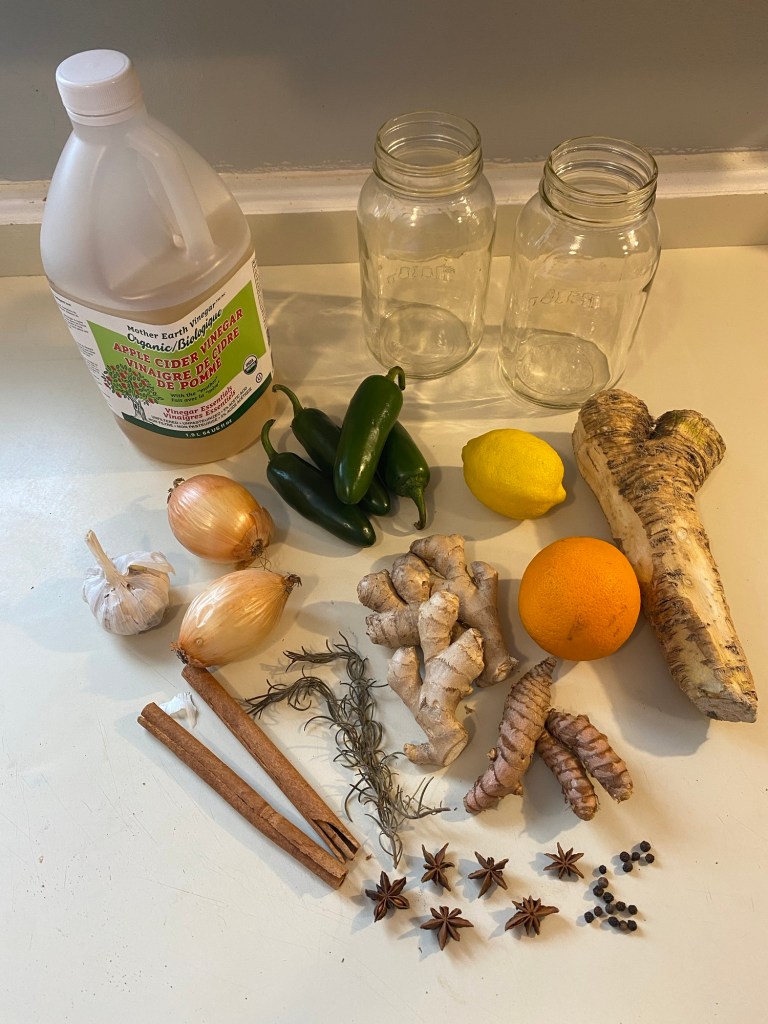
    What is Fire Cider?

    Fire Cider is an amazing natural remedy that will boost your immune system and help protect you from getting those frustrating seasonal viruses that always seem to be floating around.

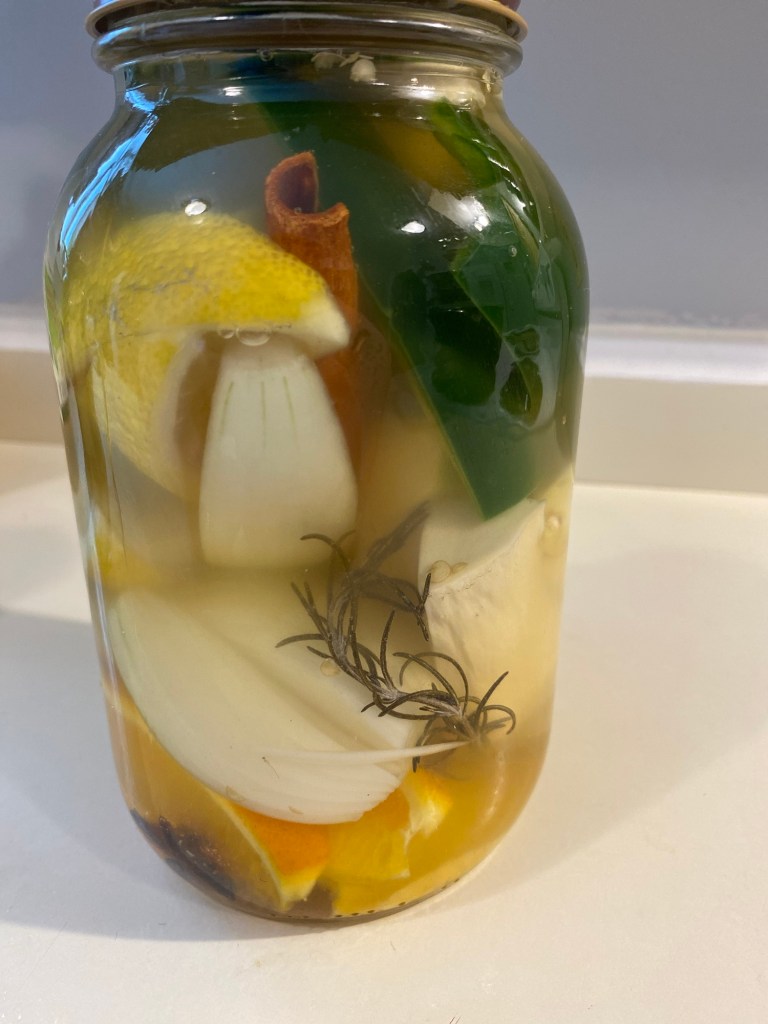
    This powerful tonic looks different from home to home, but generally they contain a fermented mixture of:

    • apple cider vinegar
    • hot peppers
    • garlic
    • onions
    • and horseradish root.

    After fermenting for several weeks, the liqud is strained into a new jar and honey can be added to help sweeten the homemade tonic.

    These other tubers, citrus, herbs and spices are ones that I’ve either used in my own fire cider, or I’ve heard of folks using in theirs:

    • Turmeric
    • Ginger
    • Lemon
    • Orange
    • Lime
    • Rosemary
    • Thyme
    • Star anise
    • All Spice Berries
    • Peppercorns
    • Cinnamon stick

    All of these are amazing ingredients on their own, and packed full of nutrition and natural medicine for our bodies. When put together, all of these are one powerful kick to get rid of illness!

    On a personal note, special mention should go to my mother, Sharon, who became known in our church and homeschooling community for having her own variation of fire cider, or “Sharon’s Brew”.

    In our home growing up, it was the dreaded jar in the fridge that had been fermenting for AGES and honestly tasted quite deadly. The longer it fermented in the jar, the more potent the hot peppers made the taste of the liquid.

    Whenever colds or illness came around, out came the jar and a handful of spoons to dip into the liquid and swallow the awful stuff. No honey to sweeten it for us!

    But it worked. And it was a much better solution than popping pharmaceutical drugs into our bodies.

    That’s why natural medicine is so important: you know exactly what is going into your body, and you are using herbs and natural foods to look after the health of your body —the way that our Creator intended.

    Where Does Fire Cider Come From?

    The idea of fire cider has been used for thousands of years by herbalists, physicians and apothecaries, who would ferment different foods, spices and herbs to make this amazing natural remedy.

    However, it wasn’t until around 1970 that a well known herbalist and author named Rosemary Gladstar began encouraging the public to make their own apple cider vinegar tonic, and made the name “Fire Cider” popular. You can read more in her book “Fire Cider! 101 Zesty Recipes for Health-Boosting Remedies”.

    On that note, she has many more amazing books on medicinal herbs and natural remedies that you can check out HERE.

    Why is it Called “Fire Cider”?

    The “fire” part of it is from the hot peppers that ferment in the apple cider vinegar and give it that special “kick” that fire cider is known for.

    Health Benefits of Fire Cider Ingredients:

    Please note, that although this is an amazing and medicinally powerful mixture of fermented goodness, I do not have a medical or herbalist degree. So when I recommend making this recipe, it is purely from experience and my own research that leads me to write about this topic.

    I am passionate about learning all I can about natural medicine, and sharing what I have learned on this blog. I highly encourage anyone interested to learn more from seasoned herbalists like Rosemary Gladstar,

    Reasons NOT to take Fire Cider:

    Based on my research, I do not recommend taking this every day if you are pregnant or if you have acid reflux or other chronic digestive problems. I also wouldn’t give it to a young child.

    Ways to take the Fire Cider:

    If you have a sensitive stomach and cannot take it strait, here are some other ways to still take fire cider:

    • Dilute it with juice or other beverage
    • Mix it into your meal
    • Use it as a tangy salad dressing
    • Use it as a marinade

    Watch this video to see the process of making your own fire cider!

    How to Make Your Own Fire Cider:

    Supplies Needed:

    Ingredients:

    Directions:

    1. Cut all fresh ingredients up and stuff into jars. Add spices in.
    2. Fill the jar up to the top with apple cider vinegar, making sure that all the ingredients are covered to prevent mold from growing.
    3. Use a plastic jar lid or put a layer of parchment paper between the jar and the metal lid so that the vinegar doesn’t react with the metal.
    4. Give jar a shake once a day, and switch the lid once a week or as needed.
    5. Ferment for 4 weeks.
    6. Use a fine mesh or cheesecloth strainer to strain out the jar contents and return liquid to fresh jars.
    7. Store in fridge and use within one year.
    8. For an adult: take three times a day when feeling ill, or take once a day as a tonic to boost and protect your immune system. (Dosage recommended by theherbalacademy.com)

    Additional Notes:

    • You can add honey directly to the jar until it has reached the desired taste to off-set the “kick”, or you can store the jar with just the fermented liquid and add sweetener as you take it. I usually take my “ medicine shot” with homemade elderberry syrup to use instead of honey to sweeten it.
    • 2 packed 1-litre jars produces around 750-1000ml of finished fire cider.

    More Ideas for Natural Living:

    Hi, I’m Jessie!

    I’m a Wife and Homeschooling Mom living in a remote town in Northern Ontario, Canada. I love making wholesome meals for my family from scratch, homeschooling our girls and learning more about natural living.

    Read more about my story HERE.

    Subscribe to Northbird’s email list to get weekly posts on: tasty recipes, activity ideas for kids, natural living tips, and some genuine mom thoughts and encouragement!

    Check out on the Natural Living Page:

    Nature’s Medicine

    An on-going picture collection of various herbs, vegetables, fruits, oils, etc and highlighting some of the amazing health benefits that they have to offer us!
    Homemade Flu Medicine: Fire Cider

    • Servings: 1-2 1 litre jars
    • Difficulty: Easy
    • Print

    A powerful natural tonic made from hot peppers, root vegetables, spices, citrus, herbs, and fermented in apple cider vinegar.


    • You can add honey directly to the jar until it has reached the desired taste to off-set the “kick”, or you can store the jar with just the fermented liquid and add sweetener as you take it. I usually take my “ medicine shot” with homemade elderberry syrup to use instead of honey to sweeten it.
    • 2 packed 1-litre jars produces around 750-1000ml of finished fire cider.


    Ingredients

  • Apple Cider Vinegar
  • Fresh horseradish root
  • Onion
  • Garlic
  • Ginger root
  • Turmeric root
  • Hot peppers (chillies, jalepenos, your preference how hot you want it!)
  • Lemon
  • Orange
  • Rosemary (fresh or dried)
  • Star anise
  • Peppercorns (10-15 per 1 litre jar)
  • Cinnamon stick

  • Directions:

  • Cut all fresh ingredients up and stuff into jars. Add spices in.
  • Fill the jar up to the top with apple cider vinegar, making sure that all the ingredients are covered to prevent mold from growing.
  • Use a plastic jar lid or put a layer of parchment paper between the jar and the metal lid so that the vinegar doesn’t react with the metal.
  • Give jar a shake once a day, and switch the lid once a week or as needed.
  • Ferment for 4 weeks.
  • Use a fine mesh or cheesecloth strainer to strain out the jar contents and return liquid to fresh jars.
  • Store in fridge and use within one year.
  • For an adult: take three times a day when feeling ill, or take once a day as a tonic to boost and protect your immune system. (Dosage recommended by theherbalacademy.com)
  • Nutrition


    Per 1 tablespoon serving: 27 calories; 0.8 g fat; 5.2 g carbohydrates;
    0.9 g protein.

    Return to Top

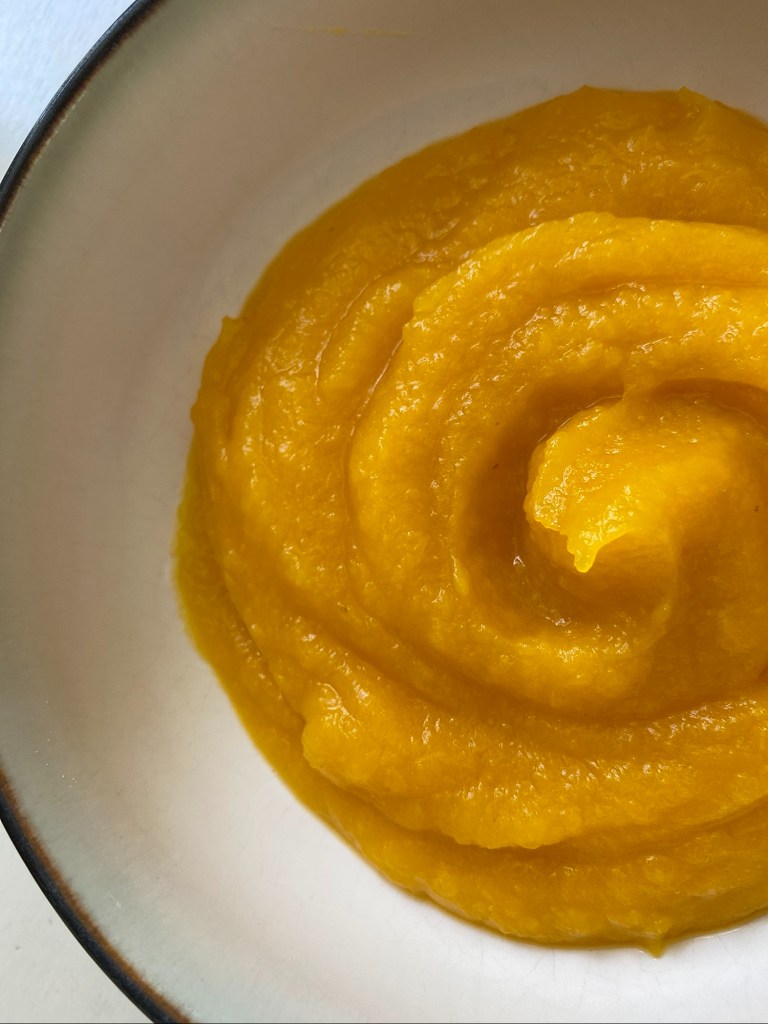
    Make Your Own Pumpkin Puree

    Find Northbird on social media:

    This post contains affiliate links. As an Amazon associate, I earn from qualifying purchases. This means that I make a small commission at no extra cost to you. You can read my full disclosure HERE.

    Jump To Recipe Card

    Jump to Video

    Return to “Homemade Pantry”

    We love this time of year! Lots of beautiful fall colours, it’s sweater weather, and it’s time to harvest what is left in the garden.
    (Now, this year is a bit of an exception as there wasn’t much of a garden to speak about!) But other years at my parent’s house there has been much fun in discovering all the pumpkins and squash that have been hiding all summer, and bringing them inside to store for the next several months.

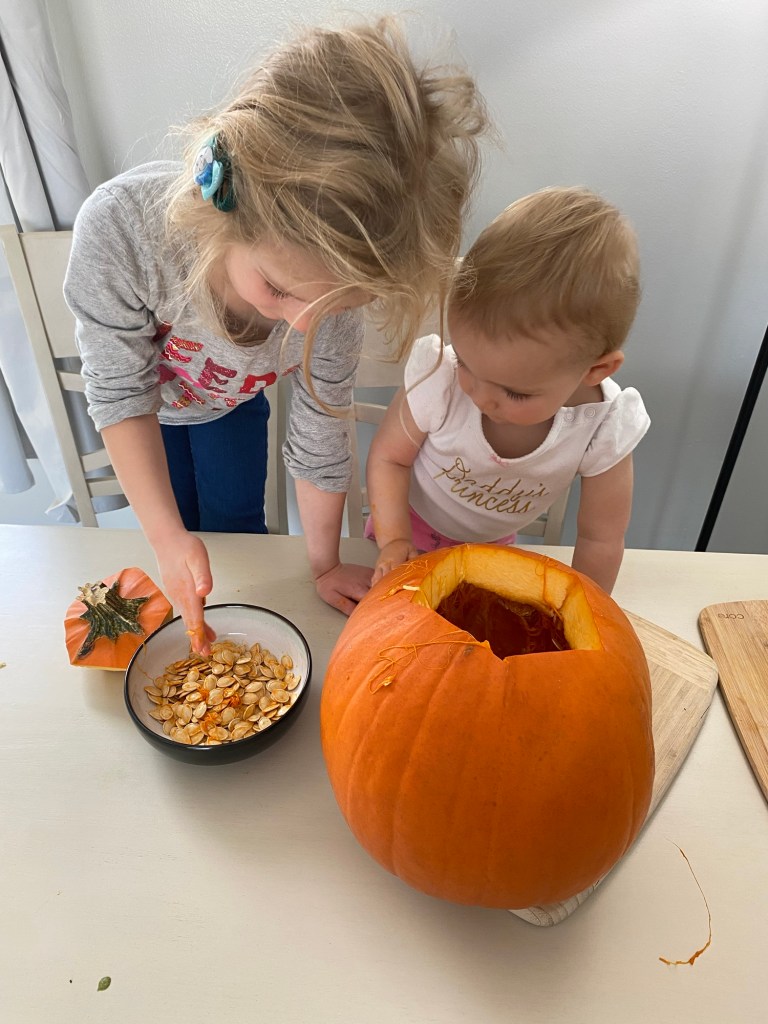
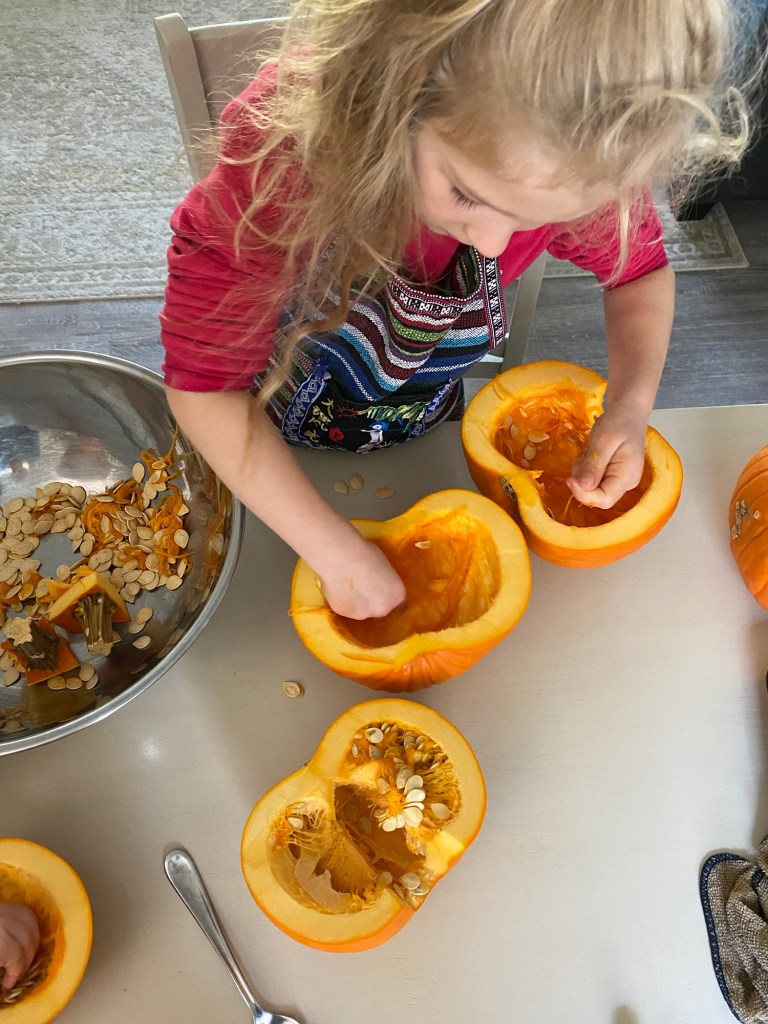
    We particularly love cutting up and cooking pumpkins to turn into homemade pumpkin puree. It’s a great activity for the kids to help with, working on their fine motor skills and scooping out all the gooey seeds!

    Ways to use Pumpkins and Pumpkin Puree:

    There are so SO many ways of using this tasty fall vegetable besides carving it up and putting it on your doorstep for decoration!

    Here are a few of my favourites plus a few more fun ideas:

    Sweet
    Savoury
    Pumpkin PiePumpkin Seed Wheat Bread
    Pumpkin MuffinsPumpkin Crackers
    Pumpkin Energy BallsPumpkin Egg Noodles & Other Pastas
    Pumpkin Chocolate SquaresPumpkin Hummus & Veggie Dips
    Pumpkin Sweet BreadPumpkin Soup Variations
    Pumpkin CookiesPumpkin Casserole
    Pumpkin Spiced Latte & Other drinksStuffed Pumpkin Dishes
    Pumpkin Pancakes & WafflesFried Pumpkin Fritters

    Does the Size of Pumpkin Matter?

    Honestly, the size only matters for what you plan on using the puree for. The smaller pumpkins will typically be sweeter, and the larger ones will just be a bit more watery.

    Smaller pumpkins, such as “pie pumpkins” are usually used for (obviously!) pies! They are sweeter, and have a more distinct taste, making them ideal for baked goodies and treats.

    The larger pumpkins are not usually used for pies and baking due to their slightly more dulled taste because they have a higher water content. This of course doesn’t mean that they can’t be used in baking and cooking, it’s purely a matter of preference.

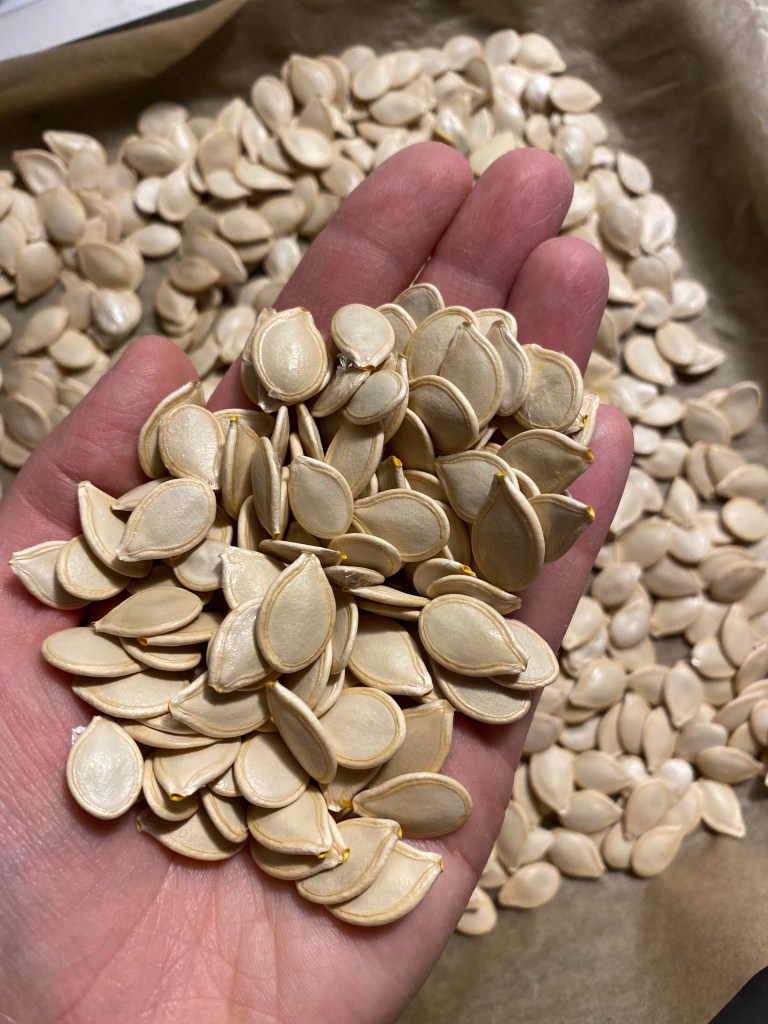
    What can you do with the Pumpkin Seeds?

    Here are 3 ways that we use leftover pumpkin seeds:

    1. Seed Saving for planting the following year (s).
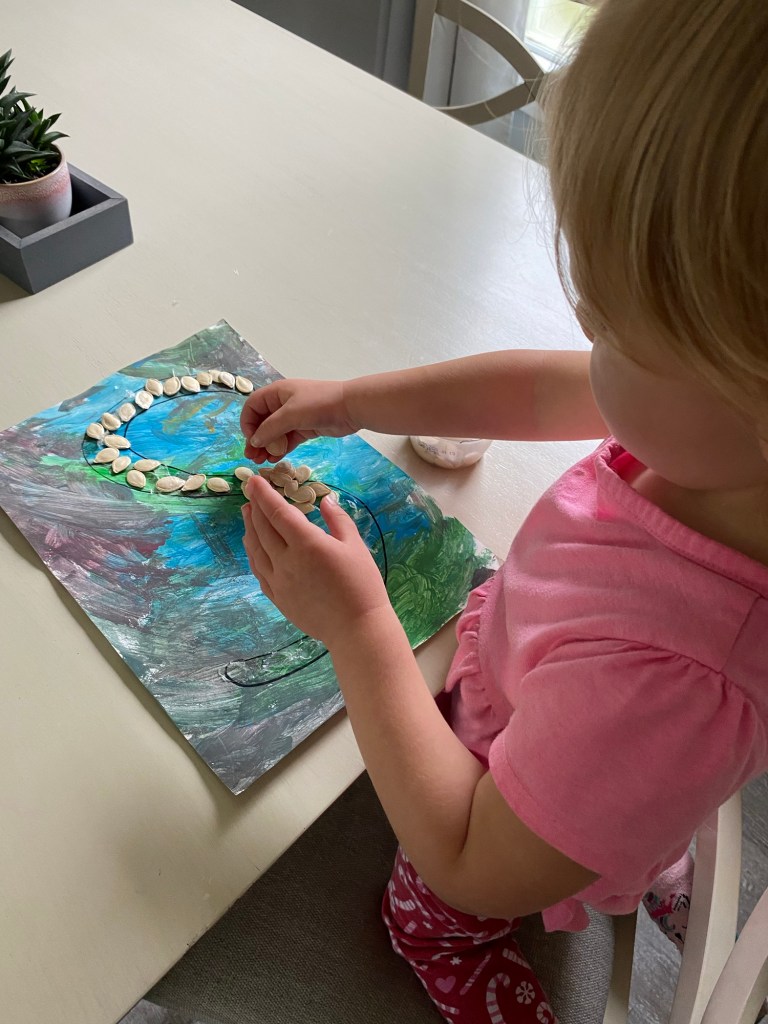
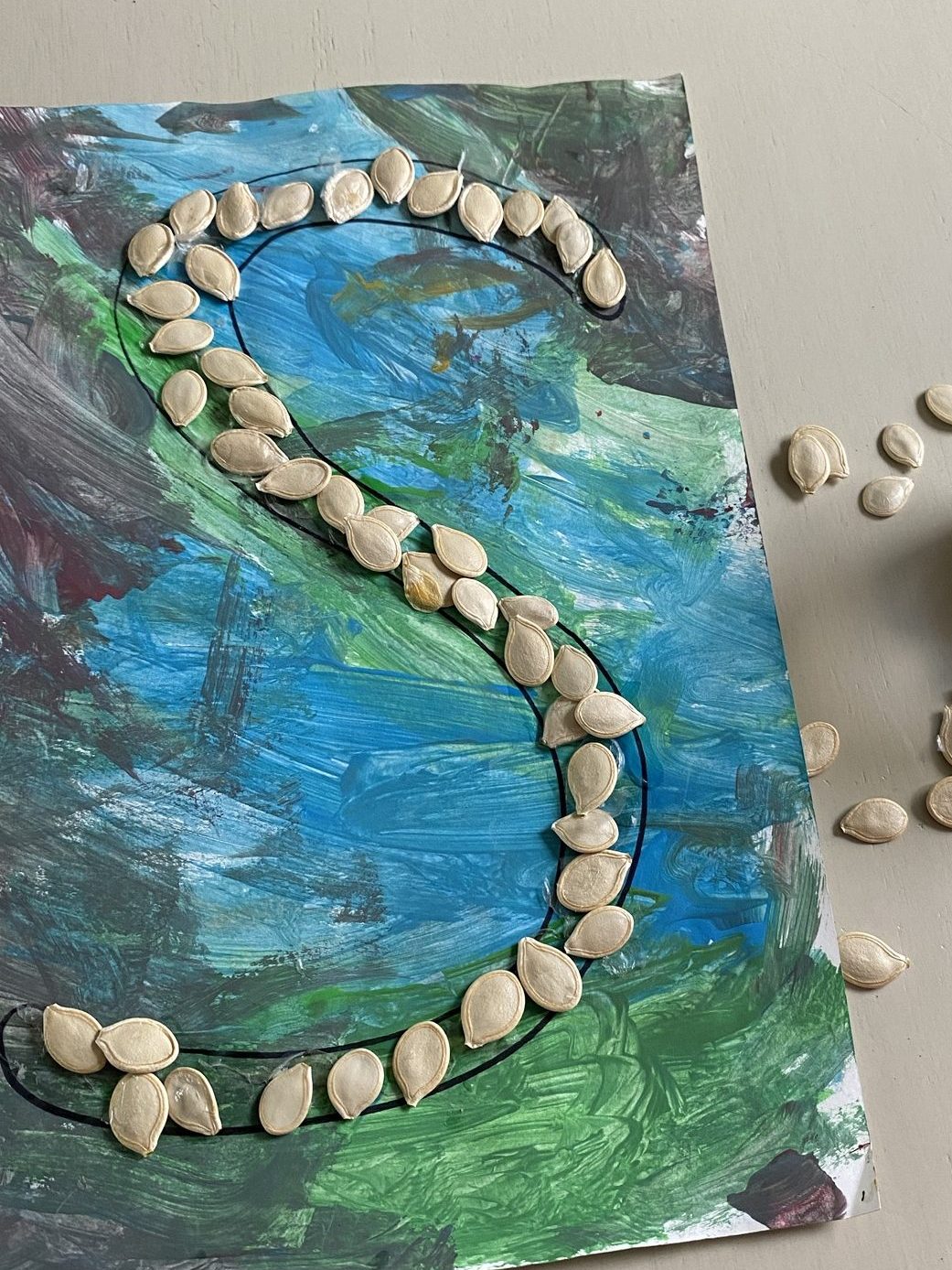
    2. Dry the seeds to use in crafts or educational activities.
    3. Roast and eat them in so many different ways!

    Saving Pumpkin Seeds for Planting:

    1. Clean seeds in a bowl of water and separate out any pulp or broken seeds. Select the biggest and best seeds to save.
    2. Drain off as much water as possible and pat the seeds as fry as you can.
    3. Put seeds on parchment paper to continue drying for several days.
    4. Put in a paper envelope and label.
    5. If you are using the seeds the following planting season, you can store it in a cool, dry pantry. If you want the germination of the seeds to last for many years, put in the freezer.
    6. Note: If it’s an heirloom pumpkin then it is definitely nice to save some seeds for future planting. If it’s a hybrid-grown pumpkin then you may not get much produce from planting the seeds, and anything grown would likely be less hardy and more vulnerable to diseases.

    Dry the Seeds for Crafts & Activities:

    1. Clean seeds in a bowl of water and separate out any pulp from them.

    2. Drain off as much water as possible and pat the seeds as dry as you can.

    3. Put seeds on parchment paper to continue drying for several days.

    4. Store the seeds in a paper envelope.

    Eating Pumpkin Seeds:

    The seeds are delicious to use in so many ways!

    • Enjoy as a salty snack
    • Add to a trail mix with other seeds, nuts and dried fruits
    • As a salad topping
    • As a pumpkin or squash soup garnish
    • Make your own pumpkin seed crackers
    • Baked into bread
    • Put in a smoothie
    • Mix into a nutritious breakfast bowl

    How to Roast Pumpkin Seeds:

    1. Wash the seeds and separate from the pulp.

    2. Mix in a small bowl with olive oil or (my favourite) Avocado oil. Add sprinklings of salt, pepper and also a dash of paprika.

    3. Spread in single layer on parchment paper.

    4. Broil on low for about 5 minutes, or until crispy (every oven is different!)

    5. Store in an airtight container at room temperature for up to one week.

    Here’s a simple video of one of the times we recently cut up some pie pumpkins.

    How to Make Your Own Pumpkin Puree

    Supplies Needed:

    Ingredients:

    • Pumpkins

    Directions:

    1. Preheat oven to 350 degrees fahrenheit.

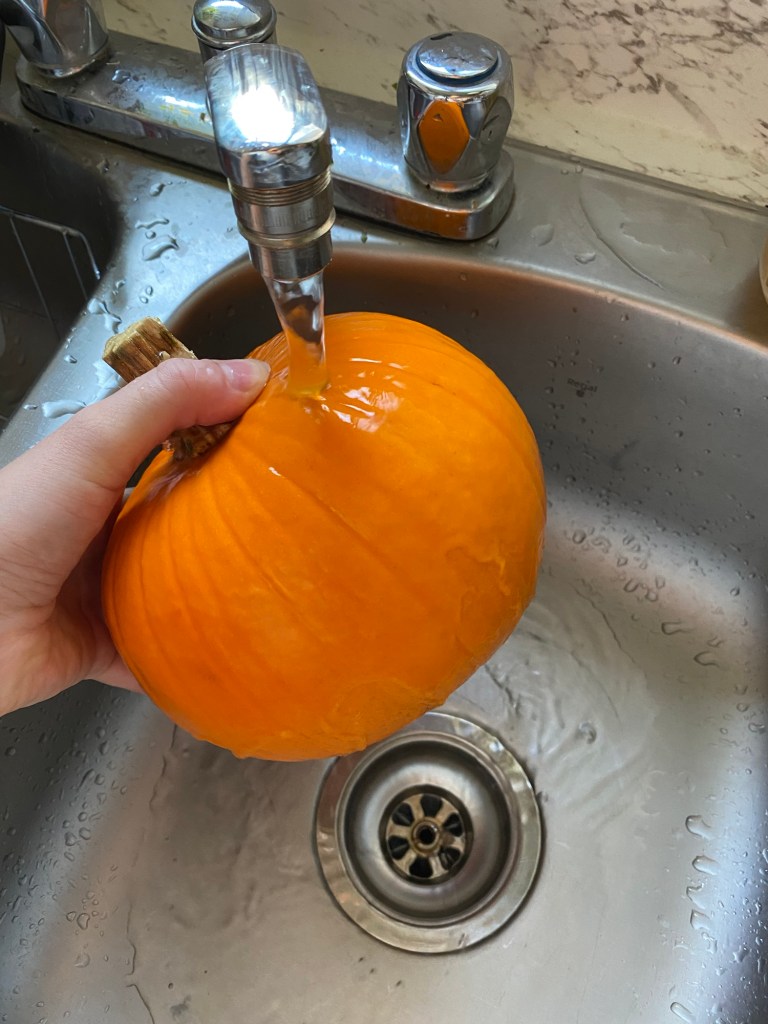
    2. Wash the outside of the pumpkins to remove any dirt.

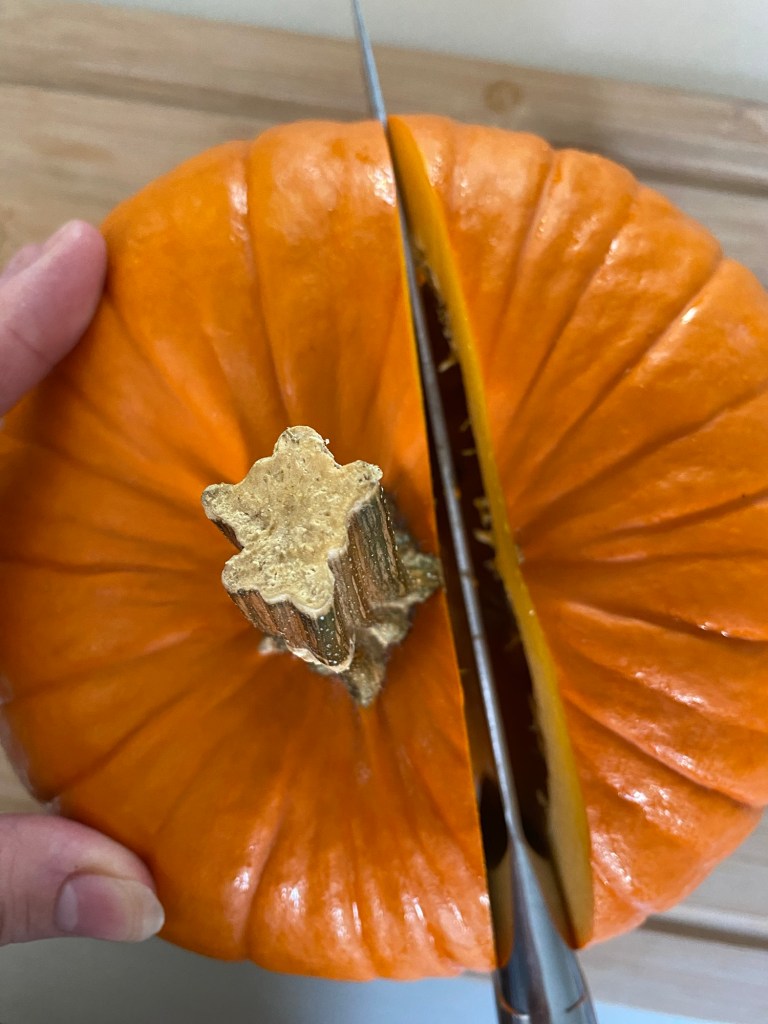
    3. If it is a small pumpkin, simply cut in half next to the stem and cut through into two halves. Cut off the stem and blossom end. If it is a larger pumpkin, cut around the stem part of the pumpkin in a circle and lift it out. Cut off the blossom ends as well.

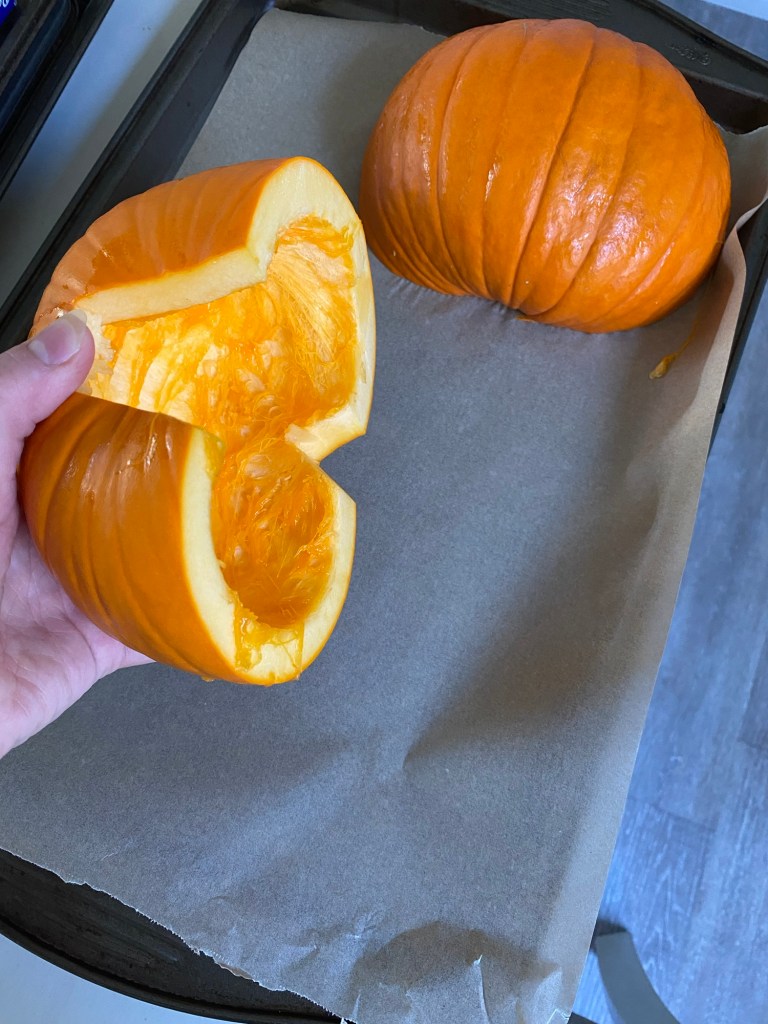
    4. Scoop the seeds out into a bowl **Save these for a tasty snack later!

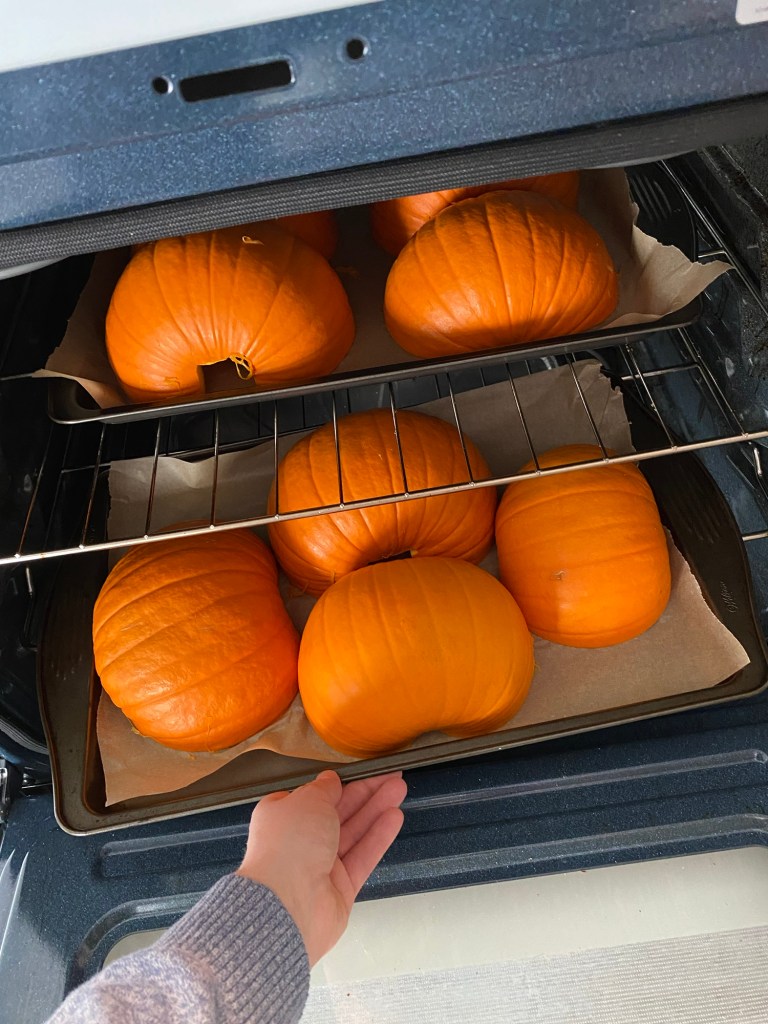
    5. Place pumpkin halves upside down on parchment-lined baking sheets.

    6. Bake fat 350 for 45-60 minutes until the pumpkin skin on the outside is soft, lightly browned, and can be easily pierced with a fork. (You will want it soft enough to easily scoop the pumpkin flesh)

    7. Let cool completely, turning right side up to cool down faster.

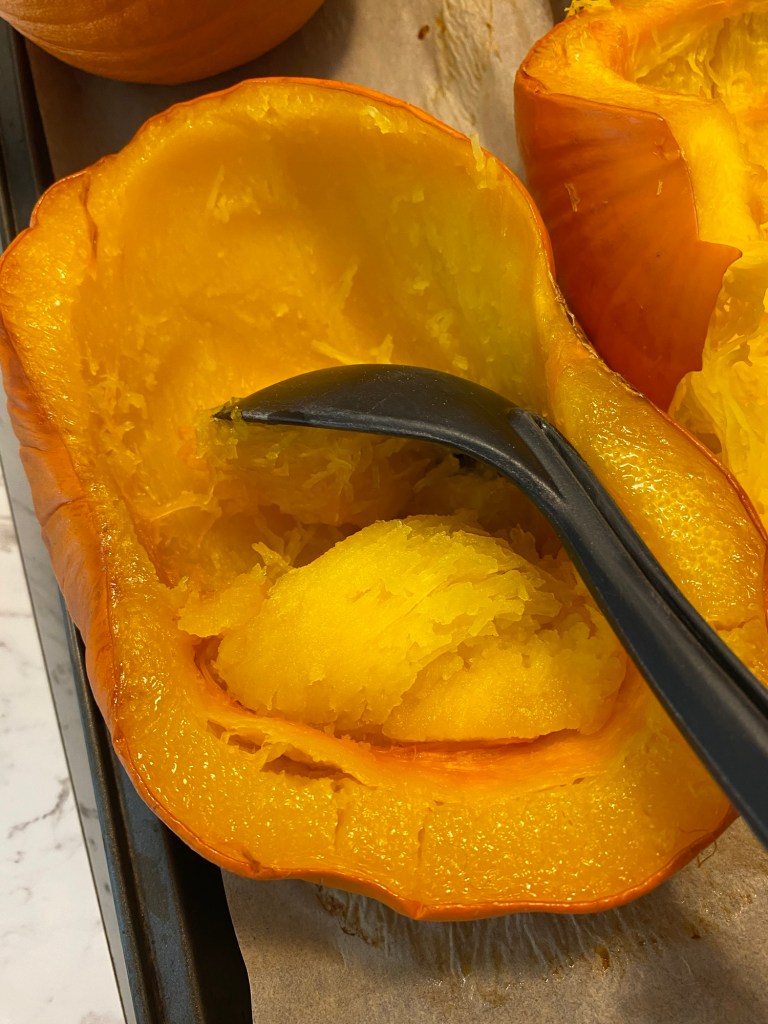
    8. Scrape the insides out into a high powered blender and puree until smooth.

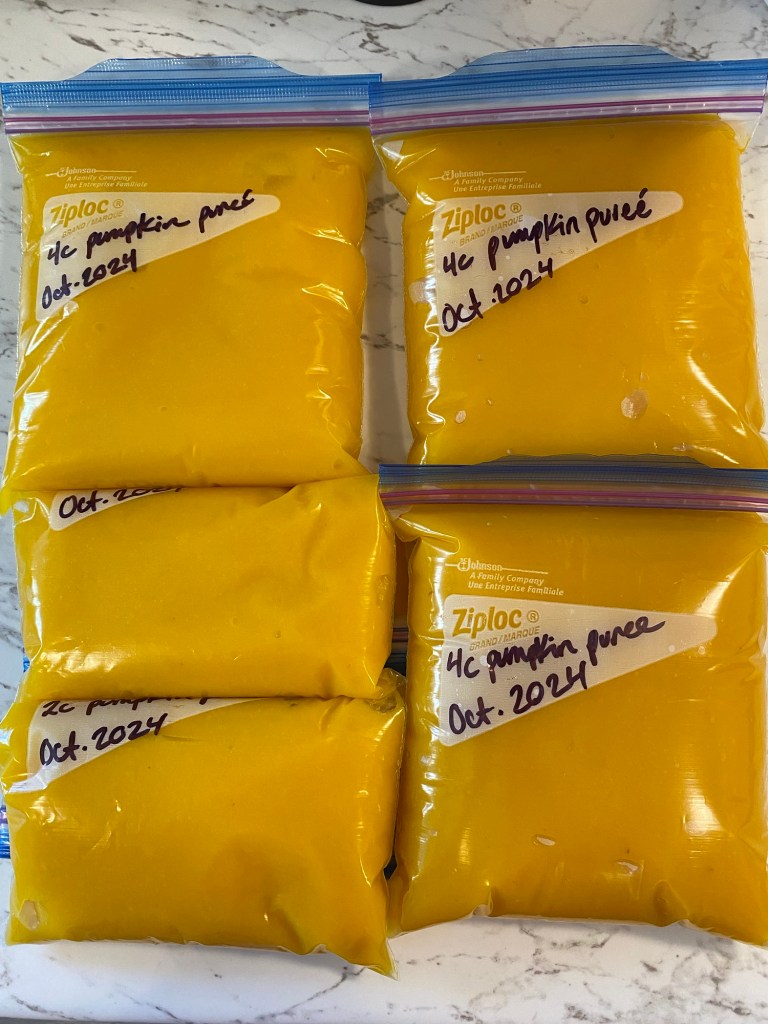
    9. Use immediately in desired recipe, or put in a sealed container and store in the fridge for up to one week. You can also put the pumpkin puree in a ziplock bag in the freezer. Best to use within 6 months. (Although I have used some puree that was frozen for much longer than that and still thawed and tasted great!)

    10. One small pie pumpkin makes approximately 4 cups of puree.

    Hi, I’m Jessie!

    I’m a Wife and Homeschooling Mom living in a remote town in Northern Ontario, Canada. I love making wholesome meals for my family from scratch, homeschooling our girls and learning more about natural living.

    Read more about my story HERE.

    Subscribe to Northbird’s email list to get weekly posts on: tasty recipes, activity ideas for kids, natural living tips, and some genuine mom thoughts and encouragement!

    Homemade Pumpkin Puree

    • Servings: 4 cups
    • Difficulty: Easy
    • Print

    Make your own pumpkin puree with this easy recipe and then freeze the puree to later make many sweet or savoury pumpkin recipes!


    You can use either large or small pumpkins for this recipe. The smaller pumpkins will typically be sweeter, and the larger ones will just be more watery. See ideas above for how to use pumpkins best based on their size.

    Ingredients

    • Pumpkins

    Directions:

    1. Preheat oven to 350 degrees fahrenheit.
    2. Wash the outside of the pumpkins to remove any dirt.
    3. If it is a small pumpkin, simply cut in half next to the stem and cut through into two halves.
    4. Scoop the seeds out into a bowl **Save these for a tasty snack later!
    5. Place pumpkin halves upside down on parchment-lined baking sheets.
    6. Bake fat 350 for 40-50 minutes until the pumpkin skin on the outside is soft, lightly browned, and can be easily pierced with a fork.
    7. Let cool completely, turning right side up to cool down faster.
    8. Scrape the insides out into a high powered blender and puree until smooth.
    9. Use immediately in desired recipe, or put in a sealed container and store in the fridge for up to one week. You can also put the pumpkin puree in a ziplock bag in the freezer. Best to use within 6 months.
    10. One small pie pumpkin makes approximately 3-4 cups of puree.

    Nutrition


    Per 1 cup serving: 34 calories; 0.3 g fat; 8.1 g carbohydrates;
    1.1 g protein.

    Return to Top