Birdwatching Binocular Craft with Bird Survey Printables

Find Northbird on social media:

This post contains affiliate links. As an Amazon associate, I earn from qualifying purchases. This means that I make a small commission at no extra cost to you. You can read my full disclosure HERE.

Jump to Binocular Activity Card

Return to “Homeschooling Activities & Resources”

Return to “Discovering Birds”

Birds: A Natural Homeschooling Inquiry…

Learning about birds in our homeschool studies is one of the easiest topics to investigate in my opinion, simply because it is on-going, and the kid’s curiosity is spring boarded from seeing “who” comes to our bird feeders!

This is such a natural discovery process that leaps into questions of:

“Where do the birds go when it is raining or snowing?”

“What do birds eat when we forget to fill up the bird feeder?”

“Why are the birds chasing each other in the sky?”

Even though questions from these little treasures may be nearly constant some days, I am learning to pray for patience and view them as a golden opportunity for the kids to learn.
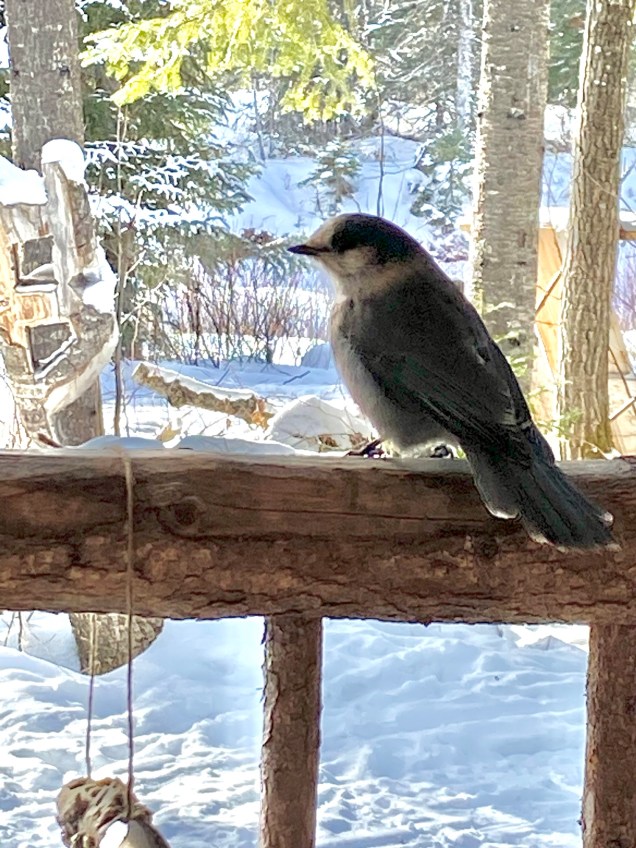
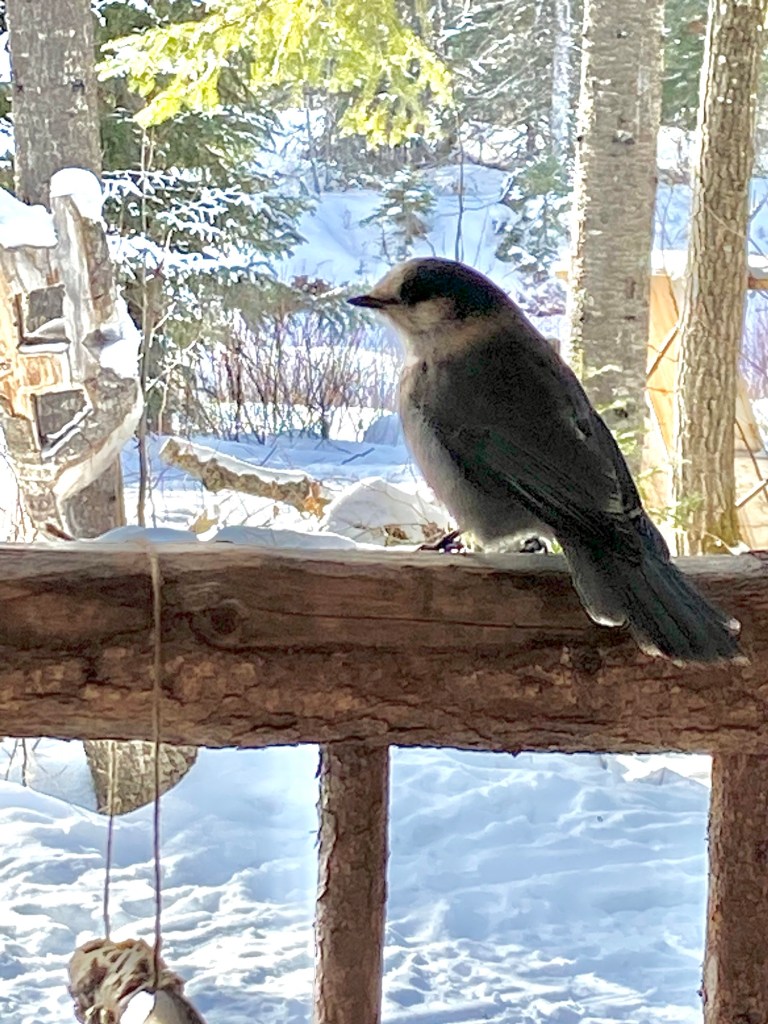
A “Whisky Jack”/”Canada Jay”,
Moose River area, Northern Ontario

Honestly, there are so many days that we have dropped the math or language arts lessons to simply go stare out the window for several minutes to watch the various feathered creatures fly around, eat at our feeders, scratch for worms and bugs, or pick up grass for their nests.

There is always something to learn from watching birds, even if it is to realize our need to sit still, and step away from whatever business is in our lives while we quietly observe these beautiful creatures. Birdwatching is so calming, both for myself and also my very busy children!

I love how one can almost hear a pin drop if they are watching the birds from our window. They have learned to be as quiet as they can and not move so the birds don’t get spooked!

A downy woodpecker hanging on to have a snack.

One of our favourite types of bird feeders is the clear plastic one above  ↑ (The Window Cafe, similar to THIS ONE available on Amazon) that suctions right onto the window glass!
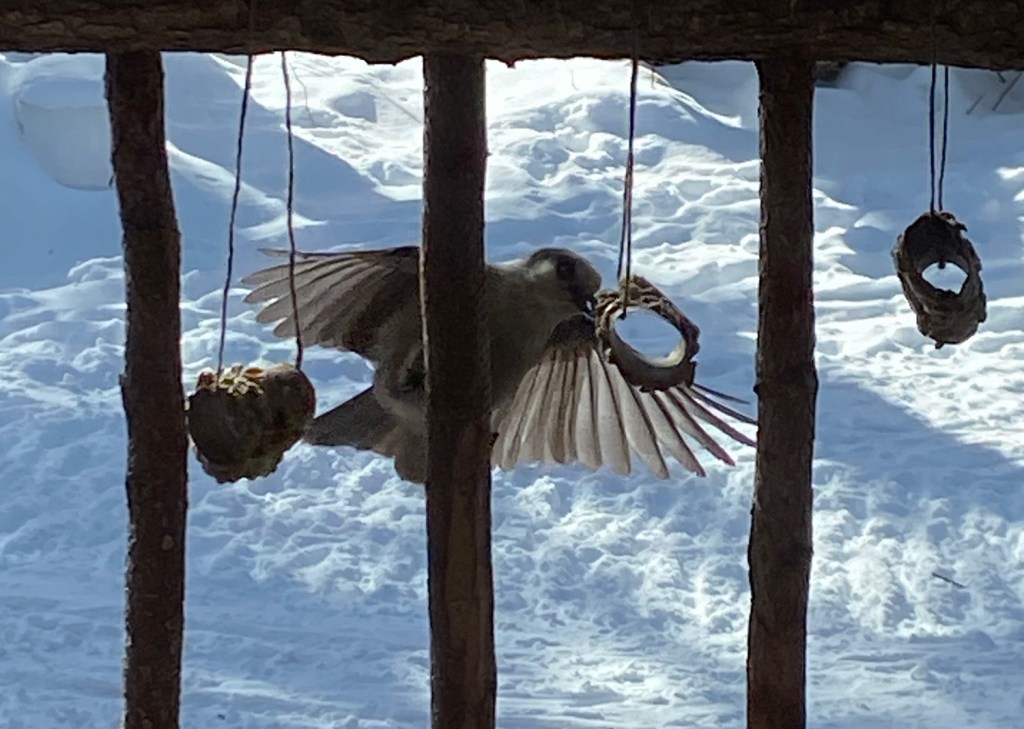
A “Whisky Jack” eating from one of our homemade bird feeders.

You can check out THIS POST if you are interested in seeing how we made these easy & seedy paper roll bird feeders.

About this Craft:

This bird-based inquiry craft is an easy set up, inexpensive, and can be completed as simple or fancy as you like!
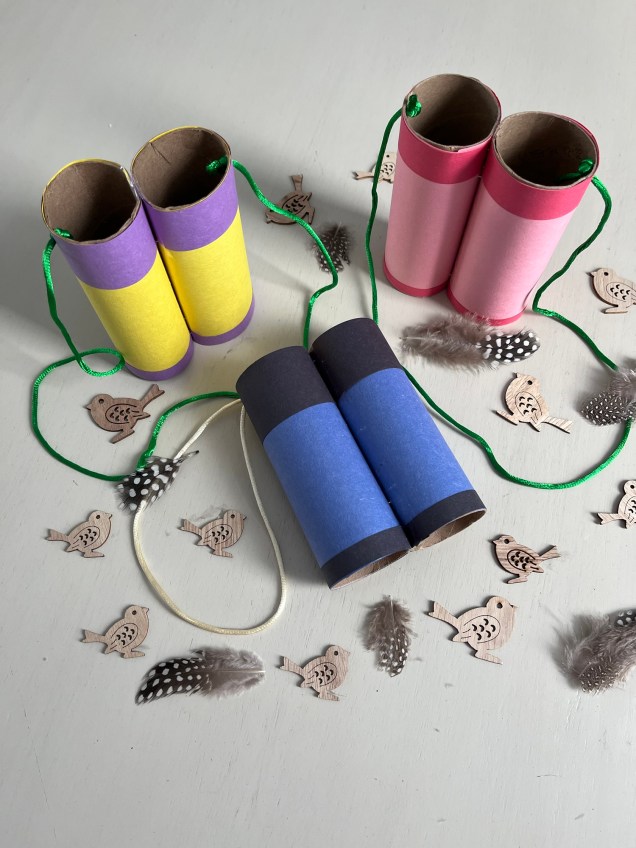
I must give credit to my sister-in-law “L” for first having the idea several years ago and making two quick sets for our toddlers to decorate with stickers when they were having trouble getting along with each other!

I hope you and your students have fun making this simple fun birding craft!

Watch and Record!

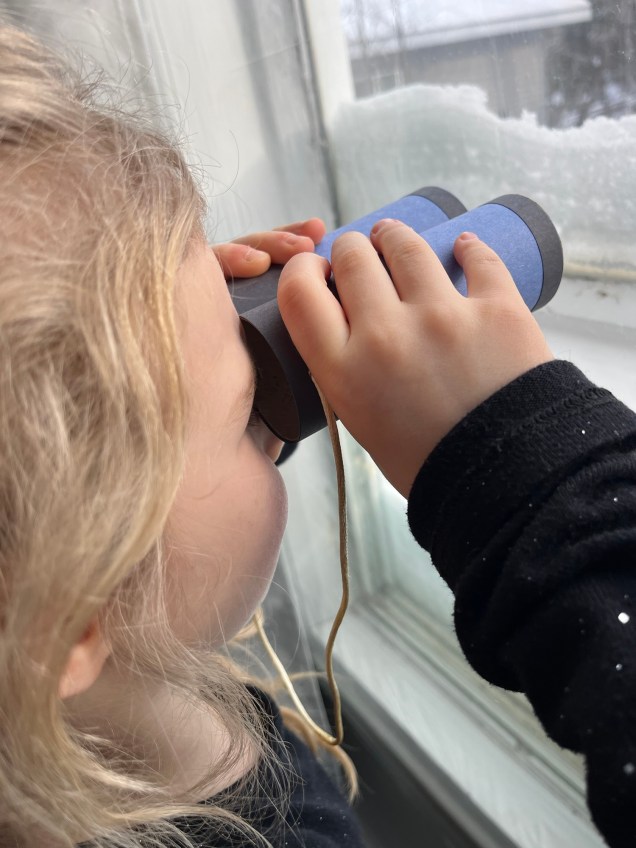
Don’t forget to watch and record what types of birds your kids can find using their new birdwatching binoculars!
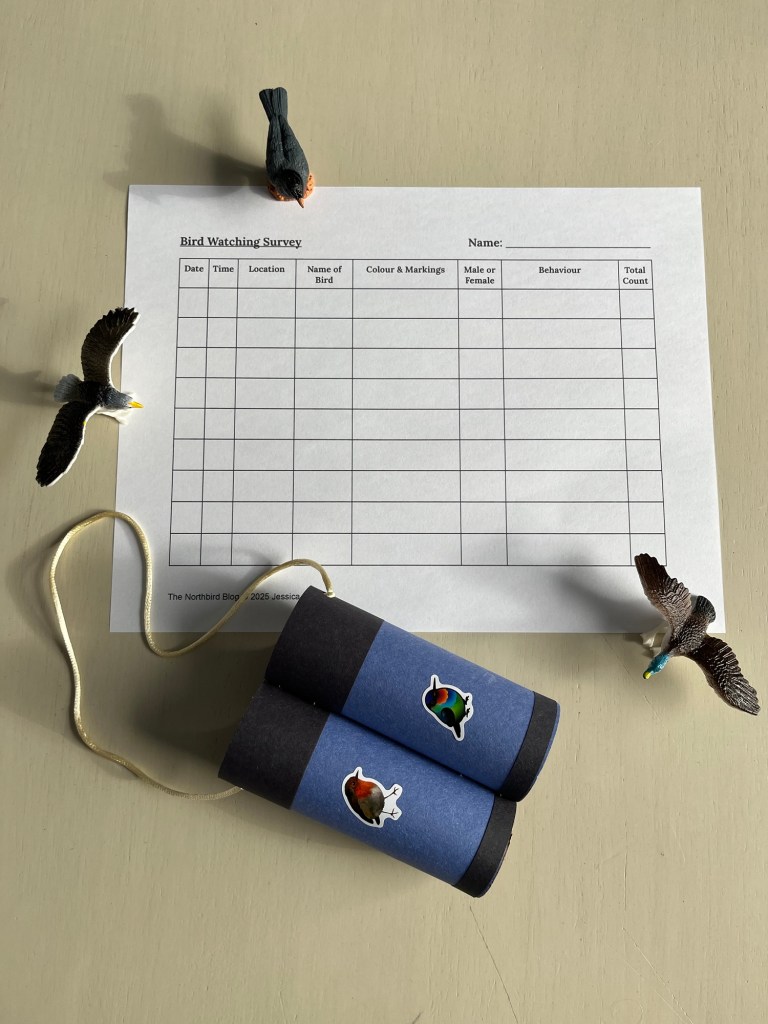
You can download this Free Birdwatching Survey Sheet PDF HERE.

Have a student that loves to record and draw?

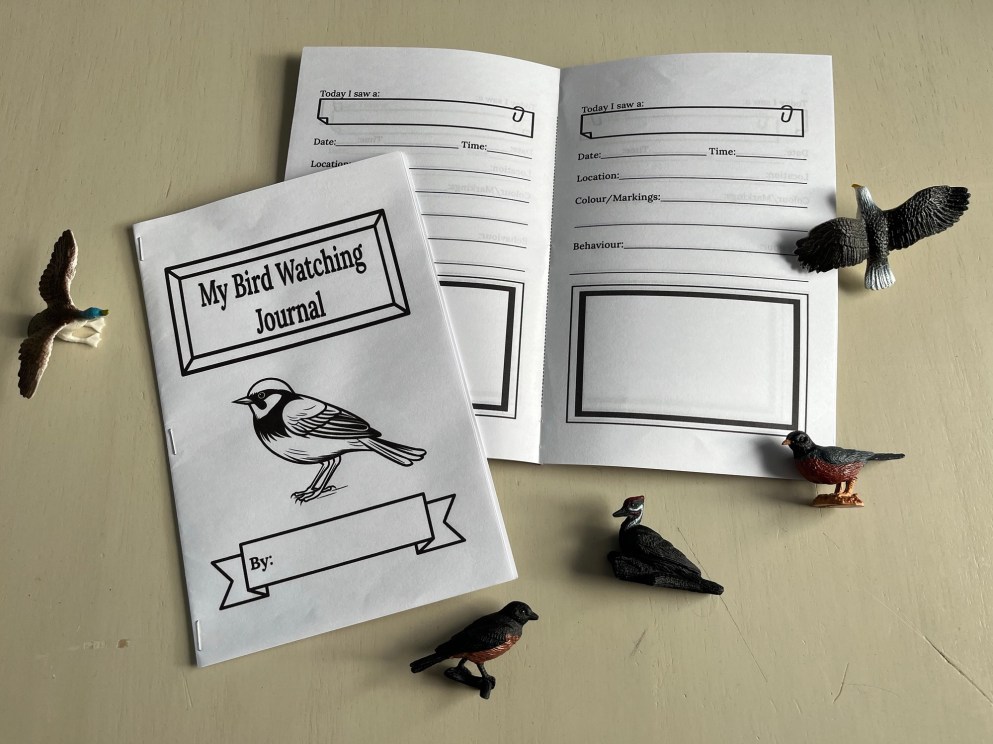
My daughter loves drawing! I created this bird survey tool as a way for her to record and draw the different birds that she finds around our home in Northern Ontario. It will be a great keepsake in years to come.
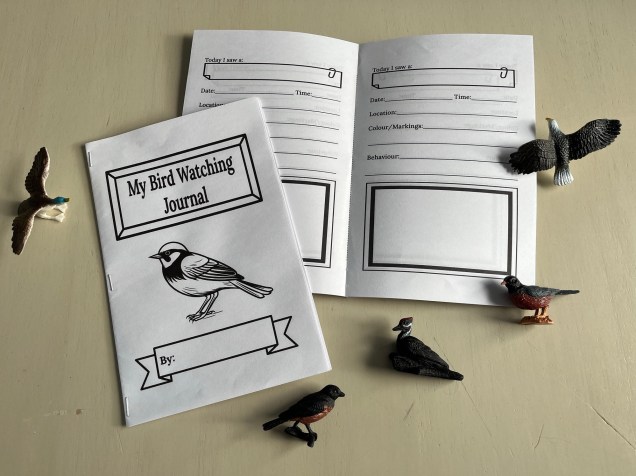
This birdy resource will encourage students to get outside into nature and watch and listen for the many amazing different bird species out there! It is non-specific to any geographical area, and is to be used as an interactive survey tool.

On each page students can record:

  • The name of the BIRD sighted
  • Date/Time
  • Location of the BIRD
  • Colour and any notable markings of the BIRD
  • Behavior of the BIRD (what was the bird doing?)

At the bottom of each page there is a framed box where students can DRAW their impression of what the bird looked like, or what it was doing (flying, perching, nesting, etc)

This PDF file has been designed to be easily printed, folded and stapled together, making it an easy handout to either print and make ahead of time for younger students, or have the older students assemble it themselves!
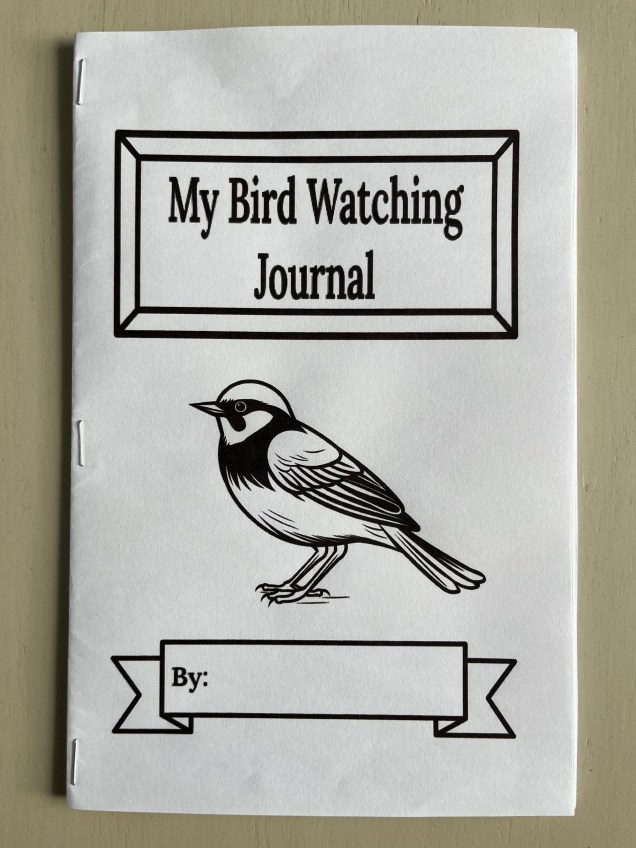
This Bird Watching Printable Journal is available to purchase and download from my store on Teachers Pay Teachers HERE.

How to Make Paper Binoculars

Supplies Needed:

Decorating suggestions:

Directions:

1. If you are using paper towel rolls, first cut them in half. If using toilet paper rolls, make sure they are completely bare!

2. Cut coloured paper into strips for a background, then wrap around and tape in place.

3. Cut a different colour of paper into thinner strips and also wrap and tape into place. (*Note: it helps to have all the tape along one side, so that when you staple it together, the tape can be hidden)

4. Staple together the two rolls where they touch when held together, (tape side in), stapling twice both at the top and bottom.

5. Use a single hold punch, make a small hole about 1/2 inch below the eye hole top, opposite from the staples (see picture).
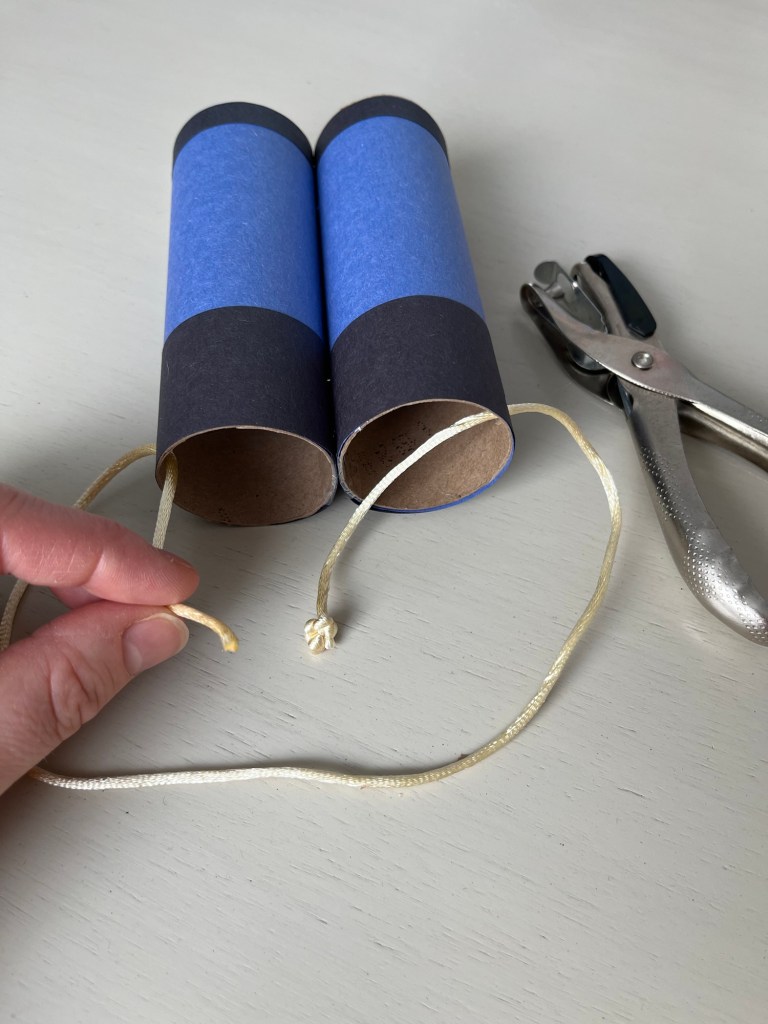
6. Insert string into hole and tie a large knot at the end of the string to hold it in place.
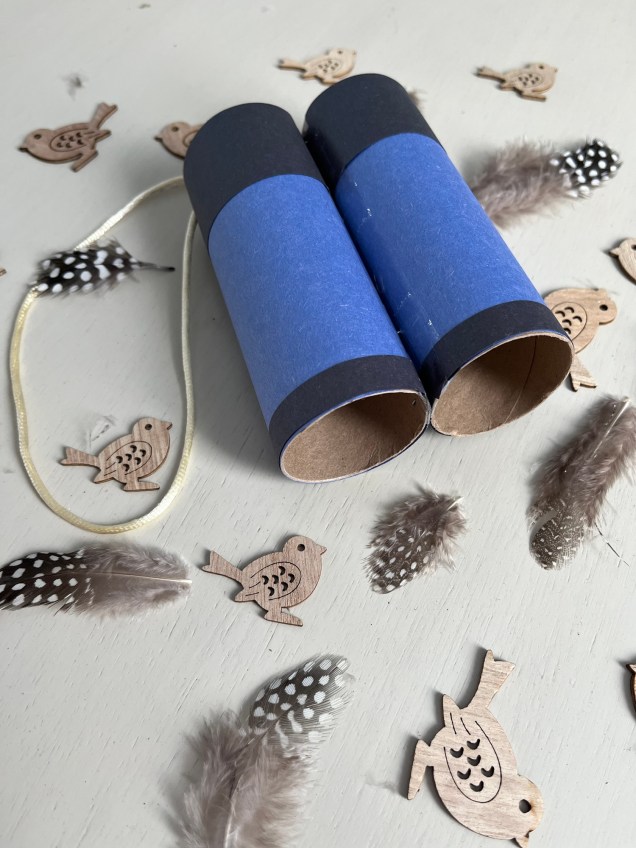
7. It’s time to begin using the binoculars!

Made this Craft?

I’d LOVE to see your results!! Feel free to post to your social media account and tag Northbird using one of the links below or post in the comments!
Hi, I’m Jessie!

I’m a Wife and Homeschooling Mom living in a remote town in Northern Ontario, Canada. I love making wholesome meals for my family from scratch, homeschooling our girls and learning more about natural living.

Read more about my story HERE.

Subscribe to Northbird’s email list to get weekly posts on: tasty recipes, activity ideas for kids, natural living tips, and some genuine mom thoughts and encouragement!

Birdwatching Binocular Craft

This is a fun bird inquiry craft to make at home: Kids can make their own binoculars and decorate them as simple or as decorative as they like!


By Jessica Burman © 2025 The Northbird Blog http://www.thenorthbirdblog.com

Supplies Needed:

  • String or Twine
  • Scissors
  • Stapler
  • Tape
  • Single Hole Punch
  • Coloured Paper
  • Inside cardboard roll from toilet paper or paper towel rolls

  • Decorating Ideas:

  • Paint
  • Markers
  • Stickers (These watercolour bird stickers are gorgeous!)
  • Coloured Ribbons
  • Washi Tape
  • Directions:

    1. If you are using paper towel rolls, first cut them in half. If using toilet paper rolls, make sure they are completely bare!
    2. Cut coloured paper into strips for a background, then wrap around and tape in place.
    3. Cut a different colour of paper into thinner strips and also wrap and tape into place. (*Note: it helps to have all the tape along one side, so that when you staple it together, the tape can be hidden)
    4. Staple together the two rolls where they touch when held together, (tape side in), stapling twice both at the top and bottom.
    5. Use a single hold punch, make a small hole about 1/2 inch below the eye hole top, opposite from the staples (see picture).
    6. Insert string into hole and tie a large knot at the end of the string to hold it in place.
    7. It’s time to begin using the binoculars!

    Return to Top

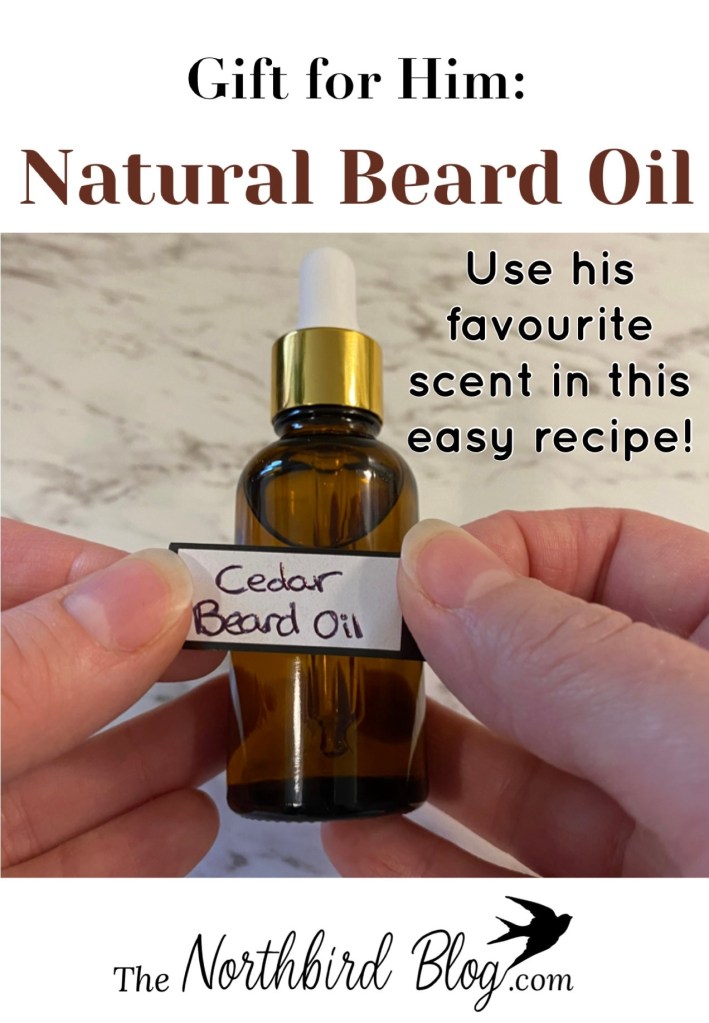
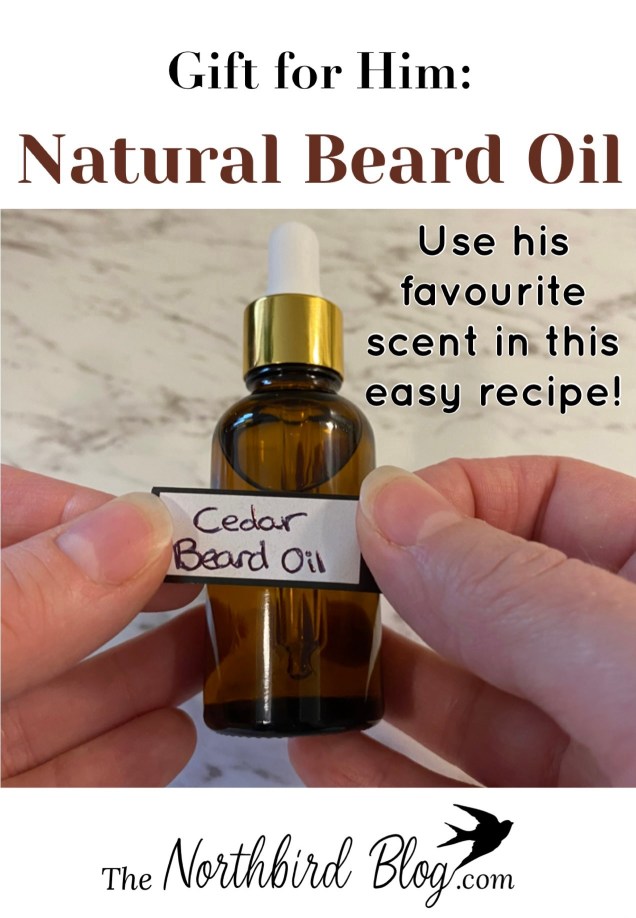
    DIY Natural Beard Oil Recipe for Men

    Find Northbird on social media:

    This post contains affiliate links. As an Amazon associate, I earn from qualifying purchases. This means that I make a small commission at no extra cost to you. You can read my full disclosure HERE.

    Jump To Recipe Card

    Return to “Natural Living”

    Just to clarify: I don’t have a beard, but I’ve been married to an amazing bearded man for over 9 years! And in that time I’ve made a few different beard oil recipes for him and also for a few other masculine relatives that love their beards.
    The first time I made a beard oil for my husband was when I was trying to figure out what to get him for Christmas and ended up making 5 simple gifts: each one representing one of the 5 senses. This one of course represented Scent.

    He is somewhat particular about smells, and what scents he likes for his self-care products. So, I had fun blindfolding him a few weeks prior to Christmas and holding up different essential oil bottles to get him to tell me what scents he liked. His personal favourites are Cedar and Sandalwood.

    This recipe is made with all natural ingredients and fits perfectly into a 30ml dropper bottle like THIS ONE.

    You’ll notice that the recipe below has Sandalwood Essential Oil listed, but feel free to substitute it for any scent that you/your spouse prefer.

    Masculine Essential Oils:

    I’ve noticed that many essential oils that have the label “masculine” tend to be from different tree species and have musky, forest scents. I’m sure it’s not always the case, it’s just my own observation from research, and asking the bearded men in my life. Essentially, think: Musky, Smoky, Spicy, Earthy…This seems to be the general idea (from a female’s perspective!)

    These are some of the scents that I have used, as well as a few more that I’ve read are enjoyed as beard oil scents:

    Sweet Almond Oil:

    Sweet Almond Oil: is an important oil that has been used for massaging and skin treatment for hundreds of years. It is rich in medicinal properties that help prevent inflammation, scarring, and dryness.

    Jojoba Oil:

    Jojoba Oil is another all-around essential skin oil that is a great moisturizer and cleanser. It is also known to help with treating acne, psoriasis and eczema.

    Vitamin E Oil:

    I always add a few drops of Vitamin E Oil into whatever skin care products I am making. It is highly beneficial to the skin because of its moisturizing properties, and helps to cure skin problems such as psoriasis, eczema, dryness and itchiness to name just a few!

    It is also a wonderful antioxidant and helps to keep your immune system strong.

    Why are Pure Essential Oils better to use in skincare products than Artificial Scents?

    Artificial fragrances and perfumes are everywhere: in candles, in air fresheners, hand soaps, body lotions, shampoos & conditioners, laundry products, and tons of skin care products. This is one reason why it is so important to check the labels and list of ingredients!

    Synthetic scents are usually petroleum based and these chemicals have very serious effects on the human body. Some common chemicals used include benzophenone and styrene (carcinogenic) and phthalates (endocrine disruptors). You can read more about this HERE.

    Other Commonly used Essential Oils for Self Care Products and their Medicinal Uses: (I’ve also added a few that primarily aid skin conditions)

    • Peppermint: A great resource for opening up the sinuses and relieving headaches.
    • Sandalwood: Calming and a relaxing scent.
    • Lemon: A bright and refreshing scent that helps to even out the skin tone.
    • Eucalyptus: An antiseptic, anti-fungal, anti-viral, and anti-bacterial essential oil. Fights infection and promotes healing.
    • Sweet Orange Oil: An anti-bacterial, anti-inflammatory, aides in digestion, but most known to act as a mood enhancer and relaxant.
    • Carrot Seed Oil: An antioxidant, anti-fungal and anti-bacterial. Primarily used to treat skin infections and inflammations.
    • Grapefruit: Treats acne and other skin infections. Mood enhancer and may also help with weight loss.

    How to Make Your Own Beard Oil

    Supplies Needed:

    Ingredients:

    Directions:

    1. Lay some paper towel down for your work station, and set the mini funnel ready in the bottle.
    2. Carefully measure out the Jojoba, Sweet Almond Oil and Vitamin E Oil and pour through the mini funnel.
    3. Add the drops of Sandalwood (or other) pure essential oil until it is as strong as you like.
    4. Screw the lid on tight and shake to mix it well.
    5. To Use: Squirt a few drops into your hands and rub into beard to encourage softness and healthier skin.

    Made This Activity?

    I’d LOVE to see your results!! Feel free to post to your social media account and tag Northbird using one of the links below or post in the comments!

    More Ideas for Natural Living:

    Hi, I’m Jessie!

    I’m a Wife and Homeschooling Mom living in a remote town in Northern Ontario, Canada. I love making wholesome meals for my family from scratch, homeschooling our girls and learning more about natural living.

    Read more about my story HERE.

    Subscribe to Northbird’s email list to get weekly posts on: tasty recipes, activity ideas for kids, natural living tips, and some genuine mom thoughts and encouragement!

    Check out on the Natural Living Page:

    Nature’s Medicine

    An on-going picture collection of various herbs, vegetables, fruits, oils, etc and highlighting some of the amazing health benefits that they have to offer us!

    DIY Natural Beard Oil Recipe for Men

    • Servings: 1 x 30ml bottle
    • Difficulty: Easy
    • Print

    An All-Natural Beard Oil Recipe to soften bristly beards and moisturize skin.


    By Jessica Burman © 2025 The Northbird Blog. http://www.thenorthbirdblog.com


    Ingredients

  • 1 Tablespoon Organic Jojoba Oil
  • 1 Tablespoon Sweet Almond Oil
  • 1/4 teaspoon Vitamin E Oil
  • 10-15 drops Sandalwood Pure Essential Oil (or see other suggestions above!)

  • Directions:

    1. Lay some paper towel down for your work station, and set the mini funnel ready in the bottle.
    2. Carefully measure out the Jojoba, Sweet Almond Oil and Vitamin E Oil and pour through the mini funnel.
    3. Add the drops of Sandalwood (or other) pure essential oil until it is as strong as you like.
    4. Screw the lid on tight and shake to mix it well.
    5. To Use: Squirt a few drops into your hands and rub into beard to encourage softness and healthier skin.

    Return to Top

    DIY Eco-Friendly Christmas Ornament from Toilet Paper Rolls

    Find Northbird on social media:

    This post contains affiliate links. As an Amazon associate, I earn from qualifying purchases. This means that I make a small commission at no extra cost to you. You can read my full disclosure HERE.

    Jump to Printable Directions

    Jump to Video

    Return to “Homeschooling Activities & Resources”

    Return to “Christmas Activities and Crafts”

    Our little town recently had a very festive gathering in the town square to come together, decorate and light up a large Christmas tree in the middle of the square. It was super chilly and snowy out, but great fun to be there with our friends, enjoying some freshly popped corn, hear the local school choir do some carolling, and bring our homemade ornaments for the tree.

    One criteria on the event poster was that the ornaments be eco-friendly. My oldest and I had some fun thinking of ideas and discussing what “eco-friendly” meant, as we have made many ornaments over the years but I don’t think any of them were recycled or ok for the environment!

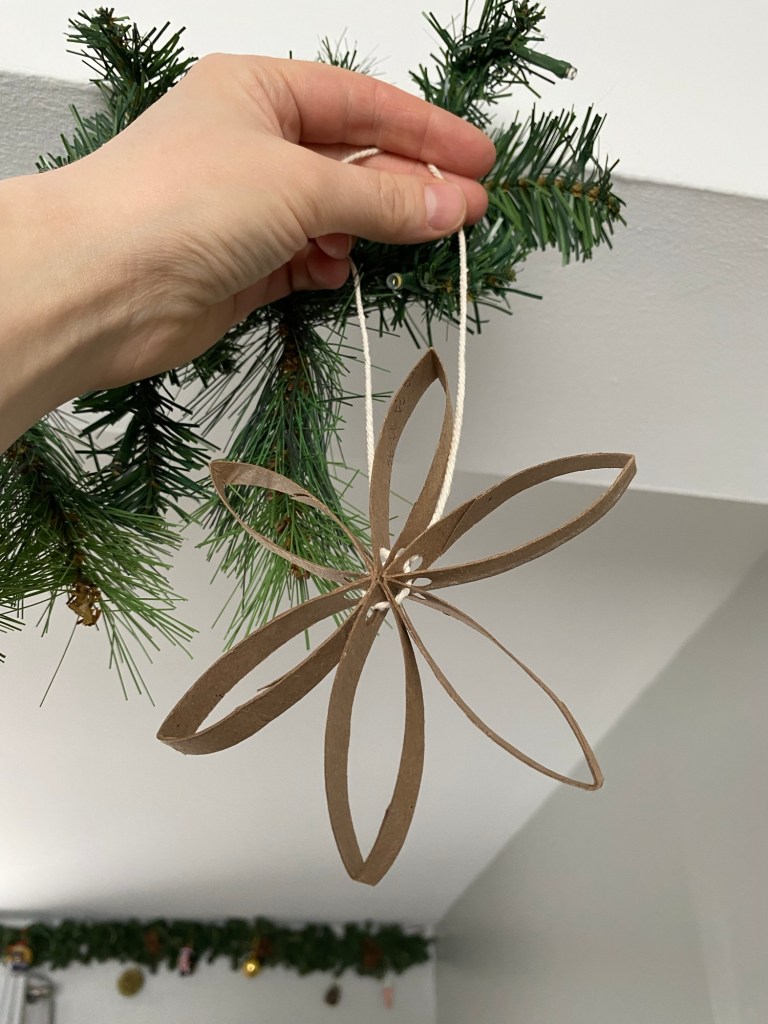
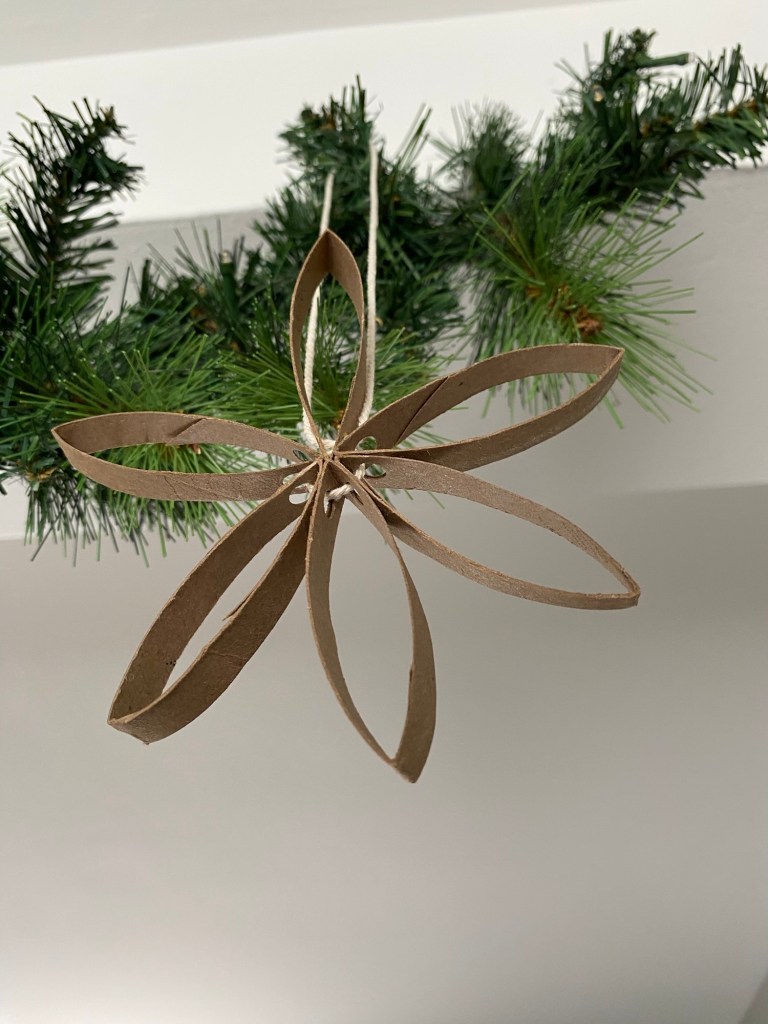
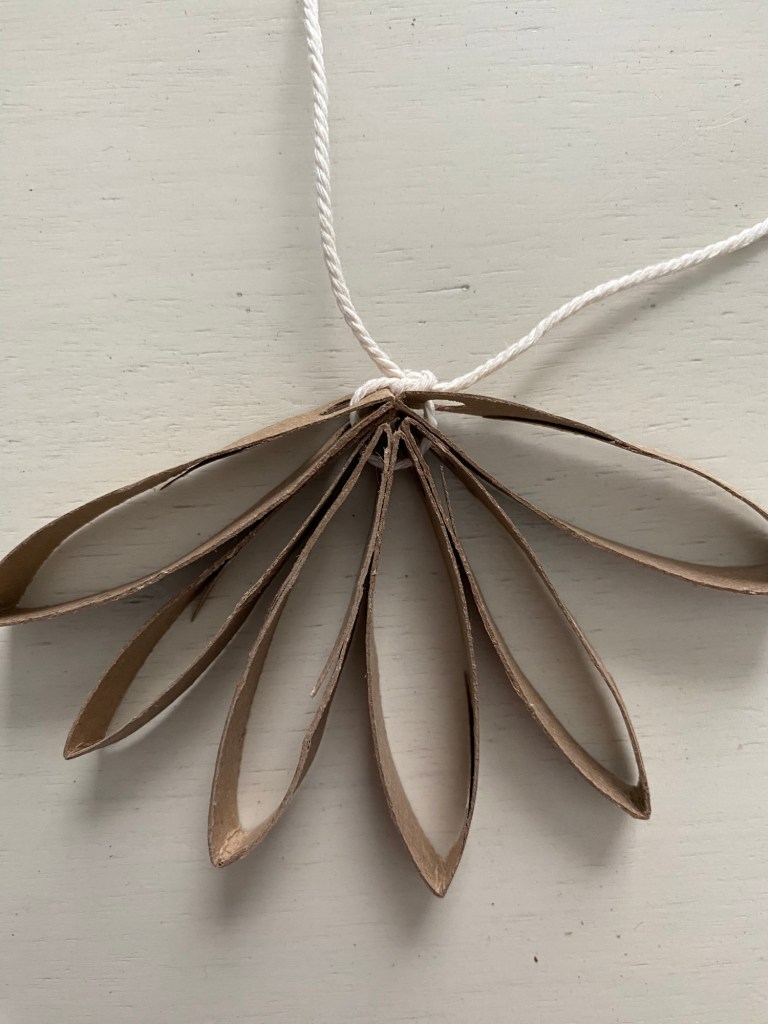
    This easy and simple craft is what we came up with. All you need is string and toilet paper rolls. Everyone has these!

    I like that it can be either completed and hung “as is”, or if desired, adding further embellishments or painting it! There are so many possibilities to have fun with this simple craft.

    I hope you enjoy making this easy ornament for your Christmas tree or holiday garland!

    For those who need a visual aid in making the Paper Roll Star, you might find this short video helpful!

    How to Make A Paper Roll Christmas Ornament:

    Supplies Needed:

    Directions:

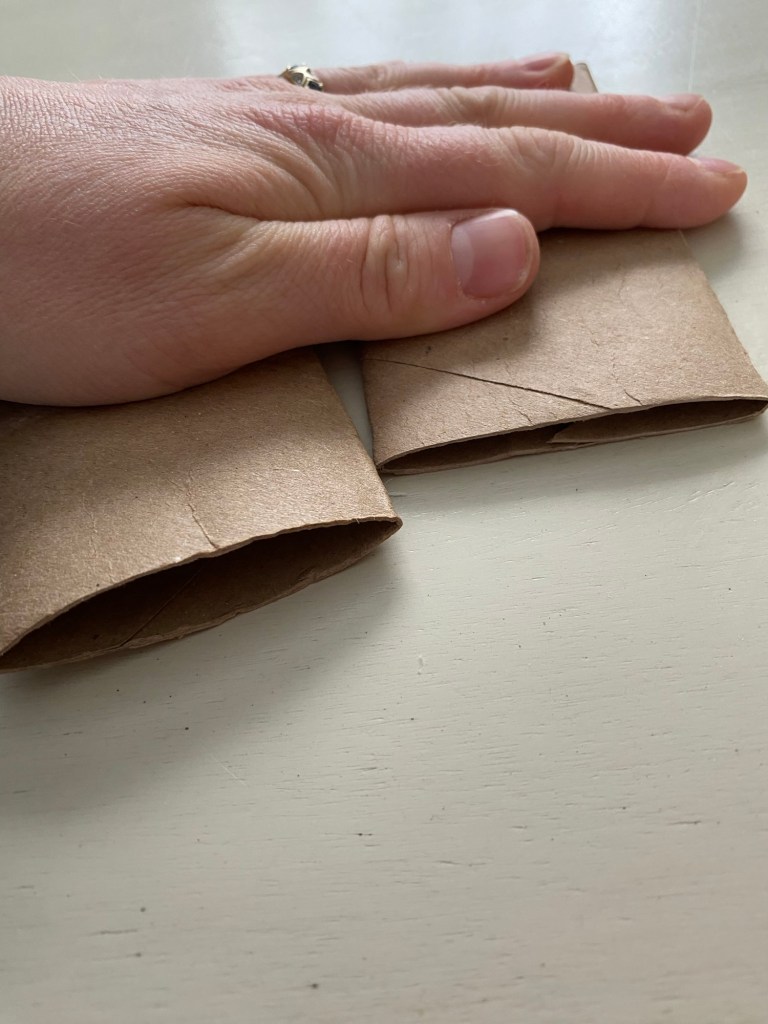
    1. Take a leftover toilet paper inner roll and make sure there is not any remains of white paper left on them. Then flatten firmly.

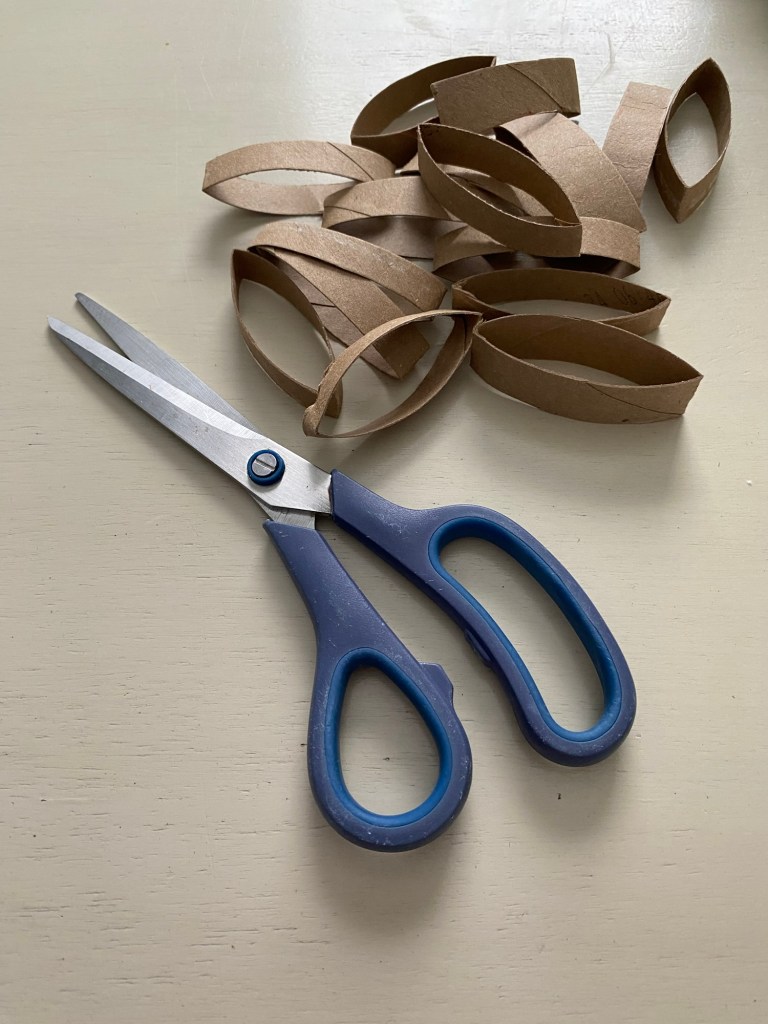
    2. Cut with scissors into 1/2 inch strips across roll.

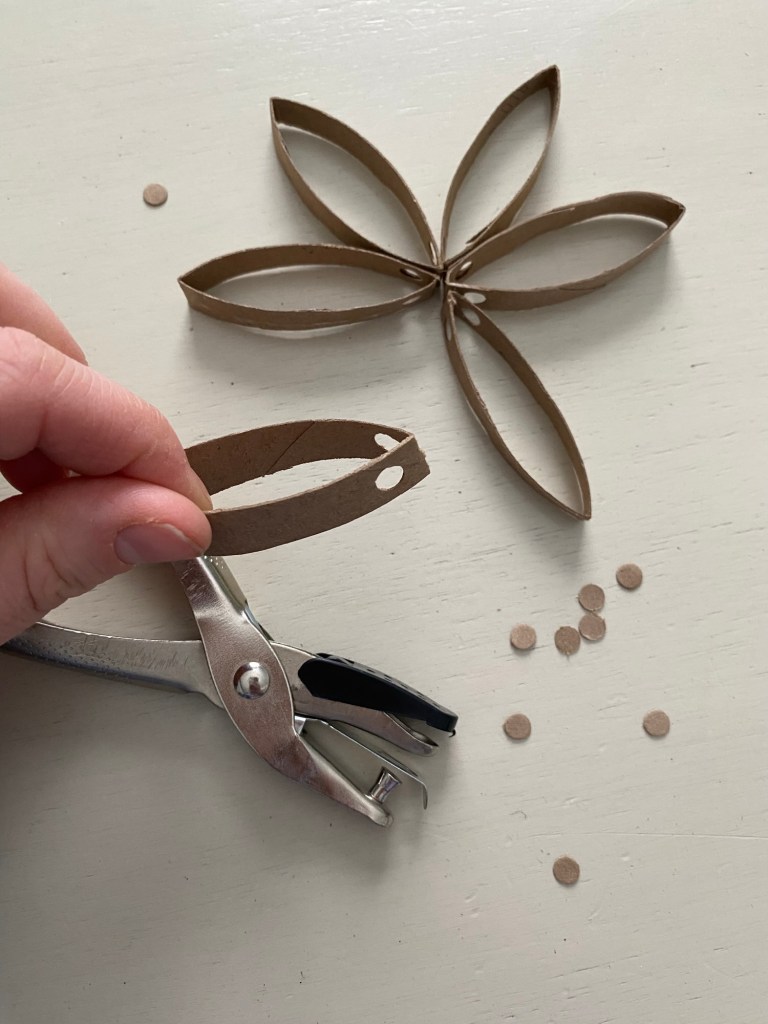
    3. Using a hole punch, make a hole at the end, leaving about a 1/4 inch from the end.

    4. Arrange Star with the amount of pieces you would like to use, with the hole punched ends in the middle.

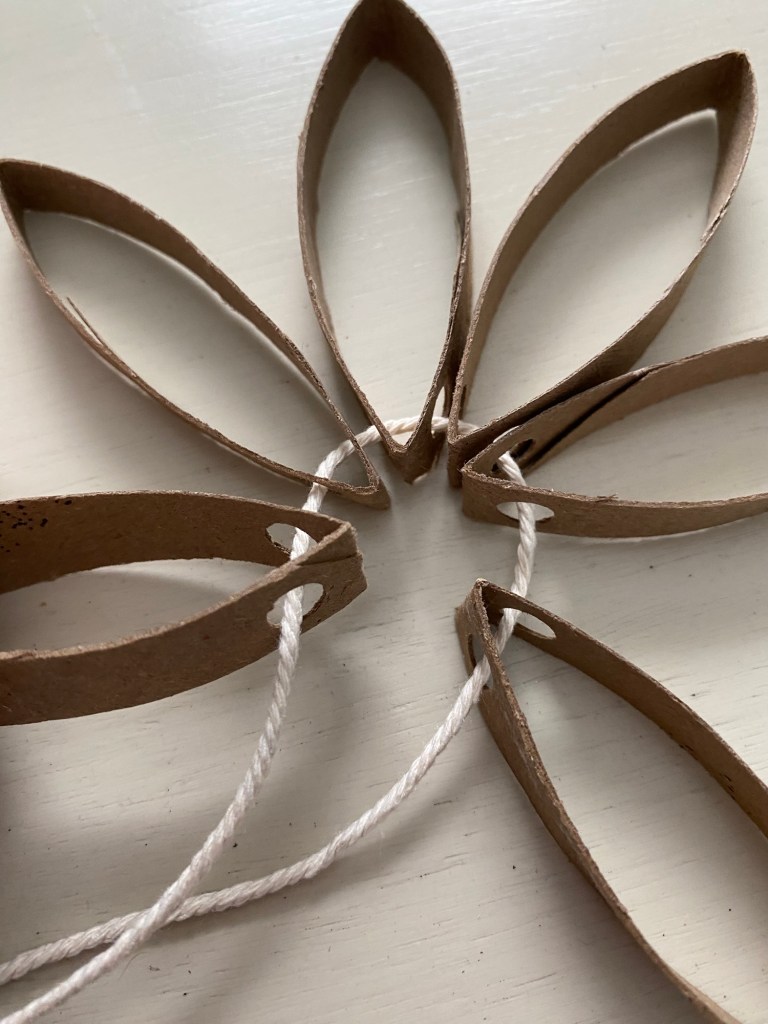
    5. Cut string about 10 inches in length, and thread through the middle holes, leaving equal lengths of string on either side.

    6. Gather the pieces down and tie a double knot firmly.

    7. Fan it back up and re-thread one of the strings back through only one of the cardboard pieces (2 holes).

    8. Tie a double knot at the end and it’s ready to hang!

    Made This Activity?

    I’d LOVE to see your results!! Feel free to post to your social media account and tag Northbird using one of the links below or post in the comments!

    Hi, I’m Jessie!

    I’m a Wife and Homeschooling Mom living in a remote town in Northern Ontario, Canada. I love making wholesome meals for my family from scratch, homeschooling our girls and learning more about natural living.

    Read more about my story HERE.

    Subscribe to Northbird’s email list to get weekly posts on: tasty recipes, activity ideas for kids, natural living tips, and some genuine mom thoughts and encouragement!

    Eco Friendly Christmas Ornament: Paper Roll Star

    • Servings: 1 Christmas Ornament
    • Difficulty: Easy
    • Print

    Looking for an easy Christmas ornament craft to do this holiday season? Are you interested in it being Eco-Friendly and made from recycled materials? Check out this easy craft to decorate your home with!


    The Northbird Blog, 2024 http://www.thenorthbirdblog.com

    Supplies Needed

  • String or twine
  • Toilet paper inner roll or paper towel inner roll
  • Scissors
  • Single hole punch

  • Directions

    1. Take a leftover toilet paper inner roll and make sure there is not any remains of white paper left on them. Then flatten firmly.
    2. Cut with scissors into 1/2 inch strips across roll.
    3. Using a hole punch, make a hole at the end, leaving about a 1/4 inch from the end. (see picture)
    4. Arrange Star with the amount of pieces you would like to use, with the hole punched ends in the middle.
    5. Cut string about 10 inches in length, and thread through the middle holes, leaving equal lengths of string on either side.
    6. Gather the pieces down and tie a double knot firmly.
    7. Fan it back up and re-thread one of the strings back through only one of the cardboard pieces (2 holes).
    8. Tie a double knot at the end and it’s ready to hang!

    Return to Top

    Salt Dough Baby Print Ornaments

    Find Northbird on social media:

    This post contains affiliate links. As an Amazon associate, I earn from qualifying purchases. This means that I make a small commission at no extra cost to you. You can read my full disclosure HERE.

    Jump to Printable Directions

    Jump to Video

    Return to “Homeschooling Activities & Resources”

    Return to “Christmas Activities and Crafts”

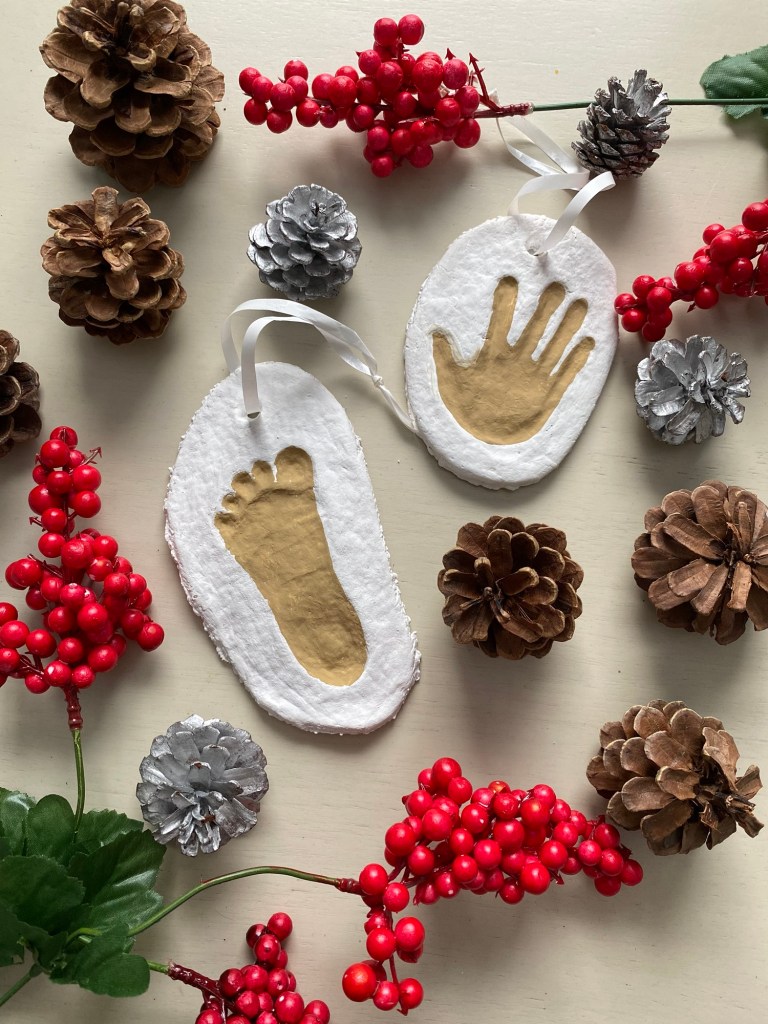
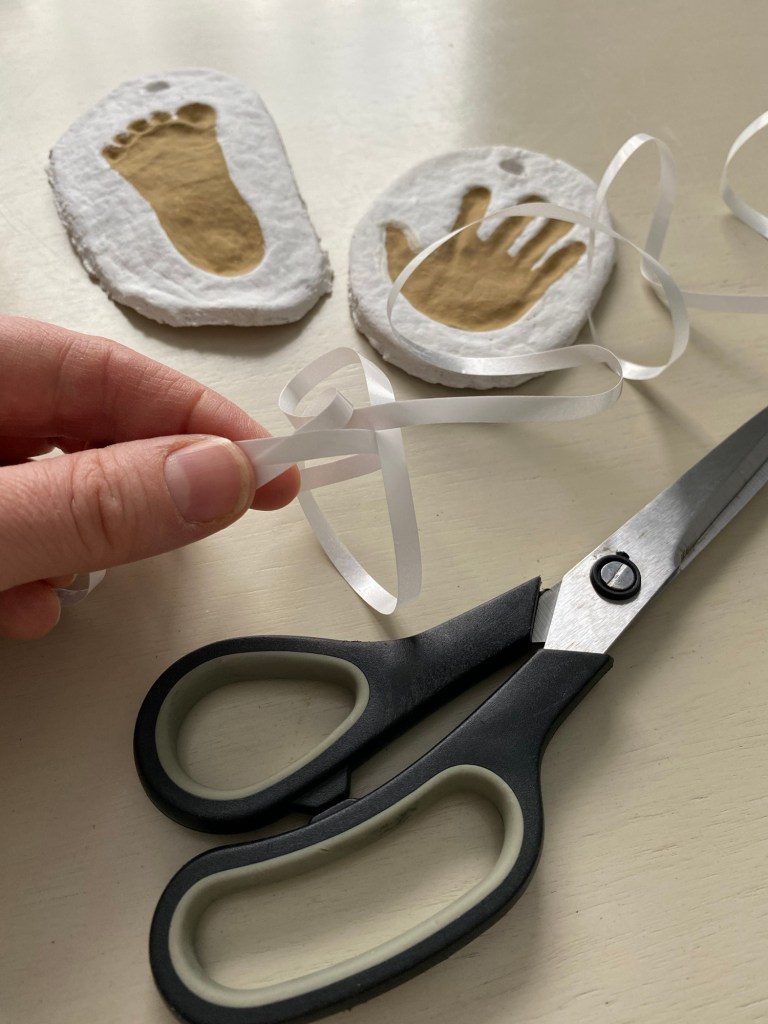
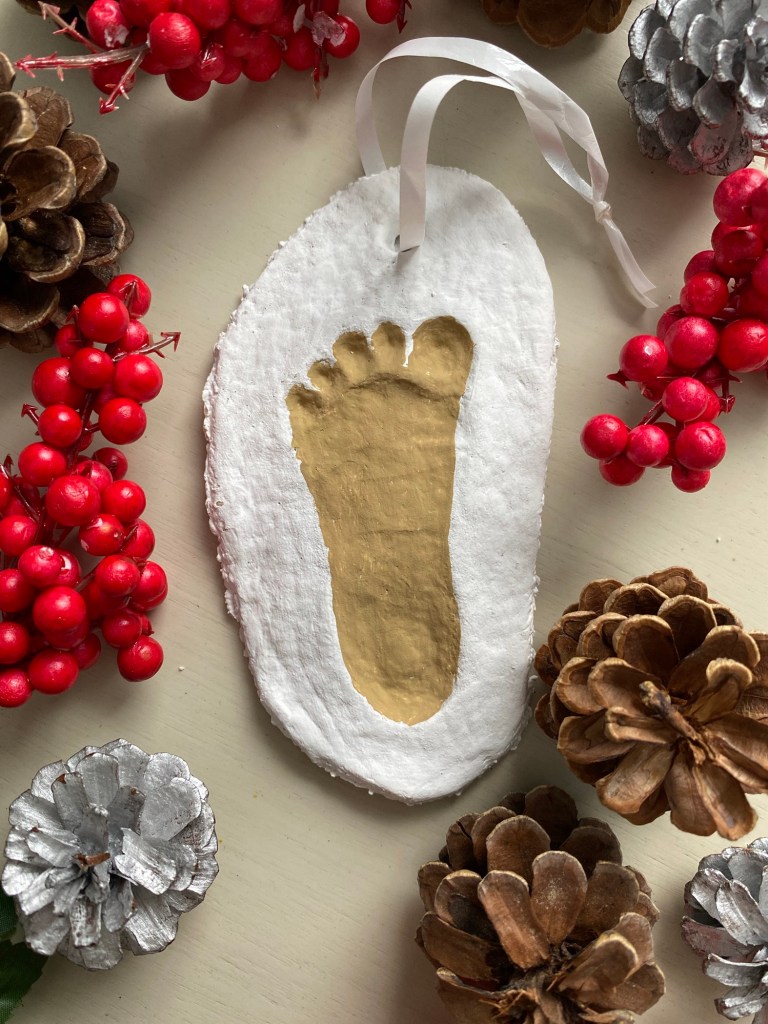
    With each baby that we’ve had, we have this lovely tradition to make a salt dough imprint of their tiny feet or hands every Christmas and turn it into a special ornament for our Christmas garland.

    I love having this precious memento to remind myself of our little girls when they were this tiny!

    It’s not always easy to try to get wriggling toes or tiny squirming fingers to cooperate for this craft, so I definitely suggest having someone help hold your little one still while you gently push their feet or hands into the rolled out and ready dough!

    These charming ornaments also make great gifts for grandparents, aunties, uncles (to my family members reading this: sorry for the spoiler this year!) and other special friends in your life.

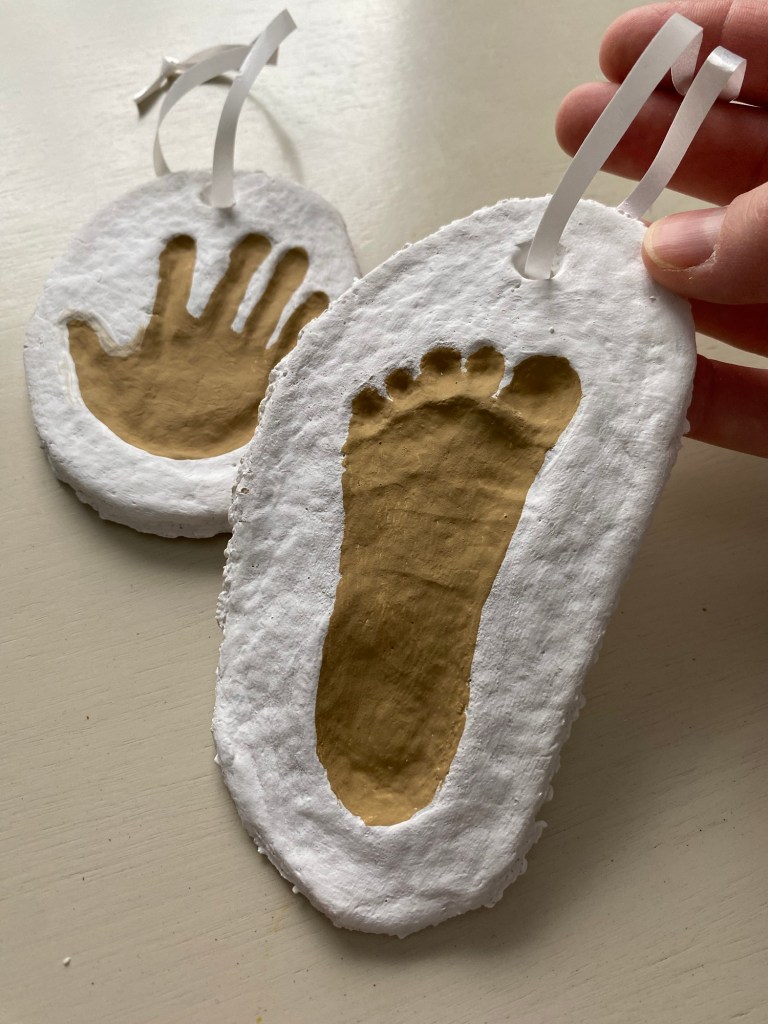
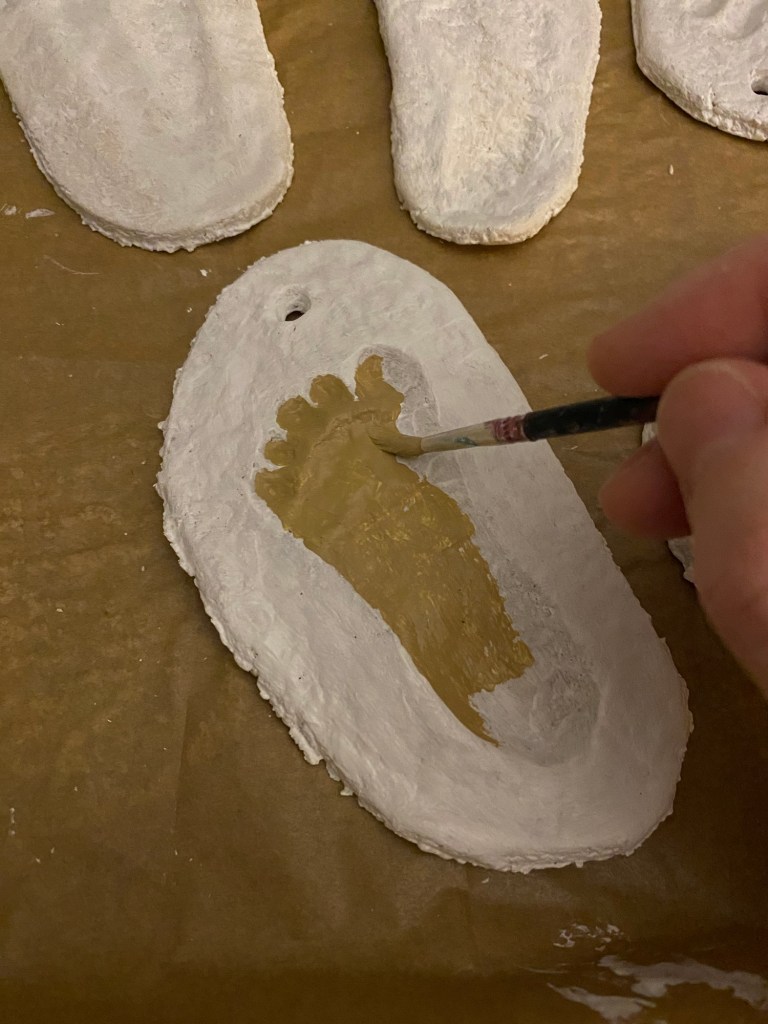
    After baking them in the oven and cooling completely, use some acrylic paint to either paint the print so you can see it better, or paint the whole thing however you like!

    After the paint has dried, a nice layer of mod podge will seal it and give it a nice shine to enjoy on your Christmas tree for many years to come.

    I hope you enjoy making this simple and inexpensive yet precious keepsake of this time in your baby’s life!

    If you are a visual learner like I am, this video might be helpful to see the whole process!

    How to Make Salt Dough Baby Foot/Handprint Ornaments:

    Supplies Needed:

    Ingredients:

    Directions:

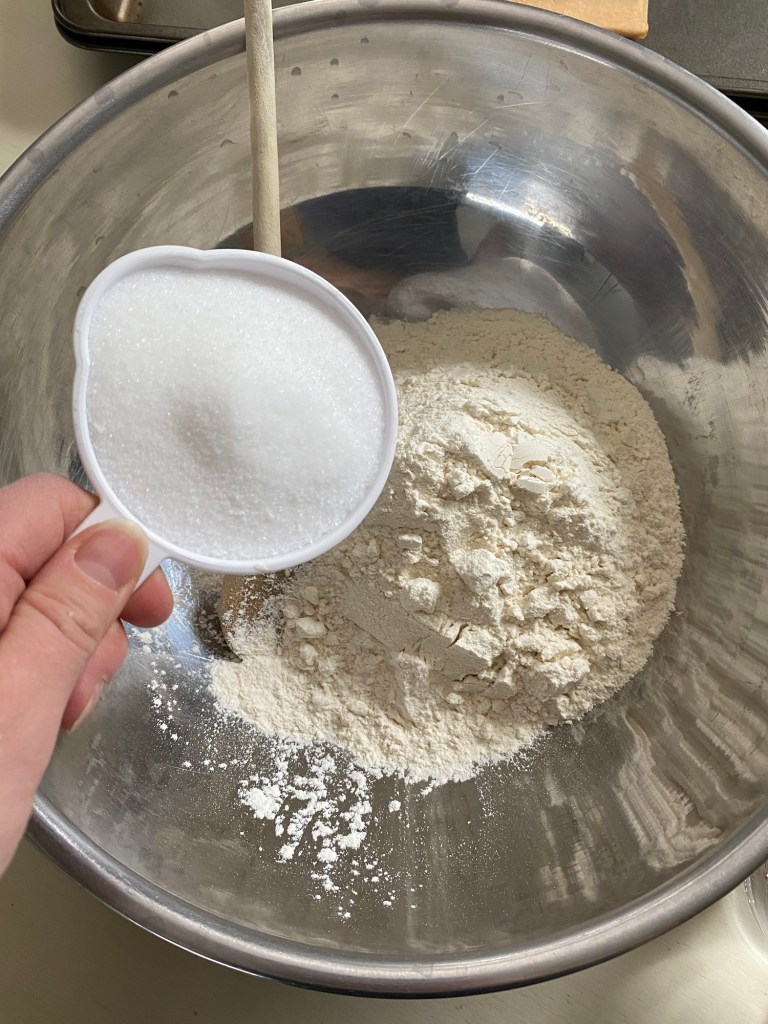
    1. Preheat oven to 250 degrees fahrenheit.
    2. Mix flour and salt together in medium size bowl. (Add any additional sparkles or cinnamon if you want at this point, but keep in mind if you want to paint later on it may not matter too much!)
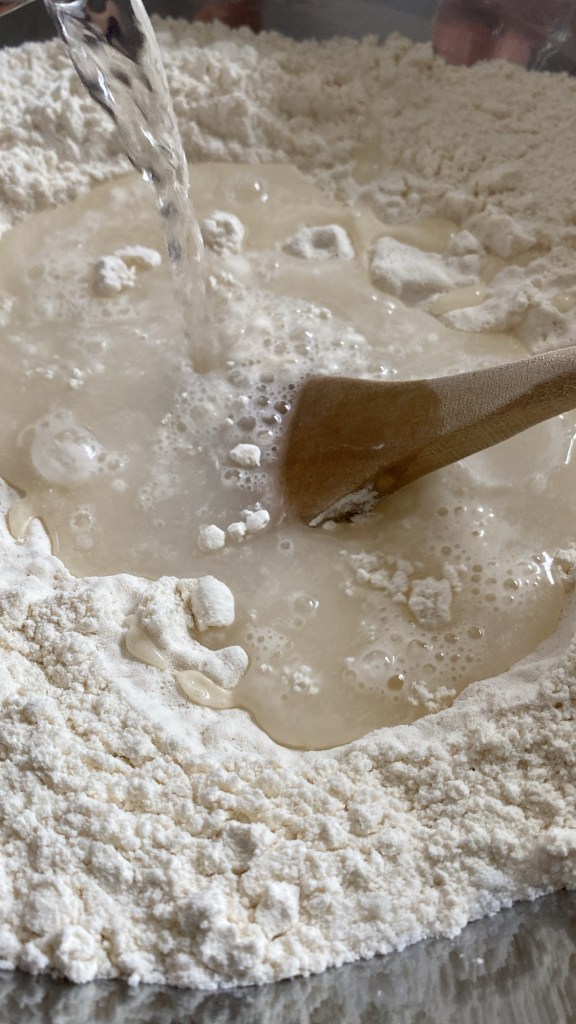
    3. Add just enough water to make it into a soft dough.

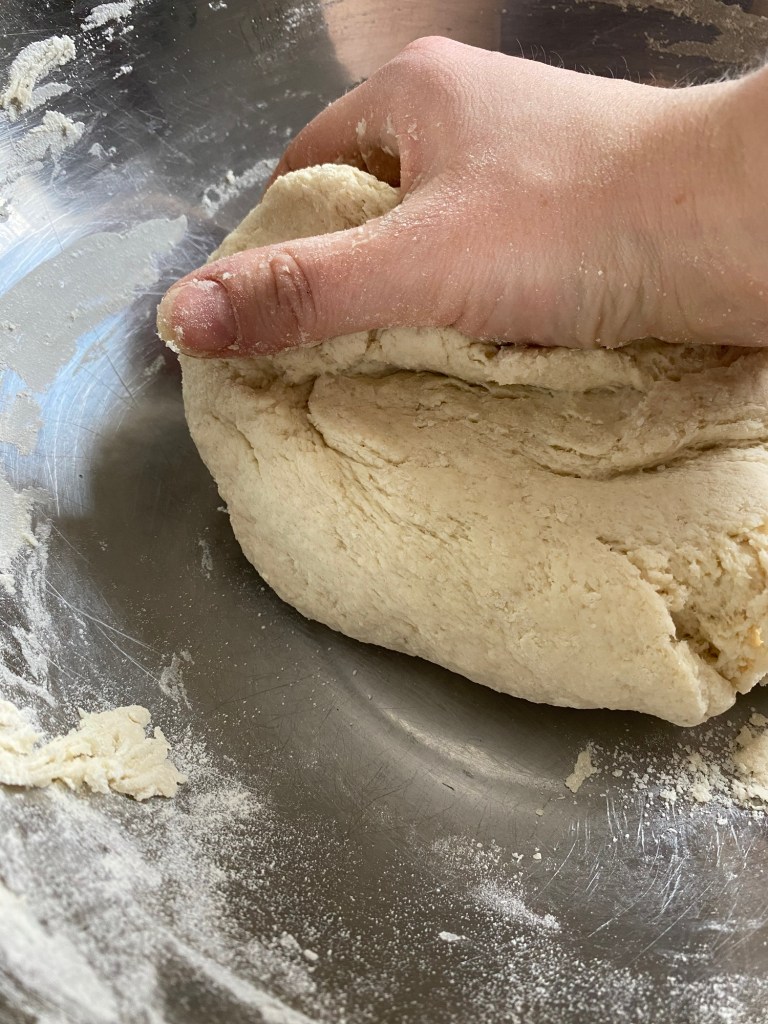
    4. Knead for 2-3 minutes so dough is a smooth ball.

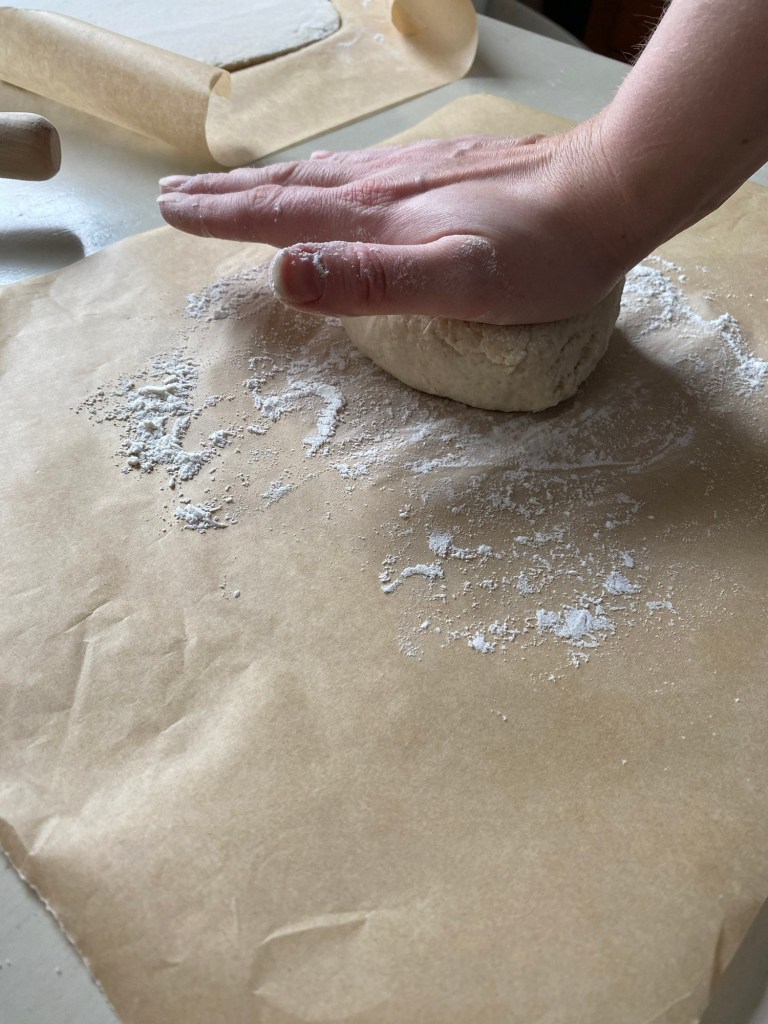
    5. Divide into 2 balls and roll out to 1/4” thick (or about 1/2 centimeter). *You can try putting a flattened ball between two sheets of parchment paper with flour and rolling it this way, or just flour up a surface and roll out, adding flour as you go. (Try not to add too much flour, just enough so that it doesn’t stick to the parchment or pin!)

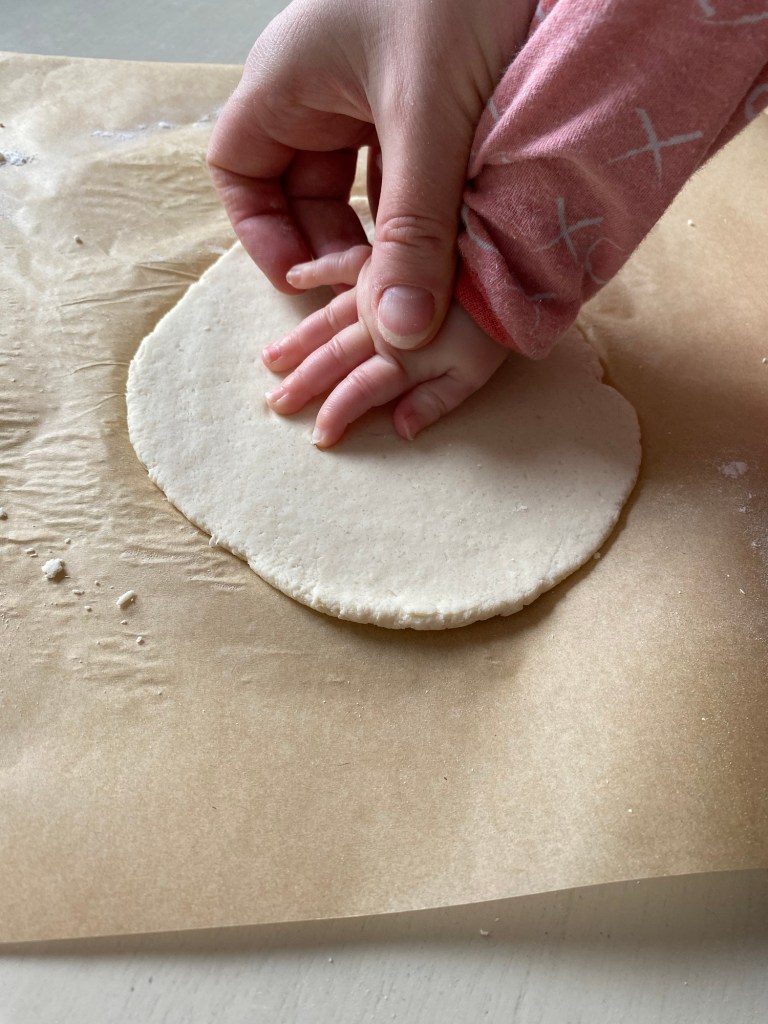
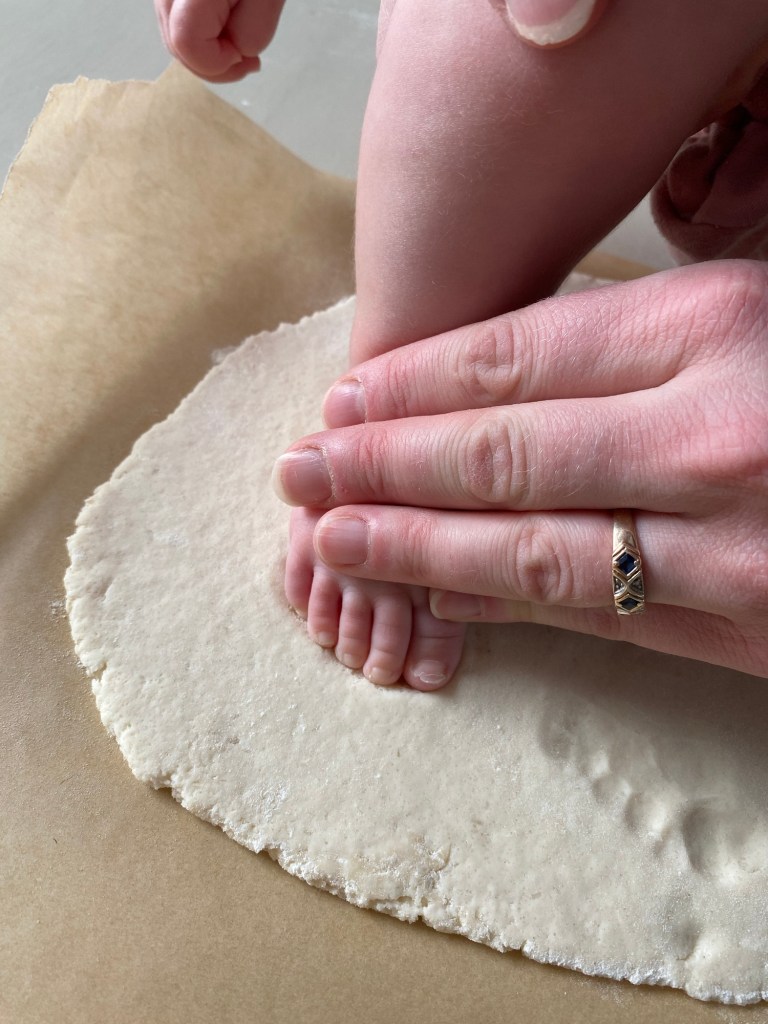
    6. While baby is held overtop of dough area by one person, another can gently take the hand or foot and press firmly into the soft dough. Make sure to poke each finger and toe so that you get the full imprint! (If you have a really wriggly baby, feet are definitely much easier to do than hands!)

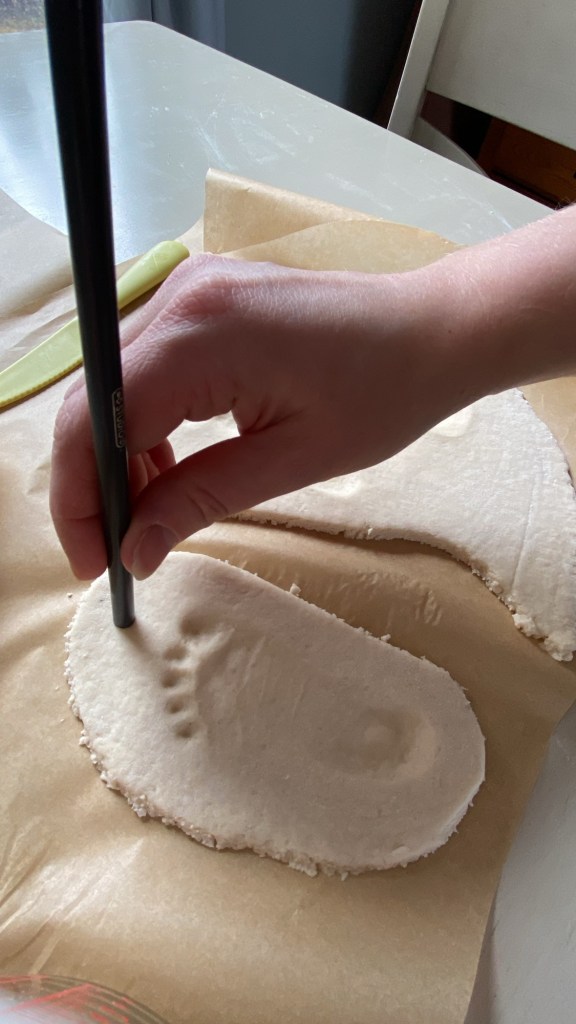
    7. If the print is not very deep, it will be harder to see, especially after baking. Use your finger or gently use a utensil to deepen the baby’s print to make it more visible.

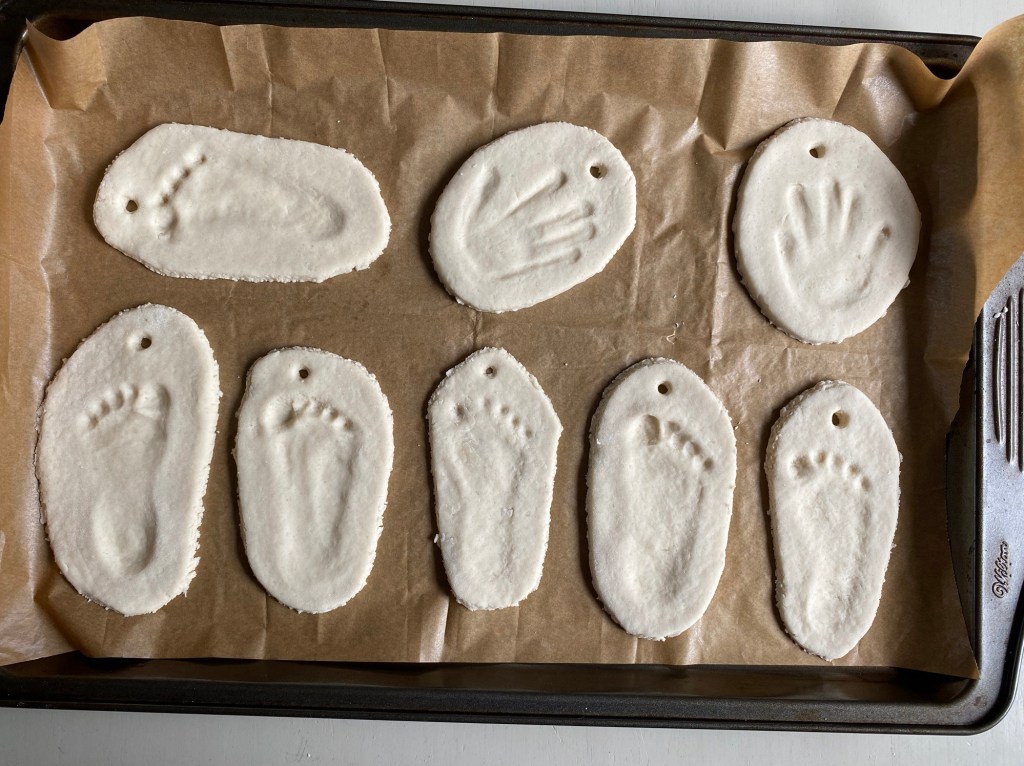
    8. Use dull knife or large cookie cutter to cut out baby’s print. Gently place on a parchment covered baking sheet, spaced out evenly with other baby prints.

    9. Poke a hole above the print for the ribbon, leaving at least 1/2 inch of dough before the edge.

    10. Bake on middle rack for about 1.5-2 hours (90-120 minutes). The timing will largely depend on the thickness of the baby prints, so I recommend checking it after 1 hour, and every 20 minutes after that. When done it will be mostly hard yet slightly soft on top (not squish-able!) and slightly golden on bottom. Turn the oven off at this point and just let them continue to dry out in the oven for another hour (or longer if you want, just make sure not to forget about them for the next time you use the oven!)

    11. Remove from oven and transfer to cooling racks.

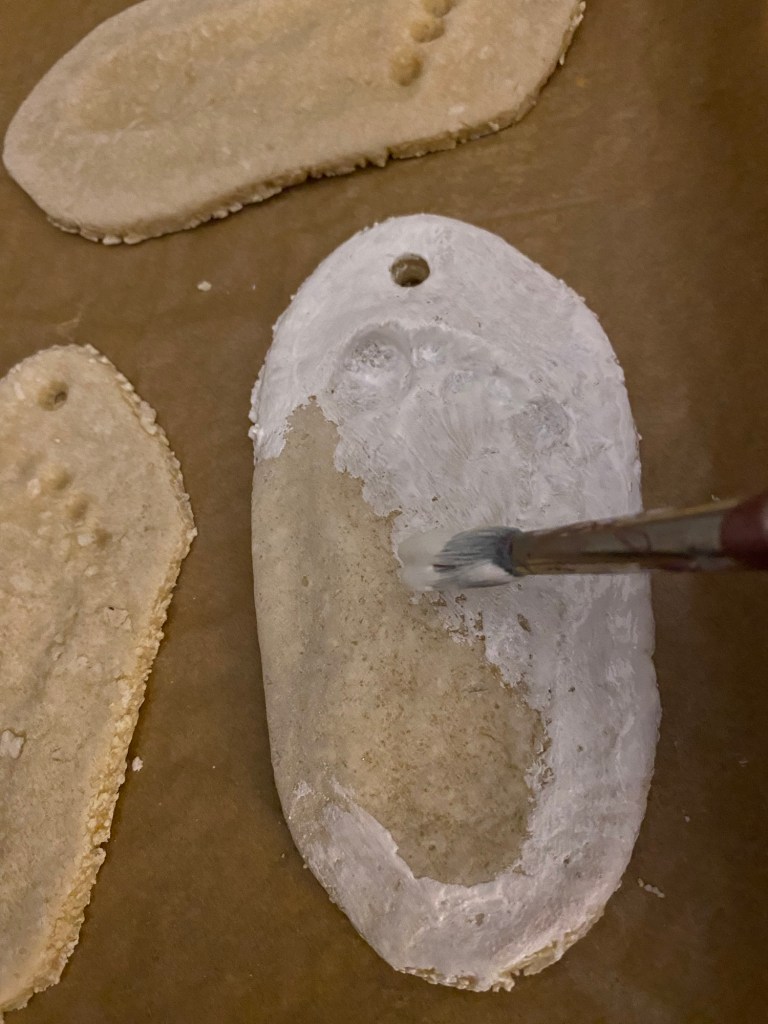
    12. When fully cooled (or the next day!) you can use acrylic paint if desired to paint the baby’s imprint area so it can be seen better, and decorate however you like. I also painted the backs once the front side had dried.

    13. Seal with mod podge or other craft sealer to help it stay dry and preserved.

    14. Don’t forget to write your baby’s name and age with a permanent marker so you don’t forget this precious moment in your baby’s life.

    15. Tie with a ribbon and wrap up carefully when not in use. Keep in mind that it may still break if dropped (it is salt dough after all!).

    Additional Notes:

    1. This recipe makes enough for about 10 handprint or footprint infant ornaments.

    2. I had some ornaments puff up while being baked several years ago, using other recipes. So after tweaking it and having many great results, I have learned that puffing up usually happens from these three avoidable things:

    • Having the oven too hot
    • The dough hasn’t been rolled out thin enough
    • The dough has mini air pockets in it

    Made This Recipe?

    I’d LOVE to see your results!! Feel free to post to your social media account and tag Northbird using one of these links:

    Hi, I’m Jessie!

    I’m a Wife and Homeschooling Mom living in a remote town in Northern Ontario, Canada. I love making wholesome meals for my family from scratch, homeschooling our girls and learning more about natural living.

    Read more about my story HERE.

    Subscribe to Northbird’s email list to get weekly posts on: tasty recipes, activity ideas for kids, natural living tips, and some genuine mom thoughts and encouragement!

    Salt Dough Baby Footprint Ornaments

    • Servings: 10
    • Difficulty: Easy
    • Print

    Make a salt dough imprint of your baby's hands or feet and turn it into a beautiful ornament or precious gift for your loved ones this Christmas!


    This recipe makes enough for about 10 handprint or footprint infant ornaments.

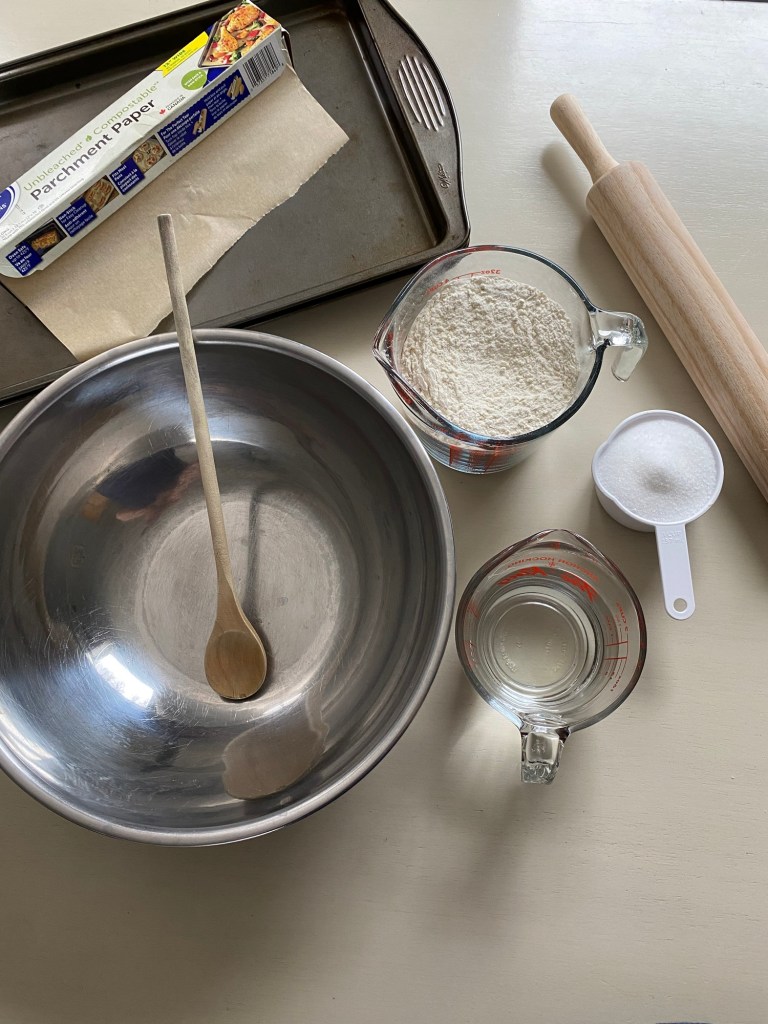
    Supplies Needed

  • Mixing bowl
  • Spoon
  • Measuring cups
  • Parchment paper
  • Rolling pin
  • Baking sheets x2
  • Cooling rack
  • Pencil or straw (for poking ribbon holes)
  • Dull knife or a large cookie cutter (if you want perfectly round ones!)

  • Ingredients

  • 2 cups all purpose flour (plus extra for rolling out)
  • 1/2 cup iodized fine salt
  • 3/4 cups water (more or less)
  • Additional ideas if not painting:

  • Directions

    1. Preheat oven to 250 degrees fahrenheit.
    2. Mix flour and salt together in medium size bowl. (Add any additional sparkles or cinnamon if you want at this point, but keep in mind if you want to paint later on it may not matter too much!)
    3. Add just enough water to make it into a soft dough.
    4. Knead for 2-3 minutes so dough is a smooth ball.
    5. Divide into 2 balls and roll out to 1/4” thick (or about 1/2 centimeter). *You can try putting a flattened ball between two sheets of parchment paper with flour and rolling it this way, or just flour up a surface and roll out, adding flour as you go. (Try not to add too much flour, just enough so that it doesn’t stick to the parchment or pin!)
    6. While baby is held overtop of dough area by one person, another can gently take the hand or foot and press firmly into the soft dough. Make sure to poke each finger and toe so that you get the full imprint! (If you have a really wriggly baby, feet are definitely much easier to do than hands!)
    7. If the print is not very deep, it will be harder to see, especially after baking. Use your finger or gently use a utensil to deepen the baby’s print to make it more visible.
    8. Use dull knife or large cookie cutter to cut out baby’s print. Gently place on a parchment covered baking sheet, spaced out evenly with other baby prints.
    9. Poke a hole above the print for the ribbon, leaving at least 1/2 inch of dough before the edge.
    10. Bake on middle rack for about 1.5-2 hours (90-120 minutes). The timing will largely depend on the thickness of the baby prints, so I recommend checking it after 1 hour, and every 20 minutes after that. When done it will be mostly hard yet slightly soft on top (not squish-able!) and slightly golden on bottom. Turn the oven off at this point and just let them continue to dry out in the oven for another hour (or longer if you want, just make sure not to forget about them for the next time you use the oven!)
    11. Remove from oven and transfer to cooling racks.
    12. When fully cooled (or the next day!) you can use acrylic paint if desired to paint the baby’s imprint area so it can be seen better, and decorate however you like. I also painted the backs once the front side had dried.
    13. Seal with mod podge or other craft sealer to help it stay dry and preserved.
    14. Don’t forget to write your baby’s name and age with a permanent marker so you don’t forget this precious moment in your baby’s life.
    15. Tie with a ribbon and wrap up carefully when not in use. Keep in mind that it may still break if dropped (it is salt dough after all!).

    Return to Top

    How to Make a Simple Bird Feeder

    Find Northbird on social media:

    This post contains affiliate links. As an Amazon associate, I earn from qualifying purchases. This means that I make a small commission at no extra cost to you. You can read my full disclosure HERE.

    Jump to Printable Activity Card

    Jump to Video

    Return to “Homeschooling Activities & Resources”

    Return to “Discovering Birds”

    “Birding” as a Homeschooler…

    With spring right around the corner, we are looking forward to many things, and one of those is more birds coming to visit!

    Many of our winter days have had temperatures around -30 to -40 degrees celcius, which means less feathery visitors to our bird feeders during those chilly days.

    However, through the winter we have still had a steady visiting flow of black-cap chickadees, whisky jacks, pileated woodpeckers, crows, and the occasional sparrow.

    Our kids love watching birds from our front window, and one of our favourite types of bird feeders is a clear plastic one (The Window Cafe, similar to THIS ONE) that suctions right onto the window glass! It lasted on our window for several months until we had several super cold days in a row, fell off and wouldn’t suction anymore…Oh well, we’ll try again when it’s warmer!

    A downy woodpecker hanging on to have a snack.

    When I was younger and also homeschooled, my mother kept several nature books in the sunroom (probably still does), and whenever an interesting bird, insect, or animal was spotted, out came the identification books to discover the name and nature of what we had found/observed.

    Of course, special mention must also go to my godfather “Ernie”, who was like a living, walking encyclopedia of knowledge. He was a retired science teacher and loved spending time with my siblings and I to teach and discover many things about the natural world around us. We didn’t even need to grab for our bird identification book if we were out on nature walks with him, we could just ask him! (Of course sometimes we got more information than we needed, such as the latin names and classification of species.)

    I’m sure Ernie will be mentioned on this blog more than once, as he was a very dear and memorable character, and had much knowledge and enthusiasm to offer young learners.

    About this Craft:

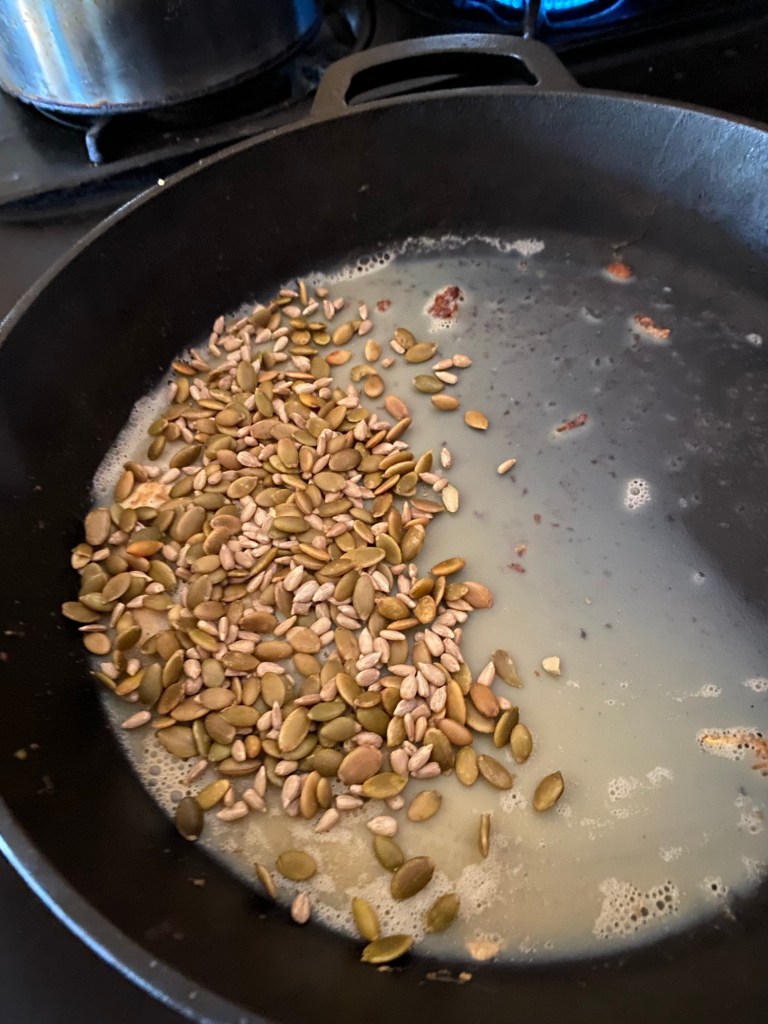
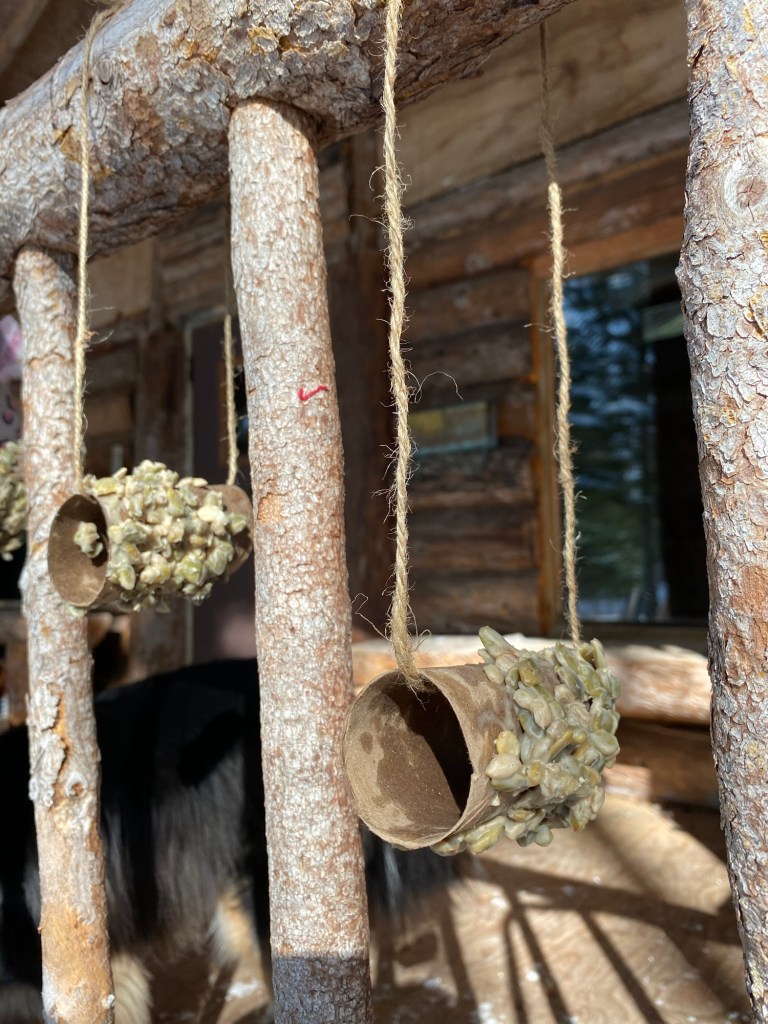
    On a recent family holiday weekend to a bush cabin, the kids and I developed this easy bird feeder idea, using leftover bacon grease and some sunflower and pumpkin seeds that I took from our trail mix. We spread the mixture onto a toilet paper finished roll, let it harden/freeze, then tied it to the porch railing. We had a lot of fun over the next few hours watching the whisky jack birds fight over our homemade bird feeders.

    A smart squirrel also noticed the tasty hanging treat and helped himself a few times. Eventually he figured out how to chew through the string and took off into the bush dragging the paper roll with him!

    Our pup may have snuck over a few times to sample the bacon grease…!

    There are many ways to make this simple bird feeder, based on what you may have available in your pantry. As I mentioned above, when we made it a few weeks ago we didn’t have any bird seed, just a few seeds in our trail mix that I sifted out. It would definitely be easier with smaller bird-feeder seeds!

    Have fun making this and don’t forget to watch and record what types of birds come to visit!

    Here’s a short video of making this easy bird feeder (and a few shots of the feathery/furry visitors that came to eat!)

    How to Make a Simple Bird Feeder

    Supplies Needed:

    • Leftover bacon grease (You can also use peanut butter, lard, or butter)
    • Bird seed
    • String
    • Scissors
    • Inside cardboard roll from toilet paper or paper towel rolls

    Directions:

    1. Pour seeds into pan of bacon grease and stir well. Let bacon grease cool in pan.

    2. Using a spoon, spread mixture onto paper roll. (Or, if your seeds are small enough, first spread grease/peanut butter onto paper roll and then dip/roll in a bowl of the bird seed.)

    3. Let harden on a plate if needed (we stuck ours outside in the BBQ overnight to fully harden without animals eating it!)

    4. Cut string to desired length (we used about 3 feet length), and thread through roll.

    5. Tie string ends to make a loop and hang near a window so you can watch the animal activity!

    Hi, I’m Jessie!

    I’m a Wife and Homeschooling Mom living in a remote town in Northern Ontario, Canada. I love making wholesome meals for my family from scratch, homeschooling our girls and learning more about natural living.

    Read more about my story HERE.

    Subscribe to Northbird’s email list to get weekly posts on: tasty recipes, activity ideas for kids, natural living tips, and some genuine mom thoughts and encouragement!

    How to Make a Simple Bird Feeder

    Looking for an easy craft for a homeschooling bird inquiry? Save that leftover bacon grease and toilet paper rolls to make your own hanging bird feeders!


    You can also use peanut butter, other nut butters, lard, or butter to replace the bacon grease.

    Supplies Needed:

  • Leftover bacon grease
  • Bird seed
  • String
  • Scissors
  • Inside cardboard roll from toilet paper or paper towel rolls
  • Directions:

    1. Pour seeds into pan of bacon grease and stir well. Let bacon grease cool in pan.
    2. Using a spoon, spread mixture onto paper roll. (Or, if your seeds are small enough, first spread grease/peanut butter onto paper roll and then dip/roll in a bowl of the bird seed.)
    3. Let harden on a plate if needed (we stuck ours outside in the BBQ overnight to fully harden without animals eating it!)
    4. Cut string to desired length (we used about 3 feet length), and thread through roll.
    5. Tie string ends to make a loop and hang near a window so you can watch the animal activity!
    Return to Top