
Find Northbird on social media:
This post contains affiliate links. As an Amazon associate, I earn from qualifying purchases. This means that I make a small commission at no extra cost to you. You can read my full disclosure HERE.
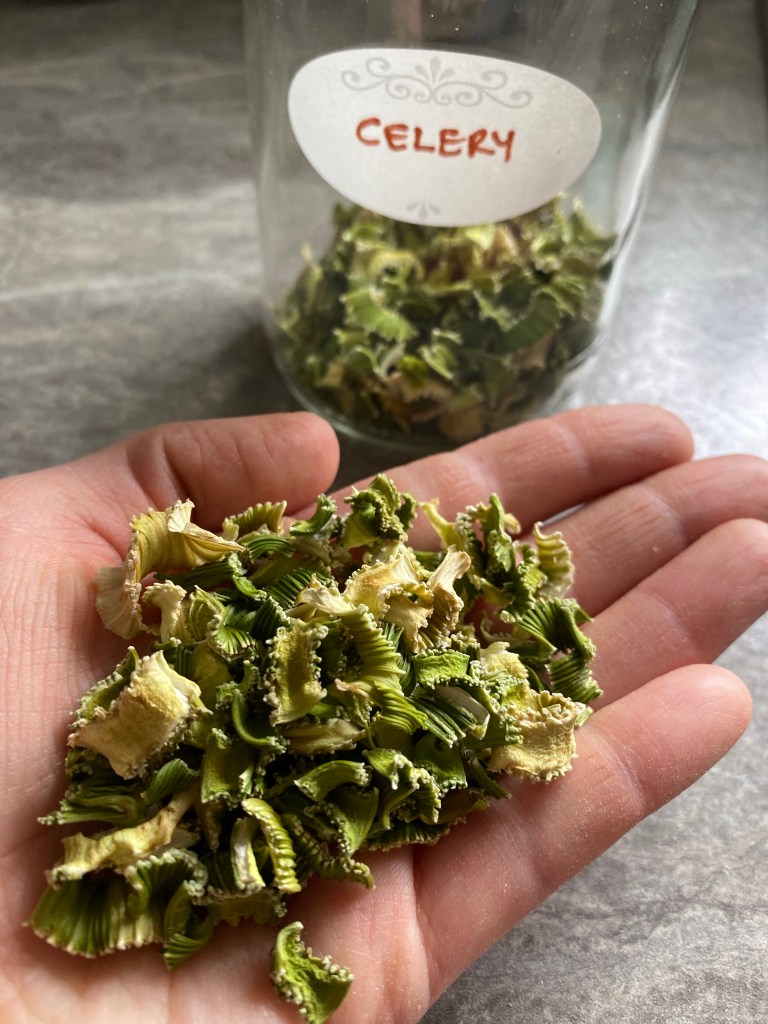
We love eating celery throughout the winter months, and frequently use it for making soups, stir frys, curries, stocks, sauces and stews.
When I started learning how to dehydrate vegetables, celery quickly became a favourite item and I always made sure to dehydrate lots of celery to store up for winter cooking.
I find that dehydrated celery has a wonderful flavour and is one of my favourite staples to use particularly when making chicken stock.
Can You Dehydrate Multiple Vegetables at the Same Time?
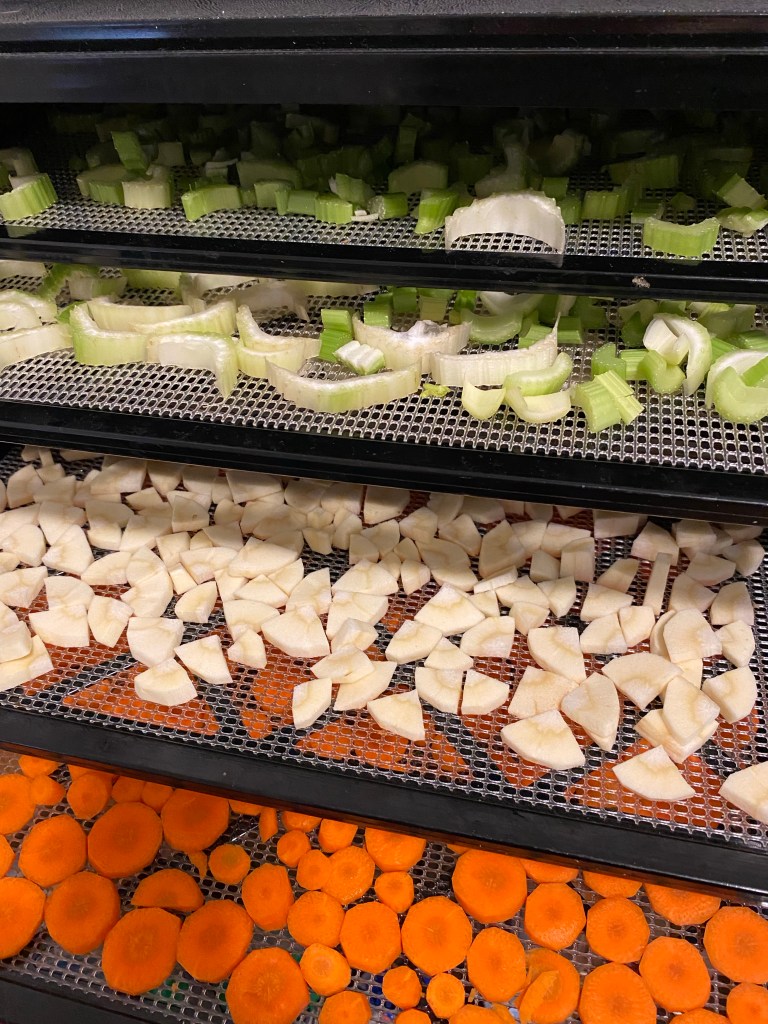
We use a Excalibur Food Dehydrator, which has 9 large trays! So sometimes I have a small amount of one vegetable that must be dried and I end up filling the rest of the trays with a few other vegetables with a similar drying time and temperature.
For example, during a recent trip to a grocery store I discovered several marked down bags of organic celery and oodles of parsnips (my favourite). Their blemishes earning them a 50%off badge? A few wrinkles! (Or in other words: already starting to dry/dehydrate!)
After prepping both of these on several different trays I also cut up a few carrots that I had on hand to fill up the remaining 2 trays.
Here is a basic guide for a few vegetables that have similar temperatures and drying times:
| Vegetable | Pre-Treatment (Optional) | Temperature | Drying Times |
| Beets | Boil/Steam to cook through & peel. | 125 degrees F | 10-12 Hours |
| Carrots | Steam blanch | 125 degrees F | 10-12 Hours |
| Celery | Water blanch | 125 degrees F | 6-8 Hours |
| Onions | N/A | 125 degrees F | 4-8 Hours |
| Parsnips | Water or steam blanch | 125 degrees F | 8-10 Hours |
| Zucchini | N/A | 125 degrees F | 8-10 Hours |
How Long Does Dehydrated Celery Last?
Dehydrated celery and other fruits and vegetables are a great item to keep in your pantry because of the natural shelf life they give if properly stored.
Most sources suggest around two years for best results, but I have heard of a few folks that use oxygen absorbers inside their mason jars that extend the shelf life by many years further.
For long term storage, put your dehydrated celery bits in an airtight container (such as a jar) in your pantry for a week, and give the jar a shake once a day, checking for any missed moisture before storing in a cooler, dry location.
If some moisture is spotted within this time, just put back in the dehydrator to dry a little longer. If any mold is noticed within the week, toss it all out and don’t risk eating. I tend to over-dry instead of under-dry, because of being paranoid of mold.

Can You Dehydrate Celery in the Oven?
I have not personally dehydrated celery in the oven, but from what I have researched, it is very easy to do so.
The process is the same as with a dehydrator, but you would put the celery slices on a parchment-covered baking sheet. If you have more than one baking sheet, arrange the larger pieces on one sheet, and put the smaller pieces on another. (The smaller pieces will dry out faster so can be removed earlier).
Then put on the middle oven rack with a preheated temperature of 150 degrees Fahrenheit (or the lowest temperature your oven has). Bake for 2-3 hours or until the pieces are dry and brittle.
You can turn and stir the pieces around on the tray a couple of times during this time. The pieces are done when they can be snapped in half, not bent.
Oven drying is a quicker process, but you will need a little more patience and keep a close eye on the small pieces to see that they don’t burn.
How to Cook Dehydrated Celery:
We love using dehydrated celery in crockpot soups, stews and curries. You can also blend up the dried celery bits to make celery powder for seasoning dishes.
1 stalk of raw celery is roughly equal to 1 heaping tablespoon of dehydrated celery (or approximately 4 grams).
If I am making a crockpot dinner dish, then I’ll just add the dried celery straight to the main mix and let it simmer and rehydrate while cooking. If I am making a dish on the stove that does not require much cooking time, then I will usually put the dried celery in a dish of water for a few minutes first to rehydrate it prior to cooking.
Here are a couple Northbird recipes to use dehydrated celery in:


Hearty Sweet Potato and White Bean Soup Recipe
A Hearty, Flavourful and Healthy Vegetarian Soup!

How to Dehydrate Celery
Supplies Needed:
- Dehydrator
- Knife
- Cutting board
- Colander
- Airtight container (I use 1L glass jars)
- Oxygen Absorbers (Optional)
Ingredients:
- Fresh celery
Directions:
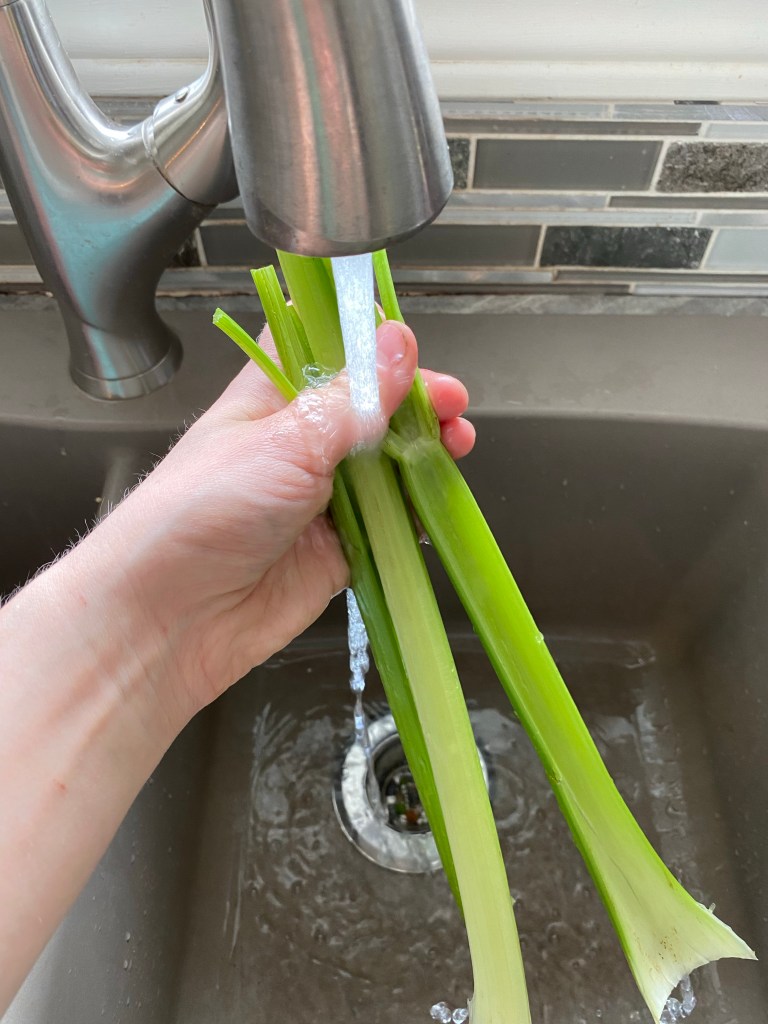
1. Cut the ends off and wash well. If the celery is not organic, you may want to consider washing in a water and vinegar vegetable bath to help remove any pesticide field sprays. (Fill a large bowl with cold water and add a few tablespoons of white vinegar. Soak the celery for a minute and wash, rinse off)
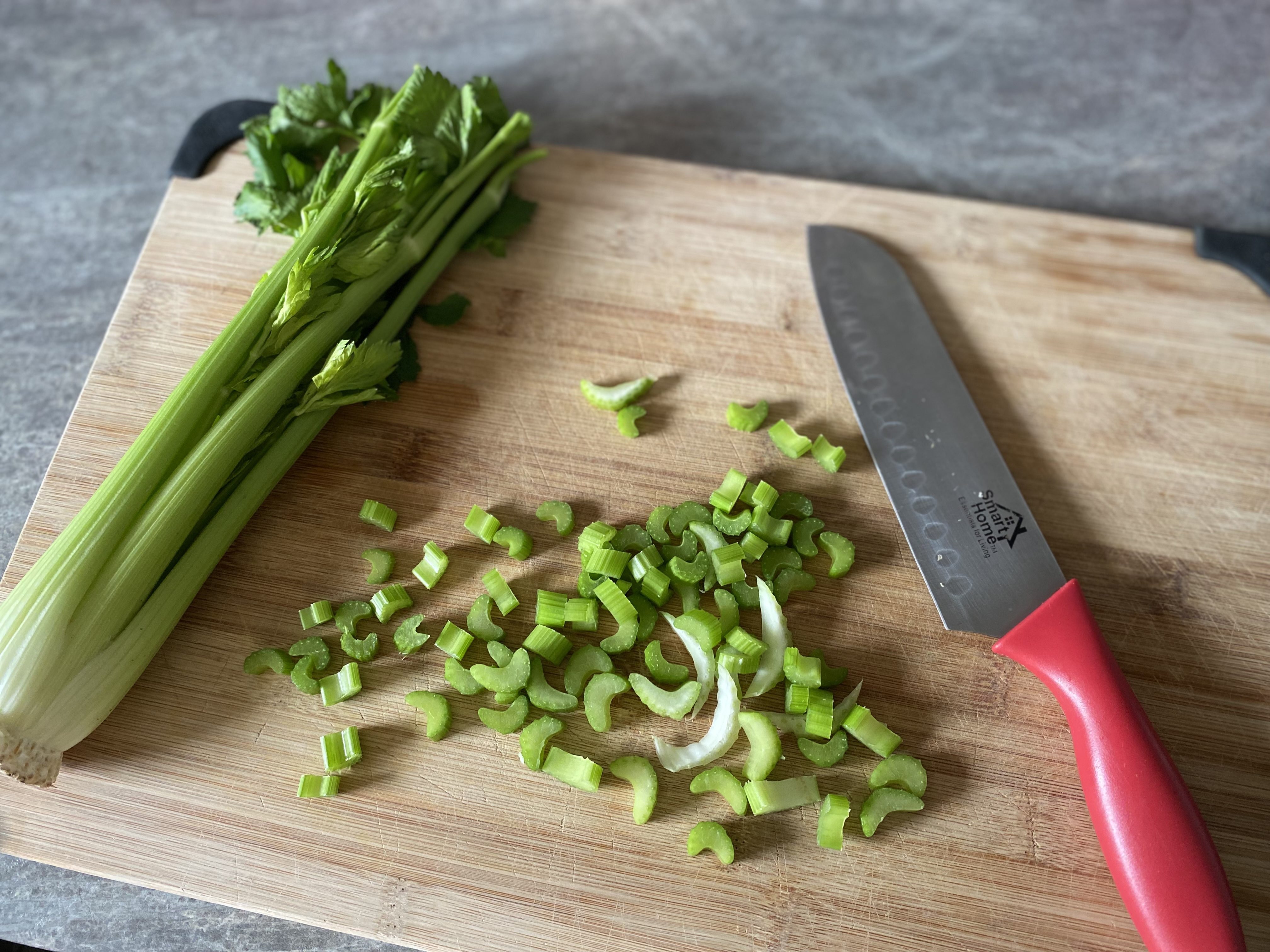
2. Cut into slices 1/8”-1/4″ thick.
3. Optional Pre-treatment: You can blanch the celery slices briefly by putting them in a pot of boiling water for 1 minute then putting them in a bowl of ice water.
4. Spread out slices on dehydrator trays without touching. I recommend putting smaller pieces on one tray and larger ones on another, that way the smaller pieces will be done drying sooner and can be removed.
5. Set dehydrator temperature to 125 degrees fahrenheit, and set timer for 6-8 hours. Depending on the humidity in the room, they may take longer to dry.
6. When crispy and fully dry, put into airtight container (I use 1 Litre glass jars) and store in a cool, dry place.
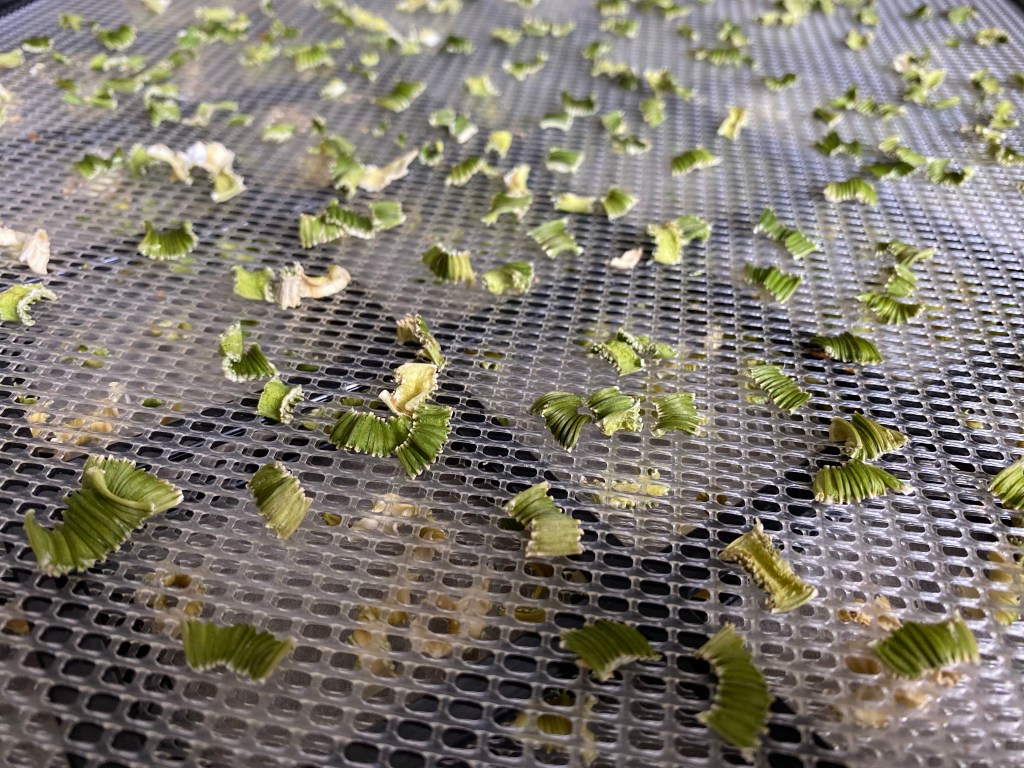
Note: For long term storage, keep accessible in a dry place and monitor for a week. Give the jar a shake once a day, checking for any missed moisture before storing in a cooler, dry location.
If some moisture is spotted within this time, just put back in the dehydrator to dry a little longer. If any mold is noticed within the week, toss it all out and don’t risk eating.
Best to use within 1 year as long as they are dried fully and stored properly.
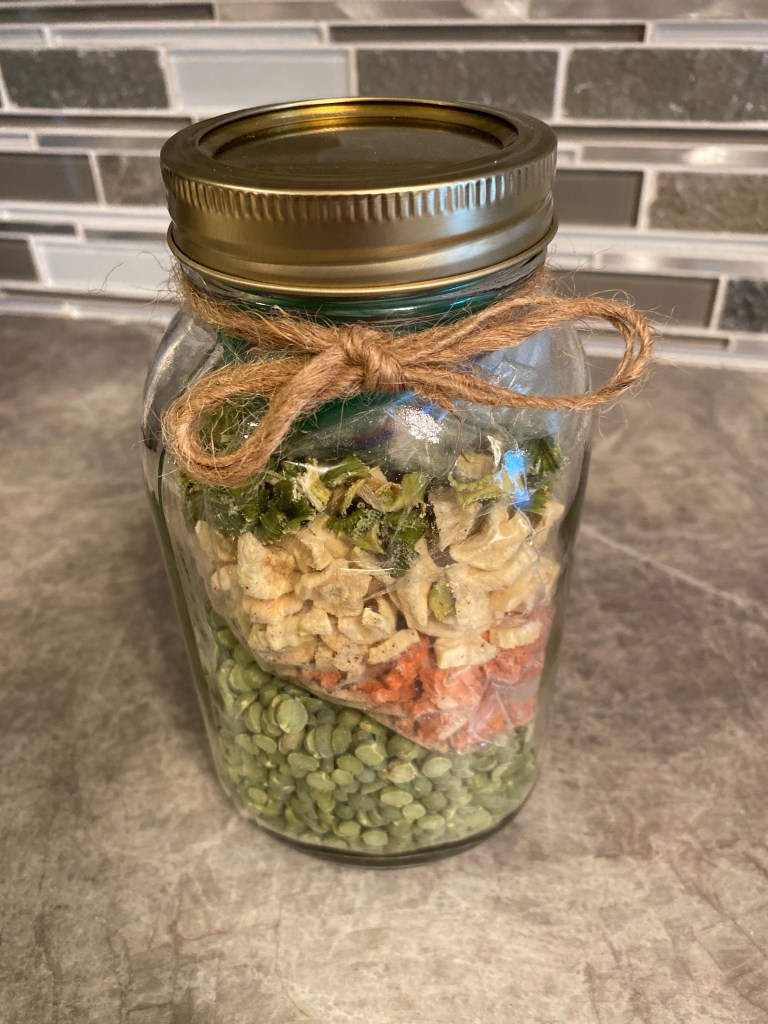
Coming Soon! “Just Add Water: Veggie Soup Mix”, featuring all dehydrated vegetables, split peas and spices.
More Great Ideas for Your Homemade Pantry!





Hi, I’m Jessie!
I’m a Wife and Homeschooling Mom living in a remote town in Northern Ontario, Canada. I love making wholesome meals for my family from scratch, homeschooling our girls and learning more about natural living.
Read more about my story HERE.

Subscribe to Northbird’s email list to get weekly posts on: tasty recipes, activity ideas for kids, natural living tips, and some genuine mom thoughts and encouragement!
Recent posts from Northbird:







How to Dehydrate Celery
A Winter Pantry Staple for Your Kitchen
Supplies Needed
Ingredients
- Fresh Celery
Directions
- Cut the ends off and wash well. If the celery is not organic, you may want to consider washing in a water and vinegar vegetable bath to help remove any pesticide field sprays. (Fill a large bowl with cold water and add a few tablespoons of white vinegar. Soak the celery for a minute and wash, rinse off)
- Cut into slices 1/8”-1/4″ thick.
- Optional Pre-treatment: You can blanch the celery slices briefly by putting them in a pot of boiling water for 1 minute then putting them in a bowl of ice water.
- Spread out on dehydrator trays without touching. I recommend putting smaller pieces on one tray and larger ones on another, that way the smaller pieces will be done drying sooner and can be removed.
- Set dehydrator temperature to 125 degrees fahrenheit, and set timer for 6-8 hours. Depending on the humidity in the room, they may take longer to dry.
- When crispy and fully dry, put into airtight container (I use 1 Litre glass jars) and store in a cool, dry place. – Additional Note: For long term storage, keep accessible in a dry place and monitor for a week. Give the jar a shake once a day, checking for any missed moisture before storing in a cooler, dry location. If some moisture is spotted within this time, just put back in the dehydrator to dry a little longer. If any mold is noticed within the week, toss it all out and don’t risk eating. Best to use within 1 year as long as they are dried fully and stored properly.
Nutrition
Per 1 Cup: 200 calories; 10 g fat; 20 g carbohydrates;
8 g protein.

 Northbird