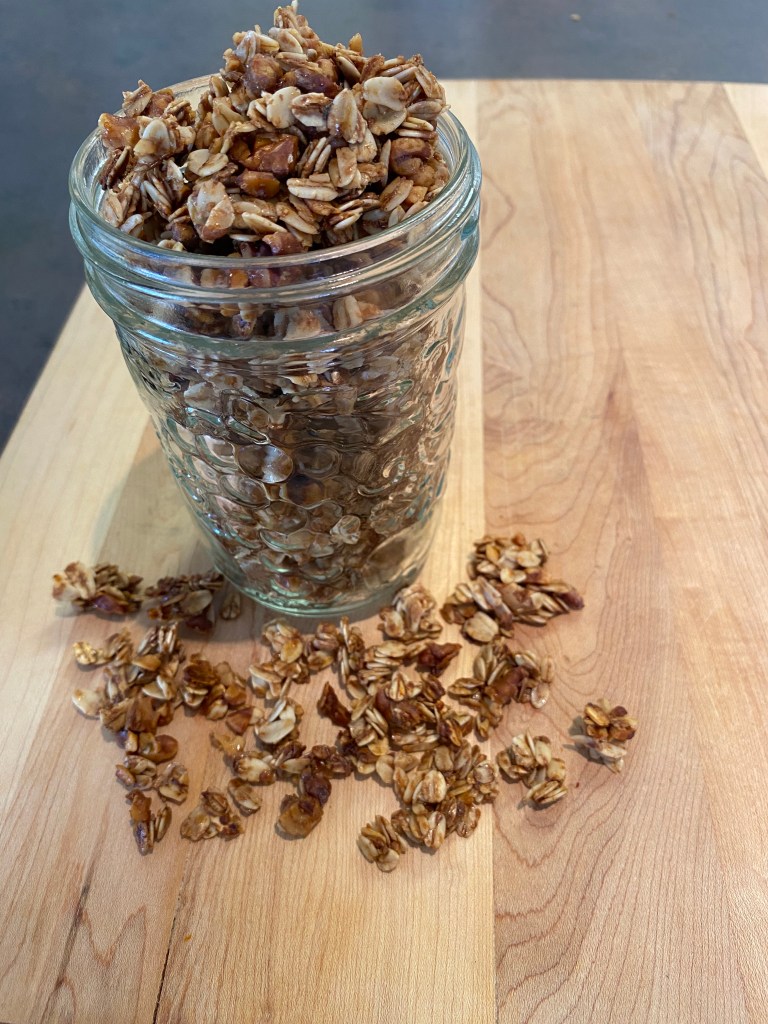
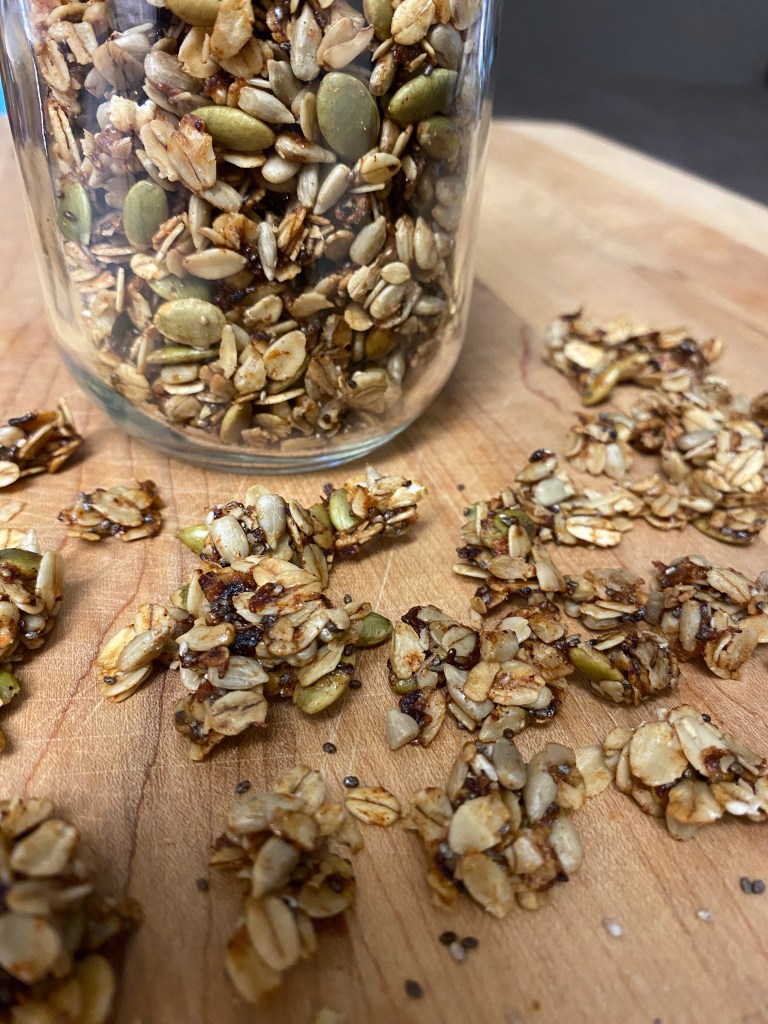
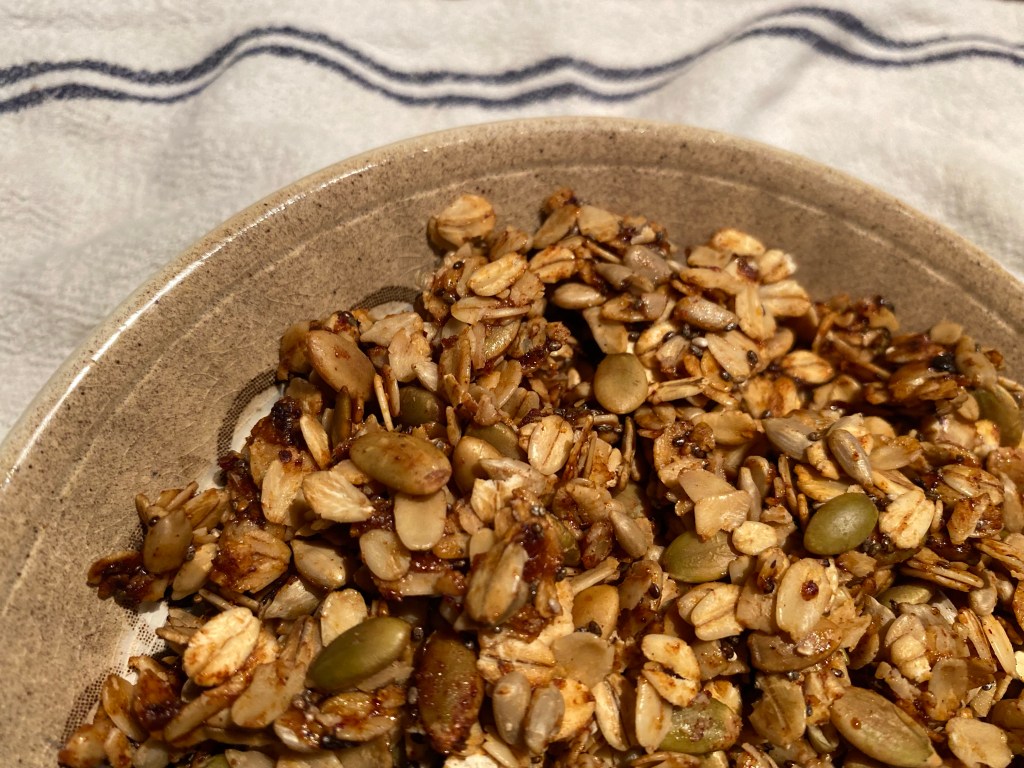
Super Seed Granola

Find Northbird on social media:

This post contains affiliate links. As an Amazon associate, I earn from qualifying purchases. This means that I make a small commission at no extra cost to you. You can read my full disclosure HERE.
Jump to Recipe

Ways to Eat Granola:

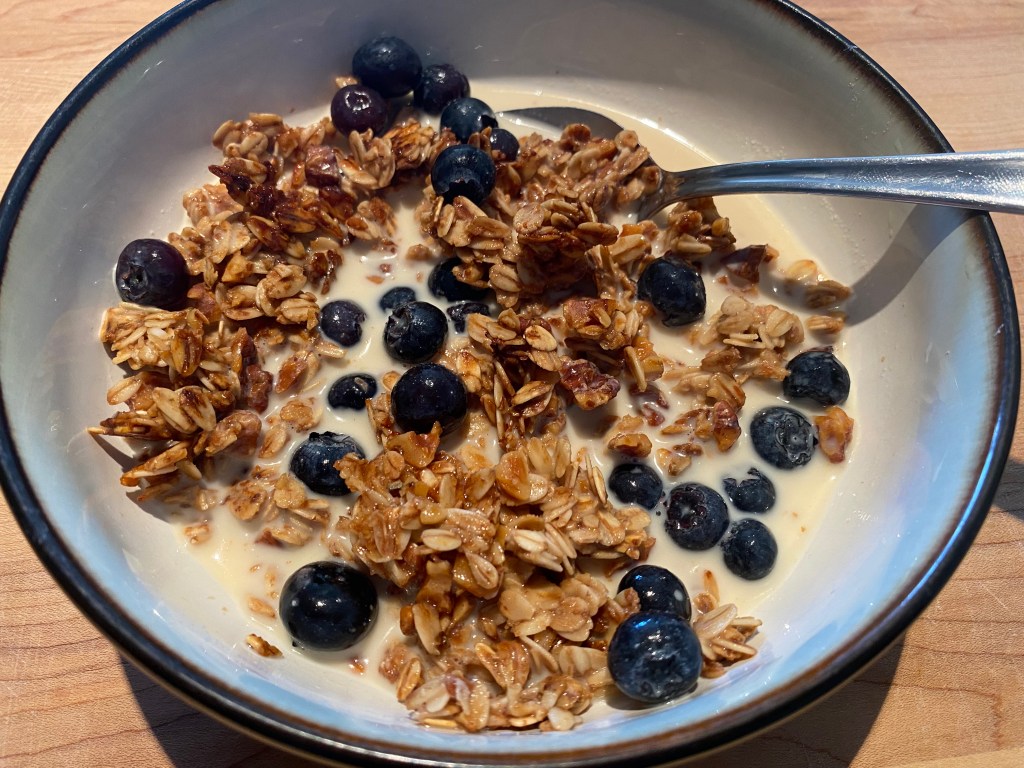
  • Breakfast bowl with regular milk, oat milk, soy, or nut milks (try it with Homemade Almond Milk!) and add some berries for fresh sweetness.
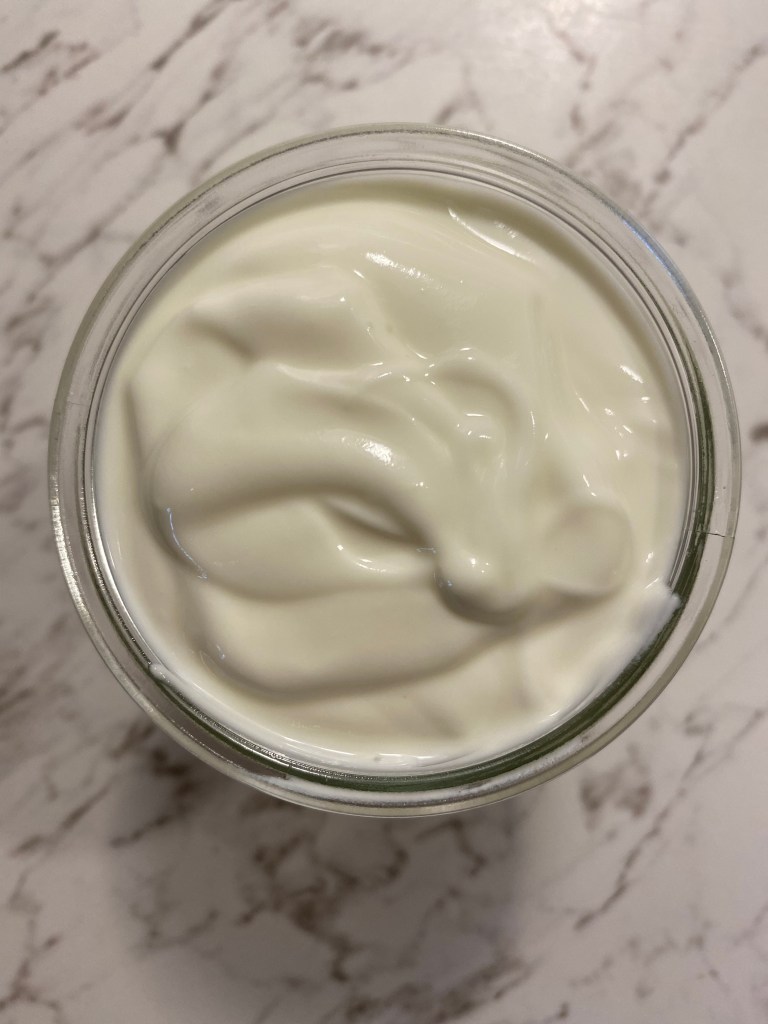
  • Enjoy a bowl on top of yogurt (try it with a fresh batch of Homemade Crockpot Yogurt).
  • Take a baggie of granola for your next hike or camping trip and add some dried fruit or seeds and nuts for a delicious trail mix.
  • Make a Breakfast Parfait with frozen berries and yogurt!
  • Use it as a baked desert crumb topping (Apple Crisp recipe coming soon!)
  • Make granola bars from it! (Recipe being developed)

Health Benefits of Granola:

Healthy granola recipes are usually high in protein, fibre and healthy fats due to recipe variations that may include oats, nuts, seeds, dried fruits and organic unrefined oils. They are packed full of nutritious options that make a filling, on-the-go quick breakfast or a delicious snack option.

Protein:

Protein is essential to the body for not only helping to build muscle mass and bones, but also very important for weight loss and regulating metabolism. Additional functions may consist of:

  • Slowing appetite and hunger cravings
  • Feel “full” for longer, less calories eaten
  • Helps with fat burning
  • Lowering blood pressure
  • Helps to maintain weight loss
  • Boosts metabolism
  • Builds muscle mass and strength
  • Lowers risk of osteoporosis and fractures
  • Helps to repair broken bones and tissues
High Protein Ingredients You can put in Granola:
NutsWalnuts, Almonds, Cashews, Peanuts, Pistachios, Brazil Nuts, Hazelnuts…
SeedsChia, Hemp, Sesame, Sunflower, Pumpkin, Flax…
Dried Fruits & BerriesApricot, Kiwi, Blackberries, Cherries, Raisins, Banana…

Fibre:

Fibre is mostly known for helping to keep the digestive system happy. Some other benefits of increased fibre may include:

  • Regulating bowel movements
  • Keeps you feeling fuller for longer
  • Assists in lowering cholesterol
  • Preventing blood sugar from spiking
  • Helps to lower blood pressure
High Fibre Ingredients You can put in Granola:
NutsChestnuts, Almonds, Hazelnuts…
SeedsChia, Flax, Pumpkin, Sesame, Sunflower…
Dried FruitsDates, Figs, Prunes, Apricots, Raisins…
OatsOrganic Rolled Oats

Fats:

Fats are not only used as a source of energy in the body, but also aid in the following:

  • Help to insulate and protect the organs
  • Gives your body energy
  • Supports cell growth
  • Helps to regulate blood pressure and cholesterol
  • Assists the body in absorbing vitamins A, E & D
  • Reduces inflammation
  • Assists in cell growth
High Fats Ingredients You can put in Granola:
NutsWalnuts, Macadamia, Coconut, Cashews…
SeedsSunflower, Pumpkin, Flax, Chia, Hemp…
OilsCoconut oil, Avocado oil, Olive oil…
Seed & Nut ButtersPeanut butter, Almond butter, Tahini, Sunflower seed butter, Pumpkin seed butter
Dried Fruits & BerriesPlantain, Strawberries, Raspberries, Kiwi, Raisins

Reasons to Make Your Own Granola:

  • It is soooo easy! Chop… Melt… Mix… Spread… Bake… Eat!
  • Way less expensive than buying from the store.
  • Store-bought granolas are often made with lower quality ingredients and usually have more processed sugars and additives mixed in to prolong shelf life.
  • When you make your own granola you know exactly what ingredients you are eating!
  • Granola is a versatile recipe: You can add more nuts and seeds, and add dried fruits/berries at the end if desired.
  • Granola is one of those easy and quick breakfast solutions to help your day start smoothly!

Try These Other Northbird Granola Recipes!

Apple Cinnamon Raisin Granola

Get your bowl ready to scoop up this tasty, brand-new homemade granola recipe! Sweetened with honey, dehydrated apple and raisins, and flavoured with cinnamon and vanilla, this delicious…

Pecan Peach Granola

This Granola blend has the crunchy delight of roasted pecans, sweetened with honey and dates, and filled with the flavour of summer peaches!
Something went wrong. Please refresh the page and/or try again.
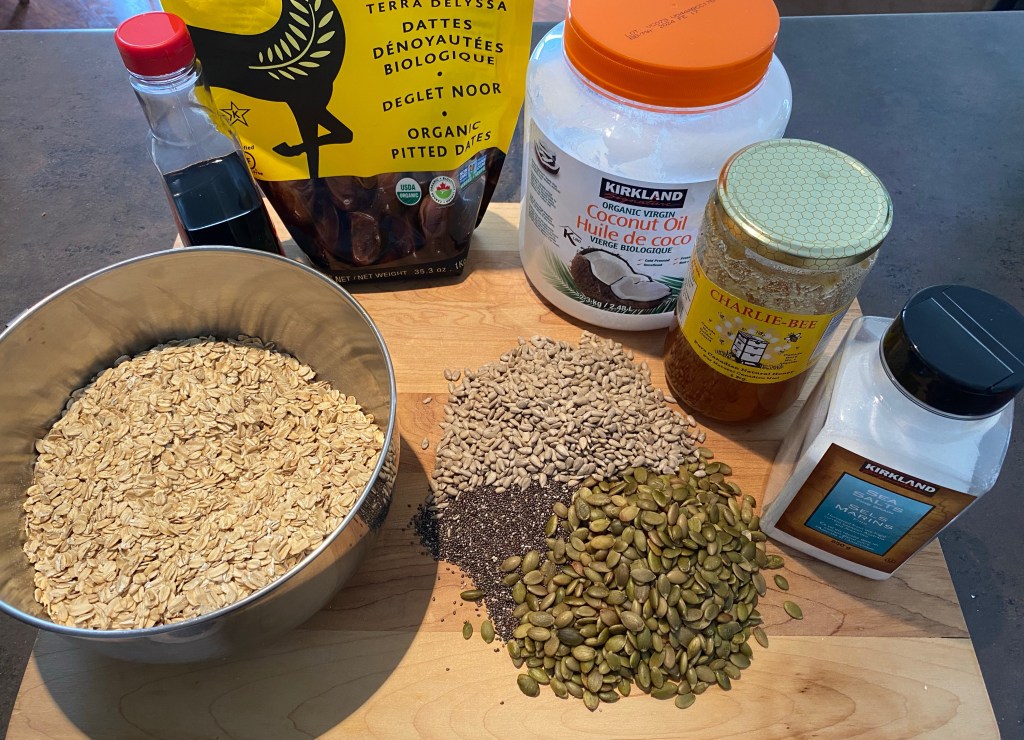
How to Make Super Seed Granola

Supplies Needed:

Ingredients:

Directions:

1. Preheat oven to 300 degrees F.

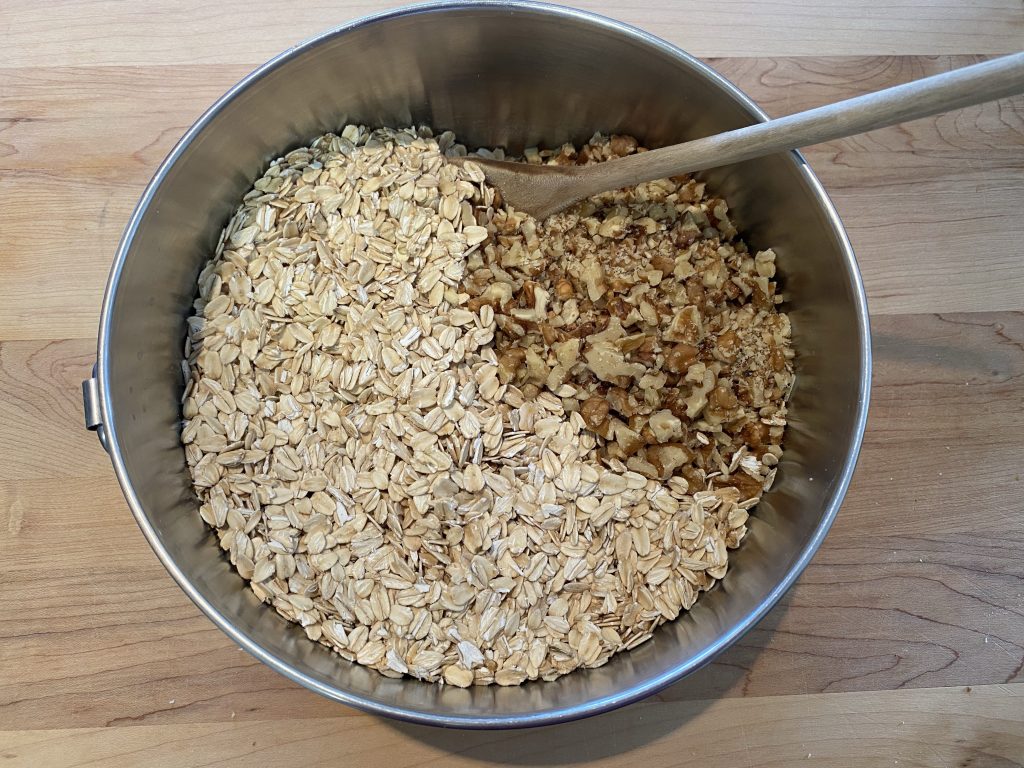
2. Mix the oats, cinnamon, sunflower seeds, pumpkin seeds and chia seeds together in a large bowl. Set aside.

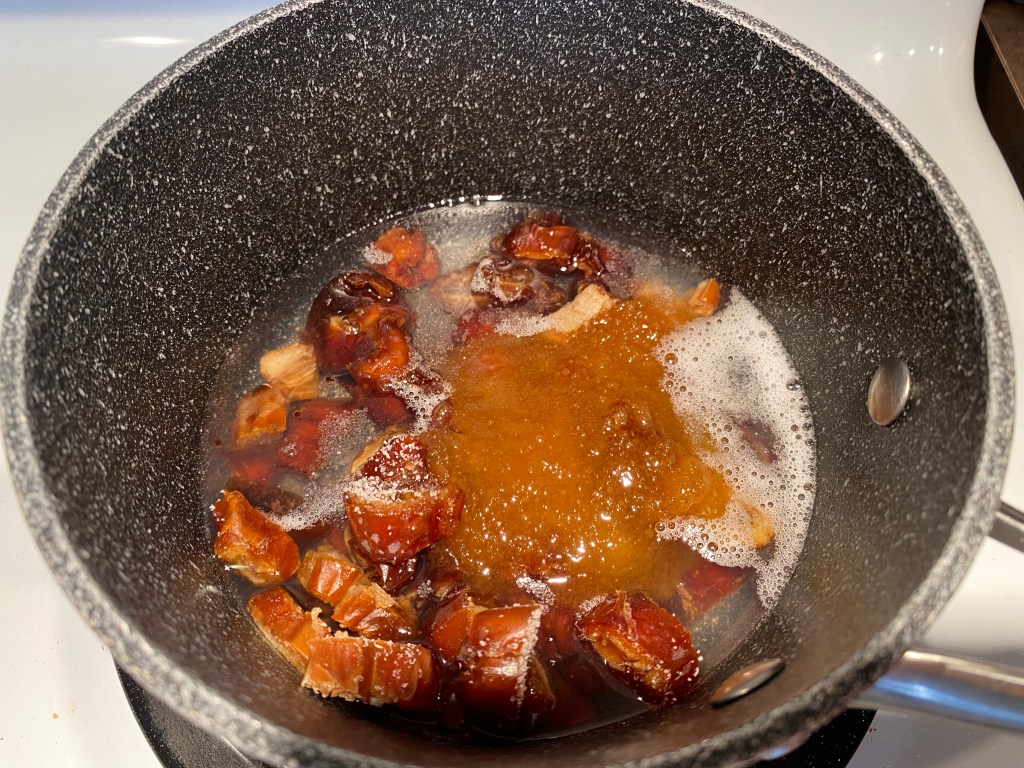
3. Melt the coconut oil in a small pot and add chopped dates, honey, sea salt and vanilla. Stir and mash or lightly blend once the dates are softened.

4. Add the wet mix to dry mix and stir well. If it has cooled enough you can finish mixing with your hands (I always find this easiest, but be careful of the hot oil!)
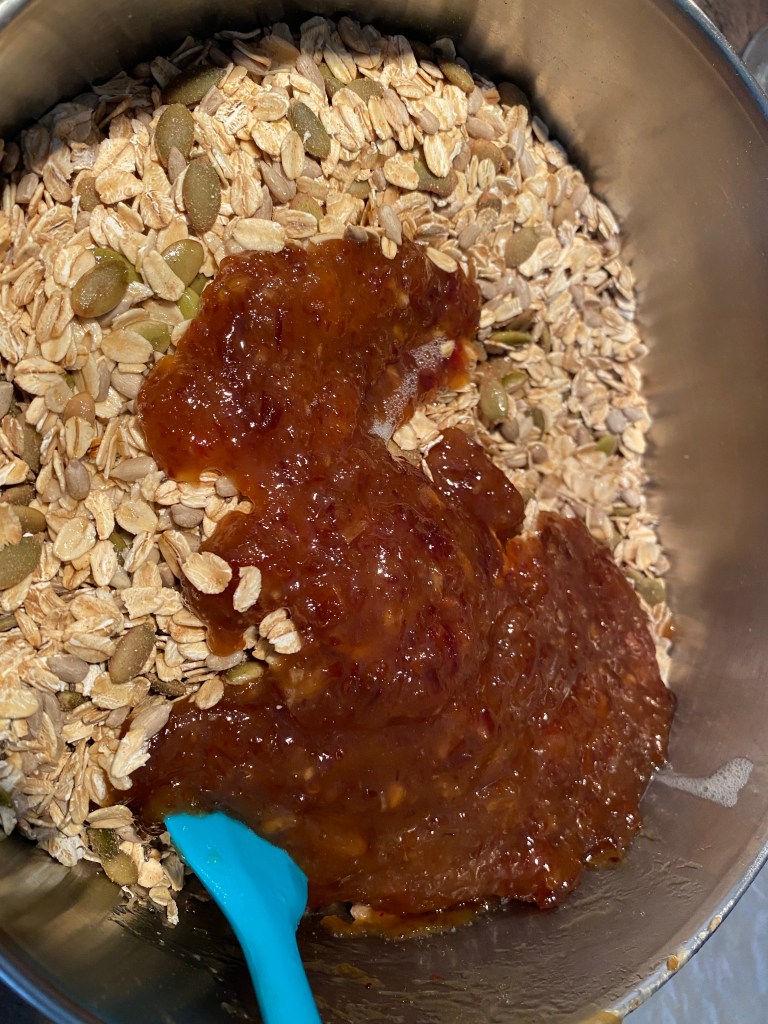
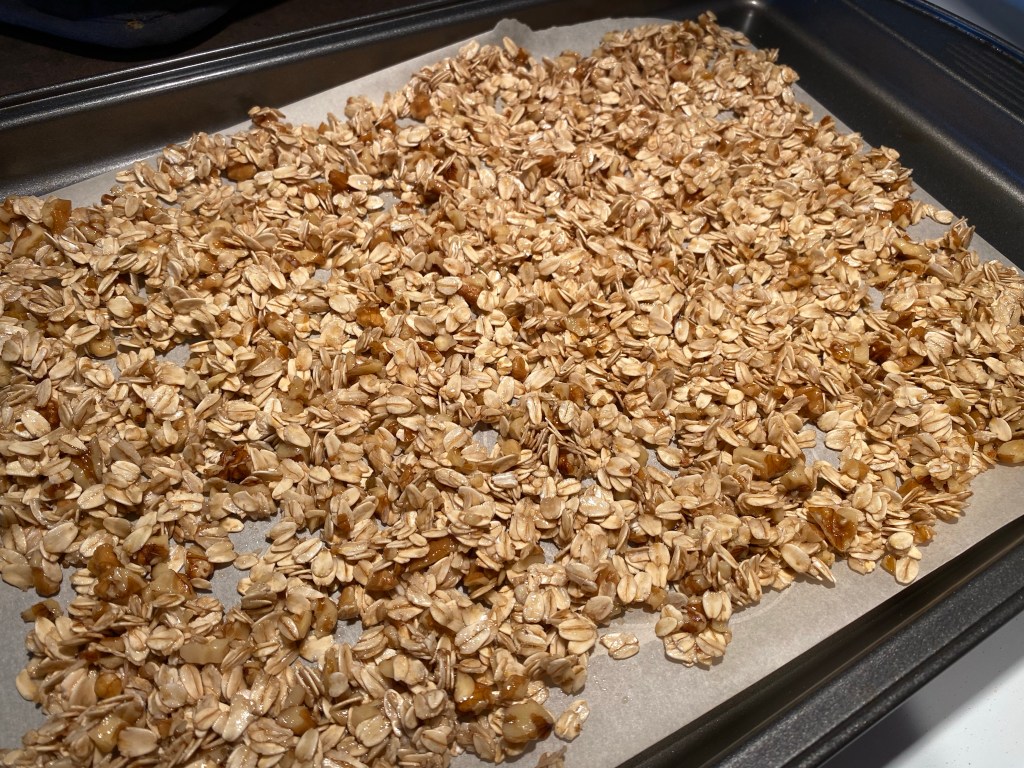
5. Spread granola mix onto parchment covered cookie sheets. Granola should be in a single layer.
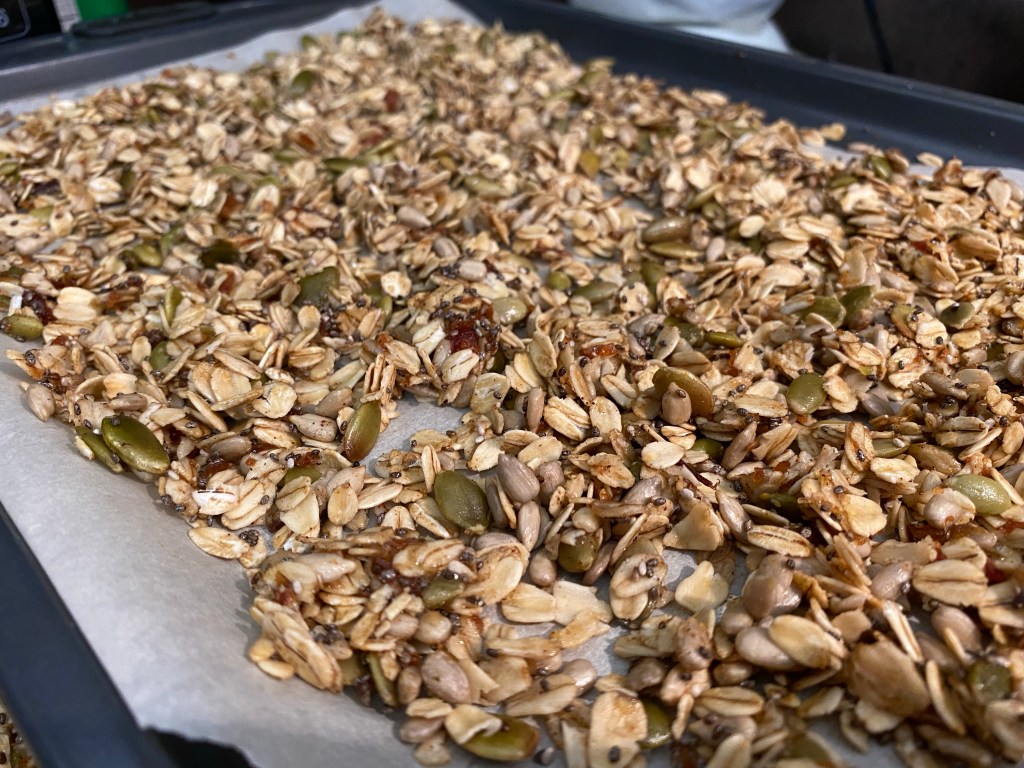
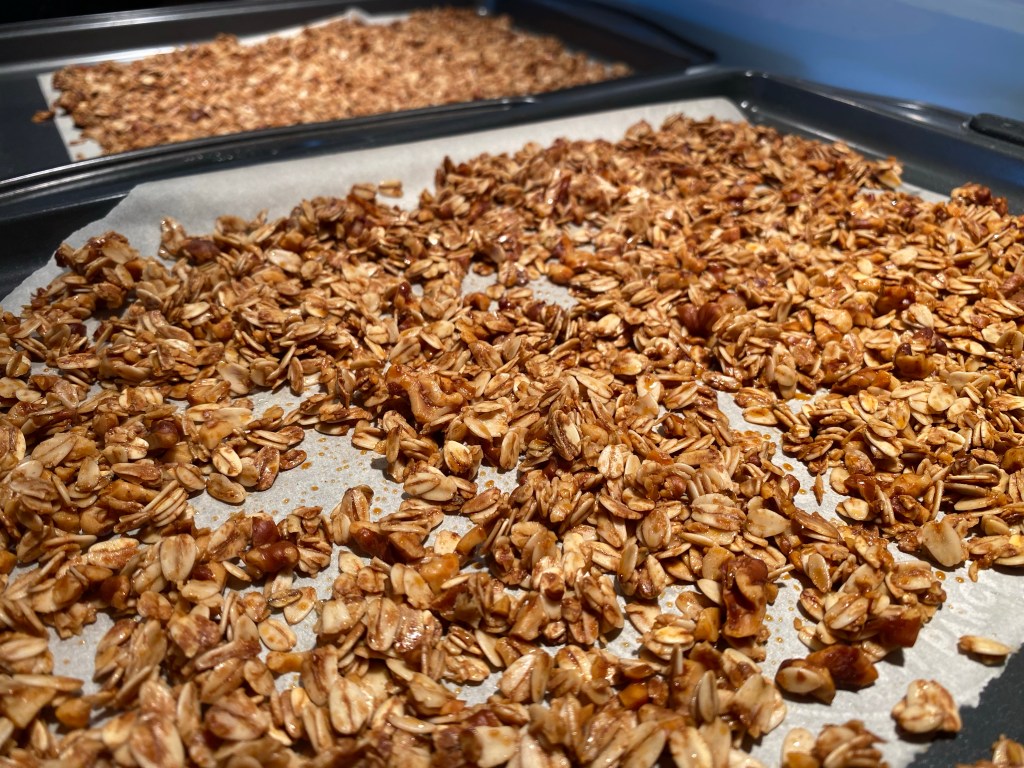
6. Bake for 30-35 minutes (depending on your oven), until golden.

7. Let cool and sit undisturbed for an hour, it will firm up as it cools down.

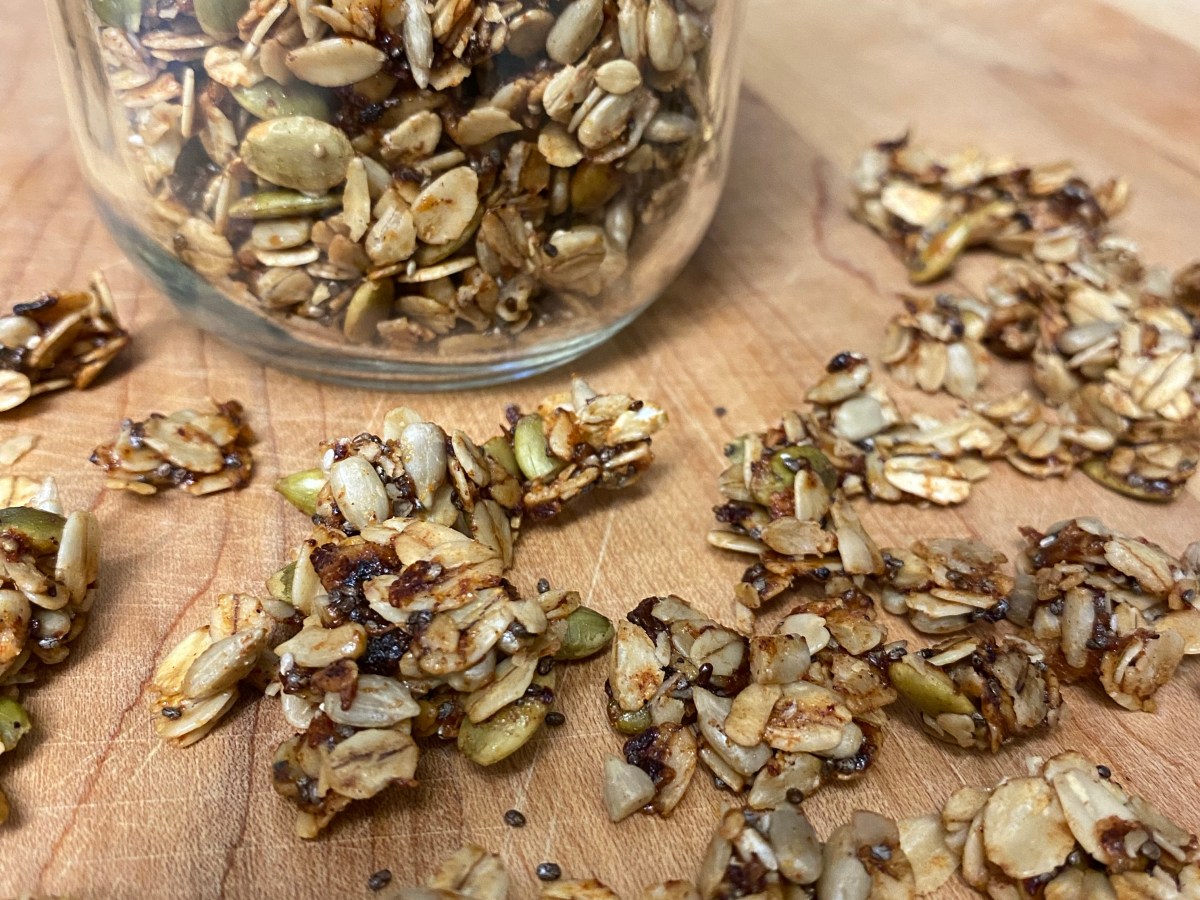
8. Break into smaller pieces per preference, and store in airtight container for up to 1 month.

Try this Granola recipe with some Homemade Almond Milk or Easy Crockpot Yogurt!
Check out these other Breakfast Recipes from the Northbird Kitchen!
Hi, I’m Jessie!

I’m a Wife and Homeschooling Mom living in a remote town in Northern Ontario, Canada. I love making wholesome meals for my family from scratch, homeschooling our girls and learning more about natural living.

Read more about my story HERE.

Subscribe to Northbird’s email list to get weekly posts on: tasty recipes, activity ideas for kids, natural living tips, and some genuine mom thoughts and encouragement!

Super Seed Granola

  • Servings: 8 cups
  • Difficulty: Easy
  • Print

Energy Boost Granola


Ingredients

  • 4 cups organic rolled oats
  • 1 teaspoon ground cinnamon
  • 1 cup sunflower seeds
  • 1 cup pumpkin seeds
  • 1/4 cup organic chia seeds
  • 1/3 cup melted organic, unrefined coconut oil
  • 1/2 cup chopped & pitted dates
  • 3 tablespoons unpasteurized honey
  • 1/2 teaspoon sea salt
  • 1/2 teaspoon pure vanilla

  • Directions

    1. Preheat oven to 300 degrees F.
    2. Mix the oats, cinnamon, sunflower seeds, pumpkin seeds and chia seeds together in a large bowl. Set aside.
    3. Melt the coconut oil in a small pot and add chopped dates, honey, sea salt and vanilla. Stir and mash or lightly blend once the dates are softened.
    4. Add the wet mix to dry mix and stir well. If it has cooled enough you can finish mixing with your hands (I always find this easiest, but be careful of the hot oil!)
    5. Spread granola mix onto parchment covered cookie sheets. Granola should be in a single layer.
    6. Bake for 30-35 minutes (depending on your oven), until golden.
    7. Let cool and sit undisturbed for an hour, it will firm up as it cools down.
    8. Break into smaller pieces per preference, and store in airtight container for up to 1 month.

    Nutrition


    Per 1 Cup Serving: 533 calories; 27 g fat; 63 g carbohydrates;
    14 g protein; 132 mg sodium.

    Return to Top

    Coconut Blueberry Breakfast Bowl

    Find Northbird on social media:

    This post contains affiliate links. As an Amazon associate, I earn from qualifying purchases. This means that I make a small commission at no extra cost to you. You can read my full disclosure HERE.

    Jump to Recipe Card

    Have you ever had one of those mornings where suddenly you realize (in the middle of pre-coffee grogginess) that there is NO MILK?! Because SOMEONE finished off the last milk and SOMEONE didn’t put it on the grocery list, and SOMEONE forgot to soak almonds last night to make almond milk…

    The kids are hungry and getting impatient, and suddenly nothing else matters except figuring out something for them to eat QUICKLY.

    In our family, we try to have either granola, oatmeal, or breakfast bowls of some sort during the week. Cereals and other breakfast foods are for the weekends and special days.

    On this particular occasion, the girls and I were staying at my parents so we were a bit out of routine (which explains why SOMEONE forgot a lot of routine things!).

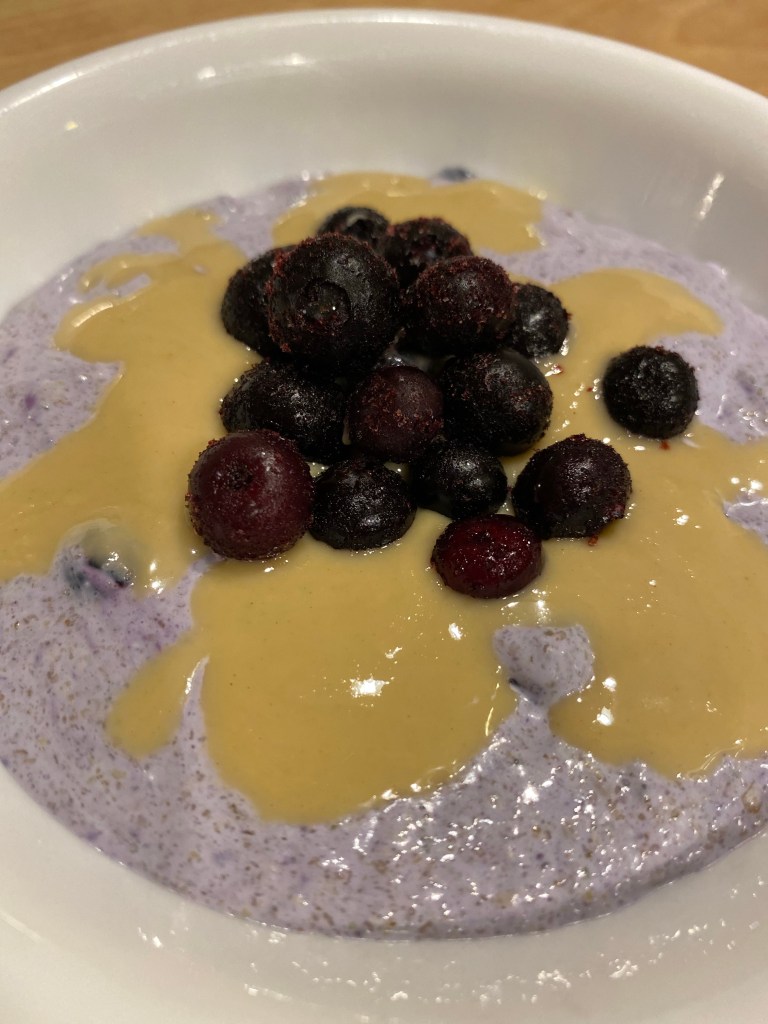
    I managed to find an assortment of items that we usually use in our breakfast bowls: tahini, 3 seed blend (chia, flax and sunflower), and some frozen blueberries.

    Thankfully, I also found some coconut powder. I had never used it before, but after reconstituting the powder with water, we had a deliciously creamy nut milk to use in our breakfast bowl.

    Problem solved!

    And bonus: the blueberries made the breakfast splodge have a beautiful lavender colour, which my oldest loved.

    What is 3 Seed Blend?

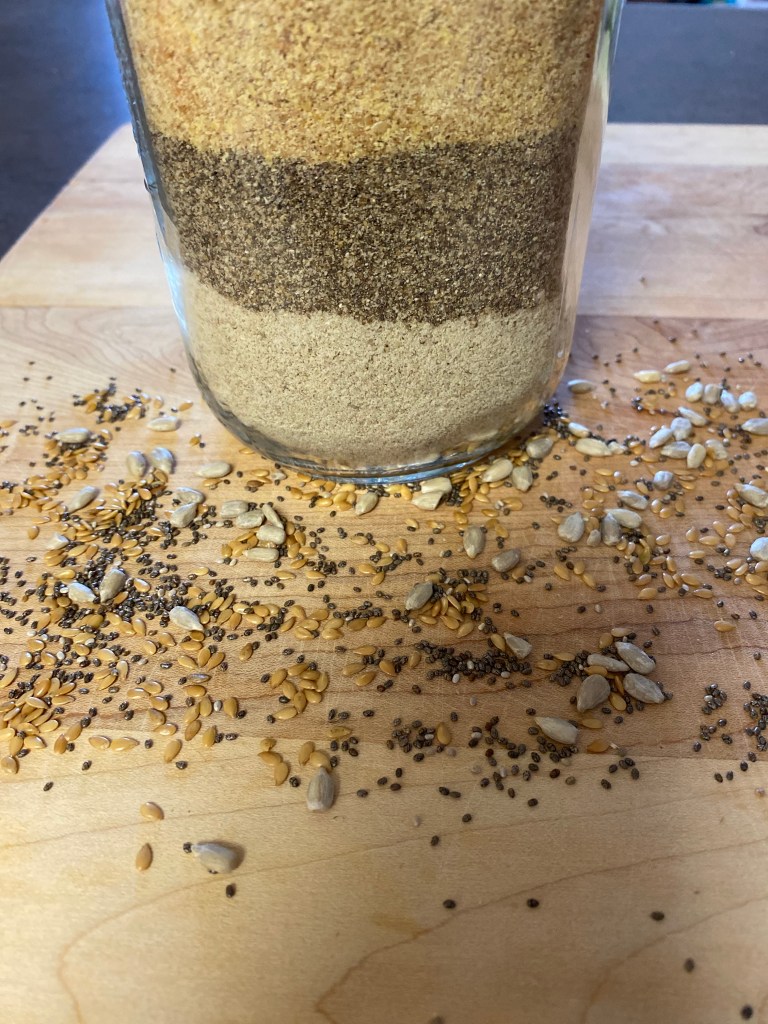
    This is a blended seed mix that we always have in a jar in the fridge. We use it often in breakfast bowls and snacks. It consists of: organic flax seeds, organic chia seeds, and raw/hulled organic sunflower seeds.

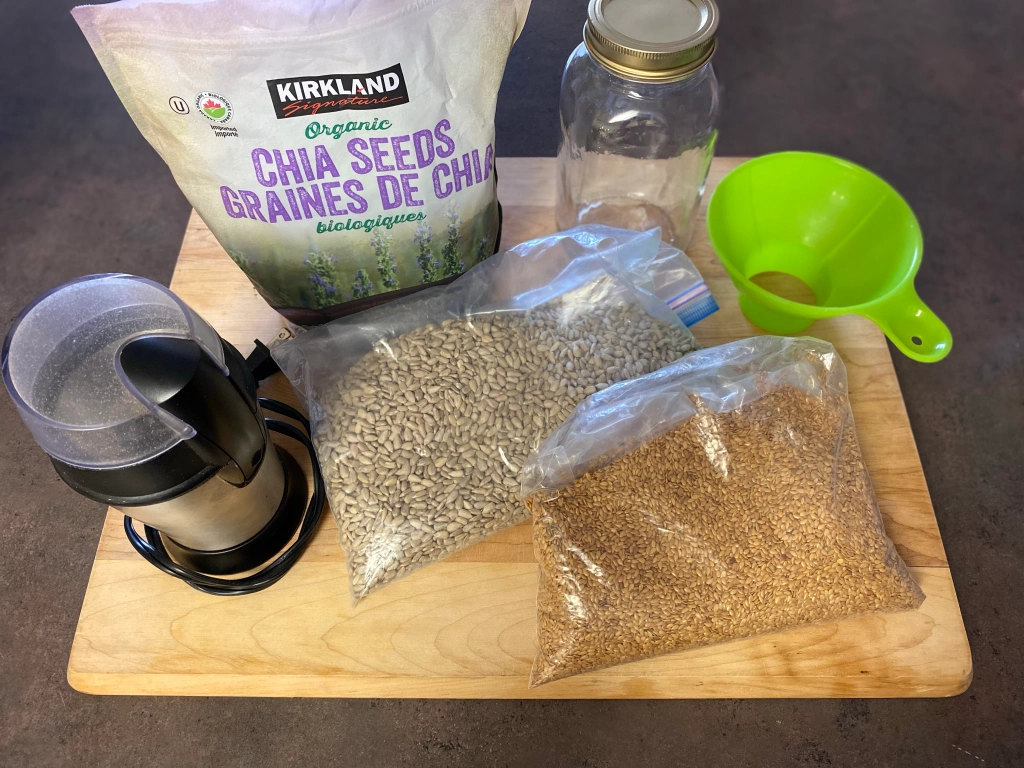
    To make the 3 Seed Breakfast Blend you will need:

    • Small blender or coffee grinder
    • Measuring cup
    • Jar
    • Funnel
    • Organic Flax seeds
    • Organic Sunflower seeds (raw, hulled and unsalted)
    • Organic Chia seeds

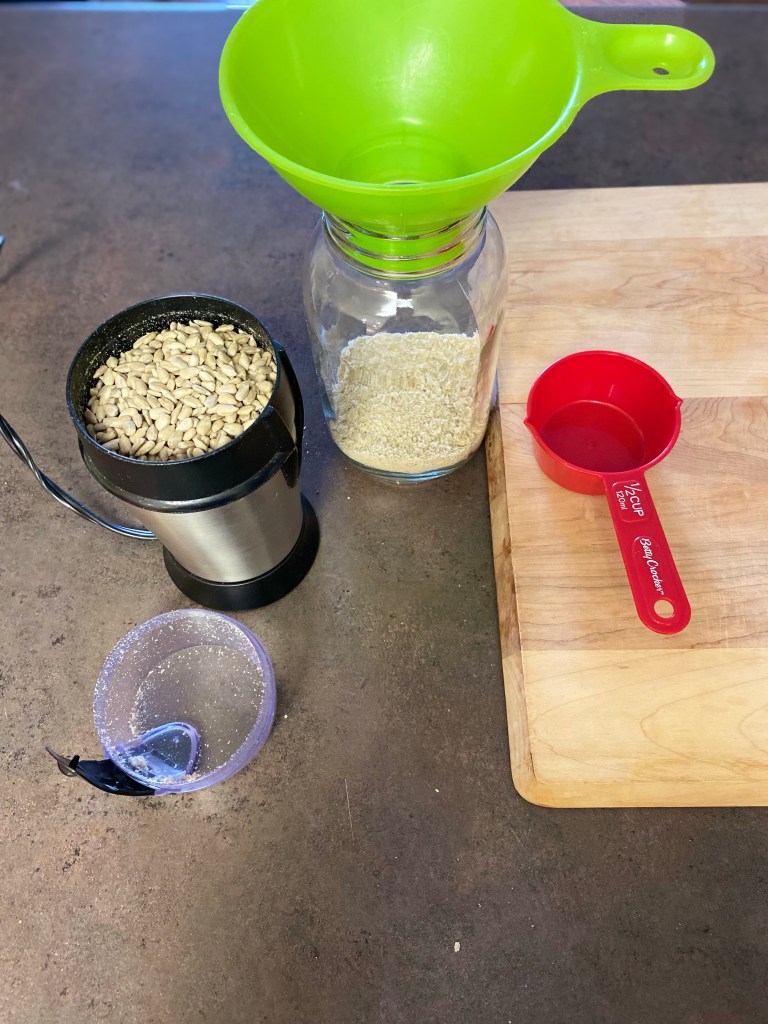
    Directions to make the 3 Seed Breakfast Blend:

    1. Measure equal batches of seed into blender and pulse until grainy.
    2. Add to Jar and give it a good shake!
    3. Store in fridge for up to one month.

    A Little About the Seeds:

    Organic Golden Flaxseed:

    These are high in fibre and omega-3 fatty acids! They have also been shown to help lower blood pressure and blood sugar, contain protein, improve digestion (hence the fibre) and reduces bloating. Some doctors also claim it to help with weight loss.

    Important to note: Nutrition experts recommend the importance of grinding up flaxseed instead of eating it whole. Ground flaxseed is easier to digest and for your body to absorb the nutrients. Avoid buying it pre-ground, as it is best ground fresh and stored in the fridge. At room temperature it will lose some of its nutritional properties, which is why our Naturopath discouraged us from buying the pre ground sold at bulk barn!

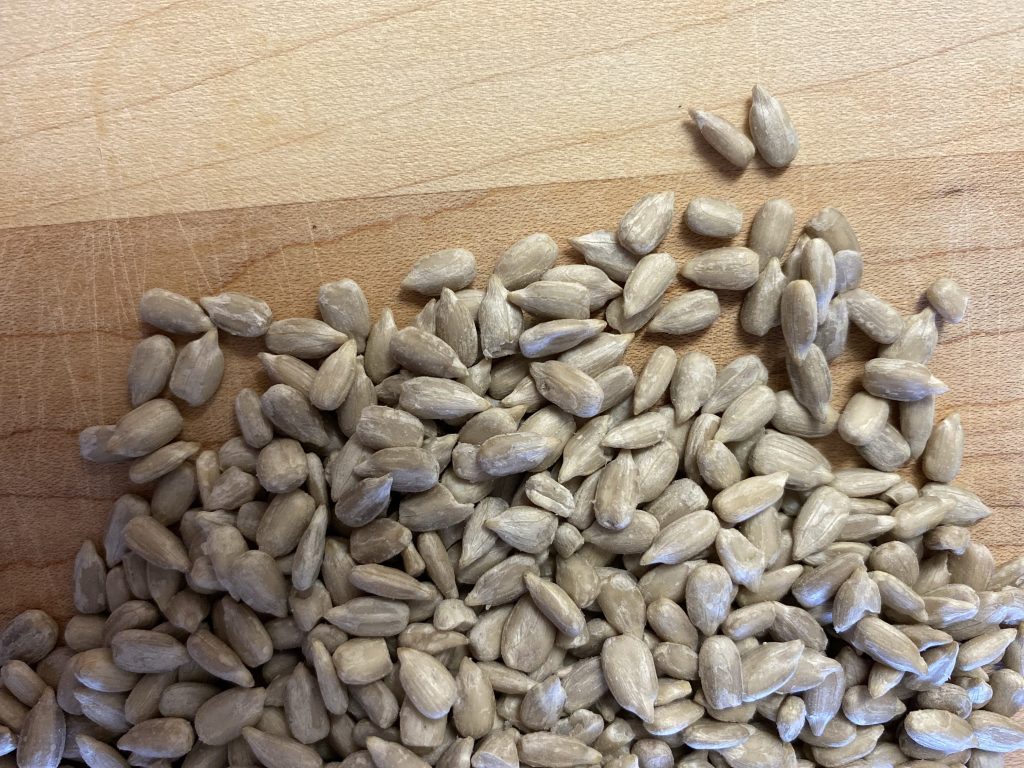
    Raw, Hulled Organic Sunflower Seeds:

    These are notably high in vitamin E and selenium, which act as a powerful antioxidant and supports your immune system and thyroid function. They also contain protein, magnesium, and linoleic fatty acids.

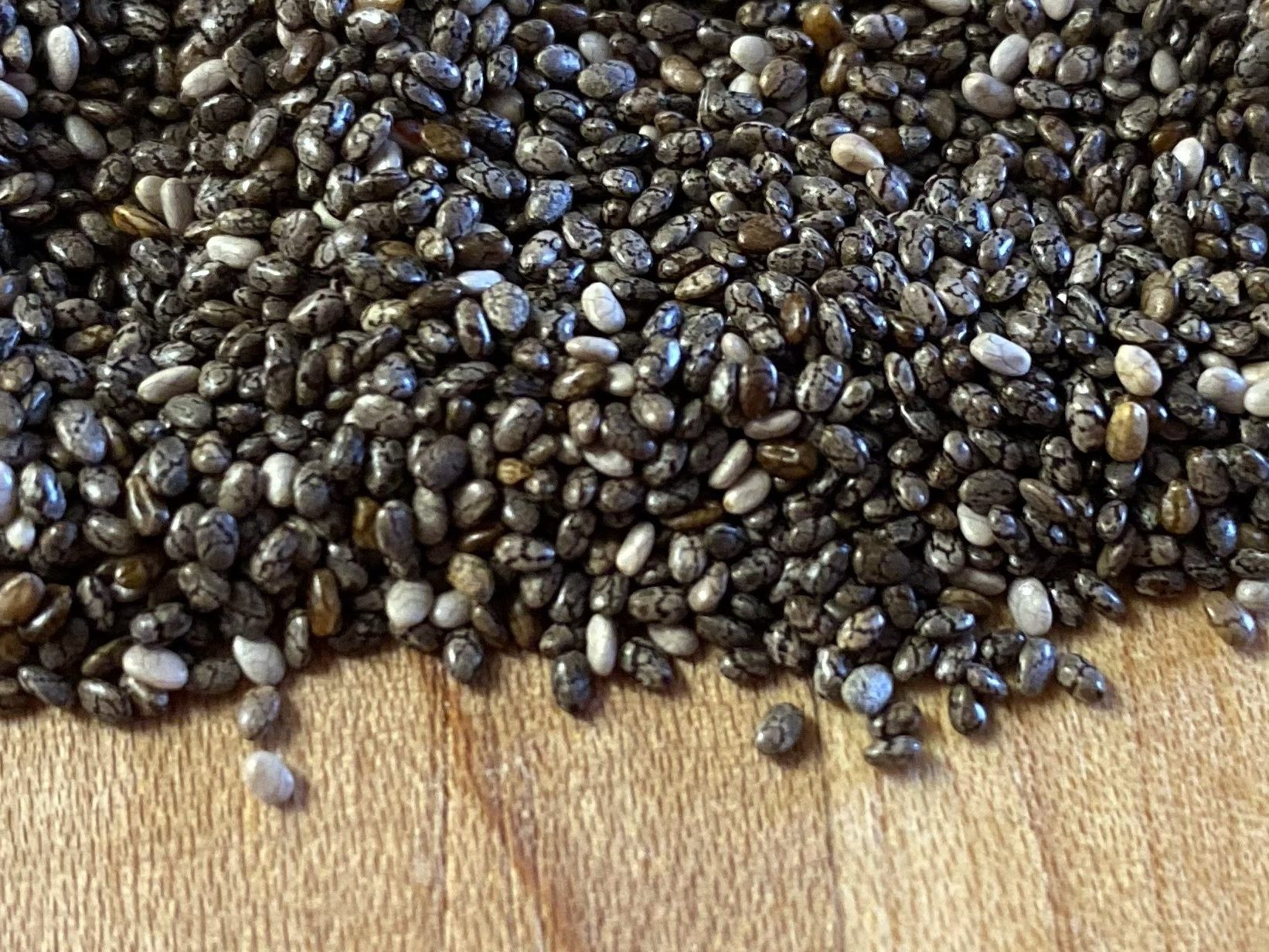
    Organic Chia Seeds:

    Chia seeds have had their waves of popularity over the past few years, but the science and nutritional values still speak for themselves. Chia seeds are amazing for lowering blood pressure, blood sugar and cholesterol, and improving overall heart health. They are high in fibre, which aids in digestion and reduces bloating.

    It is important to soak whole chia seeds for at least twenty minutes before eating them so that they become more digestible. This is true of most edible seeds! When they are soaked, the hard seed shell releases a gelatinous-like film around the seed, making it look like frog eggs or custard!

    What is Tahini?

    Tahini is basically just sesame seeds blended up into a paste and when you first open a container of it the oil has separated, which must be stirred up. Tahini originated in Middle-Eastern and Mediterranean cuisine, and today is widely used as an ingredient in sauces, dips, dressings, and marinades.

    How to Make Blueberry Coconut Breakfast Bowl

    Note: This recipe is for 1 adult size bowl.

    Supplies Needed:

    Ingredients:

    Directions:

    1. Mix together coconut milk and 3 seed blend and wait until it thickens, 5-10 minutes. (Perfect timing to get the coffee going…)

    2. Add 1/4 cup of the blueberries and stir in.

    3. Put the Tahini and the remaining 1/4 cup of blueberries on top. For added sweetness, you can drizzle some pure maple syrup or honey on top.

    Check out these other Breakfast Recipes from the Northbird Kitchen!
    Hi, I’m Jessie!

    I’m a Wife and Homeschooling Mom living in a remote town in Northern Ontario, Canada. I love making wholesome meals for my family from scratch, homeschooling our girls and learning more about natural living.

    Read more about my story HERE.

    Subscribe to Northbird’s email list to get weekly posts on: tasty recipes, activity ideas for kids, natural living tips, and some genuine mom thoughts and encouragement!

    Blueberry Coconut Breakfast Bowl

    • Servings: 1
    • Difficulty: Easy
    • Print

    A Smooth and Nutritious Breakfast Bowl


    This recipe is for 1 adult size bowl.

    Supplies Needed

  • Mixing bowl & whisk (for coconut powder reconstitution)
  • Blender (for 3 Seed Blend)
  • Measuring cups

  • Ingredients

  • 1/2 cup Coconut milk or reconstituted coconut milk powder into milk
  • 1/4 cup Tahini
  • 1/2 cup 3 Seed Blend (raw & hulled sunflowers, chia seeds and flaxseeds)
  • 1/2 cup Blueberries (fresh, frozen or dehydrated)
  • 1 T pure maple syrup or unpasteurized honey (optional)
  • Directions

    1. Mix together coconut milk and 3 seed blend and wait until it thickens, 5-10 minutes. (Perfect timing to get the coffee going…)
    2. Add 1/4 cup of the blueberries and stir in.
    3. Put the Tahini and the remaining 1/4 cup of blueberries on top. For added sweetness, you can drizzle some pure maple syrup or honey on top.

    Nutrition


    Per Serving: 866 calories; 67.3 g fat; 52.4 g carbohydrates;
    25 g protein;

    Return to Top

    Maple Walnut Granola

    Find Northbird on social media:

    This post contains affiliate links. As an Amazon associate, I earn from qualifying purchases. This means that I make a small commission at no extra cost to you. You can read my full disclosure HERE.

    Jump to Recipe Card

    Granola is often associated and advertised as a healthy option for breakfast, and while there are some great brands and mixes on the market, there is a large number of granolas that are full of processed sugars and cheap oils.

    This granola recipe uses unpasteurized honey and pure maple syrup as natural sweeteners, and organic unrefined coconut oil to help hold it together. Addicting, delicious and crunchy, you’ll never want to buy from the store again after making this recipe!

    Ways to Eat Granola:

    • Breakfast bowl with regular milk, oat milk, soy, or nut milks (try it with Homemade Almond Milk!) and add some berries for fresh sweetness.
    • Enjoy a bowl on top of yogurt (try it with a fresh batch of Homemade Crockpot Yogurt).
    • Take a baggie of granola for your next hike or camping trip and add some dried fruit or seeds and nuts for a delicious trail mix.
    • Make a Breakfast Parfait with frozen berries and yogurt!
    • Use it as a baked desert crumb topping (Apple Crisp recipe coming soon!)
    • Make granola bars from it! (Recipe being developed)

    Health Benefits of Granola

    Healthy granola recipes are usually high in protein, fibre and healthy fats due to recipe variations that may include oats, nuts, seeds, dried fruits and organic unrefined oils. They are packed full of nutritious options that make a filling, on-the-go quick breakfast or snack option.

    Protein:

    Protein is essential to the body for not only helping to build muscle mass and bones, but also very important for weight loss and regulating metabolism. Additional functions may consist of:

    • Slowing appetite and hunger cravings
    • Feel “full” for longer, less calories eaten
    • Helps with fat burning
    • Lowering blood pressure
    • Helps to maintain weight loss
    • Boosts metabolism
    • Builds muscle mass and strength
    • Lowers risk of osteoporosis and fractures
    • Helps to repair broken bones and tissues
    High Protein Ingredients in Granola
    NutsWalnuts, Almonds, Cashews, Peanuts, Pistachios, Brazil Nuts, Hazelnuts…
    SeedsChia, Hemp, Sesame, Sunflower, Pumpkin, Flax…
    Dried Fruits & BerriesApricot, Kiwi, Blackberries, Cherries, Raisins, Banana…

    Fibre:

    Fibre is mostly known for helping to keep the digestive system happy. Some other benefits of increased fibre may include:

    • Regulating bowel movements
    • Keeps you feeling fuller for longer
    • Assists in lowering cholesterol
    • Preventing blood sugar from spiking
    • Helps to lower blood pressure
    High Fibre Ingredients in Granola
    NutsChestnuts, Almonds, Hazelnuts…
    SeedsChia, Flax, Pumpkin, Sesame, Sunflower…
    Dried FruitsDates, Figs, Prunes, Apricots, Raisins…
    OatsOrganic Rolled Oats

    Fats:

    Fats are not only used as a source of energy in the body, but also aid in the following:

    • Help to insulate and protect the organs
    • Gives your body energy
    • Supports cell growth
    • Helps to regulate blood pressure and cholesterol
    • Assists the body in absorbing vitamins A, E & D
    • Reduces inflammation
    • Assists in cell growth
    High Fats Ingredients in Granola
    NutsWalnuts, Macadamia, Coconut, Cashews…
    SeedsSunflower, Pumpkin, Flax, Chia, Hemp…
    OilsCoconut oil, Avocado oil, Olive oil…
    Seed & Nut ButtersPeanut butter, Almond butter, Tahini, Sunflower seed butter, Pumpkin seed butter
    Dried Fruits & BerriesPlantain, Strawberries, Raspberries, Kiwi, Raisins

    Reasons to Make Your Own Granola:

    • It is soooo easy! Chop… Melt… Mix… Spread… Bake… Eat!
    • Way less expensive than buying from the store.
    • Store-bought granolas are often made with lower quality ingredients and usually have more processed sugars and additives mixed in to prolong shelf life.
    • When you make your own granola you know exactly what ingredients you are eating!
    • Granola is a versatile recipe: You can add more nuts and seeds, and add dried fruits/berries at the end if desired.
    • Granola is one of those easy and quick breakfast solutions to help your day start smoothly!

    How to Make Maple Walnut Granola

    Supplies Needed:

    Ingredients:

    Directions:

    1. Preheat oven to 300 degrees F.

    2. Mix the oats and walnuts together in a large bowl.

    3. Melt the coconut oil in a small pot and add maple syrup, honey, sea salt and vanilla. Mix well.

    4. Add the wet mix to dry mix and stir well. If it has cooled enough you can finish mixing with your hands (I always find this easiest, but be careful of the hot oil!)

    5. Spread granola mix onto parchment covered cookie sheets. Granola should be in a single layer.

    6. Bake for 35-40 minutes (depending on your oven), until golden.

    7. Let cool and sit undisturbed for an hour, it will firm up as it cools down.

    8. Break into smaller pieces per preference and store in airtight container for up to 1 month.

    Try this Granola recipe with some Homemade Almond Milk or Easy Crockpot Yogurt!

    Hi, I’m Jessie!

    I’m a Wife and Homeschooling Mom living in a remote town in Northern Ontario, Canada. I love making wholesome meals for my family from scratch, homeschooling our girls and learning more about natural living.

    Read more about my story HERE.

    Subscribe to Northbird’s email list to get weekly posts on: tasty recipes, activity ideas for kids, natural living tips, and some genuine mom thoughts and encouragement!

    Maple Walnut Granola

    • Servings: 10 cups
    • Difficulty: Easy
    • Print

    A Super Delicious Start to Your Day!


    Ingredients

  • 4 1/2 cups organic rolled oats
  • 1 1/2 cups chopped walnuts
  • 1/3 cup melted organic, unrefined coconut oil
  • 1/3 cup pure maple syrup
  • 3 tablespoons unpasteurized honey
  • 1/2 teaspoon sea salt
  • 1 teaspoon pure vanilla

  • Directions

    1. Preheat oven to 300 degrees F.
    2. Mix the oats and walnuts together in a large bowl.
    3. Melt the coconut oil in a small pot and add maple syrup, honey, sea salt and vanilla. Mix well.
    4. Add the wet mix to dry mix and stir well. If it has cooled enough you can finish mixing with your hands (I always find this easiest, but be careful of the hot oil!)
    5. Spread granola mix onto parchment covered cookie sheets. Granola should be in a single layer.
    6. Bake for 35-40 minutes (depending on your oven), until golden.
    7. Let cool and sit undisturbed for an hour, it will firm up as it cools down.
    8. Break into smaller pieces per preference and store in airtight container for up to 1 month.

    Nutrition


    Per 1 Cup Serving: 309 calories; 16.1 g fat; 38.6 g carbohydrates;
    6.2 g protein; 0 mg cholesterol; 119.2 mg sodium.

    Return to Top

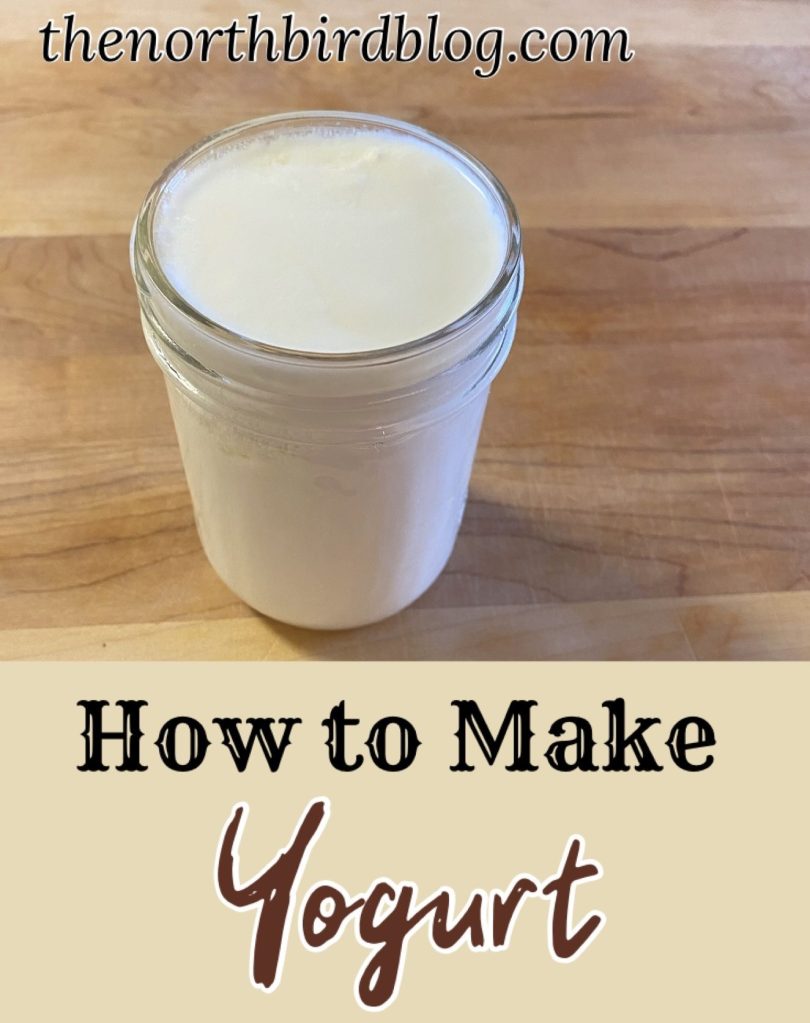
    How to Make Yogurt in the Crockpot (Greek & Drinkable)

    Find Northbird on social media:

    This post contains affiliate links. As an Amazon associate, I earn from qualifying purchases. This means that I make a small commission at no extra cost to you. You can read my full disclosure HERE.

    Jump to Recipe Card

    Return to “Breakfast”

    Homemade yogurt? Yes, it’s that easy. And I had no idea just how easy until a few months ago when I started trying it out.

    My main reason to learn to make it from scratch was because of the cost of yogurt at our remote small town grocery store, and the fact that our girls liked having some nearly every day for breakfast!

    I found several recipes for making it in an instant pot, but because I didn’t have one I wanted to find another option that would be easy and simple. After learning to make it successfully in the crockpot for several weeks, I decided it was worth sharing with the blog just how EASY and MONEY-SAVING homemade yogurt could be…and of course it is absolutely DELICIOUS.

    Why Make Your Own Yogurt?

    • You know exactly what you are eating (no additives/preservatives/added sugar)
    • Saves on the grocery budget
    • Cuts down on garbage waste
    • You can flavour it however you like!
    • You can adjust the thickness by how much whey you strain out

    What Can You do With the Leftover Whey? (It’s High in Protein!)

    • Store in a sealed jar or container in the fridge
    • Put the whey in soups and stews
    • Add it to smoothies
    • Use it to replace water when making bread or other baked goodies

    Nutritional Benefits of Yogurt

    • High in probiotics (live bacterial cultures)
    • Contains many vitamins and nutrients
    • High in calcium
    • Source of protein
    • Aides in digestion
    • Immune system booster

    How to Use Homemade Yogurt

    • Try it in Yogurt and 3 Seed Breakfast Bowl!
    • Use it with homemade granola or other breakfast cereals
    • Use it in baking
    • Use it as a desert topping over a bowl of fruit
    • Make a yogurt parfait!

    How to Make Crockpot Yogurt

    Supplies Needed:

    Ingredients:

    • 8 cups 3% whole milk (2% works well too, just add another 1/4 cup starter)
    • 1/2 cup yogurt starter (saved from last batch, or you can use store bought yogurt, unsweetened/unflavoured and if the label says it contains the live bacterial cultures. Dried yogurt starter is also available online)

    Optional flavouring:

    Directions:

    1. Measure 8 cups of milk into crockpot.

    2. Turn crockpot on low and heat slowly until meat thermometer reads 180 degrees Fahrenheit when you dip it into the milk. For me it takes 3 hours and 10 minutes, but depending on your crockpot it may take less time.

    3. At 180 degrees, turn crockpot off with lid on and let cool slowly until temp reaches 110-115 degrees Fahrenheit. This usually takes me around 3 hours. Partway through this time, take out your yogurt starter from the fridge and let it come to almost room temperature.

    4. Take out about 2 cups of warm milk and in a separate bowl, whisk in your yogurt starter (or see note above for store bought yogurt). Whisk until there are no lumps and return to crockpot.

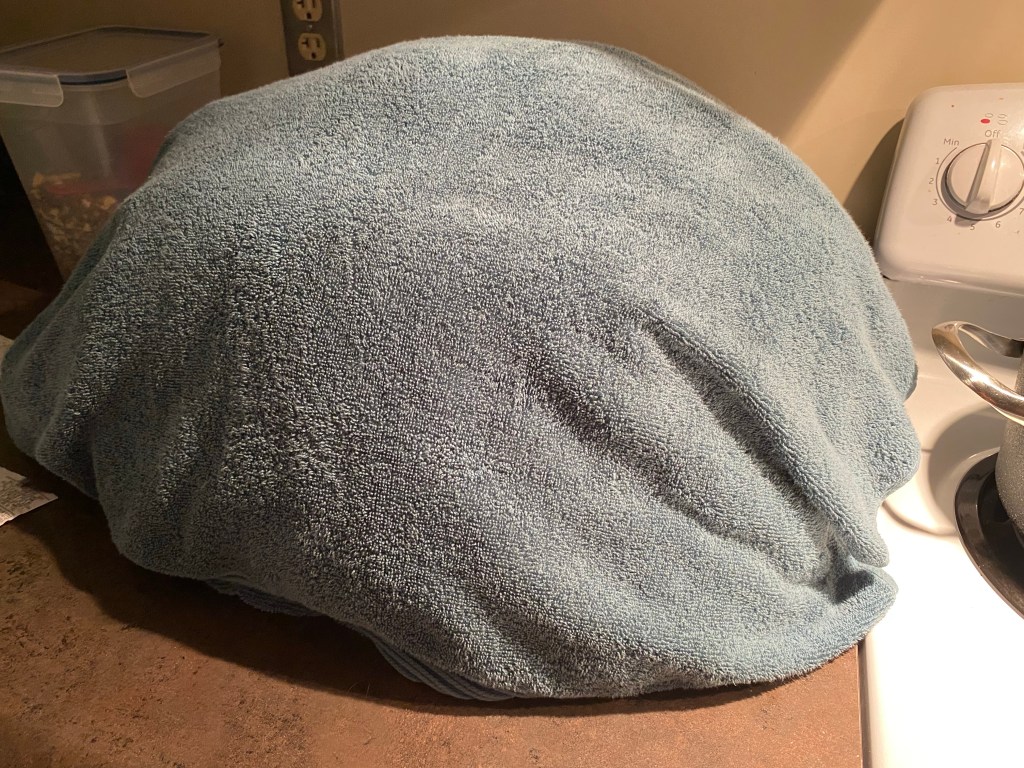
    5. Put lid back on, (if you have clamps on your crockpot it’s good to use them at this point!) and cover crockpot with several heavy towels. Let sit undisturbed for around 12 hours or overnight.

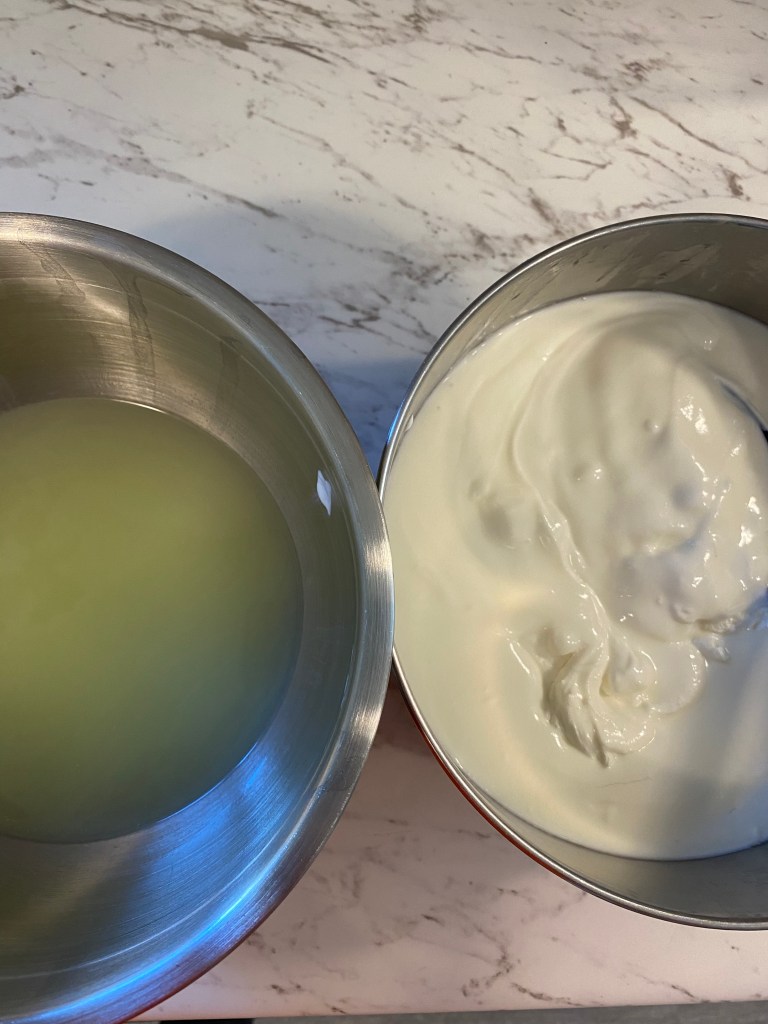
    6. The next morning, spoon out the yogurt into a nutmilk bag or tea towel and hang up over a bowl to separate out the whey. Let strain for 1-2 hours for thicker greek yogurt. Strain for less time or omit straining altogether for a thinner, drinkable yogurt.

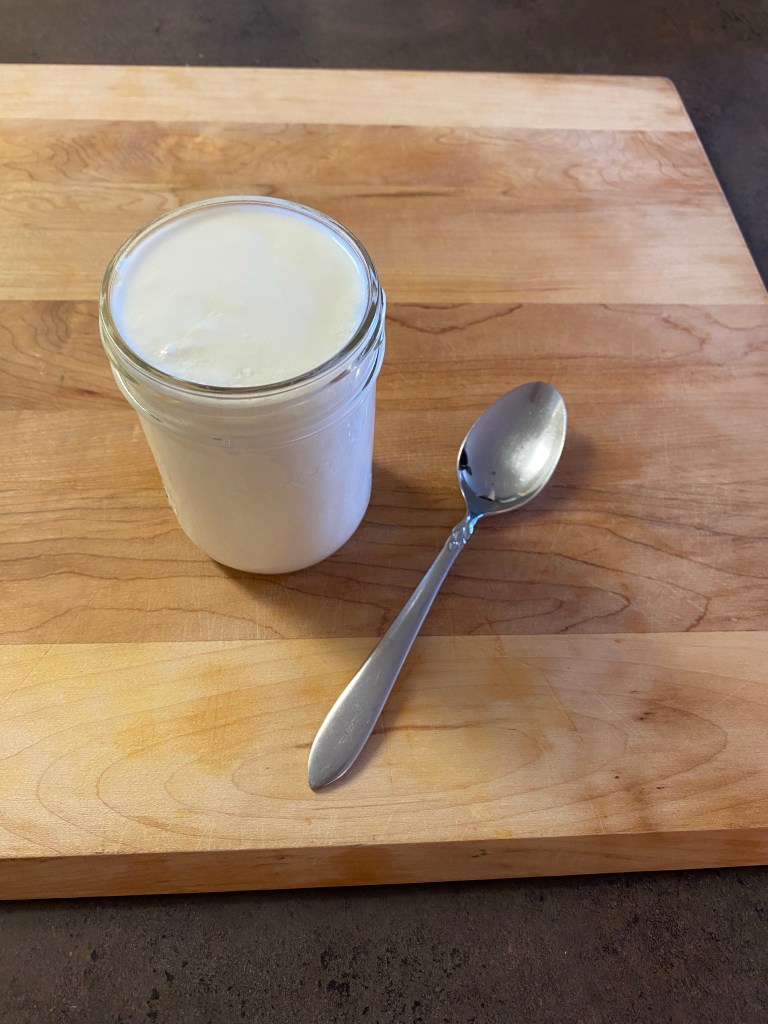
    7. When it has strained out enough whey, pour yogurt into clean glass jars or plastic container and chill in the fridge for 4-6 hours.

    8. Use up within 2 weeks. Make sure to save some pure yogurt (unflavoured) for the next batch!

    Additional Notes:

    • For those that like a little more flavour and sweetness, you can try adding one of the suggestions from above. We personally enjoy adding honey and vanilla!
    • When making greek yogurt, I usually end up with about 2 cups of whey, and 6 cups of thick yogurt. Adjust desired thickness of yogurt by how much whey you strain out.
    • For making drinkable yogurt, just leave the whey in and omit straining altogether. It is wonderful added protein!

    Check out these other Breakfast Recipes from the Northbird Kitchen!

    Hi, I’m Jessie!

    I’m a Wife and Homeschooling Mom living in a remote town in Northern Ontario, Canada. I love making wholesome meals for my family from scratch, homeschooling our girls and learning more about natural living.

    Read more about my story HERE.

    Subscribe to Northbird’s email list to get weekly posts on: tasty recipes, activity ideas for kids, natural living tips, and some genuine mom thoughts and encouragement!

    How to Make Yogurt in the Crockpot

    • Servings: 6 cups of yogurt, 2 cups of whey
    • Difficulty: Easy
    • Print

    How to make your own greek and drinkable yogurt in the crockpot!


    • For those that like a little more flavour and sweetness, you can try adding one of the suggestions from above. We personally enjoy adding honey and vanilla!
    • When making greek yogurt, I usually end up with about 2 cups of whey, and 6 cups of thick yogurt. Adjust desired thickness of yogurt by how much whey you strain out.
    • For making drinkable yogurt, just leave the whey in and omit straining altogether. It is wonderful added protein!


    Ingredients

    • 8 cups 3% whole milk (2% works well too, just add another 1/4 cup starter)
    • 1/2-3/4 cup yogurt starter (saved from last batch, or you can use store bought yogurt, unsweetened/unflavoured, containing live bacterial cultures. Dried yogurt starter is also available online)


    Directions

    1. Measure 8 cups of milk into crockpot.
    2. Turn crockpot on low and heat slowly until meat thermometer reads 180 degrees Fahrenheit when you dip it into the milk. For me it takes 3 hours and 10 minutes, but depending on your crockpot it may take less time.
    3. At 180 degrees, turn crockpot off with lid on and let cool slowly until temp reaches 110-115 degrees Fahrenheit. This usually takes me around 3 hours. Partway through this time, take out your yogurt starter from the fridge and let it come to almost room temperature.
    4. Take out about 2 cups of warm milk and in a separate bowl, whisk in your yogurt starter (or see note above for store bought yogurt). Whisk until there are no lumps and return to crockpot.
    5. Put lid back on, (if you have clamps on your crockpot it’s good to use them at this point!) and cover crockpot with several heavy towels. Let sit undisturbed for around 12 hours or overnight.
    6. The next morning, spoon out the yogurt into a nutmilk bag or tea towel and hang up over a bowl to separate out the whey. Let strain for 1-2 hours for thicker greek yogurt. Strain for less time or omit straining altogether for a thinner, drinkable yogurt.
    7. When it has strained out enough whey, pour yogurt into clean glass jars or plastic container and chill in the fridge for 4-6 hours.
    8. Use up within 2 weeks. Make sure to save some pure yogurt (unflavoured) for the next batch!

    Nutrition


    Per 1 cup serving: 173 calories; 8.8 g fat; 13 g carbohydrates;
    8.6 g protein; 33 mg cholesterol; 133 mg sodium.

    Return to Top

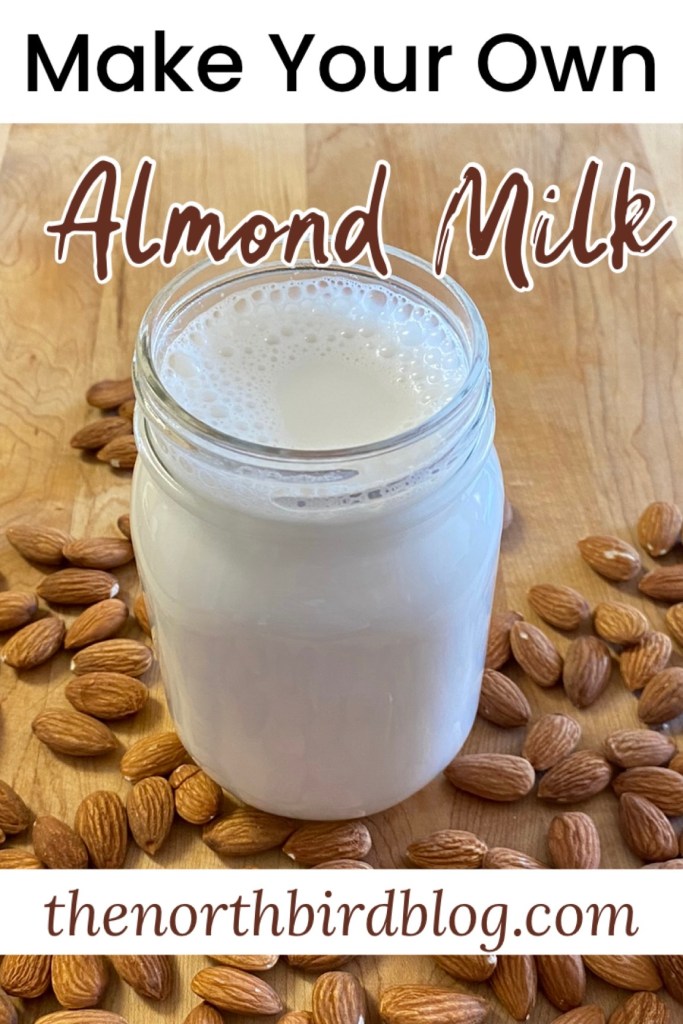
    Homemade Almond Milk Recipe

    Find Northbird on social media:

    This post contains affiliate links. As an Amazon associate, I earn from qualifying purchases. This means that I make a small commission at no extra cost to you. You can read my full disclosure HERE.

    Jump to Recipe Card

    Return to “Breakfasts”

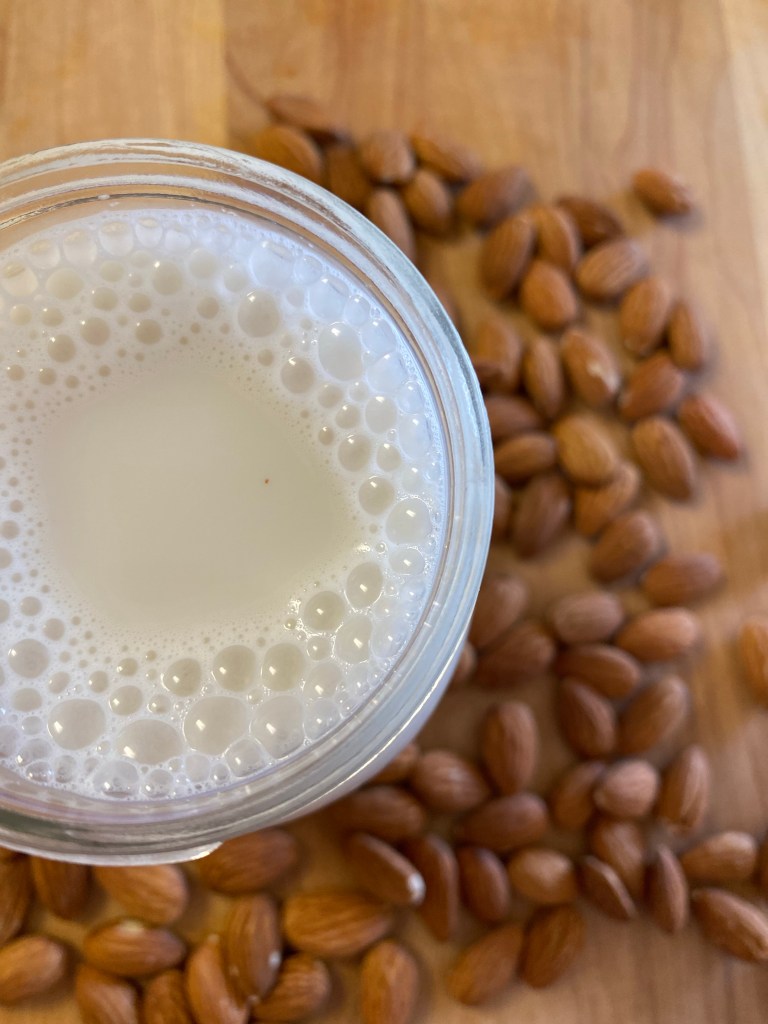
    Making Almond Milk From Scratch

    We have been making our own almond milk for several years now, and before that we always bought a carton from the store. One day I did the math and realized that not only was the homemade milk healthier and free from tons of preservatives but also cost way less too!

    Unless we are away from home or in the middle of packing for a move (which has happened a lot!), we always try to have 1-2 large jars of homemade almond milk on the go.

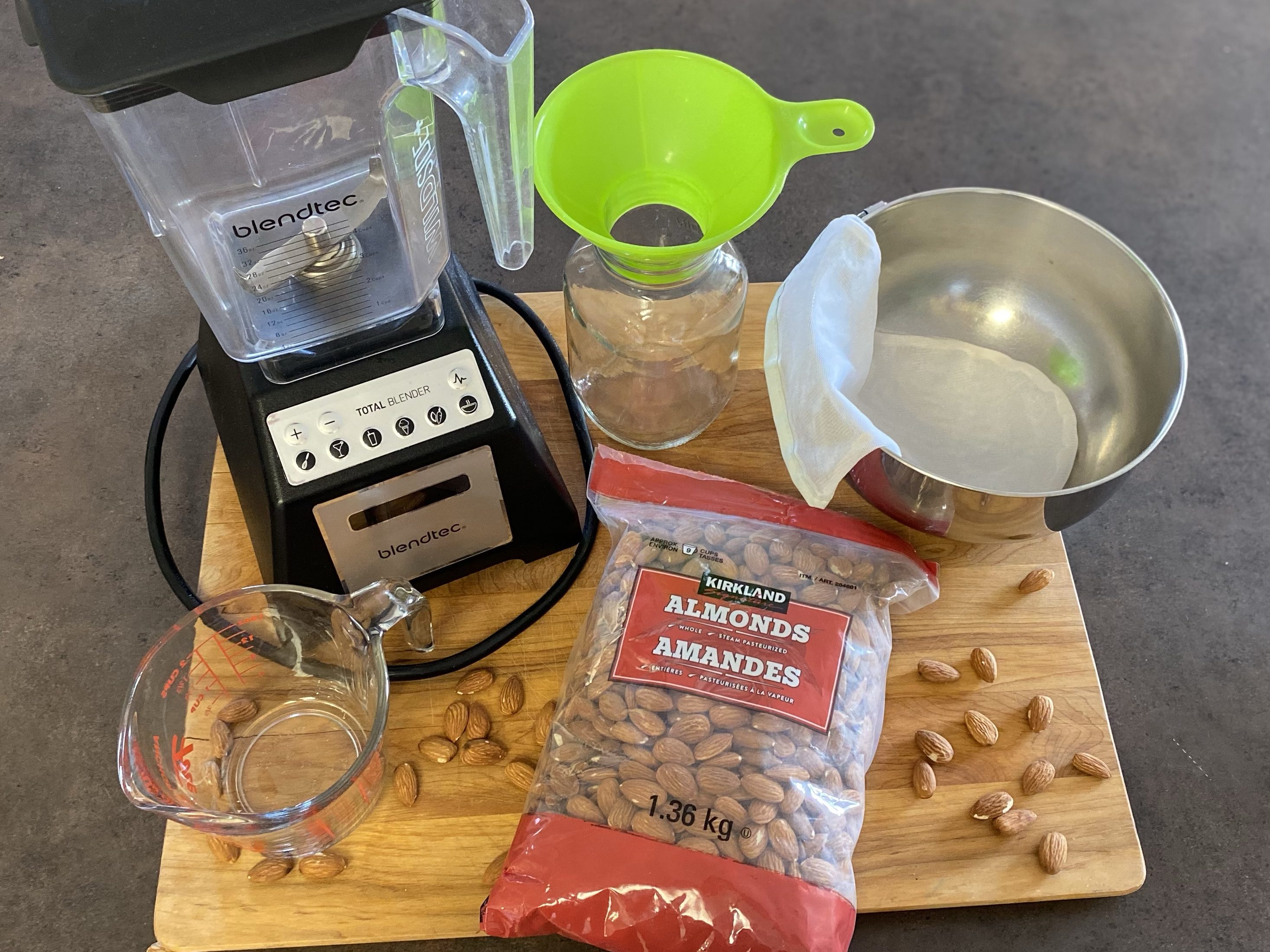
    When we first started making it, we bought a refurbished Blendtech blender (which has since then paid for itself!), and a couple of mesh nut milk bags.

    We usually buy our almonds from Costco and Yupik (Amazon) , as they seem to have the best price for almonds when we do our southern grocery pantry stock-up. We currently buy several large packages a year, and make almond milk 1-2 times a week.

    If purchasing a larger bulk amount of almonds, they can also be frozen to stay fresher, which we have done in the past when we have freezer space.

    How to Make Almond Milk

    Supplies Needed:

    Ingredients:

    • 1 cup raw almonds
    • Water for soaking
    • 4 cups water for blending
    • 3 pitted dates (optional)
    • 1 teaspoon vanilla (optional)
    • 1 tablespoon honey (optional)

    Directions:

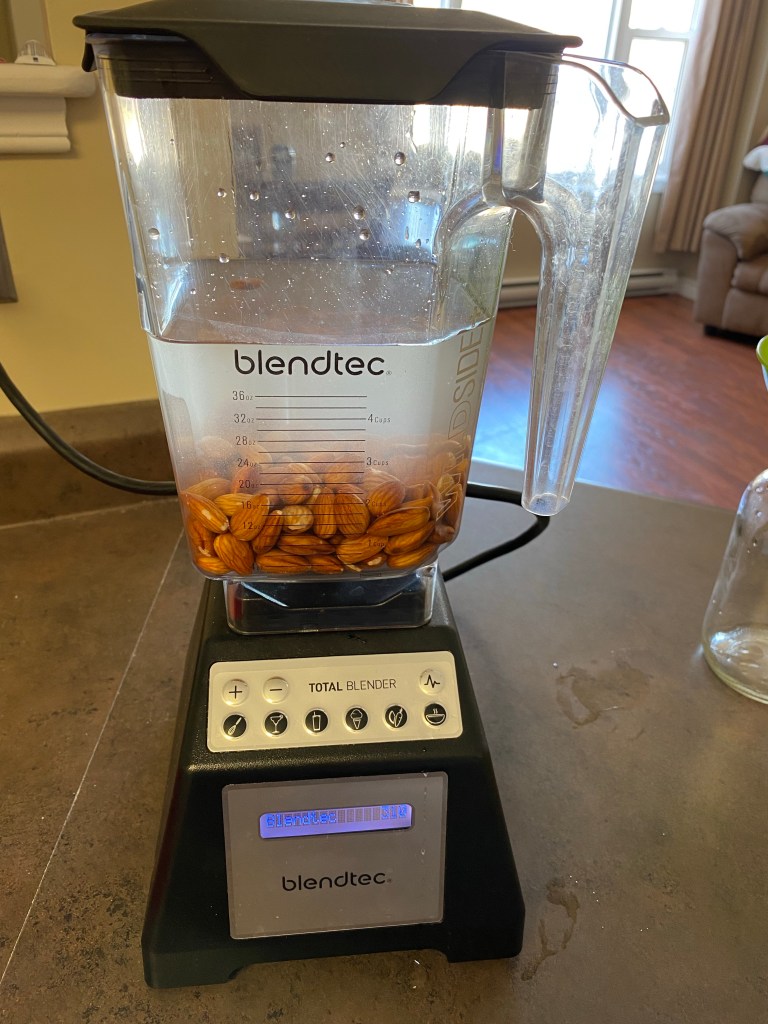
    1. Soak 1 cup of almonds overnight at room temperature, or for at least 8 hours. Make sure the almonds are covered well with water to allow the almonds to expand. I like to use beesewax covers on top while they soak.

    (Sometimes at the end of the day I realize that I forgot to blend them up, so instead of using the noisy blender and potentially waking the kids, I rinse the almonds really well, change the water and put it in the fridge to blend up the next day).

    2. Rinse well after soaking, then add to the blender with 4 cups of water.

    3. If you want you can add a sweetener like honey (1 Tablespoon) or vanilla (1 teaspoon), or (my husband’s favourite) adding 3 pitted dates to the blender before pulsing.

    3. Blend well, until no visible chunks of almond pulp. Usually takes about a minute on our medium setting, but every blender is different.

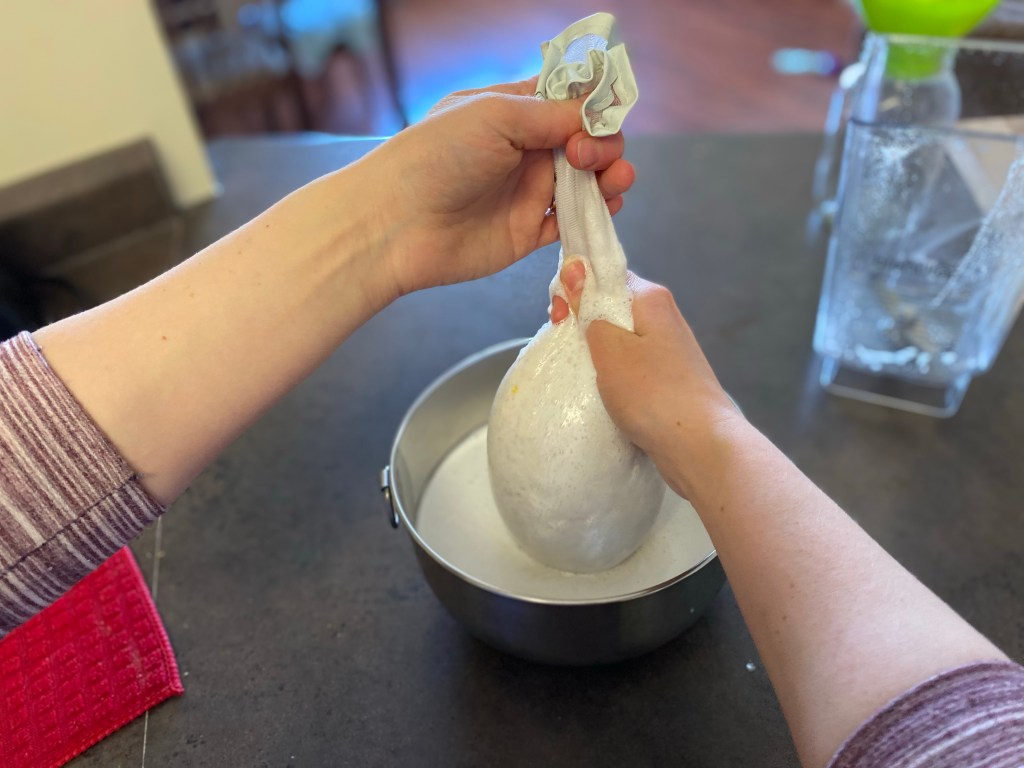
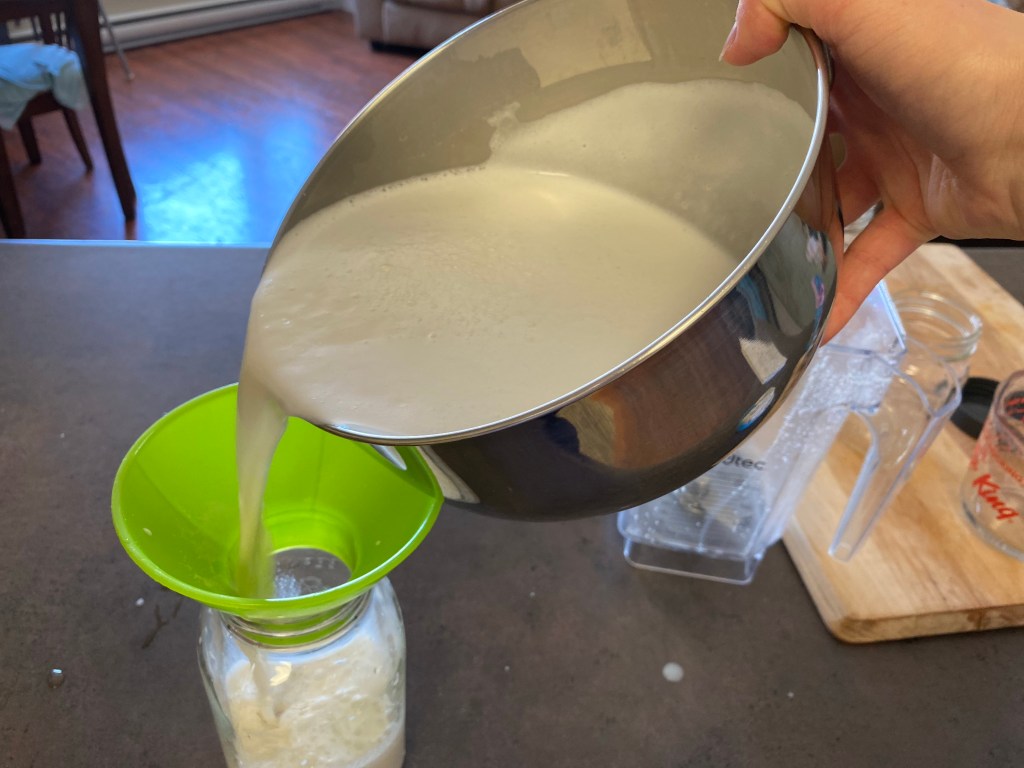
    4. Pour into bowl, through nut milk bag. I usually give a little rinse of the blender and pour the rest through as well.

    5. Gently squeeze the nut milk bag with your hands until most of the liquid is out and you are left with the pulp. Set pulp aside (don’t throw out! Can be used in many more recipes!)

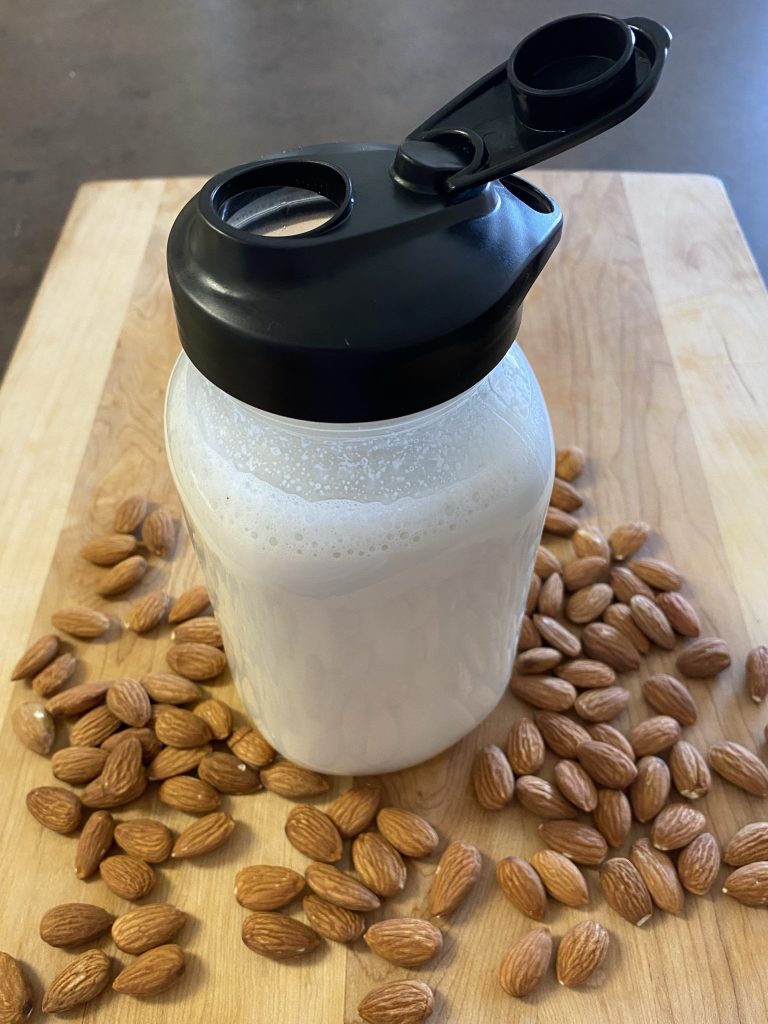
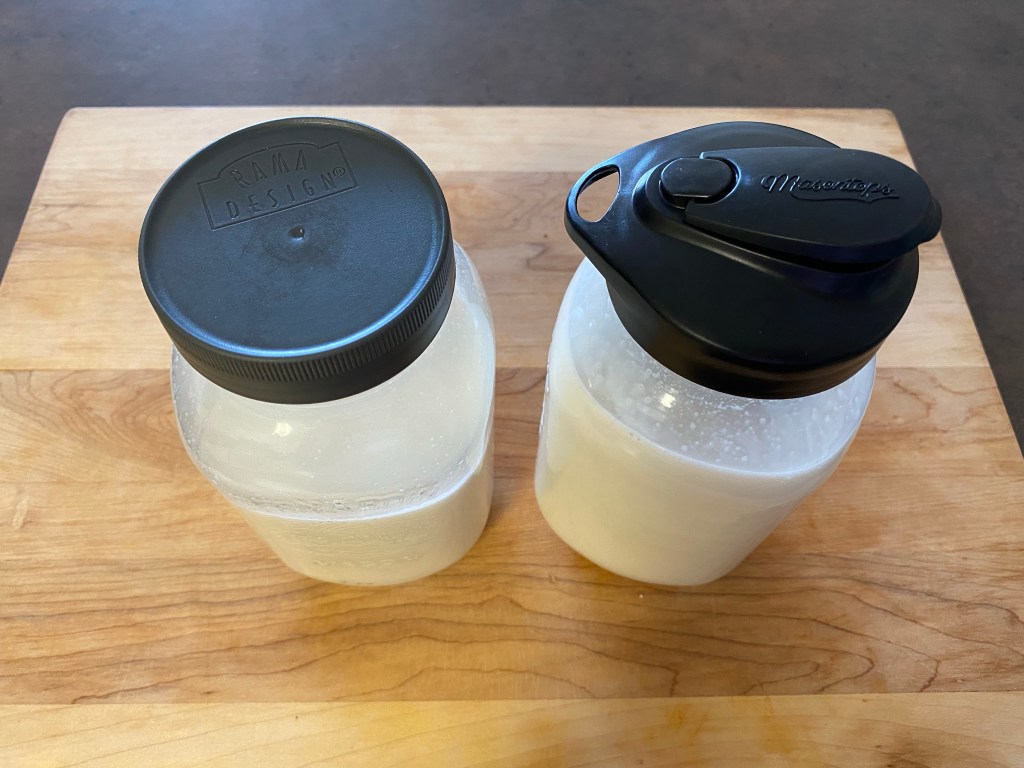
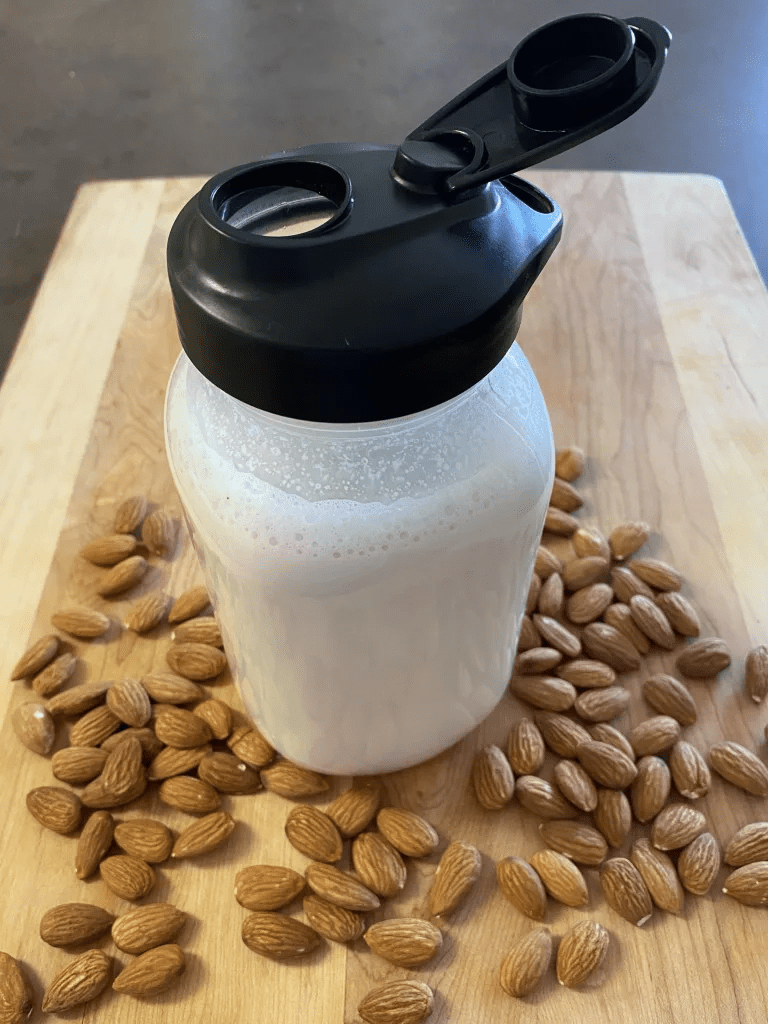
    7. Pour into glass jars, usually makes about 1500ml, so we use x2 1L glass mason jars. We use this pourable mason jar lid found on Amazon and love it!

    8. Serve and enjoy! Store in fridge for up to one week.

    Notes: You may notice that it separates after a day or so. This is normal and perfectly fine. Just give it a shake before enjoying it.

    Pros and Cons of Making Your Own Almond Milk:

    Pros:

    • You can adjust the sweetness level and flavour
    • Free from preservatives and additives
    • You can soak almonds in the evening and blend it up fresh the next morning
    • No more running to the store to get forgotten milk!

    Cons:

    • Timing: you’ll need to plan ahead
    • Cannot make it instantly without losing some of the nutrients from un-soaked almonds
    • A few more dishes to wash (haha)

    Why is it Important to Soak Your Almonds Before Eating or Making into Milk?

    I have seen a lot of recipes out there for almond milk, but many of them skip over the importance of soaking your almonds in water for several hours prior to blending them into milk.

    When soaked, they not only become easier to blend up into milk, but they also taste way better. Some compare it to a buttery-creamy taste!

    But most importantly, un-soaked almonds contain an enzyme inhibitor called phytic acid, which prevents the body from absorbing nutrients, and makes it harder for the body to digest. Beans and legumes are the same as nuts in this regard, they all need to be soaked and well rinsed to activate optimal absorption of goodness!

    When almonds are soaked for 8-12 hours, fully submerged in water, this phytic acid is released from the nut. You can see it as a cloudy muck that develops in the soaking bowl around the almonds, which is why it is important to rinse them well before blending into milk!

    Can I Still Eat Dry, Raw Almonds?

    Absolutely! I love eating raw almonds, and I’d rather eat them any day over a bag of chips as a snack!

    But after realizing that my body can’t properly absorb any nutrients from unsoaked almonds, I wanted to find another way to still enjoy dry, raw almonds. After all, they are one of those awesome trail mix staples!

    How to Dry and Store Soaked Almonds:

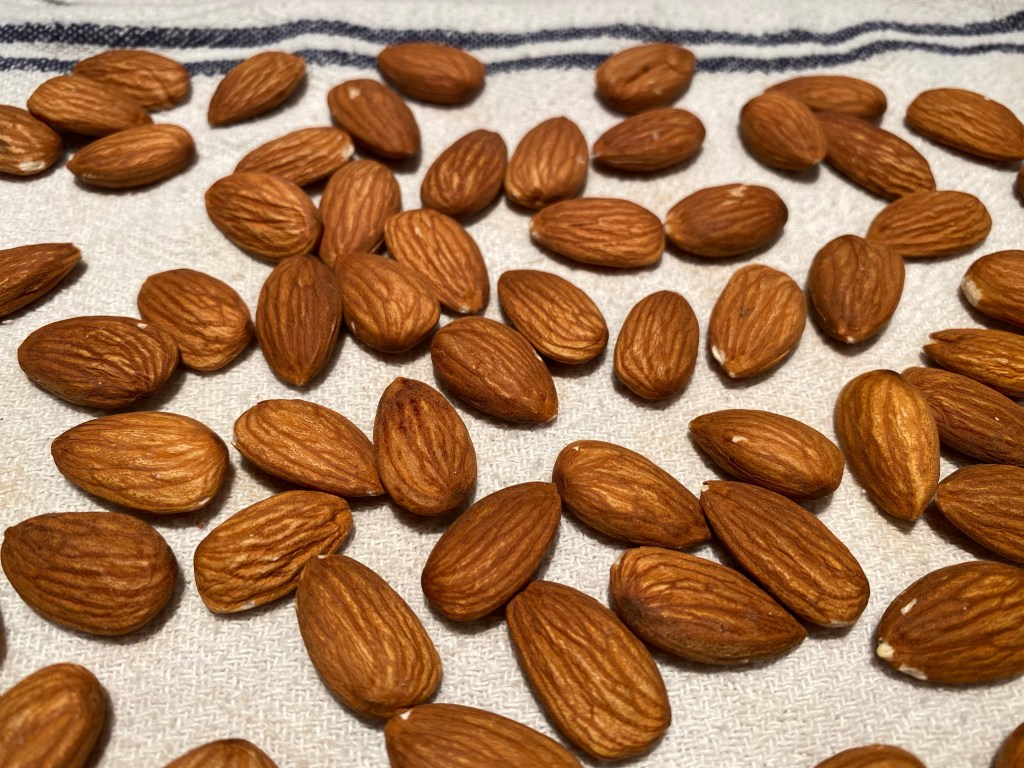
    1. Short Term: After soaking almonds for 8-12 hours, you can spread them out on a clean towel and let dry for 12-24 hours. Store in the fridge in an airtight container for up to 1 week.
    2. Long Term: Soak 1 cup raw almonds with 1/2 tablespoon sea salt, covered with water for 8-12 hours. If using the Oven: Spread on cookie sheet in single layer and dry at lowest temperature 12-24 hours until dry. If using a Dehydrator: Spread on dehydrator tray in single layer and dry at 150 for 12-24 hours until dry. Make sure they are completely dry to avoid risk of mold! Store in an airtight container for up to 1 year.

    What Can I do With the Leftover Almond Meal from Making Milk?

    The leftover almond meal is AMAZING. There are so many ways to use this delicious pulp. I am working on developing recipes into posts to link to this page with ideas, but in the meantime, here’s a list of my favourite ways to use up almond pulp (and some extra inspiration as well!):

    1. Put the pulp in a plastic container in the freezer until you are ready to use it up. When you have time, thaw to use almond meal in:
      • Energy Balls
      • Granola
      • Oatmeal & Breakfast Splodge
      • Overnight Oats
    2. Put the pulp on a baking sheet and dry out in the oven (200 degrees F for 1-2 hours), then blend up into flour and store at room temperature. Shelf stable for several months. Use as almond flour in:
      • Cookies & Squares
      • Waffles & Pancakes
      • Cakes & Pies
      • Pastries & Breads
      • Muffins & Biscuits
      • Crackers
      • Breadcrumbs (before blending to flour) ………..The list goes on!
    Almond meal, after drying in the oven.

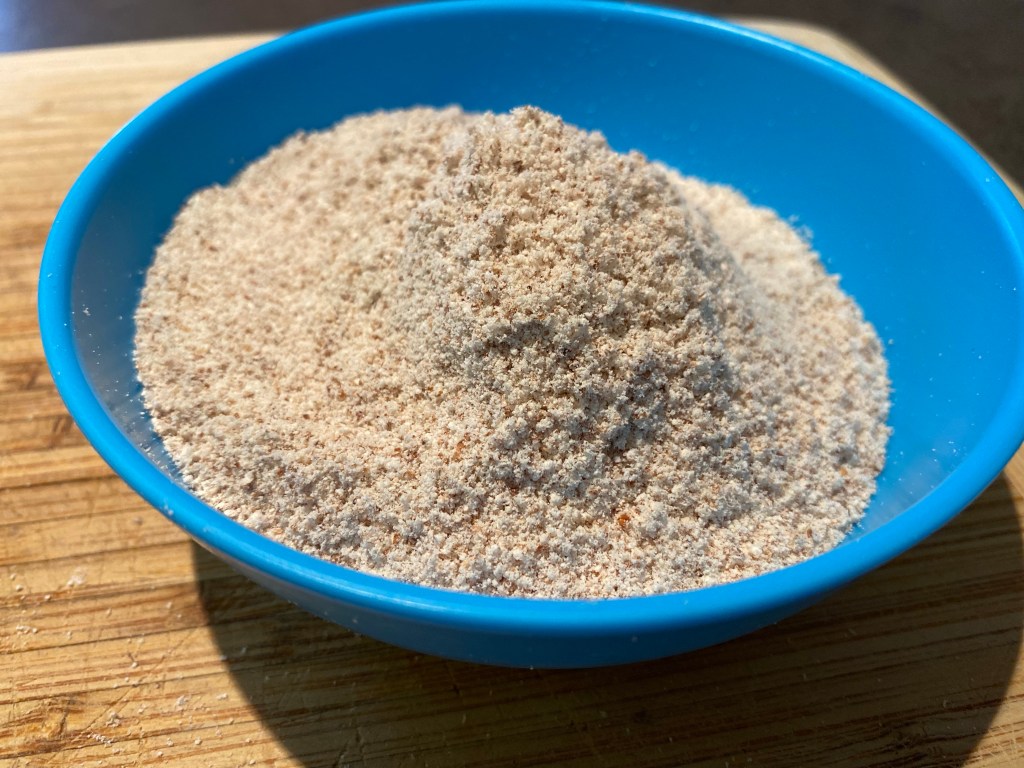
    After the blender, it’s Homemade Almond flour!

    Check out these other Breakfast Recipes from the Northbird Kitchen!

    Hi, I’m Jessie!

    I’m a Wife and Homeschooling Mom living in a remote town in Northern Ontario, Canada. I love making wholesome meals for my family from scratch, homeschooling our girls and learning more about natural living.

    Read more about my story HERE.

    Subscribe to Northbird’s email list to get weekly posts on: tasty recipes, activity ideas for kids, natural living tips, and some genuine mom thoughts and encouragement!

    How to Make Almond Milk

    • Servings: 6 cups
    • Difficulty: Easy
    • Print

    Easy and Delicious: How to Make Your Own Almond Milk!


    Please Note: You may notice that it separates after a day or so. This is normal and perfectly fine. Just give it a shake before enjoying it.


    Ingredients

  • 1 cup raw almonds
  • Water for soaking
  • 4 cups water for blending
  • 3 pitted dates (optional)
  • 1 teaspoon vanilla (optional)
  • 1 tablespoon honey (optional)

  • Directions

    1. Soak 1 cup of Almond milk overnight for 8-12 hours. Make sure the almonds are covered well with water to allow the almonds to expand.
    2. Rinse well after soaking, then add to the blender with 4 cups of water.
    3. If you want you can add a sweeteners to the blender before pulsing. (See suggestions)
    4. Blend well, until no visible chunks of almond pulp. Usually takes about a minute on our medium setting, but every blender is different.
    5. Pour into bowl, through nut milk bag.
    6. Gently squeeze the nut milk bag with your hands until most of the liquid is out and you are left with the pulp. Set pulp aside and use in other recipes. See above for ideas.
    7. Pour into glass jars, usually makes about 1500ml or approximately 6 cups.
    8. Store in fridge for up to one week

    Nutrition


    Per 1 cup Serving: 32 calories; 3 g fat; 1 g carbohydrates;
    2 g protein; 0 mg cholesterol; 0 mg sodium.

    Return to Top