This post contains affiliate links. As an Amazon associate, I earn from qualifying purchases. This means that I make a small commission at no extra cost to you. You can read my full disclosureHERE.
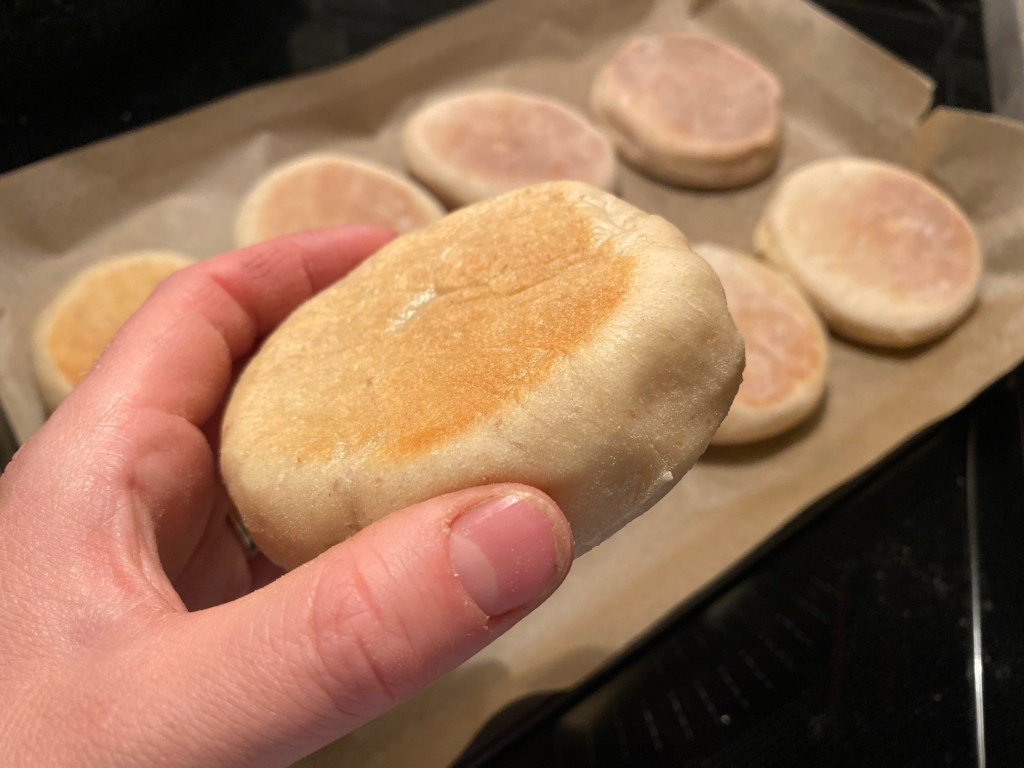
I never knew until recent years that English Muffins were FRIED, not baked. I’m not sure why I just assumed they were baked (especially with the golden-brown tops and bottoms!)
Anyway, since I began experimenting with developing my own recipe of this, we have eaten these quite often. Probably my favourite reason for making these so often through the summer months in particular, is that there’s no need to use the oven and overheat the kitchen. Definitely a bonus.
Where do English Muffins Come From?
According to the “Baking Hall of Fame”, a man named Samuel Bath Thomas emigrated from England to New York City (America) in 1874, and later in 1880 he opened his own bake shop in Manhattan, New York. It is thought that he first brought the fried bread recipe idea to America and made it popular.
To this day, Americans call it an “English Muffin”, and the British simply call it a “Muffin”.
Is an English Muffin the same as a Crumpet?
No. English Muffins are more dense and have a more “bread-like” texture. They are hand-formed from dough. A Crumpet is spongier, lighter and has a thinner batter that is usually poured into a griddle base or mold. It is somewhat similar to a pancake, but typically smaller.
Ways to eat English Muffins:
These tasty fried breads are lovely when sliced through the middle, toasted, and spread with salted butter and jam. It also makes an easy lunch sandwich in the absence of sandwich bread.
Perhaps one of the fast-food breakfast favourites that you might see in North America at a Mcdonalds, A&W, or Tim Hortons is a: Bacon, Egg and Cheese on an English Muffin”.
One of our quick travel meals that we like to do is to make little mini pizzas out of sliced English Muffins. We spread pizza sauce, add pepperoni, other toppings and cheese. A quick bake then wrap in tinfoil to maintain heat makes it a tasty and warm meal on-the-go.
New to Sourdough?
Check out THIS POST on Sourdough Bread to see some tips and helpful info that I’ve learned for looking after and feeding a sourdough starter.
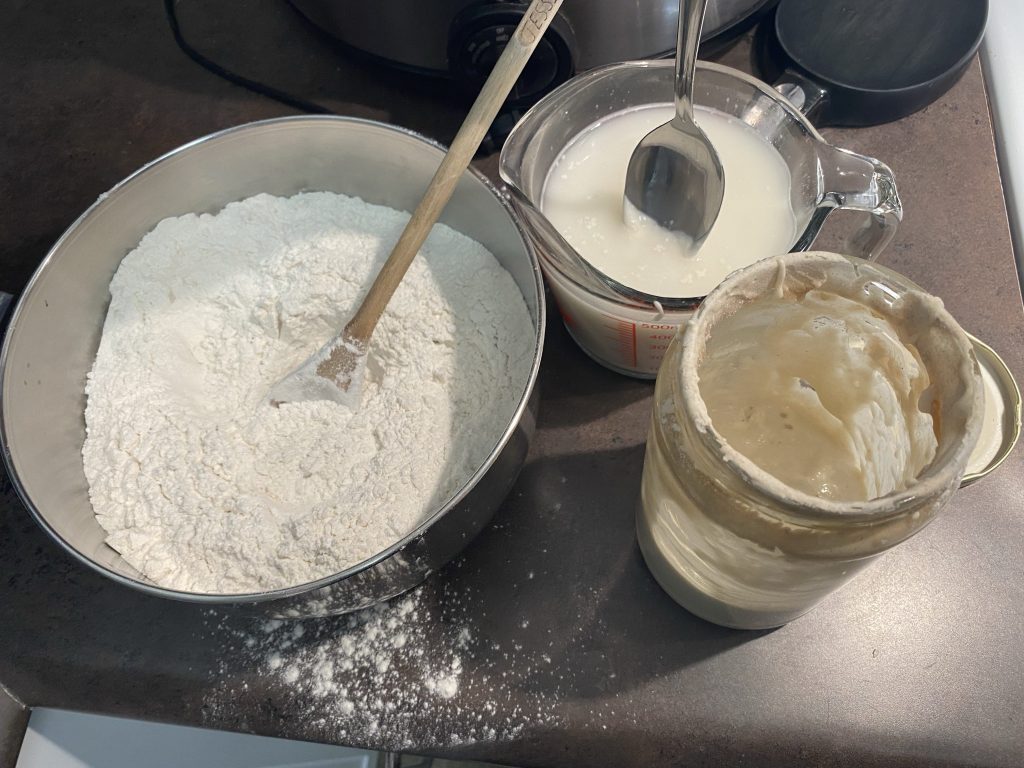
1. Whisk together sourdough starter, liquid sweetener and milk/yogurt until no starter clumps remain and it is a frothy white liquid.
2. Add flour and sea salt and mix into dough.
3. Knead for 3-5 minutes. Add additional flour as needed to make into a soft dough.
4. Cover and rest for 8-12 hours to long ferment at room temperature. It will more than double in size *See Note Below
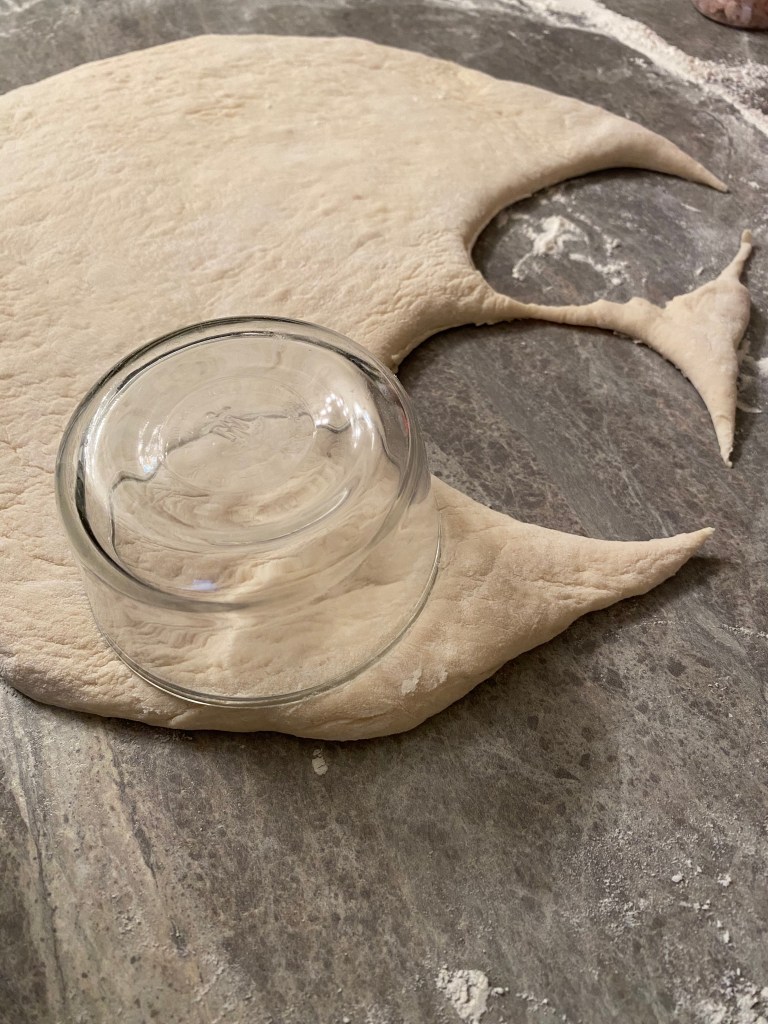
5. Roll out so that dough is about 3/4 inch thick (2.5 cm). Cut out rounds of dough 3-4 inches in diameter. (I just use circular tupperware to cut the dough)
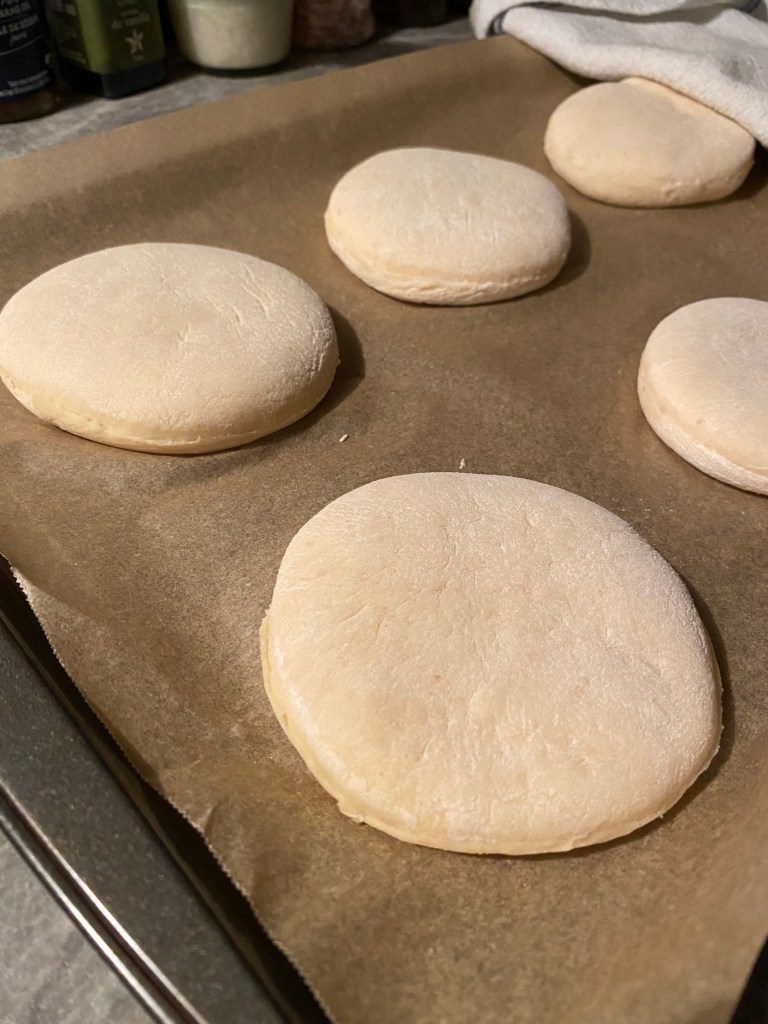
6. Place on parchment covered baking sheet and cover with a tea towel. Rest 1-2 hours (they will puff up during this time).
7. Warm skillet on low/medium heat with lid on for 3-5 minutes (dry, no oil). Sprinkle the tops of the english muffins with cornmeal.
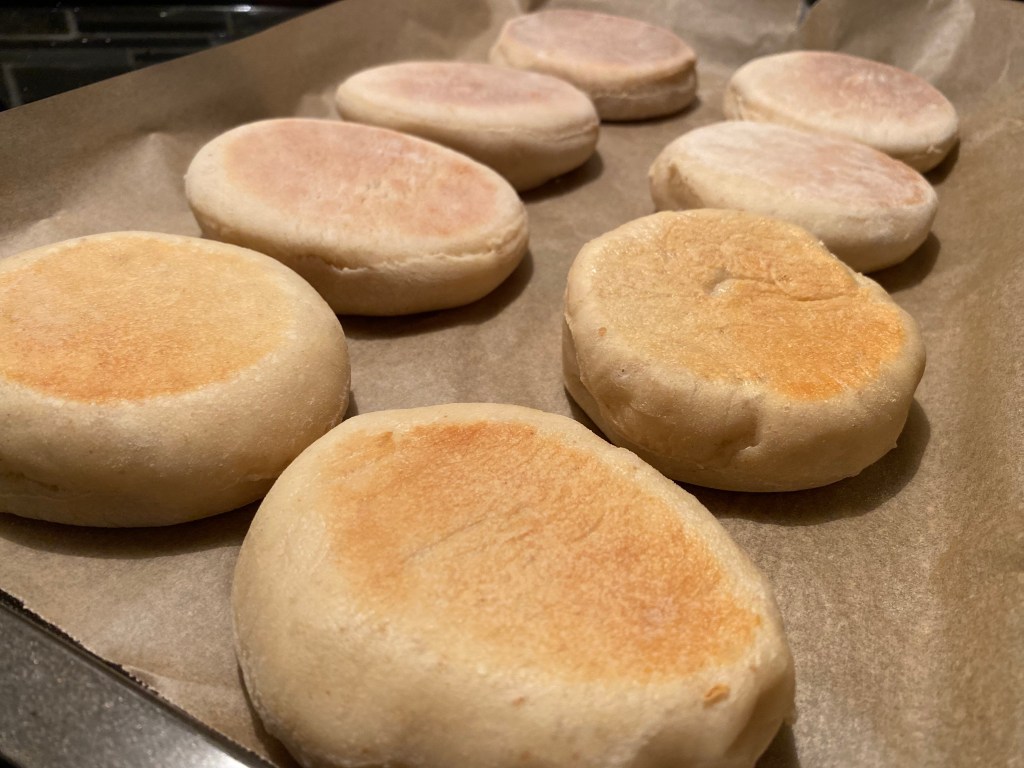
8. Place 3-4 English Muffins in the skillet, top (cornmeal covered) side-down, and sprinkle cornmeal on the revealed bottom side. Secure lid and fry for 4-6 minutes or until golden brown. Flip over, cover and fry for another 3-4 minutes or until golden brown.
Note: The first batch may need some tweaking of the temperature and timing as every stove is different. Too hot, and it will brown without baking the inside.
9. Cool for several minutes on baking sheets before cutting open. Makes 10-12 English Muffins (depending on the size of the dough circles!).
10. Store in a sealed container at room temperature for up to 5 days, or in an air-sealed ziploc bag in the freezer for up to 3 months.
Additional Notes:
I usually feed my sourdough starter in early afternoon, then it is bubbly and ready to use by early evening when I mix up my dough. The long ferment takes place overnight, and the next morning all that is left is a roll out, cut, rest, and then fry: just in time for breakfast!
I’m a Wife and Homeschooling Mom living in a remote town in Northern Ontario, Canada.I love making wholesome meals for my family from scratch, homeschooling our girls and learning more about natural living.
Subscribe to Northbird’s email list to get weekly posts on: tasty recipes, activity ideas for kids, natural living tips, and some genuine mom thoughts and encouragement!
One of my favourite go-to recipes for making sourdough without using the oven!
I usually feed my sourdough starter in early afternoon, then it is bubbly and ready to use by early evening when I mix up my dough. The long ferment takes place overnight, and the next morning all that is left is a roll out, cut, rest, and then fry: just in time for breakfast!
Whisk together sourdough starter, liquid sweetener and milk/yogurt until no starter clumps remain and it is a frothy white liquid.
Add flour and sea salt and mix into dough.
Knead for 3-5 minutes. Add additional flour as needed to make into a soft dough.
Cover and rest for 8-12 hours to long ferment at room temperature.
Roll out so that dough is about 3/4 inch thick (2.5 cm). Cut out rounds of dough 3-4 inches in diameter. (I just use circular tupperware to cut the dough)
Place on parchment covered baking sheet and cover with a tea towel. Rest 1-2 hours (they will puff up during this time).
Warm skillet on low/medium heat with lid on for 3-5 minutes (dry, no oil). Sprinkle the tops of the english muffins with cornmeal.
Place 3-4 English Muffins in the skillet, top (cornmeal covered) side-down, and sprinkle cornmeal on the revealed bottom side. Secure lid and fry for 4-6 minutes or until golden brown. Flip over, cover and fry for another 3-4 minutes or until golden brown.
Note: The first batch may need some tweaking of the temperature and timing as every stove is different. Too hot, and it will brown without baking the inside.
Cool for several minutes on baking sheets before cutting open. Makes 10-12 English Muffins (depending on the size of the dough circles!).
Store in a sealed container at room temperature for up to 5 days, or in an air-sealed ziploc bag in the freezer for up to 3 months.
Nutrition
Per 1 serving: 194 calories; 0.8 g fat; 42.8 g carbohydrates;
4.5 g protein.
This post contains affiliate links. As an Amazon associate, I earn from qualifying purchases. This means that I make a small commission at no extra cost to you. You can read my full disclosure HERE.
I was honestly asking myself this a year ago, and never really looked into it because we had so many transitions in our life: A new baby, moving OUT of the north, buying a house, moving BACK to the north…you get the idea.
We were way too busy for me to start a new hobby and spend the time to learn something new. And “sourdough” was a complicated process, right? Or so I thought!
We were out for dinner at another family’s house and my friend P had some fresh sourdough bread. She encouraged me to try it and gave some starter with instructions and a website to check out.
I was apprehensive and unsure if I was up for the challenge, but wanted to give it a try. After researching and building up my tiny starter for a few days, I made my first loaf. I was amazed at HOW EASY it really was!
After that, I decided that we would no longer buy bread, but would make it ourselves as much as possible. And the result: I learned to make and create a few different sourdough recipes, my tummy was happier because it could digest the fermented bread better and it largely cut down on our grocery bill. Not to mention the pride I felt in serving my family fresh baking made from scratch!
What is Sourdough Bread?
Sourdough bread is a natural leavening bread, which means that it rises without the use of commercial yeast. It is made using a fermented mixture of flour and water, called the starter, and mixed with more water, flour, and usually salt. The bread naturally rises as the dough ferments during resting stages. There are hundreds of variations of sourdough bread with different flavourings, texture and shapes.
Is Sourdough Good for You?
Yes! I have a sensitive tummy when it comes to bread products, and although I’m sure those struggling with celiac would still find sourdough bread hard to digest, I personally have no digestive problems with sourdough, compared to the traditional yeasted store-bought breads.
1. Sourdough bread is easier to digest than other breads. The fermenting that takes place while making sourdough breads produces amino acids, which in turn produces enzymes that help to break down proteins and lower the overall gluten levels in the bread (making it easier to digest).
2. Whole grain sourdough breads have a lower glycemic index than other types of bread, specifically white flour breads that have been processed and are packed full of preservatives. This means that sourdough breads have less of a glycemic spike, and more of a gradual release on the glycemic scale, making it a healthier option for those struggling with balancing blood sugar levels.
3. Sourdough bread contains higher levels of protein, fibre and nutrientsthan most breads.
Sourdough bread still contains many of the natural nutrients that are processed out of the majority of other kinds of breads.
It contains lower levels of phytate, which helps your body to absorb the nutrients easier than other breads.
Whole grain sourdough is considered a high-fiber food, which feeds the good bacteria in your gut and digestive system.
Common vitamins and minerals found in sourdough bread: Calcium, Iron, Manganese, B1-B6, B12, Potassium, Magnesium, Folate, Niacin, Zinc, Thiamin, Riboflavin, Selenium, Phosphorus, and Vitamin E.
What is a Sourdough Starter?
A sourdough starter is basically a fermented mixture of flour and water. Every day it is “fed” flour and water, and within several hours it becomes bubbly and the amount doubles in size. This is now called “active starter”. The “active” timing depends on your kitchen’s temperature and humidity, and also the feeding ratio of flour and water.
HOW & WHAT do I feed a Sourdough Starter?
The current starter I use every day is mostly made from all purpose flour. I have used bread flour, spelt flour and whole wheat flour to feed it in the past, but now I find it is easiest to use basic all purpose flour for feeding it with the ratio I have developed, (and can also better predict the bubbling up timing!) I am sure there is more science behind using different flours and ratio of starter/new flour/new water, so when I have learned and researched more then I will share this with you.
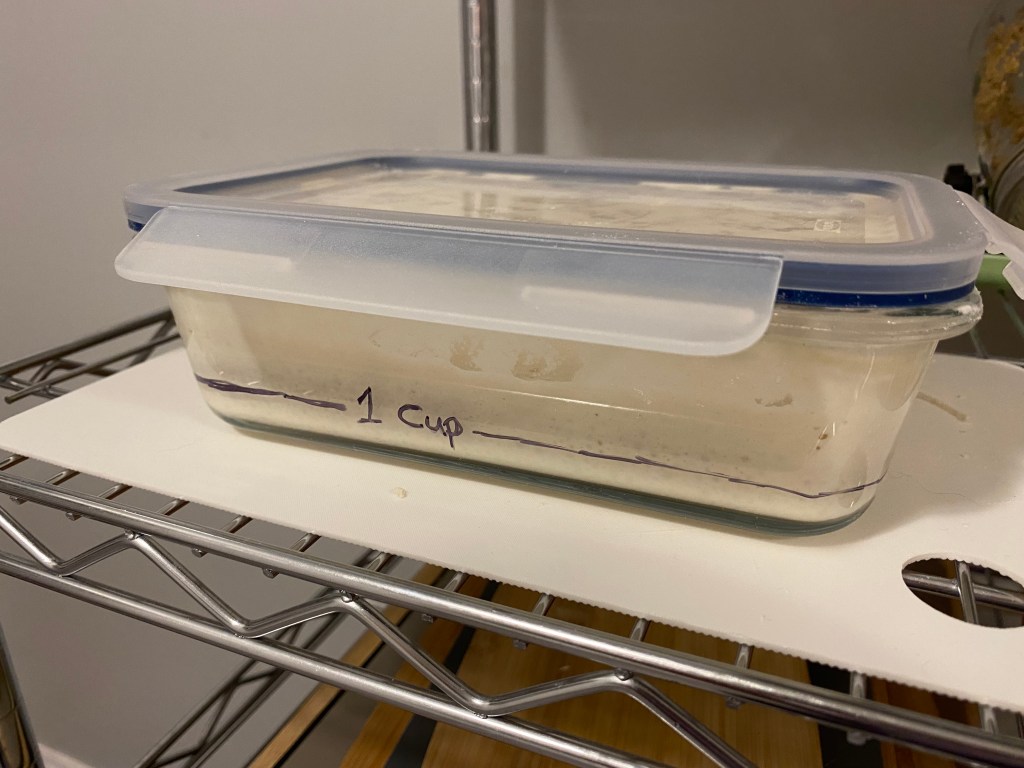
When I first started “sourdoughing”, I used a glass jar to store my starter, but have since started using a glass rectangle dish with clamp on lid. I was inspired by my friend R’s sourdough dish when I looked after it for a week, and loved how easy it was to measure amounts and stir.
I got this particular glass container from Ikea, and wrote on the side a “1 Cup” marking line with permanent marker that I use as a baseline to determine how much to feed it.
On the days that I plan on feeding it (because it’s not every day!) I will usually discard (spoon out/skim off the top) until I reach the 1 cup measuring line.
With 1 cup of starter in there, I will then add about 2/3 cup of all purpose flour and 1/3 cup of lukewarm/room temperature water. I have read that it’s best to use well water or distilled water instead of “town water” for feeding your starter, but have also had great results with unfiltered town water. Typically we use filtered water for feeding and recipes.
General feeding rule of thumb that I use: 1:1 ratio of {1 PART current starter : 1 PART added flour+added water}
After a good stir, the starter rests in a warm area of the kitchen on the counter (not in a cupboard!) and within 4-8 hours is bubbly, more than doubled in size, and ready. A great test is to take a cup of water and put a tiny spot of starter in it to see if it floats. If it floats, then it is ready!
As mentioned above, the timing of active starter readiness will be determined by the warmth and humidity of your kitchen. I have also found the active timing to change with the seasons.
Here in Northern Ontario we get temperatures nearing -50 degrees Celsius in the winter months, and our old kitchen has the furnace contained on one side of it. This means that when the other rooms of the house get chillier, the air vents in the kitchen will tend to come on more frequently and blast hot air into an already warm kitchen (especially if I am already cooking or baking that day!). On those days, the sourdough starter doesn’t take too long to bubble up for me.
I don’t have time to feed it and bake with it every day. What should I do?
I don’t make bread or other sourdough stuff everyday, so as soon as I’ve measured out the active starter I need for a recipe, I’ll put my starter container in the fridge with the lid clamps on. This will slow down the fermenting process and let it go a little dormant in the fridge until I’m ready to feed it and make something else again in a few days.
When in the fridge, the typical rule is to feed it once a week. To maintain a consistent amount of starter while in the fridge, then you will need to discard/spoon out some of the inactive starter until you reach your base amount. (for example, I always try to keep a minimum of 1 cup of starter when it is taking a break in the fridge.
How does the timing work?
There are so many ways of doing it, and honestly everyone does it a little differently! The routine that has worked for me is as follows for most of my sourdough recipes:
Feed the starter in the morning…(somewhere between getting the kids breakfast and sitting down to coffee!)
Sometime after lunch or mid afternoon I’ll check on it and if its ready then I’ll mix up the dough. (And put the rest of my starter in the fridge to go dormant for a few days)
Depending on the recipe, it may need a few extra stretches (like for bread) that I’ll do while making dinner.
Bulk fermenting overnight. Usually this is easier to do overnight and the timing can be very forgiving for generally most sourdough recipes.
Next morning, depending on the recipe there may need to be more stretches (bread), or rolling out, shaping, letting rise for a few hours, putting in fridge, etc. Most timing is quite forgiving and I try to plan the baking part of the recipe according to what that day holds.
I accidently used too much starter in a recipe and am only left with a few tablespoons. How do I build it back up?
I have definitely done this a few times, for example doubling a recipe then forgetting that I actually need 1 CUP of starter instead of 1/2 CUP. Ooops.
To build your starter back up when it has settled back down from the active stage, you can simply measure the amount you currently have, then add an equal amount of flour and water. For example, If you have 3 tablespoons of starter, you can add 2 tablespoons of flour and 1 tablespoon of water.
Oops, I missed the active timing and it has started to bubble down again! Can I still use it?
Sometimes my timing gets off if we have a busy morning, or (as mentioned above) it bubbles up faster than I anticipated or had planned, and has already started to shrink down again. It still looks bubbly but doesn’t float. When this happens (and yes, has happened many times!), I still use the starter, but just add another 1-2 tablespoons of starter to the regular recipe.
What can I do with the Sourdough Discard?
The idea of “discarding” your starter is there for a reason: if you never discard or remove a portion of your starter from the jar, but keep feeding it and never take any out for baking in recipes, then if you are following the 1:1 feeding ratio it will quickly multiply and you will have to keep feeding it higher quantities of flour/water each day!
As a result of this multiplying “problem” there are now oodles of “sourdough discard” recipes and ideas to be found on the internet, to incorporate the inactive starter into a recipe instead of throwing it in the trash.
How can I get a Sourdough Starter?
There are dehydrated sourdough starters that you can purchase online, or you can make your own from scratch (it takes about 10 days, I am still developing a post post to follow soon with instructions), or if possible, see if a friend can give you a portion of theirs.
Sourdough starters that have been fed and cultured for years are pure gold to beginners!
How to Make Sourdough Bread
This recipe’s timing has been written to bake the loaf off on the 2nd day late morning. Adjust the start time to bake off in the evening.
You can read above HERE for more suggestions on feeding your starter.
If your kitchen is more humid and warmer, than your starter may take less time to activate. You could feed your starter in the early afternoon instead to keep with this recipe’s timing.
2. Mix your Dough in the Evening
Mix your active starter with the water and set aside. Mix the flour and salt together in larger bowl, then add the wet ingredients and stir together until it forms a sticky ball.
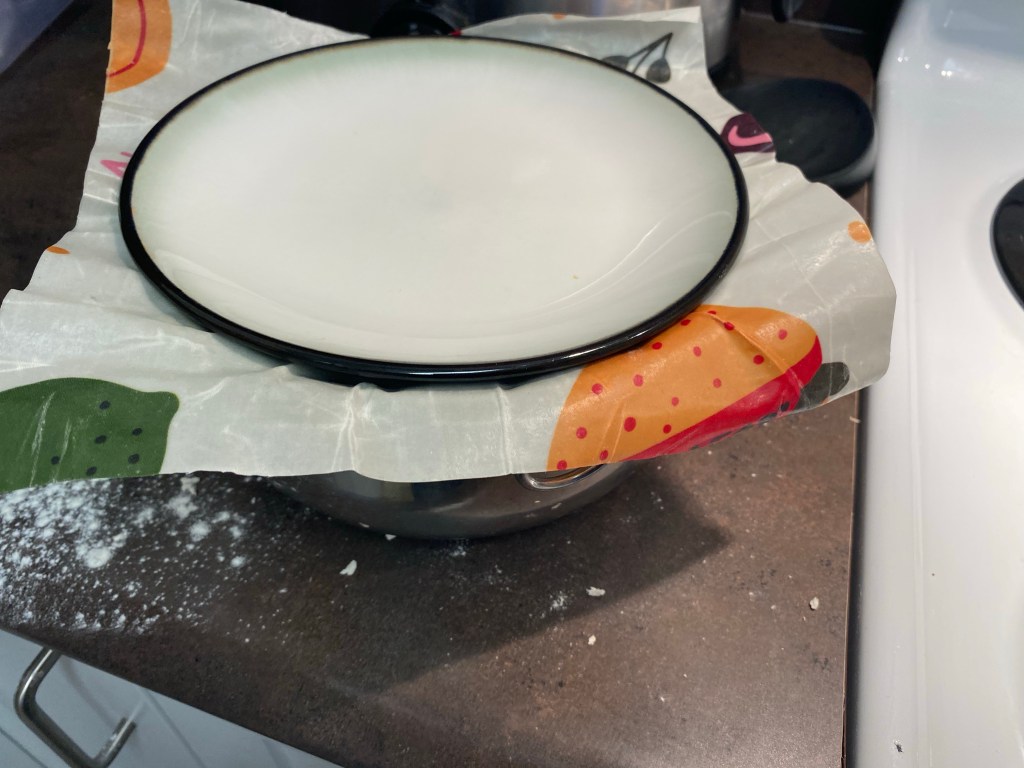
I find it easier to finish mixing it with my hands. If it is dry, resist the urge to add any water! Cover with beeswax cover/plastic wrap/tea towel and rest for 30 minutes.
3. Stretch & Fold: 1st Way
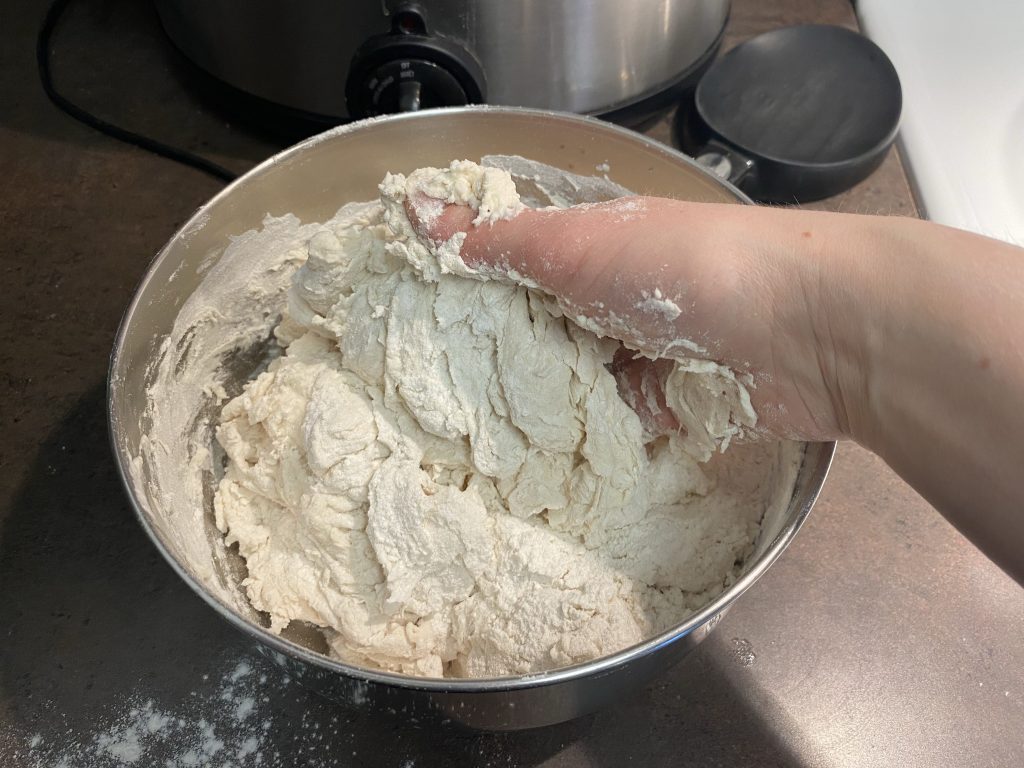
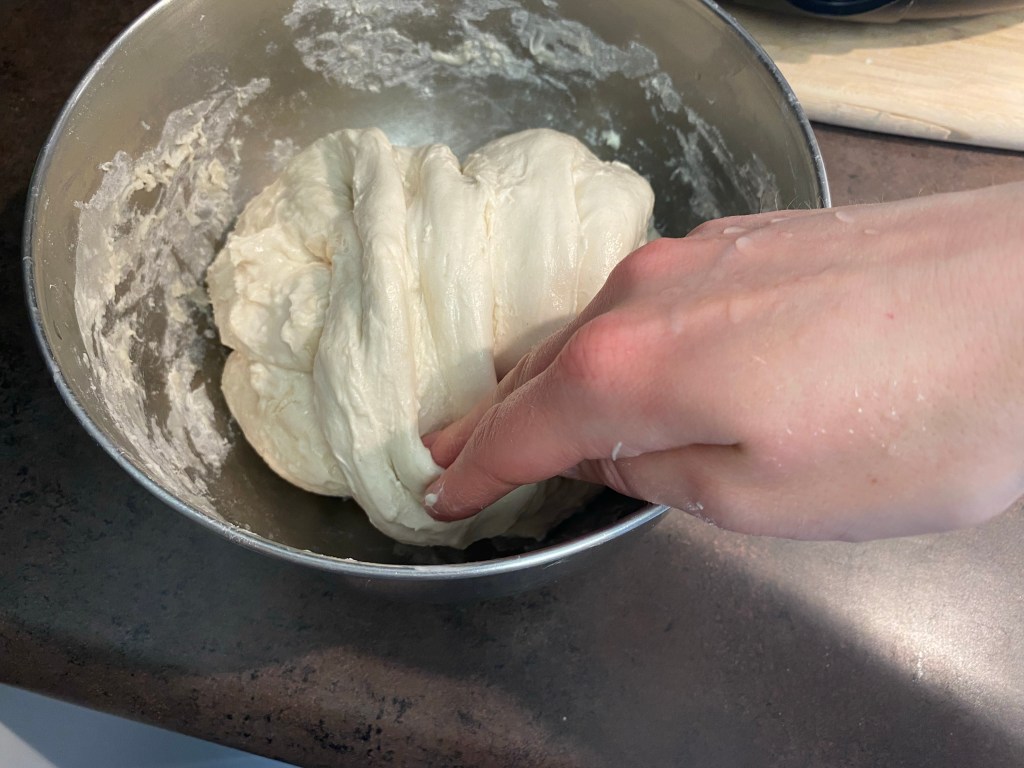
Wet one hand and gently loosen dough from edges of bowl. Take a handful of dough from the top of the bowl and pull towards you *See picture. Turn bowl 1/4 turn and repeat for a total of 4 stretch & folds to complete circle.
Cover and rest 20 minutes
Repeat stretch & fold full circle
Cover and rest 20 minutes
Repeat stretch & fold full circle
Cover and rest overnight 10-12 hours.
Day Two:
4. Lift & Fold: 2nd Way
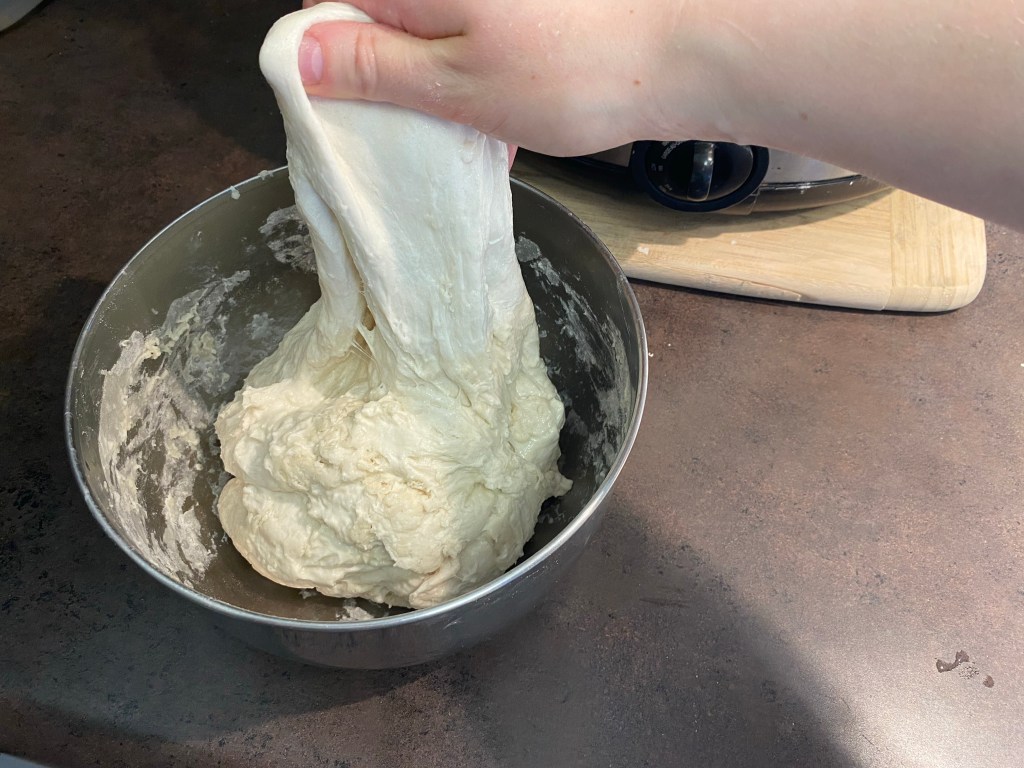
Wet both hands and loosen dough from edges of bowl. Using both hands, pick up dough from middle and let it droop over the sides of your hands. *See picture. Gently lower into bowl and let it fold on top of itself. Turn bowl 1/4 turn and repeat for total of 4 to complete full circle.
Note: If it is stiff at first, you can pick it up and gently stretch a little with your wet hands to encourage the gluten. *See picture.
Cover and rest 20 minutes
Repeat lift & fold full circle
Cover and rest 20 minutes
5. Transfer to Fridge
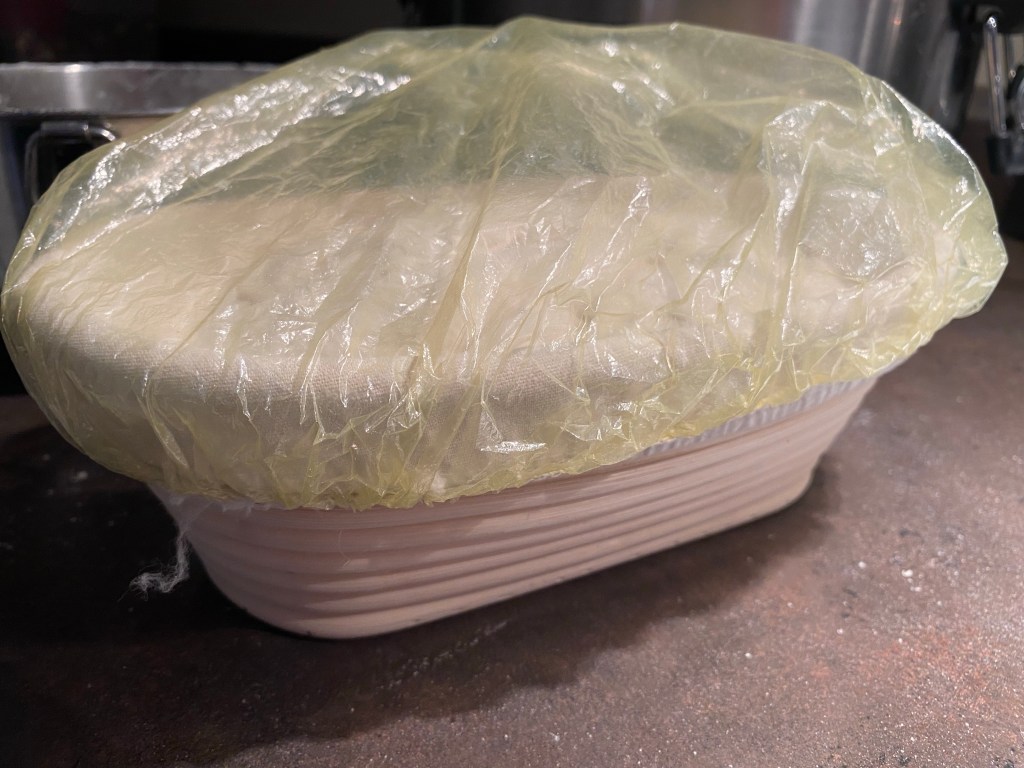
Put on floured surface and form into soft ball with floured hands. Put into banneton basket with smoothest side down and cover OR into a clean bowl lined with parchment paper, smoothest side up.
Cover and place in fridge for 1-24 hours. *This step is great, because you can keep the bread dough in there until you are ready to use it. It will continue cold fermenting and “proofing” during this time.
Note: If in fridge for longer than 1 hour, start preheating 1 hour from when you plan to bake.
6. Bake
Put your dutch oven or roasting pan in oven with lid on and preheat oven to 450 degrees.
Approximately 1 hour from the time you turned the oven on, take dough out of the fridge.
If using a banneton, transfer to parchment lined baking sheet. (I like to place a big piece of parchment on top of banneton, place cookie sheet upside down on top of parchment, then flip it right side up and gently pull banneton off, revealing the smooth side of the dough).
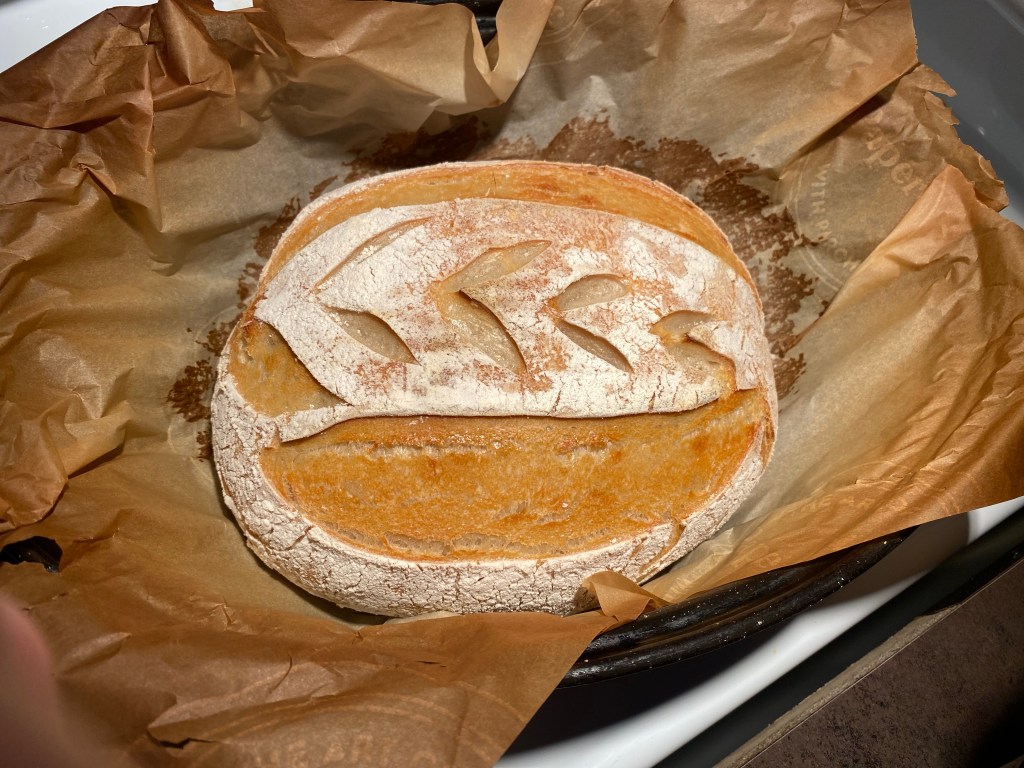
If desired, lightly dust the top of the bread with flour.
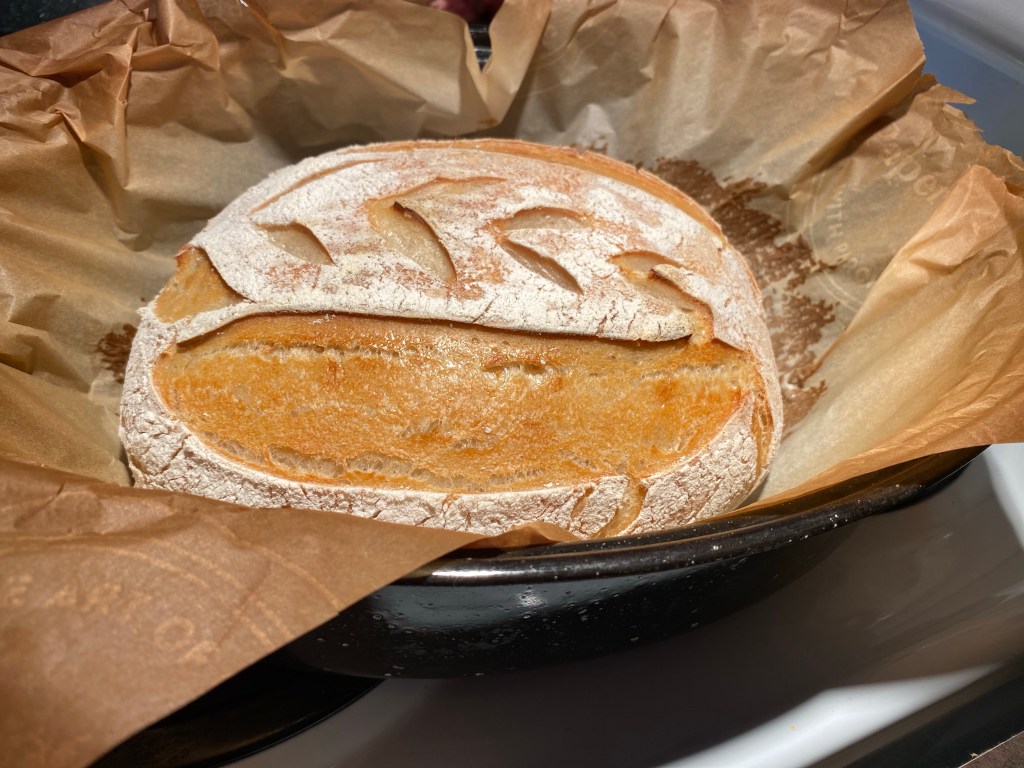
Proceed to score the top with sharp knife, razor blade or baking “lame”.
If using a bowl already lined with parchment, continue to score.
Take dutch oven or roaster out of oven, take lid off, and transfer dough by lifting up the parchment corners. Put lid back on and bake for 20 minutes.
After 20 minutes, take lid off and continue to bake for another 15-20 minutes or until golden and crusty.
7. Cool
Cool on wire rack, and let air harden the crust a little as desired. Store in airtight container or ziplock bag at room temperature to maintain freshness.
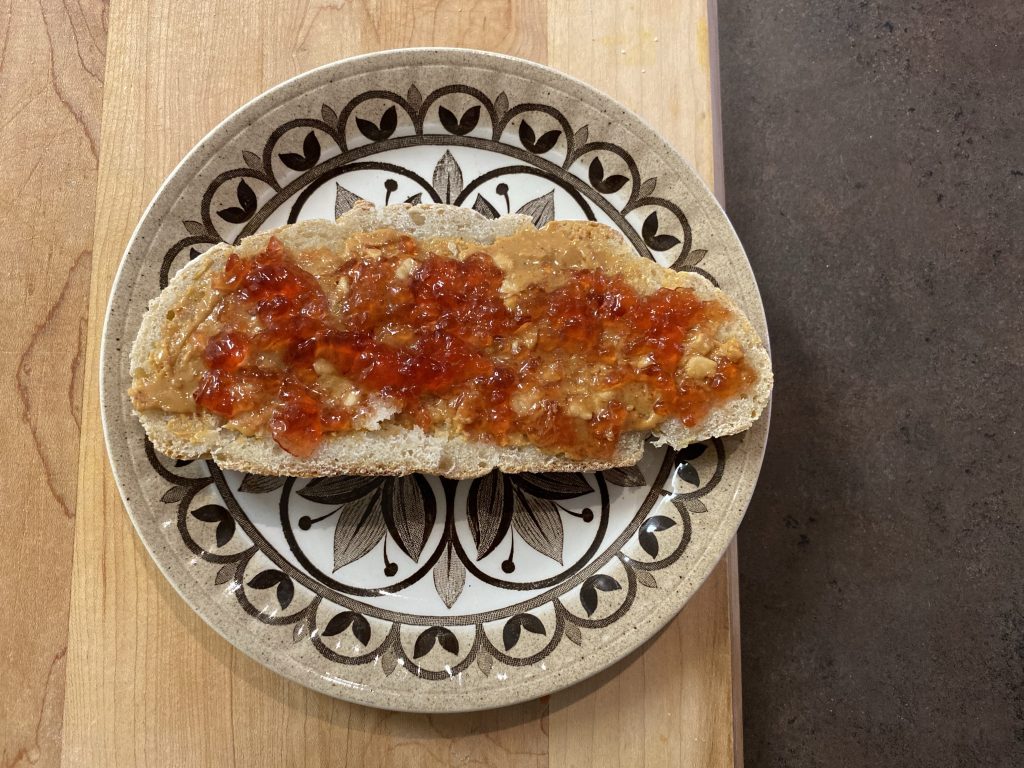
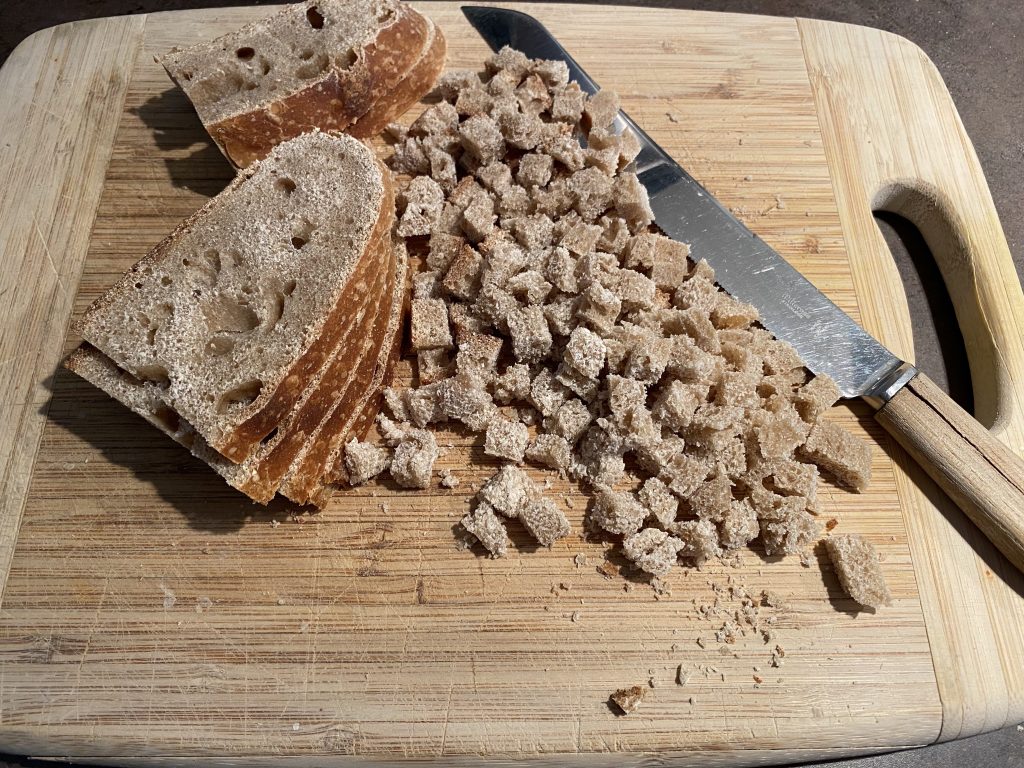
These are some of my favourite ways to eat Sourdough Bread:
Peanut butter and homemade jamSlathered in butter and dipped into a hearty soupDiced and toasted up into croutons for a saladToasted and blended into bread crumb for breaded chicken
I’m a Wife and Homeschooling Mom living in a remote town in Northern Ontario, Canada.I love making wholesome meals for my family from scratch, homeschooling our girls and learning more about natural living.
Subscribe to Northbird’s email list to get weekly posts on: tasty recipes, activity ideas for kids, natural living tips, and some genuine mom thoughts and encouragement!
Please Note: This recipe’s timing has been written to bake the loaf off on the 2nd day late morning. Adjust the start time to bake off in the evening.
Directions: Day One
1. Feed Your Starter In the Morning
You can read above HERE for more suggestions on feeding your starter.
If your kitchen is more humid and warmer, than your starter may take less time to activate. You could feed your starter in the early afternoon instead to keep with this recipe’s timing.
2. Mix your Dough in the Evening
Mix your active starter with the water and set aside. Mix the flour and salt together in larger bowl, then add the wet ingredients and stir together until it forms a sticky ball. I find it easier to finish mixing it with my hands. If it is dry, resist the urge to add any water!
Cover with beeswax cover/plastic wrap/tea towel and rest for 30 minutes.
3. Stretch & Fold: 1st Way
Wet one hand and gently loosen dough from edges of bowl. Take a handful of dough from the top of the bowl and pull towards you *See picture. Turn bowl 1/4 turn and repeat for a total of 4 stretch & folds to complete circle.
Cover and rest 20 minutes.
Repeat stretch and fold full circle.
Cover and rest 20 minutes.
Repeat stretch and fold full circle.
Cover and rest overnight 10-12 hours.
Directions: Day Two
4. Lift & Fold: 2nd Way
Wet both hands and loosen dough from edges of bowl. Using both hands, pick up dough from middle and let it droop over the sides of your hands. *See picture. Gently lower into bowl and let it fold on top of itself. Turn bowl 1/4 turn and repeat for total of 4 to complete full circle.
Note: If it is stiff at first, you can pick it up and gently stretch a little with your wet hands to encourage the gluten. *See picture.
Cover and rest 20 minutes
Repeat 2nd way of stretch & fold full circle
Cover and rest 20 minutes
5. Transfer to Fridge
Put on floured surface and form into soft ball with floured hands. Put into banneton basket with smoothest side down and cover OR into a clean bowl lined with parchment paper, smoothest side up.
Cover and place in fridge for 1-24 hours.
Note: If in fridge for longer than 1 hour, start preheating 1 hour from when you plan to bake.
6. Bake
Put your dutch oven or roasting pan in oven with lid on and preheat oven to 450 degrees.
Approximately 1 hour from the time you turned the oven on, take dough out of the fridge.
If using a banneton, transfer to parchment lined baking sheet. (I like to place big piece of parchment on top of banneton, place cookie sheet upside down on top of parchment, then flip it rightside up and gently pull banneton off, revealing the smooth side of the dough).
If desired, lightly dust the top of the bread with flour.
Proceed to score the top with sharp knife, razor blade or baking “lame”.
If using a bowl already lined with parchment, continue to score.
Take dutch oven or roaster out of oven, take lid off, and transfer dough by lifting up the parchment corners. Put lid back on and bake for 20 minutes.
After 20 minutes, take lid off and continue to bake for another 15-20 minutes or until golden and crusty.
7. Cool
Cool on wire rack, and let air harden the crust a little as desired. Store in airtight container or ziplock bag at room temperature to maintain freshness.
Nutrition
Per 2 slices: 190 calories; 0.5 g fat; 40 g carbohydrates;
5.4 g protein; 465 mg sodium.
















































 Northbird